Biomedical Research Engineer Resume Example
 Example by JobSprout
Market Insights
Biomedical Research Engineer
Salary Range
US market data · Source: Adzuna · Updated Mar 2026
How useful was this template?
Biomedical Research Engineer resume samples
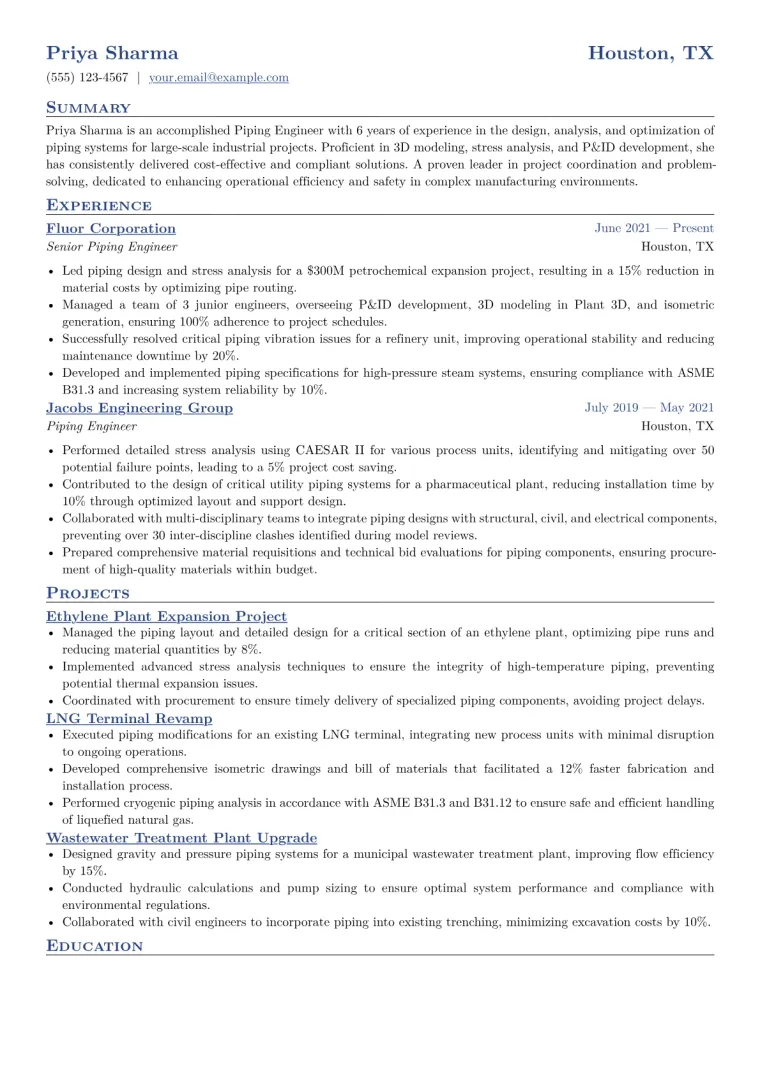
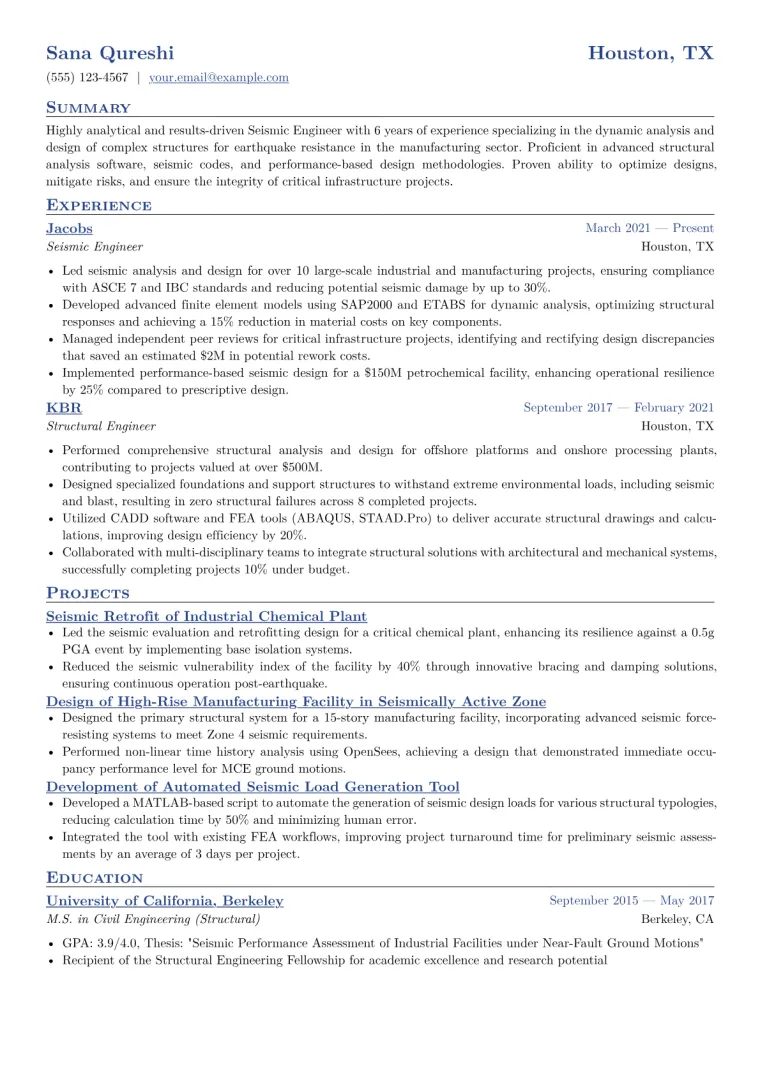
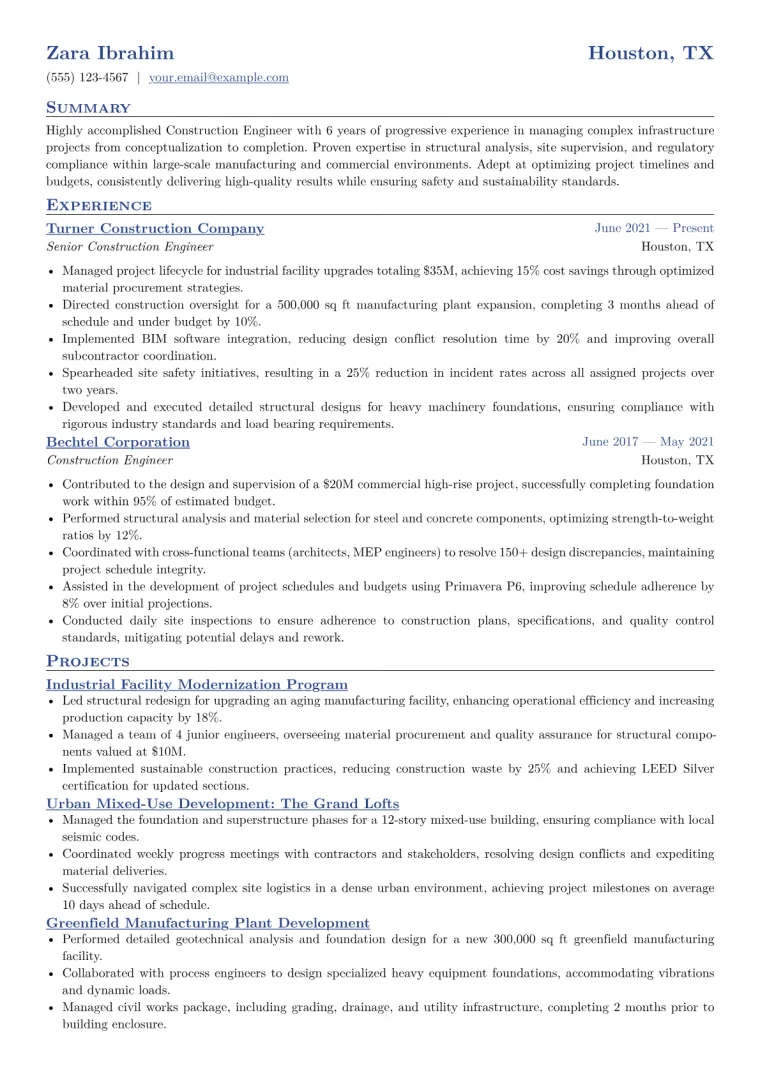
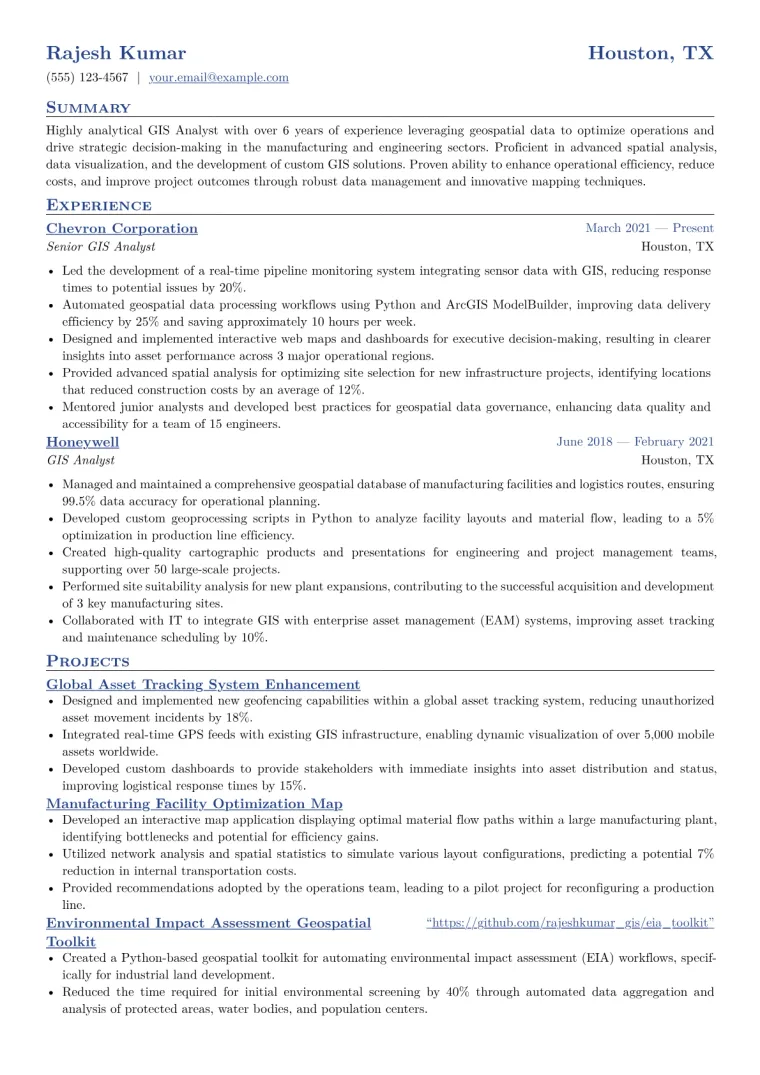
Three complete resumes, each in a different design.
Editorial Notes
A strong Biomedical Research Engineer resume in Manufacturing must directly address the industry's rigorous demands for product safety, efficacy, and quality. Hiring managers prioritize candidates demonstrating expertise in design control, process validation (IQ/OQ/PQ), and regulatory compliance, particularly FDA 21 CFR Part 820 and ISO 13485. Achievements should quantify contributions to device development lifecycles, often involving material selection, biocompatibility testing, and risk management. Specific terminology like DFM (Design for Manufacturability), Lean Six Sigma methodologies, and GxP adherence signals a candidate's readiness for the sector's unique challenges in bringing medical devices from concept to production.
This example CV excels by clearly segmenting technical prowess from quality systems understanding. Achievements are effectively quantified; for instance, detailing a "15% reduction in material waste" or "successful launch of two Class II devices within budget." Skills are judiciously grouped, separating "Biomaterials & Prototyping" from "Regulatory Affairs & Quality Assurance," providing immediate clarity to a recruiter. The strategic highlighting of certifications such as Certified Quality Engineer (CQE) alongside specific software proficiency in SolidWorks and MATLAB showcases a comprehensive and relevant skillset for the manufacturing environment.
This template was built with JobSprout and can be remixed to create your own tailored Biomedical Research Engineer resume.
How useful was this template?
Example by JobSproutBiomedical Research Engineer resume summary example
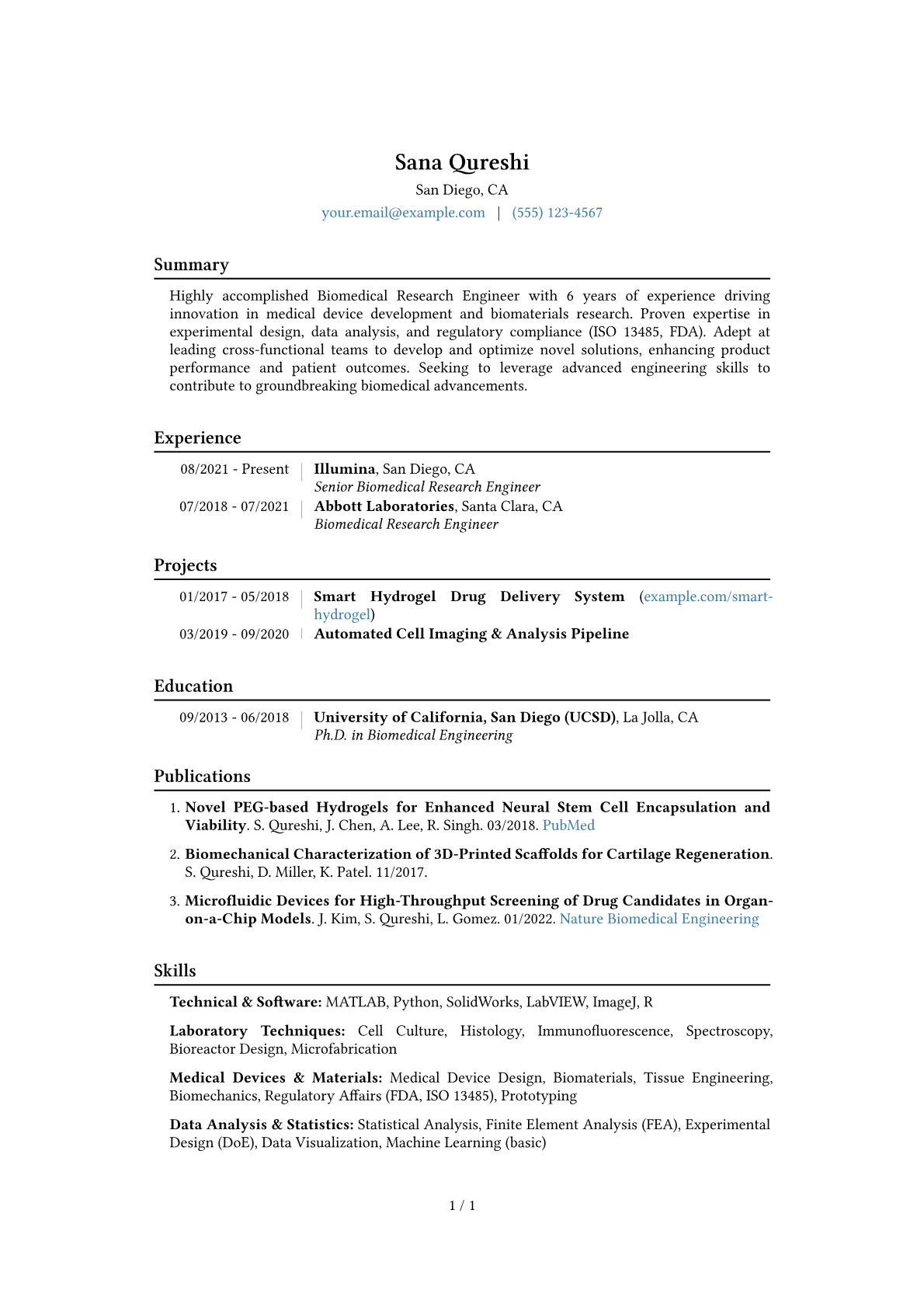
Highly accomplished Biomedical Research Engineer with 6 years of experience driving innovation in medical device development and biomaterials research. Proven expertise in experimental design, data analysis, and regulatory compliance (ISO 13485, FDA). Adept at leading cross-functional teams to develop and optimize novel solutions, enhancing product performance and patient outcomes. Seeking to leverage advanced engineering skills to contribute to groundbreaking biomedical advancements.
Biomedical Research Engineer salary by country
| Country | 25th percentile | Median | 75th percentile |
|---|---|---|---|
| US | $83,364 | $101,105 | $142,382 |
| UK | £40,200 | £46,800 | £56,071 |
| Canada | C$67,778 | C$85,000 | C$111,667 |
| Australia | A$98,333 | A$130,000 | A$149,000 |
| Germany | €60,708 | €70,760 | €77,167 |
| France | €28,050 | €43,900 | €70,123 |
| Netherlands | €38,110 | €52,045 | €68,452 |
| Austria | €38,750 | €56,667 | €71,500 |
| New Zealand | NZ$82,292 | NZ$100,000 | NZ$130,769 |
| India | ₹300,000 | ₹600,000 | ₹900,000 |
| Poland | zł122,500 | zł185,000 | zł192,500 |
Annual salaries in local currency, aggregated from live job postings via Adzuna. Figures refresh continuously and reflect advertised pay, not negotiated offers.
Biomedical Research Engineer resume skills and keywords
Recruiters and applicant tracking systems scan Biomedical Research Engineer resumes for these skills and keywords. Include the ones that match your experience and mirror the wording in the job description. Check your resume against them with the free ATS checker.
Hard skills
Tools & software
Certifications
Soft skills
Market Insights
Biomedical Research Engineer
Salary Range
US market data · Source: Adzuna · Updated Mar 2026
![How to Write a CV for Manufacturing Applications [2026 Guide]](/thumbnails/cv-for-manufacturing-applications.webp)