Fixed Income Trader Resume Example
 Example by JobSprout
Free to use. No download fee.
Market Insights
Fixed Income Trader
Salary Range
Salary Trend
Mar 2025 – Feb 2026
12-Month Trend
Based on advertised Finance & Accounting roles.
US market data · Source: Adzuna · Updated Mar 2026
How useful was this template?
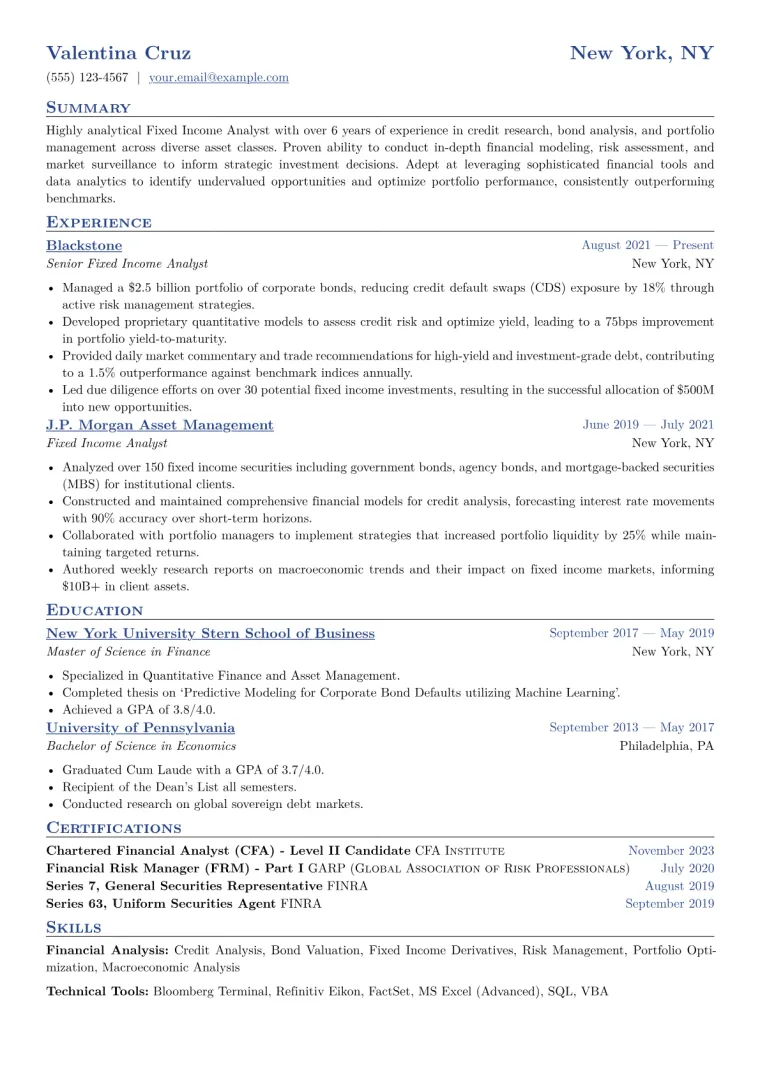
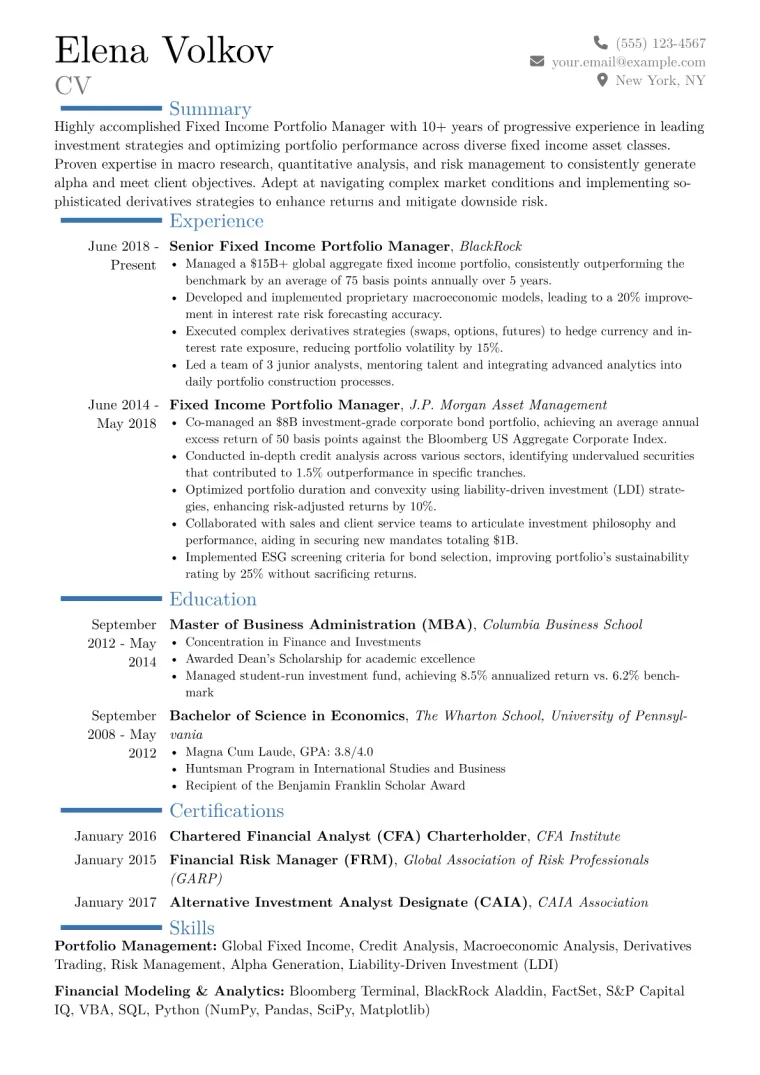
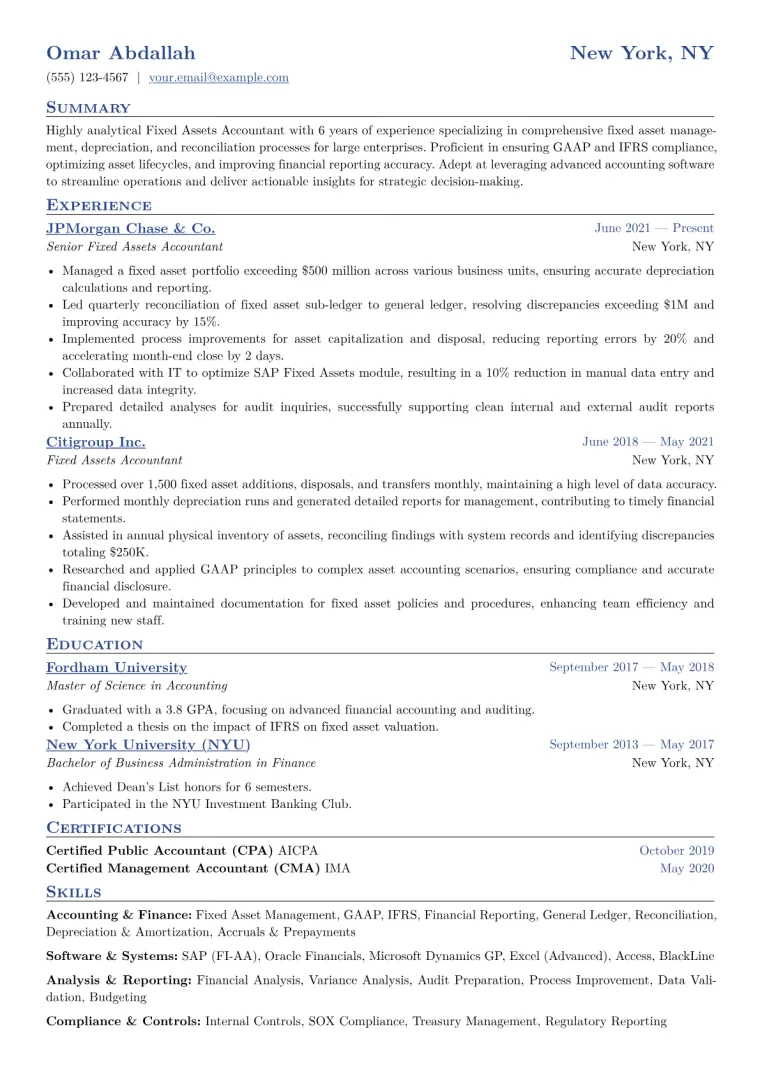
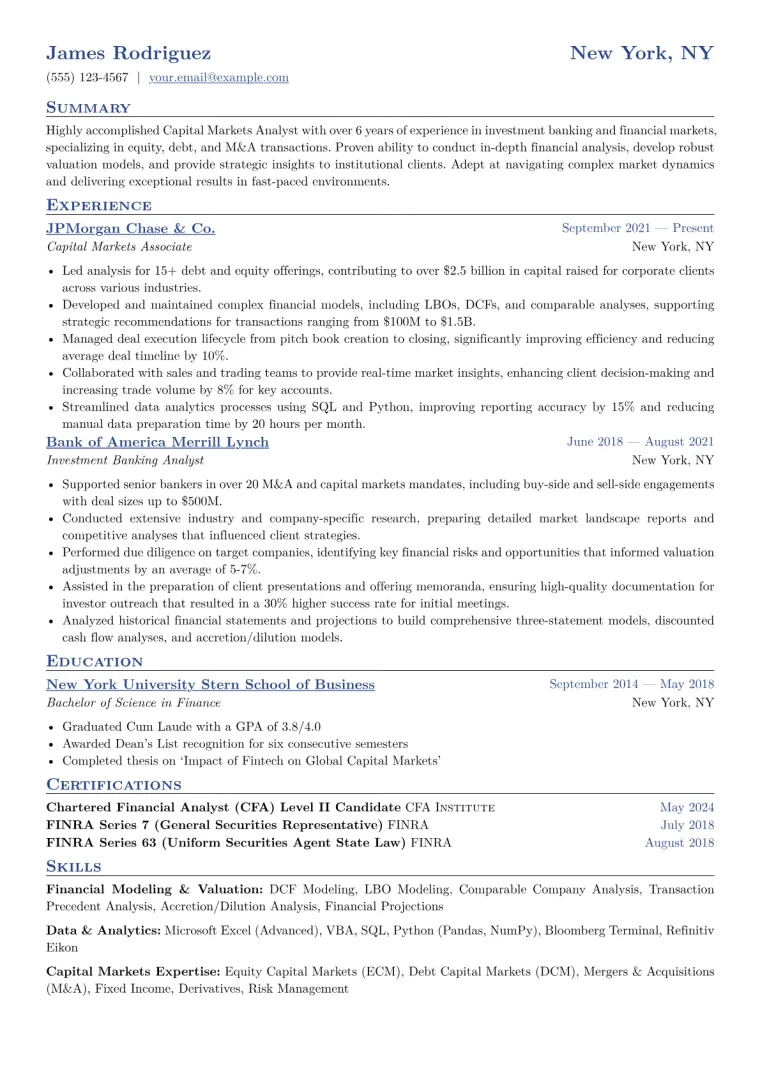
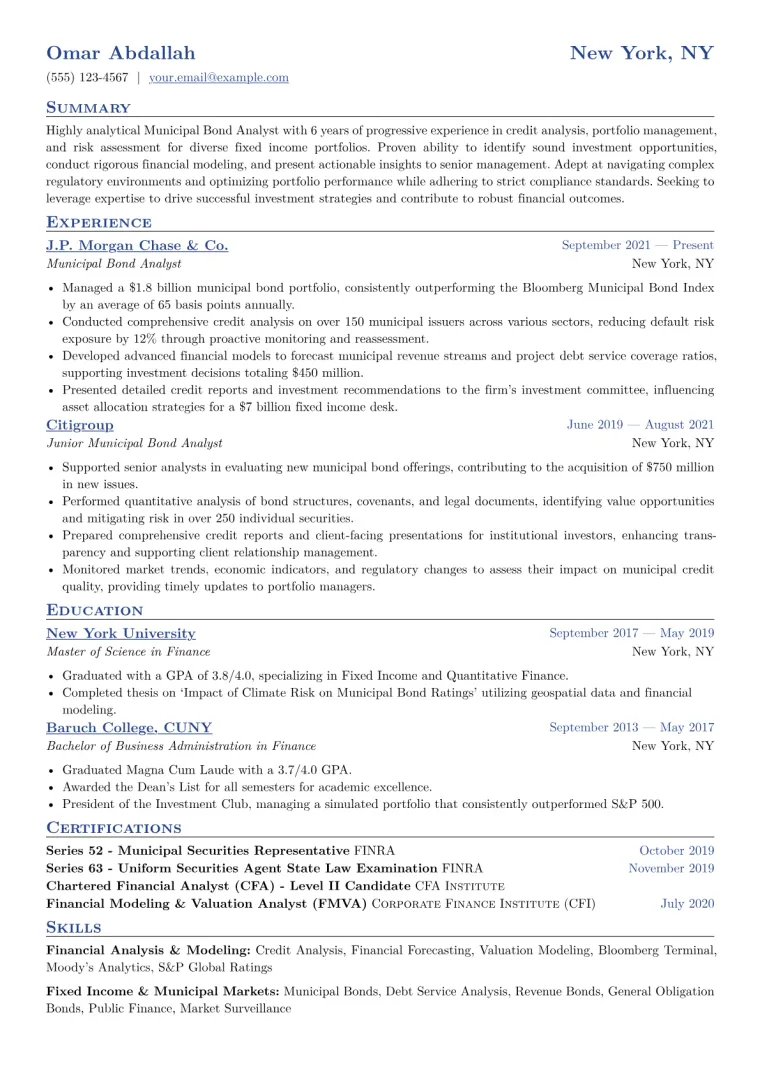
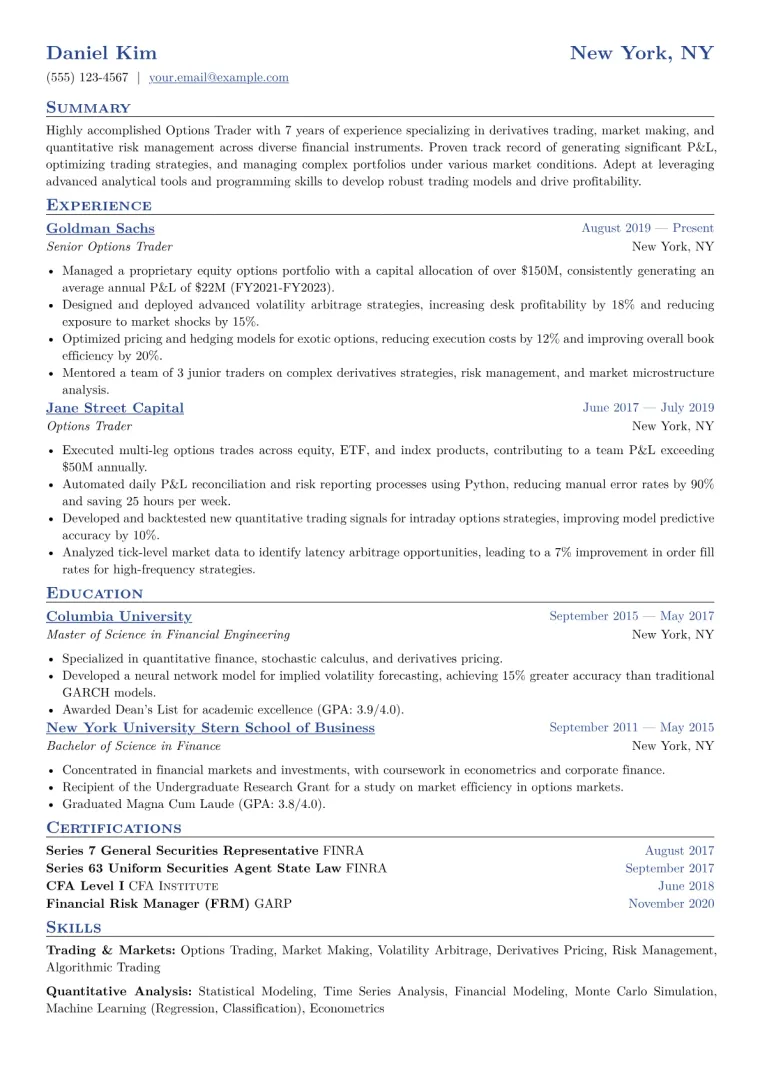
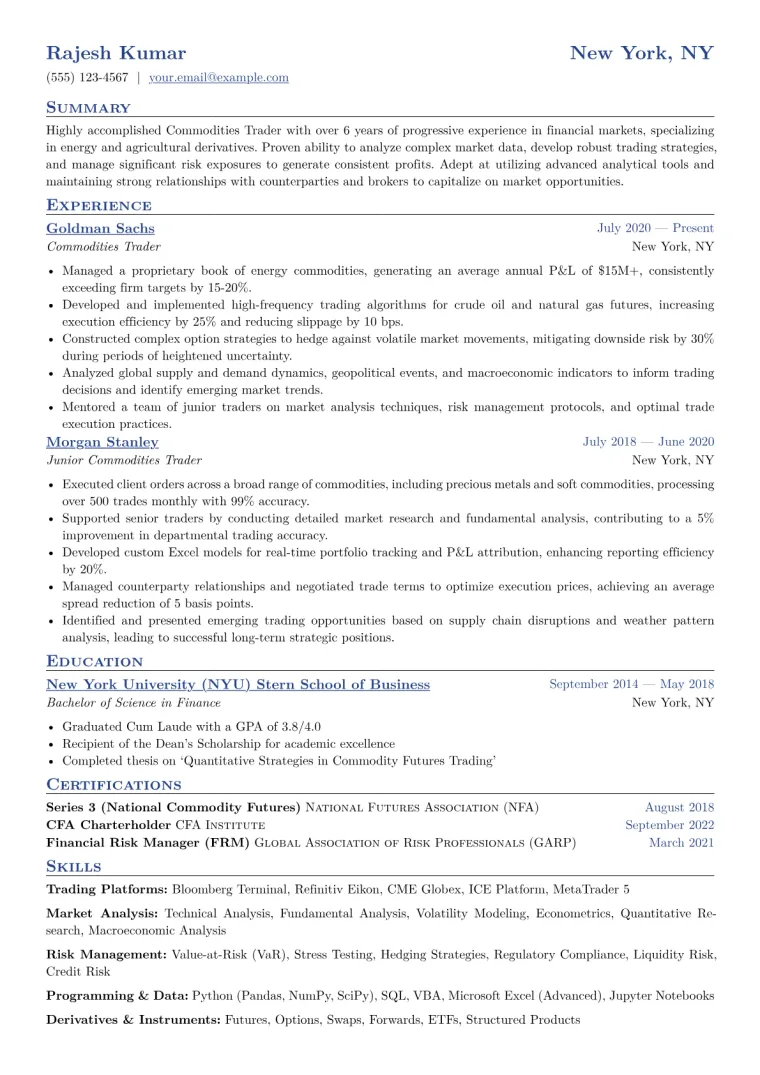
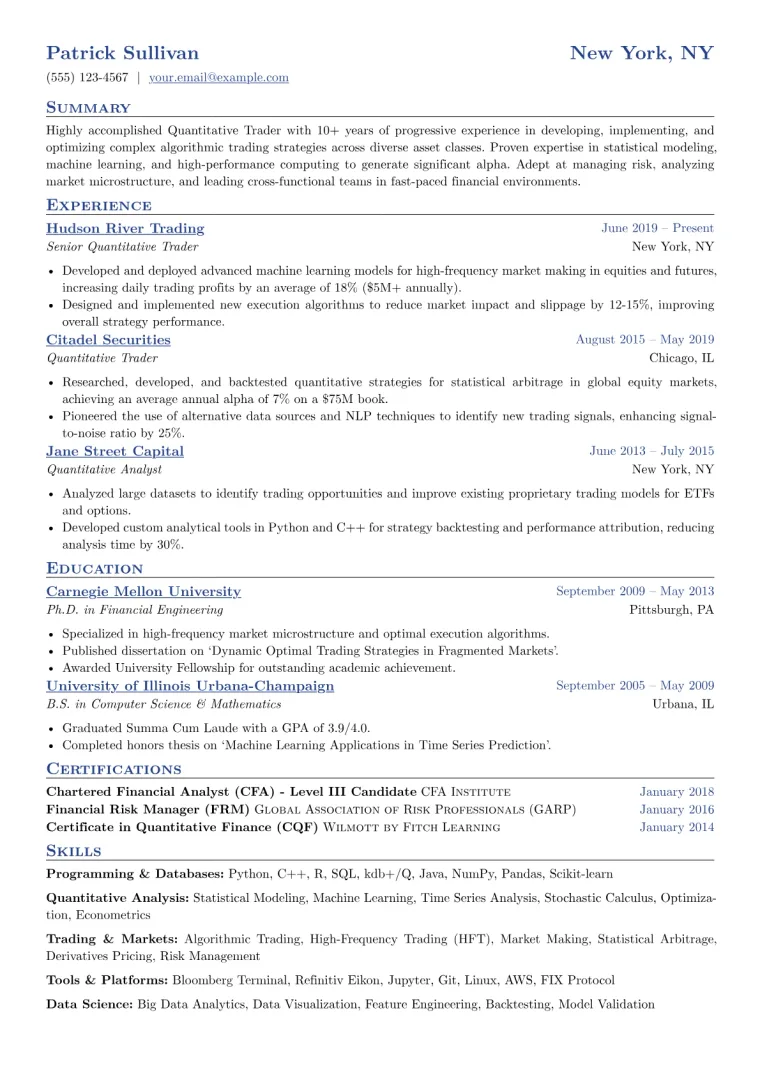
Fixed Income Trader resume samples
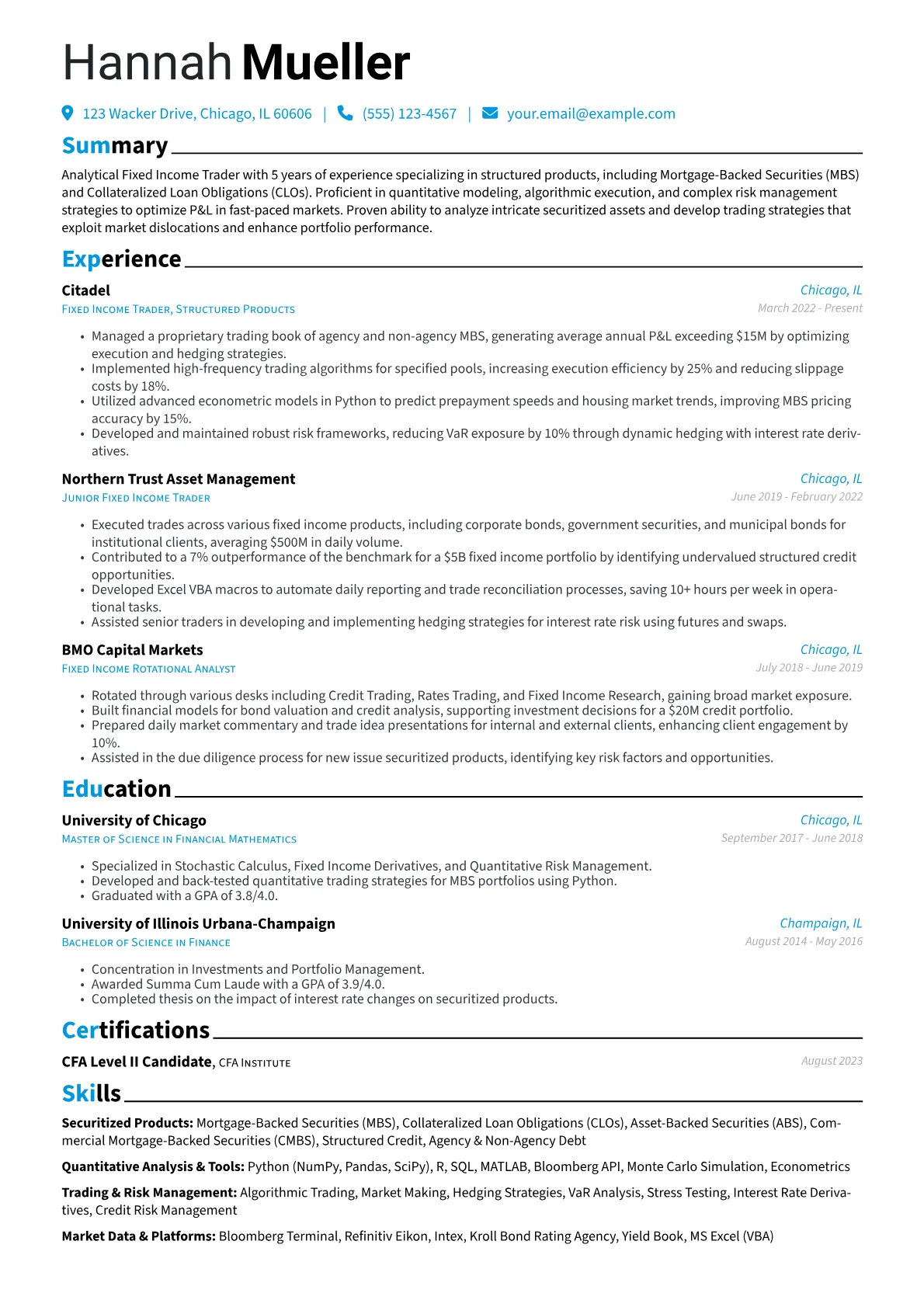
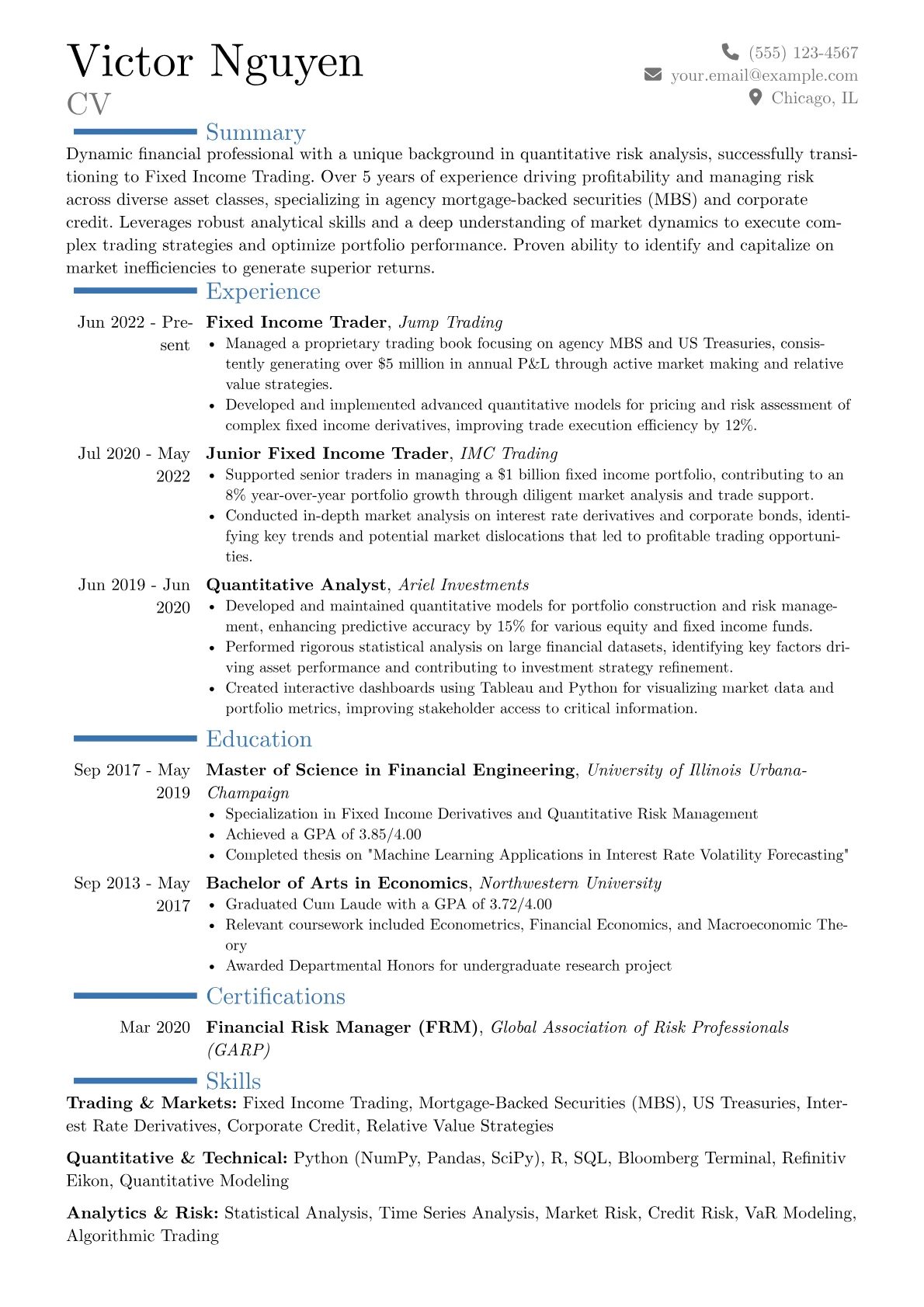
Three complete resumes, each in a different design.


Free to use. No download fee.
What makes a strong Fixed Income Trader resume?
US median salary $130,000 ·
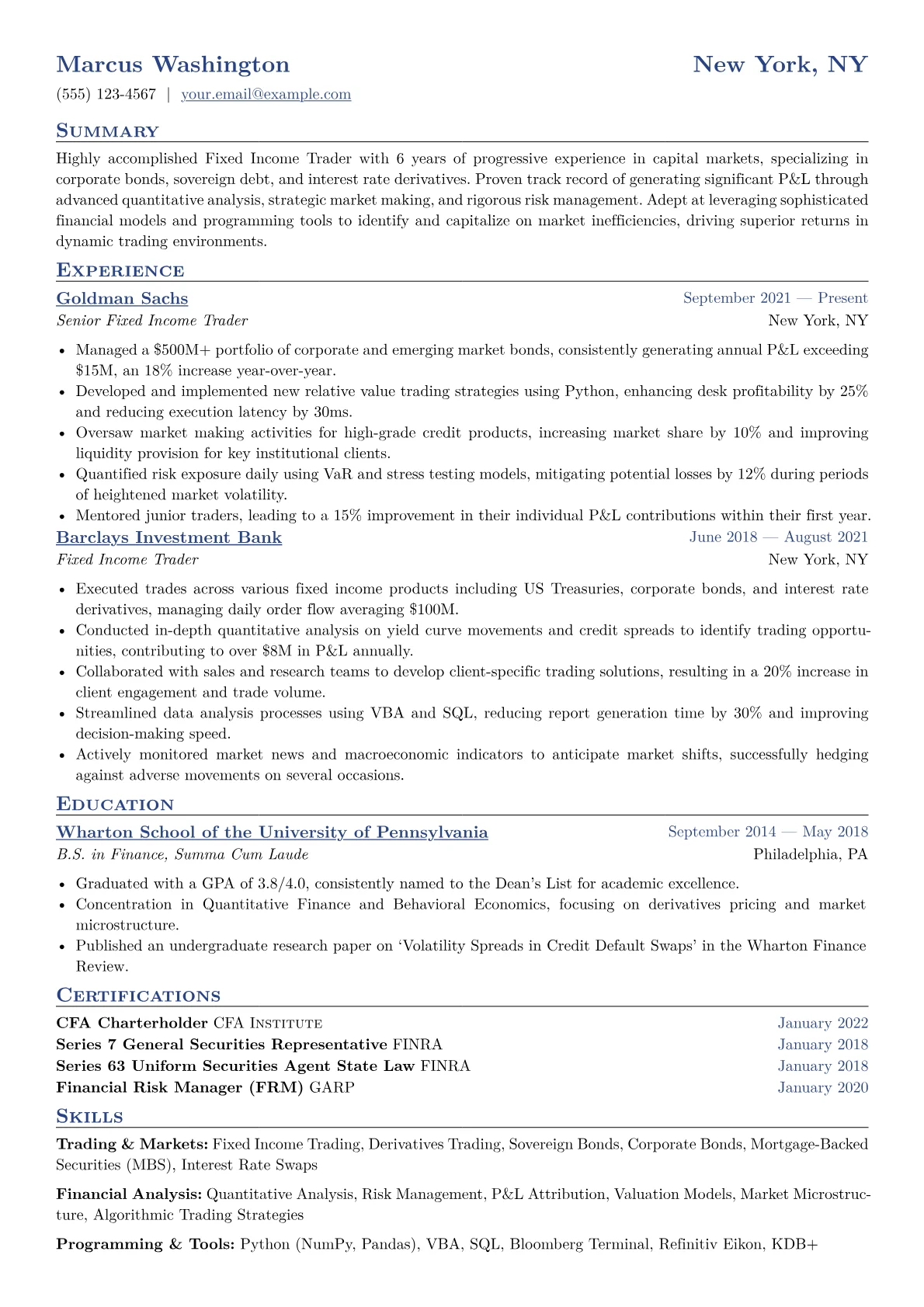
A strong Fixed Income Trader resume for mid-level professionals must emphasize quantifiable P&L contribution, precise risk management, and deep product knowledge. Hiring managers seek evidence of navigating complex markets, such as generating alpha from corporate credit or optimizing duration strategies within government securities. Achievements should detail specific trade volumes, basis point improvements, or successful implementation of hedging strategies. Crucial terminology includes VaR, DV01, and asset classes like Treasuries, MBS, or emerging market debt. Certifications like CFA or FRM also significantly enhance credibility.
Why this example works
The JobSprout example effectively showcases these elements. Its structure groups relevant technical skills such as Bloomberg Terminal proficiency, VBA, and specific fixed income product knowledge, making it easy for recruiters to identify core competencies. Achievements are clearly quantified, for instance, by stating “managed a USD 500M portfolio generating X P&L annually” or “implemented hedging strategies that reduced interest rate risk by Y%.” The resume precisely highlights certifications and essential tools, demonstrating industry-specific expertise that stands out.
How useful was this template?
Example by JobSprout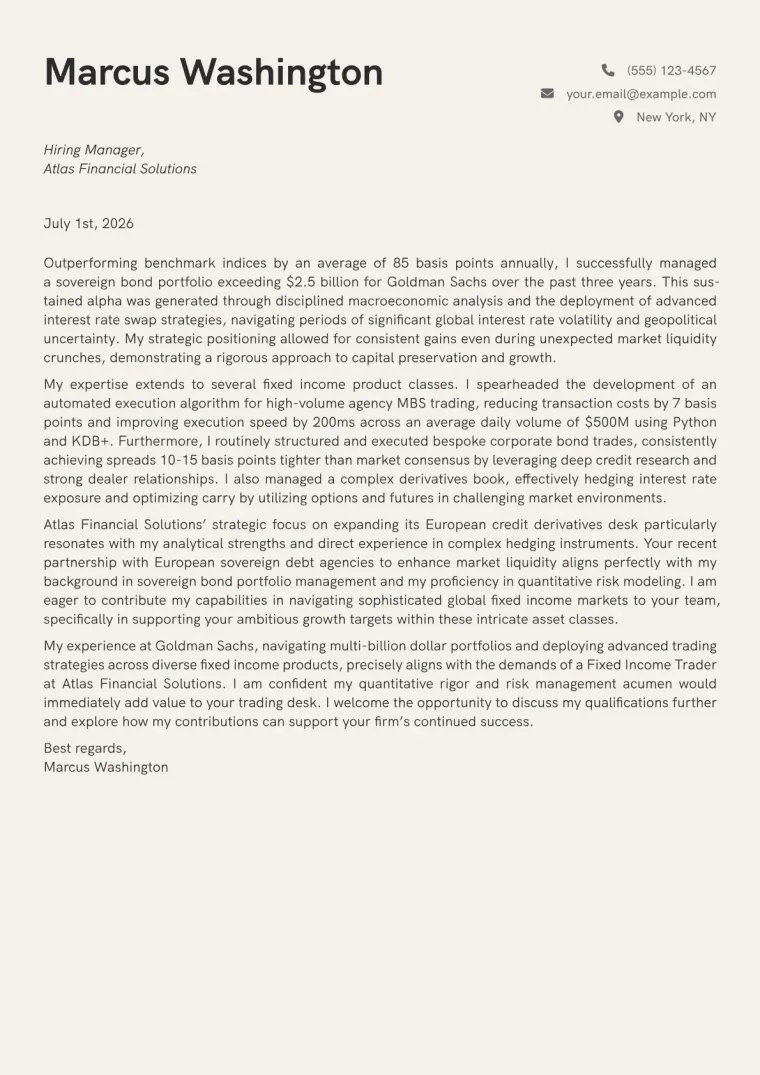
Fixed Income Trader Cover Letter Example
Written for the same person as this resume, ready to adapt.
Fixed Income Trader resume summary example
Highly accomplished Fixed Income Trader with 6 years of progressive experience in capital markets, specializing in corporate bonds, sovereign debt, and interest rate derivatives. Proven track record of generating significant P&L through advanced quantitative analysis, strategic market making, and rigorous risk management. Adept at leveraging sophisticated financial models and programming tools to identify and capitalize on market inefficiencies, driving superior returns in dynamic trading environments.
Fixed Income Trader salary by country
| Country | 25th percentile | Median | 75th percentile |
|---|---|---|---|
| US | $90,000 | $130,000 | $149,748 |
| UK | £32,430 | £43,199 | £60,872 |
| Canada | C$63,778 | C$84,927 | C$111,697 |
| Australia | A$87,619 | A$108,025 | A$136,923 |
| Germany | €52,788 | €62,750 | €72,868 |
| France | €43,125 | €48,750 | €62,500 |
| Netherlands | €48,252 | €55,346 | €64,313 |
| Italy | €32,344 | €39,688 | €46,618 |
| Austria | €38,333 | €50,000 | €71,667 |
| New Zealand | NZ$85,833 | NZ$104,167 | NZ$126,786 |
| India | ₹392,912 | ₹785,824 | ₹1,532,110 |
| Poland | zł126,250 | zł152,500 | zł170,714 |
Annual salaries in local currency, aggregated from live job postings via Adzuna. Figures refresh continuously and reflect advertised pay, not negotiated offers.
Fixed Income Trader resume skills and keywords
Recruiters and applicant tracking systems scan Fixed Income Trader resumes for these skills and keywords. Include the ones that match your experience and mirror the wording in the job description. Check your resume against them with the free ATS checker.
Hard skills
Tools & software
Certifications
Soft skills
Market Insights
Fixed Income Trader
Salary Range
Salary Trend
Mar 2025 – Feb 2026
12-Month Trend
Based on advertised Finance & Accounting roles.
US market data · Source: Adzuna · Updated Mar 2026
Frequently Asked Questions
What's the best resume structure for a mid-level Fixed Income Trader?
What key skills and qualifications should a Fixed Income Trader with 3-7 years of experience highlight?
How do I write compelling achievement bullets or a professional summary for a Fixed Income Trader?
Are there any optional sections that truly matter for a Fixed Income Trader's resume?
How can I best tailor this Fixed Income Trader resume to a specific job opening?
The blank page is the hard part. Skip it.
Free to use. No download fee.
![How to Write a CV for Finance Applications [2026 Guide]](/thumbnails/cv-for-finance-applications.webp)