PDF or DOCX · up to 2MB
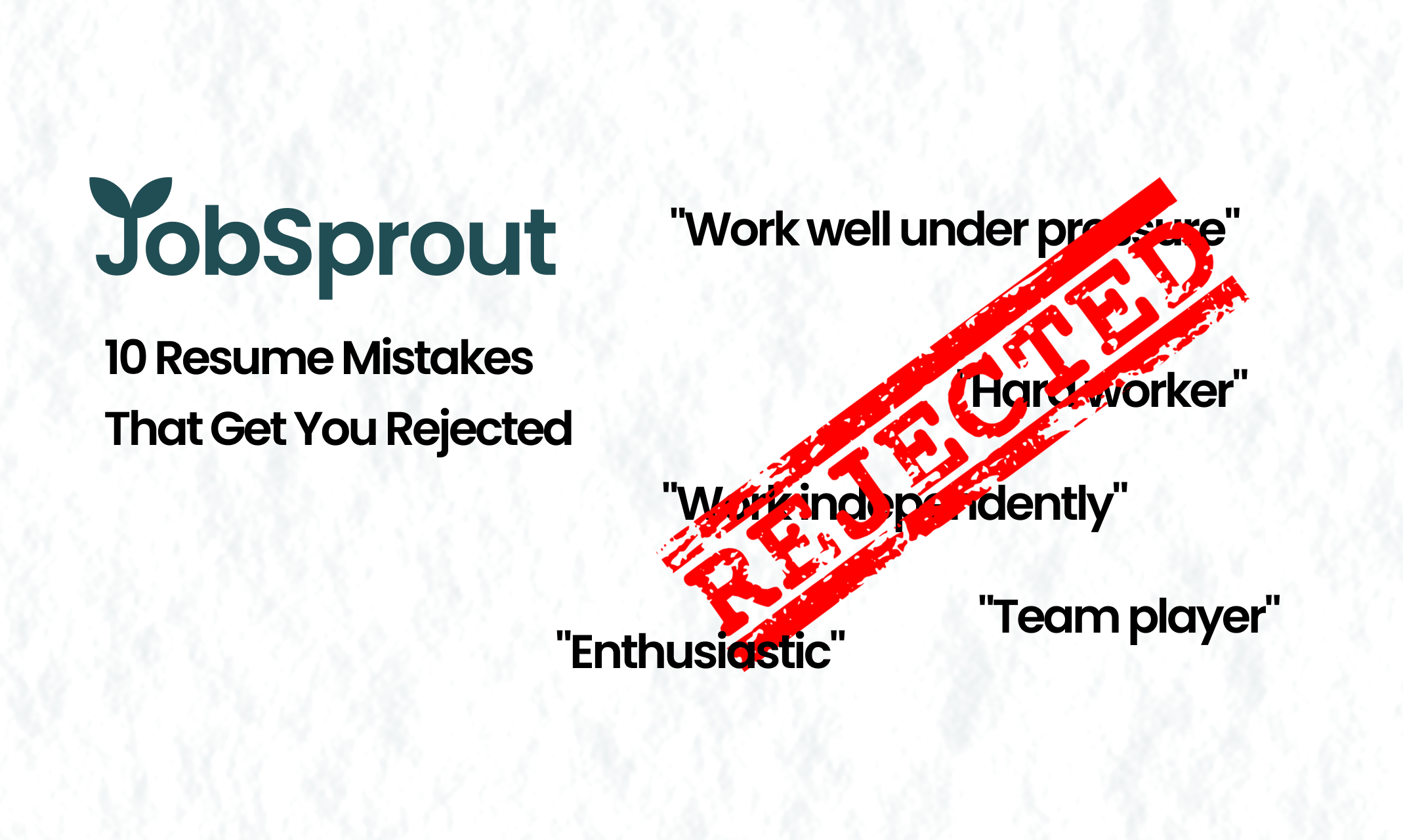
The data is clear: these 10 mistakes are why your resume isn't getting interviews. Based on recruiter surveys, eye-tracking studies, and hiring manager feedback. Learn what to fix today.
The right LinkedIn profile picture size (400 x 400 pixels or more, under 8MB), how to frame it for the circle crop, and what recruiters notice first.
What an ATS score actually measures, what counts as a good resume ATS score, and why the "ATS auto-rejects 75% of resumes" claim is a myth. Includes real score bands and a free checker.
See exactly what a modern resume looks like in 2026 with visual examples, before-and-after comparisons, and breakdowns by career stage and industry. Includes ATS-friendly formatting tips.
Here's a brutal truth: only 2% of resumes result in an interview.
That means for every 100 applications you send, 98 go nowhere. But here's the thing: most of those rejections are completely avoidable.
We analysed data from recruiter surveys, eye-tracking studies, and hiring manager feedback to identify exactly what's getting resumes rejected. These aren't opinions. These are the mistakes backed by real numbers.
Before we dive into the mistakes, you need to understand what you're up against.
The numbers are staggering:
You're competing against hundreds of applicants, software that parses and ranks your CV before anyone reads it, and recruiters who decide your fate in seconds.
The mistakes below are what separate the 2% who get interviews from the 98% who don't.
The statistic: 77% of hiring managers say typos or bad grammar are a deal-breaker. 59% will reject a candidate for this alone (Zippia).
This is the easiest mistake to make and the easiest to avoid. Yet it remains the #1 reason resumes get rejected.
Think about it from the employer's perspective: if you can't proofread a two-page document about yourself, how careful will you be with their work?
Common typos that slip through:
How to fix it:
The statistic: 63% of recruiters want to receive resumes tailored to the open position. 61% say customisation is the #1 tactic to boost your chances (Zippia).
Yet 36% of resumes are rejected for being too generic (Zippia).
Sending the same CV to every job is like wearing the same outfit to a wedding and a job interview. It might technically work, but you'll never stand out.
What recruiters mean by "tailored":
How to fix it:
Tools like JobSprout make this faster with one-click job tailoring: paste a job description and your CV is rewritten to match the role, with a word-level diff showing every change before you accept.
Yes, this takes longer than blasting out generic applications. But 10 tailored applications will outperform 100 generic ones.
The statistic: 97.8% of Fortune 500 companies run an ATS, so almost every application is parsed by software first. (The widely quoted claim that ATS auto-rejects 75% of resumes is a 2012 vendor sales pitch with no study behind it. The parsing is real; the auto-rejection figure is not.)
Here's what makes this particularly frustrating: you might be perfect for the job, but a computer rejects you before any human sees your CV.
How ATS works:
The keyword gap is real:
How to fix it:
Not sure how your CV reads to the software right now? Our free ATS resume checker scores it in seconds and flags the exact lines an ATS can't parse, so you can fix them before you apply.
The statistic: 34% of hiring managers cite "lack of quantifiable results" as a major deal-breaker (Zippia).
"Responsible for managing social media" tells me nothing. "Grew Instagram following from 5K to 50K in 12 months" tells me everything.
The difference:
| Duty (Weak) | Achievement (Strong) |
|---|---|
| Managed customer service team | Led customer service team of 8, improving satisfaction scores from 72% to 94% |
| Responsible for sales | Generated £1.2M in new business revenue, 140% of annual target |
| Handled marketing campaigns | Launched 15 email campaigns with 32% average open rate (industry avg: 21%) |
| Oversaw budget | Managed £500K budget with zero overspend across 3 years |
The formula: Action Verb + What You Did + Quantified Result
How to fix it:
The statistic: Over 50% of recruiters will reject a candidate if their resume is full of clichés (Zippia).
Words like "team player," "hard worker," and "good communicator" are meaningless. Everyone says them. They prove nothing.
Clichés recruiters hate (and how many hate them):
| Cliché | % of Recruiters Who Hate It |
|---|---|
| "Work independently" | 47% |
| "Hard worker" | 42% |
| "Work well under pressure" | 39% |
| "Good communicator" | 36% |
| "Enthusiastic" | 35% |
| "Team player" | 32% |
Source: Zippia
How to fix it:
Don't tell. Show.
Instead of "team player," write: "Collaborated with cross-functional team of 12 to deliver product launch 2 weeks ahead of schedule."
Instead of "excellent communication skills," write: "Presented quarterly results to board of 8 directors; secured £2M additional funding."
Instead of "hard worker," let your achievements speak for themselves.
The statistic: 40% of recruiters are put off by too much resume design. Yet 17% see a two-page resume as a deal-breaker (Zippia).
So which is it? The answer depends on your experience level.
The length debate (settled by data):
The format rules:
When to use one page: Entry-level, less than 5 years experience, or career changers
When to use two pages: 10+ years experience, senior roles, or roles requiring detailed project lists
The statistic: 13% of resumes include a photo, and this is a rejection trigger for many employers (Zippia).
In the UK and US, including a photo creates legal liability for employers. It opens them up to discrimination claims based on age, race, gender, or appearance.
Many companies have policies to automatically reject CVs with photos to avoid this risk.
The exceptions:
How to fix it:
Remove your photo. Your qualifications should speak for themselves.
If you're applying internationally, research the norms for that specific country.
The statistic: 75% of HR managers have caught a lie on a resume. Meanwhile, 70% of people admit to having lied on job applications (Zippia, TechTarget).
The temptation is understandable. Everyone else seems to be inflating their achievements. But the risks are enormous:
What happens when you get caught:
Common lies employers catch:
How to fix it:
Be honest. Instead of lying about gaps, address them briefly. Instead of inflating titles, focus on achievements. Instead of claiming skills you don't have, highlight transferable skills and willingness to learn.
Honesty stands out more than you think. And it lets you sleep at night.
The statistic: 35% of hiring managers cite unprofessional email addresses as a deal-breaker (Zippia).
hotguy1995@gmail.com or partyanimal@outlook.com might have seemed funny at 18. They're killing your job applications now.
What counts as unprofessional:
The ideal format: firstname.lastname@gmail.com
If your name is taken, try:
How to fix it:
Create a new email address specifically for job applications. It takes 5 minutes and could be the difference between getting an interview and getting ignored.
The statistic: 54% of employers have rejected candidates based on their social media profiles. 90% use social media in their search for candidates (Zippia).
Your CV gets you in the door. Your social media can slam it shut.
What employers look for:
What helps:
How to fix it:
The statistic: 57% of recruiters reject candidates who don't send a thank-you note. 84% reject for "impersonal applications" (Zippia).
After all the effort of crafting a perfect CV, many candidates disappear into the void. A simple follow-up can set you apart.
The follow-up sequence:
Before sending your next application, verify:
Content:
Format:
Contact:
Quality:
Statistically, typos and grammar errors cause the most rejections (77% of hiring managers cite this as a deal-breaker). But the most avoidable mistake is not tailoring your CV for each role.
Studies show the average is 6-7 seconds for initial screening. 24% spend less than 30 seconds, and 40% spend less than a minute. This is why formatting and clear structure matter so much.
Yes. 45% of recruiters say not having a cover letter could get your application rejected. 26% always read them. It's an opportunity to explain things your CV can't.
No. Include relevant roles that demonstrate your qualifications for this specific job. Irrelevant positions dilute your message and waste precious space.
Yes, especially if you have 10+ years of experience or are applying for senior roles. 77% of employers say experienced workers shouldn't limit themselves to one page.
The job market is competitive. Hundreds of people apply for every opening, and software parses and ranks your CV before a human reads it.
But here's the good news: most of your competition is making these exact mistakes. Avoid them, and you're already ahead of the majority.
Create an ATS-friendly CV with JobSprout and let our AI help you craft a CV that makes it past the bots and impresses the humans.
Last updated: January 2026