Data Product Analyst Resume Example
 Example by JobSprout
Free to use. No download fee.
Market Insights
Data Product Analyst
Salary Range
Salary Trend
Mar 2025 – Feb 2026
12-Month Trend
Based on advertised Software Engineering roles.
US market data · Source: Adzuna · Updated Mar 2026
How useful was this template?
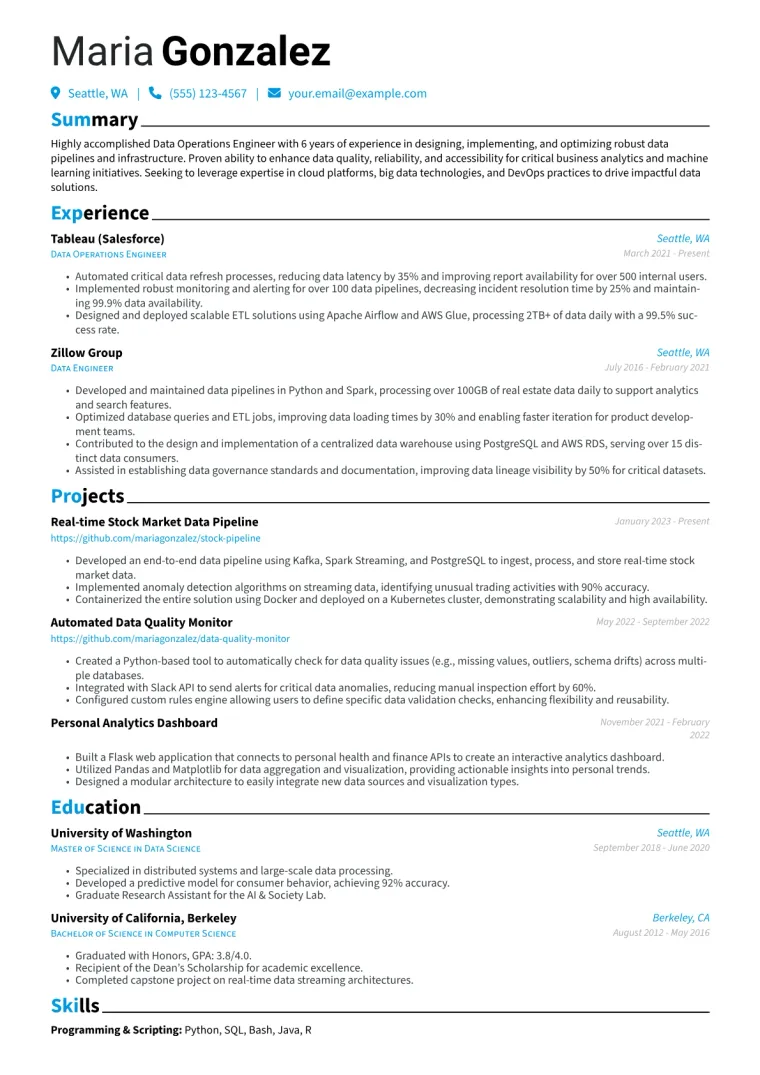
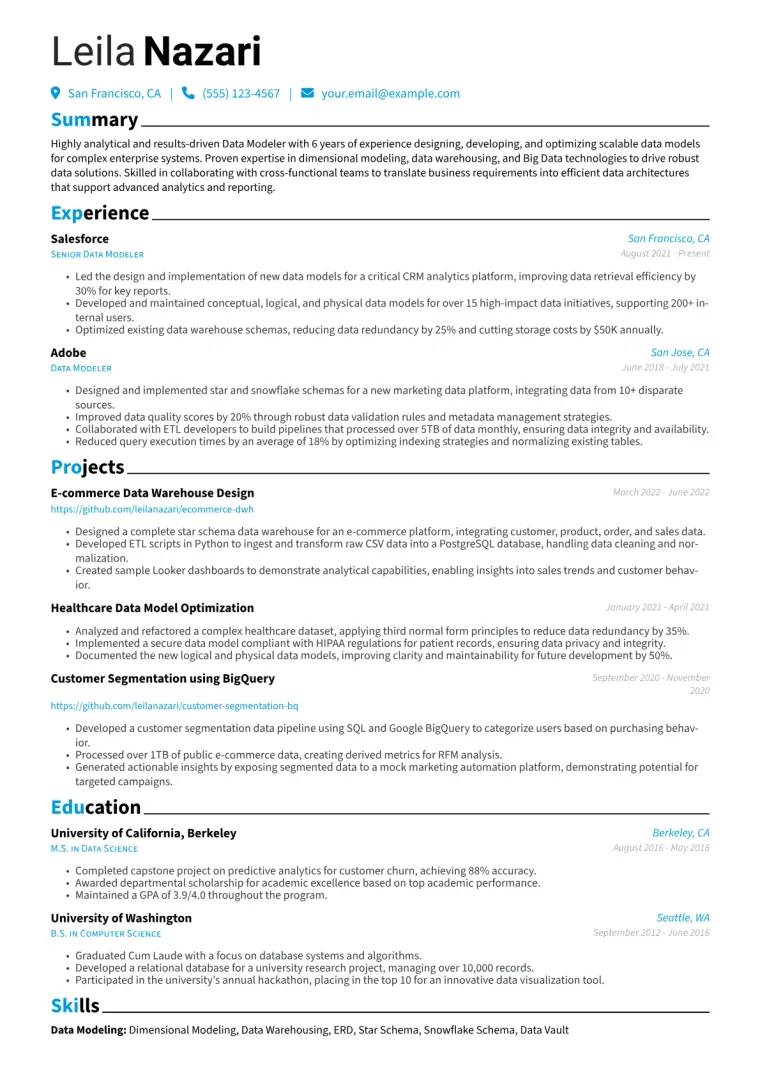
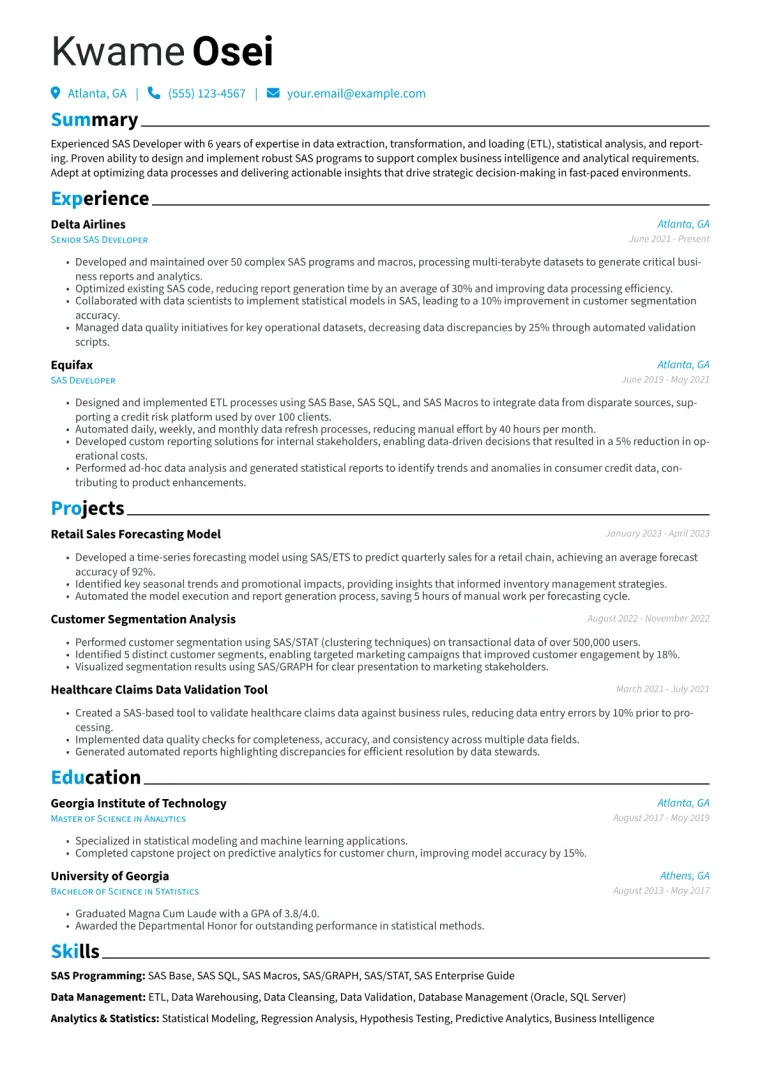
Data Product Analyst resume samples
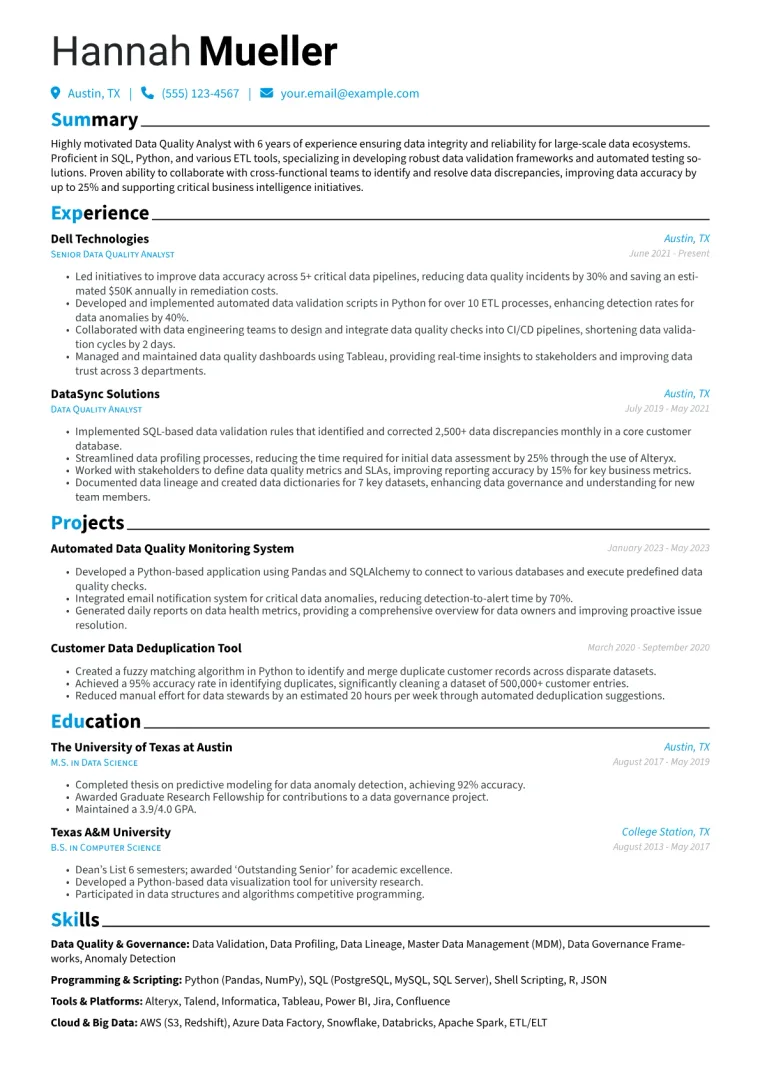
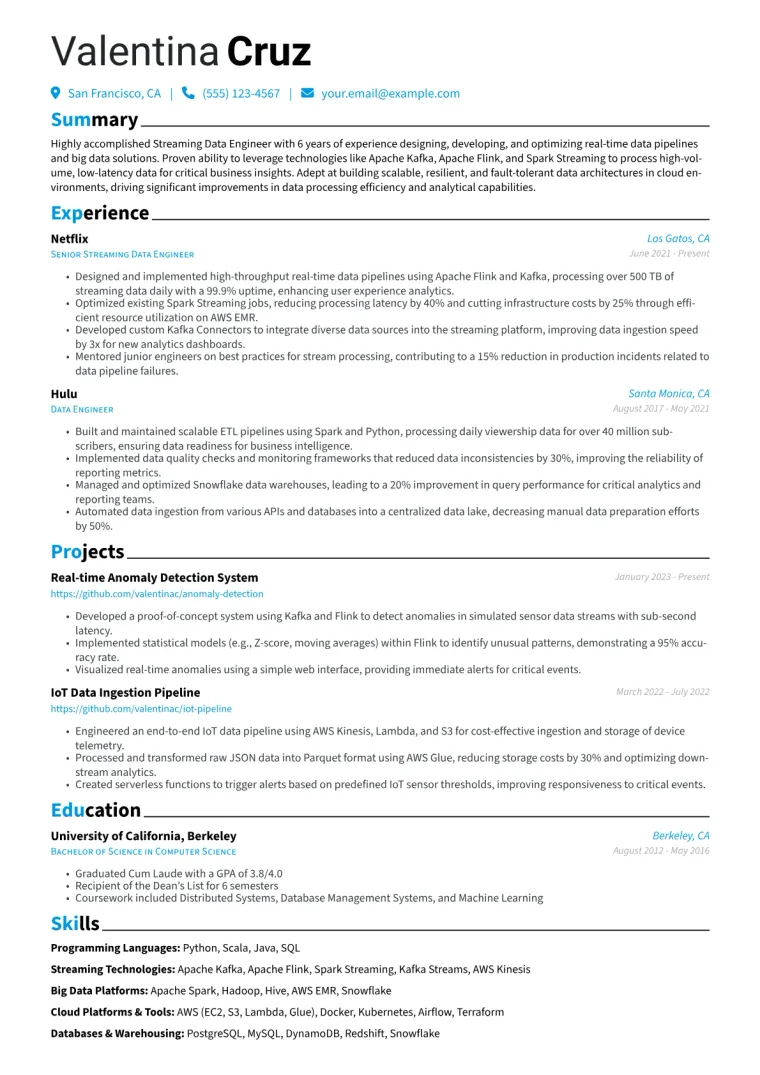
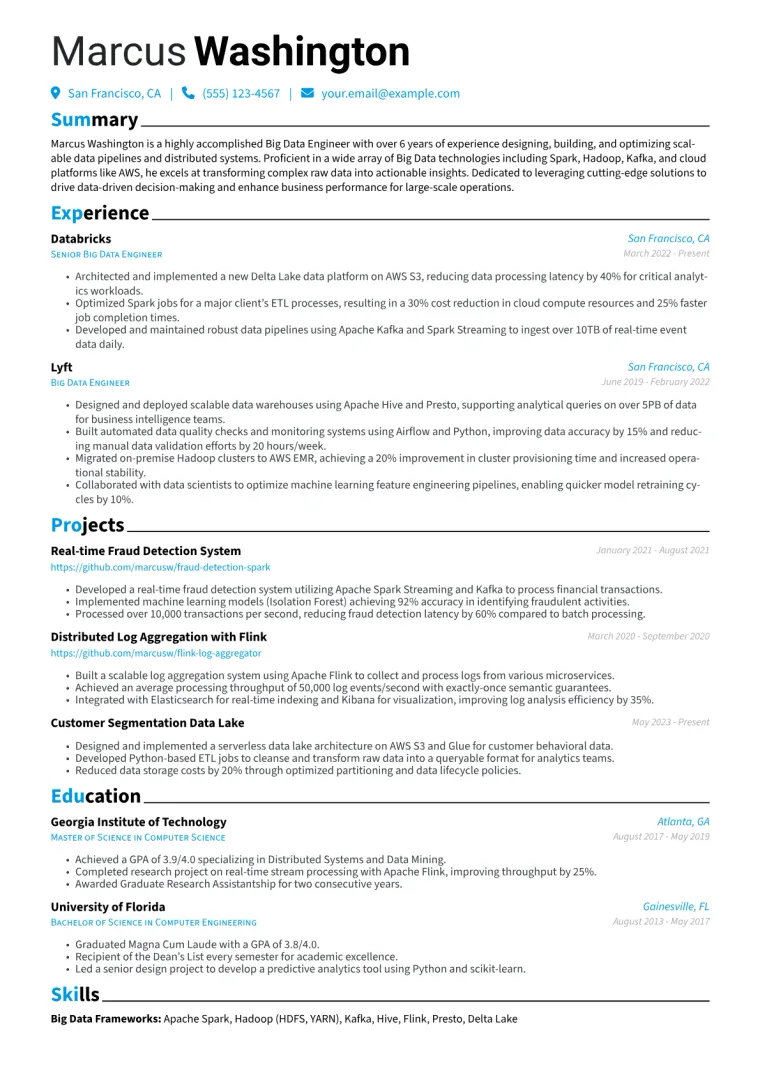
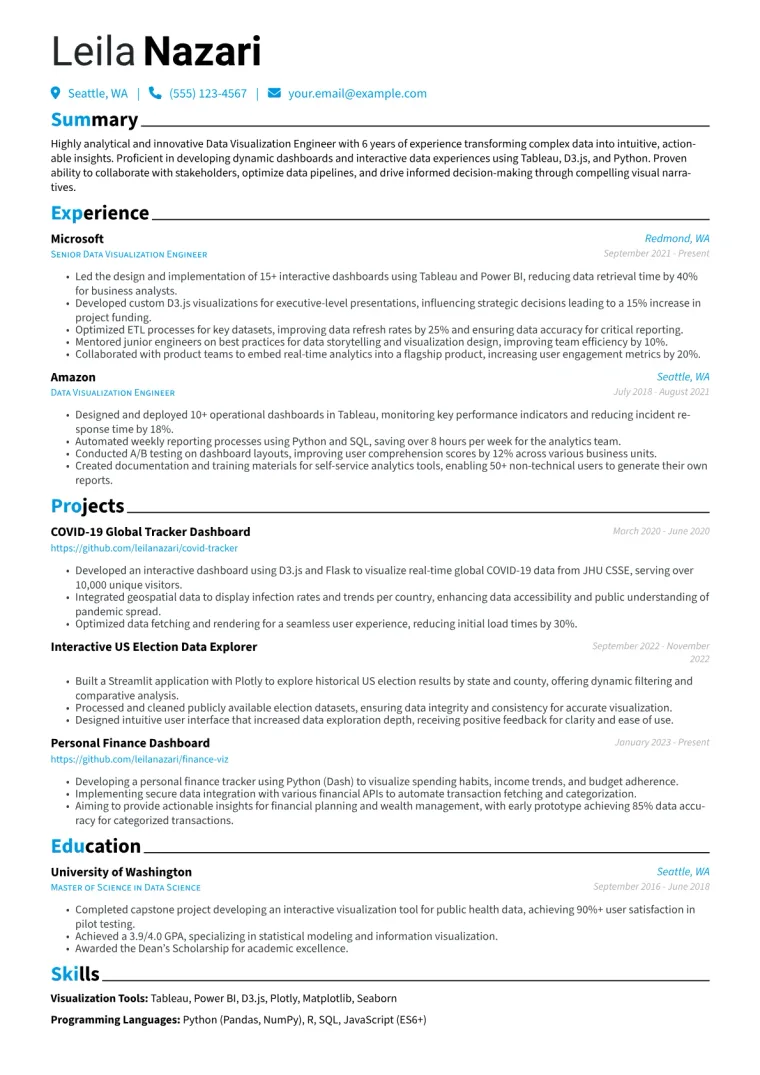
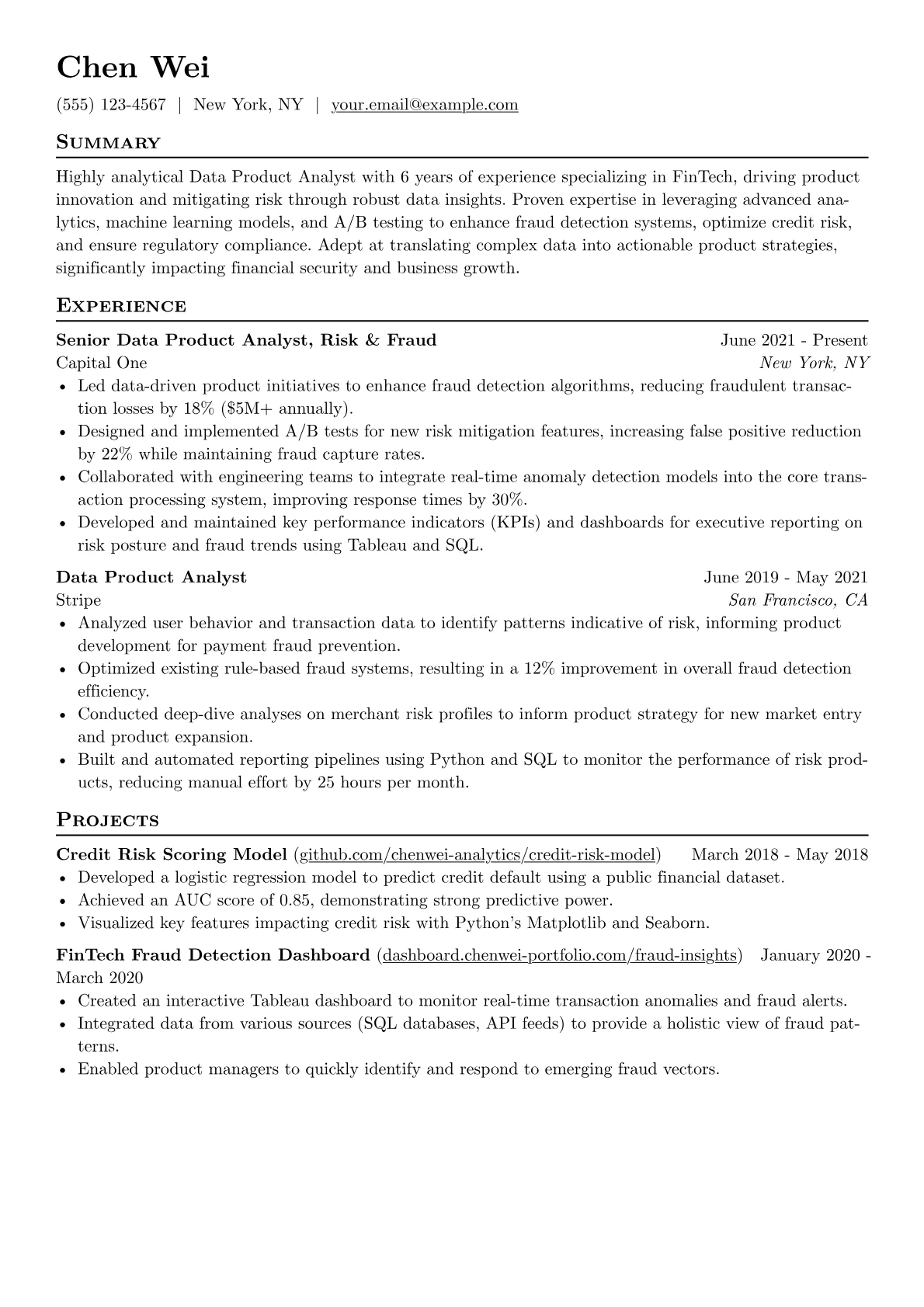
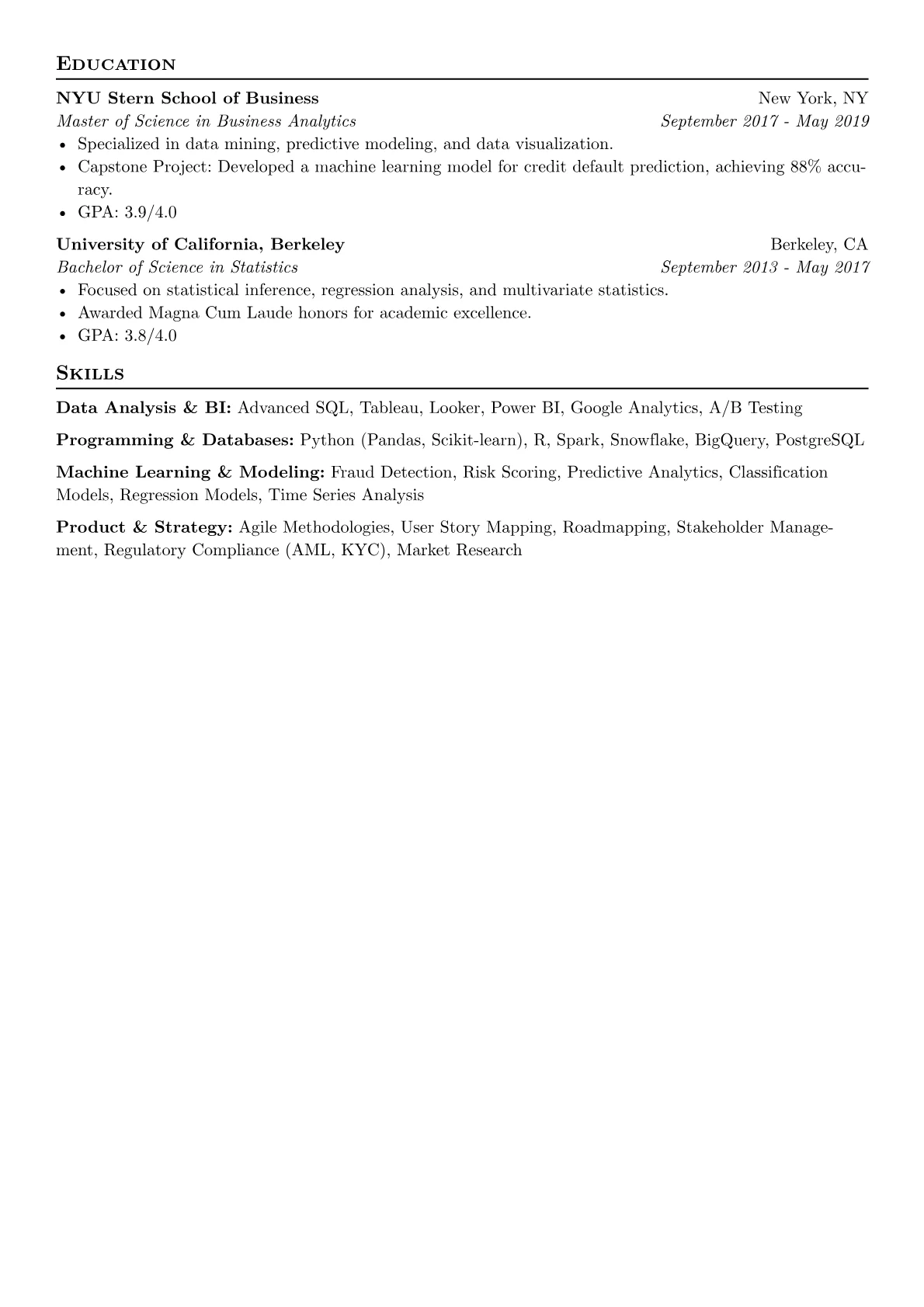
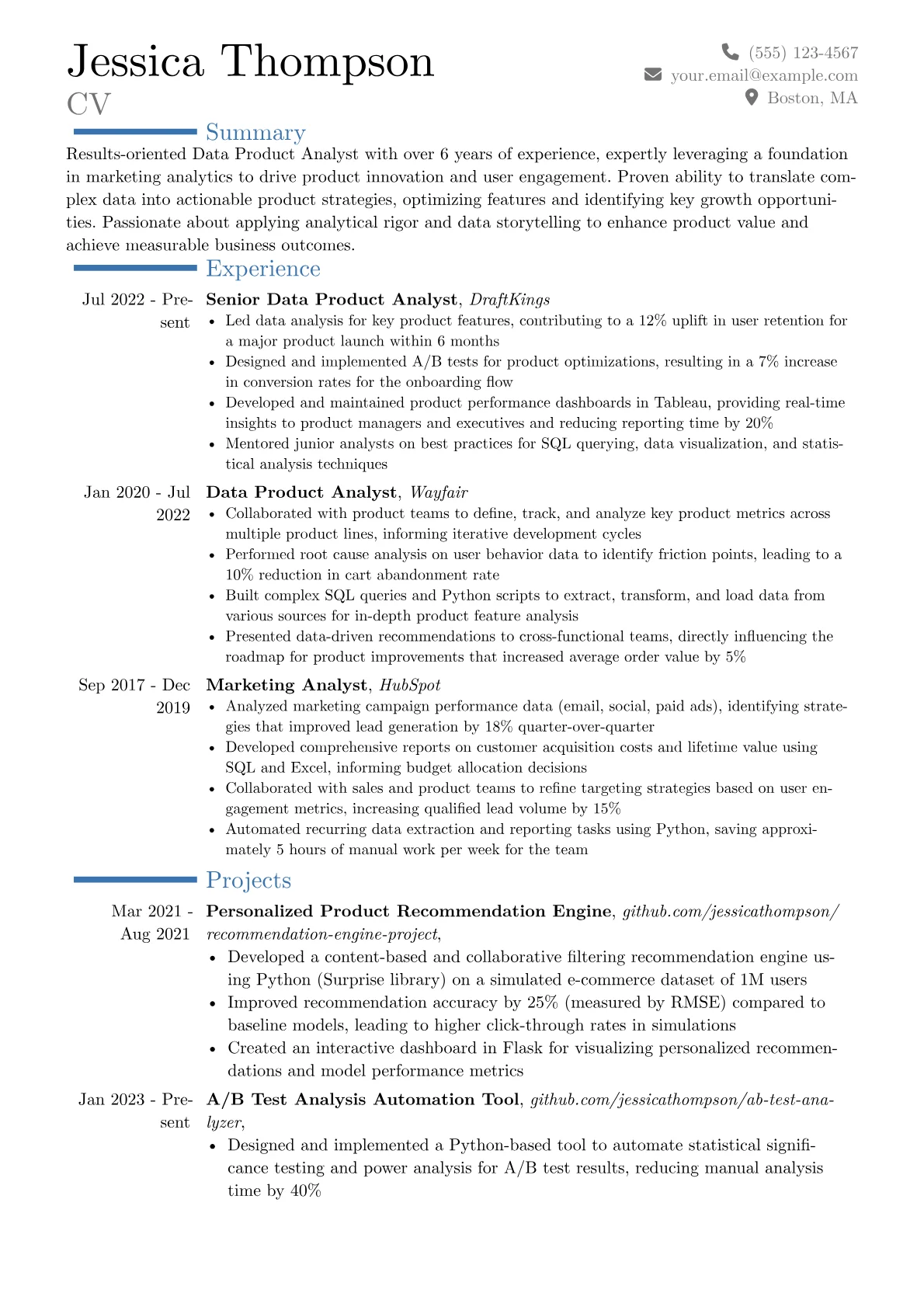
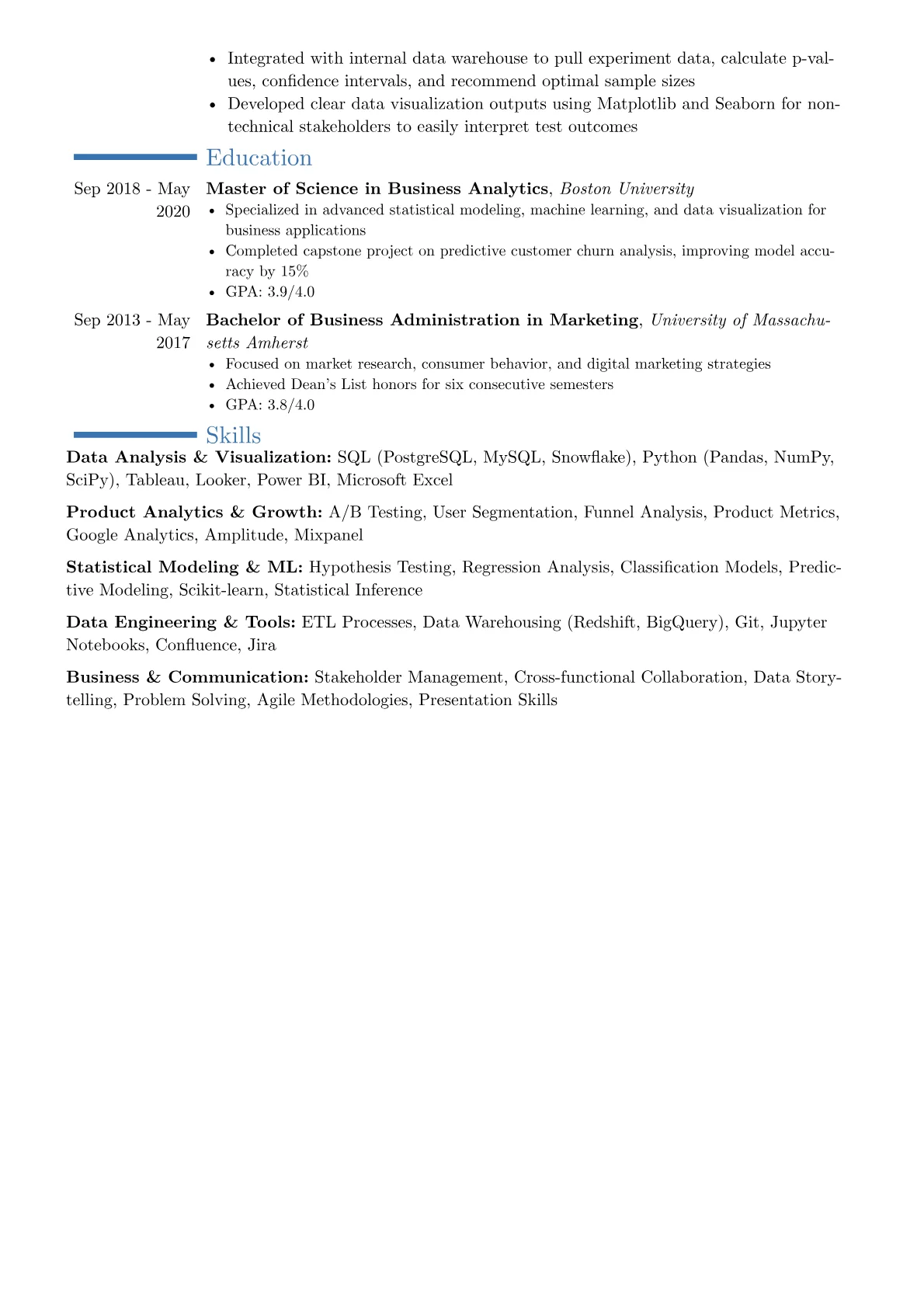
Three complete resumes, each in a different design.
Free to use. No download fee.
Editorial Notes
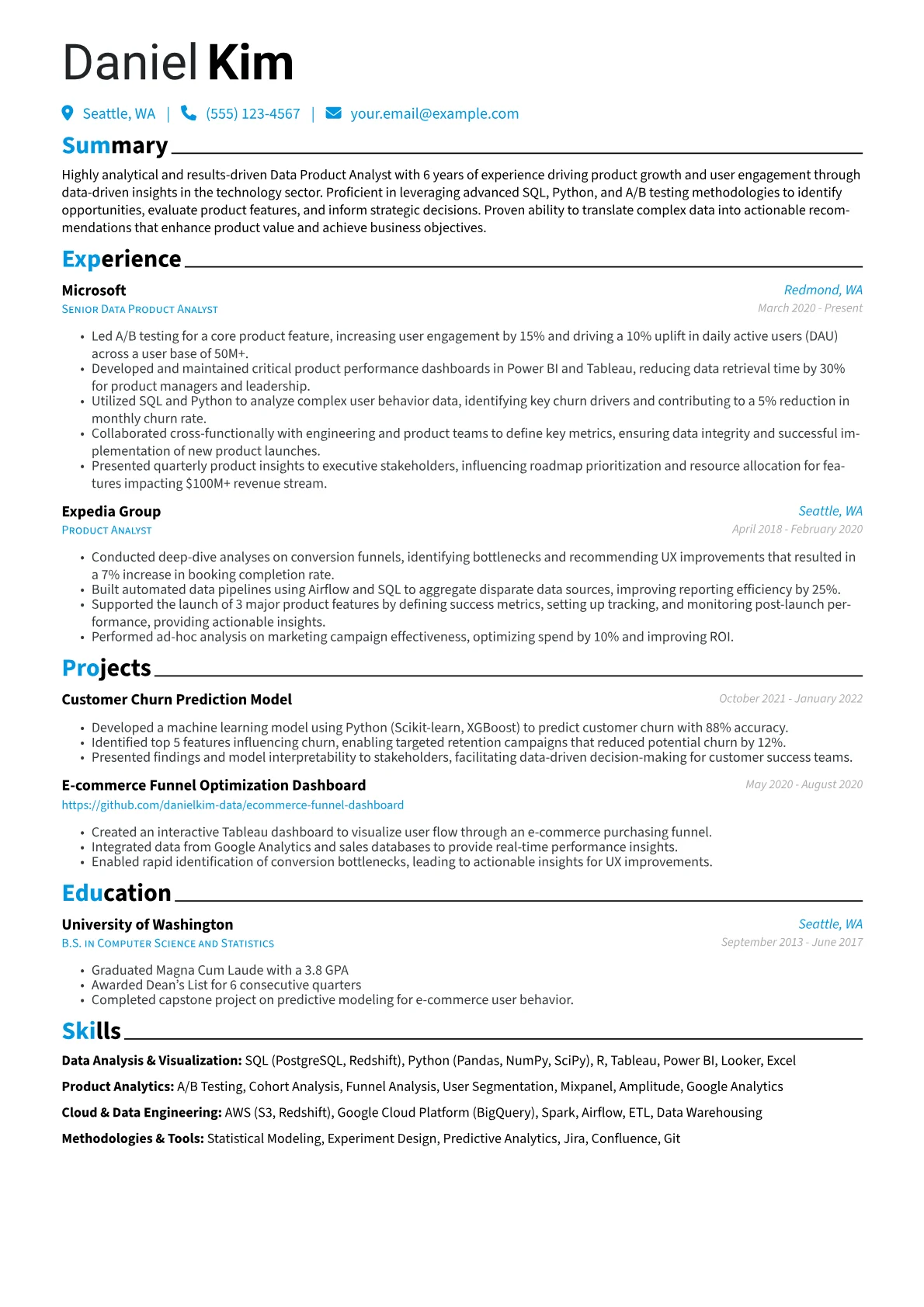
A compelling Data Product Analyst resume in Technology emphasizes concrete impact on product development and business outcomes. Hiring managers specifically look for demonstrated expertise in experimental design, A/B testing, and robust product metric analysis (e.g., DAU, conversion funnels). Achievements should quantify contributions to feature adoption, user retention, or revenue growth, showcasing proficiency with SQL, Python for analysis, and data visualization tools like Tableau. Certifications in product management or advanced analytics further signal a deep understanding of the product lifecycle and data-driven decision making.
This example resume effectively highlights a Data Product Analyst's critical capabilities. Achievements are precisely quantified, illustrating impact like "increased feature engagement by 18%" or "optimized user onboarding reducing churn by 12%." Technical skills are clearly grouped by category, separating data analysis tools from product strategy methodologies. Crucially, proficiencies in specific industry-standard platforms such as Snowflake, Amplitude, or Google Analytics are prominently displayed, assuring recruiters of immediate operational value without generic fluff.
This template was built with JobSprout and can be remixed to create your own tailored Data Product Analyst resume, ensuring your qualifications stand out effectively.
How useful was this template?
Example by JobSproutData Product Analyst resume summary example
Highly analytical and results-driven Data Product Analyst with 6 years of experience driving product growth and user engagement through data-driven insights in the technology sector. Proficient in leveraging advanced SQL, Python, and A/B testing methodologies to identify opportunities, evaluate product features, and inform strategic decisions. Proven ability to translate complex data into actionable recommendations that enhance product value and achieve business objectives.
Data Product Analyst salary by country
| Country | 25th percentile | Median | 75th percentile |
|---|---|---|---|
| US | $124,333 | $147,002 | $159,677 |
| UK | £43,750 | £61,667 | £72,500 |
| Canada | C$111,667 | C$136,667 | C$149,286 |
| Australia | A$86,395 | A$116,563 | A$143,841 |
| Germany | €95,500 | €121,000 | €146,500 |
| France | €57,500 | €78,897 | €110,037 |
| Netherlands | €51,771 | €60,750 | €71,146 |
| Italy | €26,591 | €42,778 | €54,583 |
| Austria | €42,500 | €57,500 | €72,500 |
| New Zealand | NZ$103,571 | NZ$125,000 | NZ$175,000 |
| India | ₹1,333,333 | ₹2,000,000 | ₹3,000,000 |
| Poland | zł185,941 | zł220,831 | zł255,720 |
Annual salaries in local currency, aggregated from live job postings via Adzuna. Figures refresh continuously and reflect advertised pay, not negotiated offers.
Data Product Analyst resume skills and keywords
Recruiters and applicant tracking systems scan Data Product Analyst resumes for these skills and keywords. Include the ones that match your experience and mirror the wording in the job description. Check your resume against them with the free ATS checker.
Hard skills
Tools & software
Certifications
Soft skills
Market Insights
Data Product Analyst
Salary Range
Salary Trend
Mar 2025 – Feb 2026
12-Month Trend
Based on advertised Software Engineering roles.
US market data · Source: Adzuna · Updated Mar 2026
Frequently Asked Questions
What's the best resume structure for a mid-level Data Product Analyst?
What key skills should a Data Product Analyst emphasize on their resume?
How do I write strong achievement bullets and a professional summary?
What optional sections are relevant for a Data Product Analyst?
How can I tailor my resume for a specific Data Product Analyst job?
The blank page is the hard part. Skip it.
Free to use. No download fee.
Related Articles
![How to Write a CV for Tech Applications [2026 Guide]](/thumbnails/cv-for-tech-applications.webp)
How to Write a CV for Tech Applications [2026 Guide]
Learn how to write a software engineering CV that gets interviews. Real template analysis, what hiring managers look for, and common mistakes to avoid.
![How to Write a CV That Shows Startup Experience [2026 Guide]](/thumbnails/cv-for-startup-engineers.webp)
How to Write a CV That Shows Startup Experience [2026 Guide]
Learn how to write a CV that showcases founding engineer and startup experience. Real example from JobSprout's creator, what hiring managers look for, and how to position breadth as a strength.