PDF or DOCX · up to 2MB
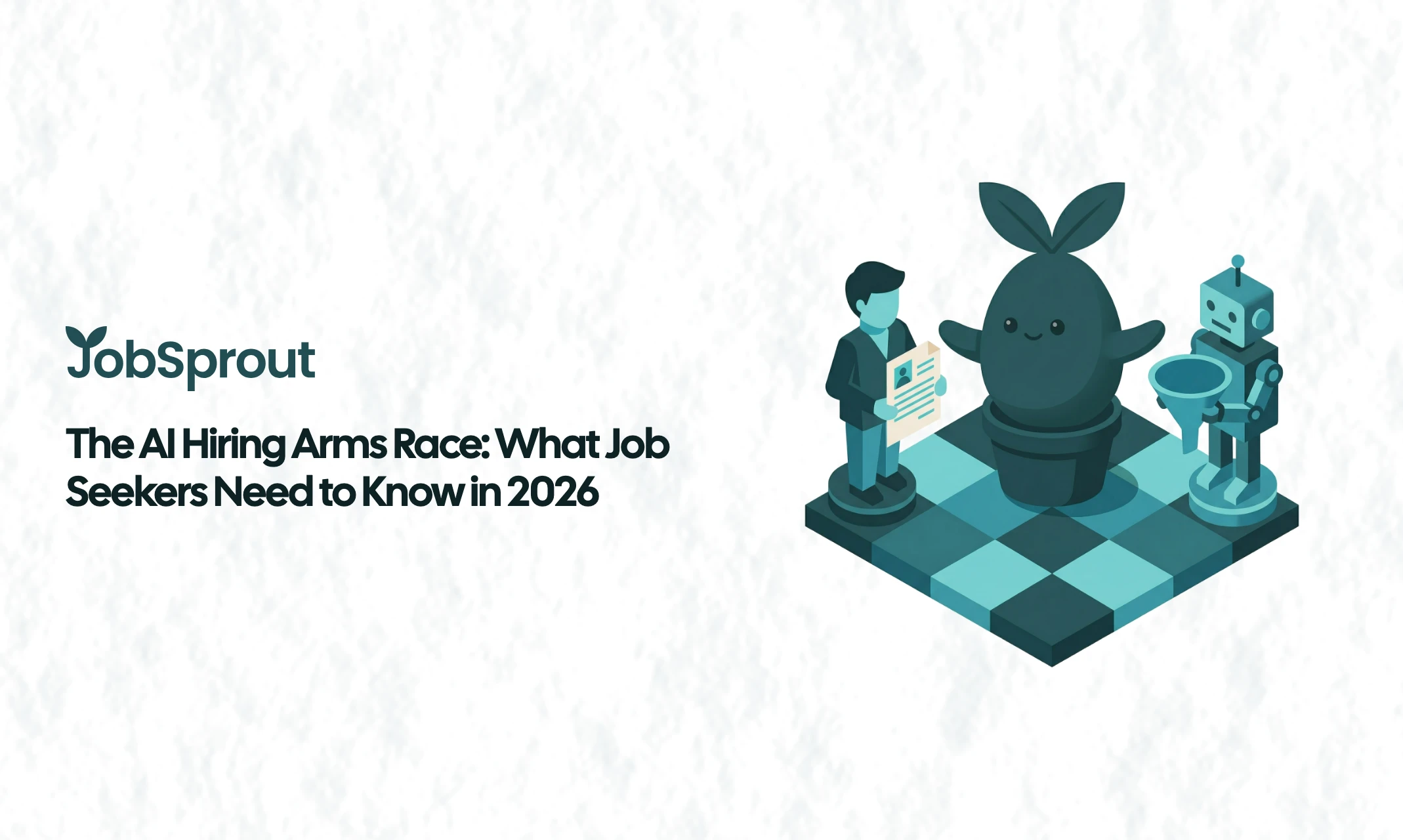
Job seekers use AI to apply. Employers use AI to filter. Trust is collapsing on both sides. Here's what's happening, what it means for you, and how to win.
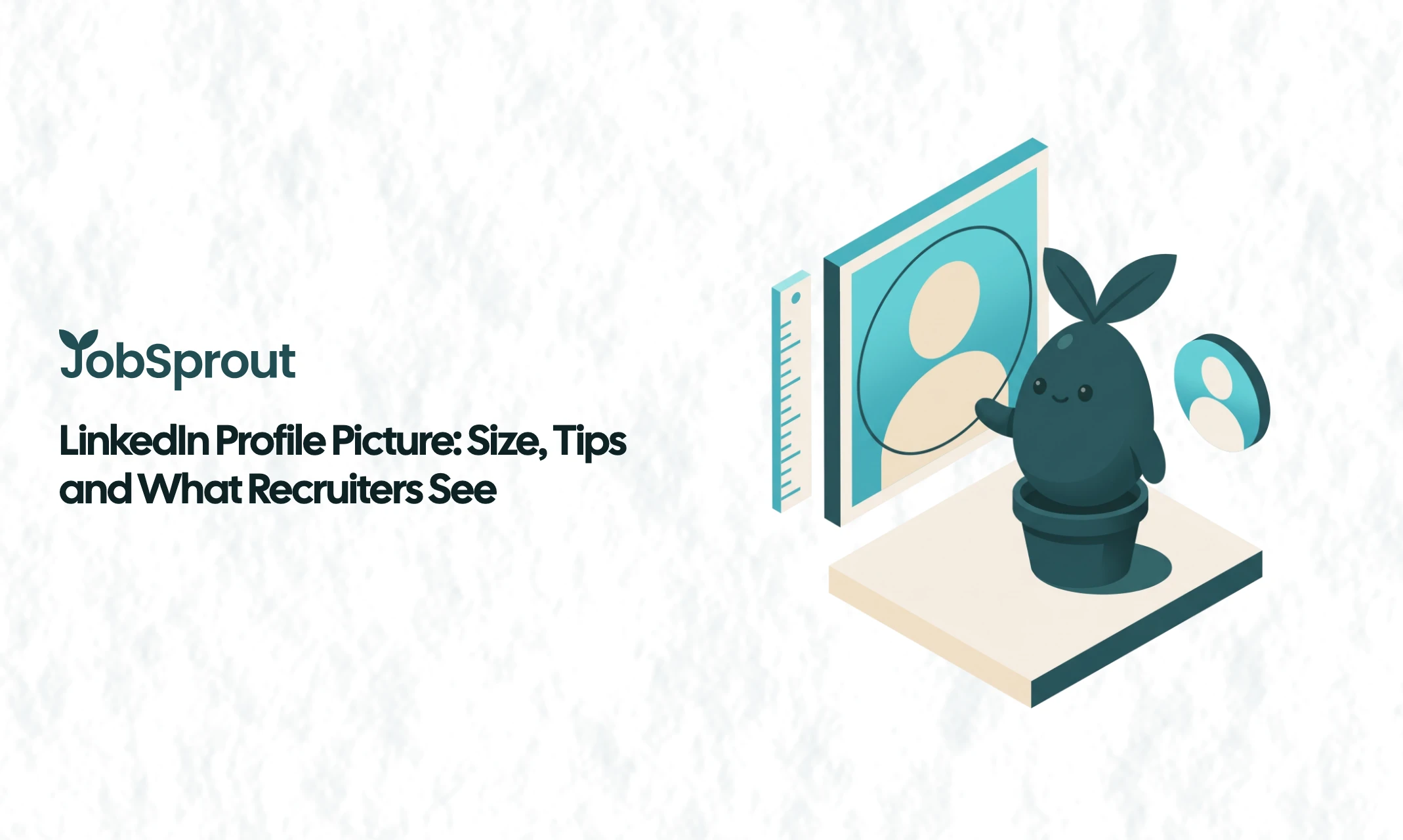
The right LinkedIn profile picture size (400 x 400 pixels or more, under 8MB), how to frame it for the circle crop, and what recruiters notice first.
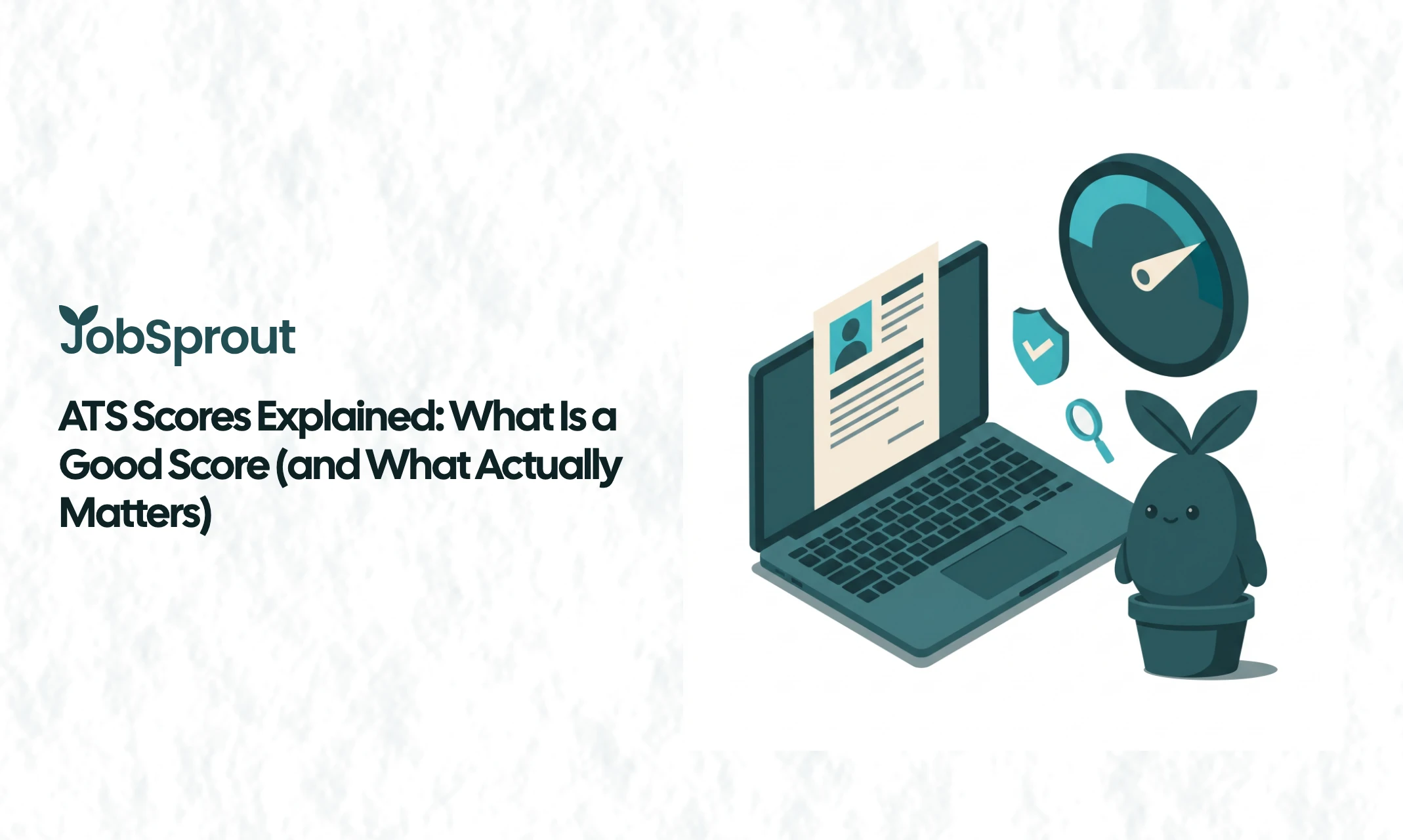
What an ATS score actually measures, what counts as a good resume ATS score, and why the "ATS auto-rejects 75% of resumes" claim is a myth. Includes real score bands and a free checker.
See exactly what a modern resume looks like in 2026 with visual examples, before-and-after comparisons, and breakdowns by career stage and industry. Includes ATS-friendly formatting tips.
Something has broken in how we hire.
LinkedIn recorded 11,000 applications per minute in June 2025. Applications are up 45% year over year. The average corporate job posting receives 250+ applications, with popular tech roles exceeding 500.
On the other side of the desk, 91% of employers now use AI somewhere in their hiring process. Automated screening, AI-powered ranking, chatbot interviews, and algorithmic matching are standard practice at most mid-to-large companies.
The result is what Greenhouse CEO Daniel Chait describes as an "AI doom loop": job seekers use AI to apply to more jobs, employers use AI to filter them out, both sides escalate, and the process gets worse for everyone.
This isn't a future scenario. It's happening right now. And understanding it is essential for anyone navigating the job market in 2026.
Let's start with the data, because the scale of this shift is hard to appreciate without it.
| Metric | Stat | Source |
|---|---|---|
| LinkedIn applications per minute (June 2025) | 11,000 | Fortune/Greenhouse |
| Application volume increase (year over year) | 45% | Fortune/Greenhouse |
| US job seekers applying to more jobs than last year | 49% | Greenhouse 2025 Survey |
| Average applications per corporate job posting | 250+ | Zippia |
| Fortune 500 companies using an ATS | 97.8% | Jobscan |
| Metric | Stat | Source |
|---|---|---|
| Employers using AI in hiring | 91% | Resume Now |
| Organisations using AI for HR tasks (up from 26% in 2024) | 43% | HireTruffle |
| Hiring managers who trust AI for faster decisions | 70% | Greenhouse |
| Companies expecting AI to run entire hiring by end of 2026 | 1 in 3 | Resume Genius |
| Recruiters spending up to half their week filtering spam | 34% | Greenhouse |
| Metric | Stat | Source |
|---|---|---|
| Job seekers who believe AI-screened hiring is fair | 8% | Greenhouse |
| US job seekers with decreased trust in hiring (past year) | 46% | Greenhouse |
| Job seekers blaming AI directly for decreased trust | 42% | Greenhouse |
| Gen Z entry-level workers who have lost trust | 62% | Greenhouse |
| Recruiters who have spotted candidate deception | 91% | Greenhouse |
Read those numbers again. 8% of job seekers think AI hiring is fair. That's a legitimacy crisis.
The arms race follows a predictable escalation pattern. Understanding it helps you see where you fit and how to break out of the cycle.
AI tools make it trivially easy to generate resumes, cover letters, and applications at scale. Services like auto-apply bots, one-click applications, and AI resume generators lower the effort per application from hours to minutes or even seconds. The rational response is to apply to more jobs, because the marginal cost of each application has dropped to near zero.
The surge in applications overwhelms human recruiters. A role that used to get 50 applications now gets 250+. Quality drops as volume rises, because many of those applications are low-effort AI-generated submissions. 90% of employers report an increase in spammy AI applications.
To handle the volume, employers lean more heavily on AI screening tools. ATS systems become more aggressive in filtering. AI-powered ranking algorithms prioritise candidates algorithmically. Some companies introduce chatbot-based initial screenings. The goal is to reduce the stack to a manageable number before a human gets involved.
You can at least see your own resume the way that first filter does: our free ATS resume checker scores its machine-readability and shows what a parser would miss, no sign-up needed.
Facing opaque AI screening that they can't see or understand, candidates respond with their own escalation. 41% admit to using prompt injections: hidden white text in resumes designed to fool ATS systems. Another 52% are considering it. Meanwhile, AI-generated applications become more sophisticated, making them harder to detect but often no more genuine.
Job seekers feel the system is rigged. 42% blame AI directly. Employers feel overwhelmed by fake or inflated applications. 65% of hiring managers have caught applicants using AI deceptively. Trust collapses on both sides, and the hiring process, which was already imperfect, becomes actively adversarial.
"It's easier than ever to apply for jobs, but it's harder and harder to get a job." That's how Greenhouse CEO Daniel Chait summarised the current state. The doom loop is self-reinforcing: more AI on one side triggers more AI on the other, and the quality of the interaction degrades for everyone.
I wrote about this in our piece on whether employers can detect AI content, but it bears repeating here because the hypocrisy is at the core of the trust crisis.
Employers are using AI to:
And they're penalising candidates for using AI to:
The same employers who deploy AI to evaluate you in seconds are suspicious of you using AI to present yourself. 79% want to regulate candidate AI use, while 91% use AI in their own process.
This double standard erodes trust. And it's one of the reasons only 8% of job seekers consider AI hiring fair. Whether you agree with the double standard or not, understanding it is essential for navigating the current market.
The AI arms race exists within a broader context of hiring dysfunction. It's worth understanding these additional factors because they compound the problem.
69% of US job seekers report encountering fake or already-filled job postings. Companies post roles they have no intention of filling, sometimes to build a talent pipeline, sometimes to appear to be growing, and sometimes because the internal process hasn't caught up with the hiring decision.
This means a significant portion of the applications being submitted, processed, and filtered by AI on both sides are going into a void. Candidates spend time applying. AI screens the applications. And nothing happens, because the job didn't exist.
While application volumes surge, actual hiring is contracting at the entry level. UK tech companies cut graduate roles by 46% from 2023 to 2024, with another projected 53% drop by 2026. Advertised entry-level jobs hit their lowest share on record in Q1 2025.
For new graduates, this is particularly brutal: more applications, more AI screening, fewer actual openings, and a higher proportion of ghost jobs. It's no coincidence that 62% of Gen Z workers have lost trust in the hiring process.
Understanding the arms race is useful, but only if it changes how you approach your search. Here are the practical implications.
The AI doom loop tempts you to apply to more jobs. Don't fall for it. If your generic, AI-generated resume has a 1% interview rate, sending 200 of them gets you 2 interviews. If a well-tailored, specific resume has a 12% rate, you need 17 applications for the same result, with far less wasted time.
Quality over quantity isn't just career advice cliche. It's the mathematically correct strategy. Our guide to tailoring your resume shows you how to customise each application in 15 minutes. For a complete resume foundation to tailor from, see our guide to writing a resume.
In a world flooded with AI-generated applications, genuine human voice is the differentiator. Specific details. Real metrics. Unique experiences. The things AI can't invent are the things that get you interviews.
This is the core argument of our article on AI detection in resumes: the candidates getting flagged aren't the ones who used AI. They're the ones who let AI replace their actual experience with corporate filler.
Almost every large employer runs an ATS, so parsing cleanly is the first hurdle. It is worth saying what that hurdle actually is: the widely quoted claim that ATS auto-rejects 75% of resumes traces to a 2012 vendor sales pitch with no study behind it. What an ATS really does is parse your file into fields and rank the result, and a CV that parses badly arrives incomplete. So ATS optimisation isn't about gaming the system with hidden text or keyword stuffing. It's about clear formatting, relevant keywords, and well-structured content. Our ATS-friendly resume guide covers the fundamentals.
Here's the uncomfortable truth: the most effective way to avoid the AI hiring arms race is to not enter it at all. Referred candidates are 4-5x more likely to be hired than applicants through job boards. Referrals skip ATS screening, go directly to hiring managers, and come with built-in credibility.
This doesn't mean you shouldn't apply online. It means that investing time in relationships, informational interviews, and genuine professional connections generates a higher return than sending more applications into the void.
The smart approach to AI in your job search is the same approach smart employers take with AI in hiring: human in the loop. Use AI to draft, refine, and optimise. Don't use it to replace your thinking, your voice, or your genuine experience.
The distinction between AI-assisted and AI-generated is the difference between standing out and being filtered out. I wrote about this extensively in our piece on why ChatGPT alone isn't enough and in our AI skills guide.
Not every company is trapped in the doom loop. Some are actively rethinking their approach. Understanding their strategies gives you an edge in identifying which companies are worth applying to.
A growing number of employers are moving away from resume screening entirely for initial evaluation. Instead, they use skills assessments, work samples, or project-based evaluations to identify candidates. If you see a job posting that mentions a "take-home assignment" or "skills assessment," that's a positive signal. The company is trying to evaluate you on what you can do, not what AI wrote on your behalf.
The best hiring systems use AI for what it's good at (sorting, scheduling, initial pattern matching) and humans for what they're good at (evaluating fit, judging nuance, making final decisions). Indeed's approach of using AI-powered recommendations while keeping human decision-making authority is an example of this model.
Companies that use structured interviews (the same questions for every candidate, scored on consistent rubrics) produce more equitable outcomes and are less susceptible to the gaming that plagues AI-screened processes.
Some employers are beginning to disclose how they use AI in hiring. Look for companies that are transparent about their process. Opacity is a red flag, both ethically and practically.
The arms race is drawing regulatory attention, which will reshape the playing field over the next 12-24 months.
In regulated jurisdictions, you may have the right to:
These rights are still emerging and vary by location, but the direction is clear: governments are moving to ensure AI hiring is transparent and accountable.
The most effective strategy in an arms race is often not to escalate. Here's a practical framework for navigating the current market without getting caught in the doom loop.
Apply to fewer jobs, but invest more in each application. 10 highly tailored applications will outperform 100 generic ones. Use the 15-minute tailoring workflow from our resume guide to customise efficiently.
Assemble evidence of your capabilities that AI can't fabricate:
Allocate at least 30% of your job search time to networking:
Use AI tools to:
Don't use AI tools to:
The current market rewards patience over panic. Panic-applying doesn't work, and the data consistently shows that strategic, targeted job searches produce better outcomes faster.
Predicting the future of AI hiring is speculative, but some trajectories are clear:
Short-term (2026-2027):
Medium-term (2027-2029):
Long-term (2029+):
The one certainty: the status quo is unsustainable. Something will change. The candidates and employers who adapt first will have the advantage.
No. Mass-applying with AI tools is the primary driver of the doom loop, and it's demonstrably ineffective for individual job seekers. The volume of applications you send has diminishing returns. Your time is better spent on fewer, highly tailored applications supplemented by networking. If you're using a tool that applies to 50 jobs while you sleep, you're contributing to the problem and unlikely to benefit from it.
No. 41% of job seekers admit to using them, but it's a short-term tactic with significant risks. ATS systems are being updated to detect hidden text, and if a human reviewer discovers it (which happens more than you'd think), your credibility is destroyed. It's also increasingly likely to violate terms of service on application platforms.
Yes. Multiple studies, including research from MIT and HBR, have documented biases in AI hiring tools. These include preference for certain name patterns, penalisation of career gaps (disproportionately affecting women and caregivers), and ordering biases where the first resume reviewed receives preferential treatment. The EU AI Act specifically targets these issues by requiring bias audits for hiring AI.
Unlikely in the near term. 1 in 3 companies expect AI to run their entire hiring process by end of 2026, but "run" likely means automating logistics, not eliminating human judgement. The most effective hiring systems use AI for efficiency (sorting, scheduling, initial matching) and humans for evaluation (cultural fit, nuanced assessment, final decisions). Companies that automate human judgement out of hiring tend to get worse outcomes, not better ones.
Three things today: (1) Stop mass-applying and start tailoring. Our tailoring guide shows you how. (2) Quantify your achievements with specific numbers that AI can't fabricate. (3) Reach out to one person at a company you're interested in. That single conversation is worth more than 50 untailored applications.
The irony of the AI hiring arms race is that the winning strategy is the most human one: genuine expertise, real relationships, and specific evidence of your value.
AI has made it trivially easy to produce a mediocre application. It hasn't made it any easier to produce a great one. That's where the opportunity lies. In a market flooded with AI-generated noise, a resume with real metrics, a cover letter with genuine company research, and a connection who can vouch for your work quality are more valuable than ever.
The arms race rewards those who refuse to play it on its terms. Be strategic. Be specific. Be human.
If you want a tool that supports that approach, JobSprout is built for it. Your profile, your experience, your voice. Paste a job description and tailor your CV in one click, with a word-level diff showing every change so you stay in control. AI helps you present it all professionally, with clean Typst typesetting and intelligent writing assistance. Not a mass-apply bot. Not a template generator. A platform that helps you put your best foot forward, one application at a time.
Start building your resume with JobSprout. Free to create and download.
Questions or thoughts on the AI hiring landscape? I'd love to hear your perspective.
Email: david@jobsprout.ai LinkedIn: linkedin.com/in/david-culemann