Academia to Industry Resume Example
 Example by JobSprout
Free to use. No download fee.
How useful was this template?
Academia to Industry resume samples
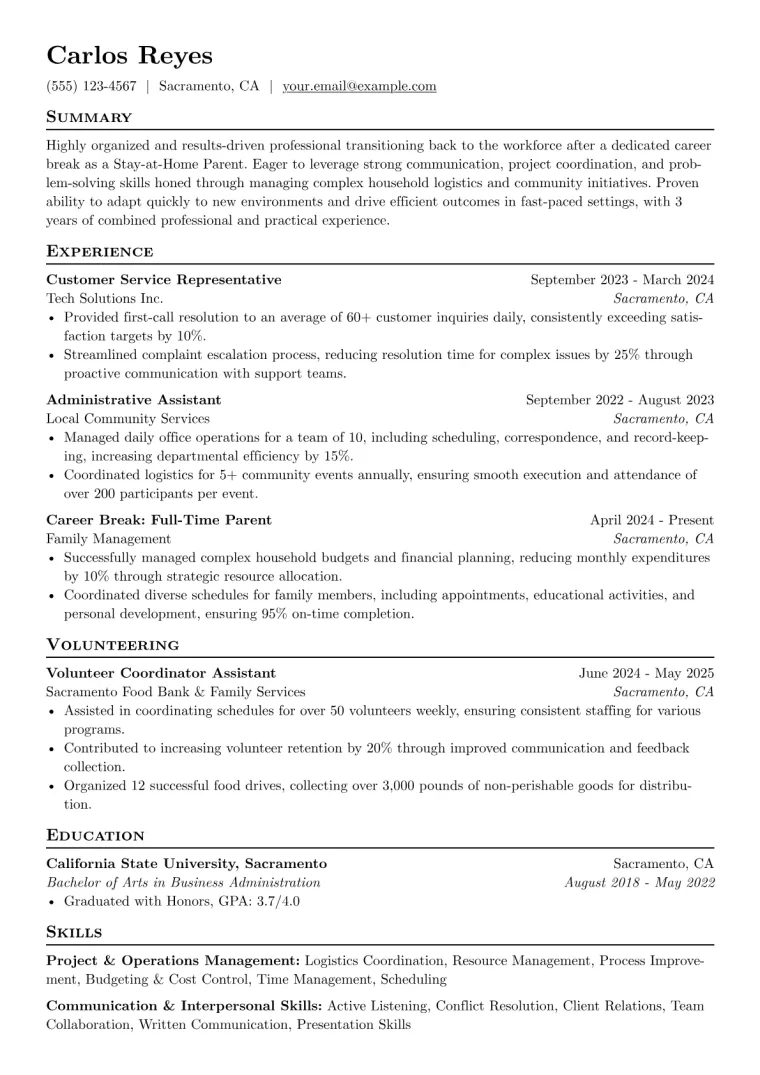
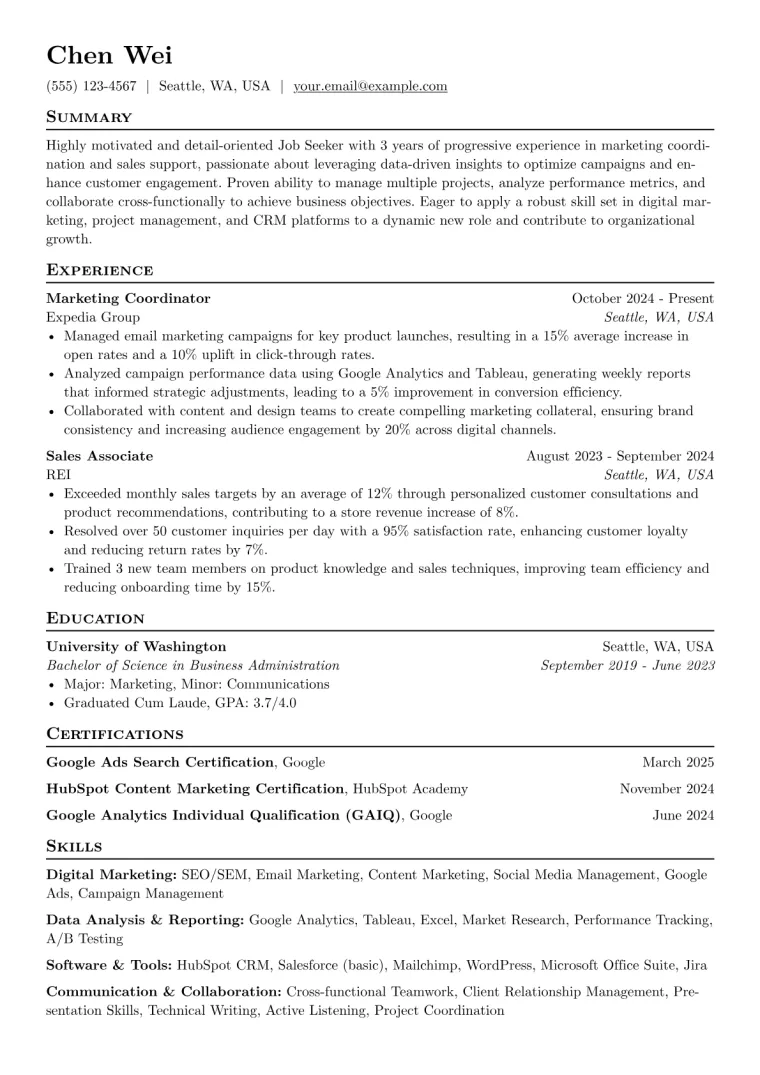
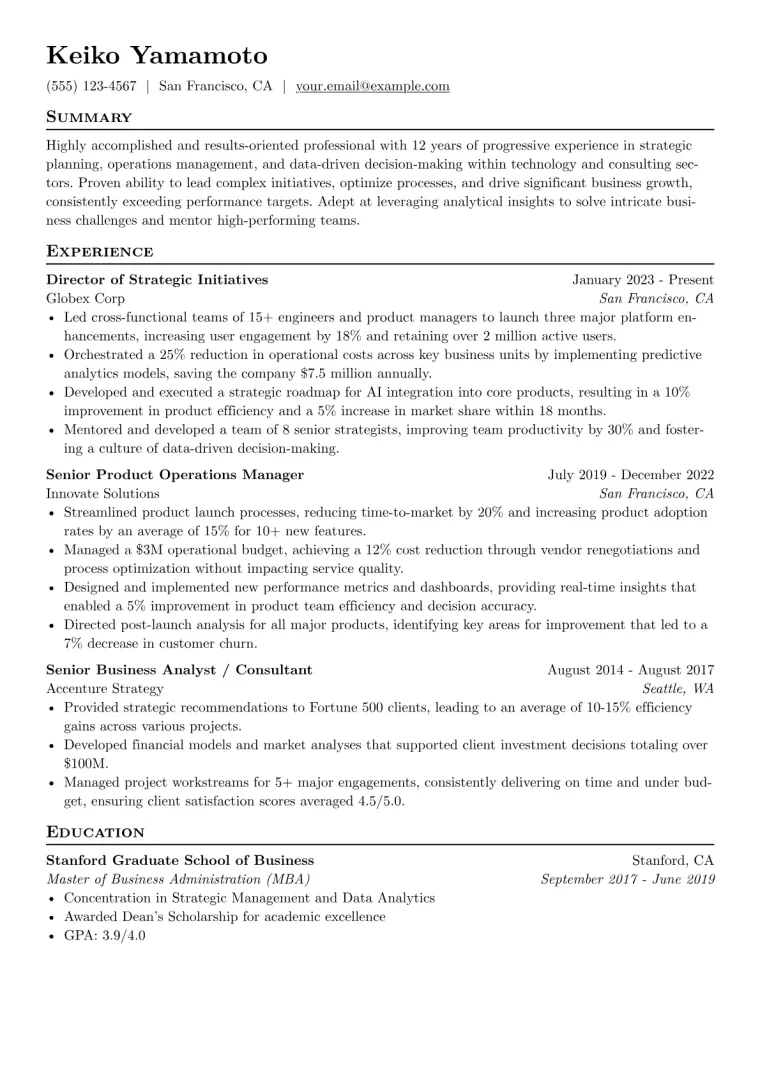
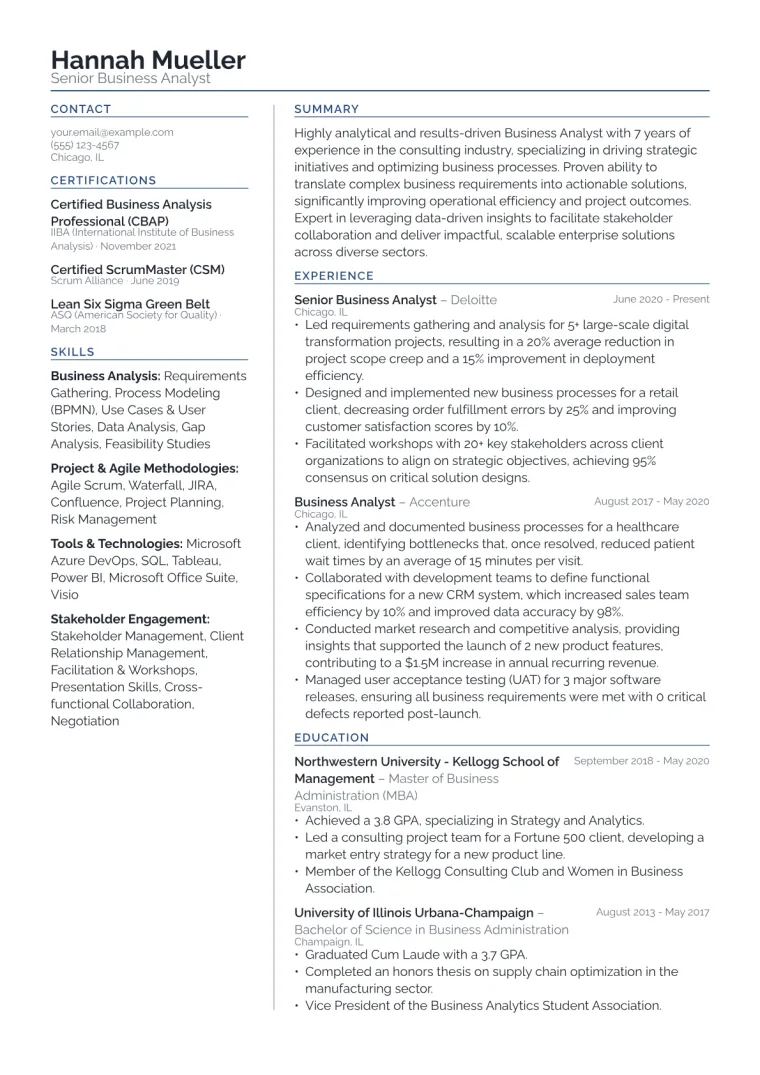
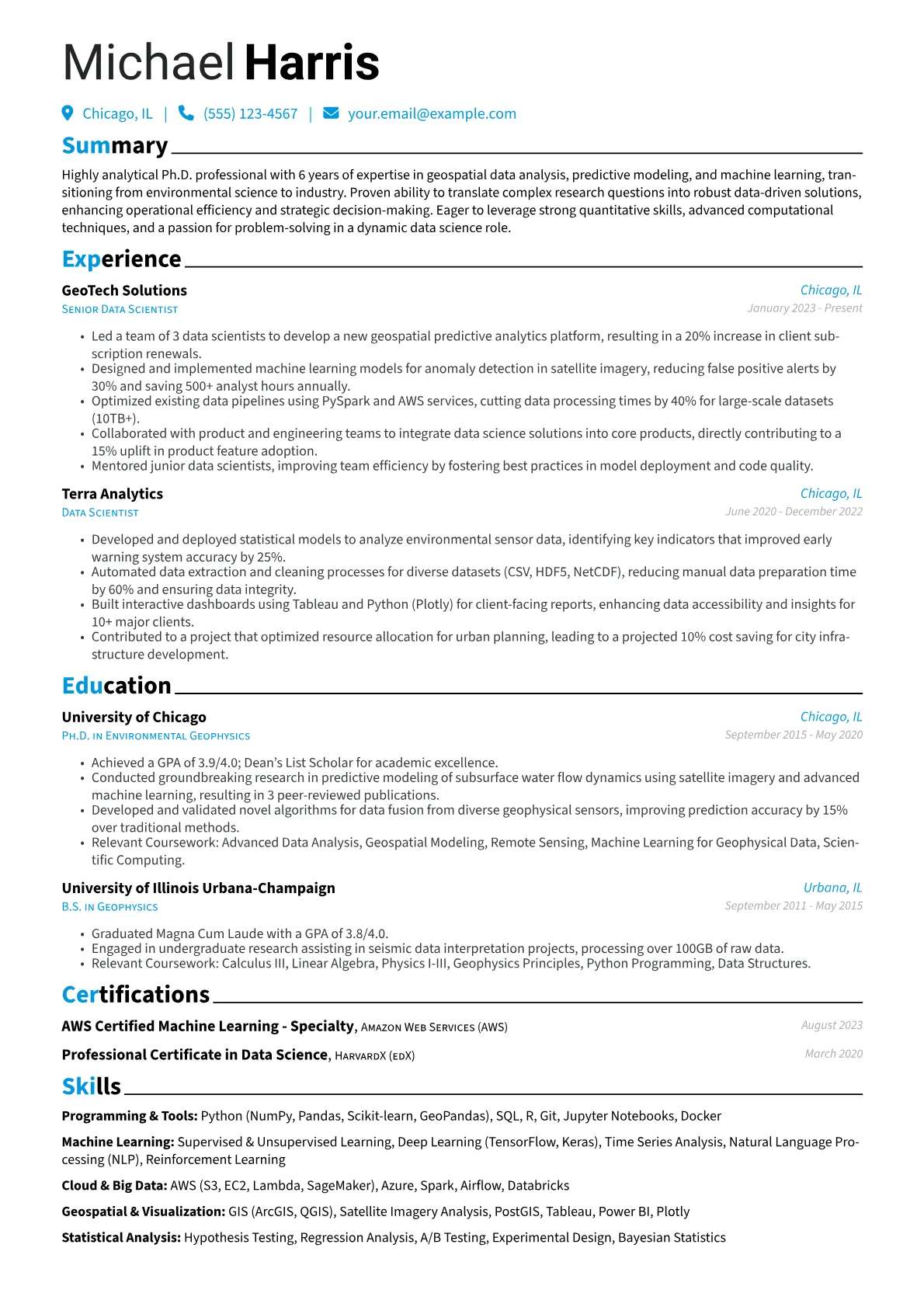
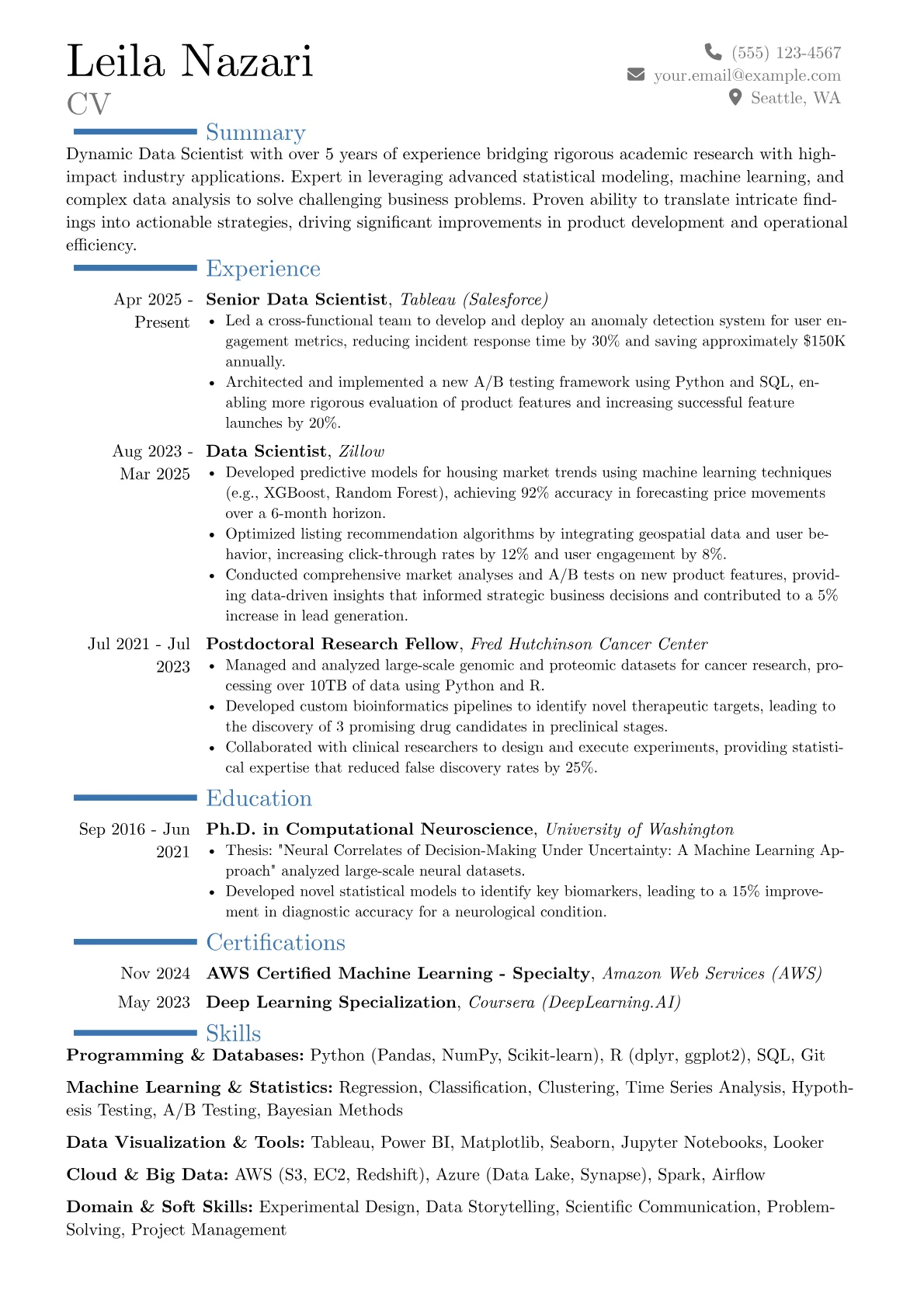
Three complete resumes, each in a different design.
Free to use. No download fee.
What makes a strong Academia to Industry resume?
Transitioning from academia to industry, particularly for mid-level roles, requires a resume that strategically translates research acumen into business value. Hiring managers in data science and biotech often seek demonstrable impact beyond publications, prioritizing achievements that quantify efficiency gains, cost savings, or improved processes. Key terminology, such as machine learning algorithms like XGBoost and Random Forest, along with cloud platforms like AWS, signal direct industry readiness. Certifications like AWS Certified Cloud Practitioner or Certified Analytics Professional further validate practical skills, while effective communication and cross-functional collaboration are essential for success in corporate environments.
Why this example works
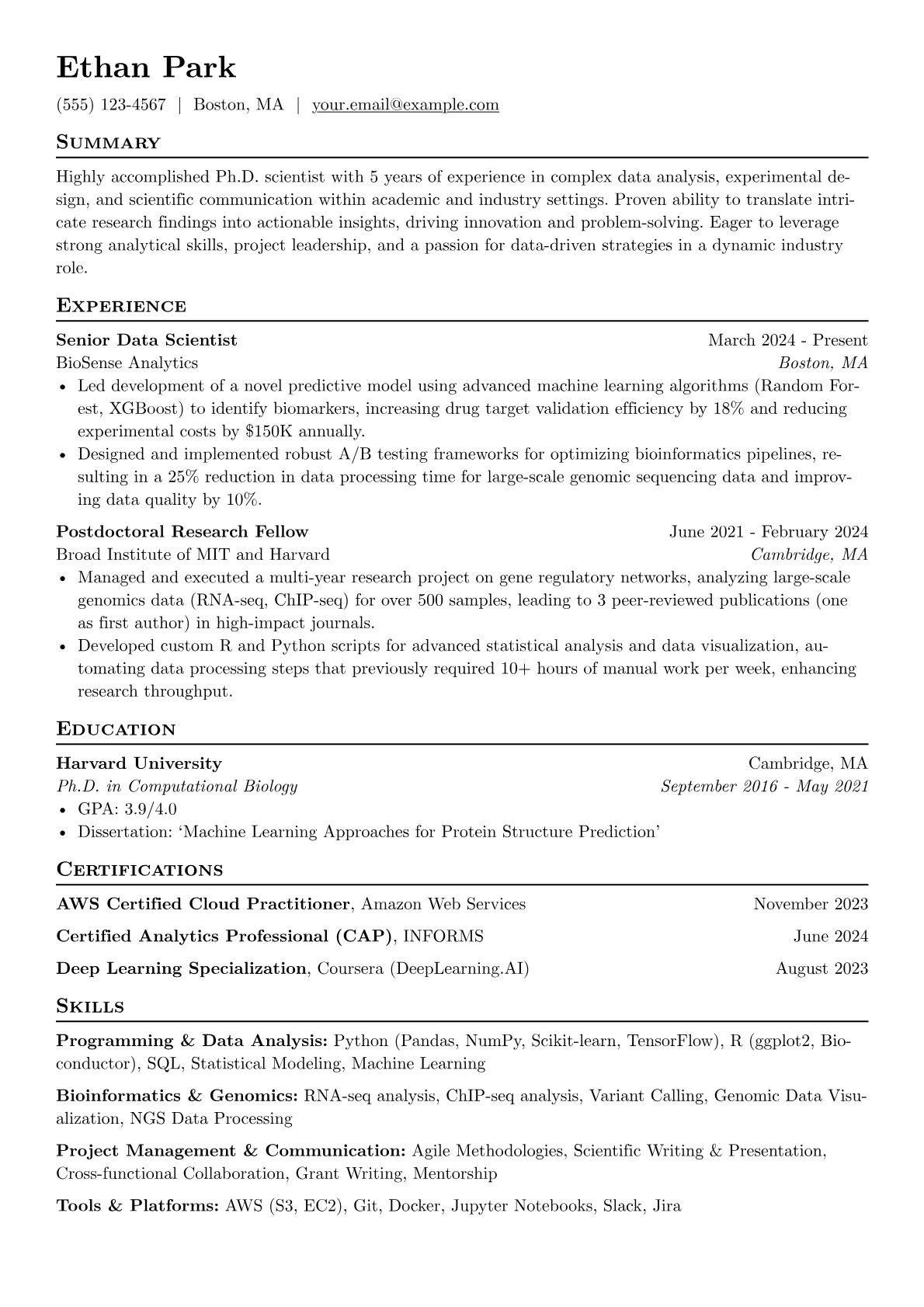
Ethan Park's example resume excels at this critical translation. His current role as Senior Data Scientist immediately showcases quantifiable contributions, such as leading development of a model increasing validation efficiency by 18% and reducing experimental costs by $150K annually. The previous Postdoctoral Research Fellow position also highlights transferable skills, including managing a multi-year project and securing a $75,000 grant, alongside technical expertise in RNA-seq and ChIP-seq analysis. The clear “Skills” section, detailing Python, R, SQL, AWS, and Agile Methodologies, along with relevant certifications, strongly positions him for advanced industry roles.
How useful was this template?
Example by JobSproutAcademia to Industry resume summary example
Highly accomplished Ph.D. scientist with 5 years of experience in complex data analysis, experimental design, and scientific communication within academic and industry settings. Proven ability to translate intricate research findings into actionable insights, driving innovation and problem-solving. Eager to leverage strong analytical skills, project leadership, and a passion for data-driven strategies in a dynamic industry role.
Academia to Industry resume skills and keywords
Recruiters and applicant tracking systems scan Academia to Industry resumes for these skills and keywords. Include the ones that match your experience and mirror the wording in the job description. Check your resume against them with the free ATS checker.
Hard skills
Tools & software
Certifications
Soft skills
Frequently Asked Questions
How do I make my academic CV look good for an industry job application?
What research skills from academia are valuable in industry? How do I translate them effectively?
How can I write a resume summary that bridges my academic background to industry roles?
Are academic publications or presentations relevant on an industry resume, or should I leave them out?
How does JobSprout's 'Remix with AI' help me adapt my academic resume for different industry job descriptions?
The blank page is the hard part. Skip it.
Free to use. No download fee.