


By David Culemann. Updated .
What a Europass CV is
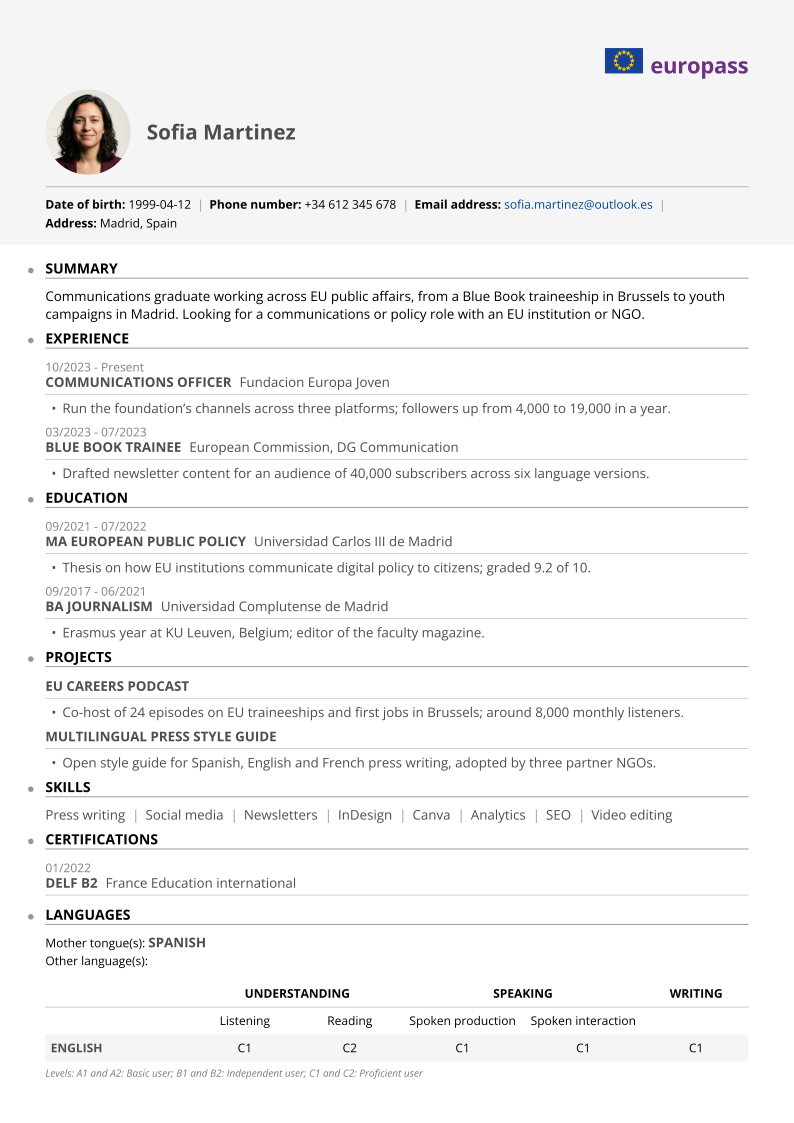
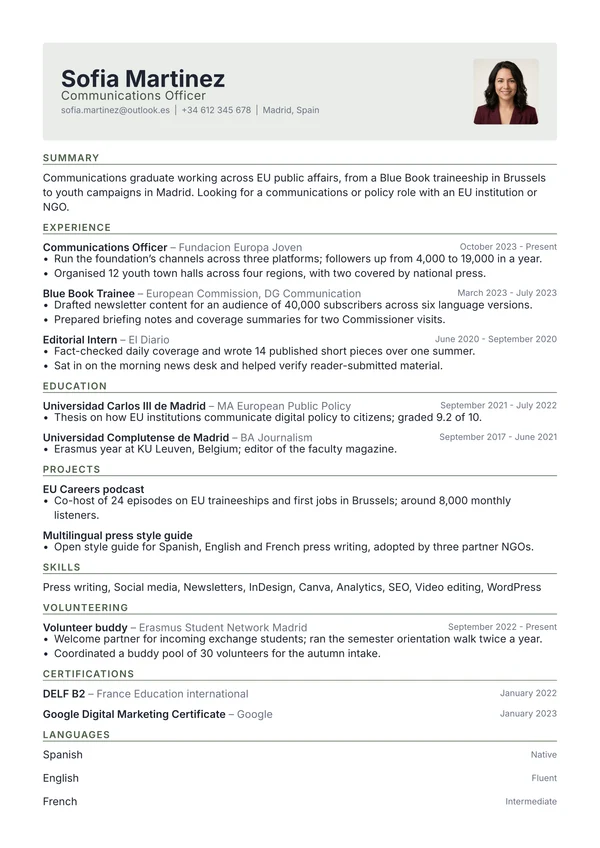
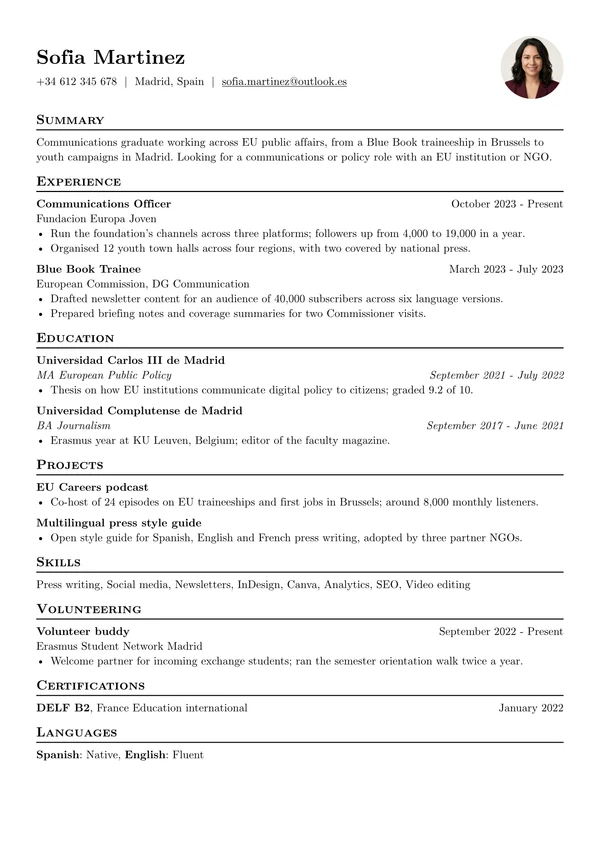
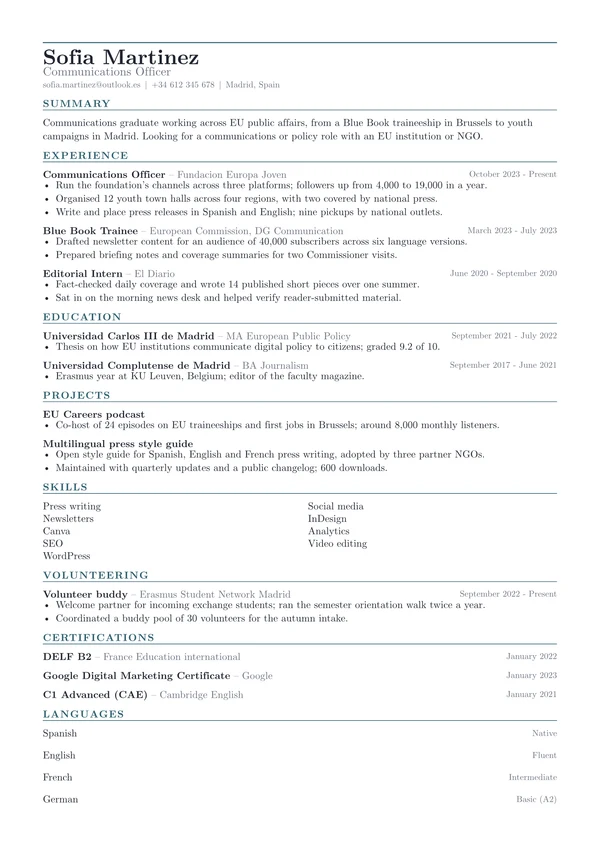
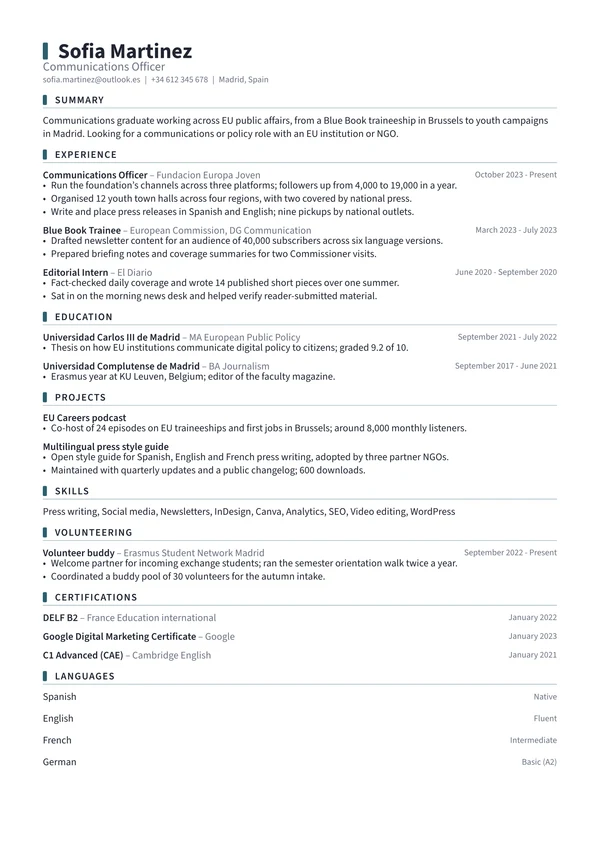
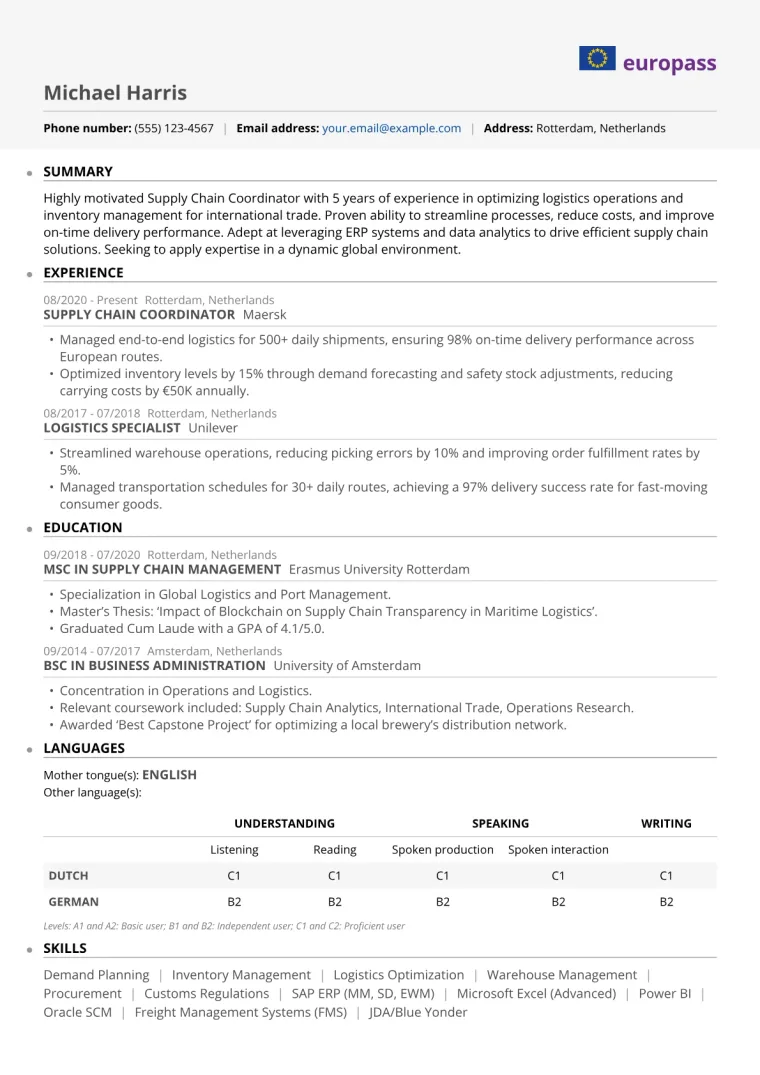
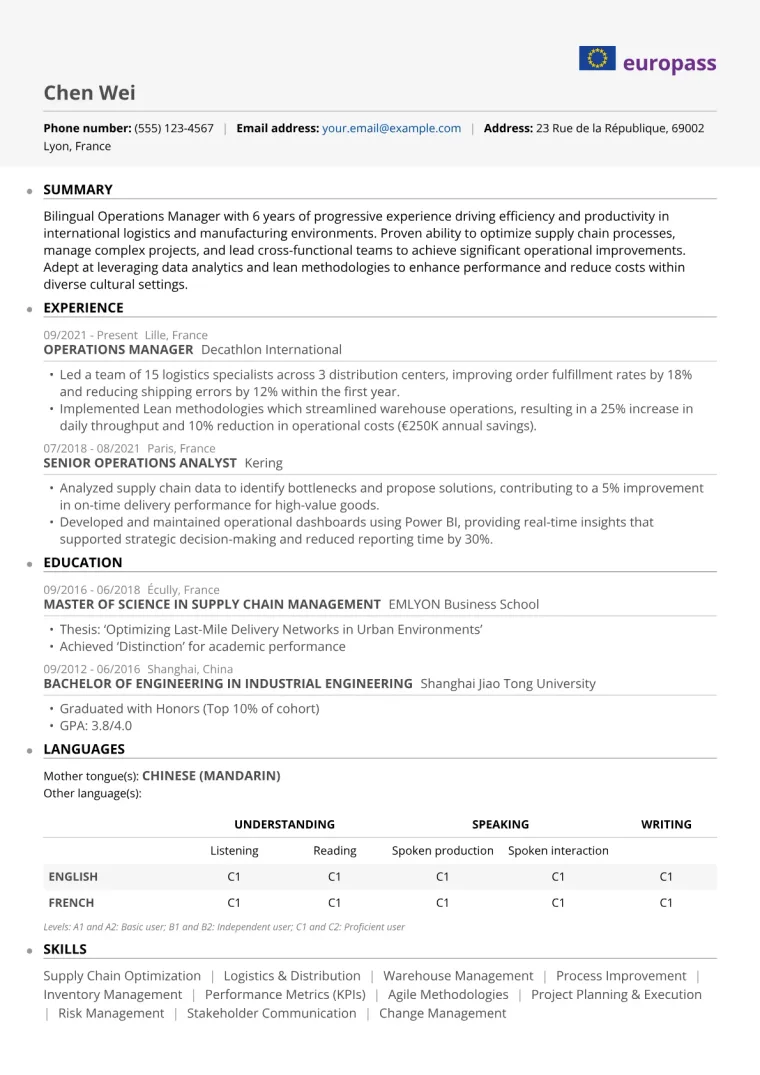
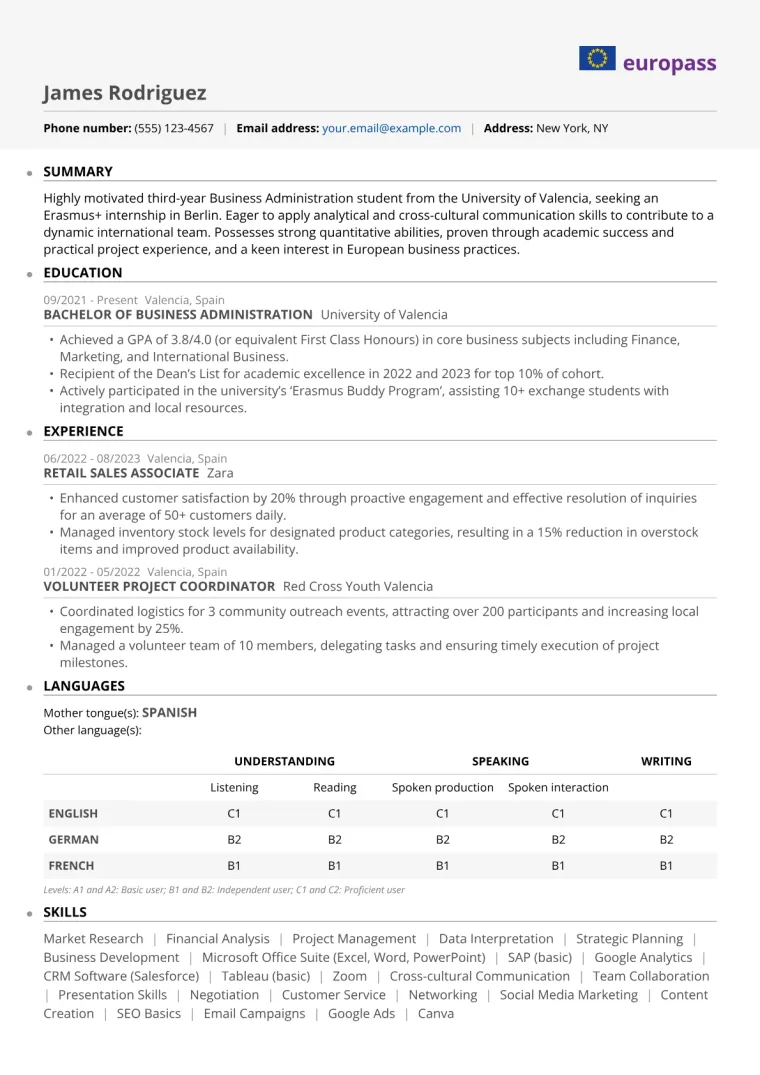
Europass is the European Union's platform for describing skills and qualifications. Its CV editor offers several layouts, with information and sections you choose for the application.
The official editor at europass.europa.eu is free to use, including as a guest. You can also save a profile to create several CVs from the same information.
Who asks for a Europass CV
- The European Banking Authority's graduate traineeships list a Europass CV among the application documents.
- EUIPO's young-professional traineeships ask for a Europass CV in English.
- The Master in Advanced Materials: Innovative Recycling (AMIR) includes a Europass CV in its required documents.
Importing a CV into Europass
The official editor can reopen its own Europass PDF and XML files. A PDF downloaded from JobSprout cannot be reopened there; edit your saved resume in JobSprout instead.
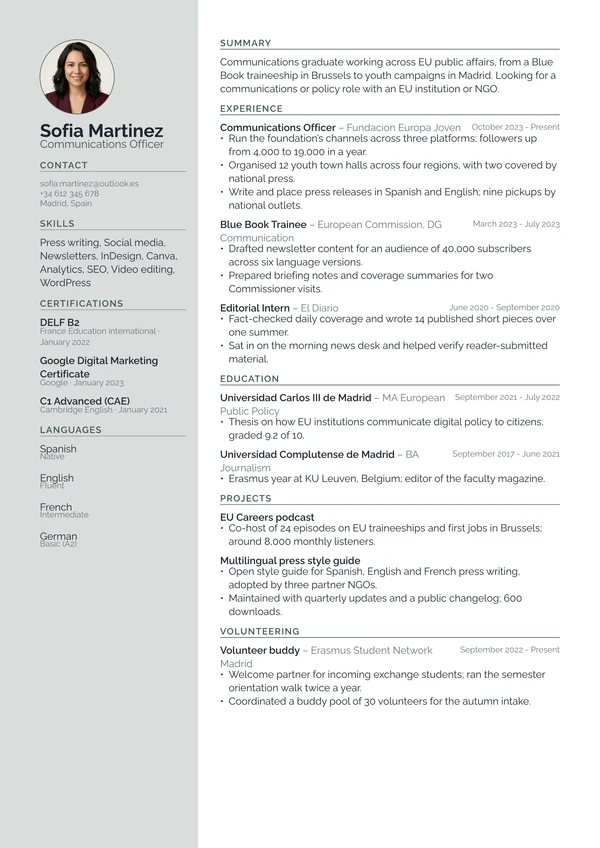
Upload your existing resume here as a PDF or .docx file and edit it in the Europass layout. Save an older .doc file as .docx before uploading.
How to fill in each section
Only your name is required. Everything else is optional, so fill in what helps your application and leave the rest out.
Personal information
Name, email, phone and city are enough for most applications. Photo, date of birth, nationality and gender are all optional in the official format; add them where local practice expects them (see the table below) and leave them off elsewhere.
Work experience
Newest job first. Each entry gets its dates (the classic Europass style is MM/YYYY), your job title, the employer, and the city and country. Under it, write three to five lines on what you did, and lead each with a result someone could check, like a number or a deadline you met.
Education and training
Same order and the same date format. Give the qualification's name as it appears on your certificate, and if a reader abroad will not recognise it, add a few words in brackets saying what it is.
Language skills
List your mother tongue first, then rate every other language separately for listening, reading, spoken production, spoken interaction and writing. The levels are the CEFR scale explained below. Rate what you could defend in an interview held in that language, and keep the levels consistent with any certificate you attach.
Digital skills
The current Europass CV lists digital skills under headings you choose, such as "Data analysis" or "Design tools". There are no levels on the CV itself. Europass also runs a separate, optional digital skills test based on the EU's DigComp framework, and you can store the result in your profile.
Everything else
The editor offers sections for certifications, projects, publications, volunteering, a driving licence and more. Add one only when it has something specific in it. An empty-sounding "Hobbies" section costs more attention than it earns.
Language levels, explained
Europass uses the Council of Europe's Common European Framework of Reference for Languages (CEFR). Six levels, in three groups:
| Level | What it means |
|---|---|
| A1 Basic user | Everyday expressions and very basic phrases, if people speak slowly. |
| A2 Basic user | Simple, routine exchanges about family, shopping, work. |
| B1 Independent user | The main points of clear speech on familiar topics. |
| B2 Independent user | Technical discussion in your field, with fluency. |
| C1 Proficient user | Demanding texts, used flexibly for work and study. |
| C2 Proficient user | Virtually everything, expressed precisely. |
If you hold a certificate, its level is a better guide than your own judgement:
- IELTS: 5.5 to 6.5 is roughly B2, 7 to 8 roughly C1, 8.5 and above C2. IELTS itself calls these approximate.
- Cambridge English: B2 First, C1 Advanced and C2 Proficiency report a CEFR level with your result. A grade A on B2 First counts as C1.
- TOEFL iBT: since January 2026 scores run from 1 to 6. A 4 or 4.5 is B2, a 5 or 5.5 is C1, and a 6 is C2.
- DELF and DALF, DELE, Goethe-Zertifikat: each exam is named after its level, so a DELF B2 is a B2.
CV conventions by country
Sources: EURES, national employment services, Poland's data protection authority and university careers teams.
| Country | Photo | Good to know |
|---|---|---|
| Belgium | Only if asked | Keep it within two A4 pages. |
| France | Optional | One page for a recent graduate. |
| Germany | Common, not required | Aim for one or two pages. |
| Ireland | Only if asked | Interests can illustrate your personal qualities. |
| Italy | Only if asked | Certificates and references only when requested. |
| Netherlands | Optional | One or two pages outside academia. |
| Poland | Optional | Leave out marital status and your PESEL number. |
| Portugal | Often appreciated | English is an option if you do not speak Portuguese. |
| Romania | Optional | EURES Romania recommends Europass. |
| Spain | Optional | Certificates are usually shown at interview. |
| Sweden | Optional | One or two pages. |
| United Kingdom | Leave it off | Leave out birth date and marital status. |