Research Intern Life Sciences Resume Example
 Example by JobSprout
Free to use. No download fee.
How useful was this template?
Research Intern Life Sciences resume samples
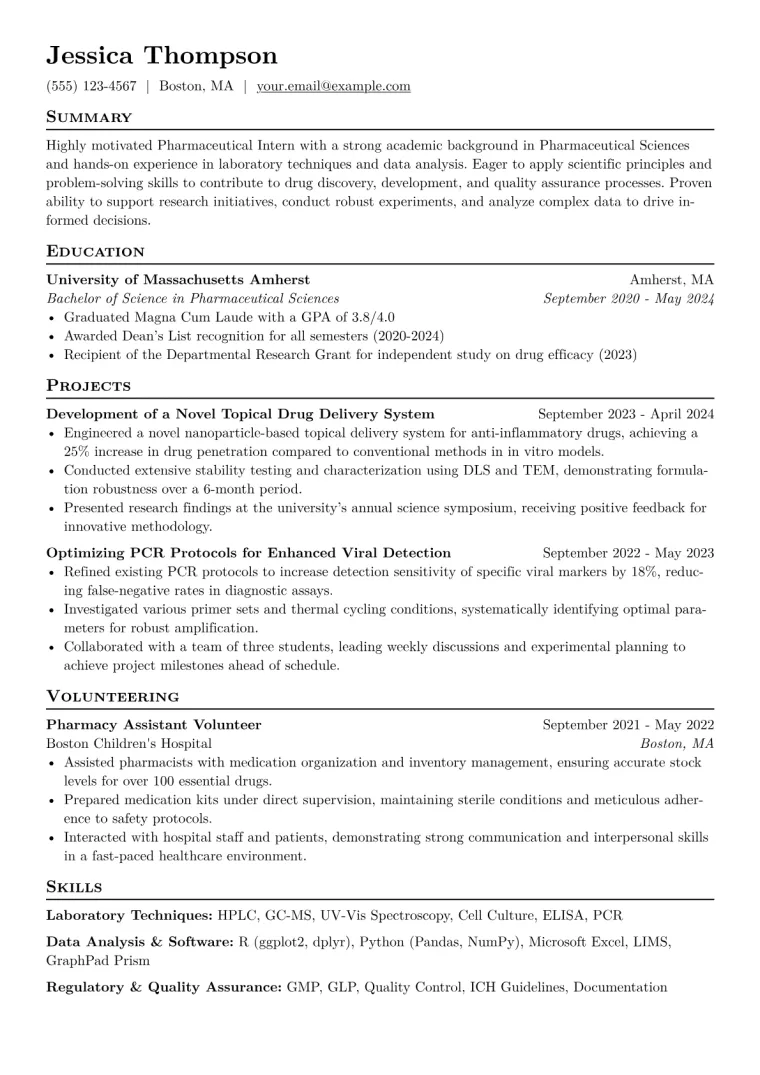
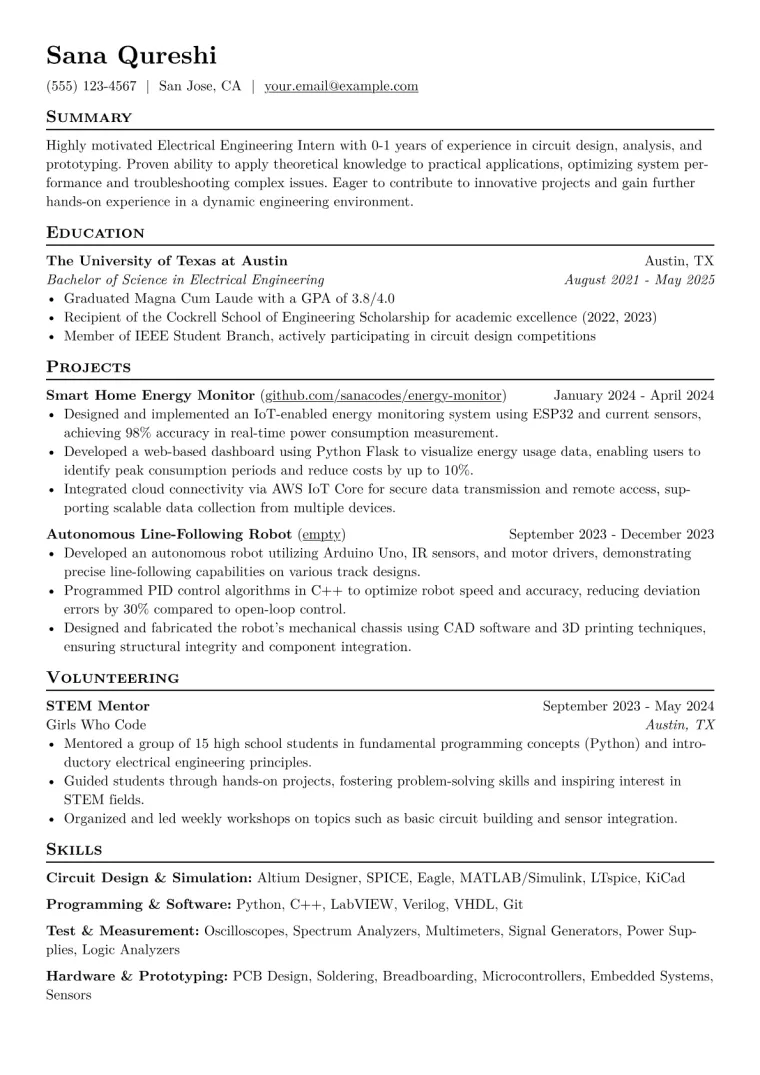
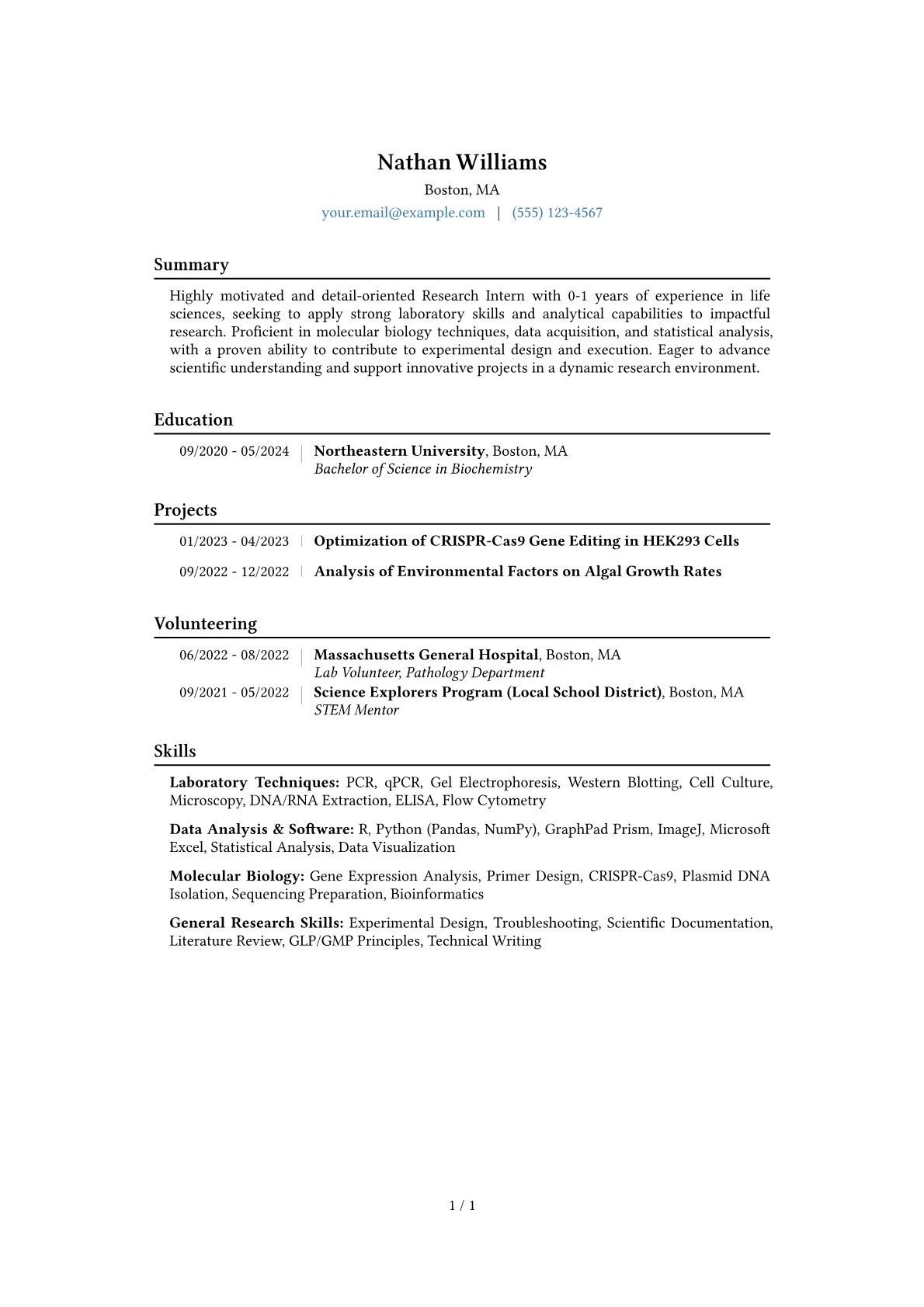
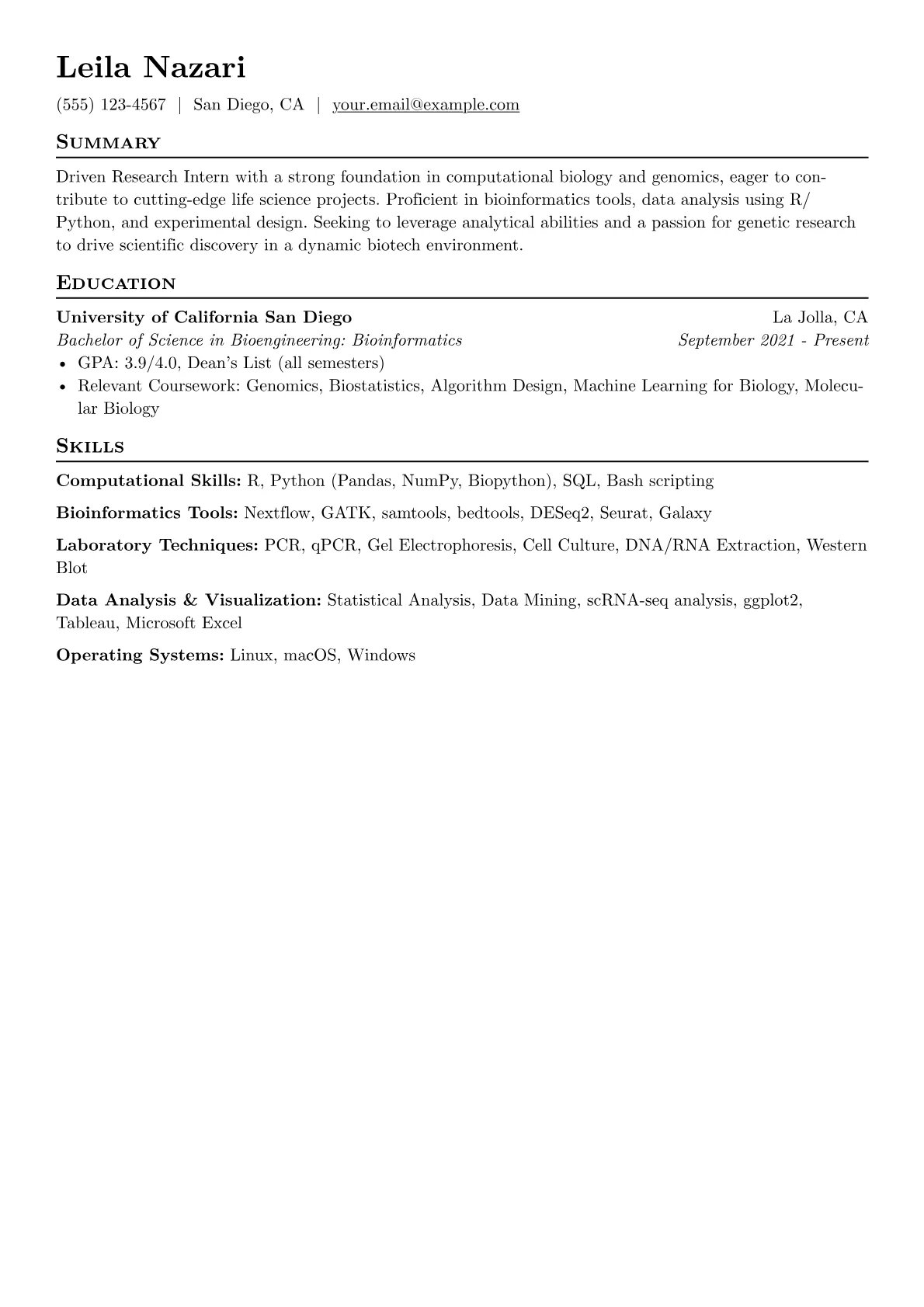
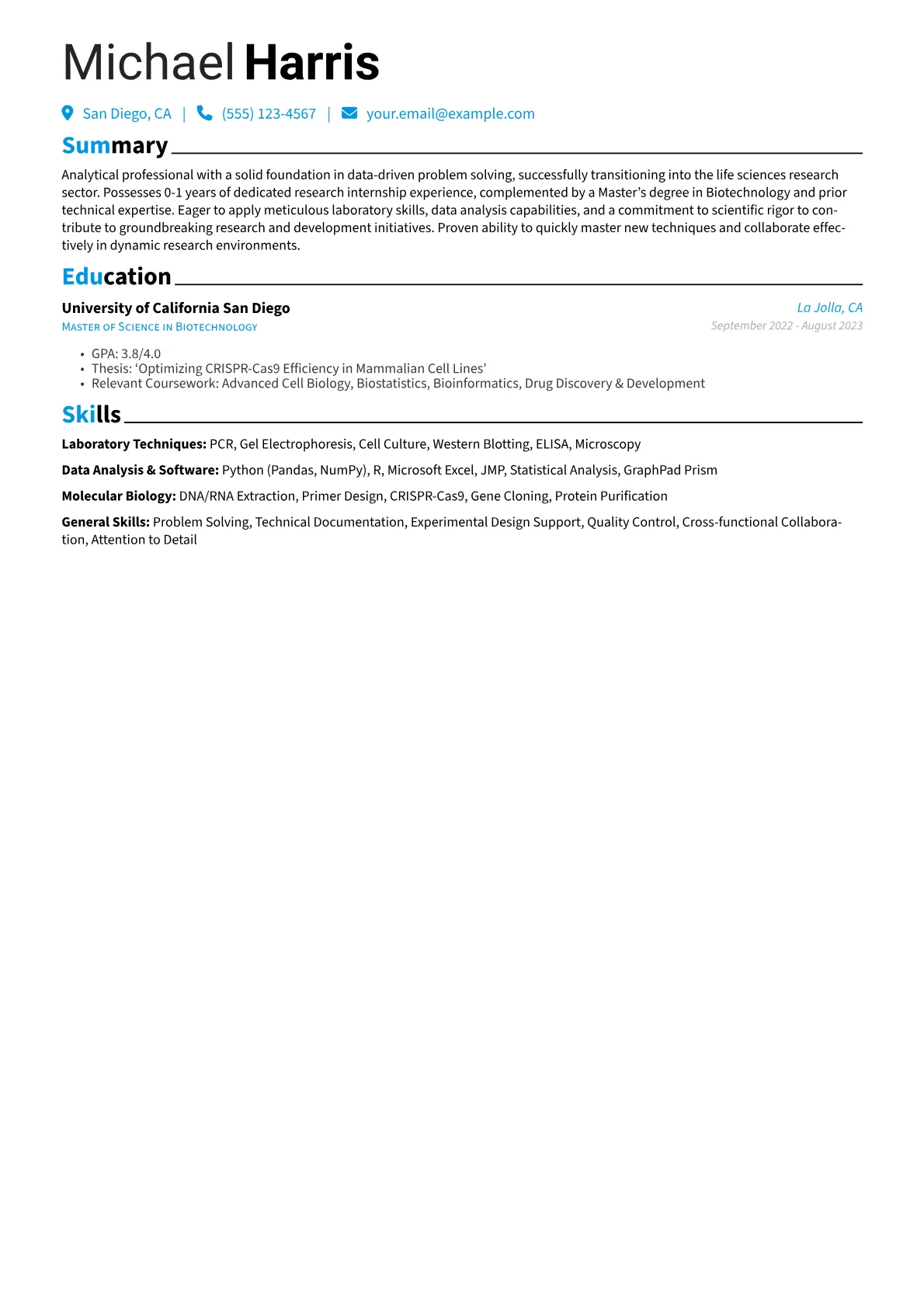
Three complete resumes, each in a different design.
Free to use. No download fee.
What makes a strong Research Intern Life Sciences resume?
A compelling Research Intern Life Sciences resume effectively showcases practical laboratory skills, an understanding of scientific methodology, and the ability to contribute to research initiatives. Hiring managers seek evidence of hands-on experience with common techniques like PCR, cell culture, and Western blotting, often preferring candidates who can quantify their contributions. The ability to analyze data using relevant software, maintain detailed scientific documentation, and communicate findings clearly are also crucial. For students or recent graduates, demonstrating involvement in academic projects, volunteer work, or research assistant roles that highlight skills like experimental design, troubleshooting, and GLP/GMP principles is highly valued.
Why this example works
The example resume for Nathan Williams excels by presenting quantifiable achievements and specific technical proficiencies. It highlights experience executing “over 150 quantitative PCR (qPCR) assays” and preparing “200+ cell culture samples,” illustrating practical application. The description of assisting in “optimization of a new Western blot protocol, improving signal-to-noise ratio by 15% and reducing material waste by 10%” demonstrates problem-solving and efficiency. Furthermore, the inclusion of “analyzed experimental data using R statistical software” and “presented weekly findings to a team of senior scientists” underlines both analytical and communication capabilities, alongside a well-categorized skills section covering “Laboratory Techniques” and “Molecular Biology.”
How useful was this template?
Example by JobSproutResearch Intern Life Sciences resume summary example
Highly motivated and detail-oriented Research Intern with 0-1 years of experience in life sciences, seeking to apply strong laboratory skills and analytical capabilities to impactful research. Proficient in molecular biology techniques, data acquisition, and statistical analysis, with a proven ability to contribute to experimental design and execution. Eager to advance scientific understanding and support innovative projects in a dynamic research environment.
Research Intern Life Sciences resume skills and keywords
Recruiters and applicant tracking systems scan Research Intern Life Sciences resumes for these skills and keywords. Include the ones that match your experience and mirror the wording in the job description. Check your resume against them with the free ATS checker.
Hard skills
Tools & software
Certifications
Soft skills
Frequently Asked Questions
What's the best resume structure for a Research Intern?
What key skills and qualifications should I highlight as a Research Intern?
How can I write a strong professional summary and impactful achievement bullets for this role?
Which optional sections are important for a Research Intern's resume?
How can I tailor my Research Intern resume for a specific job posting?
The blank page is the hard part. Skip it.
Free to use. No download fee.
Related Articles
![How to Write a Resume with No Experience [2026 Guide + Examples]](/thumbnails/resume-no-experience.webp)
How to Write a Resume with No Experience [2026 Guide + Examples]
Learn how to write a resume with no experience. Proven strategies, real examples, and the exact format that gets entry-level candidates interviews in 2026.

Cover Letter for Internship: Examples and Template (2026)
Learn how to write a standout internship cover letter with a proven template, 5 complete examples by field, and section-by-section guidance. Stand out from hundreds of applicants.
Resume for Teens: Examples & Template (2026)
Learn how to write your first resume as a teenager. Includes a full teen resume example, section-by-section guide, and tips for landing your first part-time job in 2026.