![Networking Emails That Actually Get Replies [12 Templates for 2026]](/thumbnails/networking-emails-templates.webp)
PDF or DOCX · up to 2MB
Cold networking emails average a 3.4% reply rate. These 12 templates and strategies push that above 10%. Practical scripts for every job search scenario.
Write a prompt engineer resume that gets interviews. Full resume example, summary templates, 10+ experience bullets, technical skills breakdown, and tips for career changers from software engineering, copywriting, data science, and UX research.
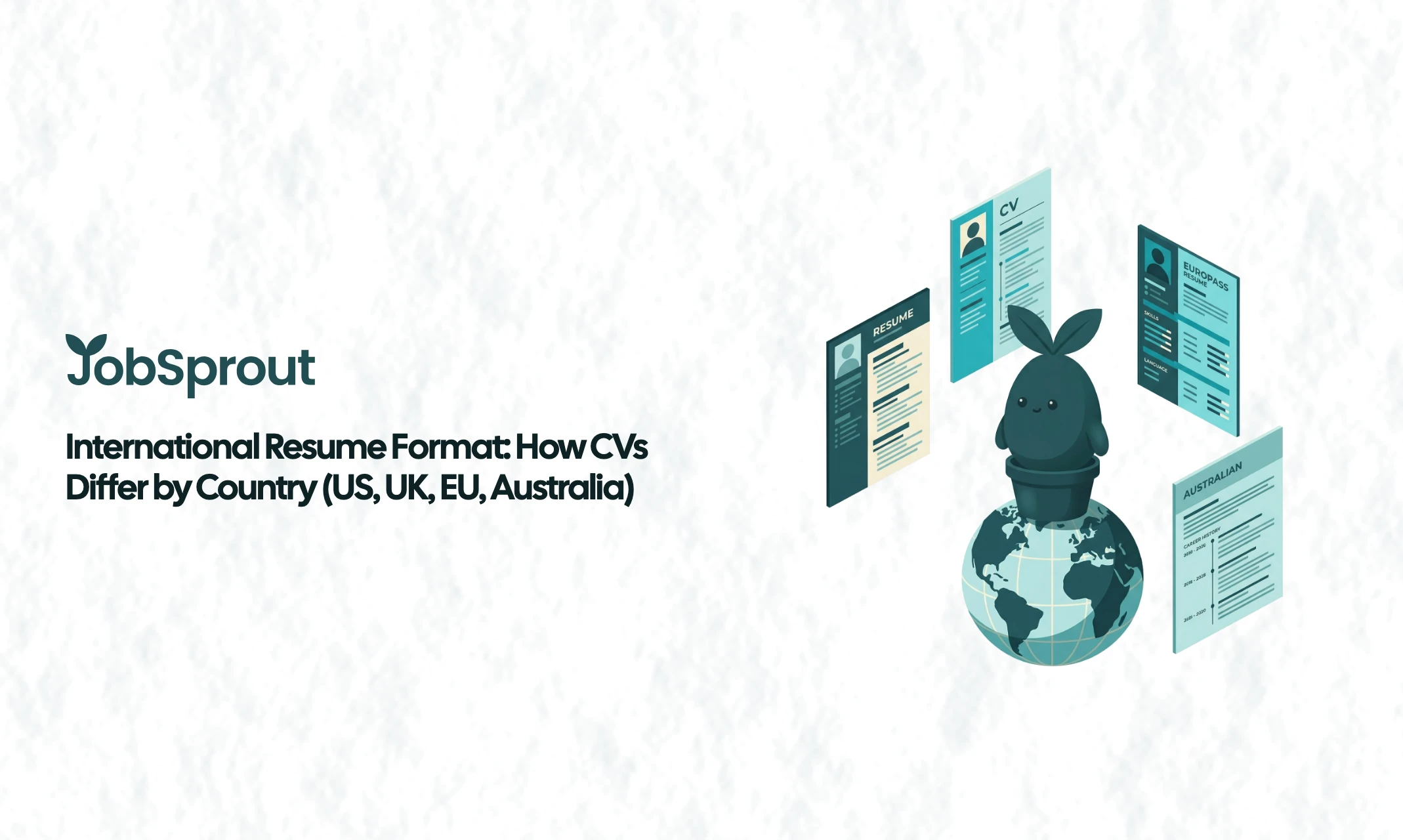
Learn how resume and CV formats differ across countries. Covers the US, UK, Germany, France, Australia, Japan, and the Middle East with comparison tables and practical tips.
Learn how to write a resume for an internal transfer. Includes a full example, summary templates for lateral moves, promotions and department changes, weak vs strong comparisons, and advice on navigating the politics.
Most networking emails don't get replies. The average cold email reply rate is 3.4%, which means roughly 97 out of 100 outreach messages disappear into the void. For job seekers using generic templates, the rate is often even lower.
But the top quartile of senders hit 5.5% reply rates, and the elite tier breaks 10%. That's a 3x difference in effectiveness, and it comes down to a handful of principles that most people either don't know or don't bother to follow.
This guide covers the data behind what works, the principles that separate effective outreach from noise, and 12 copy-paste templates you can adapt for every common job search networking scenario. No filler. Just scripts that have been tested against real response rates.
Before we get into templates, let's look at what the research tells us about email outreach in 2026.
| Metric | Stat | Source |
|---|---|---|
| Average cold email reply rate | 3.4% | Instantly.ai Benchmark Report |
| Top quartile reply rate | 5.5% | Instantly.ai |
| Elite tier reply rate | 10%+ | Instantly.ai |
| Personalised vs. generic response rate | 6x higher | Scale.jobs |
| Replies from first email | 58% | Instantly.ai |
| Replies after 5+ follow-ups | 80% of total | Scale.jobs |
| Optimal email length | Under 125 words | Scale.jobs |
| Personalised subject line open rate boost | 37% | Scale.jobs |
Three numbers stand out.
First, personalisation matters enormously. Personalised emails get 6x higher response rates than generic ones, yet only 5% of senders personalise every email. This is the single biggest opportunity: if you're willing to spend 10 minutes researching someone before emailing them, you're already in the top 5%.
Second, brevity wins. Emails under 125 words perform 5-15% better than longer ones. The best-performing campaigns maintain under 80 words. People scan emails the same way recruiters scan resumes: quickly, looking for relevance. Long emails get skimmed or skipped.
Third, follow-ups are where most replies happen. 58% of replies come from the first email, but the remaining 42% come from follow-ups. 80% of total responses happen after at least 5 touchpoints. Most people give up after one email. Persistence (done respectfully) is a massive differentiator.
Every template in this guide follows these principles. Memorise them, and you can adapt any template to any situation.
76% of outreach fails because the sender didn't research the recipient's work. Before writing a single word, spend 5-10 minutes:
This isn't about flattery. It's about demonstrating that you're reaching out to them specifically, not mass-emailing everyone on LinkedIn with a similar title.
The biggest mistake in networking emails is opening with what you want. "I'm looking for a job and I saw your company is hiring..." centres you, not them. Effective emails open with something relevant to the recipient: their work, their company, their expertise.
Weak opening: "I'm a marketing professional looking for new opportunities and wondered if we could connect."
Strong opening: "Your piece on attribution modelling for B2B SaaS resonated with challenges I've been working through at my current company."
The strong version shows you've engaged with their work. It gives them a reason to respond beyond charity.
Respect their time. A networking email isn't a cover letter. It's a door opener. Everything in the email should serve one of three purposes: establish relevance, demonstrate value, or make a specific ask. If a sentence doesn't do one of those things, cut it.
"I'd love to pick your brain" is vague and demanding. "Would you have 15 minutes for a quick call about how your team approaches content attribution?" is specific and bounded.
The easier you make it to say yes, the more likely they will. Good asks are:
One follow-up after 5-7 days is expected and appropriate. Two follow-ups over 2-3 weeks is fine. Beyond that, you're getting into diminishing returns.
The best follow-ups add new information rather than just saying "bumping this up." Share a relevant article, reference a company announcement, or offer a different angle on your original ask.
When to use: You want to learn about a company's culture, team, or open roles from someone who works there.
Subject: Quick question about [Company Name]'s [team/department]
Hi [Name],
I came across your profile while researching [Company Name]'s [specific initiative, product, or team]. Your background in [specific detail] caught my attention.
I'm a [your title] with [X years] in [field], and I'm exploring opportunities in [area]. I'd love to hear your perspective on what it's like working at [Company Name], particularly in [specific department or function].
Would you have 15 minutes for a quick call or coffee chat? Happy to work around your schedule.
Best, [Your Name]
Why it works: References specific research, establishes your credibility briefly, and makes a bounded ask.
When to use: You want career guidance from someone in a role or industry you're targeting.
Subject: Your experience in [field/role] at [Company]
Hi [Name],
I've been following your work in [field], and your [specific article/post/achievement] resonated with something I'm navigating in my own career.
I'm currently transitioning into [target area] after [X years] in [current field], and I'd really value your perspective on [specific question]. Your experience going from [their previous role] to [current role] is exactly the kind of path I'm exploring.
Would you be open to a 15-minute conversation? I have a few specific questions and I promise to respect your time.
Thanks, [Your Name]
Why it works: Demonstrates genuine interest in their career path, acknowledges their expertise, and is specific about what you want to learn.
When to use: You want to re-establish contact with someone you've worked with before.
Subject: Catching up (and a question for you)
Hi [Name],
It's been a while since we worked together at [Company]. I saw that you've moved to [their current company/role], which looks like a great fit.
I'm currently exploring new opportunities in [area] and would love to reconnect. I remember how well you understood [specific thing they were good at], and I'd value your take on the current market in [field].
Would you be up for a quick catch-up call? No pressure either way.
Hope you're doing well, [Your Name]
Why it works: Warm connection, specific compliment about their professional skills, and a relaxed tone that doesn't feel transactional.
When to use: You've identified a recruiter who hires for your target roles or industry.
Subject: [Your Title] with [X years] in [field] - open to opportunities
Hi [Name],
I see you recruit for [specific industry/function] roles, and I wanted to introduce myself.
I'm a [title] with [X years] of experience in [specialisation]. Most recently at [Company], where I [one-line achievement with a number]. I'm currently exploring [type of roles] in [location/remote preference].
I've attached my CV for reference. If anything relevant comes across your desk, I'd love to be considered. Happy to jump on a brief call if helpful.
Thanks, [Your Name]
Why it works: Recruiters are busy. This is direct, includes the key information they need (title, experience, achievement, preferences), and respects their time. Attach your resume. For help getting your resume recruiter-ready, see our complete resume writing guide. And make sure it's ATS-friendly before you send it.
When to use: You've identified a specific open role and know someone at the company.
Subject: [Specific Role Title] at [Company] - would you refer me?
Hi [Name],
I saw that [Company] is hiring for a [Role Title], and it looks like an excellent match for my background in [area]. I've been [brief relevant achievement].
Since you're at [Company], I wanted to ask: would you be comfortable referring me for this role? I know many companies prioritise internal referrals, and I'd be grateful for the introduction.
I've attached my CV so you can see the full picture. If you'd rather not or it doesn't feel right, no worries at all. I appreciate you either way.
Thanks, [Your Name]
Why it works: Direct, specific, includes an easy out (so they don't feel pressured), and attaches the resume so they can assess fit immediately. Employee referrals are the highest-converting source of hires, so this email is high-leverage.
When to use: You met someone at a conference, meetup, or industry event and want to continue the conversation.
Subject: Great meeting you at [Event Name]
Hi [Name],
It was good to meet you at [Event] yesterday. Your point about [specific thing they said or discussed] stuck with me, especially as it relates to [how it connects to your work].
I'd love to continue that conversation. Would you be open to a coffee or quick call sometime in the next week or two?
[Your Name]
Why it works: References a specific detail from the conversation (proving you were listening), connects it to mutual professional interest, and acts quickly while the memory is fresh.
When to use: You've found a job posting and want to go directly to the hiring manager, in addition to applying through the standard process.
Subject: Re: [Job Title] role - [one-line value proposition]
Hi [Name],
I just applied for the [Job Title] position on your team, and I wanted to reach out directly. I've spent [X years] in [field], most recently leading [specific relevant project] at [Company], where we [achievement with metric].
[One sentence about why this specific role or team excites you, referencing something specific about their work.]
I'd welcome the chance to discuss how my experience could contribute to what you're building. My CV is in the application system, but I'm happy to share it directly as well.
Best, [Your Name]
Why it works: Shows initiative. References a specific achievement relevant to the role. Makes clear you've also applied through proper channels (hiring managers appreciate this). Keep it under 100 words. For tips on tailoring your resume to the specific role before reaching out, see our resume tailoring guide.
When to use: You want to build a relationship with someone senior in your field, without making it transactional.
Subject: Quick question about [specific topic in their expertise]
Hi [Name],
I've been reading your posts about [topic], and your take on [specific point] has been particularly useful as I think through [your related challenge].
I'm working on [brief context about what you're doing], and I have a specific question about [topic]. If you had a few minutes to share your perspective, I'd genuinely appreciate it.
I know your time is valuable, so I'm happy to keep it to a quick email exchange if a call isn't practical.
Thanks for considering it, [Your Name]
Why it works: Not asking for a job. Asking for advice. This is a lower-stakes ask that builds goodwill and often leads to opportunities organically. The offer to keep it to email reduces friction further.
When to use: 5-7 days after your initial email received no reply.
Subject: Re: [Original Subject Line]
Hi [Name],
Just wanted to follow up on my previous note. I know inboxes get busy.
[One sentence adding new context, e.g., "I noticed [Company] just announced [news], which made me even more interested in learning about your team's approach to [topic]."]
Would a 15-minute call work sometime this week? Completely understand if the timing isn't right.
Best, [Your Name]
Why it works: Brief, adds new value (the news reference), and gives them an easy out. No guilt-tripping or passive-aggressive "just checking in" language.
When to use: 7-10 days after your first follow-up.
Subject: Re: [Original Subject Line]
Hi [Name],
I'll keep this brief. I'm still interested in connecting about [topic]. If now isn't a good time, no pressure at all.
If it's easier, I'd also welcome any suggestions for others in [field/company] who might be open to a conversation.
Thanks either way, [Your Name]
Why it works: Short, gracious, and offers an alternative (a redirect to someone else). This is your final follow-up. If there's no response after this, move on.
When to use: Within 24 hours of an informational conversation.
Subject: Thanks for your time today
Hi [Name],
Thank you for taking the time to speak with me today. Your insight on [specific topic discussed] was exactly what I needed to hear, and your point about [specific advice] is something I'm going to act on this week.
I'll keep you posted on how things develop. And if there's ever anything I can help with on my end, please don't hesitate to ask.
Thanks again, [Your Name]
Why it works: Specific (references actual advice), action-oriented (says what you'll do with it), and reciprocal (offers to help in return). This is the email that turns a one-time conversation into an ongoing relationship.
When to use: You've landed a new role, completed a certification, or have a meaningful career update to share with people who helped.
Subject: Quick update (and thank you)
Hi [Name],
I wanted to let you know that I've accepted a role as [Title] at [Company]. I start [date].
Your [specific help: advice, referral, introduction, encouragement] was a real part of making this happen. I particularly appreciated [specific detail].
I'd love to stay in touch. If there's ever anything I can do for you, I'd welcome the chance to return the favour.
Thanks again, [Your Name]
Why it works: Closes the loop. People who helped you want to know the outcome. This email strengthens the relationship and makes them more likely to respond if you ever reach out again.
Based on the data, these are the most common errors that tank networking email performance.
The entire email is about your job search, your needs, your qualifications. The recipient has no reason to engage because you haven't given them one. Every email should contain at least one element that's relevant to the recipient specifically.
Long emails signal that you don't respect the recipient's time. If your networking email requires scrolling, it's too long. Under 125 words is the benchmark. The best performers stay under 80.
Personalised subject lines are 37% more likely to be opened. "Quick question" or "Introduction" are not personalised. "[Name], your post on attribution modelling" is.
Every email needs a specific call to action. "Let me know if you'd like to connect sometime" is vague. "Would you have 15 minutes for a call next Tuesday or Wednesday?" is actionable. Make it easy for them to say yes.
80% of total responses come after multiple touchpoints. Sending one email and moving on if there's no reply means you're leaving most potential connections on the table.
Opening with "I came across your profile and thought we should connect" tells the recipient you didn't bother to learn anything about them. 76% of outreach fails for this exact reason. Spend five minutes. Reference something specific.
When you send matters. The data is clear on optimal timing:
| Day | Performance |
|---|---|
| Tuesday | Highest open rates (42.7%) |
| Wednesday | Highest reply rates |
| Monday | Good for follow-ups |
| Thursday | Good for initial outreach |
| Friday | Lower engagement |
| Weekend | Lowest engagement |
The best time of day is early morning: 4 to 8 AM in the recipient's timezone catches their inbox when they're starting their day with fewer competing messages.
If you're in a different timezone, schedule your emails to land during the recipient's morning. Most email clients support delayed sending.
Networking emails work best as a consistent habit, not a one-off burst. Here's a sustainable approach:
Daily target: 1-2 personalised outreach messages per day. That's 5-10 per week, which is enough to build meaningful connections without burning out.
Weekly routine:
| Day | Activity |
|---|---|
| Monday | Research and identify 5 people to contact this week |
| Tuesday-Thursday | Send 1-2 outreach emails per day |
| Friday | Send follow-ups on previous emails |
Track everything. Use a simple spreadsheet:
| Name | Company | Date Sent | Follow-Up 1 | Follow-Up 2 | Status |
|---|---|---|---|---|---|
| Jane Smith | Acme Corp | May 12 | May 19 | May 28 | Replied |
This systematic approach means you'll never wonder "did I follow up with that person?" And it ensures you're consistently building connections rather than doing it in scattered, stressful bursts.
If you're experiencing job search burnout, networking is one of the first things to slip. A structured routine with low daily targets makes it sustainable even on difficult days.
Both can work, but email tends to have higher reply rates for cold outreach because LinkedIn messages are associated with spam and sales pitches. If you can find someone's work email (check their company website, personal blog, or use tools like Hunter.io), email is generally more effective. If you only have LinkedIn, a connection request with a personalised note works as an alternative.
Don't send the email. Generic outreach to "Dear Hiring Manager" or "To whom it may concern" has a near-zero response rate for networking purposes. Spend the time finding the right person's name. LinkedIn, company websites, and team pages are good starting points.
Networking emails are actually excellent for introverts because they remove the real-time social pressure of in-person events. You can craft your message thoughtfully, on your own schedule, without the anxiety of live conversation. Focus on one-to-one email exchanges and informational interviews (which are structured conversations with a clear end time) rather than large networking events.
AI can help you draft and refine networking emails, but the personalisation needs to be genuinely yours. An AI-assisted email where you've added specific details about the recipient's work will outperform a fully human-written generic email. But a fully AI-generated template with no personalisation will be obviously impersonal. The same principle applies to resumes: AI-assisted beats AI-generated every time.
5-7 business days for the first follow-up. Another 7-10 days for the second. After two follow-ups with no response, move on gracefully. Three unreturned emails is the practical limit before your outreach starts to feel intrusive.
In a market where only 2% of online applications result in interviews, networking is one of the few channels that consistently produces results. Employee referrals convert at significantly higher rates than cold applications, and informational interviews build relationships that can open doors months or years later.
The templates in this guide give you a starting point. But the magic isn't in the template. It's in the research, the personalisation, and the consistency.
Make sure the resume you're sharing in these conversations is one you're proud of. JobSprout helps you build a professional, ATS-friendly resume that looks as polished as the networking email you wrote to introduce it. Clean Typst typesetting, AI-assisted writing, and one-click job tailoring that lets you paste a job description and create a tailored version in seconds, with a diff preview showing every change.
Build your resume with JobSprout. Free to create and download.
Questions or feedback? Email david@jobsprout.ai or connect on LinkedIn.