Insurance Fraud Investigator Resume Example
 Example by JobSprout
Free to use. No download fee.
Market Insights
Insurance Fraud Investigator
Salary Range
US market data · Source: Adzuna · Updated Mar 2026
How useful was this template?
Insurance Fraud Investigator resume samples
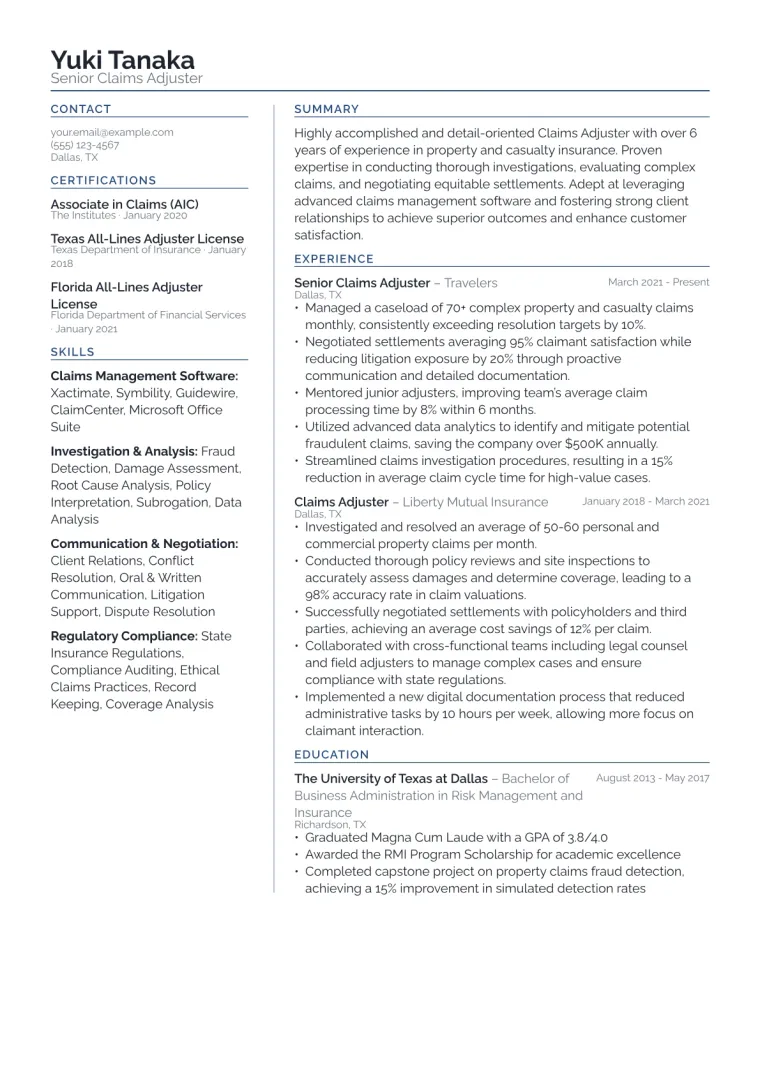
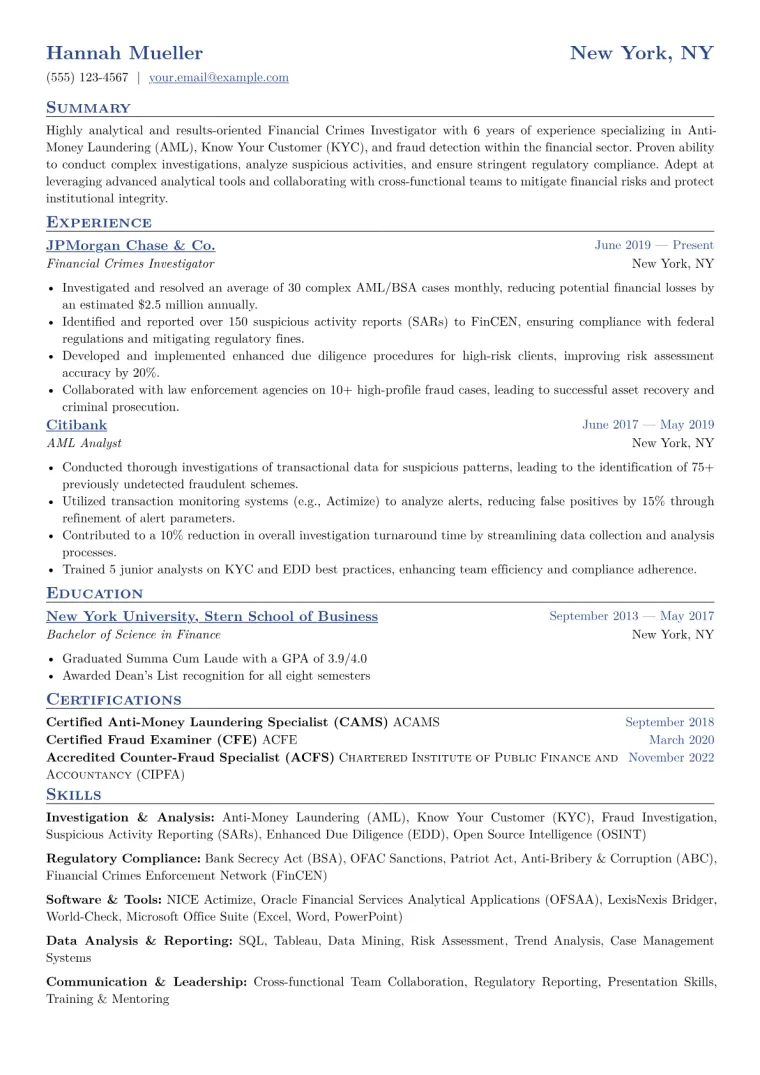
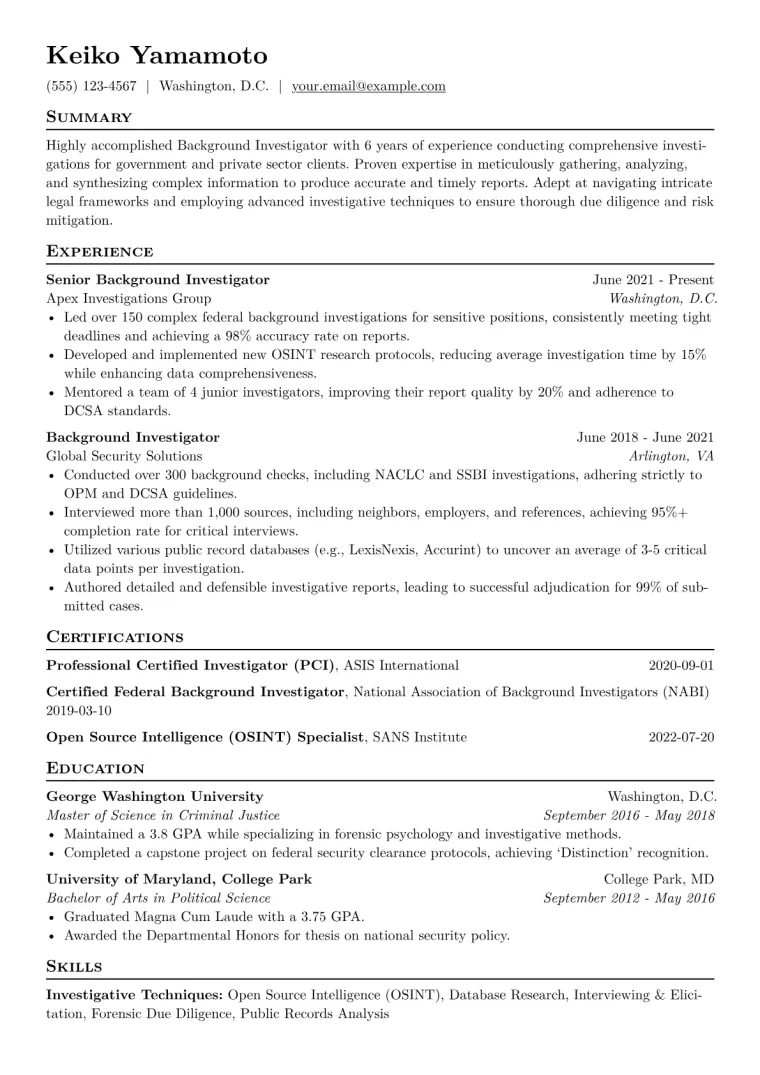
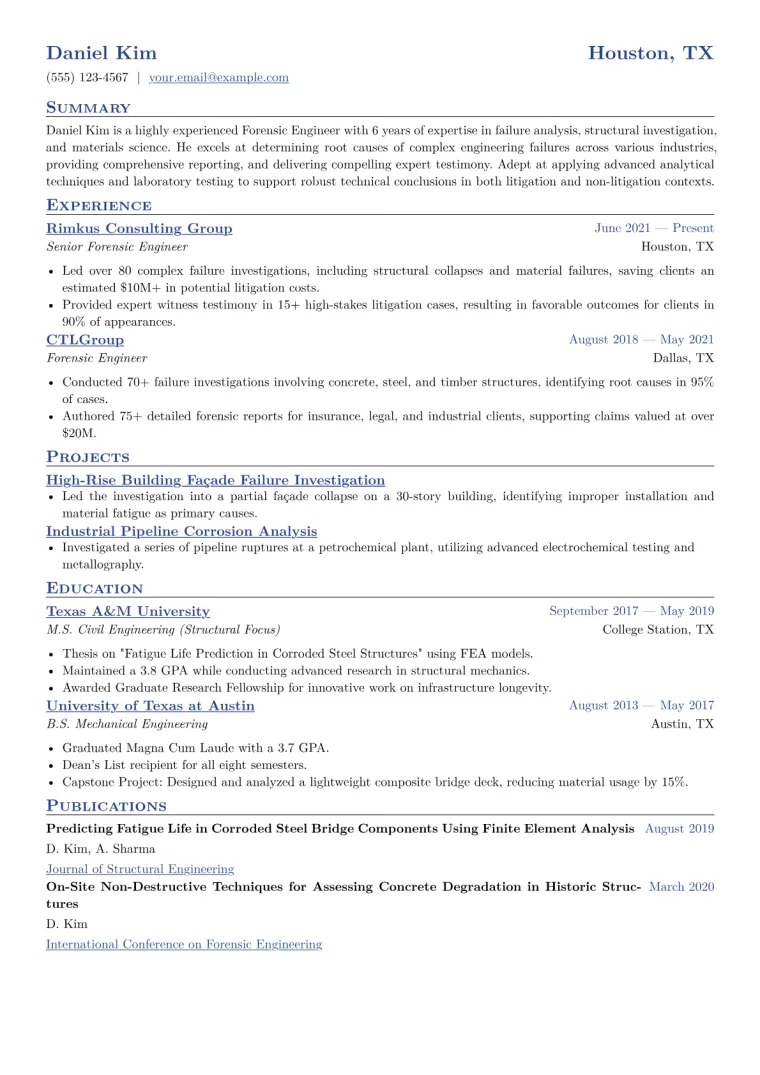
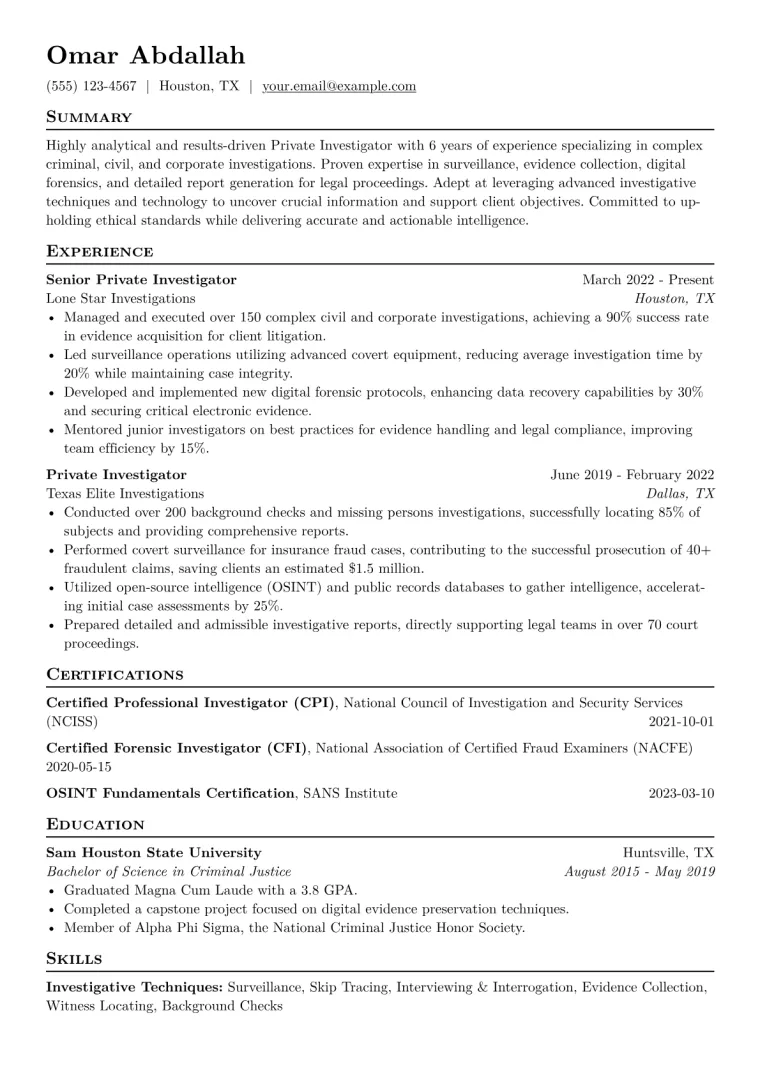
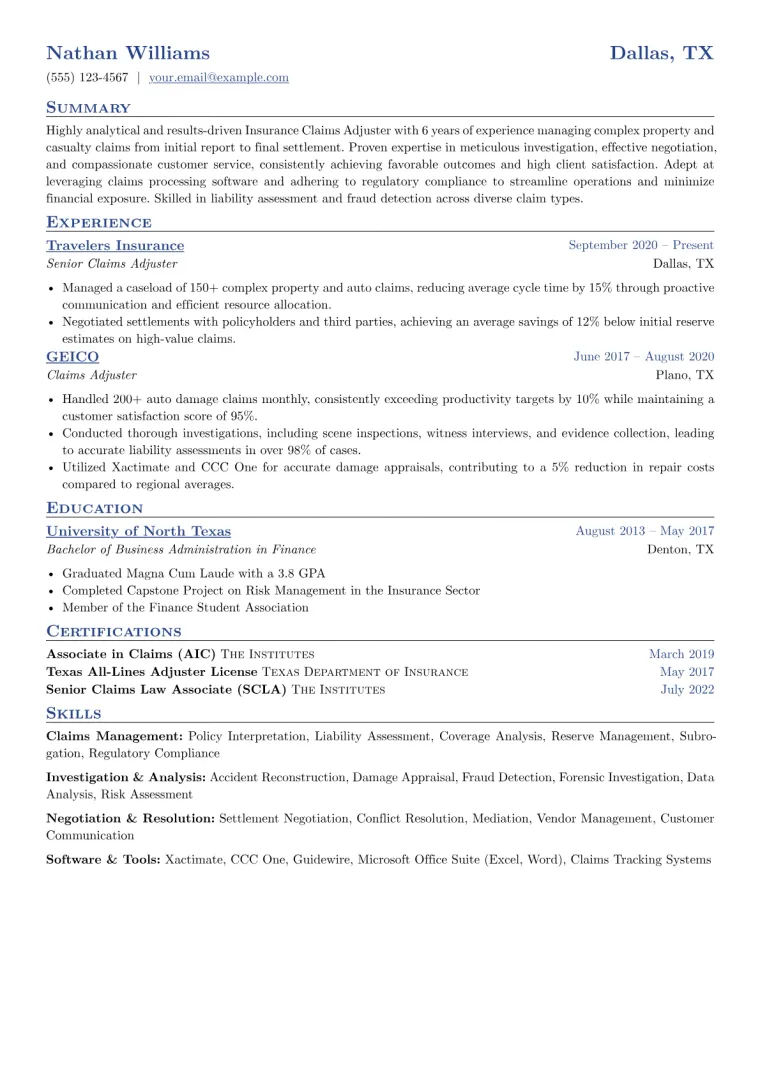
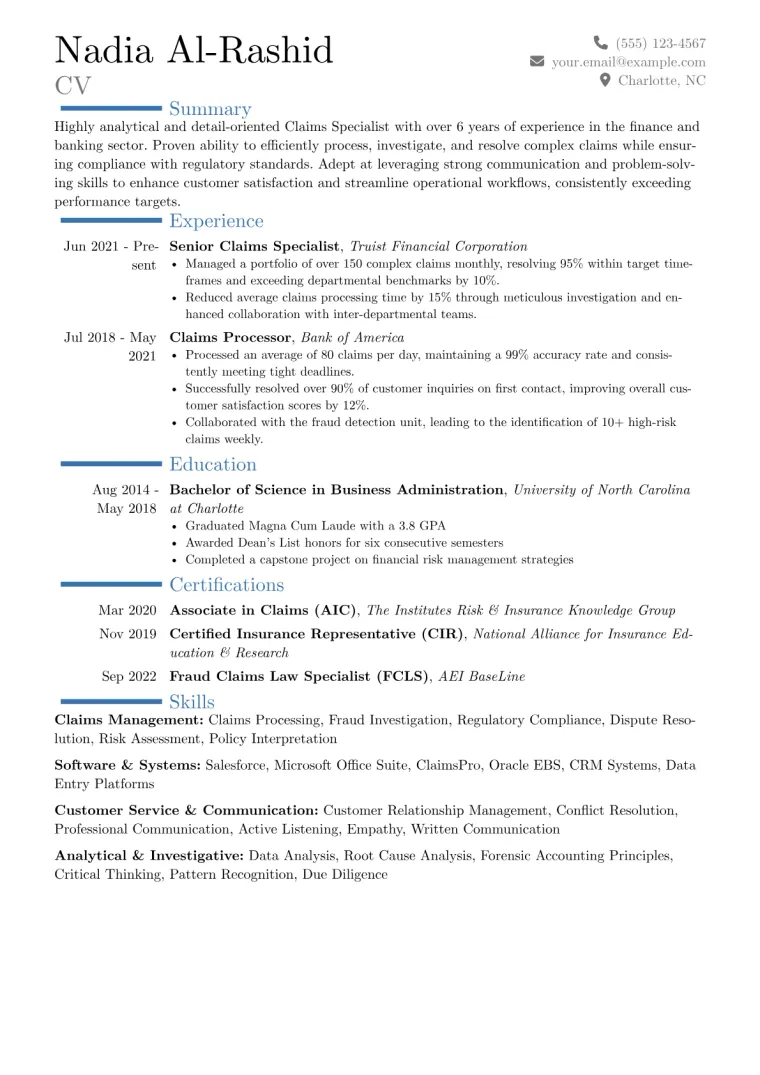
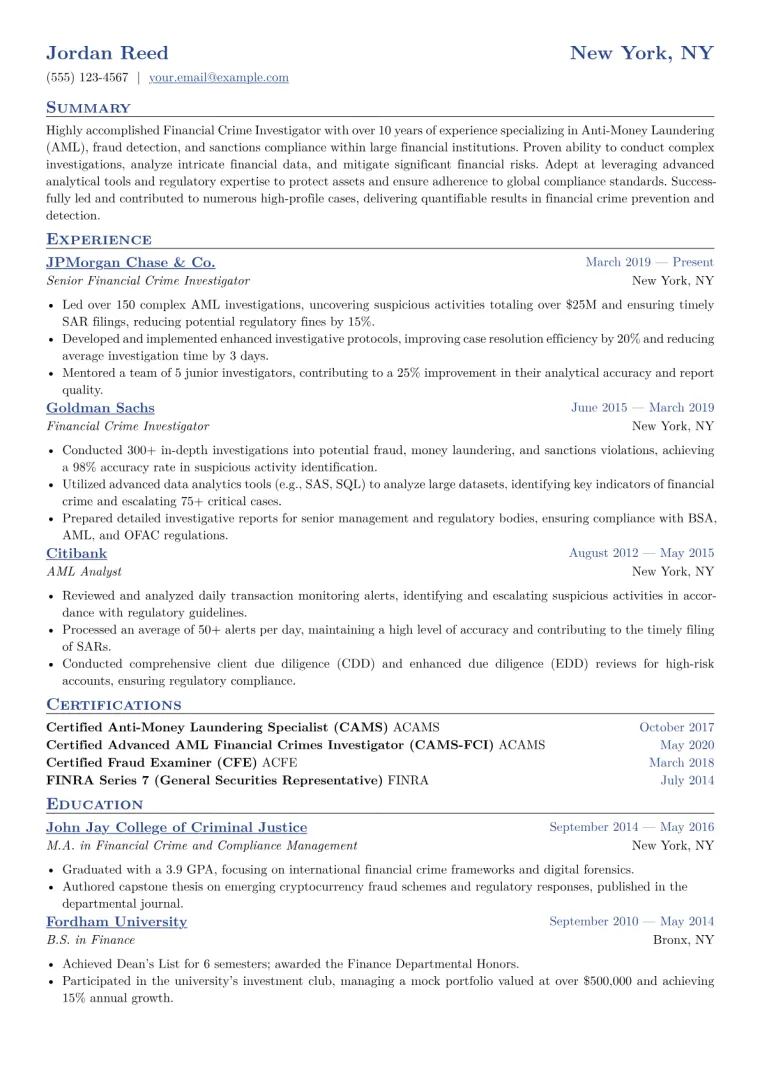
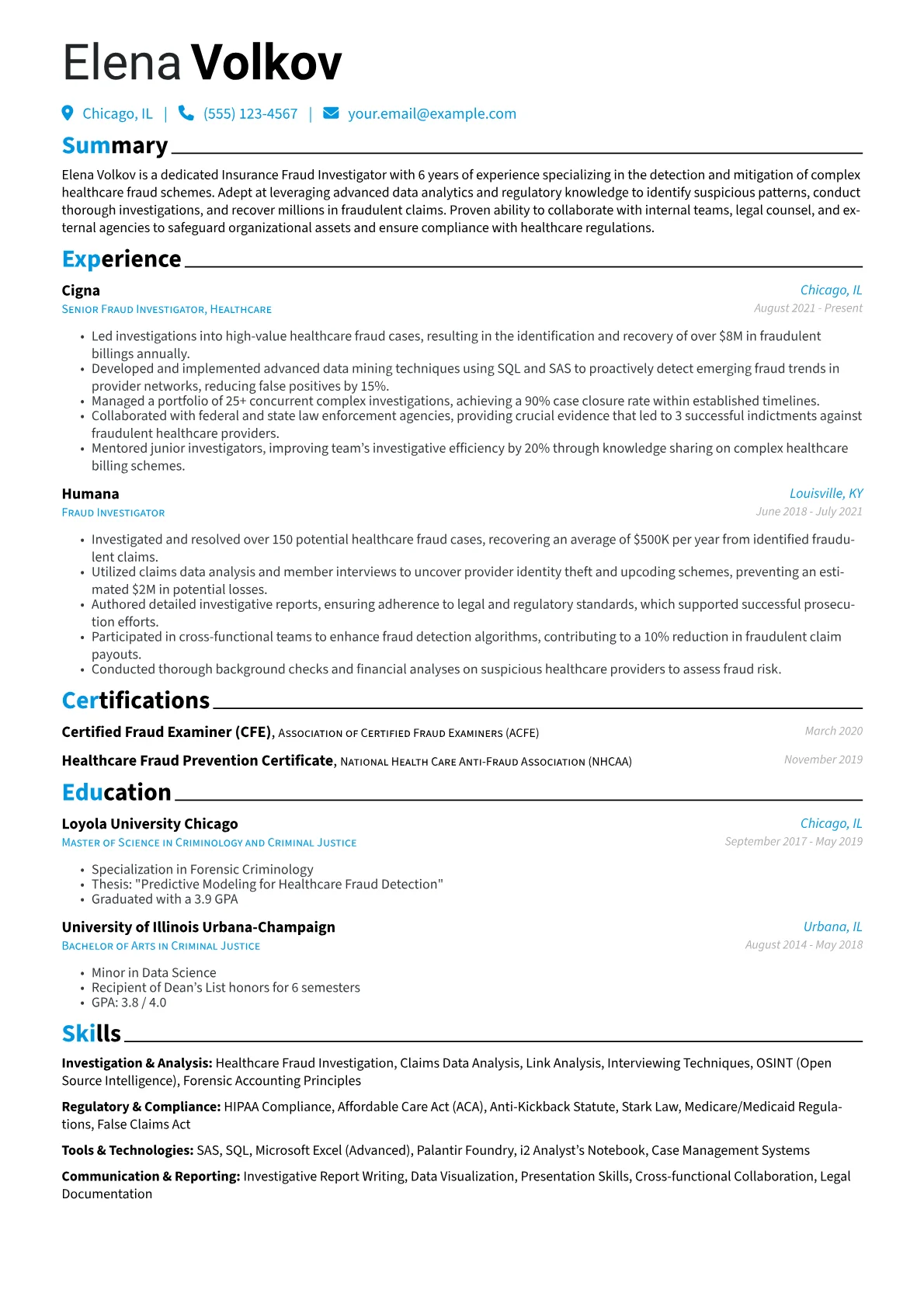
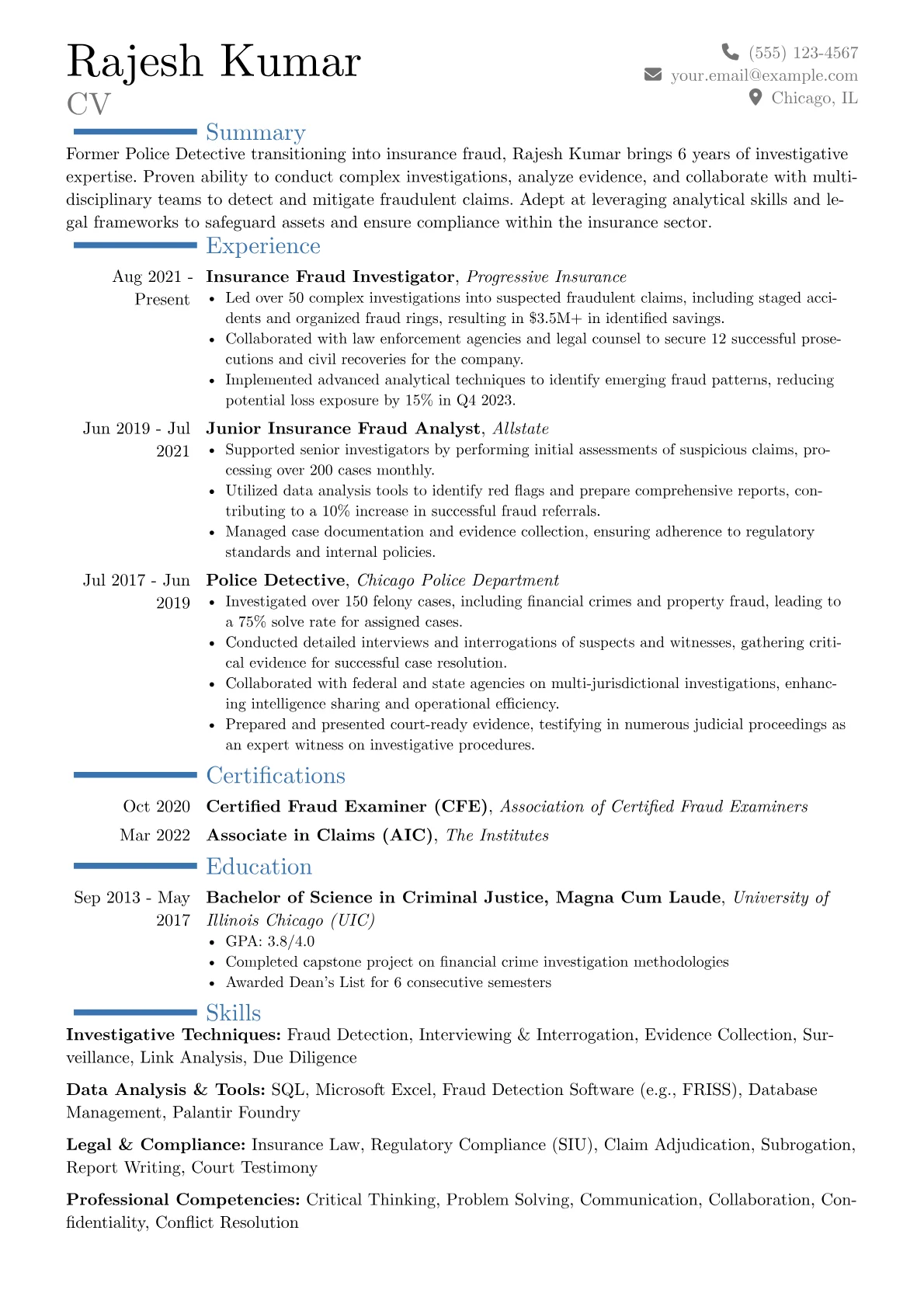
Three complete resumes, each in a different design.
Free to use. No download fee.
Editorial Notes
For an Insurance Fraud Investigator, hiring managers prioritize candidates who can demonstrate meticulous evidence collection, astute analytical skills, and a solid understanding of regulatory compliance across various insurance types. A strong resume highlights quantifiable successes, such as specific amounts of recovered funds, the number of fraudulent claims identified, or improved case resolution times. Expertise in areas like SIU operations, forensic interviewing techniques, and the ability to navigate complex policy language are crucial. Certifications like Certified Fraud Examiner (CFE) or specialized NICB training also significantly enhance a candidate's profile.
The example CV effectively illustrates an investigator's value by quantifying achievements, for instance, detailing specific dollar amounts recovered or the percentage reduction in fraud losses. Skills are logically grouped, emphasizing competencies in digital forensics, legal documentation, and stakeholder communication. Furthermore, key certifications and proficiency in specialized investigative software or data analysis platforms are clearly highlighted, showcasing relevant technical capabilities that hiring teams actively seek in this field.
This template, built with JobSprout, offers a robust framework. It can be easily customized to craft your own compelling Insurance Fraud Investigator resume.
How useful was this template?
Example by JobSproutInsurance Fraud Investigator resume summary example
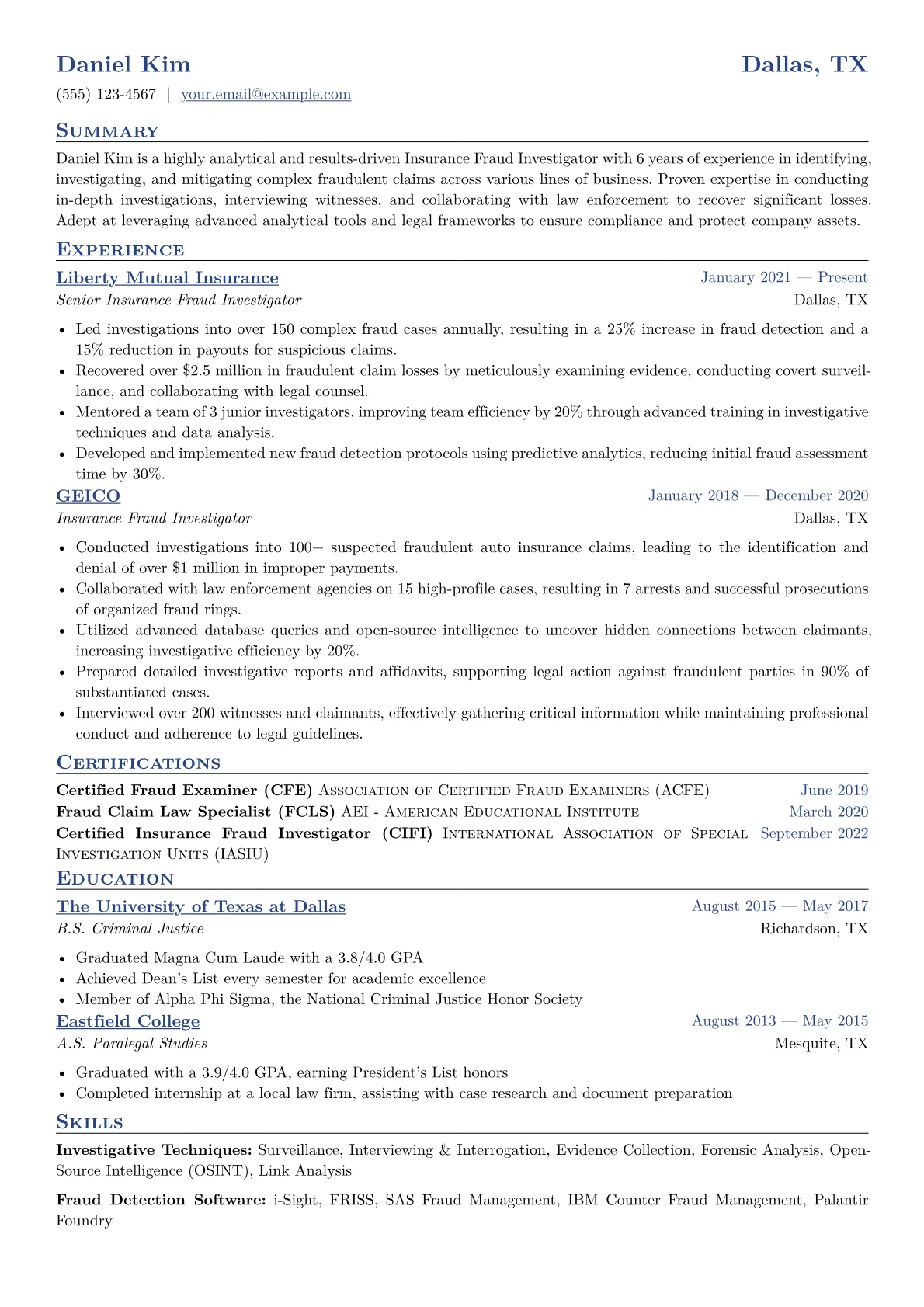
Daniel Kim is a highly analytical and results-driven Insurance Fraud Investigator with 6 years of experience in identifying, investigating, and mitigating complex fraudulent claims across various lines of business. Proven expertise in conducting in-depth investigations, interviewing witnesses, and collaborating with law enforcement to recover significant losses. Adept at leveraging advanced analytical tools and legal frameworks to ensure compliance and protect company assets.
Insurance Fraud Investigator salary by country
| Country | 25th percentile | Median | 75th percentile |
|---|---|---|---|
| US | $84,867 | $89,955 | $95,042 |
| UK | £37,727 | £53,333 | £71,667 |
| Canada | C$79,000 | C$103,333 | C$143,571 |
| Australia | A$80,000 | A$120,000 | A$160,000 |
| Germany | €41,304 | €59,718 | €72,819 |
| France | €26,998 | €34,650 | €42,911 |
| Netherlands | €40,158 | €49,152 | €62,025 |
| Italy | €17,965 | €23,981 | €29,327 |
| Austria | €34,500 | €56,250 | €71,293 |
| New Zealand | NZ$78,854 | NZ$101,126 | NZ$125,255 |
| India | ₹625,000 | ₹1,023,333 | ₹1,081,667 |
| Poland | zł159,882 | zł198,275 | zł221,495 |
Annual salaries in local currency, aggregated from live job postings via Adzuna. Figures refresh continuously and reflect advertised pay, not negotiated offers.
Insurance Fraud Investigator resume skills and keywords
Recruiters and applicant tracking systems scan Insurance Fraud Investigator resumes for these skills and keywords. Include the ones that match your experience and mirror the wording in the job description. Check your resume against them with the free ATS checker.
Hard skills
Tools & software
Certifications
Soft skills
Market Insights
Insurance Fraud Investigator
Salary Range
US market data · Source: Adzuna · Updated Mar 2026
Frequently Asked Questions
What's the best resume structure for a mid-level Fraud Investigator?
What key skills should I highlight as a Fraud Investigator with 3-7 years of experience?
How can I write strong achievement bullets or a professional summary for this role?
Which optional resume sections are important for a Fraud Investigator?
How do I tailor my resume for a specific Fraud Investigator job posting?
The blank page is the hard part. Skip it.
Free to use. No download fee.