Quantitative Researcher Resume Example
 Example by JobSprout
Free to use. No download fee.
Market Insights
Quantitative Researcher
Salary Range
Salary Trend
Mar 2025 – Feb 2026
12-Month Trend
Based on advertised Research roles.
US market data · Source: Adzuna · Updated Mar 2026
How useful was this template?
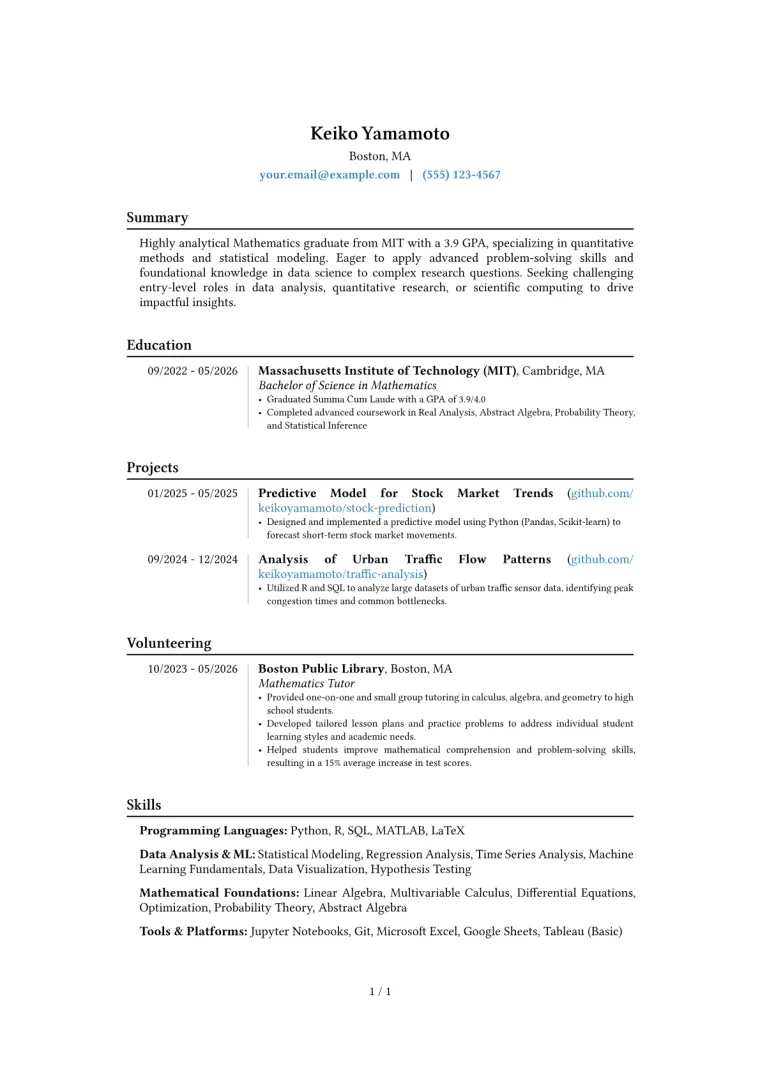
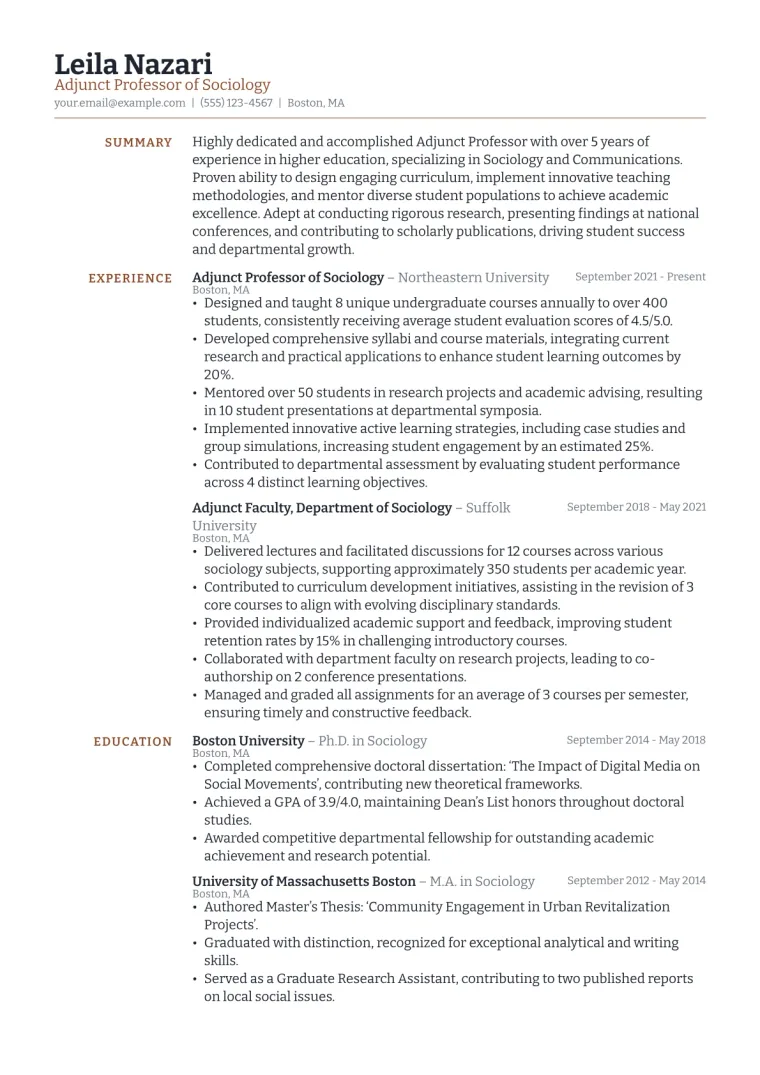
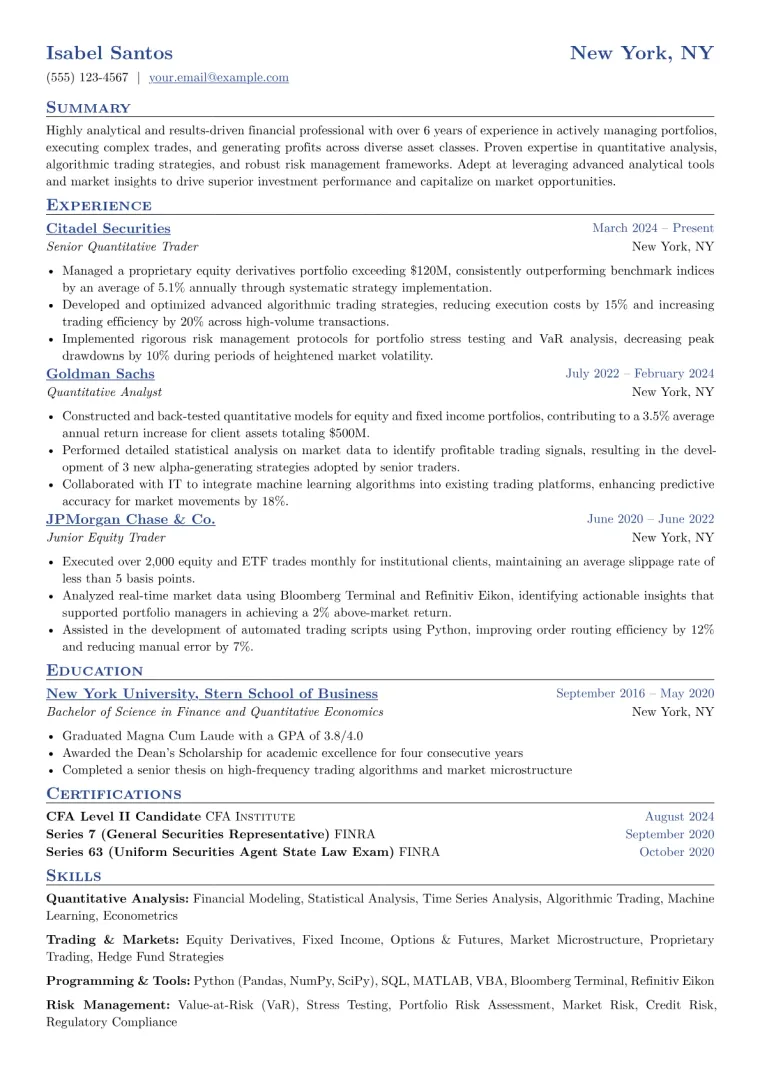
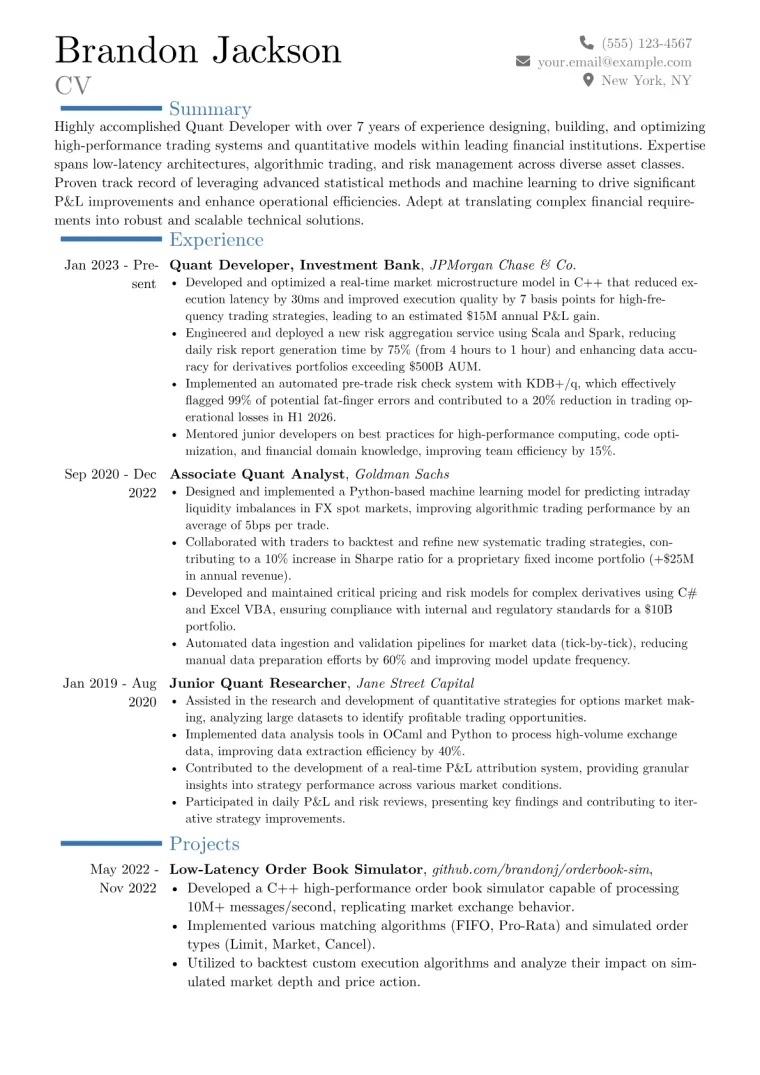
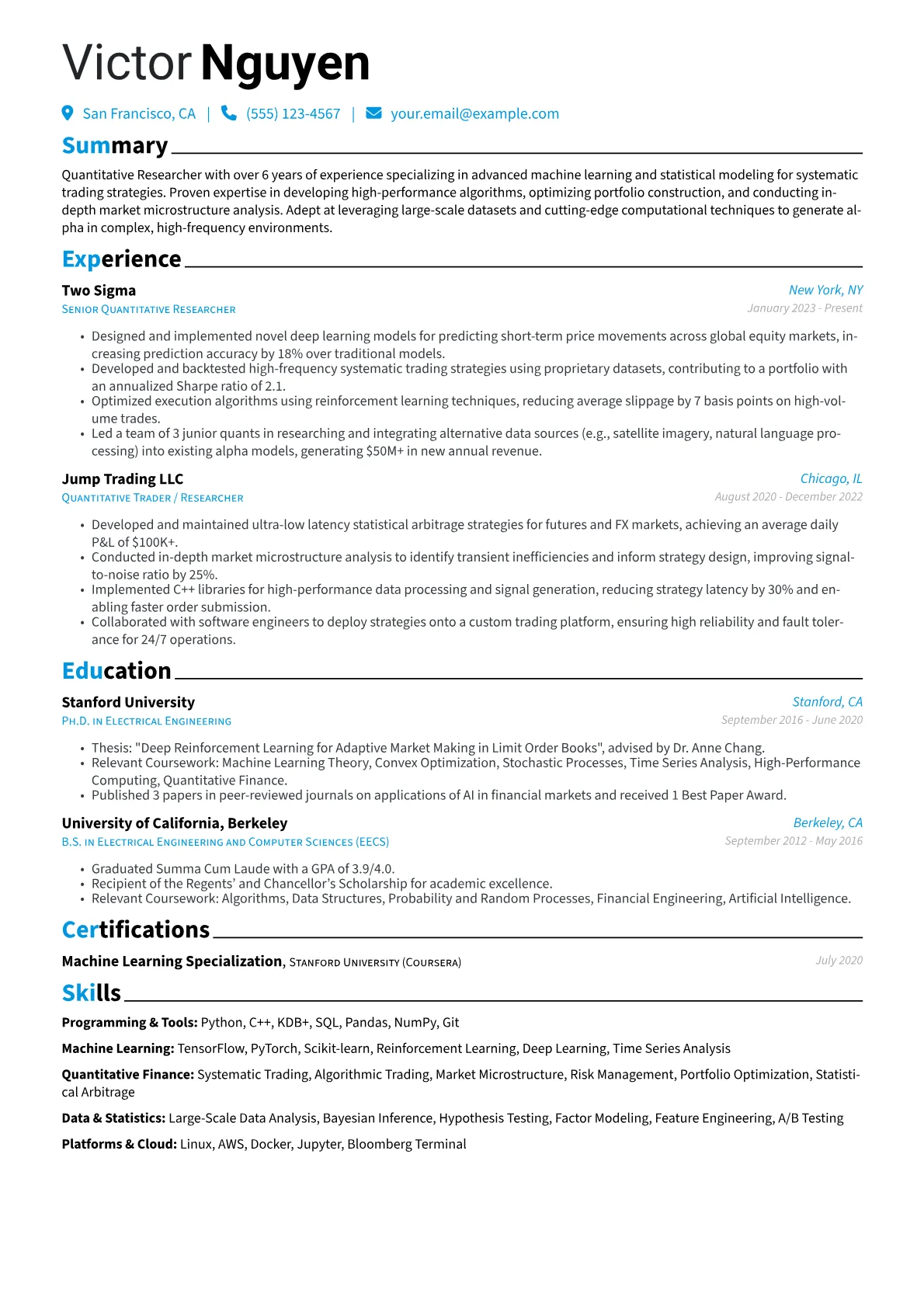
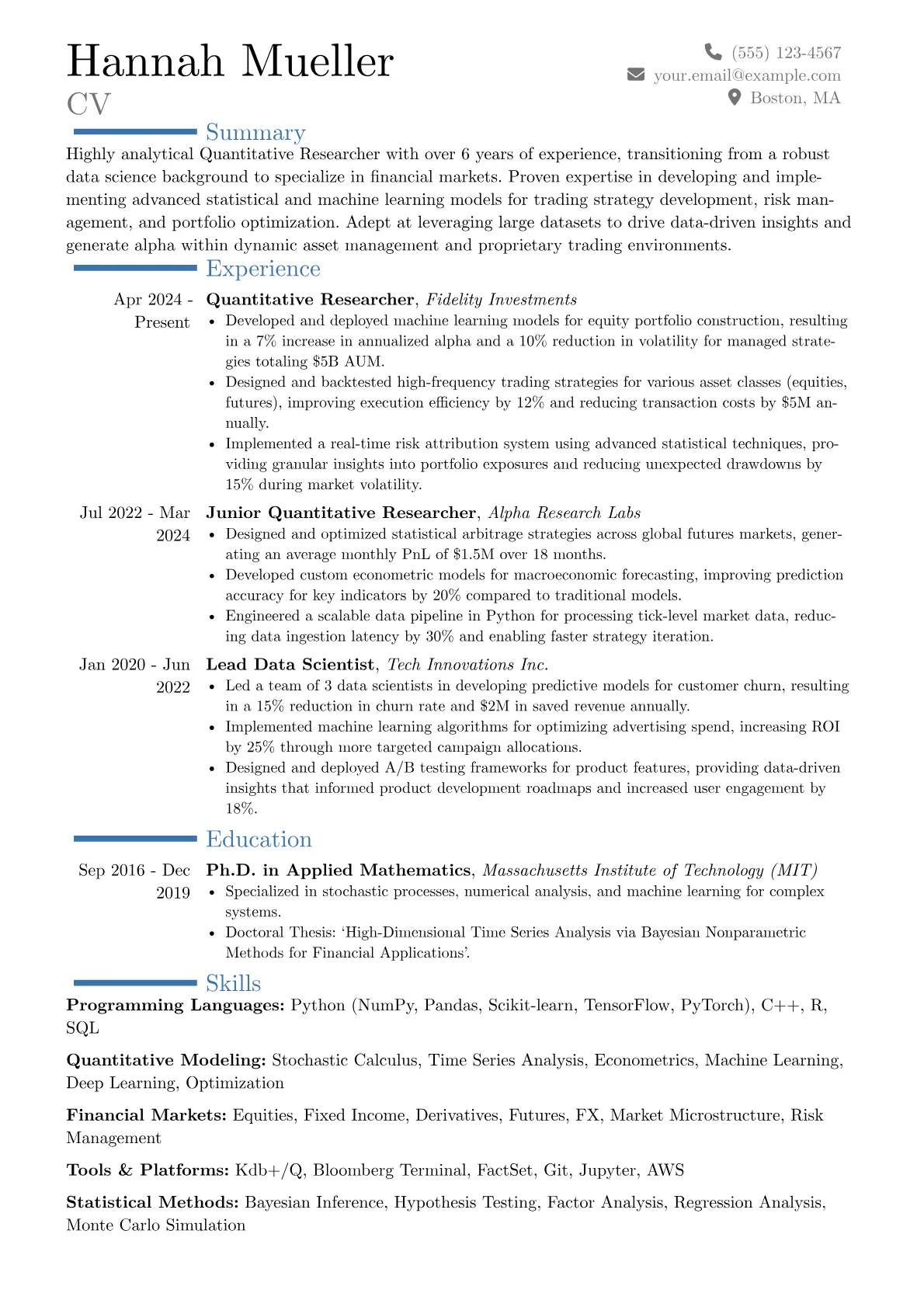
Quantitative Researcher resume samples
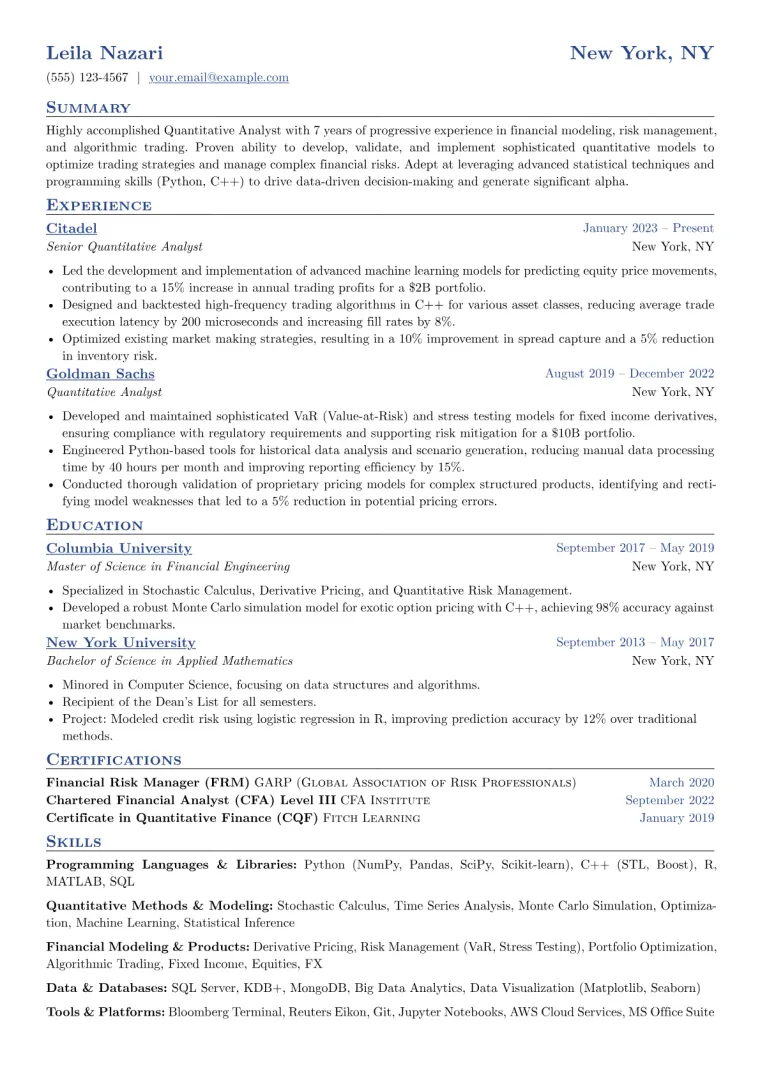
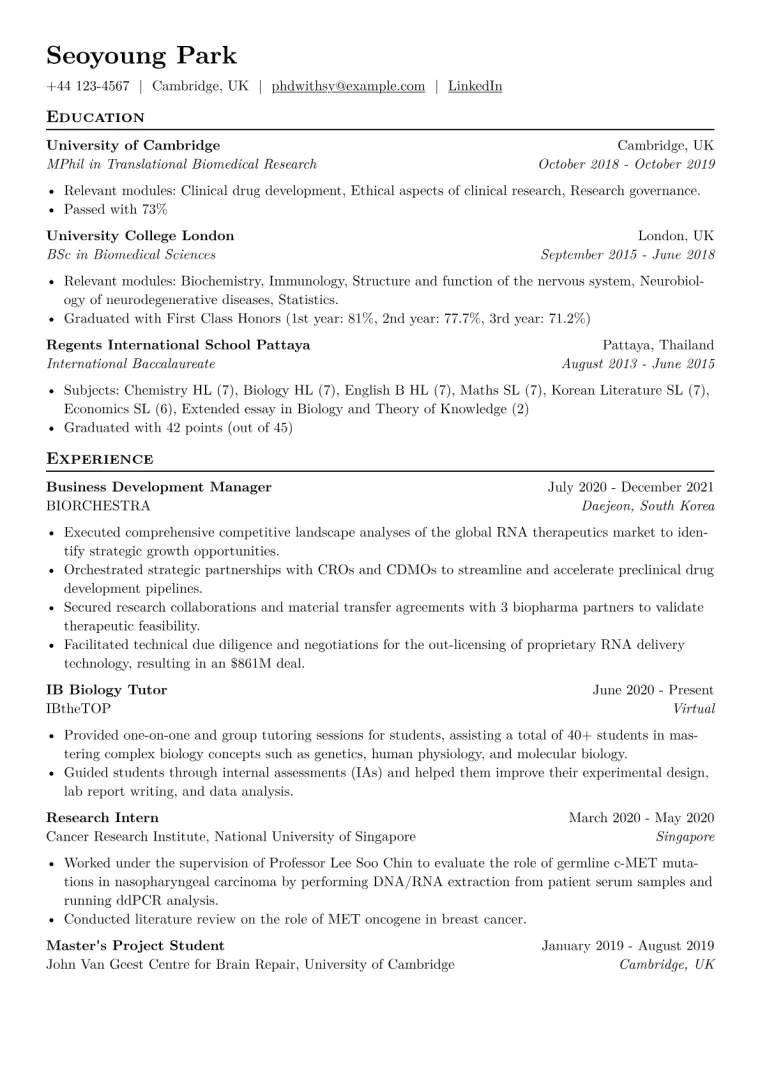
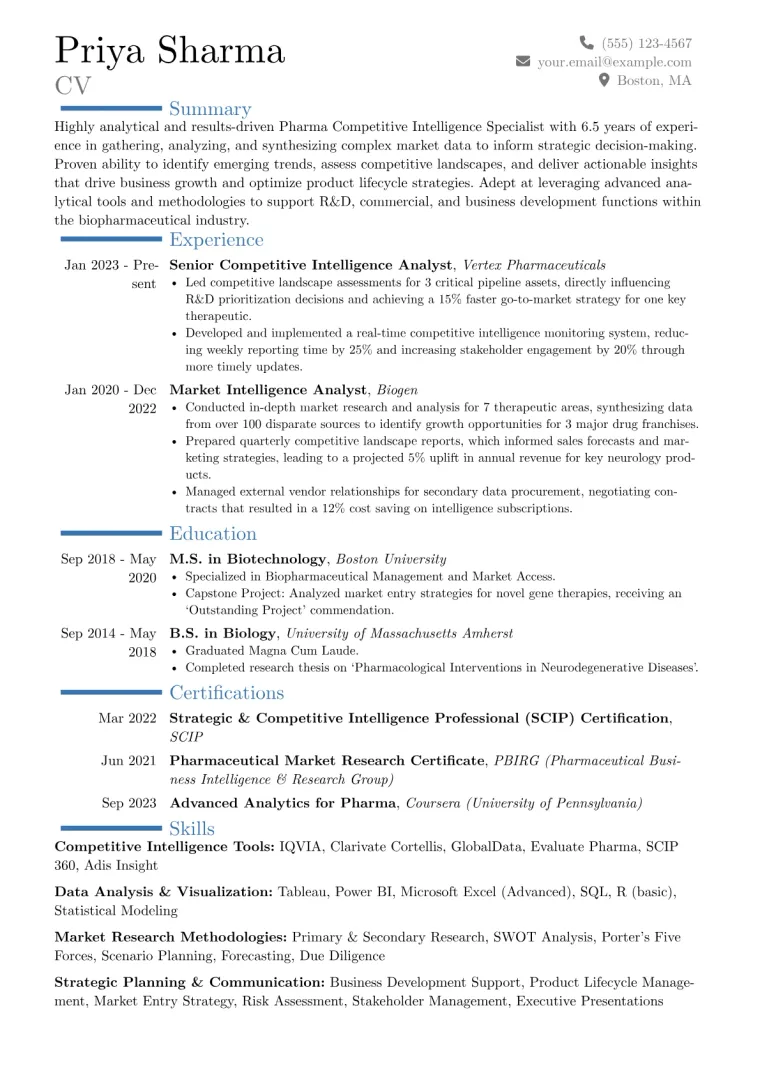
Three complete resumes, each in a different design.
Free to use. No download fee.
What makes a strong Quantitative Researcher resume?
US median salary $143,820 ·
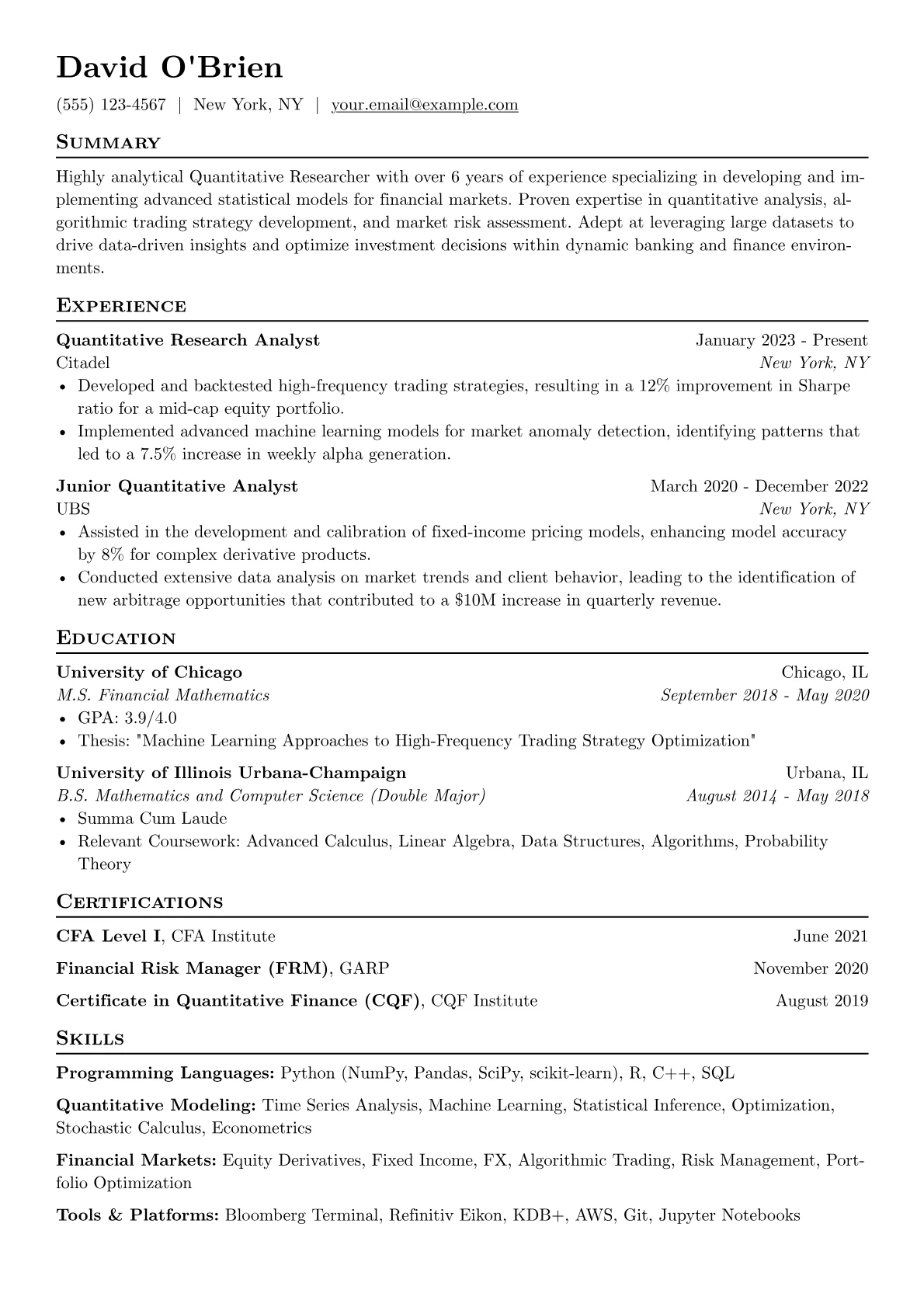
A strong Quantitative Researcher resume in Finance and Banking effectively showcases a blend of advanced technical expertise, financial market knowledge, and demonstrable impact. Hiring managers specifically seek candidates who can articulate concrete achievements using quantifiable metrics, indicating direct contributions to profit, efficiency, or risk mitigation. Key terminology like “high-frequency trading strategies,” “machine learning models,” “risk management frameworks,” and “fixed-income pricing models” resonates strongly. Furthermore, relevant certifications such as CFA, FRM, and CQF are highly valued, signaling a deep understanding of industry-specific practices and regulatory environments. Education from reputable institutions in fields like Financial Mathematics, Mathematics, or Computer Science also forms a critical foundation.
Why this example works
The provided example resume for David O'Brien excels in these aspects, particularly through its experience section. It highlights significant achievements with clear numerical outcomes, such as developing strategies that resulted in a “12% improvement in Sharpe ratio” and “7.5% increase in weekly alpha generation” at Citadel. Contributions at UBS include “enhancing model accuracy by 8%” and identifying “new arbitrage opportunities that contributed to a $10M increase in quarterly revenue.” The skills section is comprehensive, listing specific programming languages including Python with relevant libraries, quantitative modeling techniques like Machine Learning and Stochastic Calculus, and specialized financial market knowledge. Certifications like CFA Level I, Financial Risk Manager (FRM), and Certificate in Quantitative Finance (CQF) further bolster the candidate's profile.
How useful was this template?
Example by JobSproutQuantitative Researcher resume summary example
Highly analytical Quantitative Researcher with over 6 years of experience specializing in developing and implementing advanced statistical models for financial markets. Proven expertise in quantitative analysis, algorithmic trading strategy development, and market risk assessment. Adept at leveraging large datasets to drive data-driven insights and optimize investment decisions within dynamic banking and finance environments.
Quantitative Researcher salary by country
| Country | 25th percentile | Median | 75th percentile |
|---|---|---|---|
| US | $109,167 | $143,820 | $152,651 |
| UK | £43,958 | £60,455 | £75,450 |
| Canada | C$80,200 | C$94,000 | C$115,000 |
| Australia | A$92,500 | A$122,000 | A$135,000 |
| Germany | €61,875 | €66,250 | €70,809 |
| France | €51,250 | €52,500 | €53,750 |
| India | ₹650,000 | ₹1,300,000 | ₹1,950,000 |
Annual salaries in local currency, aggregated from live job postings via Adzuna. Figures refresh continuously and reflect advertised pay, not negotiated offers.
Quantitative Researcher resume skills and keywords
Recruiters and applicant tracking systems scan Quantitative Researcher resumes for these skills and keywords. Include the ones that match your experience and mirror the wording in the job description. Check your resume against them with the free ATS checker.
Hard skills
Tools & software
Certifications
Soft skills
Market Insights
Quantitative Researcher
Salary Range
Salary Trend
Mar 2025 – Feb 2026
12-Month Trend
Based on advertised Research roles.
US market data · Source: Adzuna · Updated Mar 2026
Frequently Asked Questions
How should a mid-level Quantitative Researcher structure their resume to impress hiring managers in finance?
What key skills should I highlight on my resume as a Quantitative Researcher with 3-5 years of experience?
How can I write a compelling summary and achievement bullets for a Quantitative Researcher role?
Are there any optional resume sections that really matter for a Quantitative Researcher?
How do I make sure my Quantitative Researcher resume is tailored to a specific job using JobSprout's AI tool?
The blank page is the hard part. Skip it.
Free to use. No download fee.
Related Articles

Research CV: UK Format, Structure and Examples [2026]
How to write a research CV for UK universities and institutes. The section order panels expect, how to list publications and funding, and how long it should actually be.

Postdoc CV: Structure, Template and Example [2026]
What a postdoctoral CV needs that a doctoral one does not: independence, funding, and a publication list a panel can audit. With a full worked example.

Academic CV for PhD Applications: How to Write One [2026]
Learn how to write an academic CV for PhD applications. Real template analysis, what research committees look for, and common mistakes to avoid.