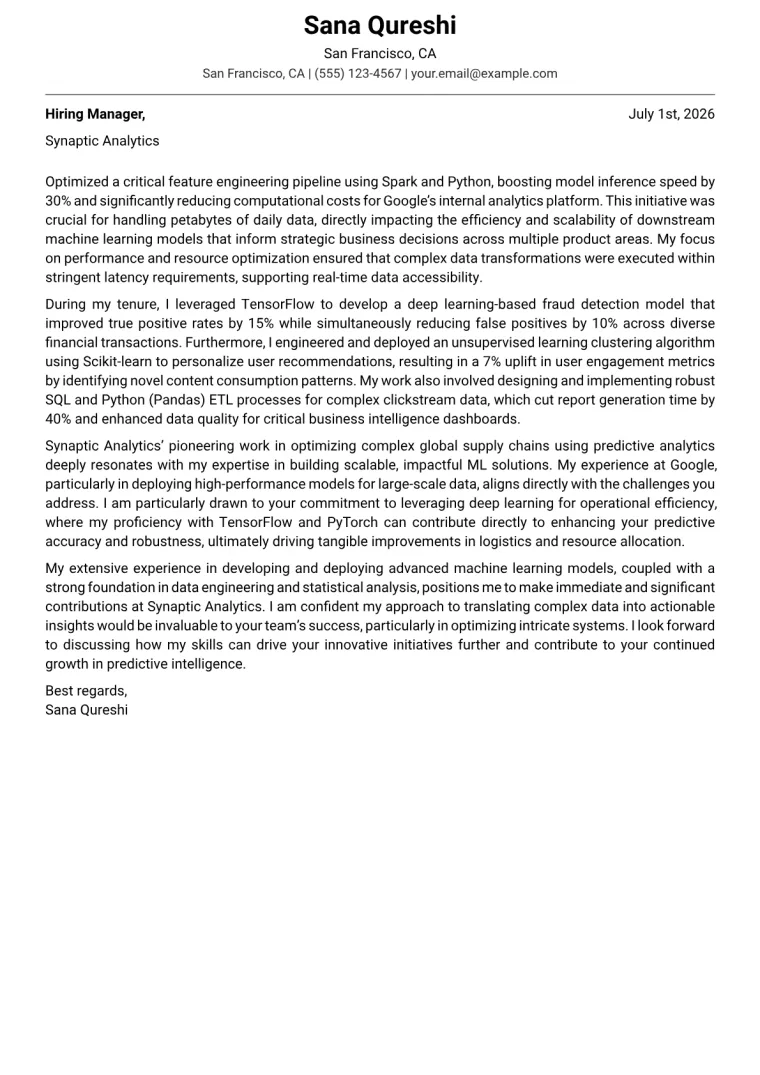
Data Scientist Interview Questions

13 questions from the recruiter screen to the situational round, each with what the interviewer is checking.

What interviewers look for

Interviewers for this role evaluate your ability to translate ambiguous business requirements into robust predictive models using Python and SQL. They assess how you handle complex datasets and explain technical findings to stakeholders while maintaining rigorous experiment design. Candidates must demonstrate proficiency in feature engineering and model evaluation to drive measurable business outcomes in environments using cloud platforms like AWS.

Recruiter screen

  1. How do you align your technical roadmap with the current production data infrastructure?

    What they're checking: How you determine the feasibility of projects based on existing technical resources and data access.

    Python
  2. What is your approach to maintaining validity when working with fragmented datasets across multiple environments?

    What they're checking: Whether you maintain logical consistency when extracting insights from messy or incomplete production logs.

    Data Mining
  3. How does your experience with cloud platforms impact your ability to deploy models?

    What they're checking: How you adapt your development workflow to the specific constraints and service limits of cloud providers.

    AWS Certified Machine Learning Specialty

Behavioral

  1. Tell me about a time you had to pivot your feature engineering strategy after the model performance failed to meet expected accuracy.

    What they're checking: How you respond to technical setbacks by iterating on input variables to improve model reliability.

    Feature EngineeringSample answer
  2. Describe a project where your data storytelling significantly changed a stakeholder decision on a product feature.

    What they're checking: Whether you can effectively communicate complex statistical concepts to audiences without a technical background.

    Data StorytellingSample answer
  3. Explain a time you managed a disagreement regarding the selection of a machine learning algorithm for a production system.

    What they're checking: Whether you can maintain productive working relationships while defending your technical choices with evidence.

    Machine Learning Algorithms
  4. Share an experience where you had to lead a cross-functional collaboration to solve a data pipeline bottleneck.

    What they're checking: How you coordinate across departments to resolve infrastructure issues that impede data processing speed.

    Cross-functional Collaboration

Role knowledge

  1. When would you prefer using Gradient Boosting over a Neural Network for tabular classification tasks?

    What they're checking: Whether you understand the trade-offs between model interpretability and predictive performance in production settings.

    Machine Learning Algorithms
  2. How do you mitigate data leakage in a time series analysis project?

    What they're checking: Whether you identify the common pitfalls in temporal data processing that lead to invalid model results.

    Time Series Analysis
  3. Describe how you would set up an A/B test to measure the lift of a new recommendation engine.

    What they're checking: How you apply scientific methods to ensure experimental results are statistically significant and actionable.

    A/B Testing
  4. Which specific metrics do you prioritize when performing model evaluation on an imbalanced classification dataset?

    What they're checking: How you select evaluation metrics that align with business goals rather than just technical benchmarks.

    Model Evaluation

Situational

  1. What would you do if your model performance drops significantly once deployed in a production environment?

    What they're checking: Whether you have a structured process for identifying and remediating drift in live production models.

    Model EvaluationSample answer
  2. What steps would you take if your stakeholders request a model that uses sensitive data not currently included in your scope?

    What they're checking: Whether you balance compliance and ethical considerations against project demands to protect user privacy.

    Critical Thinking

Sample answers

AI-written STAR examples to swap your own facts into.

Tell me about a time you had to pivot your feature engineering strategy after the model performance failed to meet expected accuracy.

Situation
Our user churn model had a high variance in its predictions. I noticed the performance plateaued during validation.
Task
I needed to reduce the error rate to make the model useful for marketing intervention.
Action
I analyzed the feature importance plots and realized that several interactions were causing overfitting. I removed those variables and engineered new log-transformed features instead.
Result
The updated feature set reduced the root mean squared error by 14 percent.
Describe a project where your data storytelling significantly changed a stakeholder decision on a product feature.

Situation
The product team planned a major interface overhaul based on incomplete user engagement data. They were convinced a specific button placement was the issue.
Task
I needed to present our usage logs in a way that highlighted the actual pain points instead of the assumed ones.
Action
I created a dashboard using Tableau that segmented user journeys by session duration and mapped these to the specific feature engagement events.
Result
This visual presentation saved the team from a misguided project and redirected resources toward a change that improved retention by 8 percent.

What would you do if your model performance drops significantly once deployed in a production environment?

Situation
A demand forecasting model began underestimating inventory needs three weeks after deployment. It was leading to missed revenue opportunities.
Task
I had to diagnose the drift and update the predictions to prevent stock outs.
Action
I performed a feature distribution analysis comparing training data to recent production data. I identified a shift in consumer purchasing patterns that the static model could not capture.
Result
By retraining the model with the updated window of data, I restored accuracy and decreased stock out incidents by 22 percent.

Say your answers out loud before the real thing

Answer by voice or text, with questions drawn from your CV and the job ad. Your answers come back rewritten using only facts from your CV or what you said.

Applying for Data Scientist jobs