Biomedical Engineer Resume Example
 Example by JobSprout
Free to use. No download fee.
Market Insights
Biomedical Engineer
Salary Range
Salary Trend
Mar 2025 – Feb 2026
12-Month Trend
Based on advertised Healthcare (Clinical) roles.
US market data · Source: Adzuna · Updated Mar 2026
How useful was this template?
Biomedical Engineer resume samples
Three complete resumes, each in a different design.
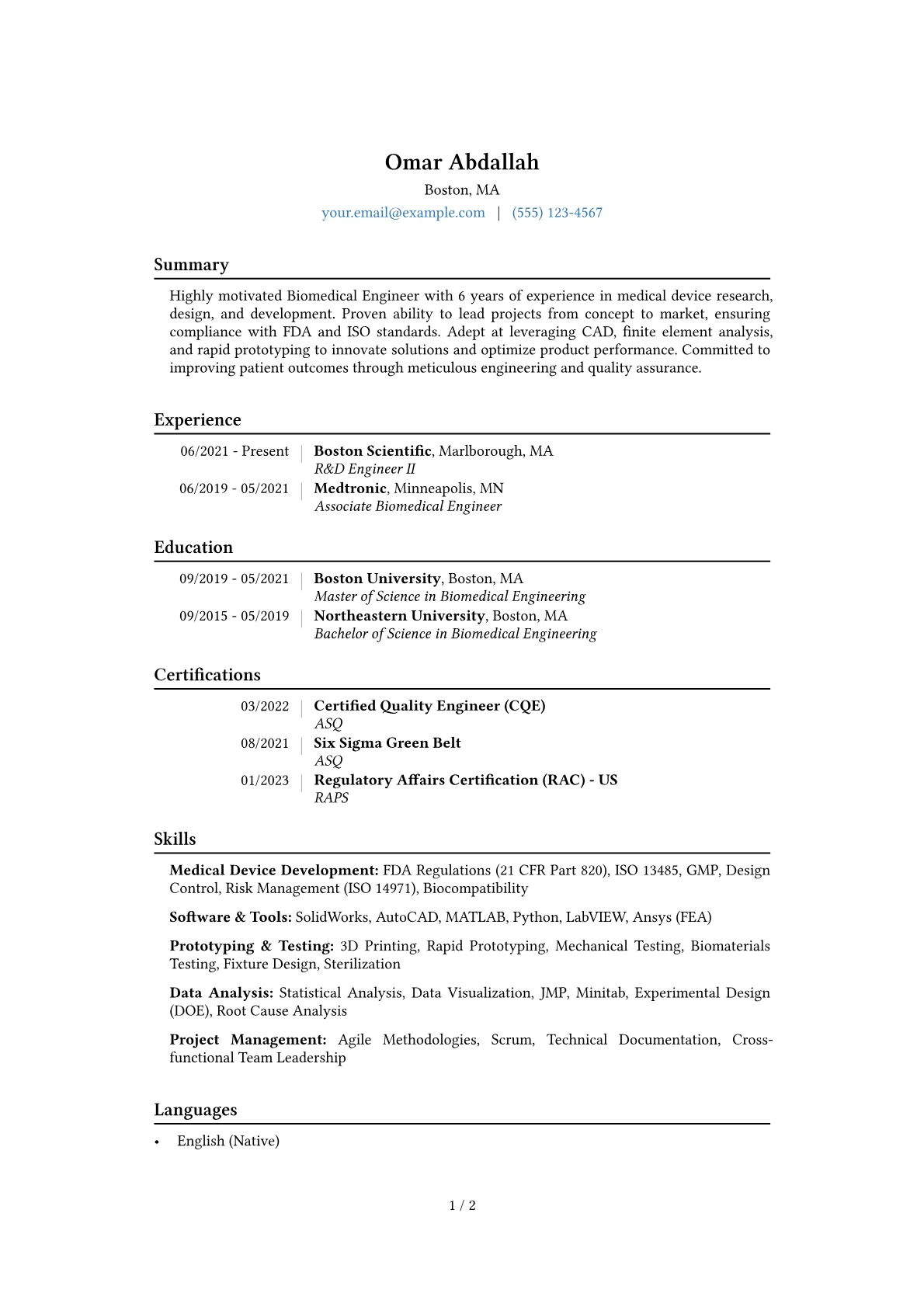

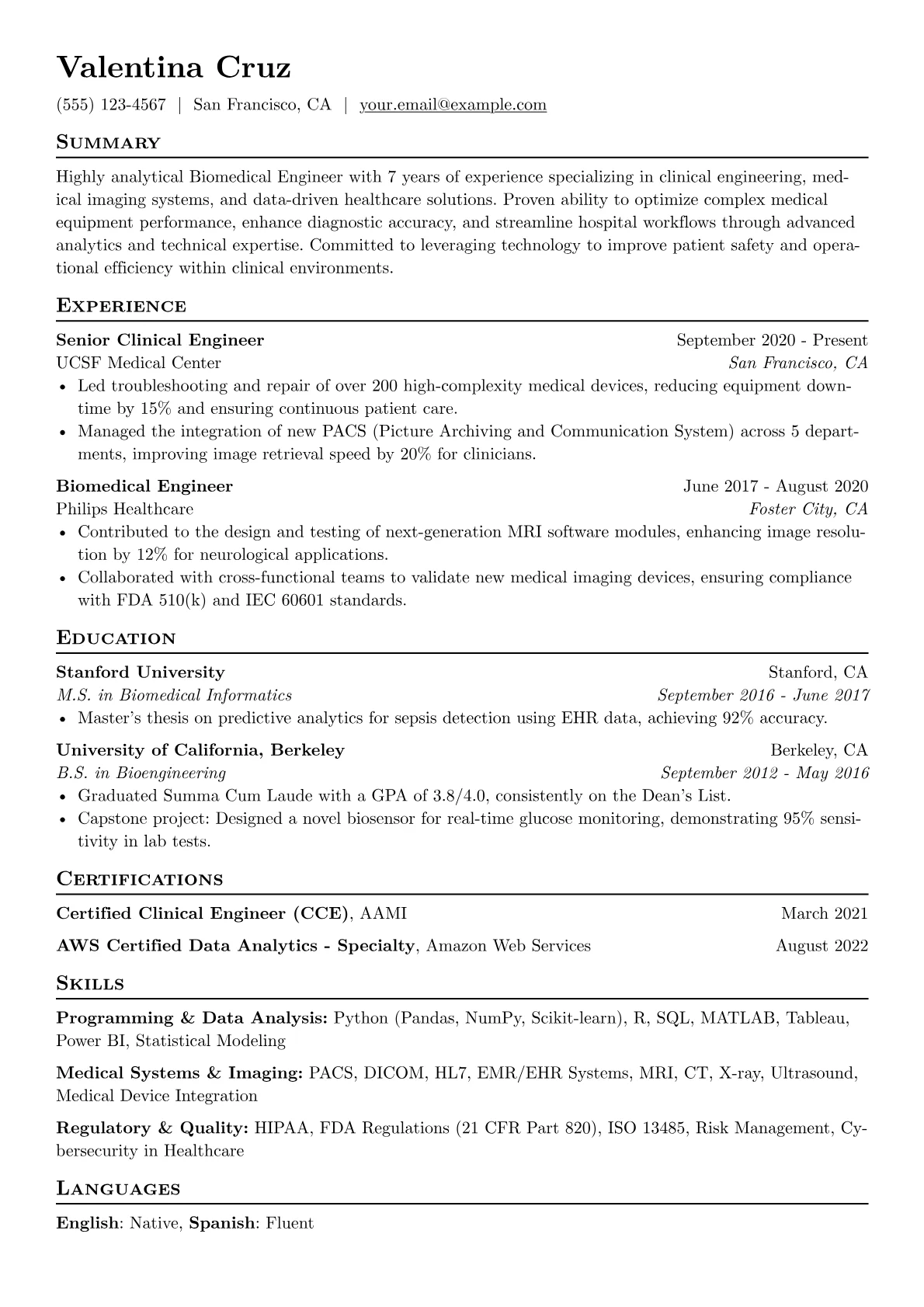
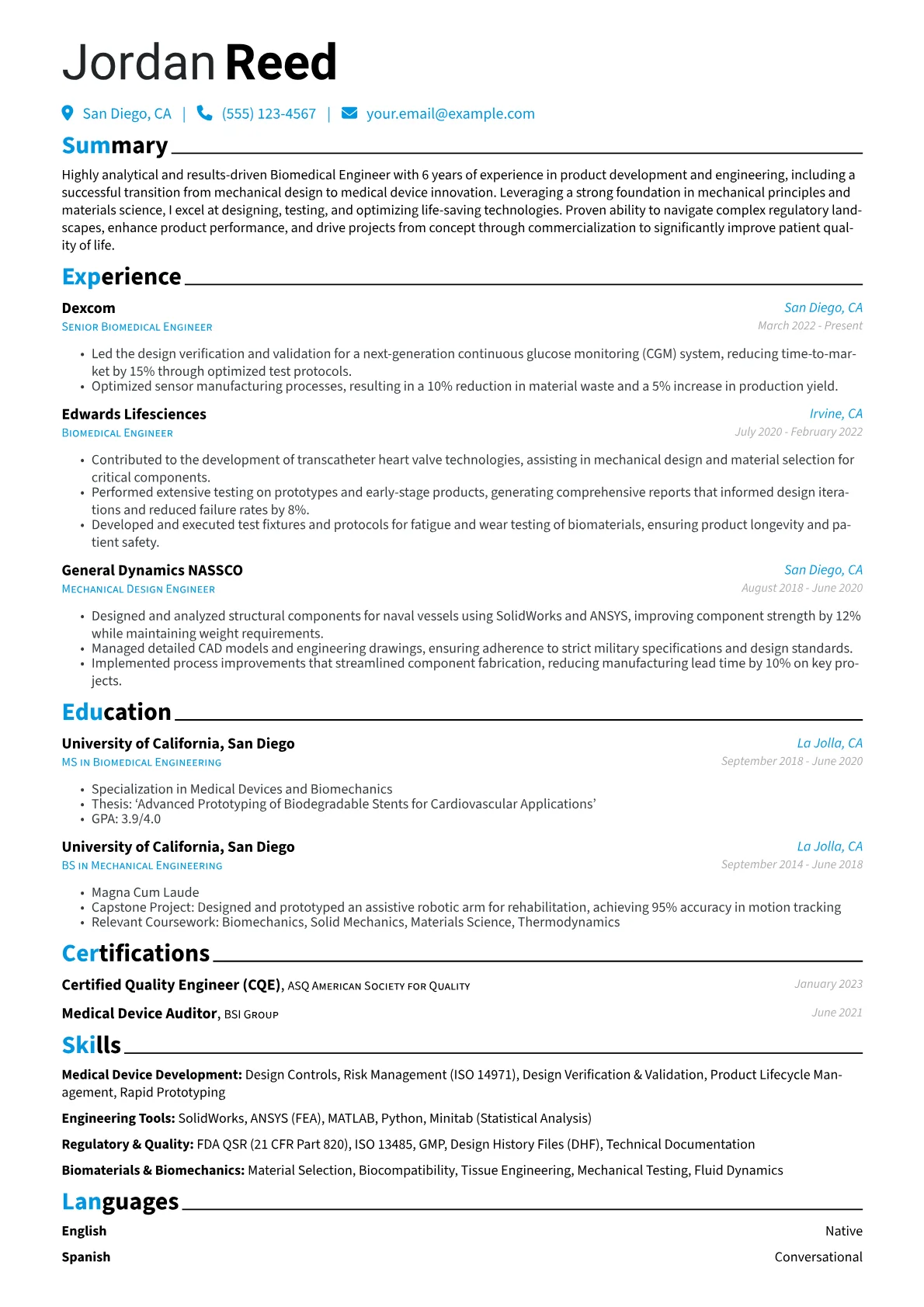
Free to use. No download fee.
What makes a strong Biomedical Engineer resume?
US median salary $101,105 ·
Hiring managers for mid-level Biomedical Engineers in healthcare seek a clear demonstration of technical expertise coupled with an understanding of clinical environments and regulatory demands. A strong resume effectively bridges engineering innovation with patient safety and practical healthcare applications. It must highlight problem-solving skills, especially in device design, testing, or maintenance, within a regulated setting.
Why this example works
This JobSprout example excels by showcasing quantified achievements, such as reducing equipment downtime or improving diagnostic accuracy, which directly translates engineering work into patient outcomes or operational efficiency. The strategic grouping of relevant technical and clinical skills, alongside industry certifications like Six Sigma or specific device training, immediately signals a well-rounded and compliant professional.
How useful was this template?
Example by JobSprout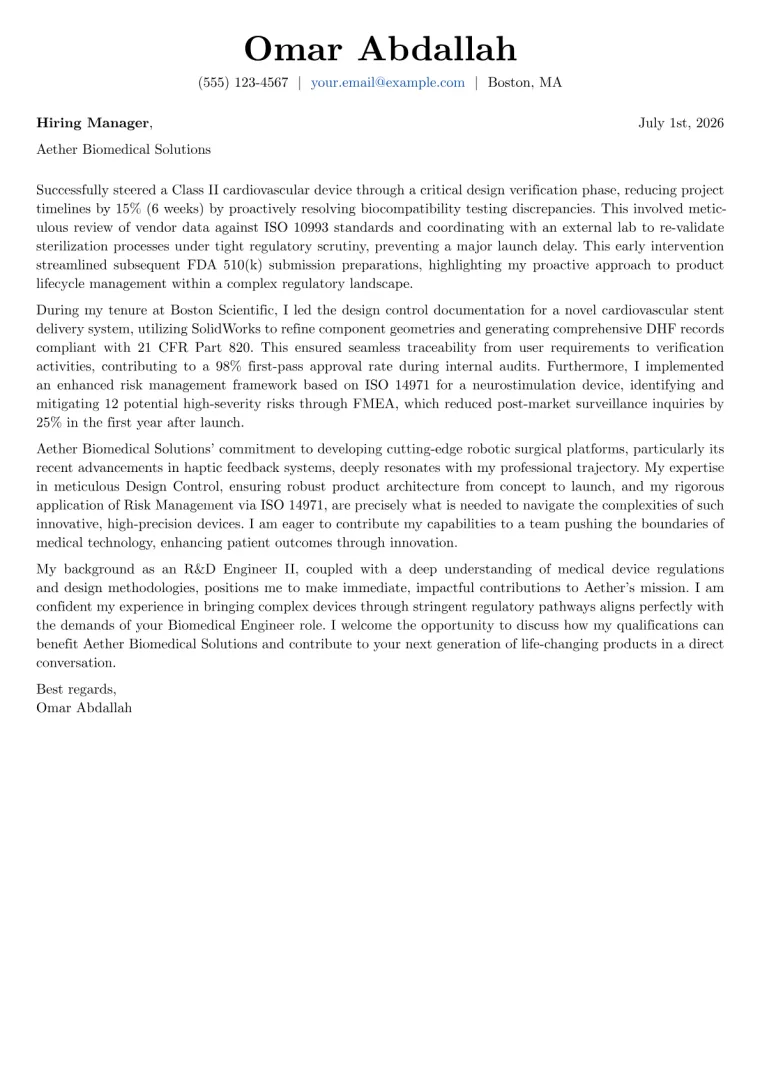
Biomedical Engineer Cover Letter Example
Written for the same person as this resume, ready to adapt.
Biomedical Engineer resume summary example
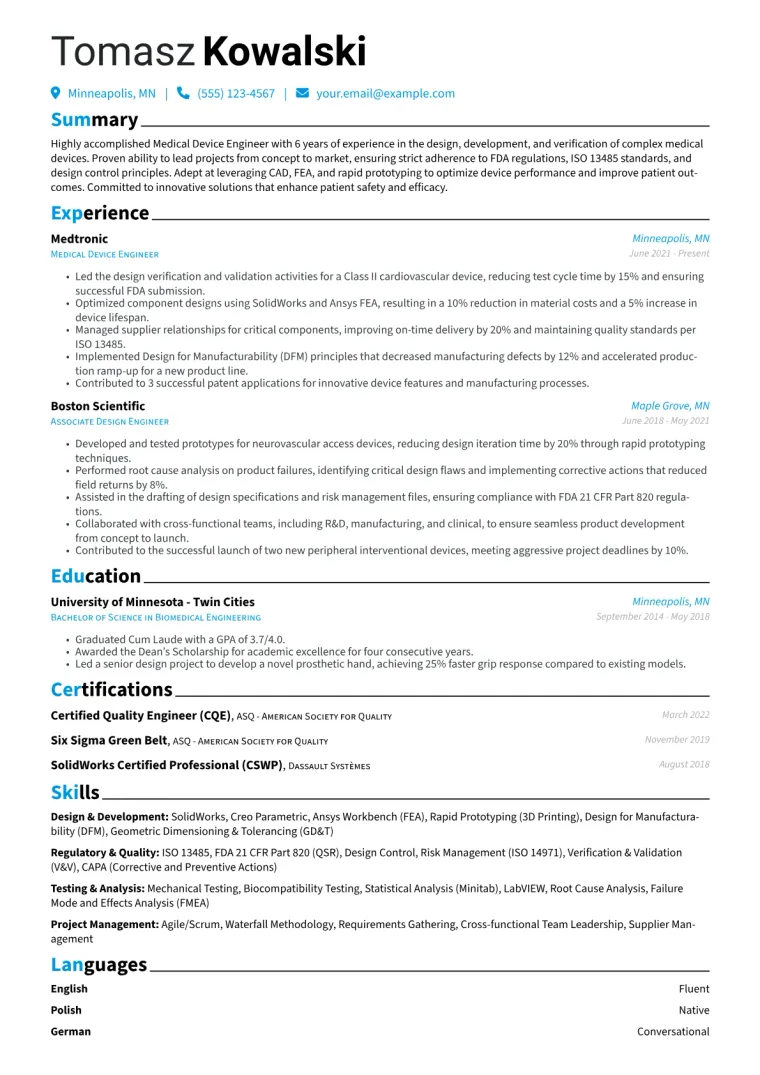
Highly motivated Biomedical Engineer with 6 years of experience in medical device research, design, and development. Proven ability to lead projects from concept to market, ensuring compliance with FDA and ISO standards. Adept at leveraging CAD, finite element analysis, and rapid prototyping to innovate solutions and optimize product performance. Committed to improving patient outcomes through meticulous engineering and quality assurance.
Biomedical Engineer salary by country
| Country | 25th percentile | Median | 75th percentile |
|---|---|---|---|
| US | $83,364 | $101,105 | $142,382 |
| UK | £40,200 | £46,800 | £56,071 |
| Canada | C$67,778 | C$85,000 | C$111,667 |
| Australia | A$98,333 | A$130,000 | A$149,000 |
| Germany | €33,750 | €37,500 | €41,250 |
| India | ₹300,000 | ₹600,000 | ₹900,000 |
Annual salaries in local currency, aggregated from live job postings via Adzuna. Figures refresh continuously and reflect advertised pay, not negotiated offers.
Biomedical Engineer resume skills and keywords
Recruiters and applicant tracking systems scan Biomedical Engineer resumes for these skills and keywords. Include the ones that match your experience and mirror the wording in the job description. Check your resume against them with the free ATS checker.
Hard skills
Tools & software
Certifications
Soft skills
Market Insights
Biomedical Engineer
Salary Range
Salary Trend
Mar 2025 – Feb 2026
12-Month Trend
Based on advertised Healthcare (Clinical) roles.
US market data · Source: Adzuna · Updated Mar 2026
Frequently Asked Questions
What's the best resume structure for a mid-level Biomedical Engineer?
Which skills and qualifications should I highlight for a Biomedical Engineer role?
How can I write strong achievement bullets or a professional summary for a Biomedical Engineer?
What optional sections, like a portfolio or publications, are important for this role?
How do I tailor my resume template for a specific Biomedical Engineer job posting?
The blank page is the hard part. Skip it.
Free to use. No download fee.
![How to Write a CV for Healthcare Applications [2026 Guide]](/thumbnails/cv-for-healthcare-applications.webp)