Food Photographer Resume Example
 Example by JobSprout
Market Insights
Food Photographer
Salary Range
US market data · Source: Adzuna · Updated Mar 2026
How useful was this template?
Food Photographer resume samples
Three complete resumes, each in a different design.
Editorial Notes
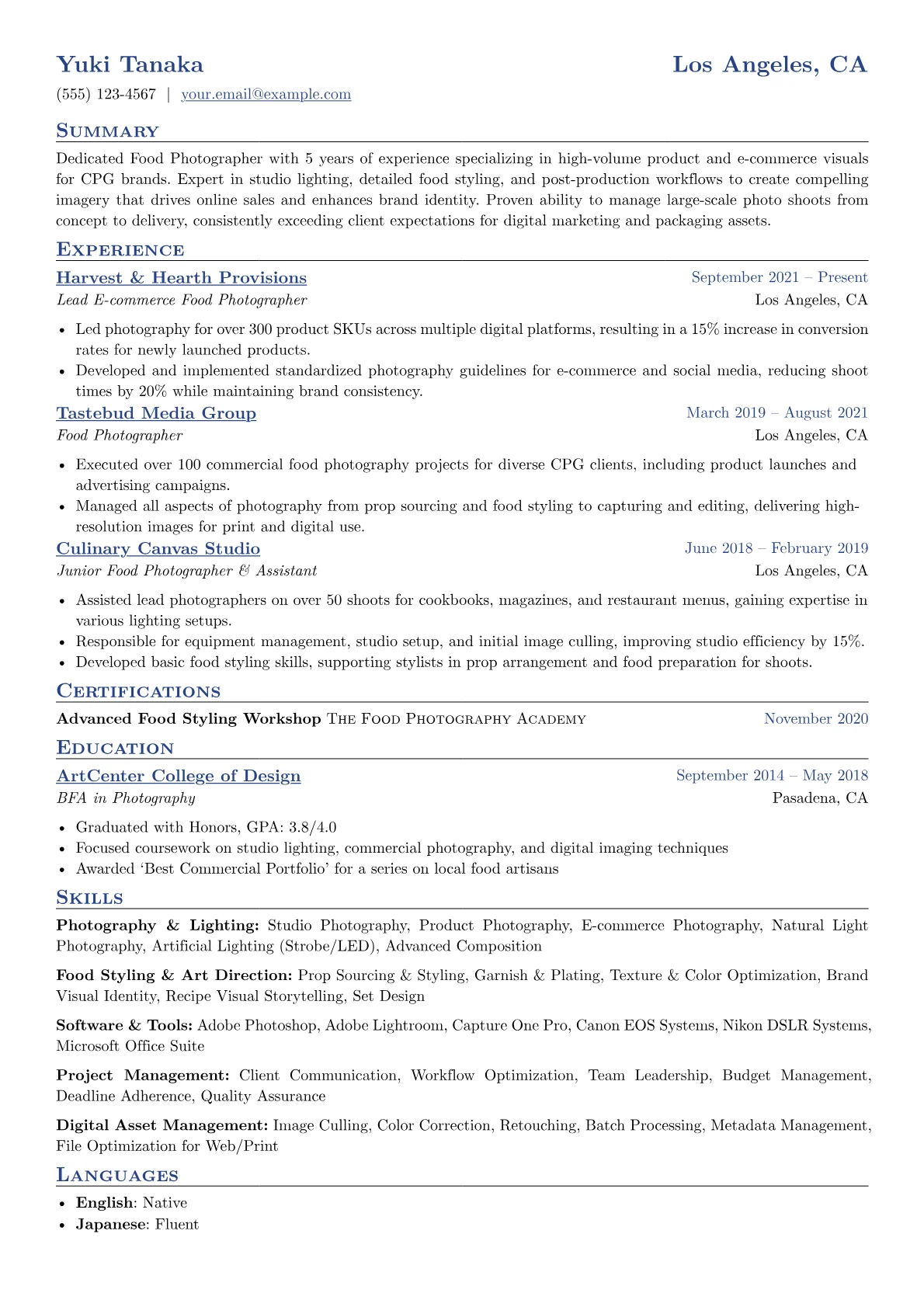
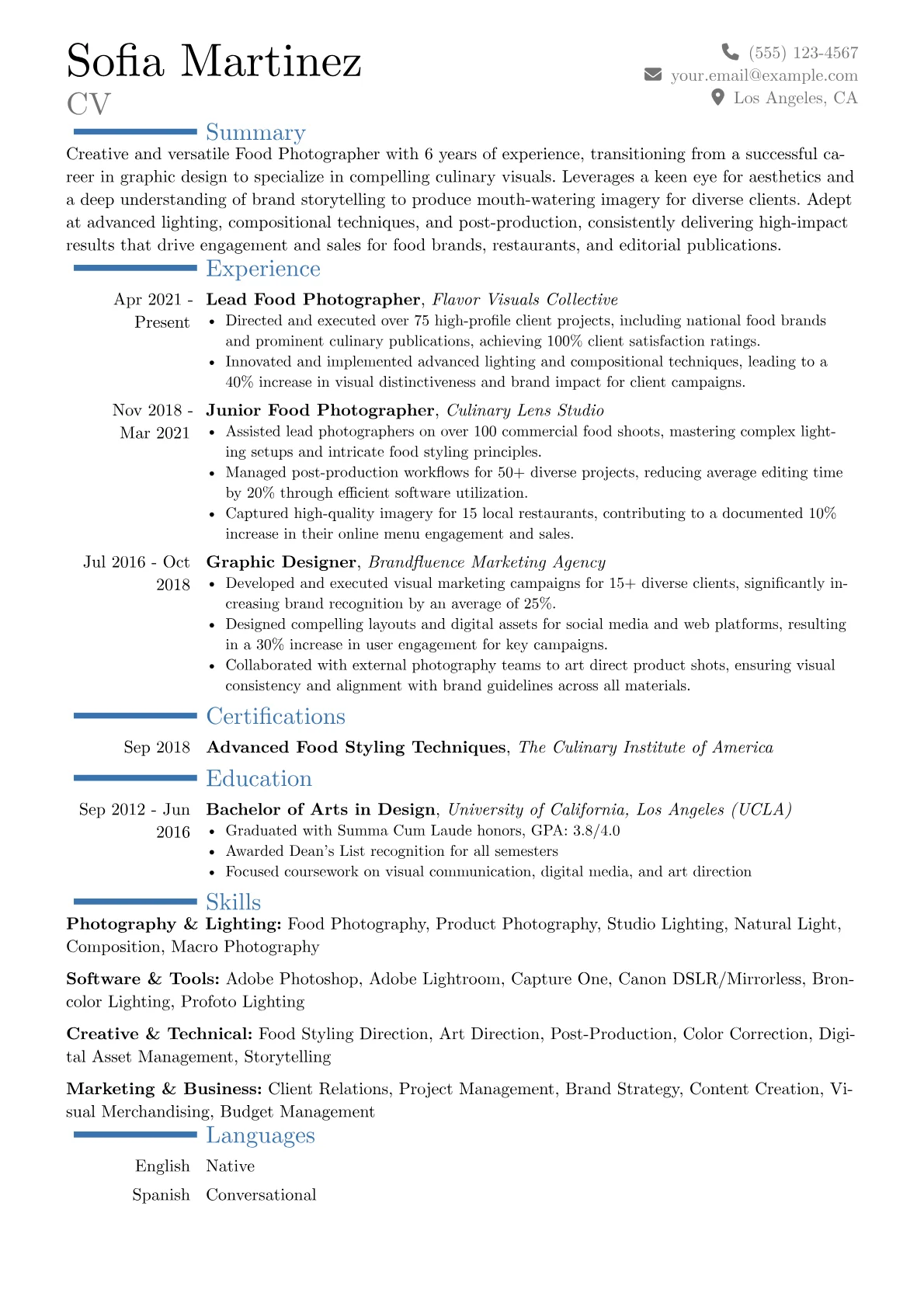
For food photographers in varied industries, a strong resume showcases not just technical skill but also business acumen and creative collaboration. Hiring managers look for concrete achievements such as increasing client engagement, meeting specific brand aesthetics, or successfully managing shoots from concept to delivery. Key terminology includes flat lay, editorial styling, prop sourcing, and advanced post-production. Emphasize experience with diverse cuisines, understanding of various lighting setups like natural or studio, and the ability to work effectively with food stylists and art directors. A prominent portfolio link is essential.
This example CV excels by clearly presenting a portfolio upfront, which is critical for visual roles. It effectively quantifies achievements, for instance, detailing how specific projects increased social media reach or met tight editorial deadlines. Technical skills are grouped intuitively, highlighting proficiency in industry-standard software like Adobe Lightroom and Photoshop, alongside specific camera equipment and lighting expertise. The resume also effectively integrates soft skills, such as client communication and creative problem-solving, within project descriptions, demonstrating a well-rounded professional ready for mid-level challenges.
This template was built with JobSprout and can be remixed to create your own tailored Food Photographer resume.
How useful was this template?
Example by JobSproutFood Photographer resume summary example
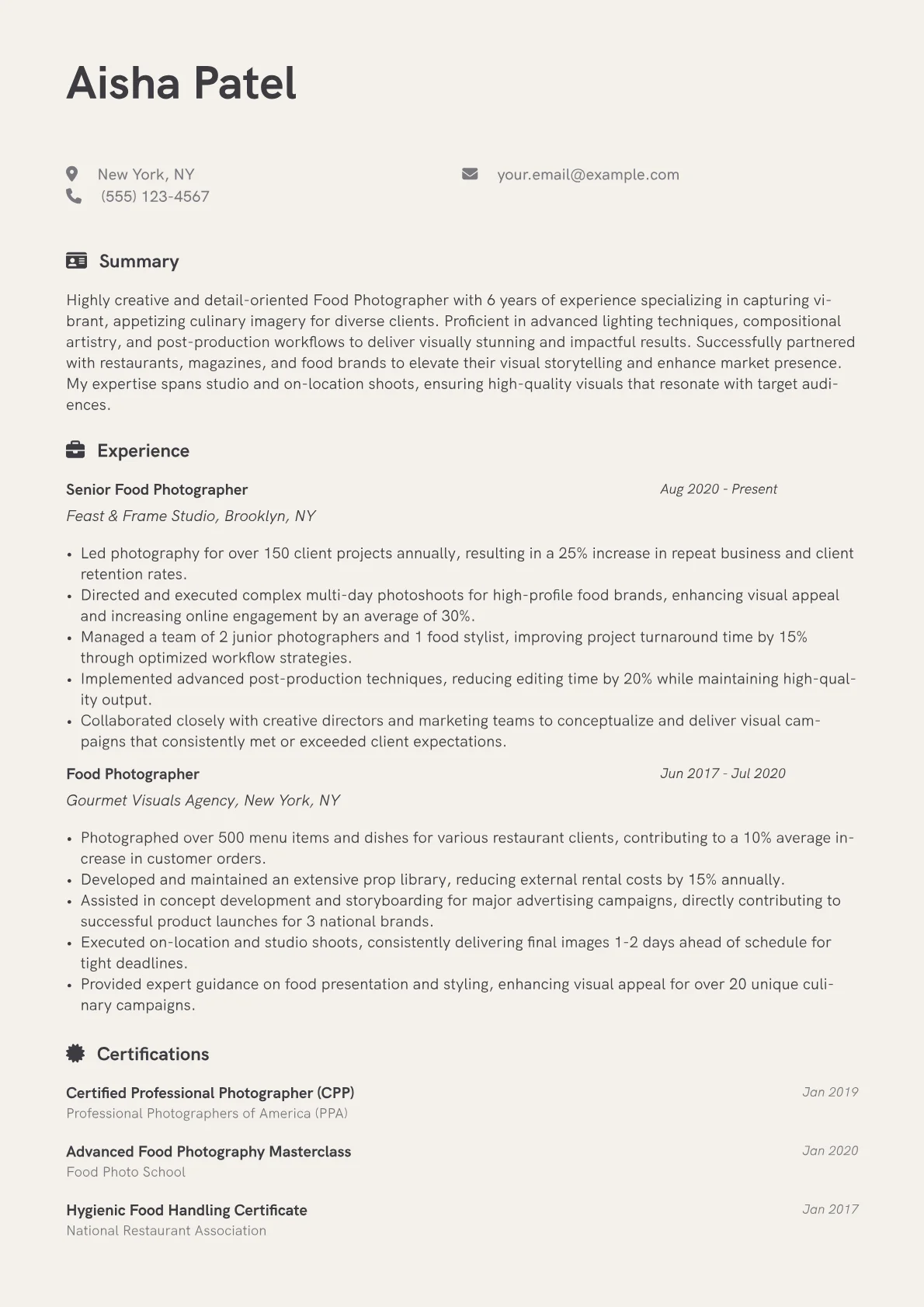
Highly creative and detail-oriented Food Photographer with 6 years of experience specializing in capturing vibrant, appetizing culinary imagery for diverse clients. Proficient in advanced lighting techniques, compositional artistry, and post-production workflows to deliver visually stunning and impactful results. Successfully partnered with restaurants, magazines, and food brands to elevate their visual storytelling and enhance market presence. My expertise spans studio and on-location shoots, ensuring high-quality visuals that resonate with target audiences.
Food Photographer salary by country
| Country | 25th percentile | Median | 75th percentile |
|---|---|---|---|
| US | $36,541 | $53,660 | $79,877 |
| UK | £28,153 | £35,862 | £45,387 |
| Canada | C$55,486 | C$70,860 | C$90,319 |
| Australia | A$75,333 | A$90,000 | A$110,000 |
| Germany | €70,000 | €75,500 | €81,000 |
| France | €27,589 | €34,153 | €39,449 |
| Netherlands | €42,652 | €52,645 | €62,474 |
| Italy | €25,000 | €34,615 | €49,000 |
| Austria | €36,452 | €54,286 | €72,063 |
| New Zealand | NZ$89,631 | NZ$116,435 | NZ$156,250 |
| India | ₹281,496 | ₹562,992 | ₹844,488 |
| Poland | zł149,286 | zł191,135 | zł206,147 |
Annual salaries in local currency, aggregated from live job postings via Adzuna. Figures refresh continuously and reflect advertised pay, not negotiated offers.
Food Photographer resume skills and keywords
Recruiters and applicant tracking systems scan Food Photographer resumes for these skills and keywords. Include the ones that match your experience and mirror the wording in the job description. Check your resume against them with the free ATS checker.
Hard skills
Tools & software
Certifications
Soft skills
Market Insights
Food Photographer
Salary Range
US market data · Source: Adzuna · Updated Mar 2026