Operational Risk Analyst Resume Example
 Example by JobSprout
Market Insights
Operational Risk Analyst
Salary Range
Salary Trend
Mar 2025 – Feb 2026
12-Month Trend
Based on advertised Finance & Accounting roles.
US market data · Source: Adzuna · Updated Mar 2026
How useful was this template?
Operational Risk Analyst resume samples
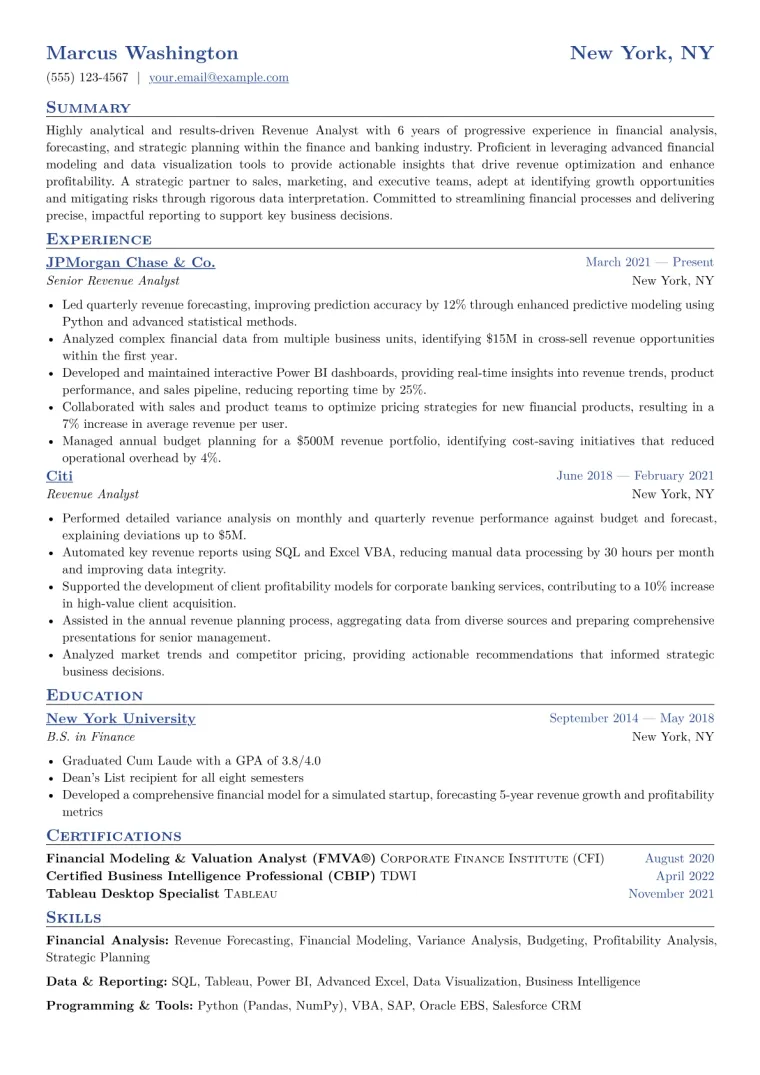
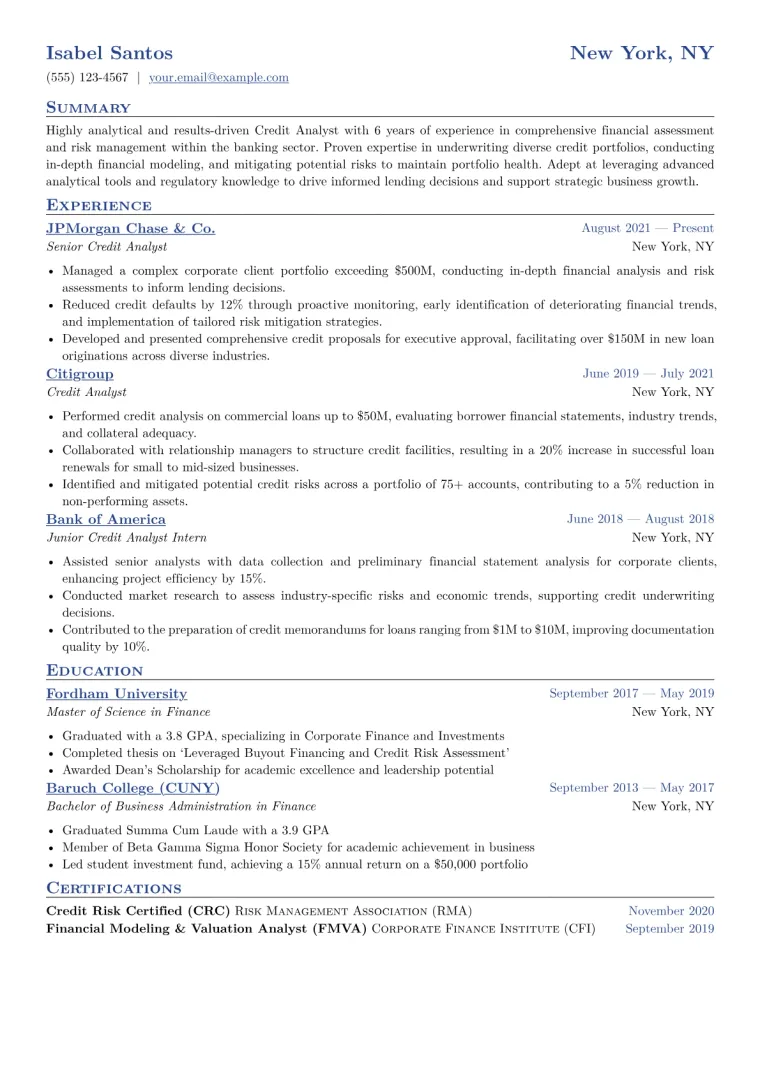
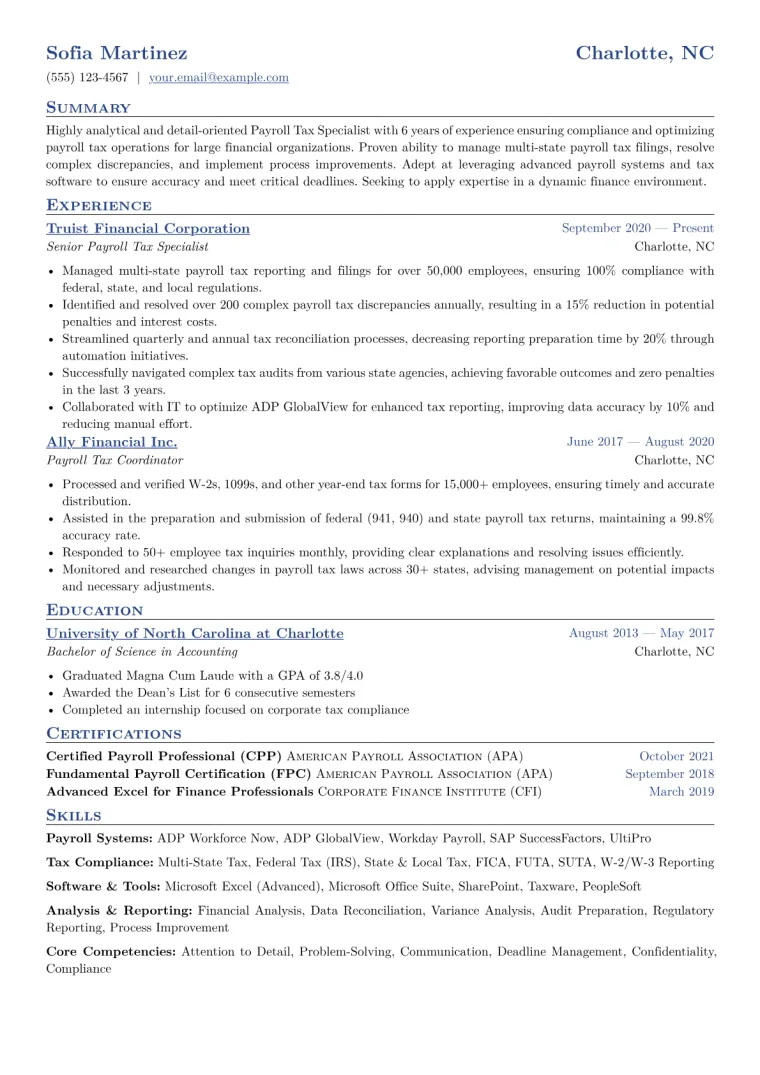
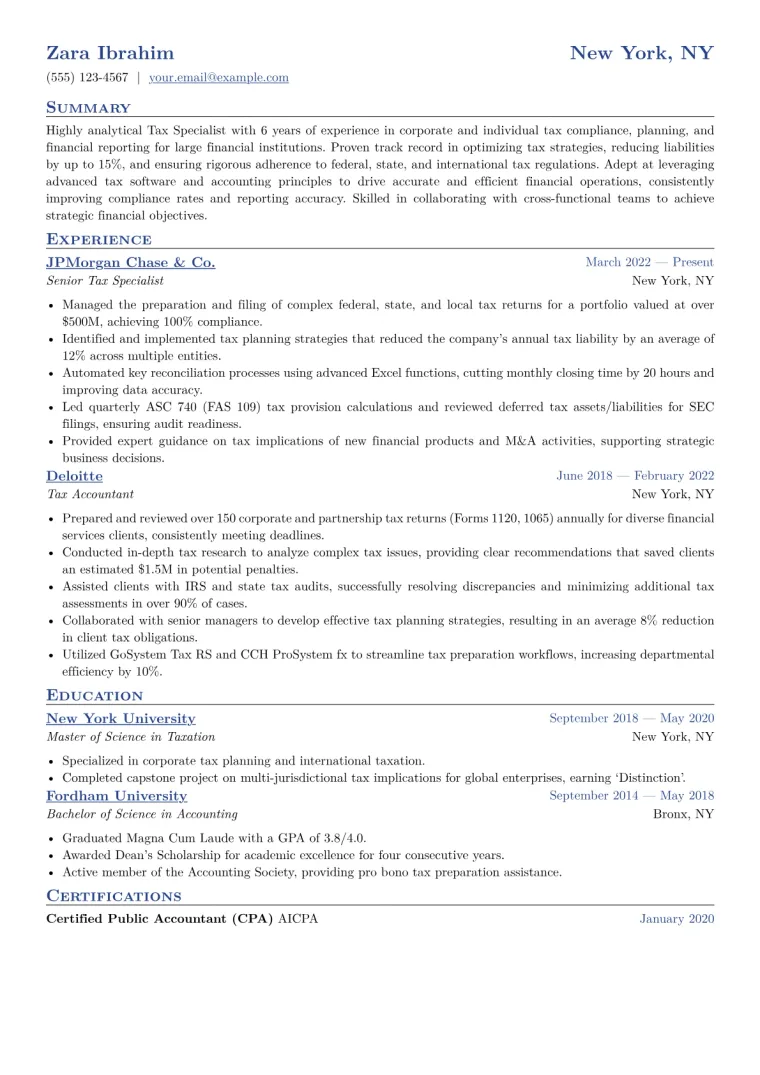
Three complete resumes, each in a different design.

Editorial Notes
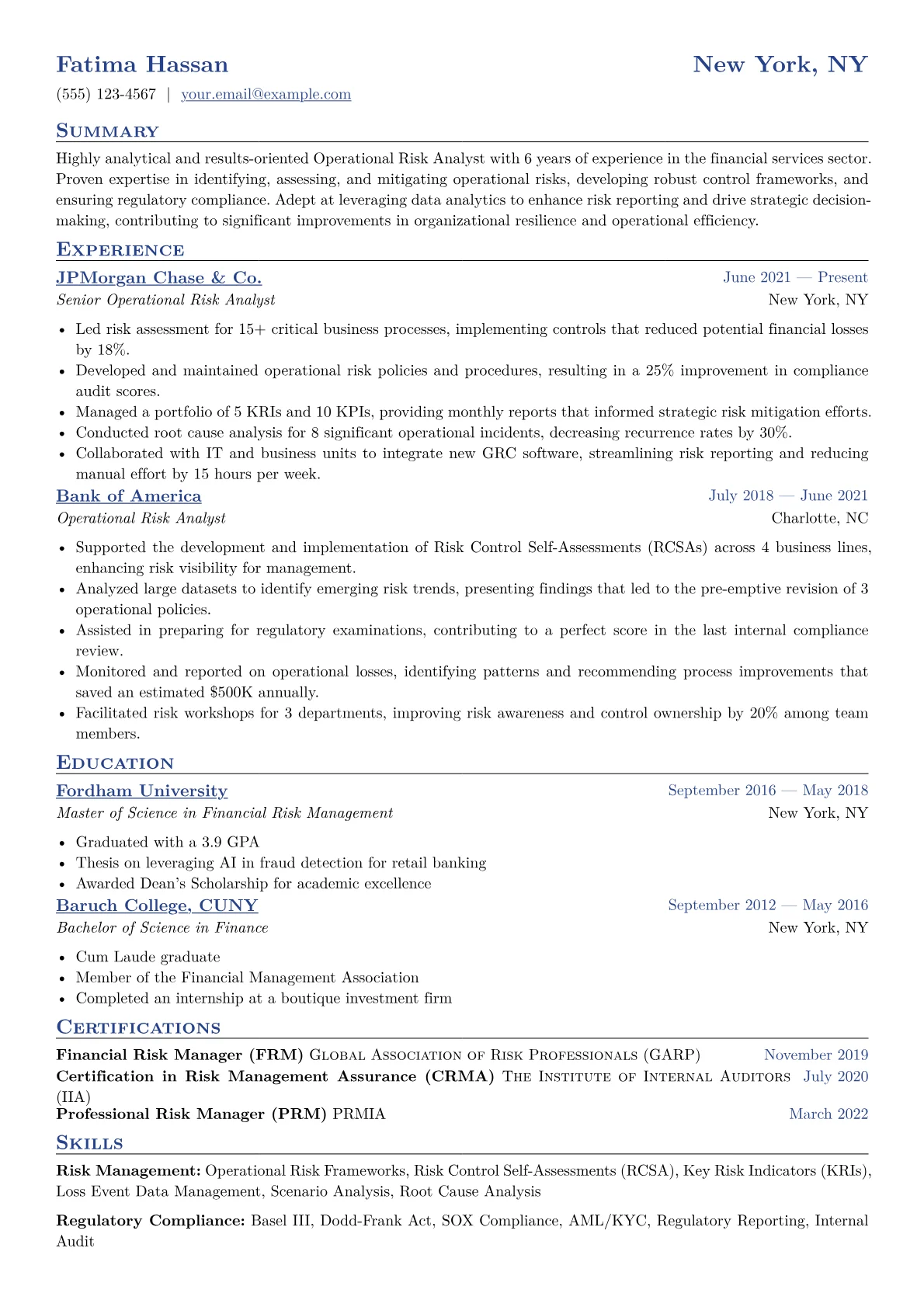
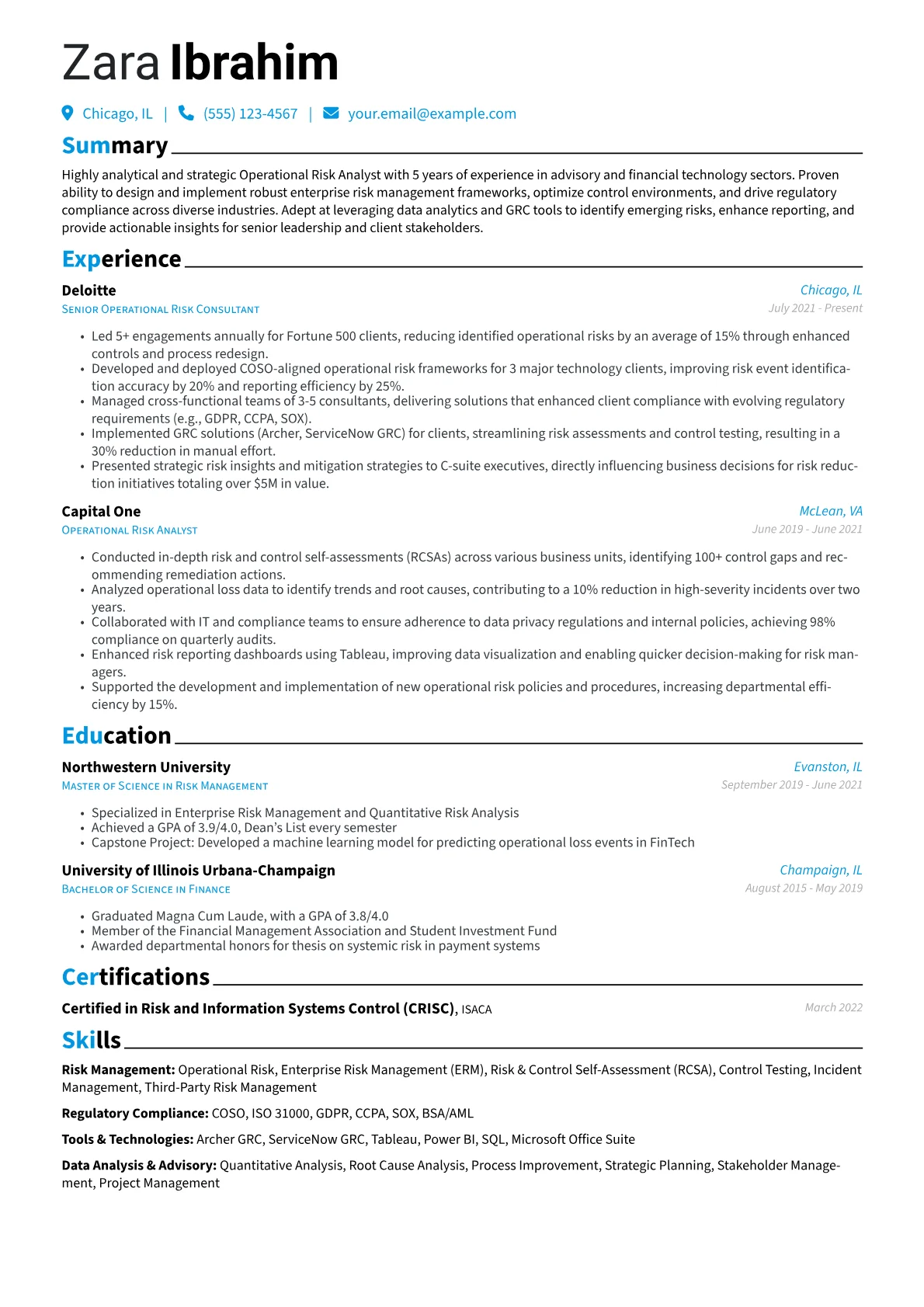
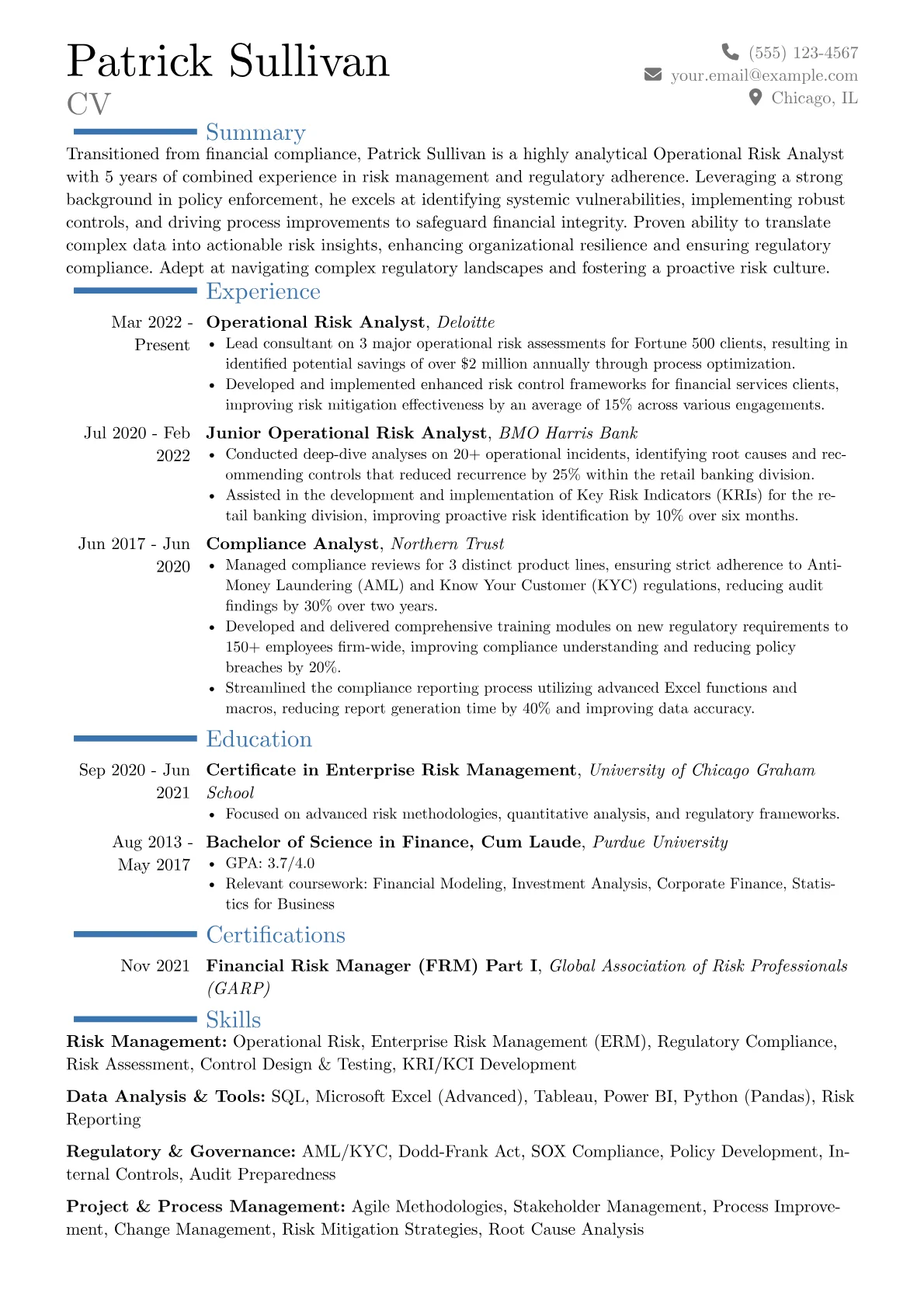
A compelling Operational Risk Analyst resume in Finance & Banking must clearly articulate an individual's capability to identify, assess, and mitigate risks within complex financial environments. Hiring managers prioritize candidates who can demonstrate practical experience with regulatory compliance frameworks such as Basel III, SOX, and CCAR, alongside robust quantitative and qualitative risk analysis skills. Achievements should be quantified, detailing, for example, how enhanced control testing reduced potential loss exposure or improved audit outcomes. Specific terminology like RCSA, KRI development, scenario analysis, and control framework implementation is crucial, as are relevant certifications like the FRM or PRM.
The JobSprout example effectively showcases these elements. Its structure prominently features a "Key Achievements" section where impact is clearly quantified, such as "Developed and implemented a new risk incident reporting process, reducing data entry errors by 20%." Skills are intelligently grouped, separating technical proficiencies like SQL and GRC tools from regulatory knowledge like AML and Basel III. Certifications, including any FRM designation, are strategically placed for immediate visibility, highlighting the candidate's commitment to industry best practices and professional development.
This template was built with JobSprout and can be remixed to create your own tailored Operational Risk Analyst resume.
How useful was this template?
Example by JobSproutOperational Risk Analyst resume summary example
Highly analytical and results-oriented Operational Risk Analyst with 6 years of experience in the financial services sector. Proven expertise in identifying, assessing, and mitigating operational risks, developing robust control frameworks, and ensuring regulatory compliance. Adept at leveraging data analytics to enhance risk reporting and drive strategic decision-making, contributing to significant improvements in organizational resilience and operational efficiency.
Operational Risk Analyst salary by country
| Country | 25th percentile | Median | 75th percentile |
|---|---|---|---|
| US | $91,892 | $113,895 | $143,448 |
| UK | £42,121 | £49,697 | £66,000 |
| Canada | C$72,000 | C$85,714 | C$110,000 |
| Australia | A$115,000 | A$130,000 | A$150,000 |
| Germany | €75,000 | €80,000 | €85,000 |
| France | €45,000 | €50,000 | €62,500 |
| Netherlands | €48,252 | €55,346 | €64,313 |
| Italy | €32,344 | €39,688 | €46,618 |
| Austria | €38,333 | €50,000 | €71,667 |
| New Zealand | NZ$85,833 | NZ$104,167 | NZ$126,786 |
| India | ₹1,687,500 | ₹2,500,000 | ₹3,312,500 |
| Poland | zł214,500 | zł249,000 | zł283,500 |
Annual salaries in local currency, aggregated from live job postings via Adzuna. Figures refresh continuously and reflect advertised pay, not negotiated offers.
Operational Risk Analyst resume skills and keywords
Recruiters and applicant tracking systems scan Operational Risk Analyst resumes for these skills and keywords. Include the ones that match your experience and mirror the wording in the job description. Check your resume against them with the free ATS checker.
Hard skills
Tools & software
Certifications
Soft skills
Market Insights
Operational Risk Analyst
Salary Range
Salary Trend
Mar 2025 – Feb 2026
12-Month Trend
Based on advertised Finance & Accounting roles.
US market data · Source: Adzuna · Updated Mar 2026
![How to Write a CV for Finance Applications [2026 Guide]](/thumbnails/cv-for-finance-applications.webp)