Cover Letter Examples

Cognitive Behavioral Therapist Cover Letter Example

A complete Cognitive Behavioral Therapist cover letter with a matching resume example.

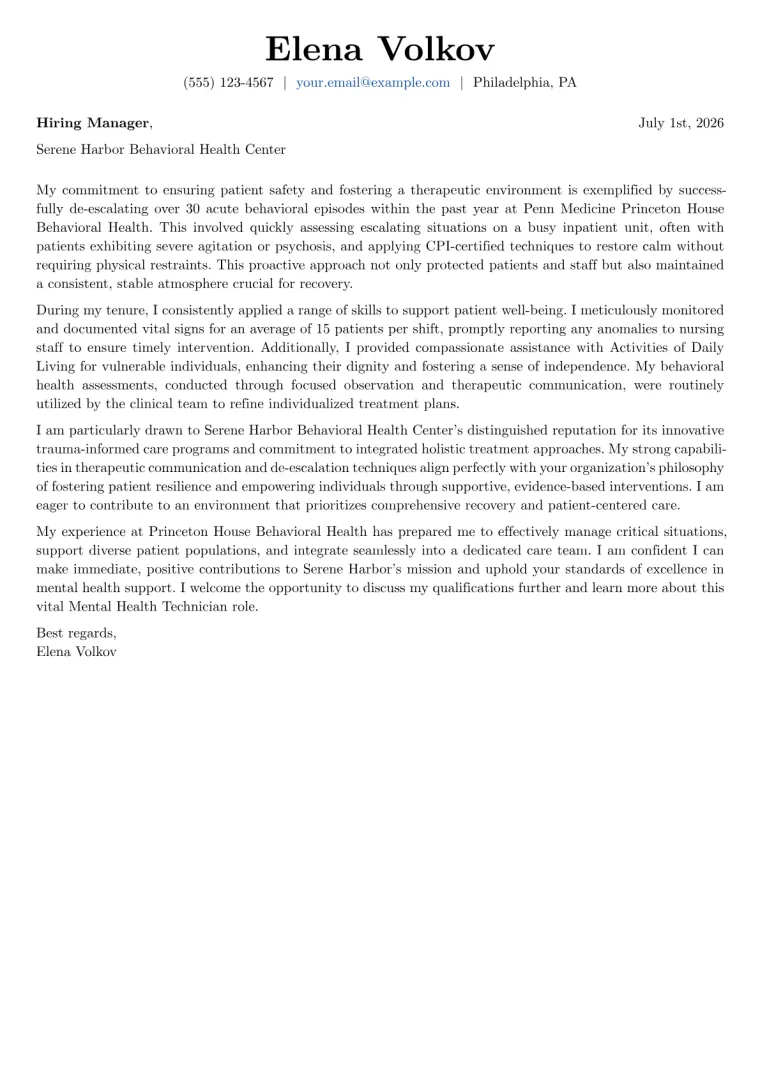
Elena VolkovTo the Hiring Manager, Harmony Behavioral Health Group

My clinical work at Massachusetts General Hospital consistently demonstrates an ability to drive measurable improvements in patient well-being, evidenced by reducing symptom severity by an average of 35% across a caseload of 45-50 adults presenting with complex anxiety and mood disorders over 12-week treatment cycles. In a challenging environment with high patient acuity and diverse presentations, I leveraged evidence-based Cognitive Behavioral Therapy (CBT) and Dialectical Behavior Therapy (DBT) protocols to empower clients to achieve significant, lasting change. This experience has honed my capacity to apply targeted interventions that yield tangible outcomes.

Utilizing Cognitive Behavioral Therapy (CBT) and Dialectical Behavior Therapy (DBT) skills training, I successfully guided 85% of clients with co-occurring disorders to achieve their primary treatment goals within six months, developing individualized treatment plans based on comprehensive psychosocial assessments. Furthermore, I implemented a new Trauma-Focused CBT (TF-CBT) psychoeducational group for veterans, resulting in a 20% increase in self-reported coping efficacy scores and an 80% attendance rate for the full 8-week program. My diagnostic precision using DSM-5 criteria also improved initial treatment plan accuracy by 15%, ensuring more targeted interventions.

Harmony Behavioral Health Group's commitment to delivering evidence-based, holistic care, particularly your pioneering work in integrating Acceptance and Commitment Therapy (ACT) principles with traditional CBT for chronic pain management, deeply resonates with my clinical philosophy. My expertise in ACT, coupled with my experience managing complex patient populations at Massachusetts General Hospital, where I frequently addressed co-morbid physical and mental health challenges, aligns perfectly with your innovative approach. I am eager to contribute my specialized skills to a practice focused on such impactful, integrated therapeutic models.

My dedication to fostering measurable client progress through tailored, evidence-based interventions makes me confident I would be a valuable asset to Harmony Behavioral Health Group. I am eager to discuss how my 5+ years of experience in diverse therapeutic modalities, including CBT, DBT, and ACT, can contribute to your team's continued success in an interview. Please find my detailed CV attached for your review and consideration; I look forward to the opportunity to connect soon.

Best regards,
Elena Volkov
Editorial Notes

For a Cognitive Behavioral Therapist, a strong cover letter in the healthcare sector must immediately demonstrate a candidate's clinical impact with quantifiable results. Hiring managers prioritize evidence-based practice, specific therapeutic modalities, and experience with complex patient populations. Key signals include reducing symptom severity, achieving treatment goals, applying DSM-5 criteria, and implementing new programs. Highlighting measurable improvements in patient well-being and a commitment to targeted, effective interventions are crucial.

This example letter excels by opening with a powerful, quantified hook: reducing symptom severity by an average of 35% across a caseload of 45-50 adults. The subsequent paragraph reinforces this with more specific achievements, such as guiding 85% of clients with co-occurring disorders to achieve primary treatment goals and implementing a TF-CBT group for veterans, resulting in a 20% increase in coping efficacy. The letter effectively connects the applicant's expertise in ACT and managing complex populations at Massachusetts General Hospital with Harmony Behavioral Health Group's pioneering work in integrating ACT for chronic pain management. The confident closing reiterates the candidate's dedication and diverse therapeutic skills.

This letter pairs effectively with JobSprout's Cognitive Behavioral Therapist resume example and can be easily adapted to specific job postings using the platform's AI cover letter writer.

Cognitive Behavioral Therapist Resume Example
Matching resume

Cognitive Behavioral Therapist Resume Example

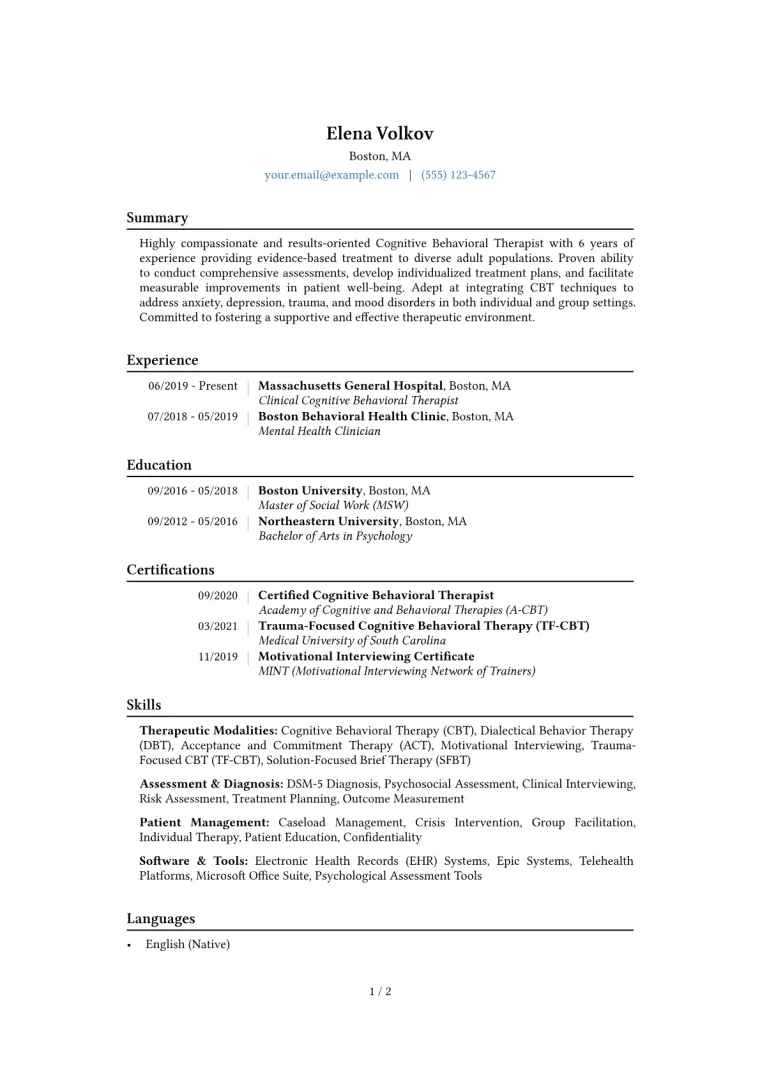
The resume this letter was written to accompany, same person and experience.

See the resume example

Frequently Asked Questions

What should a Cognitive Behavioral Therapist highlight in their cover letter?
A CBT therapist should highlight specific therapeutic modalities like CBT, DBT, ACT, or TF-CBT, along with quantifiable client outcomes. Focus on metrics like symptom reduction percentages, goal attainment rates, or improvements in coping skills. Also, emphasize your ability to manage diverse or complex caseloads effectively, detailing the context and tools used.
What is the ideal length for a Cognitive Behavioral Therapist cover letter?
The ideal length is one page, typically comprising four concise yet detailed paragraphs. Each paragraph should convey substantial information without resorting to filler. This ensures the letter is professional, respects the reader's time, and effectively communicates your value.
How should a CBT therapist open their cover letter?
Open with a strong, quantified achievement that immediately demonstrates your impact on client outcomes or a key therapeutic skill. Avoid generic phrases like 'I am writing to express my interest.' Instead, dive directly into a compelling statistic or a concrete claim about your abilities, providing brief context for the achievement.
How should a CBT therapist address having no direct experience in a specific area?
If lacking direct experience in a specific area, frame transferable skills from internships, practicums, or academic projects. Emphasize your theoretical knowledge of CBT principles, relevant case studies you've managed under supervision, and any related certifications or training. Focus on your foundational understanding and eagerness to apply and grow these skills.
How should a Cognitive Behavioral Therapist's cover letter differ from their resume?
The cover letter should tell a narrative, elaborating on *how* your achievements were accomplished, providing critical context and challenges. While the resume lists facts and metrics, the cover letter explains *why* you are a strong fit for *this specific role and company* by connecting your skills and experience to their mission and values, offering a more personalized and persuasive argument.

More Healthcare cover letter examples