Machine Learning Operations Engineer Cover Letter Example

Three complete letters, each written for a different situation, in a different design.

Machine Learning Operations Engineer cover letter example

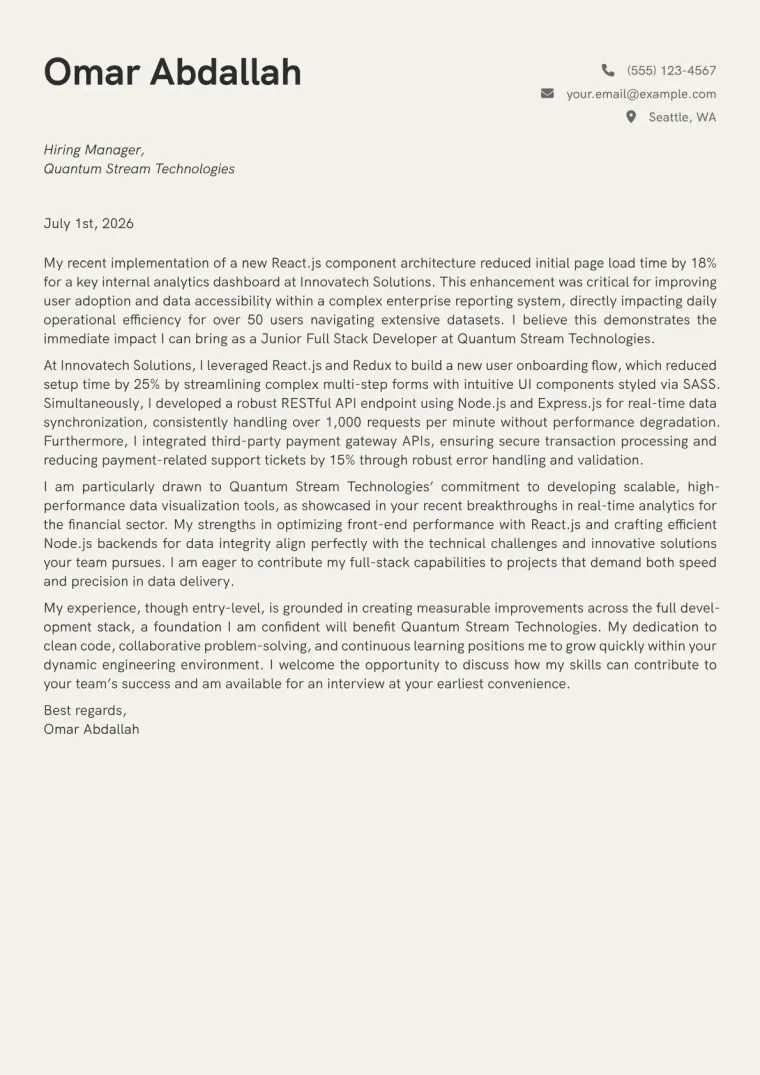
Fatima HassanTo the Hiring Manager, CogniStream AI

Successfully reduced critical machine learning model deployment cycles from several weeks to just hours at DataBridge Solutions, achieving a 90% acceleration by spearheading the implementation of CI/CD pipelines leveraging Kubeflow and TensorFlow Extended (TFX). This transformation significantly improved developer velocity and enabled quicker iterations for a high-stakes fraud detection system, ensuring models remained highly relevant and effective against evolving threats. The initiative also drastically cut down manual errors and intervention points, boosting operational efficiency.

My MLOps expertise spans critical areas, including enhancing model lifecycle management. I implemented MLflow for robust experiment tracking across 15+ diverse machine learning models, which slashed model retraining debugging time by 30% through comprehensive artifact and parameter logging. Additionally, I architected and orchestrated complex data ingestion and model retraining workflows using Apache Airflow on AWS EKS, processing petabytes of data daily and maintaining 99.9% uptime for business-critical recommendation engines. This eliminated manual interventions and scaled operations efficiently, directly impacting system reliability.

CogniStream AI's pioneering work in real-time predictive analytics and your recent advancements in deploying neural networks to edge devices deeply resonate with my career aspirations and technical strengths. Your commitment to operational excellence in delivering high-throughput, low-latency models presents an exciting challenge. My strength in designing resilient, scalable ML pipelines that can handle immense data volumes, coupled with my ability to optimize cloud infrastructure for both performance and cost across AWS and GCP, aligns perfectly with your ambitious goals in this dynamic field.

My comprehensive experience in building and optimizing end-to-end ML platforms, particularly across diverse cloud environments with tools like Kubeflow, TFX, and MLflow, makes me confident I can immediately contribute to CogniStream AI's MLOps initiatives. I am eager to discuss how my hands-on expertise in streamlining model deployment, ensuring operational stability, and optimizing infrastructure can further enhance your team's innovative projects. Thank you for your time and consideration; I look forward to the opportunity to connect and explore this role further.

Best regards,
Fatima Hassan
Machine Learning Operations Engineer cover letter for a career changer

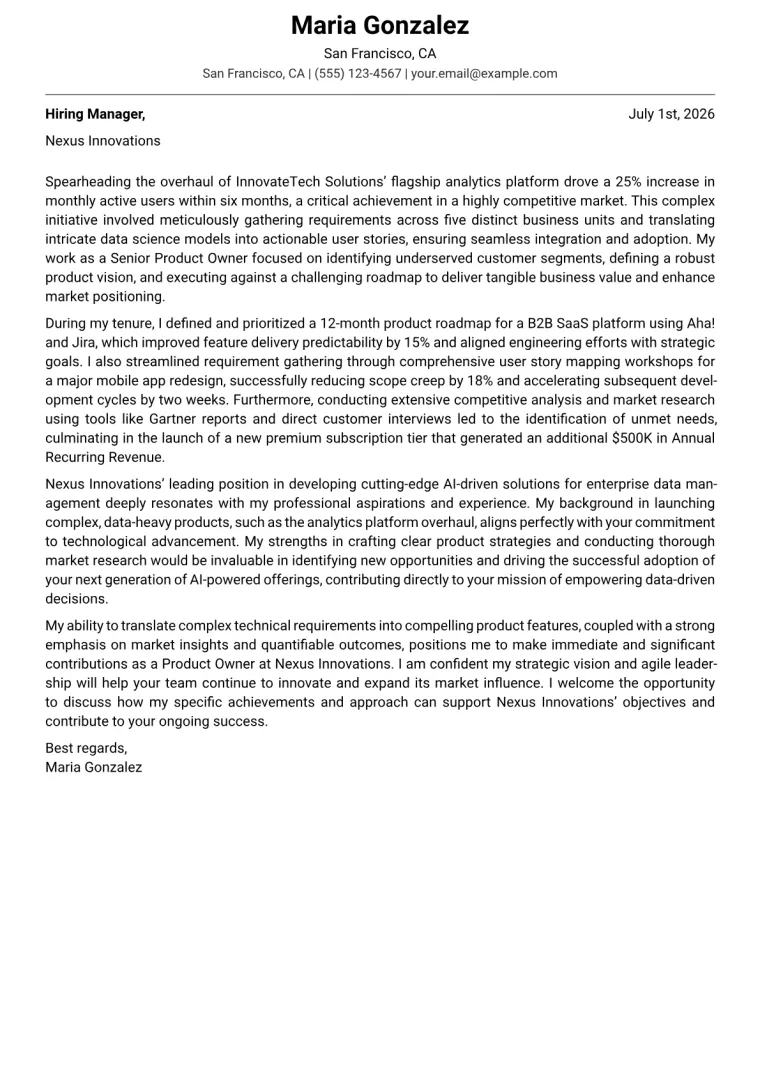
Fatima HassanTo the Hiring Manager, NexusFlow Systems

NexusFlow Systems leads the market in automated pipeline orchestration, and your recent push into edge deployment architectures aligns with my technical pivot into MLOps. Previously serving as a Lead Cloud Infrastructure Engineer, I designed a real time ingestion framework that reduced data latency by 40 percent across three massive database clusters. This architecture relied on modular services to handle spikes in throughput, mirroring the requirements for high performance model inference. Applying this systems architecture mindset allows me to bridge the gap between model experimentation and scalable, production grade machine learning operations effectively.

Prior projects involved migrating enterprise applications to microservices on AWS, which directly informs my current technical agility. I cut infrastructure costs by 22 percent by automating resource provisioning via Terraform and EKS clusters. My deployment of a custom Airflow pipeline increased scheduled data processing efficiency by 35 percent for our primary analytics suite. Furthermore, I integrated automated testing protocols for CI/CD deployments that minimized system failures by 60 percent over one fiscal year. These results demonstrate my ability to maintain stability and performance, key requirements for modern MLOps roles today.

NexusFlow Systems stands out because of the open source modularity you prioritize in your model training environments, particularly the integration of TFX components. My strength in designing resilient distributed systems combined with an extensive background in managing large scale cloud storage architectures makes me an ideal fit for your infrastructure goals. Your focus on building sustainable model monitoring tools through MLflow complements my experience in observability and system logging. My professional path centers on optimizing complex workflows, ensuring that high stakes deployments remain consistent, scalable, and highly available for global user bases.

Collaborating with your engineering division would allow me to apply my expertise in cluster orchestration and pipeline optimization to your specific model lifecycle challenges. My systematic approach to troubleshooting complex outages ensures that production pipelines remain robust even under significant load. Please review the attached technical portfolio detailing my infrastructure migrations and automated service scaling strategies. Discussions regarding your current roadmap for edge computing would be productive, and I welcome an invitation for an interview to demonstrate how my background in systems reliability will translate to your ongoing MLOps initiatives.

Best regards,
Fatima Hassan

Machine Learning Operations Engineer cover letter with no experience

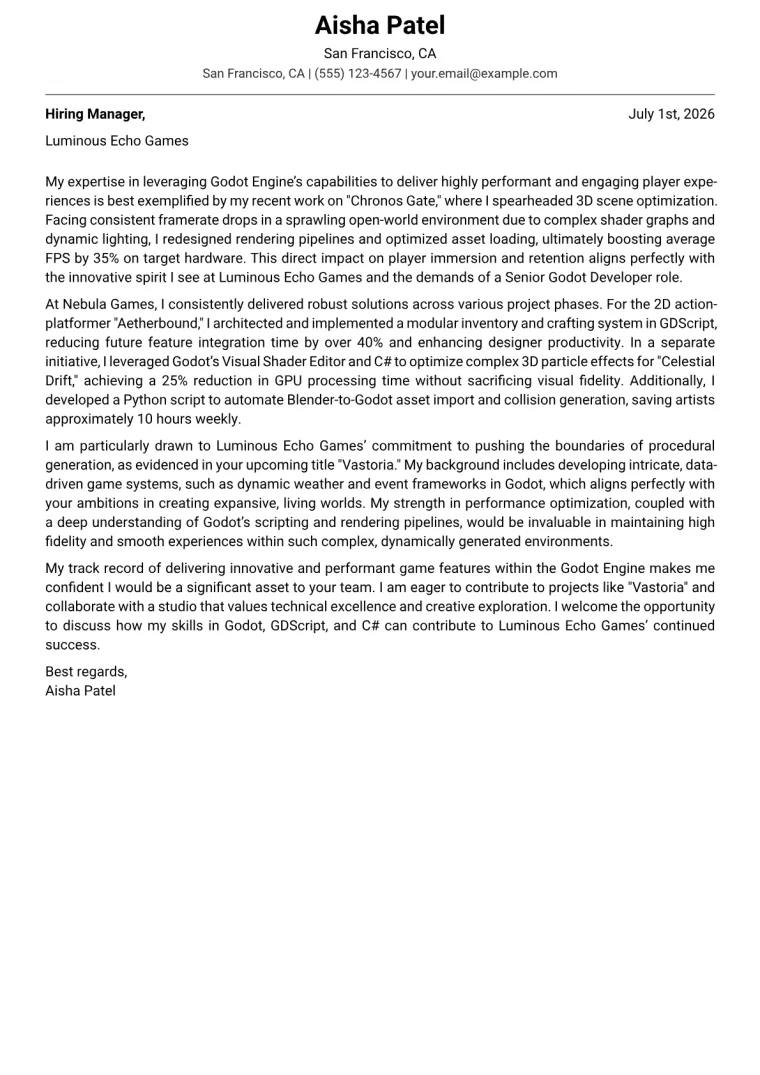
Fatima HassanTo the Hiring Manager, Veridian Systems

A model training pipeline on a public cloud architecture achieved a 40% reduction in latency through an automated containerization workflow during my recent capstone project at San Francisco City College. This development successfully optimized resource allocation for large scale datasets by replacing manual configuration with Kubernetes orchestration scripts. Developing robust production workflows represents the logical culmination of my focused research into scalable infrastructure and model lifecycle management. This role at Veridian Systems aligns with my dedication to building reliable environments where complex algorithms operate at maximum efficiency with consistent uptime.

During my academic research and volunteer efforts, I developed an automated data validation pipeline using TensorFlow Extended which caught 15% more data anomalies compared to the manual baseline script. I integrated MLflow for experiment tracking in a GitHub repository, enabling a 60% increase in retrieval speed for historical model metadata. I also configured an end to end CI/CD pipeline on AWS EKS, reducing the time required for model promotion from testing to deployment by 25%. Additionally, I built a serverless monitoring system on AWS Lambda that alerted the project team to model drift within thirty seconds.

Veridian Systems leads the industry in delivering high availability financial forecasting models, and your commitment to transparent infrastructure matches my professional focus. My primary strength lies in translating academic ML theory into operational reality through containerization and orchestration. Furthermore, my proficiency in Python and cloud native architectural design allows me to solve integration bottlenecks that frequently stall deployment efforts. I see a profound opportunity to contribute my technical rigor to your current initiatives while helping scale your MLOps capabilities to support broader client requirements across global financial markets.

My foundation in systems architecture and persistent focus on automation prepare me to deliver immediate utility to your engineering department. I look forward to discussing how my experience with Kubeflow and cloud deployment strategies supports the long term goals of the Veridian Systems platform. Thank you for your time and for considering my background for this position. Please feel free to reach out via email or telephone to schedule a conversation regarding the specific technical challenges your team currently manages and how my approach can provide effective solutions.

Best regards,
Fatima Hassan

Editorial Notes

Hiring managers for Machine Learning Operations Engineer roles prioritize concrete achievements demonstrating efficiency, scalability, and impact. They seek candidates who can quantify their success in streamlining CI/CD pipelines, optimizing model deployment, and ensuring operational stability. Specific experience with tools like Kubeflow, TensorFlow Extended, MLflow, and Apache Airflow, especially when applied to real-world problems like fraud detection or recommendation engines, signals deep practical expertise. The ability to manage petabytes of data and maintain high uptime also shows critical operational capability.

This example letter effectively captures these critical elements, opening with a quantified achievement: a 90% acceleration in deployment cycles using Kubeflow and TFX. The subsequent paragraph details MLOps expertise in model lifecycle management with MLflow, reducing debugging time by 30%, and orchestrating data workflows on AWS EKS with 99.9% uptime. The letter then articulates a specific rationale for applying to CogniStream AI, referencing their work in real-time predictive analytics, before closing confidently by reiterating a desire to contribute.

This letter pairs seamlessly with JobSprout's Machine Learning Operations Engineer resume example and can be efficiently adapted using the platform's AI cover letter writer.

Frequently Asked Questions

What should I highlight in my Machine Learning Operations Engineer cover letter?
Focus on quantifiable achievements in automating ML pipelines, accelerating model deployment, optimizing infrastructure costs, and ensuring model reliability. Emphasize specific MLOps tools like Kubeflow, MLflow, Airflow, or AWS Sagemaker, detailing how you used them to solve real-world operational challenges. Show how your work directly improved efficiency, reduced errors, or scaled ML systems.
What is the ideal length for a Machine Learning Operations Engineer cover letter?
Keep it concise and impactful, aiming for approximately three-quarters to one page. Four substantial paragraphs, each between 70-100 words, are ideal for conveying depth without overwhelming the reader. Recruiters often scan, so ensure every sentence provides concrete value and avoids generic statements.
How should I open my Machine Learning Operations Engineer cover letter?
Start with a strong, quantified achievement directly relevant to MLOps, such as significantly reducing model deployment time or improving system uptime. Immediately grab the reader's attention by showcasing your impact with specific numbers and the context of the challenge. This demonstrates immediate value and expertise rather than generic introductions.
How can I address having no direct MLOps experience in my cover letter?
Focus on transferable skills from related roles like Data Engineering, DevOps, or Machine Learning Engineering. Highlight projects where you've built scalable data pipelines, managed infrastructure, automated deployments, or worked on model lifecycle management. Emphasize any relevant academic projects, certifications, or self-taught skills with MLOps tools, explaining how they prepare you for the role.
How should my MLOps Engineer cover letter differ from my resume?
While your resume lists accomplishments, your cover letter tells a story, providing context and depth to 3-4 key achievements. Use the letter to elaborate on the 'how' and 'why' behind your impact, demonstrating your problem-solving approach and aligning your experience with the specific company's needs. It's your opportunity to convey your unique value proposition and personality beyond bullet points.

More Technology cover letter examples