Art History Resume Example
 Example by JobSprout
Free to use. No download fee.
How useful was this template?
Art History resume samples
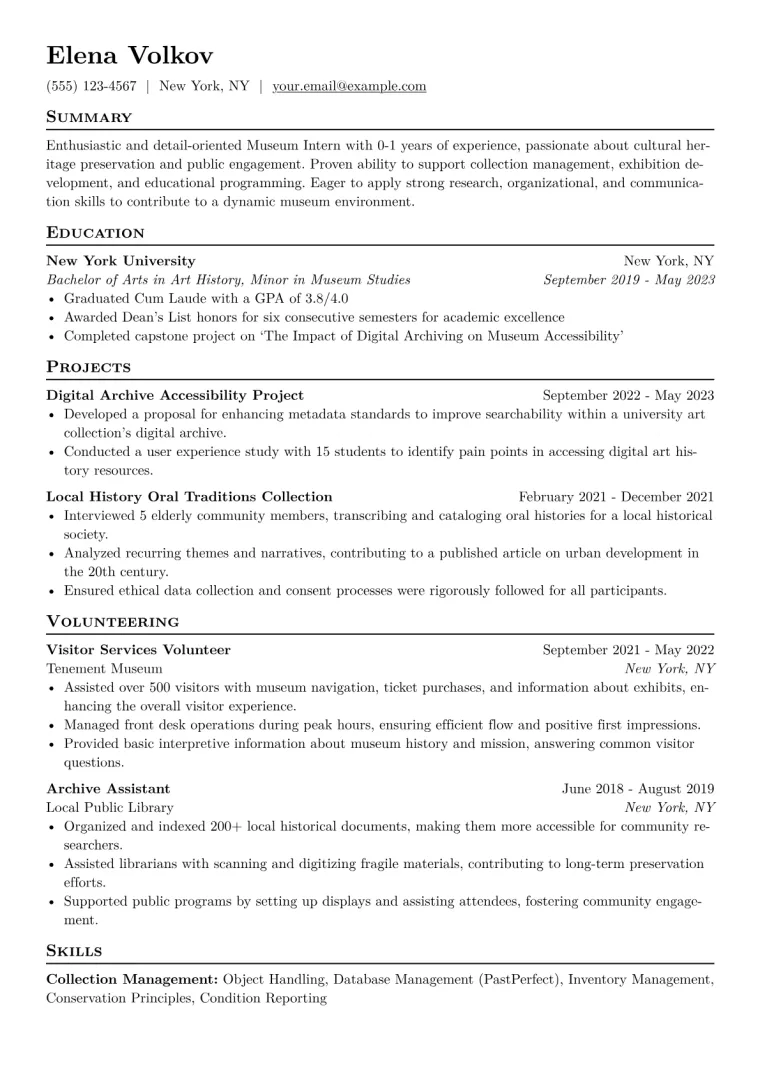
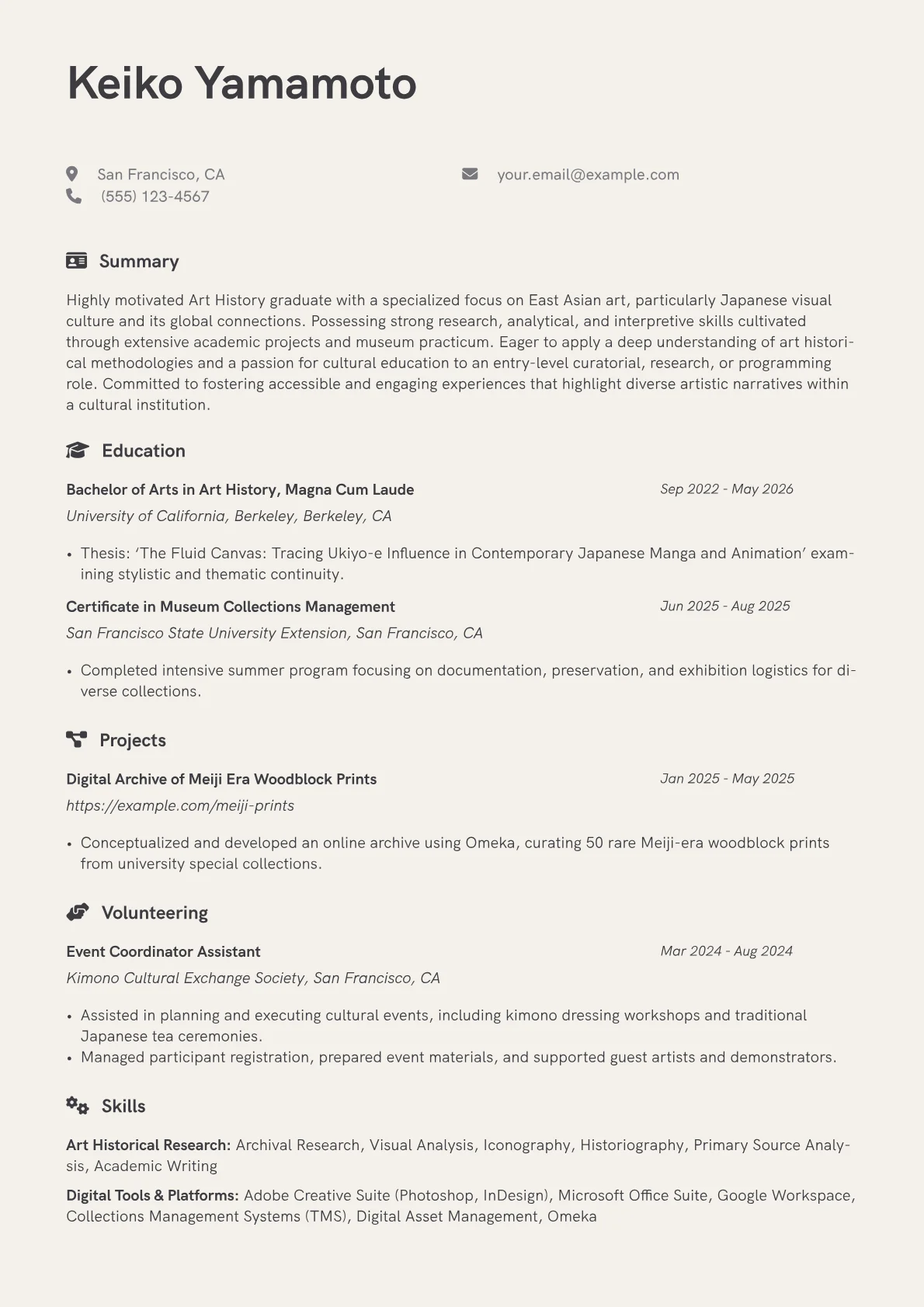
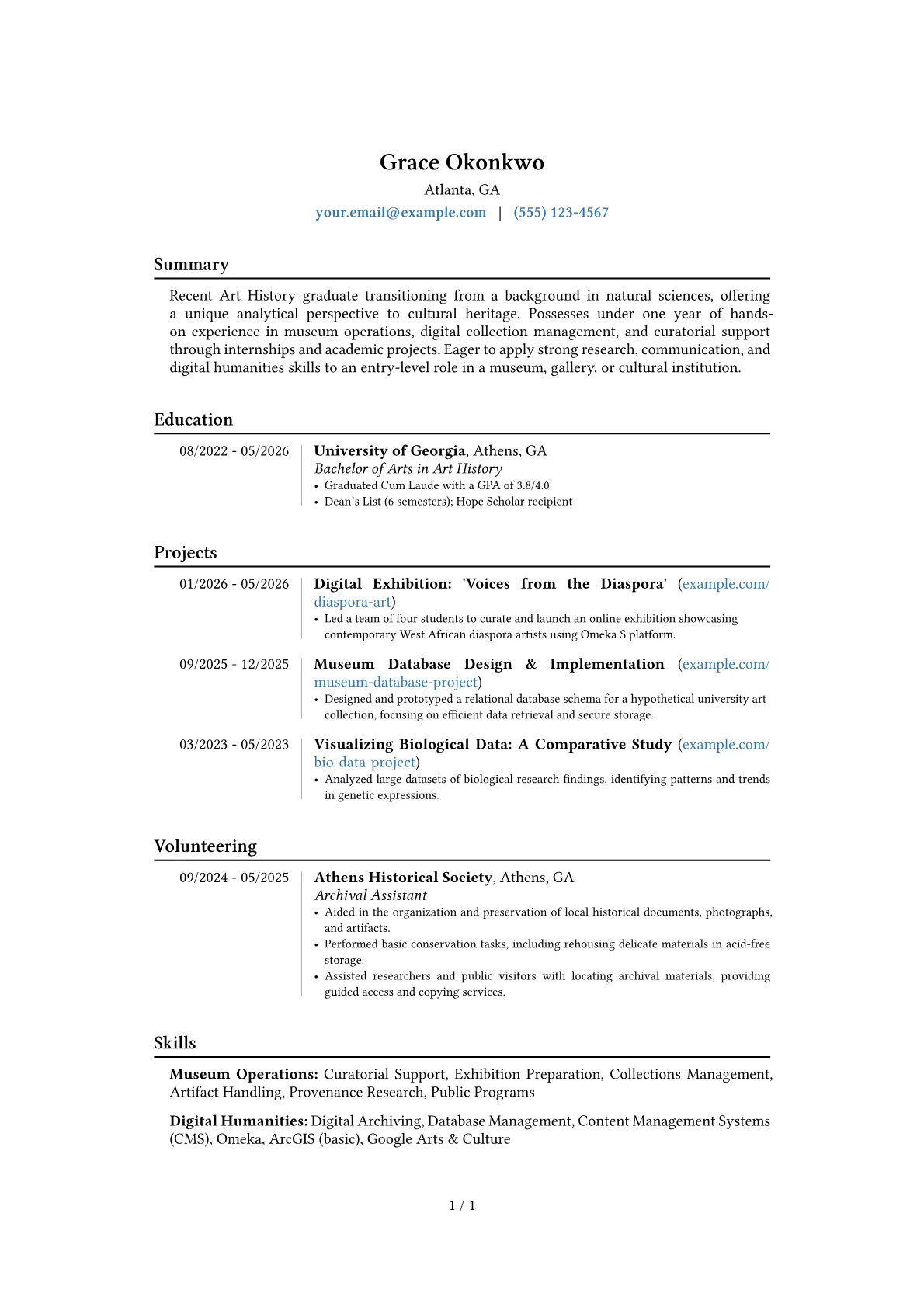
Three complete resumes, each in a different design.
Free to use. No download fee.
Editorial Notes
For aspiring art historians seeking roles in museums, galleries, or cultural institutions, a resume must clearly articulate both academic rigor and practical application. Hiring managers prioritize candidates who demonstrate concrete experience in research methodologies, collection stewardship, and public engagement. Key achievements often involve contributions to exhibition development, detailed "provenance research," or "object cataloging." Expertise in specific terminology like "interpretation," "didactic panels," and "Collection Management Software" is highly valued. The industry seeks individuals who can balance scholarly analysis with the logistical demands of managing cultural assets, making strong academic writing and visual analysis skills essential.
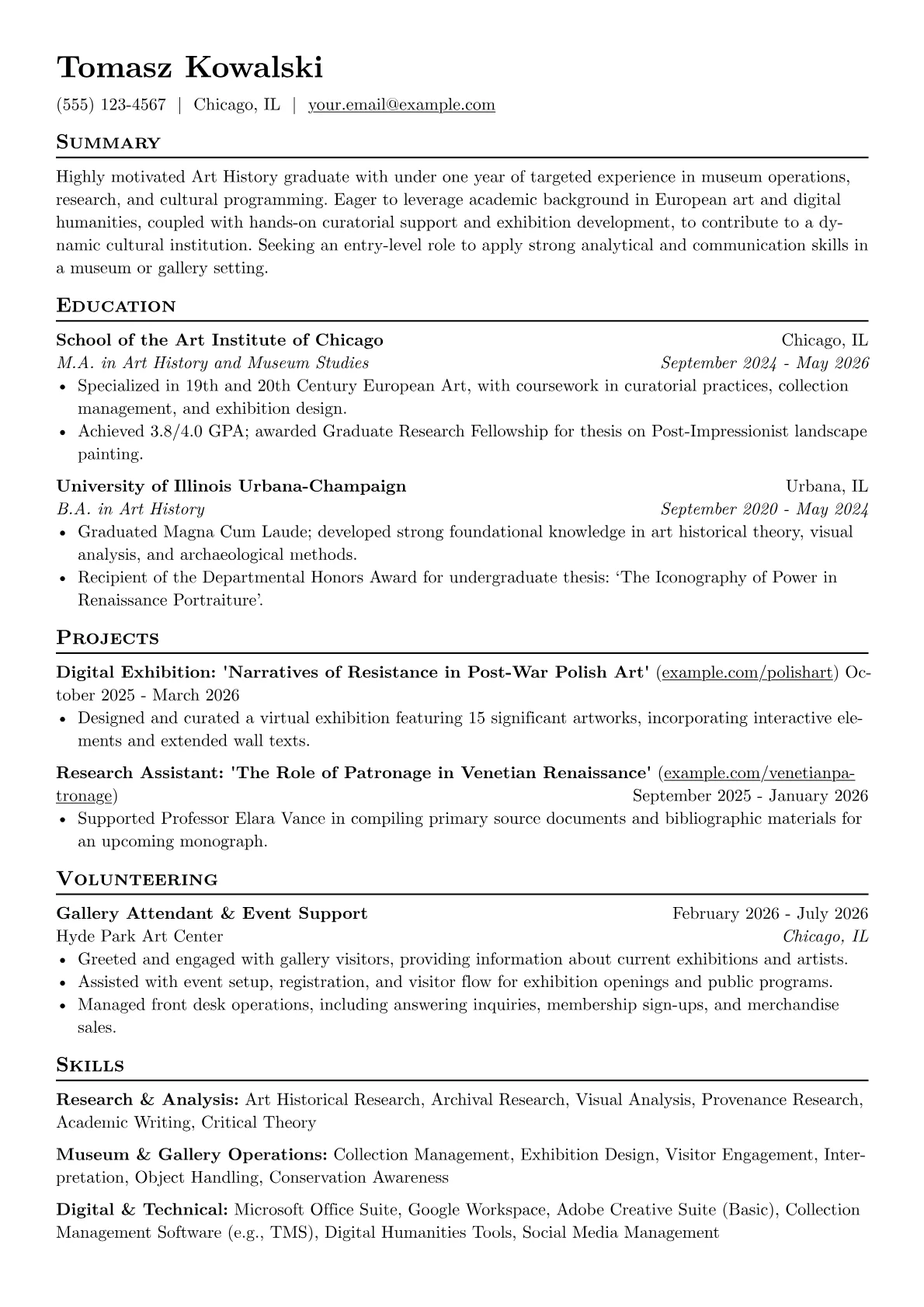
This example resume, belonging to Tomasz Kowalski, effectively highlights relevant skills and experiences for entry-level museum and gallery roles. The "Curatorial Intern" experience at the Museum of Contemporary Art Chicago demonstrates direct involvement in "exhibition research, object cataloging, and interpretation" for contemporary art shows. The inclusion of "provenance research and condition reporting for new acquisitions" showcases crucial collection care competencies. Furthermore, the well-categorized "Skills" section features explicit groups like "Research & Analysis," "Museum & Gallery Operations," and "Digital & Technical," listing specific tools such as "Collection Management Software (e.g., TMS)." The "Projects" section, including "Digital Exhibition: 'Narratives of Resistance in Post-War Polish Art'," further illustrates practical application of his academic background.
This template was built with JobSprout and can be remixed to create your own tailored Art History resume. Utilize JobSprout's customizable features to effectively showcase your unique qualifications for competitive roles in the arts and culture sector.
How useful was this template?
Example by JobSproutArt History resume summary example
Highly motivated Art History graduate with under one year of targeted experience in museum operations, research, and cultural programming. Eager to leverage academic background in European art and digital humanities, coupled with hands-on curatorial support and exhibition development, to contribute to a dynamic cultural institution. Seeking an entry-level role to apply strong analytical and communication skills in a museum or gallery setting.
Art History resume skills and keywords
Recruiters and applicant tracking systems scan Art History resumes for these skills and keywords. Include the ones that match your experience and mirror the wording in the job description. Check your resume against them with the free ATS checker.
Hard skills
Tools & software
Certifications
Soft skills
Frequently Asked Questions
What's the best resume format for an art history major looking for entry-level jobs?
Which skills from my art history degree are relevant for entry-level jobs outside of academia?
How do I make my art history research or papers sound impressive on a resume?
Do I need a portfolio or special sections for an art history resume?
How can I customize my art history resume for various job roles using JobSprout?
The blank page is the hard part. Skip it.
Free to use. No download fee.