CRNA Resume Example
 Example by JobSprout
Free to use. No download fee.
Market Insights
CRNA
Salary Range
Salary Trend
12-Month Trend
Based on advertised Healthcare (Clinical) roles.
US market data · Source: Adzuna · Updated Mar 2026
How useful was this template?
CRNA resume samples
Three complete resumes, each in a different design.
Free to use. No download fee.
What makes a strong CRNA resume?
US median salary $222,341 ·
A strong Certified Registered Nurse Anesthetist (CRNA) resume in the healthcare industry effectively highlights clinical expertise, patient safety commitment, and leadership. Hiring managers specifically seek evidence of proficiency across a broad range of anesthesia techniques, including general, regional, and monitored anesthesia care, alongside expert airway management. Quantifiable achievements demonstrating patient outcomes, efficiency improvements, and interdisciplinary collaboration are paramount. Essential certifications like Board Certified Registered Nurse Anesthetist (CRNA), Advanced Cardiovascular Life Support (ACLS), Pediatric Advanced Life Support (PALS), and Basic Life Support (BLS) are foundational, underscoring adherence to critical industry standards and compliance.
Why this example works
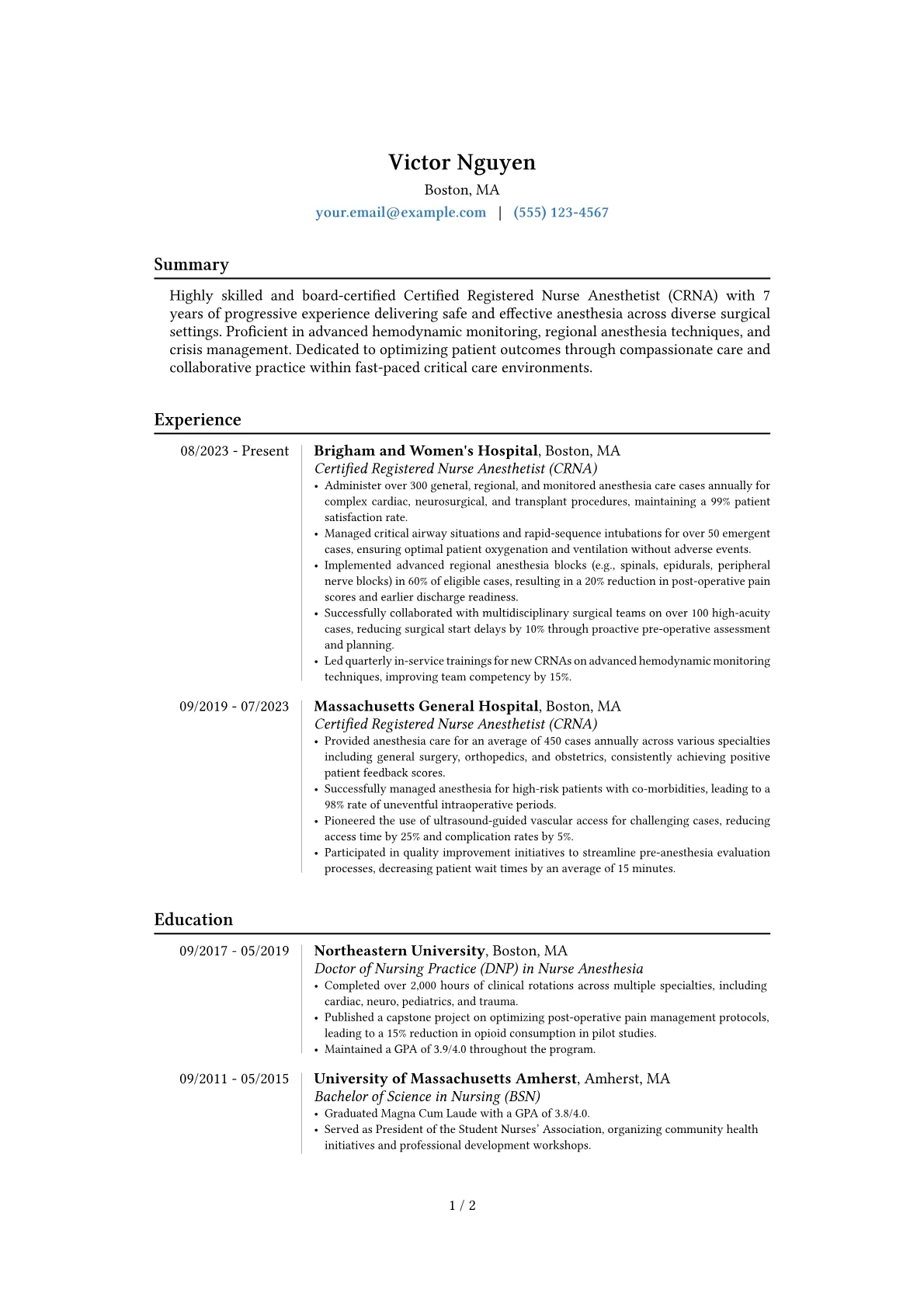
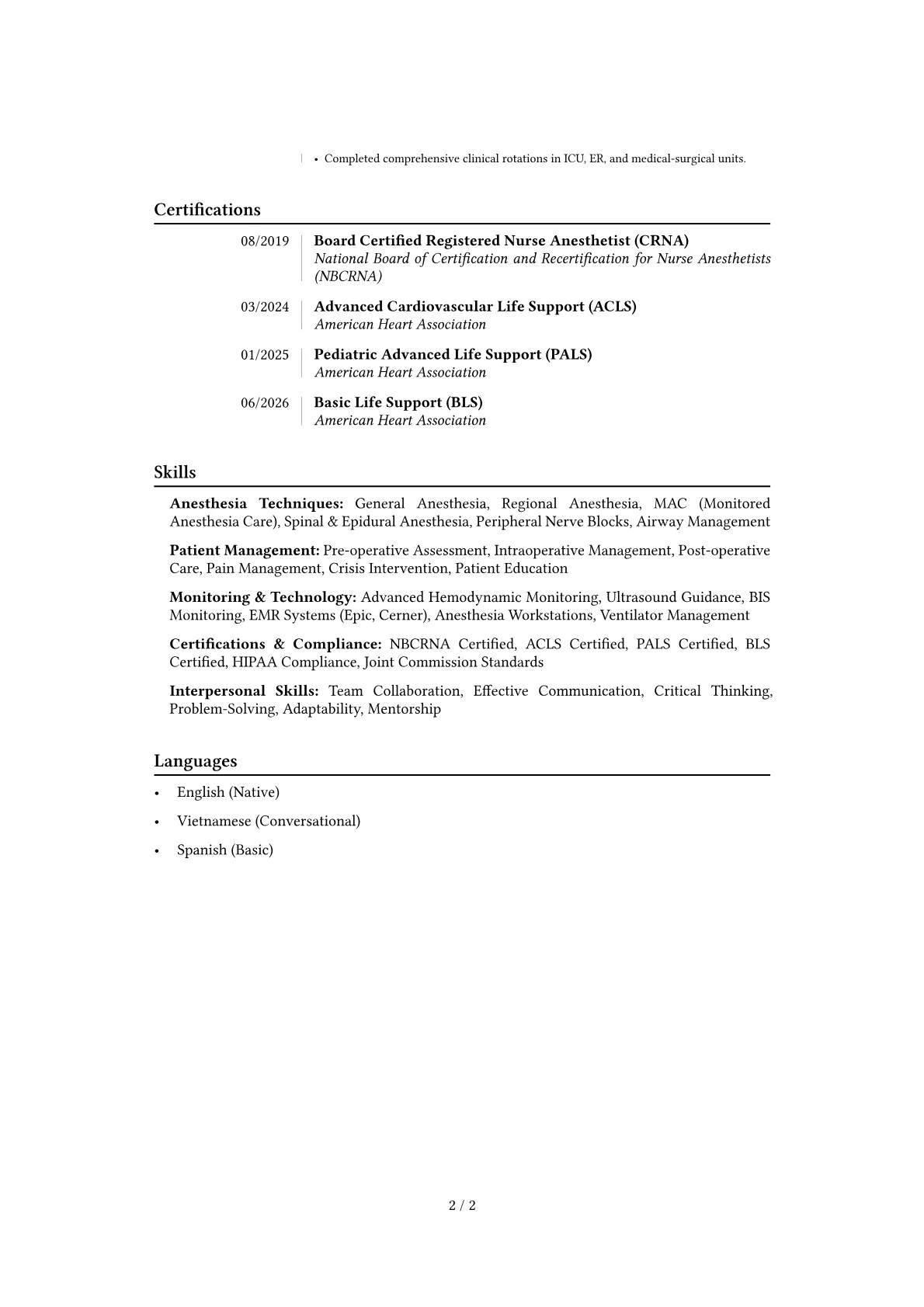
Victor Nguyen's resume exemplifies these qualities adeptly. His experience section at Brigham and Women's Hospital showcases administering “over 300 general, regional, and monitored anesthesia care cases annually,” achieving a “99% patient satisfaction rate,” and managing “critical airway situations...for over 50 emergent cases.” The resume further details implementing “advanced regional anesthesia blocks...resulting in a 20% reduction in post-operative pain scores” and “reducing surgical start delays by 10%.” His tenure at Massachusetts General Hospital notes pioneering “ultrasound-guided vascular access...reducing access time by 25% and complication rates by 5%.” The comprehensive skills section, covering “Anesthesia Techniques,” “Patient Management,” “Monitoring & Technology,” “Certifications & Compliance,” and “Interpersonal Skills,” alongside the listed certifications and educational background, reinforces his extensive capabilities.
CRNA resume example (text version)
Victor Nguyen · CRNA
Summary
Highly skilled and board-certified Certified Registered Nurse Anesthetist (CRNA) with 7 years of progressive experience delivering safe and effective anesthesia across diverse surgical settings. Proficient in advanced hemodynamic monitoring, regional anesthesia techniques, and crisis management. Dedicated to optimizing patient outcomes through compassionate care and collaborative practice within fast-paced critical care environments.
Experience
Certified Registered Nurse Anesthetist (CRNA) · Brigham and Women's Hospital
Boston, MA · 2023 - Present
- Administer over 300 general, regional, and monitored anesthesia care cases annually for complex cardiac, neurosurgical, and transplant procedures, maintaining a 99% patient satisfaction rate.
- Managed critical airway situations and rapid-sequence intubations for over 50 emergent cases, ensuring optimal patient oxygenation and ventilation without adverse events.
- Implemented advanced regional anesthesia blocks (e.g., spinals, epidurals, peripheral nerve blocks) in 60% of eligible cases, resulting in a 20% reduction in post-operative pain scores and earlier discharge readiness.
- Successfully collaborated with multidisciplinary surgical teams on over 100 high-acuity cases, reducing surgical start delays by 10% through proactive pre-operative assessment and planning.
- Led quarterly in-service trainings for new CRNAs on advanced hemodynamic monitoring techniques, improving team competency by 15%.
Certified Registered Nurse Anesthetist (CRNA) · Massachusetts General Hospital
Boston, MA · 2019 - 2023
- Provided anesthesia care for an average of 450 cases annually across various specialties including general surgery, orthopedics, and obstetrics, consistently achieving positive patient feedback scores.
- Successfully managed anesthesia for high-risk patients with co-morbidities, leading to a 98% rate of uneventful intraoperative periods.
- Pioneered the use of ultrasound-guided vascular access for challenging cases, reducing access time by 25% and complication rates by 5%.
- Participated in quality improvement initiatives to streamline pre-anesthesia evaluation processes, decreasing patient wait times by an average of 15 minutes.
Education
Doctor of Nursing Practice (DNP) in Nurse Anesthesia · Northeastern University
Boston, MA · 2017 - 2019
- Completed over 2,000 hours of clinical rotations across multiple specialties, including cardiac, neuro, pediatrics, and trauma.
- Published a capstone project on optimizing post-operative pain management protocols, leading to a 15% reduction in opioid consumption in pilot studies.
- Maintained a GPA of 3.9/4.0 throughout the program.
Bachelor of Science in Nursing (BSN) · University of Massachusetts Amherst
Amherst, MA · 2011 - 2015
- Graduated Magna Cum Laude with a GPA of 3.8/4.0.
- Served as President of the Student Nurses' Association, organizing community health initiatives and professional development workshops.
- Completed comprehensive clinical rotations in ICU, ER, and medical-surgical units.
Skills
CRNA resume example: Pediatric & Ambulatory
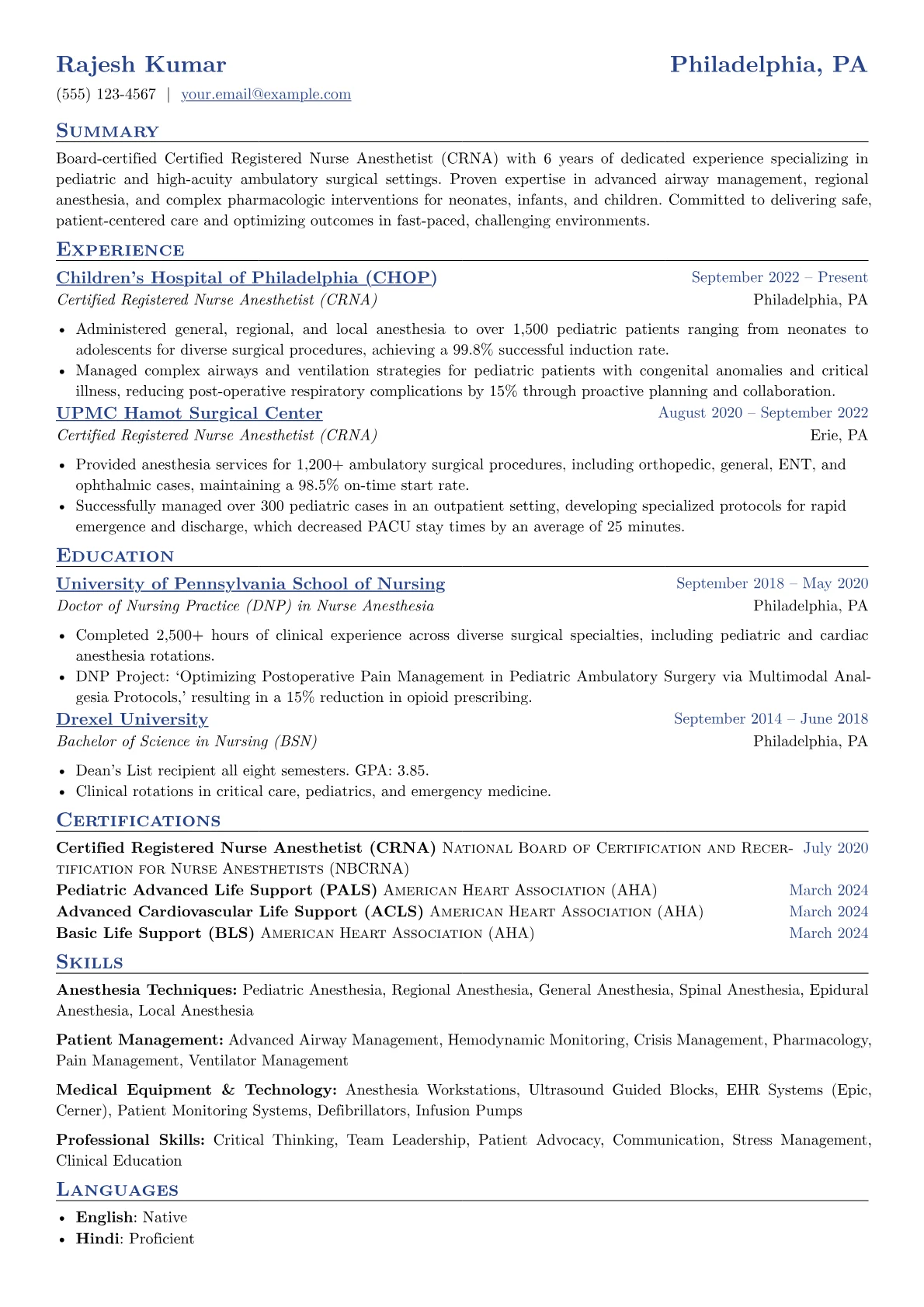
Rajesh Kumar · CRNA
Summary
Board-certified Certified Registered Nurse Anesthetist (CRNA) with 6 years of dedicated experience specializing in pediatric and high-acuity ambulatory surgical settings. Proven expertise in advanced airway management, regional anesthesia, and complex pharmacologic interventions for neonates, infants, and children. Committed to delivering safe, patient-centered care and optimizing outcomes in fast-paced, challenging environments.
Experience
Certified Registered Nurse Anesthetist (CRNA) · Children's Hospital of Philadelphia (CHOP)
Philadelphia, PA · 2022 - Present
- Administered general, regional, and local anesthesia to over 1,500 pediatric patients ranging from neonates to adolescents for diverse surgical procedures, achieving a 99.8% successful induction rate.
- Managed complex airways and ventilation strategies for pediatric patients with congenital anomalies and critical illness, reducing post-operative respiratory complications by 15% through proactive planning and collaboration.
- Implemented advanced regional anesthesia techniques, including caudal blocks and peripheral nerve blocks, for over 700 cases, leading to a 20% reduction in opioid consumption and improved pain control scores.
- Participated in a multidisciplinary team to develop and refine protocols for difficult airway management in pediatric trauma cases, enhancing team readiness and decreasing emergency re-intubation rates by 10%.
- Educated and precepted 10+ SRNA students, contributing to a 95% pass rate on their clinical evaluations.
Certified Registered Nurse Anesthetist (CRNA) · UPMC Hamot Surgical Center
Erie, PA · 2020 - 2022
- Provided anesthesia services for 1,200+ ambulatory surgical procedures, including orthopedic, general, ENT, and ophthalmic cases, maintaining a 98.5% on-time start rate.
- Successfully managed over 300 pediatric cases in an outpatient setting, developing specialized protocols for rapid emergence and discharge, which decreased PACU stay times by an average of 25 minutes.
- Collaborated with surgeons and recovery room staff to optimize patient flow and resource utilization, contributing to a 10% increase in daily case volume without compromising patient safety.
- Implemented enhanced recovery after surgery (ERAS) principles for joint replacement procedures, resulting in a 12% reduction in length of stay and improved patient satisfaction scores.
Education
Doctor of Nursing Practice (DNP) in Nurse Anesthesia · University of Pennsylvania School of Nursing
Philadelphia, PA · 2018 - 2020
- Completed 2,500+ hours of clinical experience across diverse surgical specialties, including pediatric and cardiac anesthesia rotations.
- DNP Project: 'Optimizing Postoperative Pain Management in Pediatric Ambulatory Surgery via Multimodal Analgesia Protocols,' resulting in a 15% reduction in opioid prescribing.
- Achieved a 3.9 GPA, graduating with High Honors. Coursework included Advanced Pharmacology, Anesthesia Physiology, and Clinical Informatics.
Bachelor of Science in Nursing (BSN) · Drexel University
Philadelphia, PA · 2014 - 2018
- Dean's List recipient all eight semesters. GPA: 3.85.
- Clinical rotations in critical care, pediatrics, and emergency medicine.
- Completed a Capstone Project on 'Improving Patient Safety in Pediatric Intensive Care Units'.
Skills
CRNA resume example: Career Changer
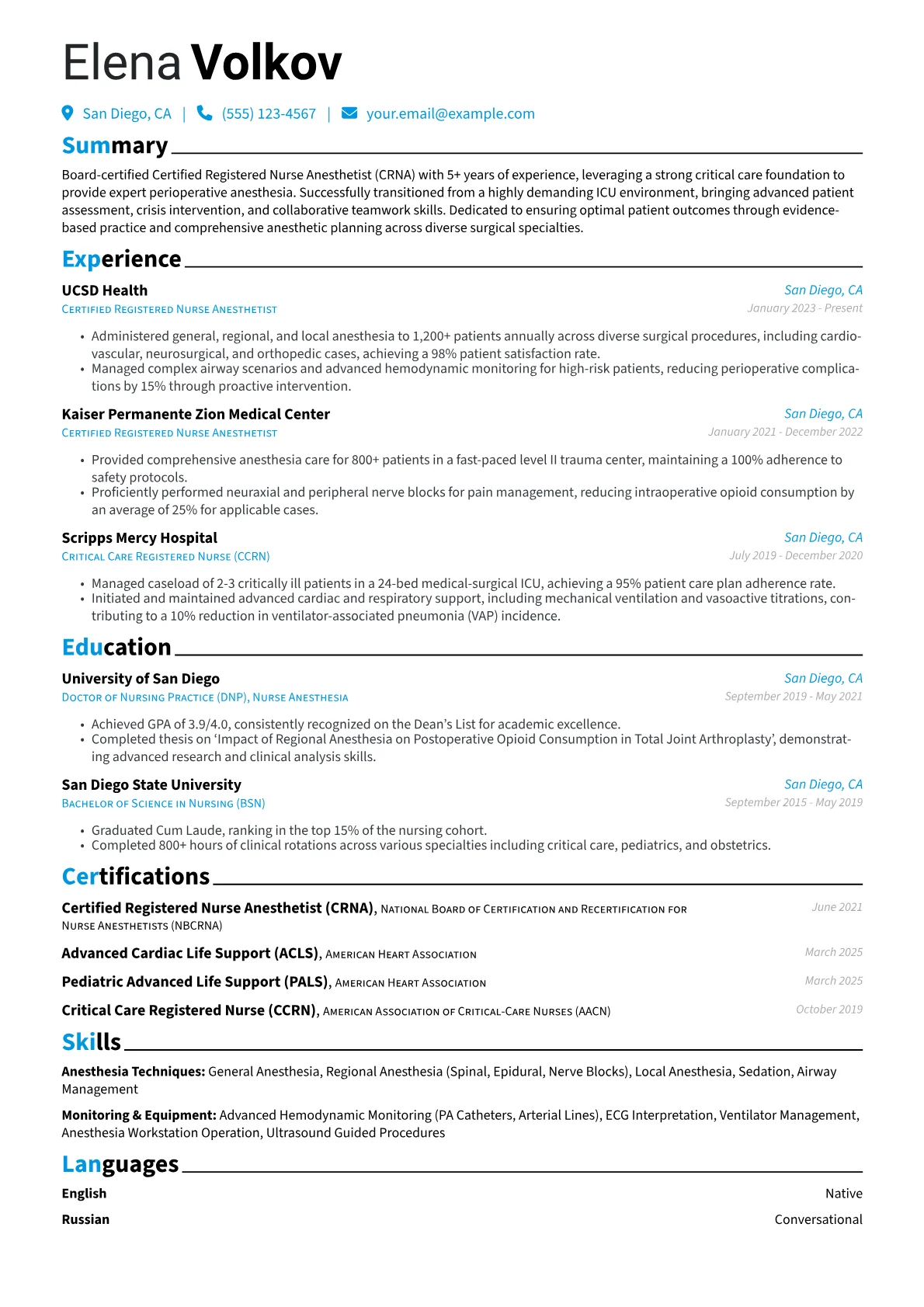
Elena Volkov · CRNA
Summary
Board-certified Certified Registered Nurse Anesthetist (CRNA) with 5+ years of experience, leveraging a strong critical care foundation to provide expert perioperative anesthesia. Successfully transitioned from a highly demanding ICU environment, bringing advanced patient assessment, crisis intervention, and collaborative teamwork skills. Dedicated to ensuring optimal patient outcomes through evidence-based practice and comprehensive anesthetic planning across diverse surgical specialties.
Experience
Certified Registered Nurse Anesthetist · UCSD Health
San Diego, CA · 2023 - Present
- Administered general, regional, and local anesthesia to 1,200+ patients annually across diverse surgical procedures, including cardiovascular, neurosurgical, and orthopedic cases, achieving a 98% patient satisfaction rate.
- Managed complex airway scenarios and advanced hemodynamic monitoring for high-risk patients, reducing perioperative complications by 15% through proactive intervention.
- Collaborated with surgical teams to optimize anesthesia plans, resulting in a 10% decrease in PACU length of stay for elective surgeries.
- Successfully implemented enhanced recovery after surgery (ERAS) protocols for over 300 orthopedic patients, reducing opioid reliance by 20% and accelerating discharge readiness.
Certified Registered Nurse Anesthetist · Kaiser Permanente Zion Medical Center
San Diego, CA · 2021 - 2022
- Provided comprehensive anesthesia care for 800+ patients in a fast-paced level II trauma center, maintaining a 100% adherence to safety protocols.
- Proficiently performed neuraxial and peripheral nerve blocks for pain management, reducing intraoperative opioid consumption by an average of 25% for applicable cases.
- Actively participated in daily case conferences, contributing to the development of patient-specific care plans and improving team efficiency by 5%.
Critical Care Registered Nurse (CCRN) · Scripps Mercy Hospital
San Diego, CA · 2019 - 2020
- Managed caseload of 2-3 critically ill patients in a 24-bed medical-surgical ICU, achieving a 95% patient care plan adherence rate.
- Initiated and maintained advanced cardiac and respiratory support, including mechanical ventilation and vasoactive titrations, contributing to a 10% reduction in ventilator-associated pneumonia (VAP) incidence.
- Trained and mentored 5 new graduate nurses on critical care protocols and emergency procedures, enhancing team competency and patient safety.
Education
Doctor of Nursing Practice (DNP), Nurse Anesthesia · University of San Diego
San Diego, CA · 2019 - 2021
- Achieved GPA of 3.9/4.0, consistently recognized on the Dean's List for academic excellence.
- Completed thesis on 'Impact of Regional Anesthesia on Postoperative Opioid Consumption in Total Joint Arthroplasty', demonstrating advanced research and clinical analysis skills.
- Relevant Coursework: Advanced Pathophysiology, Advanced Pharmacotherapeutics, Principles of Anesthesia, Regional Anesthesia Techniques, Clinical Residency.
Bachelor of Science in Nursing (BSN) · San Diego State University
San Diego, CA · 2015 - 2019
- Graduated Cum Laude, ranking in the top 15% of the nursing cohort.
- Completed 800+ hours of clinical rotations across various specialties including critical care, pediatrics, and obstetrics.
- Relevant Coursework: Critical Care Nursing, Pharmacology, Health Assessment, Medical-Surgical Nursing, Community Health.
Skills
How useful was this template?
Example by JobSproutCRNA resume summary example
Highly skilled and board-certified Certified Registered Nurse Anesthetist (CRNA) with 7 years of progressive experience delivering safe and effective anesthesia across diverse surgical settings. Proficient in advanced hemodynamic monitoring, regional anesthesia techniques, and crisis management. Dedicated to optimizing patient outcomes through compassionate care and collaborative practice within fast-paced critical care environments.
CRNA salary by country
| Country | 25th percentile | Median | 75th percentile |
|---|---|---|---|
| US | $171,845 | $222,341 | $272,838 |
| Australia | A$90,000 | A$102,834 | A$107,085 |
Annual salaries in local currency, aggregated from live job postings via Adzuna. Figures refresh continuously and reflect advertised pay, not negotiated offers.
CRNA resume skills and keywords
Recruiters and applicant tracking systems scan CRNA resumes for these skills and keywords. Include the ones that match your experience and mirror the wording in the job description. Check your resume against them with the free ATS checker.
Hard skills
Tools & software
Certifications
Soft skills
Market Insights
CRNA
Salary Range
Salary Trend
12-Month Trend
Based on advertised Healthcare (Clinical) roles.
US market data · Source: Adzuna · Updated Mar 2026
Frequently Asked Questions
What's the best resume format for a mid-level CRNA with 3-5 years of experience?
Which key skills should I highlight on my resume as a CRNA?
How do I write compelling achievement bullets for a CRNA resume?
Are optional sections like certifications or publications important for a CRNA resume?
How can JobSprout's 'Remix with AI' help tailor my CRNA resume to a specific job description?
The blank page is the hard part. Skip it.
Free to use. No download fee.
Related Articles

How to Write a CV for Healthcare Applications [2026 Guide]
Learn how to write a nursing CV that gets interviews. Real template analysis, what clinical hiring managers look for, and common mistakes to avoid.

Medical Assistant Resume Examples and Templates (2026)
Complete guide to writing a medical assistant resume that gets interviews. Includes full resume example, clinical and admin skill lists, certification table, and ATS keywords for 2026.
Career moves from CRNA
Usually need less experience or training
Includes information from the O*NET 30.3 Database by the U.S. Department of Labor, Employment and Training Administration (USDOL/ETA), used under the CC BY 4.0 license. We have modified it; USDOL/ETA has not approved, endorsed or tested these modifications. O*NET is a trademark of USDOL/ETA.