Ergonomics Engineer Resume Example
 Example by JobSprout
Free to use. No download fee.
Market Insights
Ergonomics Engineer
Salary Range
US market data · Source: Adzuna · Updated Mar 2026
How useful was this template?
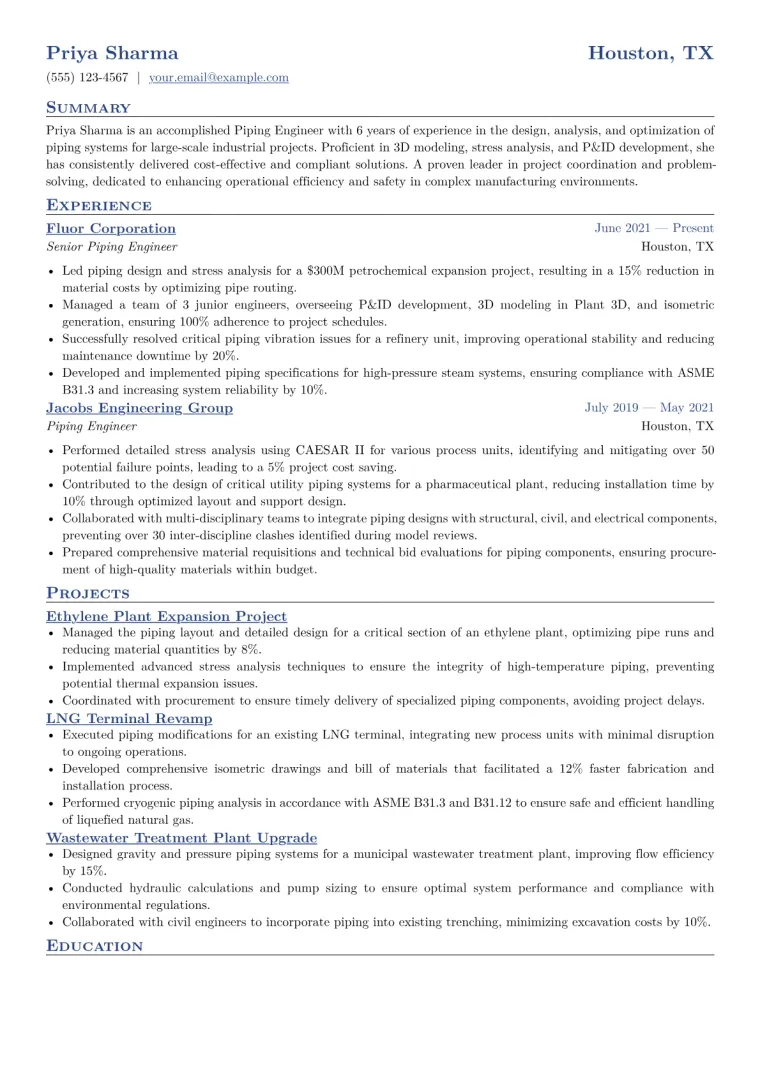
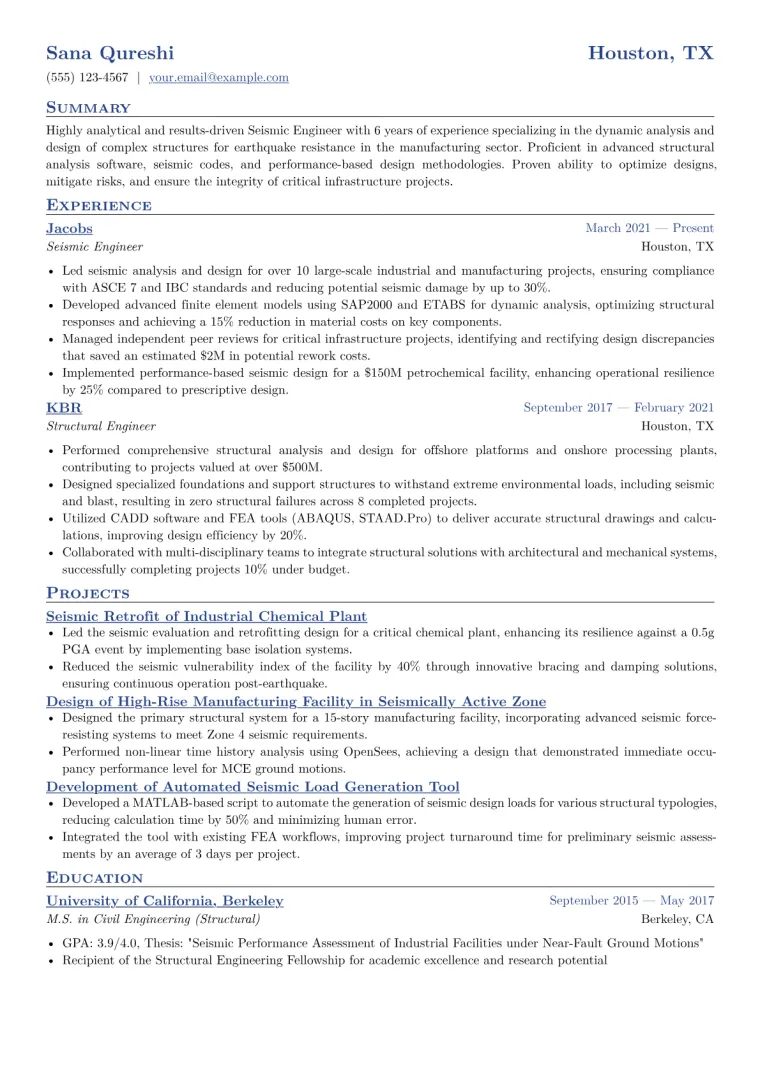
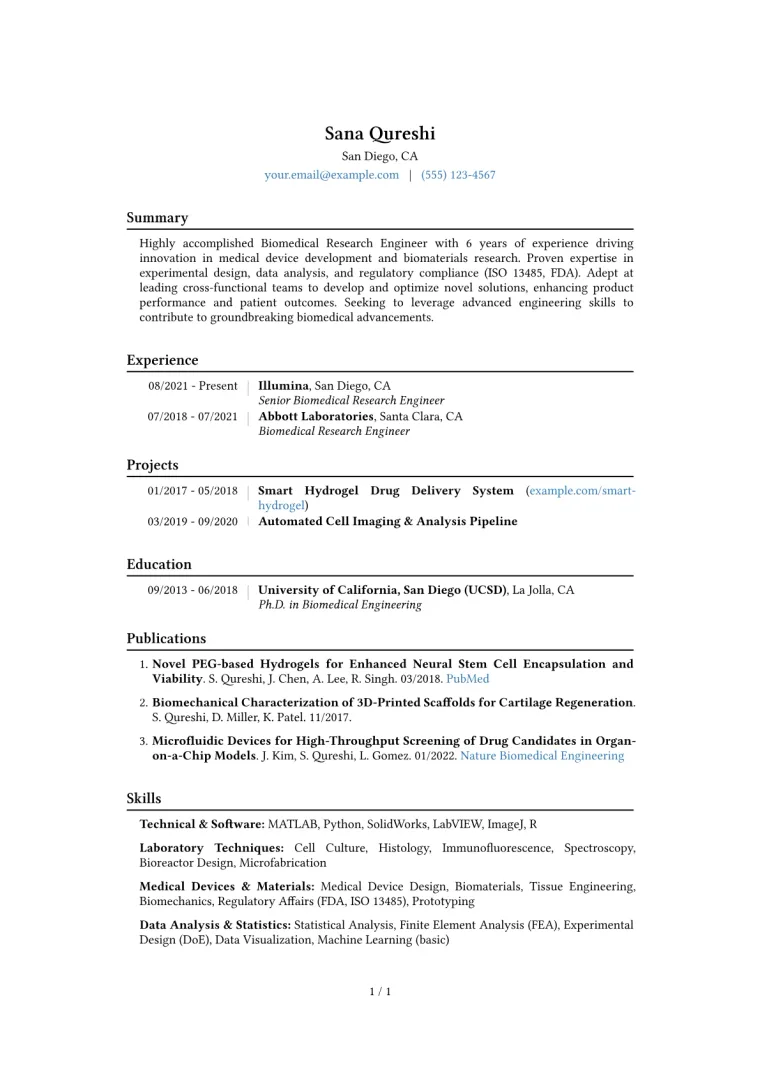
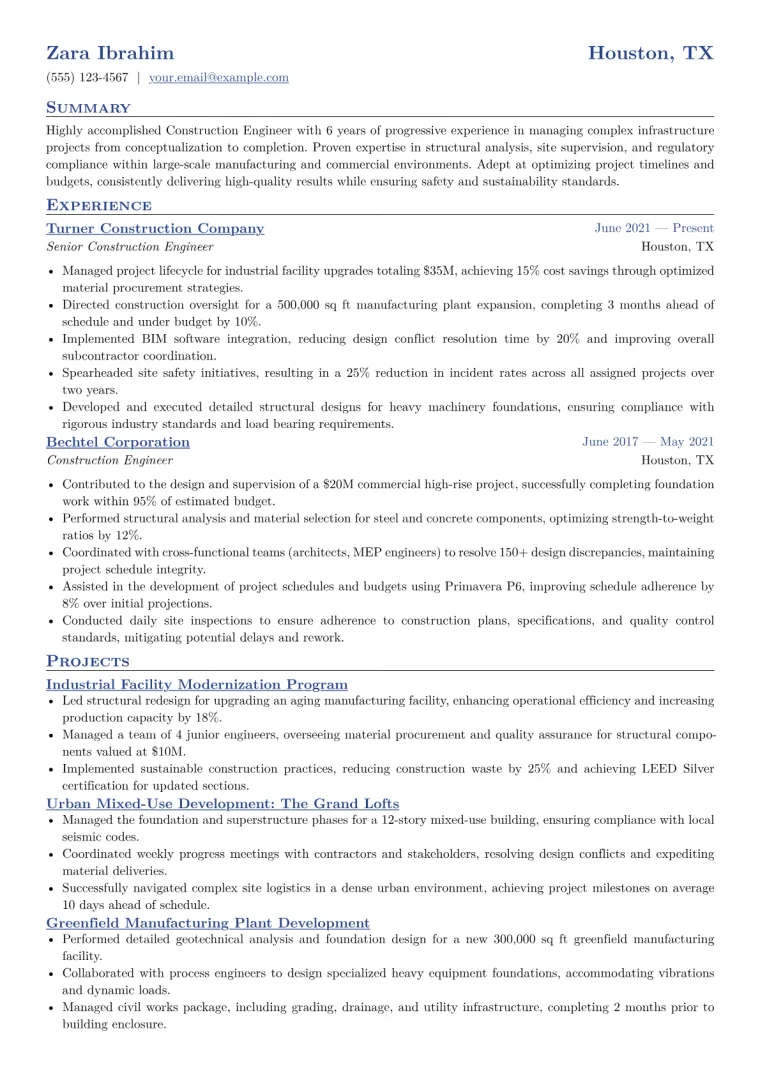
Ergonomics Engineer resume samples
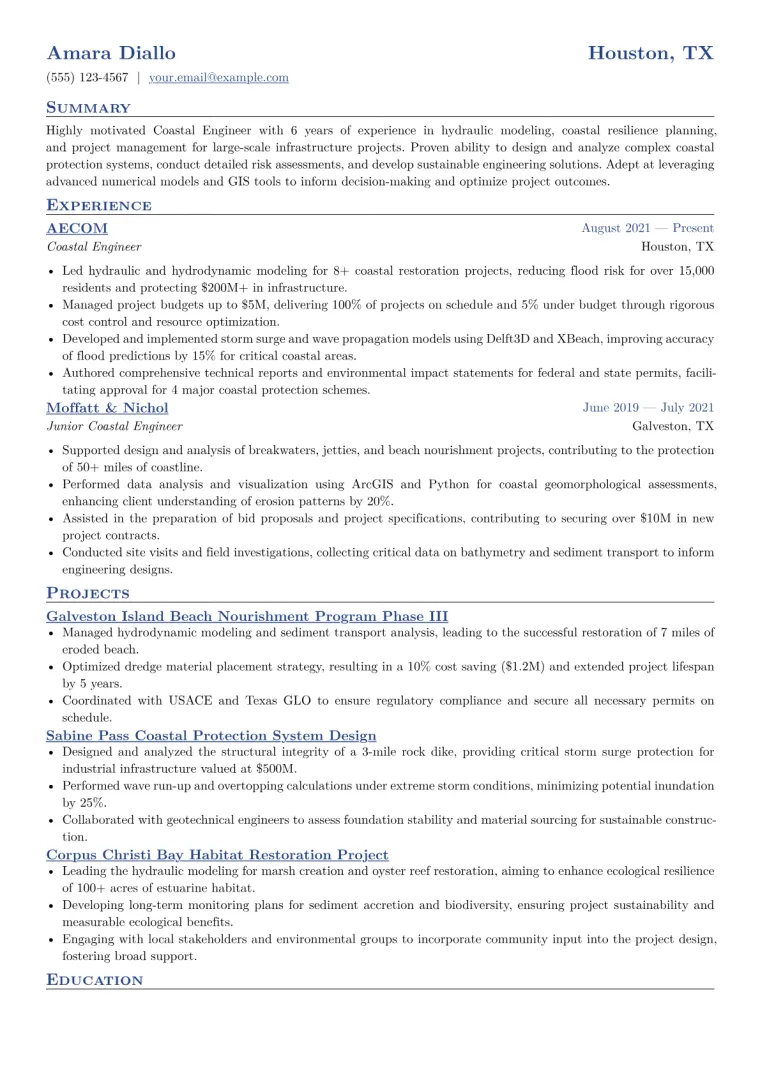
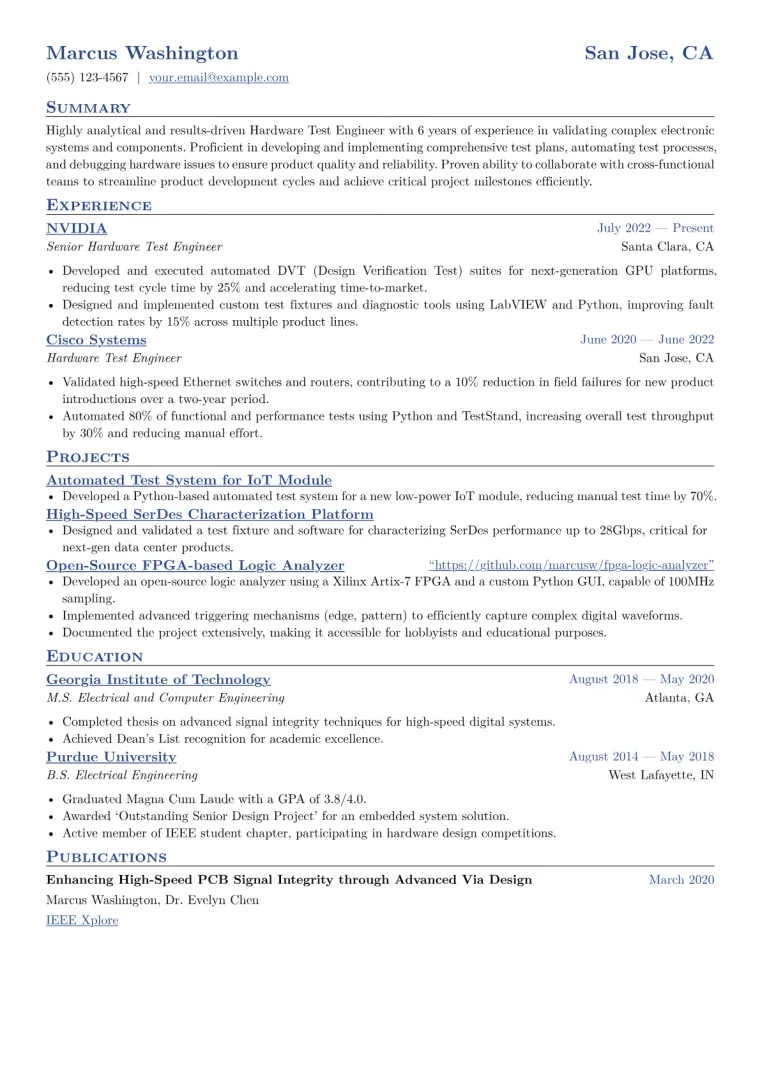
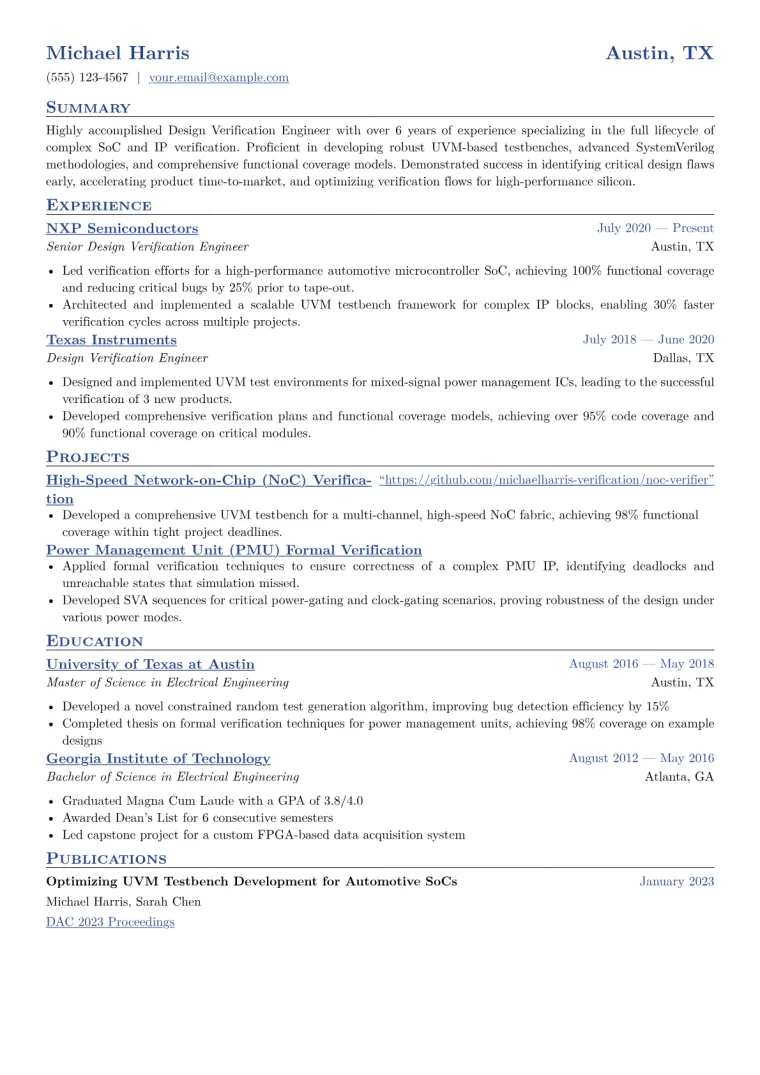
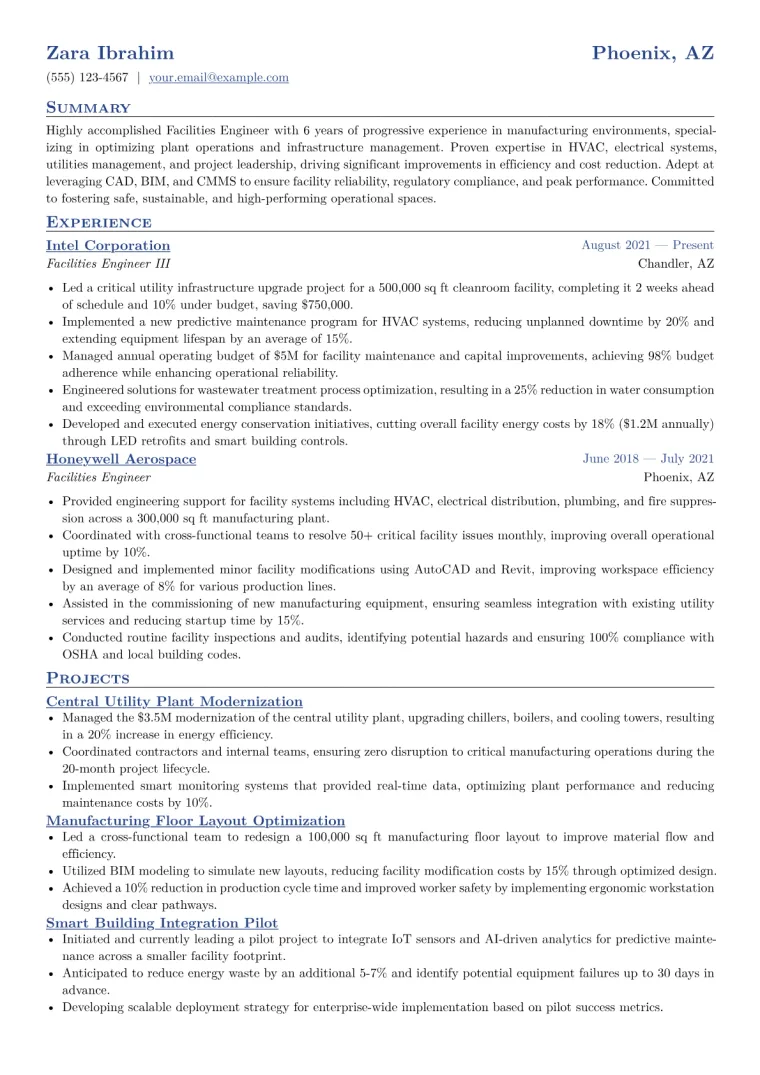
Three complete resumes, each in a different design.
Free to use. No download fee.
Editorial Notes
Hiring managers for mid-level Ergonomics Engineers in manufacturing seek concrete evidence of impact on safety, productivity, and cost reduction. A strong resume highlights achievements like reducing musculoskeletal disorder (MSD) rates, optimizing production line layouts, and ensuring compliance with OSHA standards. Demonstrating expertise in risk assessment tools such as RULA, REBA, or the NIOSH Lifting Equation, alongside certifications like a Certified Professional Ergonomist (CPE), signals a candidate's practical and theoretical capabilities crucial for this nuanced role where worker well-being directly impacts operational efficiency.
The example resume effectively showcases these elements. It strategically quantifies achievements, for instance, detailing a "15% reduction in recordable injuries" or "30% improvement in workstation efficiency." Skills are logically grouped into categories like "Ergonomic Assessment Tools," "Safety Compliance," and "Lean Manufacturing Principles," clearly indicating a breadth of relevant expertise. Key certifications, such as CPE, are prominently highlighted, and specific software proficiencies, like AutoCAD or human simulation tools, are listed, assuring employers of practical application readiness for manufacturing environments.
This template was built with JobSprout and can be remixed to create your own tailored Ergonomics Engineer resume.
How useful was this template?
Example by JobSproutErgonomics Engineer resume summary example
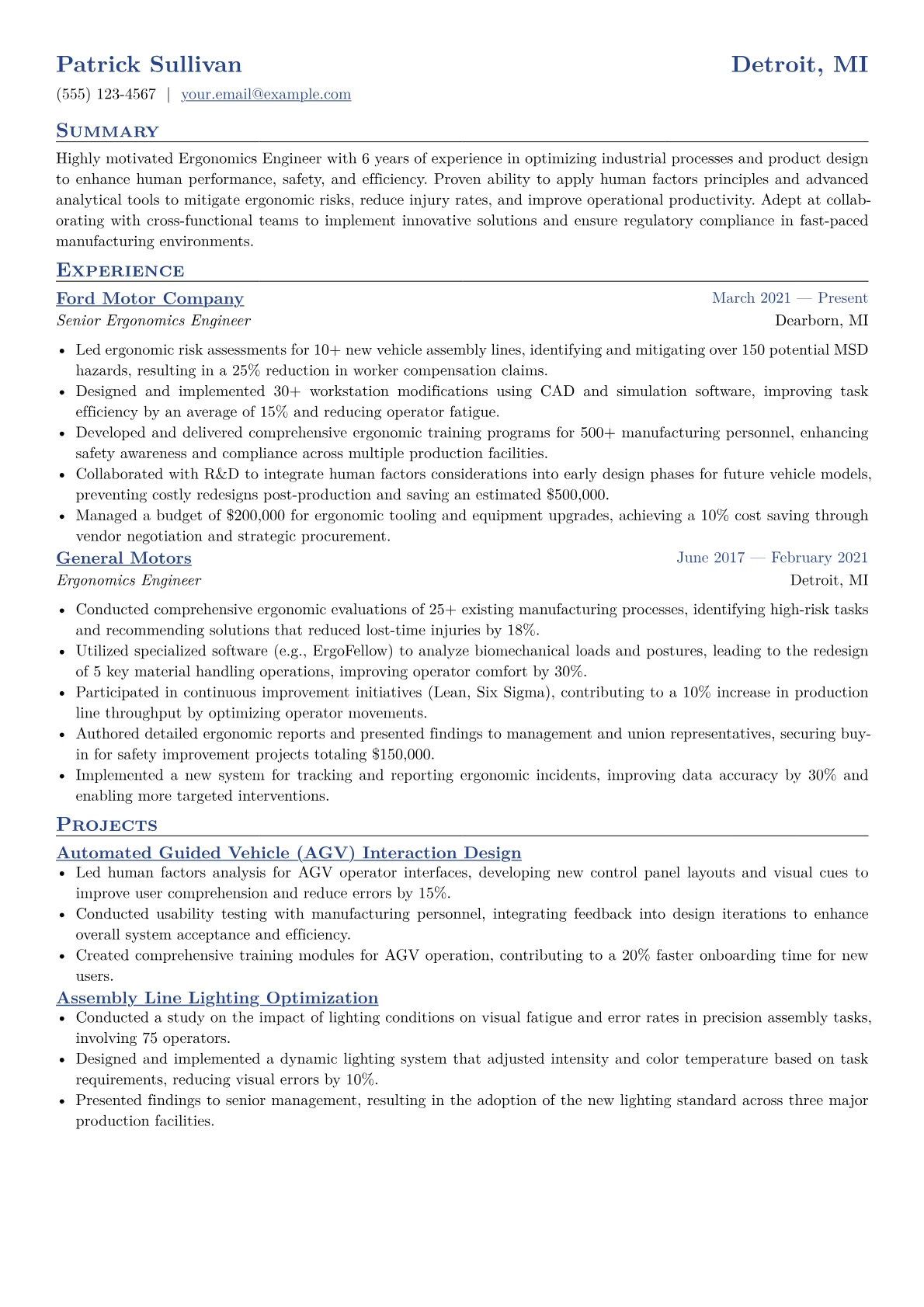
Highly motivated Ergonomics Engineer with 6 years of experience in optimizing industrial processes and product design to enhance human performance, safety, and efficiency. Proven ability to apply human factors principles and advanced analytical tools to mitigate ergonomic risks, reduce injury rates, and improve operational productivity. Adept at collaborating with cross-functional teams to implement innovative solutions and ensure regulatory compliance in fast-paced manufacturing environments.
Ergonomics Engineer salary by country
| Country | 25th percentile | Median | 75th percentile |
|---|---|---|---|
| US | $107,143 | $141,250 | $150,625 |
| UK | £30,879 | £37,521 | £49,639 |
| Canada | C$54,015 | C$76,330 | C$106,695 |
| Australia | A$81,573 | A$97,932 | A$124,030 |
| Germany | €41,304 | €59,718 | €72,819 |
| France | €26,998 | €34,650 | €42,911 |
| Netherlands | €40,158 | €49,152 | €62,025 |
| Italy | €17,965 | €23,981 | €29,327 |
| Austria | €34,500 | €56,250 | €71,293 |
| New Zealand | NZ$78,854 | NZ$101,126 | NZ$125,255 |
| India | ₹403,908 | ₹807,816 | ₹1,539,889 |
| Poland | zł159,882 | zł198,275 | zł221,495 |
Annual salaries in local currency, aggregated from live job postings via Adzuna. Figures refresh continuously and reflect advertised pay, not negotiated offers.
Ergonomics Engineer resume skills and keywords
Recruiters and applicant tracking systems scan Ergonomics Engineer resumes for these skills and keywords. Include the ones that match your experience and mirror the wording in the job description. Check your resume against them with the free ATS checker.
Hard skills
Tools & software
Certifications
Soft skills
Market Insights
Ergonomics Engineer
Salary Range
US market data · Source: Adzuna · Updated Mar 2026
Frequently Asked Questions
What's the best resume structure for a mid-level Ergonomics Engineer?
What key skills and qualifications should I highlight as an Ergonomics Engineer?
How do I write strong achievement bullets or a compelling professional summary?
Which optional sections are important for an Ergonomics Engineer's resume?
How can I tailor this resume template for a specific Ergonomics Engineer job posting?
The blank page is the hard part. Skip it.
Free to use. No download fee.
![How to Write a CV for Manufacturing Applications [2026 Guide]](/thumbnails/cv-for-manufacturing-applications.webp)