Heat Transfer Engineer Resume Example
 Example by JobSprout
Free to use. No download fee.
Market Insights
Heat Transfer Engineer
Salary Range
US market data · Source: Adzuna · Updated Mar 2026
How useful was this template?
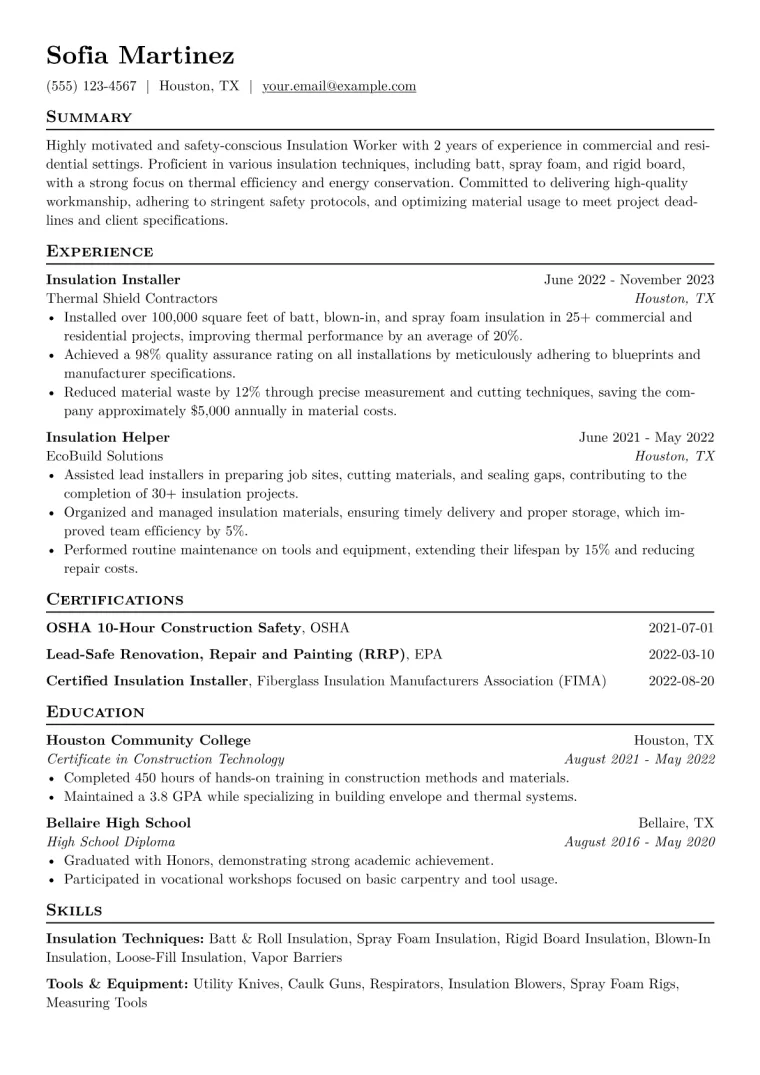
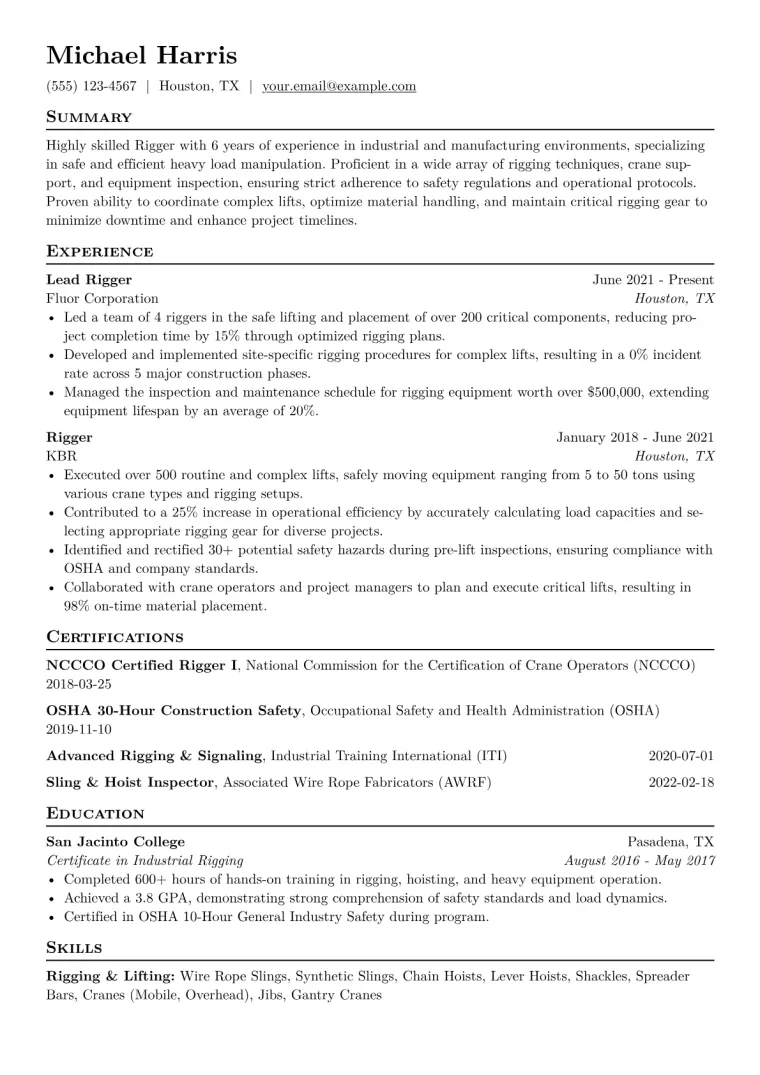
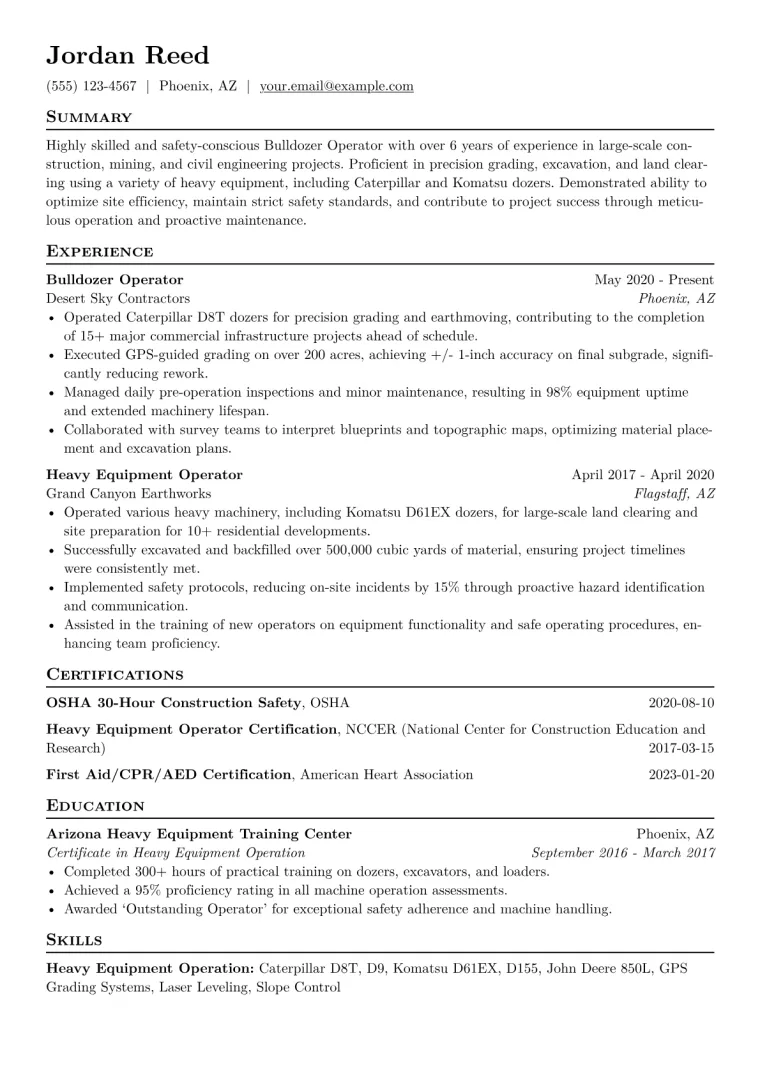
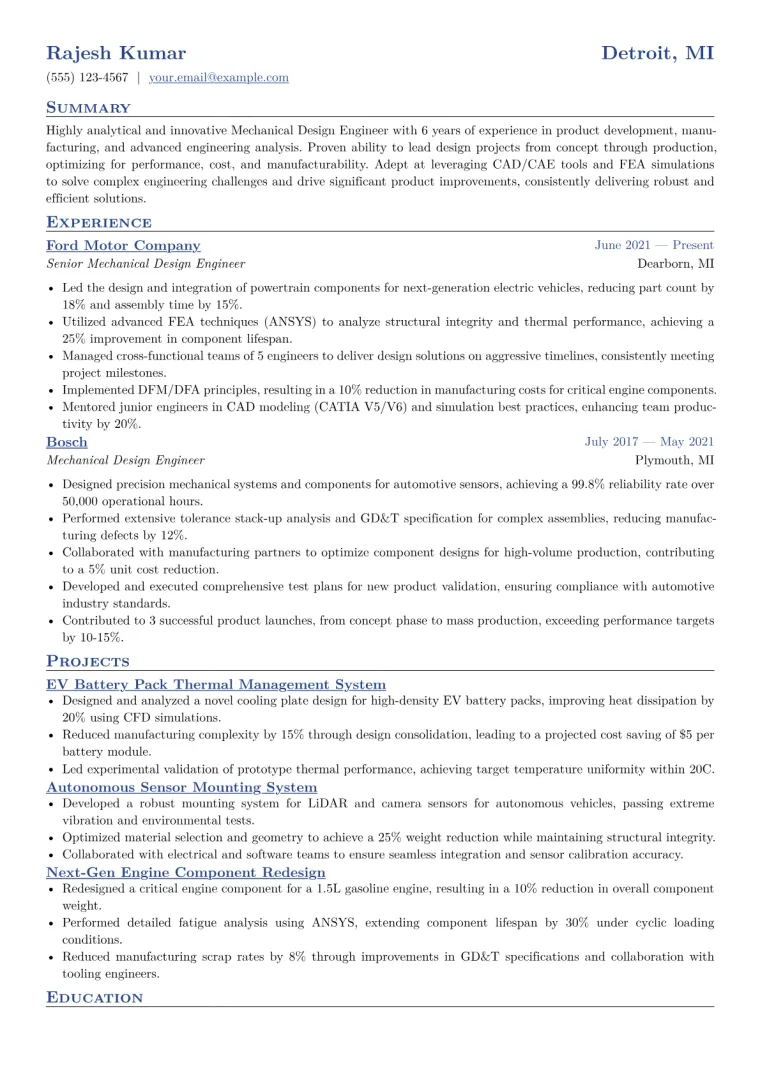
Heat Transfer Engineer resume samples
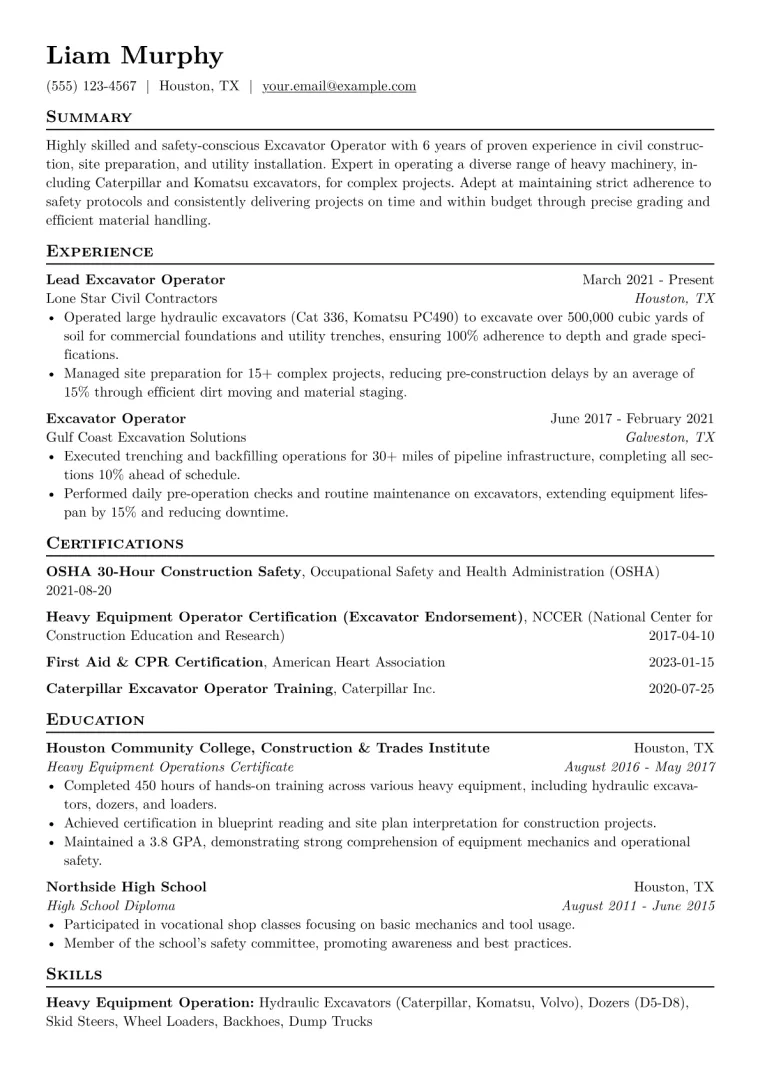
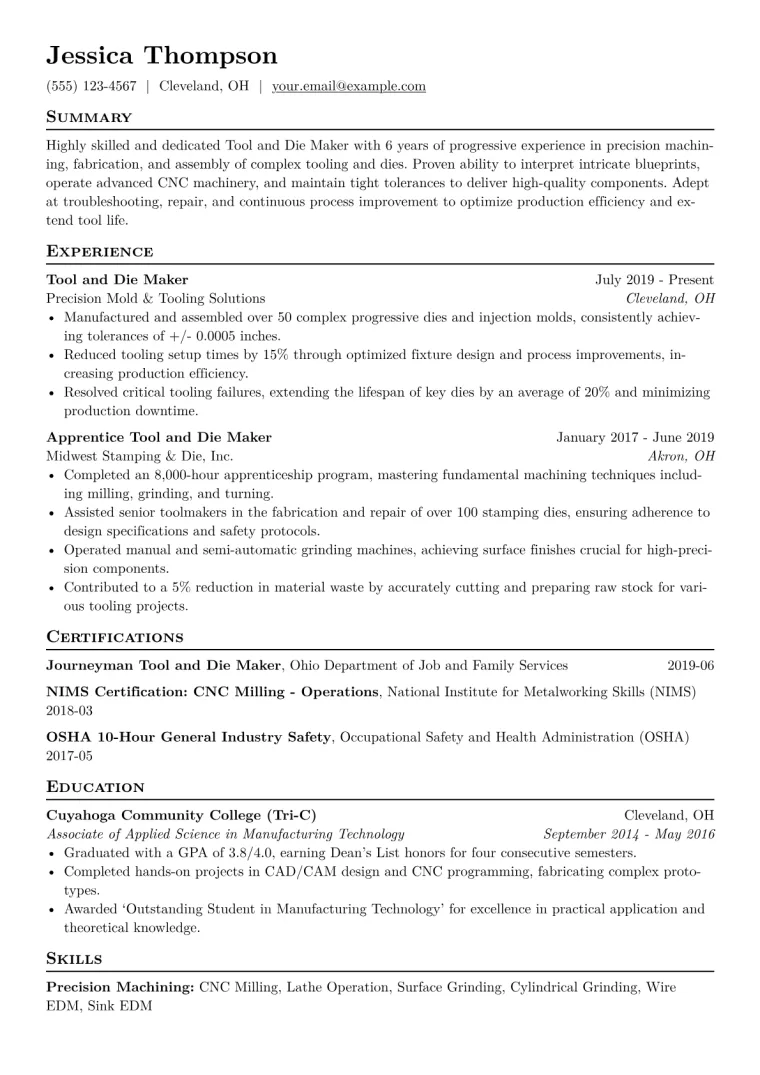
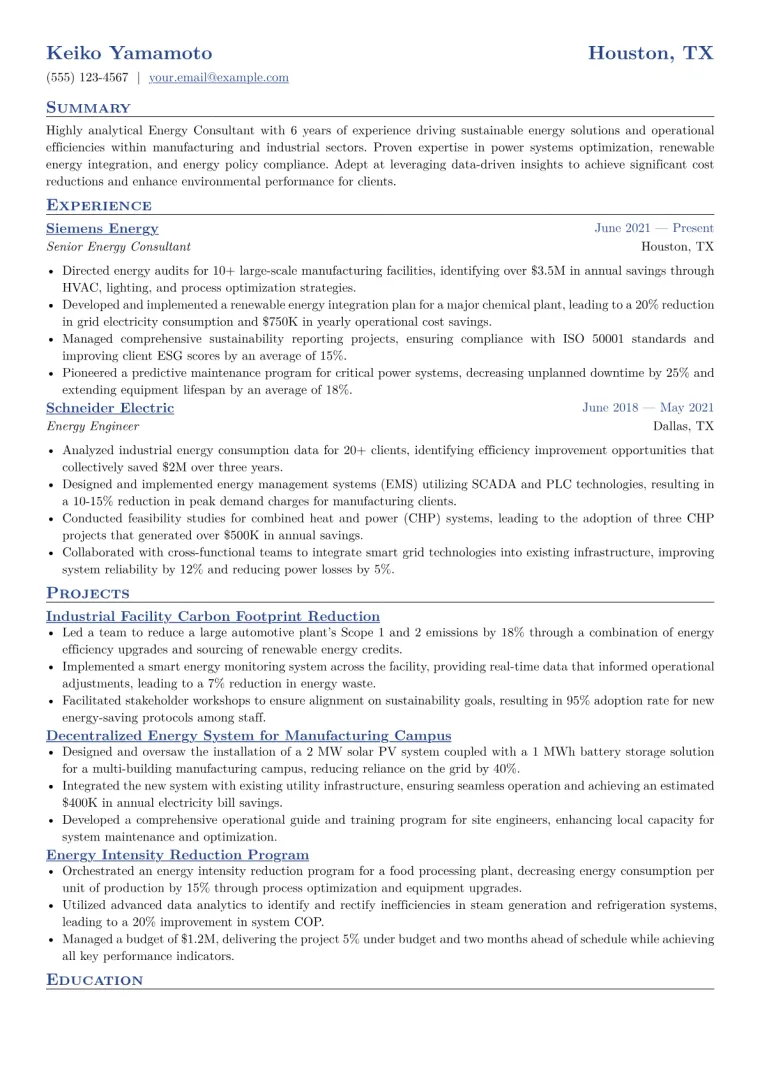
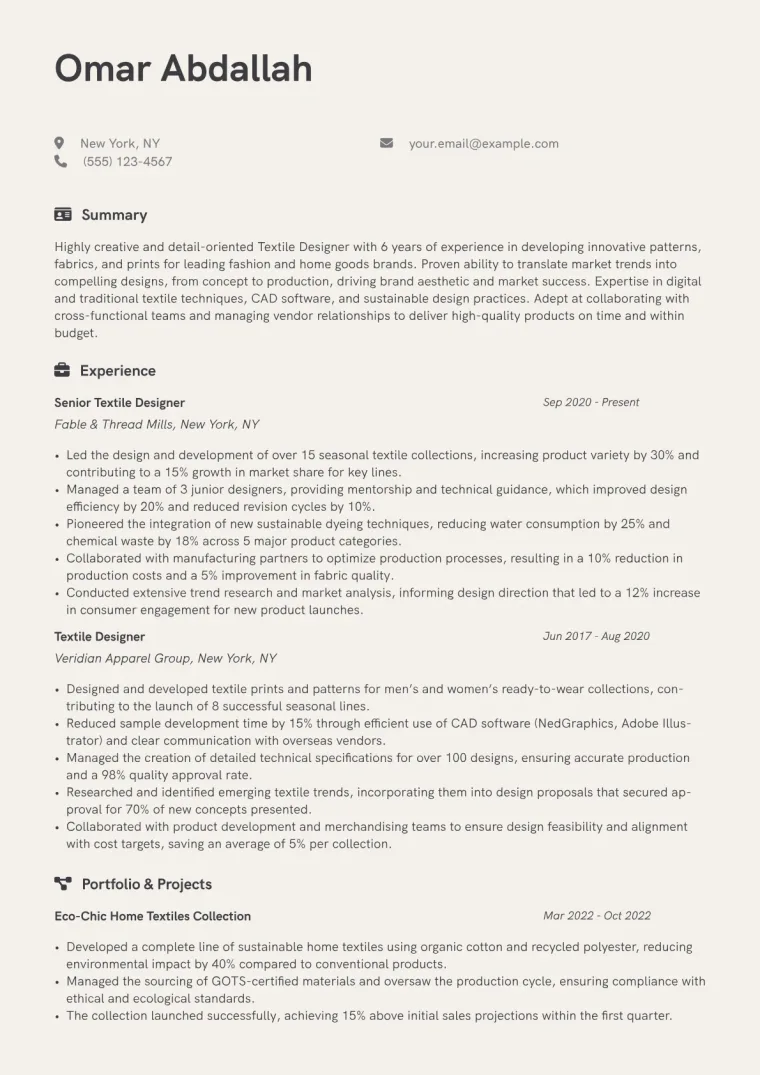
Three complete resumes, each in a different design.


Free to use. No download fee.
Editorial Notes
A strong resume for a mid-level Heat Transfer Engineer in Manufacturing must demonstrate tangible contributions to operational efficiency and product quality. Hiring managers prioritize candidates who can quantify their impact, such as reducing energy consumption by optimizing heat exchanger networks or improving product cycle times through thermal process redesign. Expertise in areas like thermal modeling, CFD simulations (e.g., ANSYS Fluent), and material science applied to manufacturing challenges is essential. Detailing achievements in waste heat recovery, preventing thermal defects, or ensuring regulatory compliance (e.g., ASME standards) showcases a candidate's value in a production setting.
This example CV effectively structures a Heat Transfer Engineer's profile by meticulously quantifying achievements. It details projects with clear metrics, for example, "Implemented new furnace insulation strategy, cutting energy usage by 18%." Skills are logically organized, distinguishing between fundamental engineering principles (thermodynamics, fluid mechanics) and specialized software proficiency (SolidWorks, MATLAB, COMSOL Multiphysics). The template also prominently highlights critical industry certifications and proficiencies with specific thermal analysis tools, providing a comprehensive view of technical capabilities.
This template was built with JobSprout and can be remixed to create your own tailored Heat Transfer Engineer resume. It offers a clear, impactful framework for showcasing your engineering expertise.
How useful was this template?
Example by JobSproutHeat Transfer Engineer resume summary example
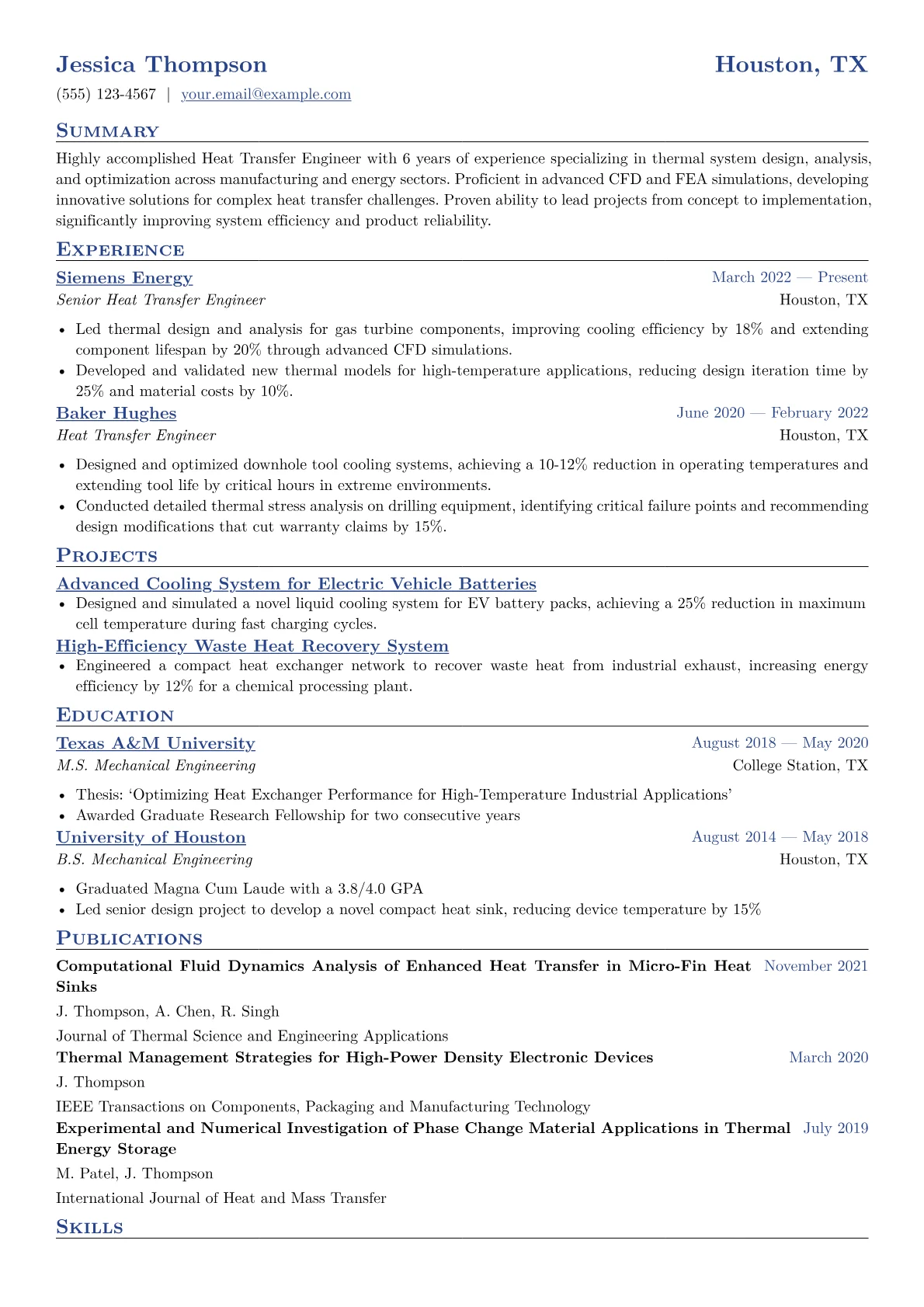
Highly accomplished Heat Transfer Engineer with 6 years of experience specializing in thermal system design, analysis, and optimization across manufacturing and energy sectors. Proficient in advanced CFD and FEA simulations, developing innovative solutions for complex heat transfer challenges. Proven ability to lead projects from concept to implementation, significantly improving system efficiency and product reliability.
Heat Transfer Engineer salary by country
| Country | 25th percentile | Median | 75th percentile |
|---|---|---|---|
| US | $102,500 | $134,000 | $148,333 |
| UK | £46,059 | £60,012 | £72,658 |
| Canada | C$86,152 | C$113,871 | C$140,800 |
| Australia | A$101,935 | A$126,667 | A$147,857 |
| Germany | €59,500 | €70,570 | €77,887 |
| France | €37,875 | €44,167 | €49,750 |
| Netherlands | €55,000 | €66,667 | €74,250 |
| Italy | €25,000 | €31,250 | €38,750 |
| Austria | €46,250 | €58,750 | €67,500 |
| New Zealand | NZ$102,500 | NZ$120,000 | NZ$162,500 |
| India | ₹570,786 | ₹1,167,051 | ₹1,840,563 |
| Poland | zł186,440 | zł209,338 | zł232,236 |
Annual salaries in local currency, aggregated from live job postings via Adzuna. Figures refresh continuously and reflect advertised pay, not negotiated offers.
Heat Transfer Engineer resume skills and keywords
Recruiters and applicant tracking systems scan Heat Transfer Engineer resumes for these skills and keywords. Include the ones that match your experience and mirror the wording in the job description. Check your resume against them with the free ATS checker.
Hard skills
Tools & software
Certifications
Soft skills
Market Insights
Heat Transfer Engineer
Salary Range
US market data · Source: Adzuna · Updated Mar 2026
Frequently Asked Questions
What's the best resume structure and format for a mid-level Heat Transfer Engineer?
Which key skills and qualifications should I highlight as a Heat Transfer Engineer?
How can I write strong achievement bullets or a compelling professional summary?
What optional sections, like publications or projects, are important for this role?
How can I tailor my JobSprout template for a specific Heat Transfer Engineer job posting?
The blank page is the hard part. Skip it.
Free to use. No download fee.
![How to Write a CV for Manufacturing Applications [2026 Guide]](/thumbnails/cv-for-manufacturing-applications.webp)