PhD Graduate Resume Example
 Example by JobSprout
Free to use. No download fee.
How useful was this template?
PhD Graduate resume samples
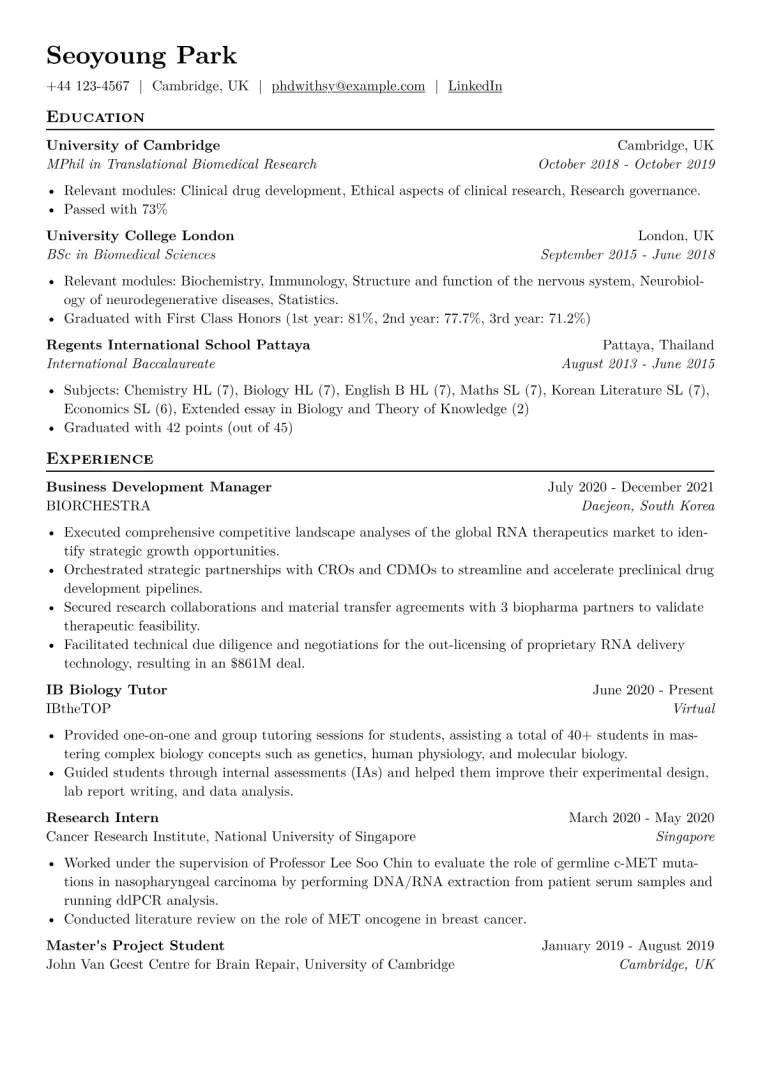
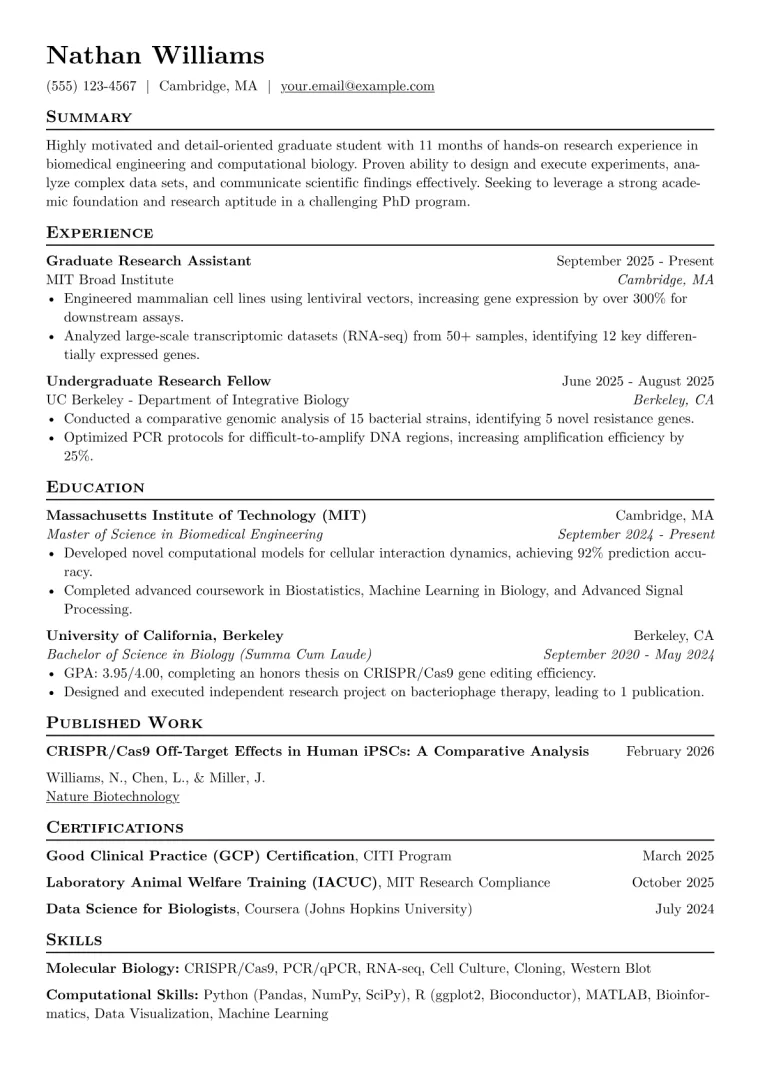
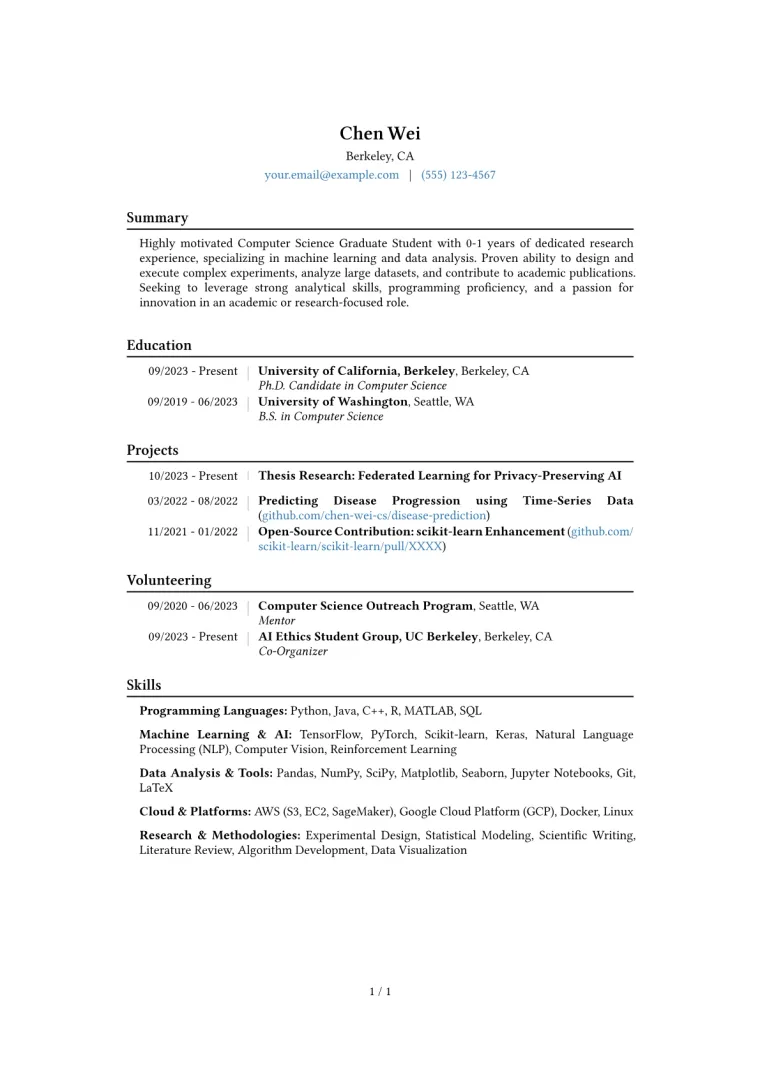
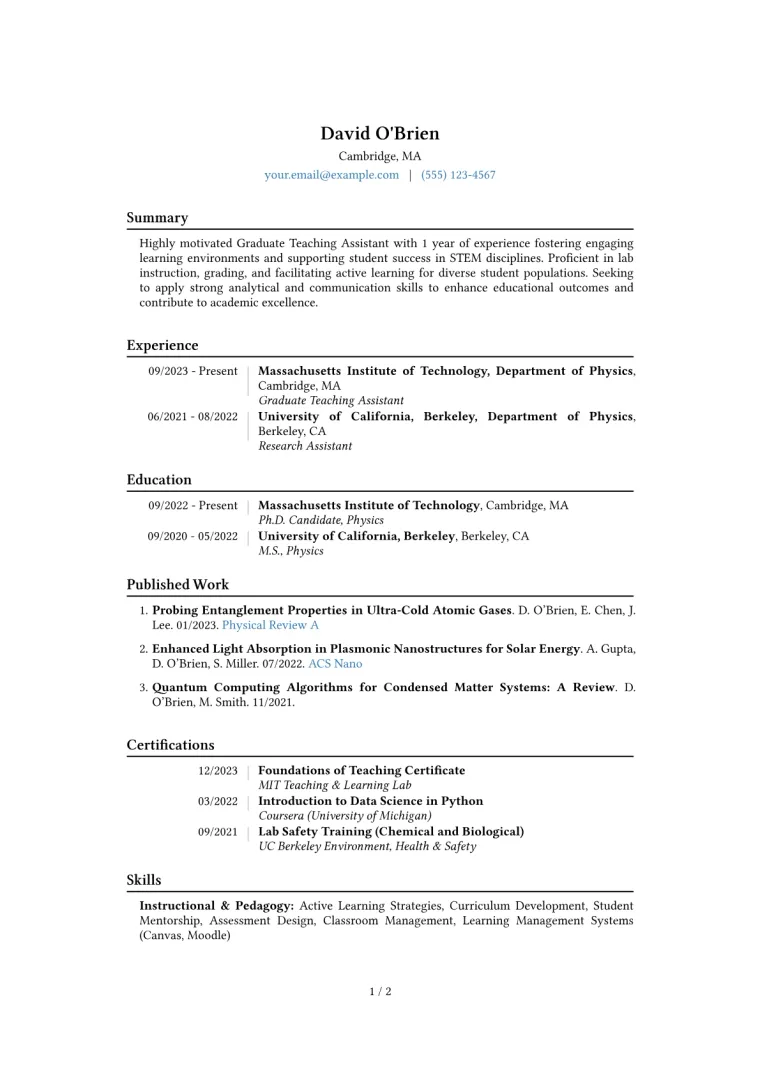
Three complete resumes, each in a different design.
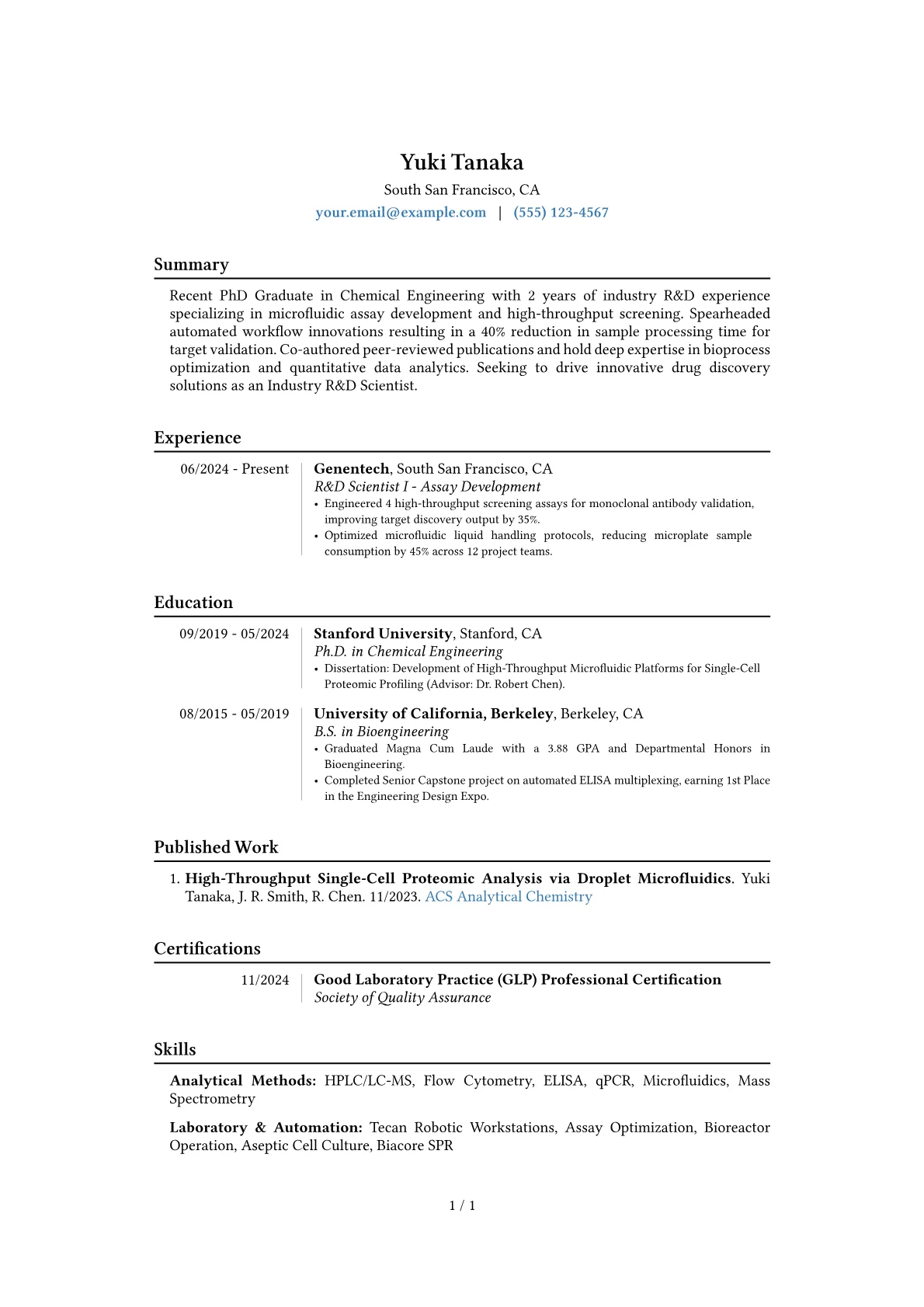
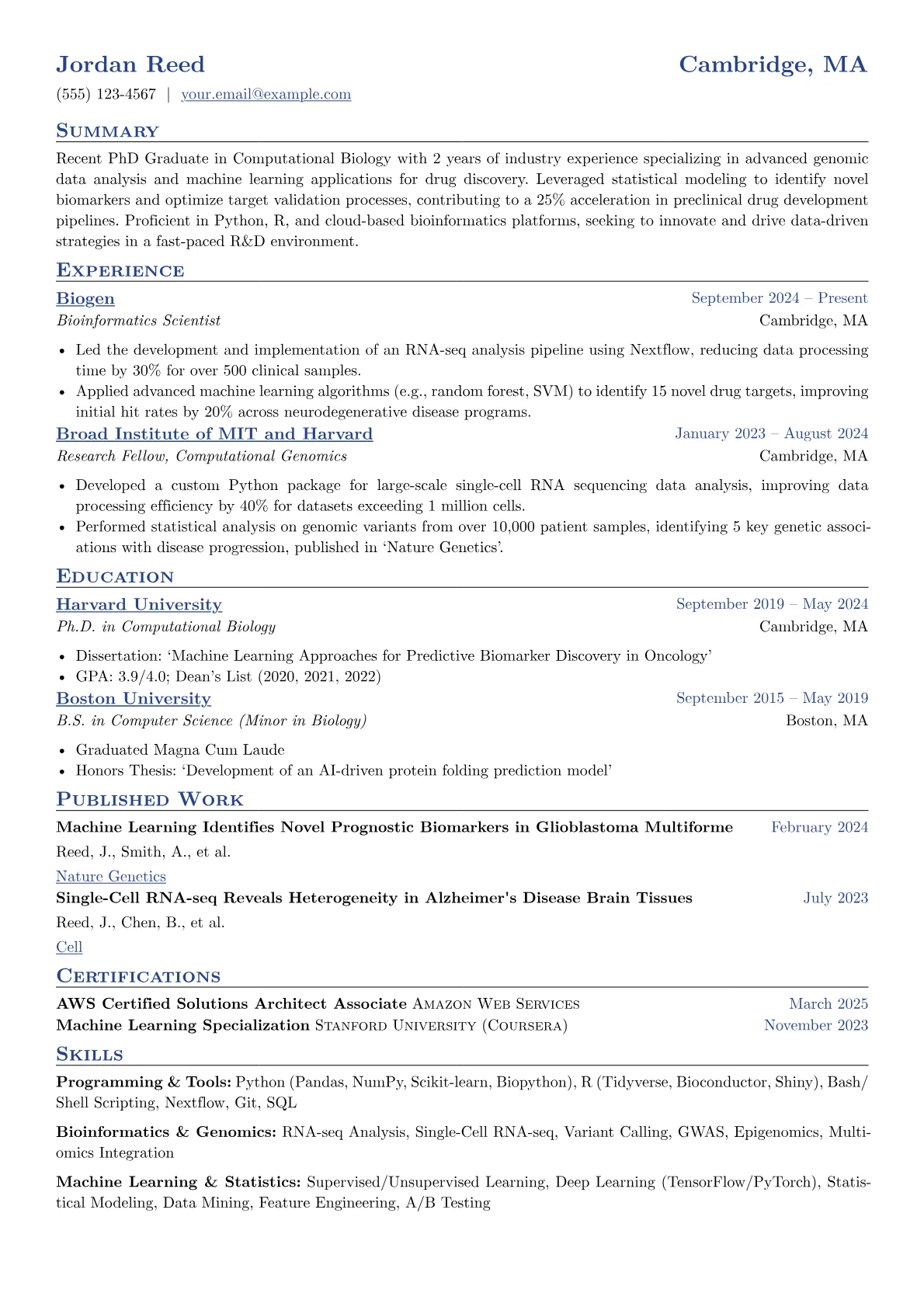
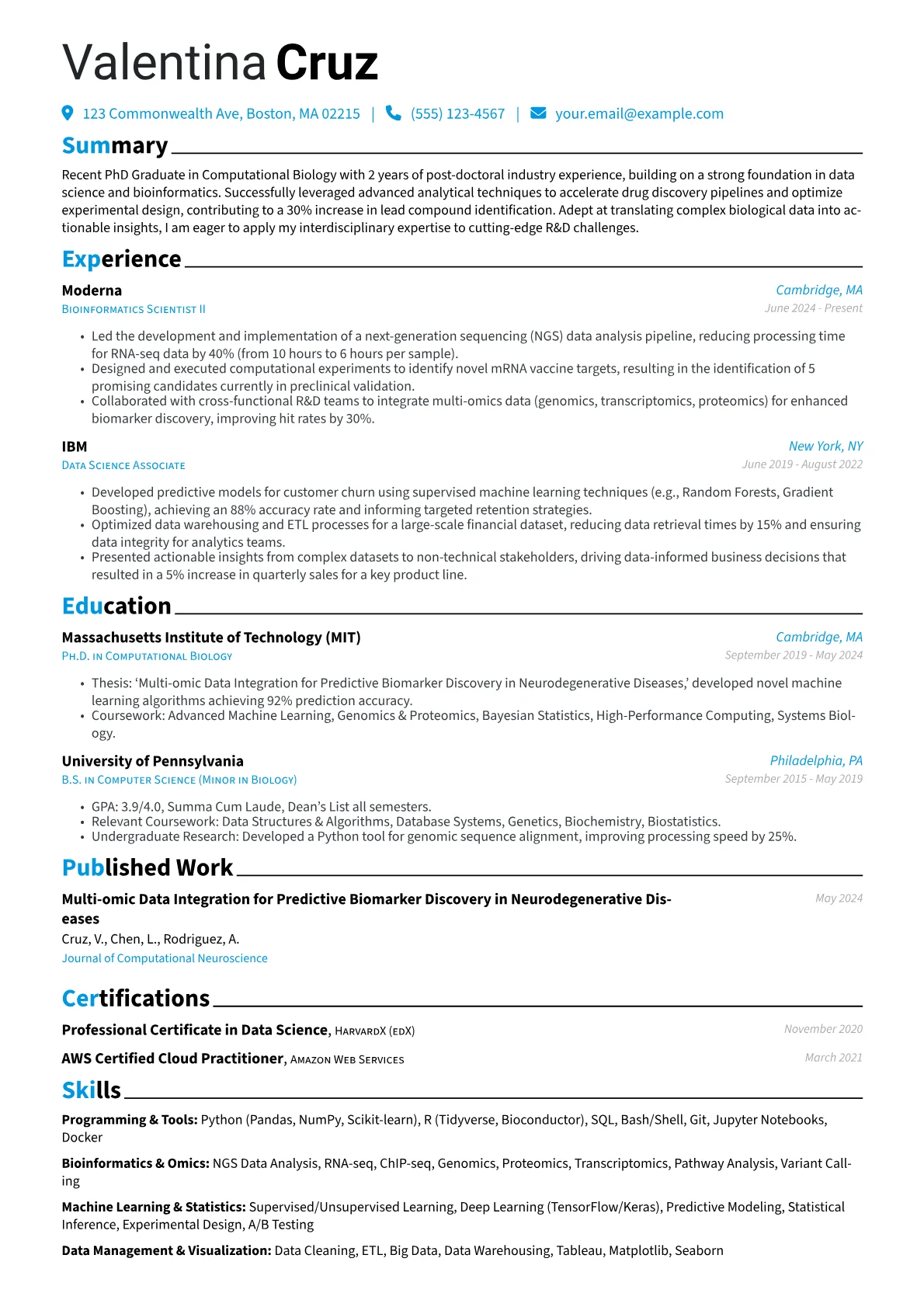
Free to use. No download fee.
What makes a strong PhD Graduate resume?
Transitioning from a doctoral program to an industry research role requires bridging academic inquiry with commercial execution. Hiring managers specifically look for candidates who combine specialized laboratory methodologies, such as microfluidics and flow cytometry, with operational scalability and regulatory familiarity. Displaying formal credentials like a Good Laboratory Practice certification and detailing technical software proficiency reassure biotech employers that a doctoral graduate can immediately drive high-throughput screening and cross-functional research projects.
Why this example works
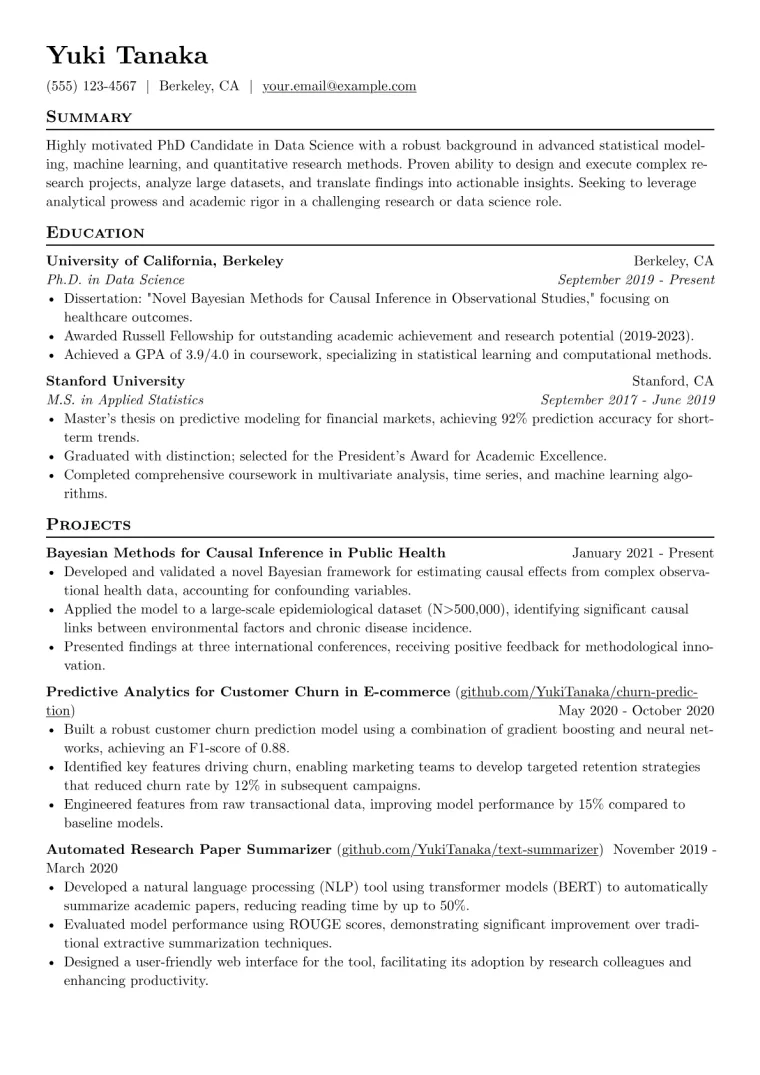
Yuki Tanaka's resume effectively translates academic rigors into industry impact through precise quantitative evidence. In the experience section as an R&D Scientist I at Genentech, Tanaka highlights engineering four high-throughput screening assays that increased target discovery output by 35% and managing analytics pipelines processing 50,000 single-cell microdrop samples weekly. The skills section systematically categorizes specialized tools like Tecan Robotic Workstations alongside statistical software like GraphPad Prism, complemented by education degrees from Stanford University and UC Berkeley.
How useful was this template?
Example by JobSproutPhD Graduate resume summary example
Recent PhD Graduate in Chemical Engineering with 2 years of industry R&D experience specializing in microfluidic assay development and high-throughput screening. Spearheaded automated workflow innovations resulting in a 40% reduction in sample processing time for target validation. Co-authored peer-reviewed publications and hold deep expertise in bioprocess optimization and quantitative data analytics. Seeking to drive innovative drug discovery solutions as an Industry R&D Scientist.
PhD Graduate resume skills and keywords
Recruiters and applicant tracking systems scan PhD Graduate resumes for these skills and keywords. Include the ones that match your experience and mirror the wording in the job description. Check your resume against them with the free ATS checker.
Hard skills
Tools & software
Certifications
Soft skills
Frequently Asked Questions
What is the best resume or CV format for a PhD graduate seeking an entry-level academic position?
What specific skills should a PhD graduate highlight for an academic entry-level role?
How should a PhD graduate write a strong summary or achievement bullets for an academic CV?
What additional sections like publications, presentations, or teaching experience are crucial for a PhD academic resume?
How can JobSprout's "Remix with AI" help me customize my PhD academic CV for various faculty or research roles?
The blank page is the hard part. Skip it.
Free to use. No download fee.
Related Articles

Research CV: UK Format, Structure and Examples [2026]
How to write a research CV for UK universities and institutes. The section order panels expect, how to list publications and funding, and how long it should actually be.
Postdoc CV: Structure, Template and Example [2026]
What a postdoctoral CV needs that a doctoral one does not: independence, funding, and a publication list a panel can audit. With a full worked example.

Academic CV for PhD Applications: How to Write One [2026]
Learn how to write an academic CV for PhD applications. Real template analysis, what research committees look for, and common mistakes to avoid.