Seismic Engineer Resume Example
 Example by JobSprout
Market Insights
Seismic Engineer
Salary Range
US market data · Source: Adzuna · Updated Mar 2026
How useful was this template?
Seismic Engineer resume samples
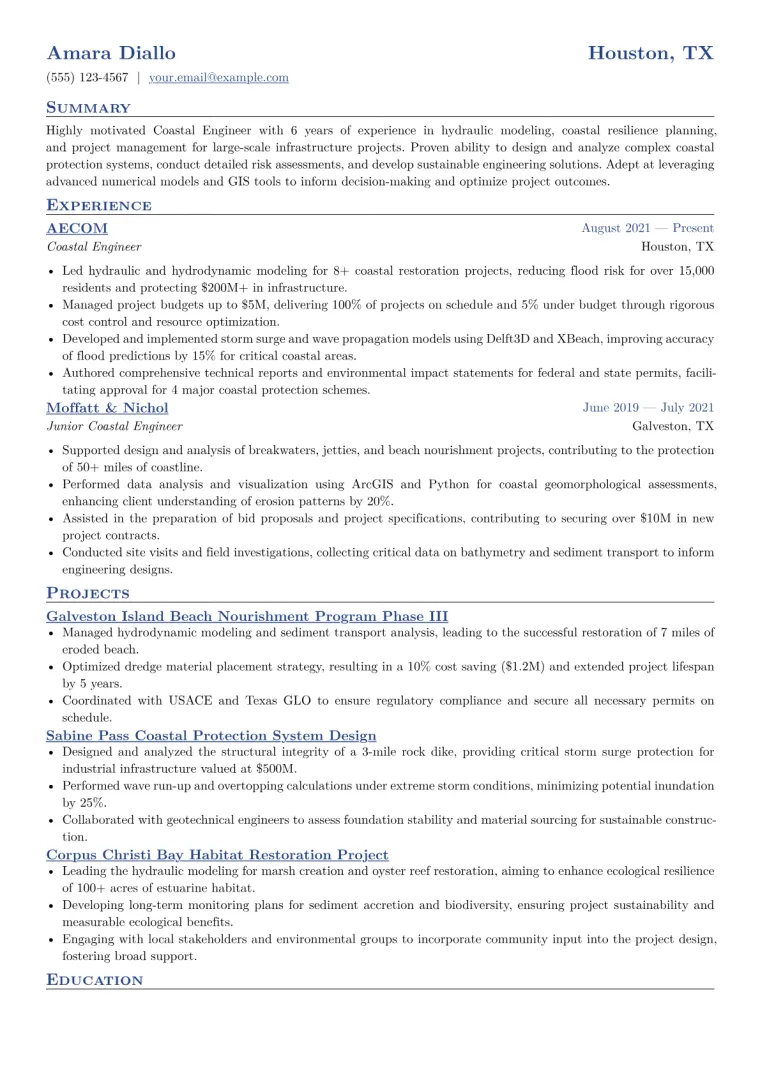
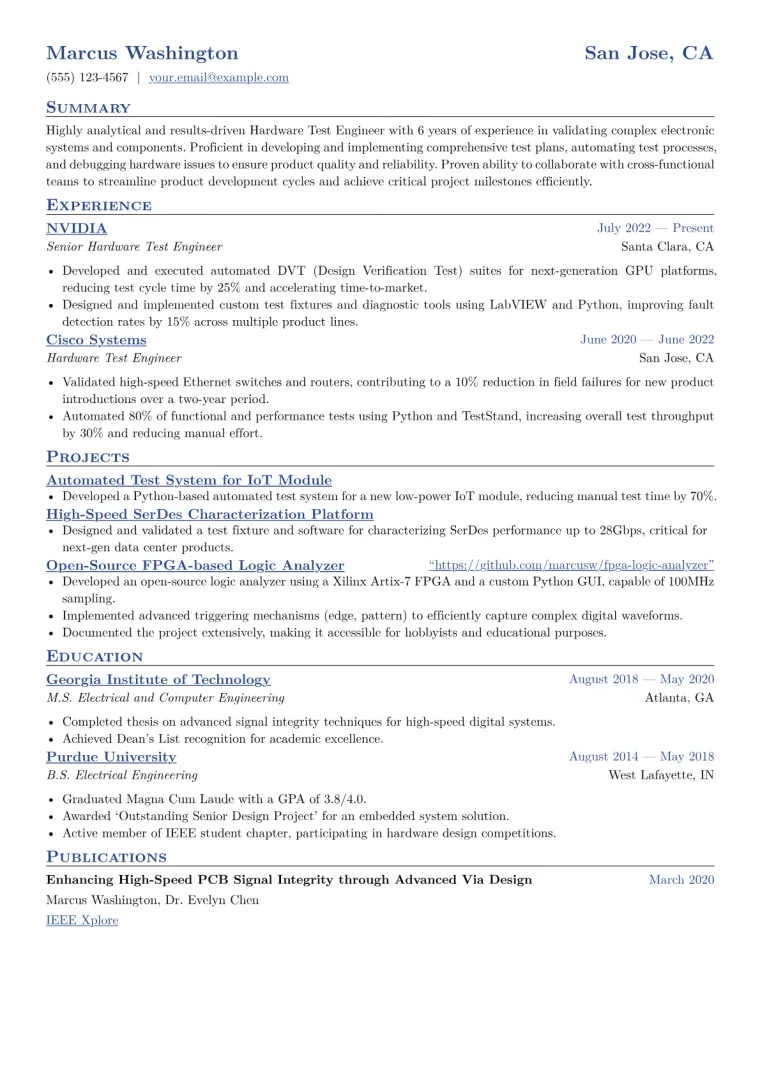
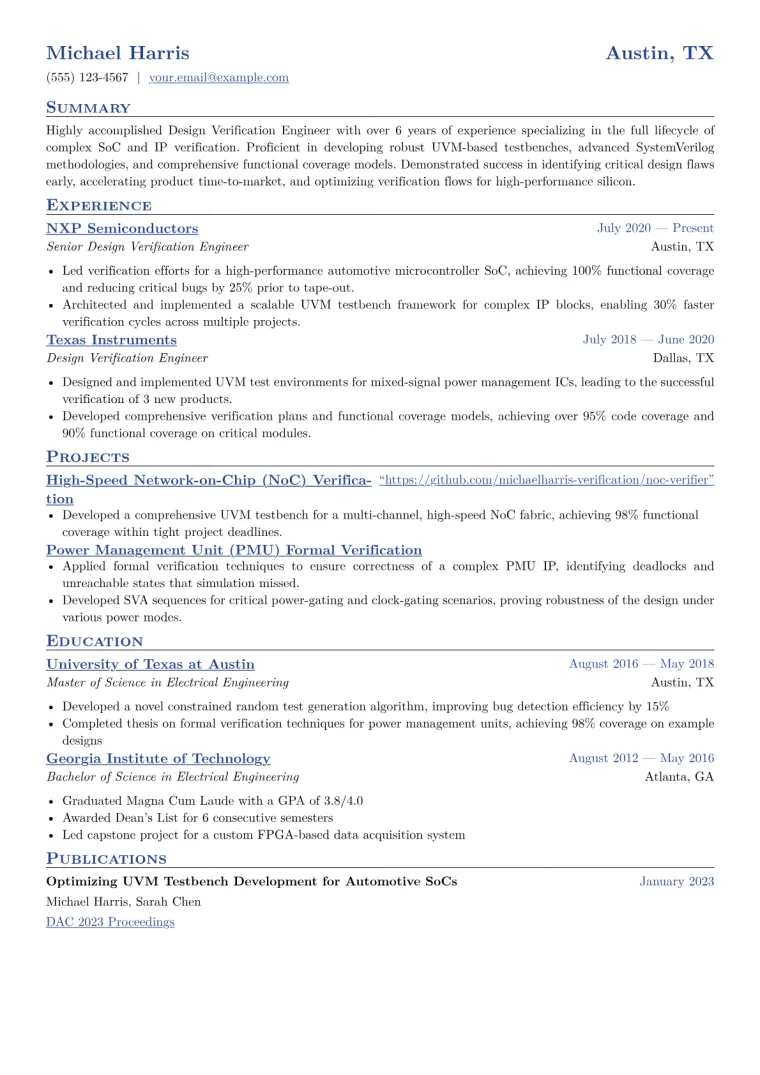
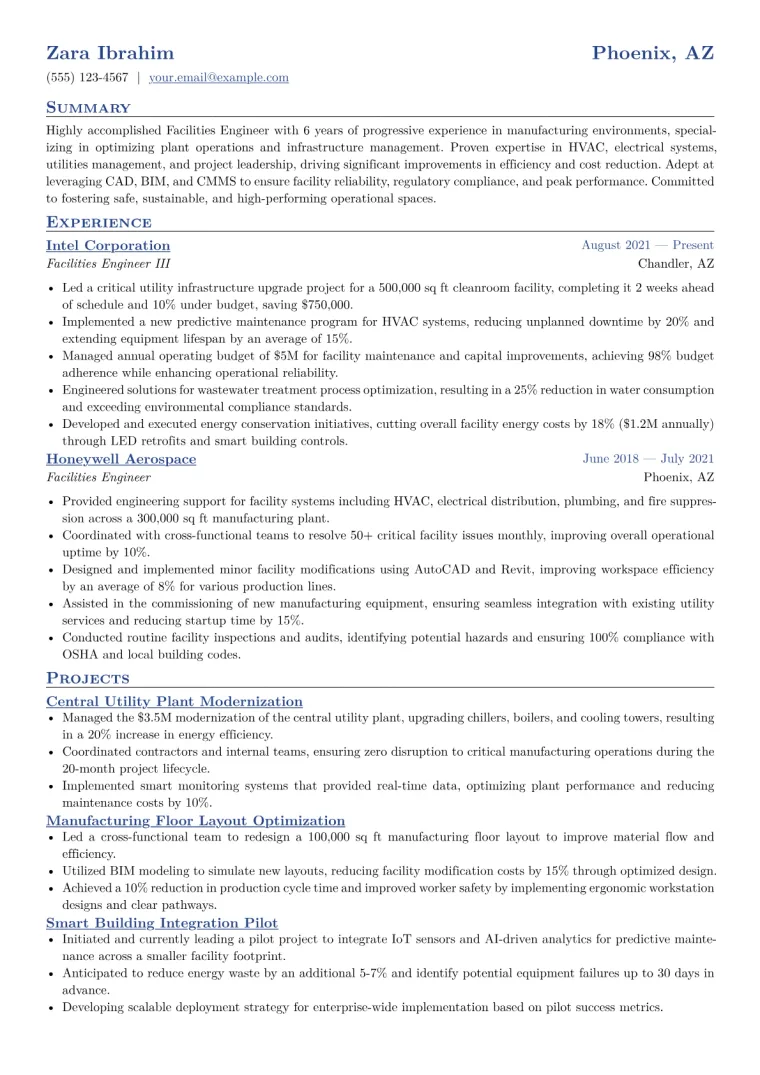
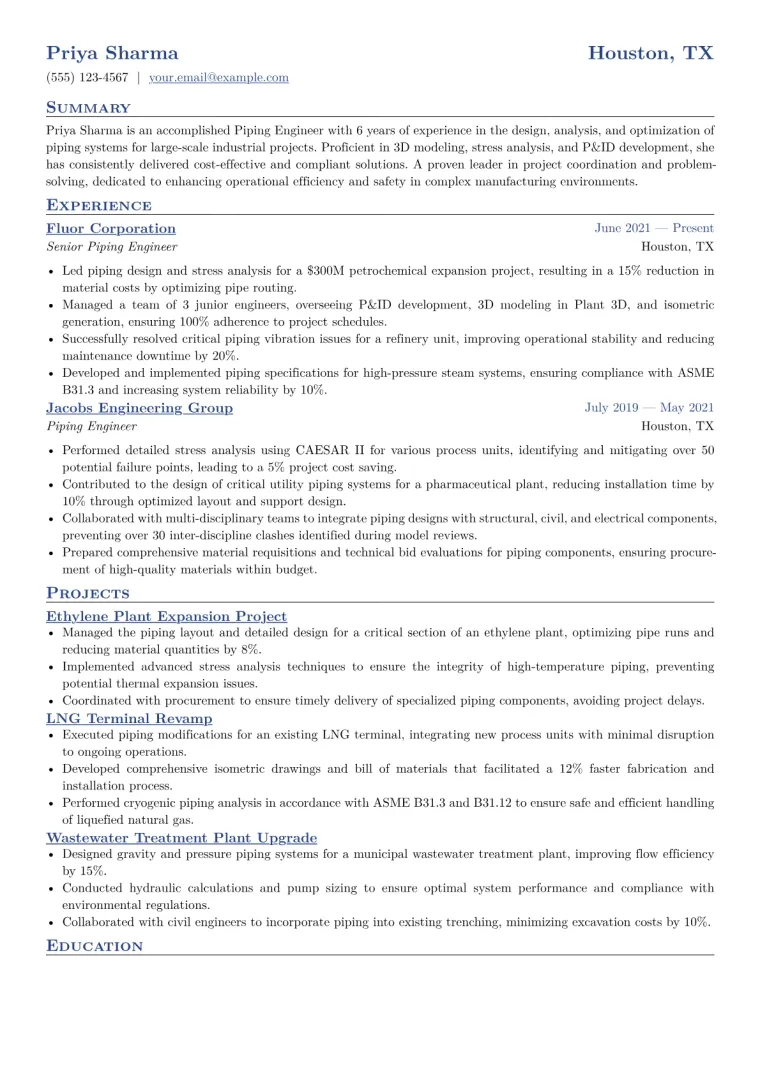
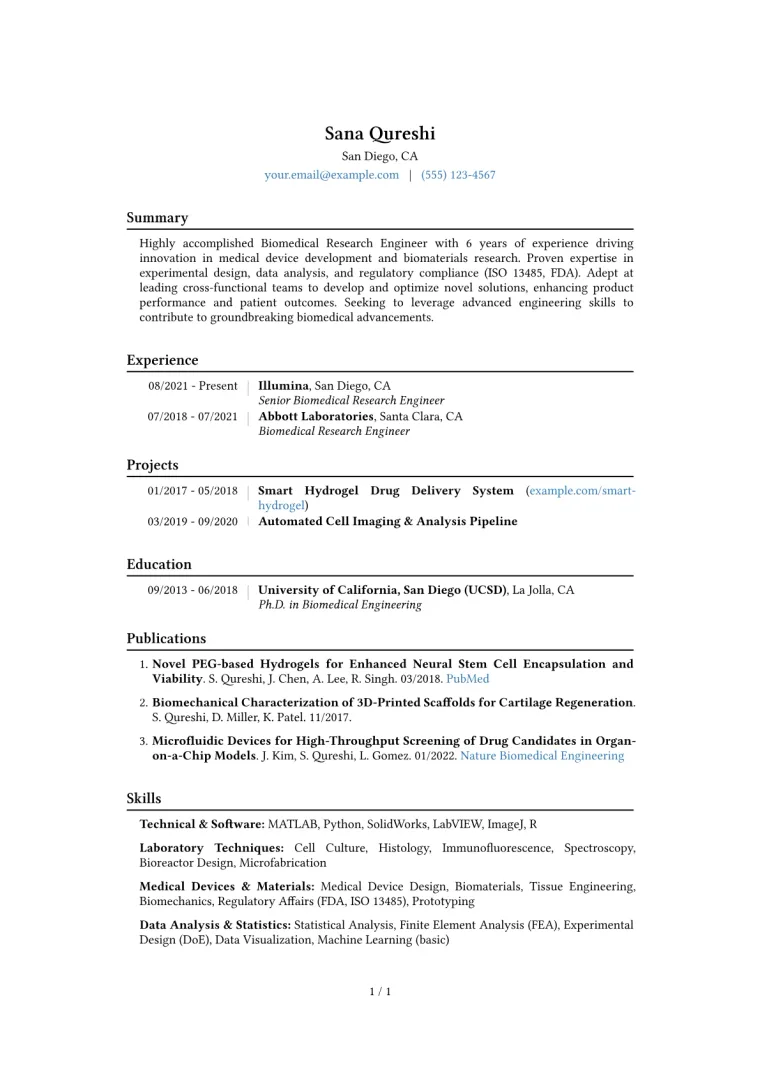
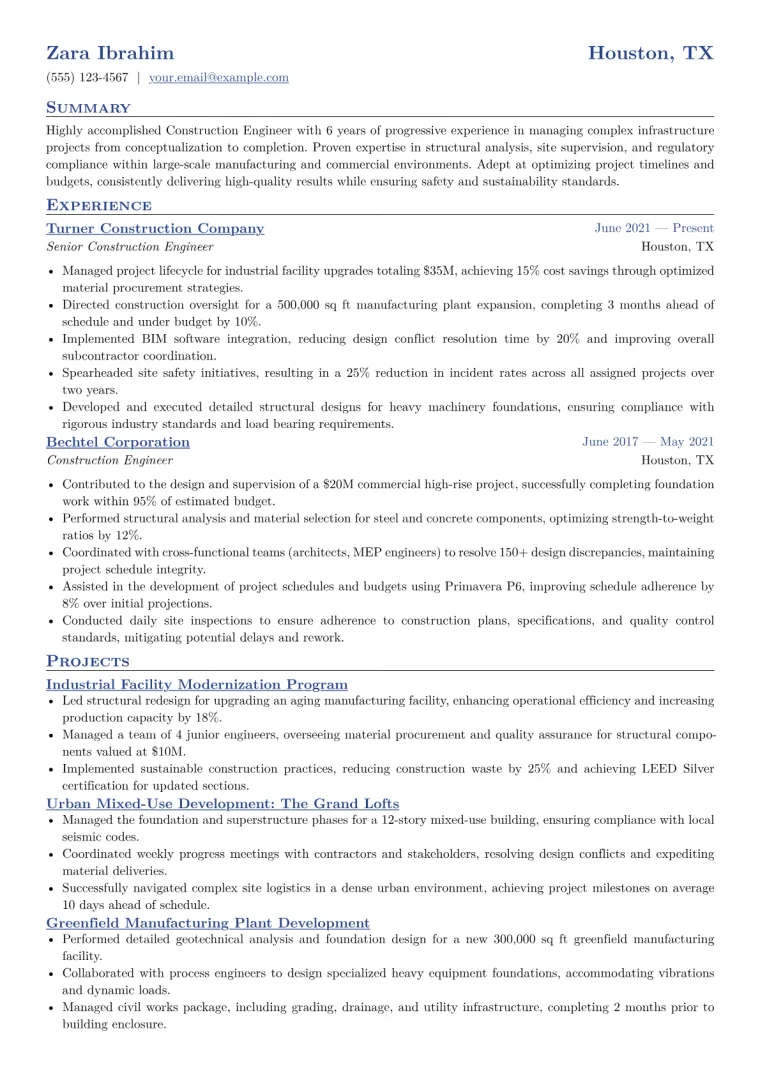
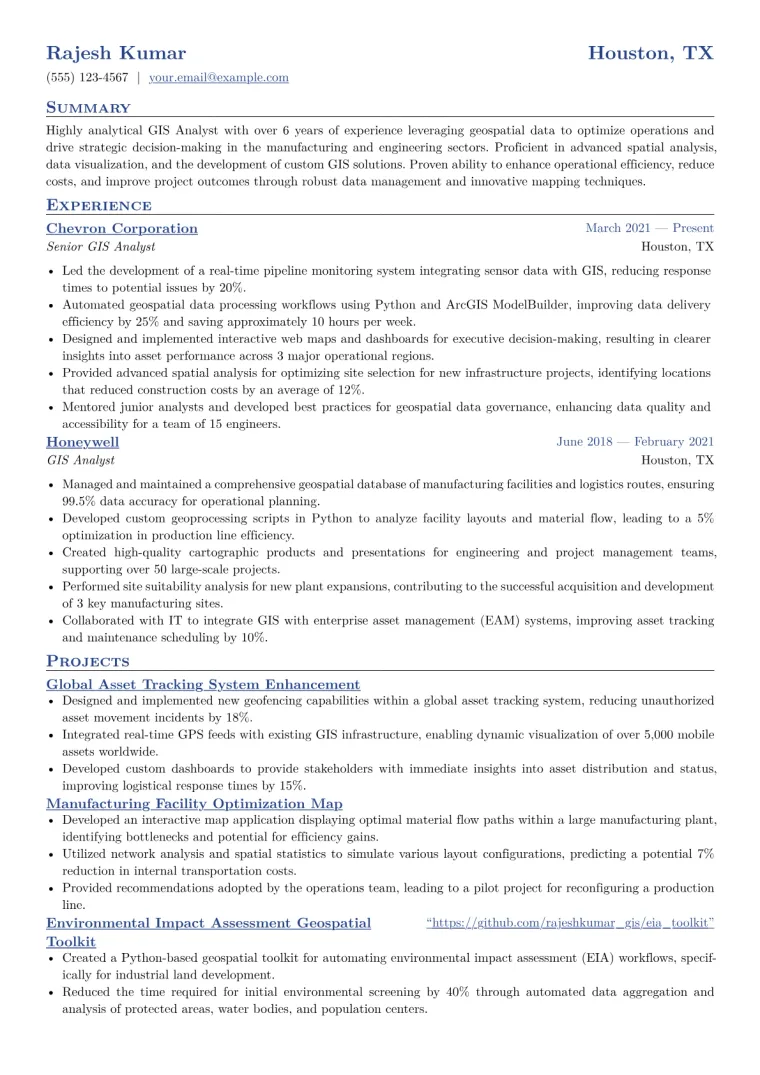
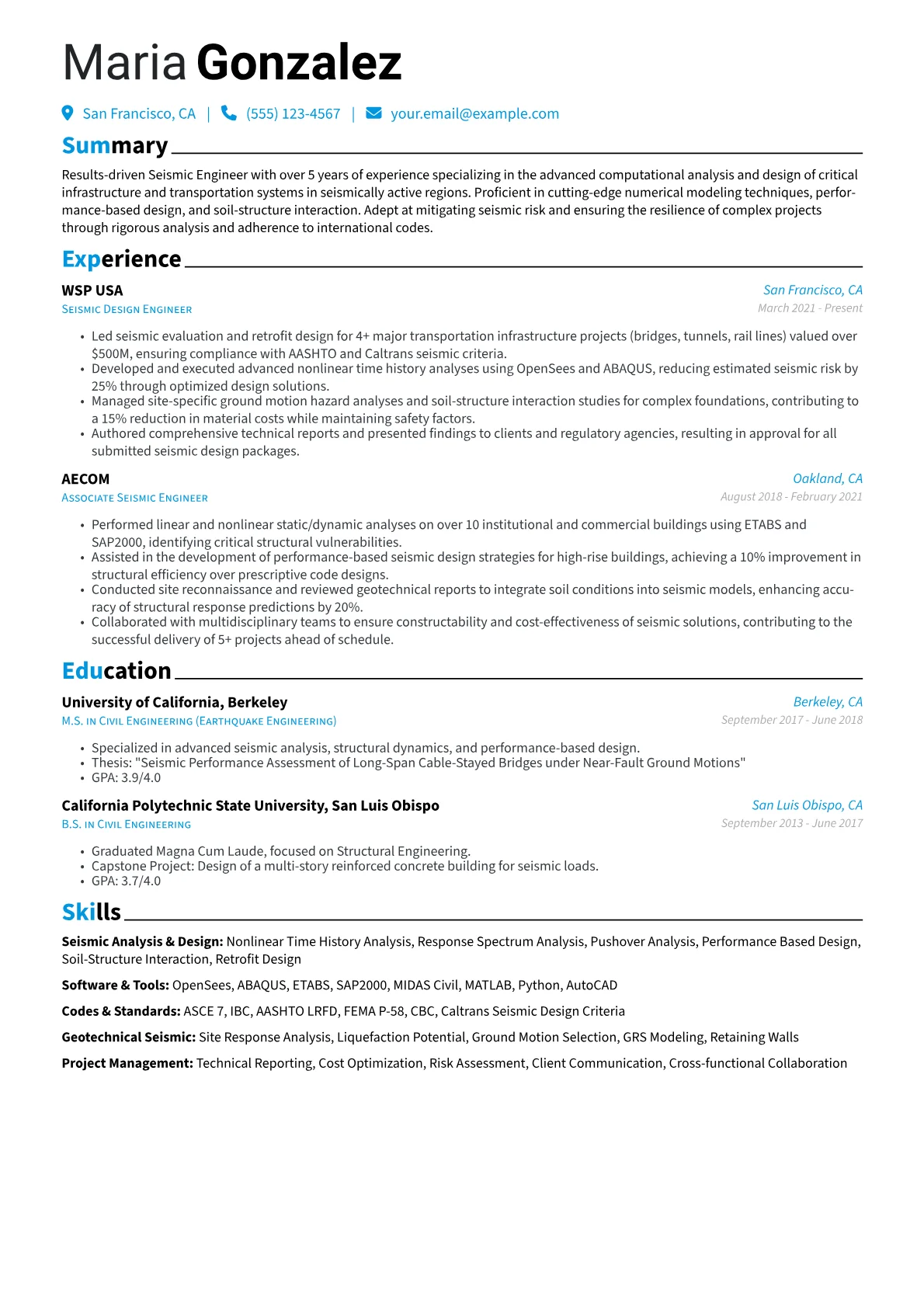
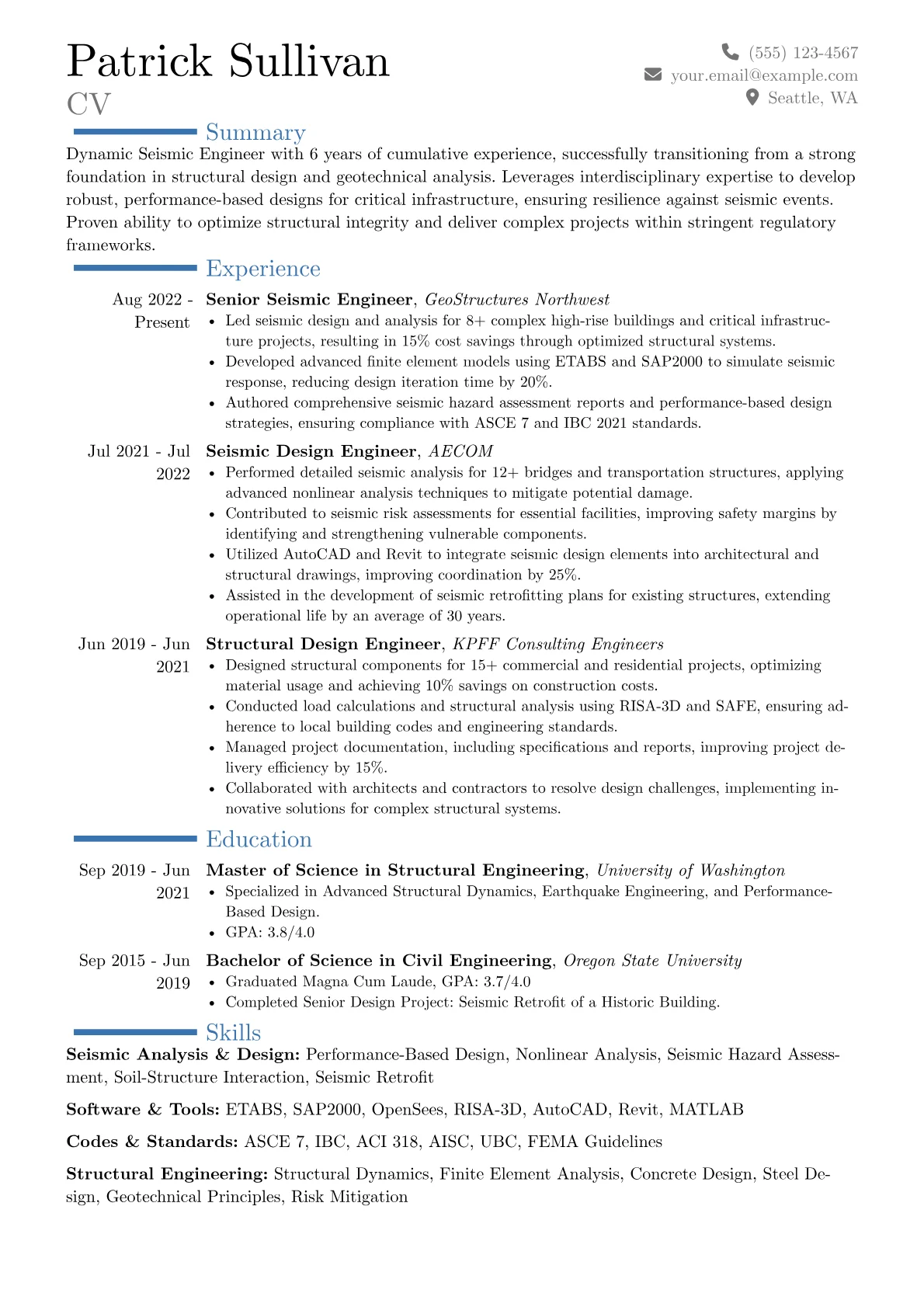
Three complete resumes, each in a different design.
Editorial Notes
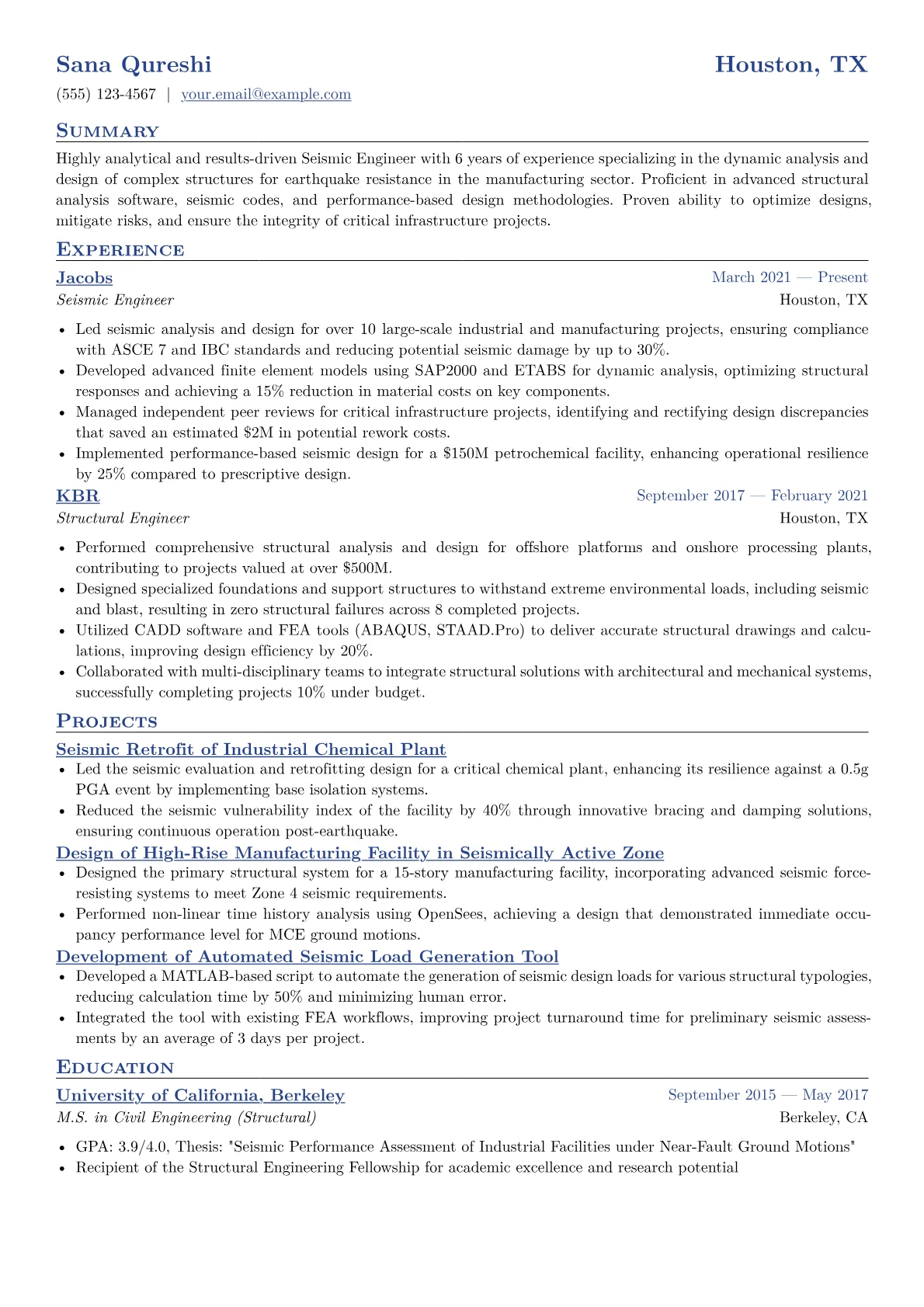
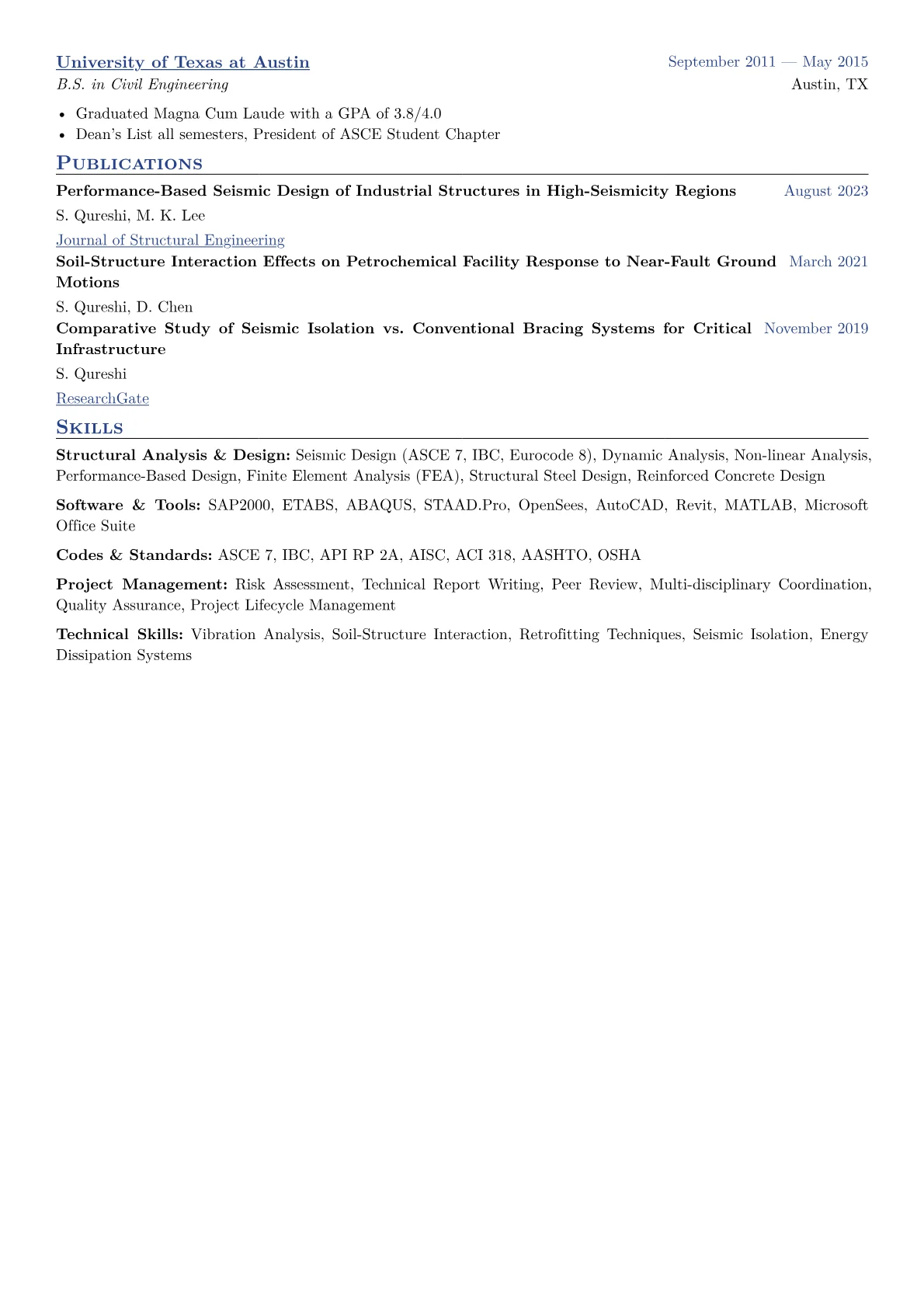
For a mid-level Seismic Engineer in Manufacturing, hiring managers seek candidates who deeply understand the unique structural challenges of industrial facilities. They look for experience mitigating seismic risks for heavy machinery, specialized equipment, and critical infrastructure, ensuring operational continuity. Key achievements should reflect quantifiable impact on reducing potential downtime, optimizing design costs for seismic resilience, and ensuring strict compliance with codes like ASCE 7 and IBC. Specific expertise in vibration analysis, material behavior under dynamic loads, and successful retrofitting projects for existing manufacturing plants is highly valued. A Professional Engineer (PE) license is often a non-negotiable requirement.
This example resume effectively showcases these critical elements. It quantifies achievements by detailing reductions in projected seismic damage to critical equipment and successful project completions within strict timelines and budgets. Technical skills are thoughtfully grouped, clearly listing proficiency in essential structural analysis software such as SAP2000 and ETABS, alongside relevant building codes. The resume also prominently highlights professional certifications, including the PE license, demonstrating the candidate's credibility and readiness for complex design and analysis responsibilities in a manufacturing context.
This template was built with JobSprout and offers a robust framework for highlighting a Seismic Engineer's unique qualifications. It can be easily remixed to create your own tailored Seismic Engineer resume.
How useful was this template?
Example by JobSproutSeismic Engineer resume summary example
Highly analytical and results-driven Seismic Engineer with 6 years of experience specializing in the dynamic analysis and design of complex structures for earthquake resistance in the manufacturing sector. Proficient in advanced structural analysis software, seismic codes, and performance-based design methodologies. Proven ability to optimize designs, mitigate risks, and ensure the integrity of critical infrastructure projects.
Seismic Engineer salary by country
| Country | 25th percentile | Median | 75th percentile |
|---|---|---|---|
| US | $98,000 | $126,667 | $142,727 |
| UK | £33,421 | £40,000 | £48,929 |
| Canada | C$120,000 | C$140,000 | C$160,000 |
| Australia | A$71,250 | A$85,000 | A$107,500 |
| Germany | €62,000 | €72,072 | €82,433 |
| France | €47,500 | €52,500 | €56,250 |
| India | ₹375,000 | ₹750,000 | ₹1,250,000 |
Annual salaries in local currency, aggregated from live job postings via Adzuna. Figures refresh continuously and reflect advertised pay, not negotiated offers.
Seismic Engineer resume skills and keywords
Recruiters and applicant tracking systems scan Seismic Engineer resumes for these skills and keywords. Include the ones that match your experience and mirror the wording in the job description. Check your resume against them with the free ATS checker.
Hard skills
Tools & software
Certifications
Soft skills
Market Insights
Seismic Engineer
Salary Range
US market data · Source: Adzuna · Updated Mar 2026
![How to Write a CV for Manufacturing Applications [2026 Guide]](/thumbnails/cv-for-manufacturing-applications.webp)