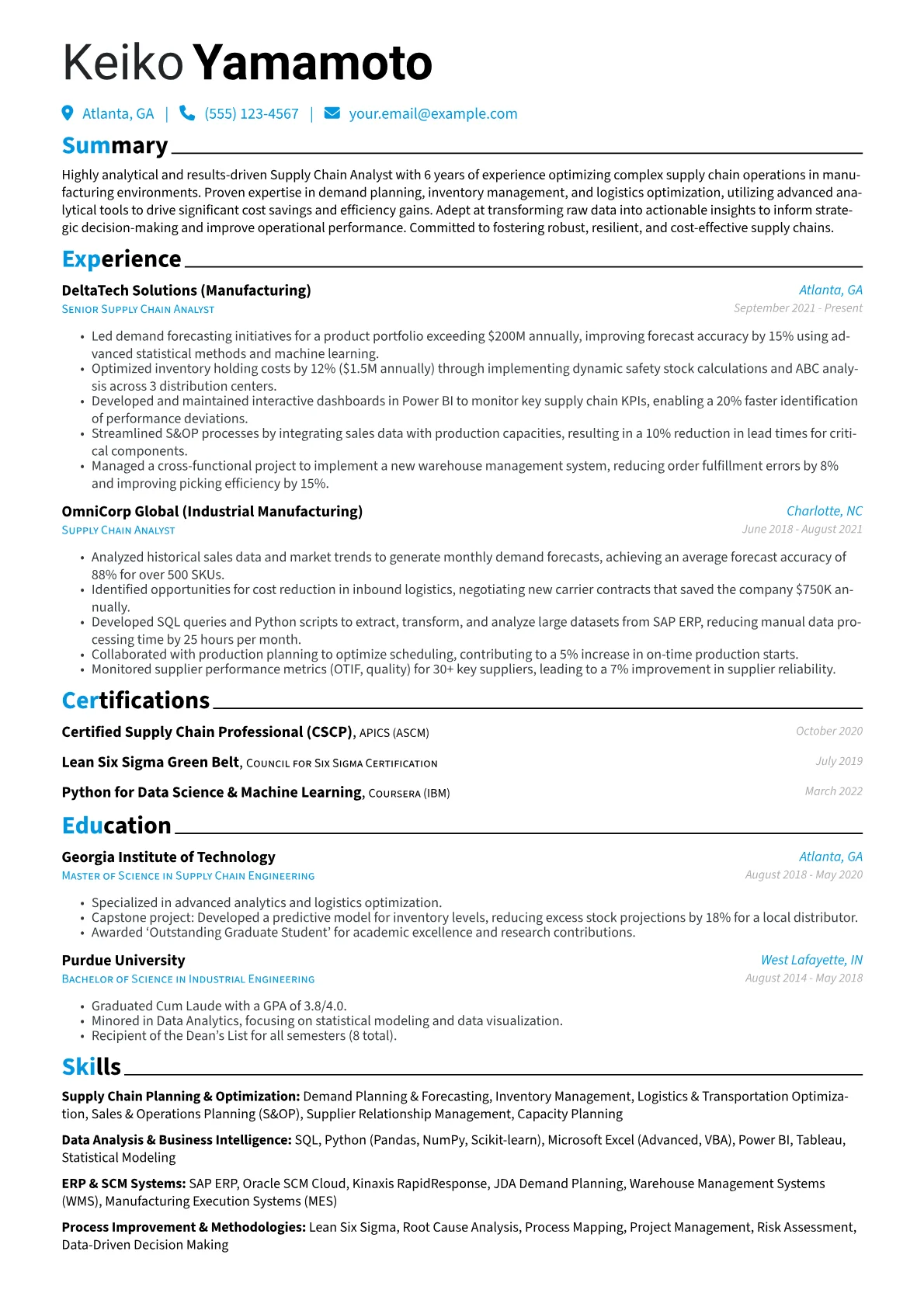
Supply Chain Analyst Resume Example
 Example by JobSprout
Score my resume
Market Insights
Supply Chain Analyst
Salary Range
Salary Trend
Mar 2025 – Feb 2026
12-Month Trend
Average advertised salaries have increased by 1% over the past 12 months based on 19,983 current job postings.
US market data · Source: Adzuna · Updated Mar 2026
How useful was this template?
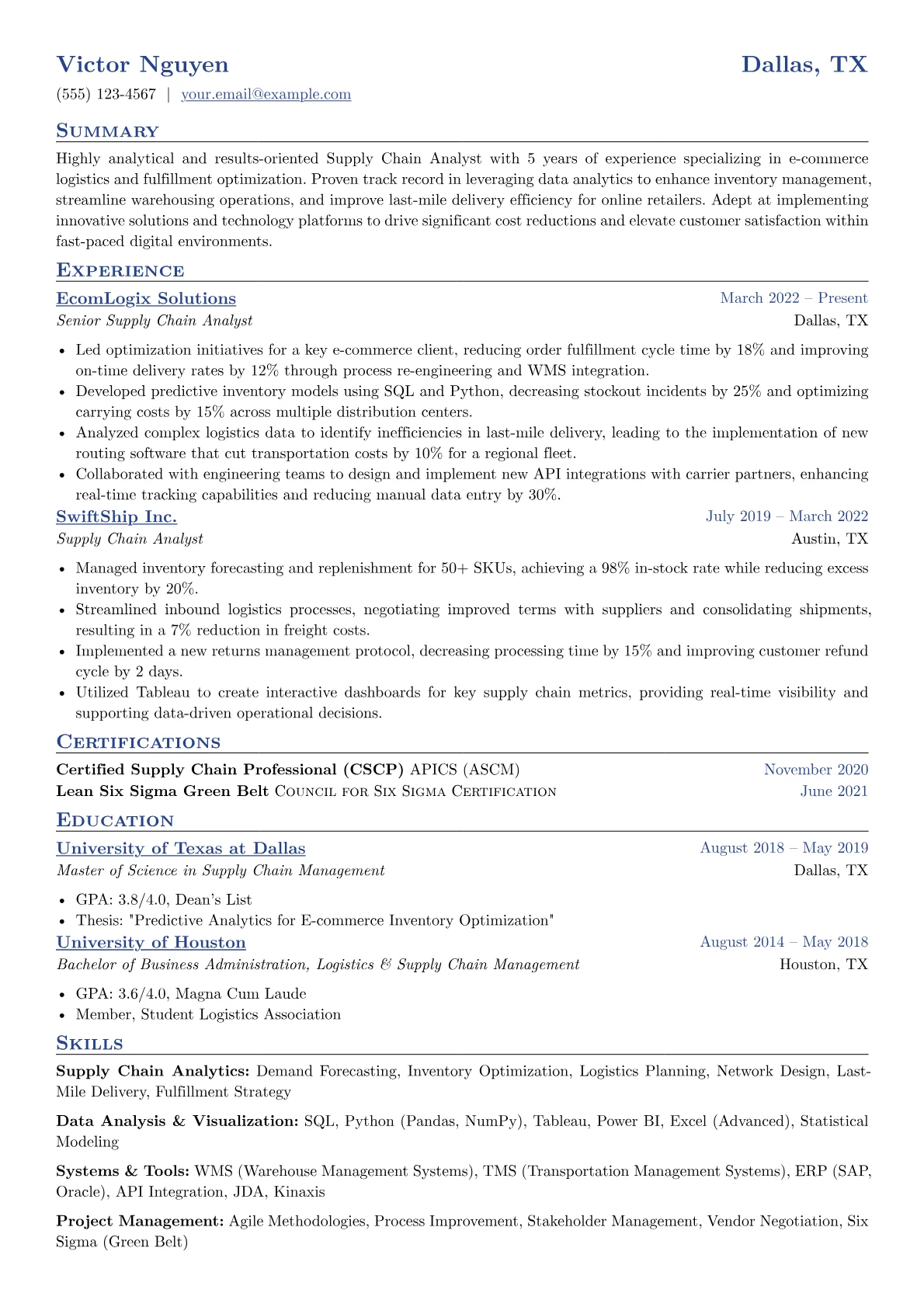
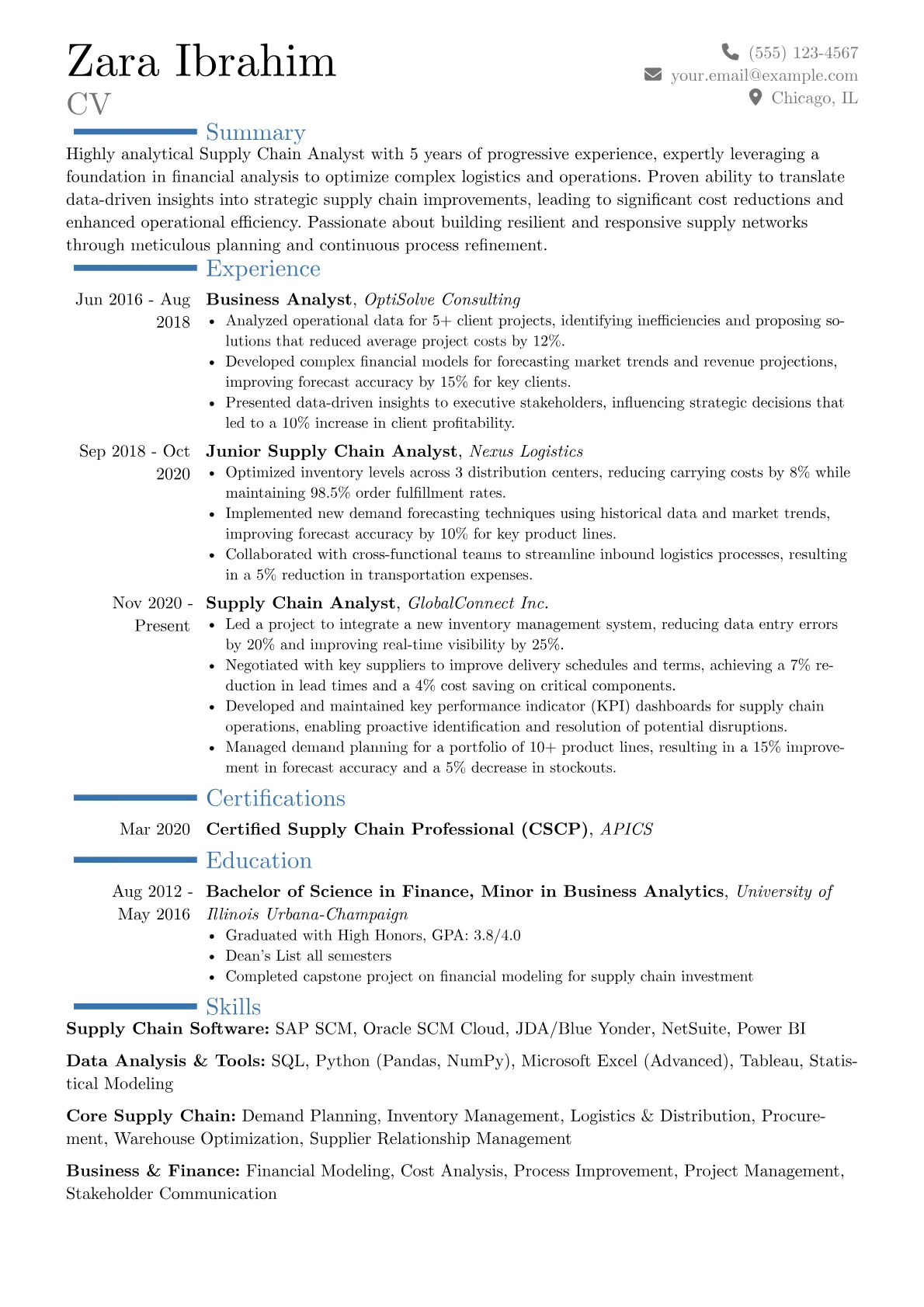
How useful was this template?
Score my resume
Editorial Notes
A strong Supply Chain Analyst resume in Manufacturing clearly articulates an ability to translate complex data into actionable strategies. Hiring managers seek candidates who can demonstrate impact on operational efficiency, cost reduction, and resilience across production and distribution networks. The unique challenges of managing intricate material flows and mitigating supply disruptions demand proven analytical and problem-solving capabilities.
This JobSprout example excels by prominently featuring quantified achievements, showcasing a candidate's tangible contributions like reducing lead times or improving forecast accuracy. It strategically groups relevant technical skills such as Python, SQL, and advanced Excel, alongside industry-specific certifications, demonstrating a comprehensive analytical toolkit. This structure effectively highlights both data science expertise and practical application in a manufacturing context.
This template was built with JobSprout's intuitive builder and can be remixed to create your own standout Supply Chain Analyst resume.
Supply Chain Analyst salary by country
| Country | 25th percentile | Median | 75th percentile |
|---|---|---|---|
| US | $76,500 | $93,704 | $118,621 |
| UK | £40,682 | £45,909 | £54,167 |
| Canada | C$56,667 | C$100,000 | C$112,500 |
| Australia | A$100,714 | A$141,091 | A$145,274 |
| Germany | €78,963 | €87,926 | €96,889 |
| France | €40,521 | €43,125 | €45,730 |
| Netherlands | €35,714 | €48,333 | €66,667 |
| Italy | €33,750 | €37,500 | €50,000 |
| Austria | €60,000 | €70,000 | €80,000 |
| New Zealand | NZ$118,750 | NZ$142,500 | NZ$163,542 |
| India | ₹1,234,375 | ₹1,468,750 | ₹1,703,125 |
| Poland | zł206,861 | zł247,013 | zł287,166 |
Annual salaries in local currency, aggregated from live job postings via Adzuna. Figures refresh continuously and reflect advertised pay, not negotiated offers.
Skills and keywords for a Supply Chain Analyst resume
Recruiters and applicant tracking systems scan supply chain analyst resumes for these skills and keywords. Include the ones that match your experience and mirror the wording in the job description. Check your resume against them with the free ATS checker.
Hard skills
Tools & software
Certifications
Soft skills
Market Insights
Supply Chain Analyst
Salary Range
Salary Trend
Mar 2025 – Feb 2026
12-Month Trend
Average advertised salaries have increased by 1% over the past 12 months based on 19,983 current job postings.
US market data · Source: Adzuna · Updated Mar 2026
Frequently Asked Questions
What's the best resume structure for a mid-level Supply Chain Analyst?
Which key skills and qualifications should I highlight for this role?
How do I write strong achievement bullets or a compelling professional summary?
What optional sections are important for a Supply Chain Analyst?
How can I tailor my resume for a specific Supply Chain Analyst job posting?
![How to Write a CV for Manufacturing Applications [2026 Guide]](/thumbnails/cv-for-manufacturing-applications.webp)
Related Templates
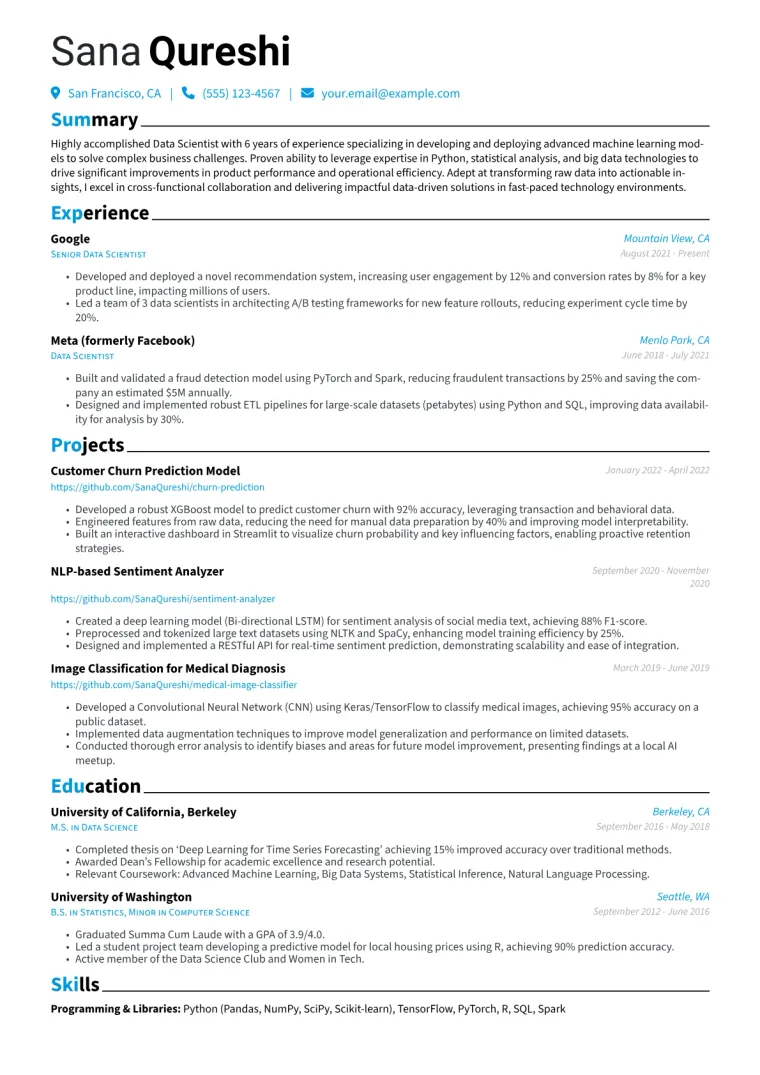
Data Scientist Resume Example
Example by JobSprout
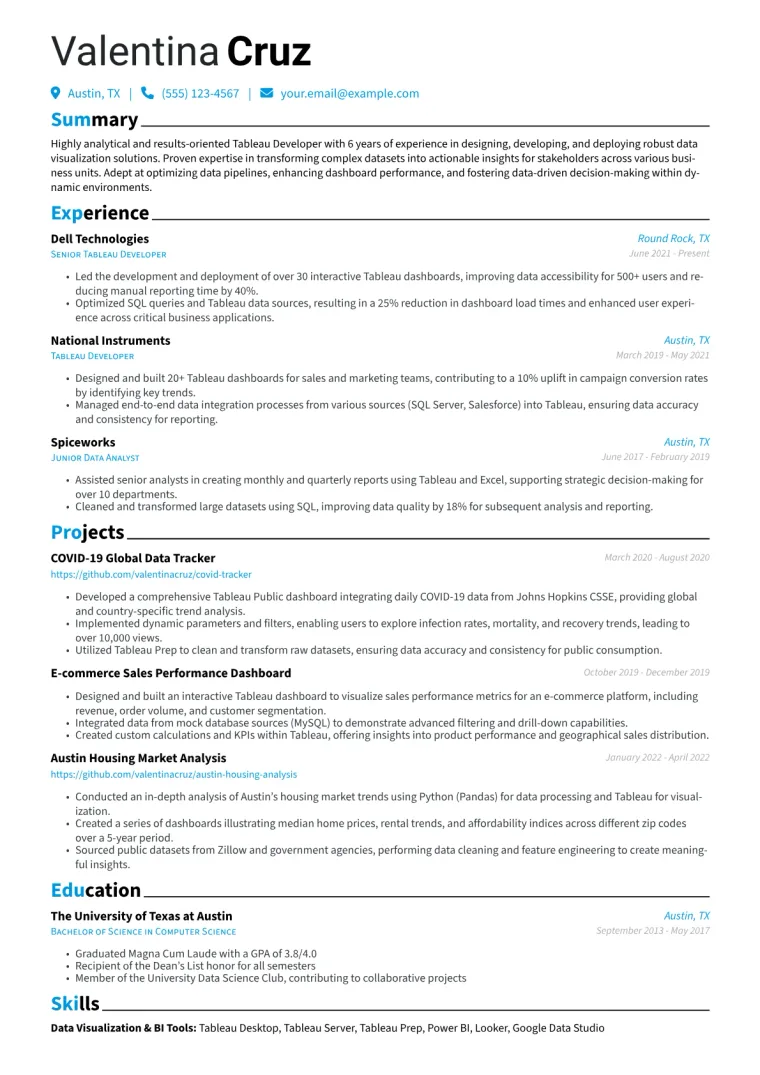
Tableau Developer Resume Example
Example by JobSprout
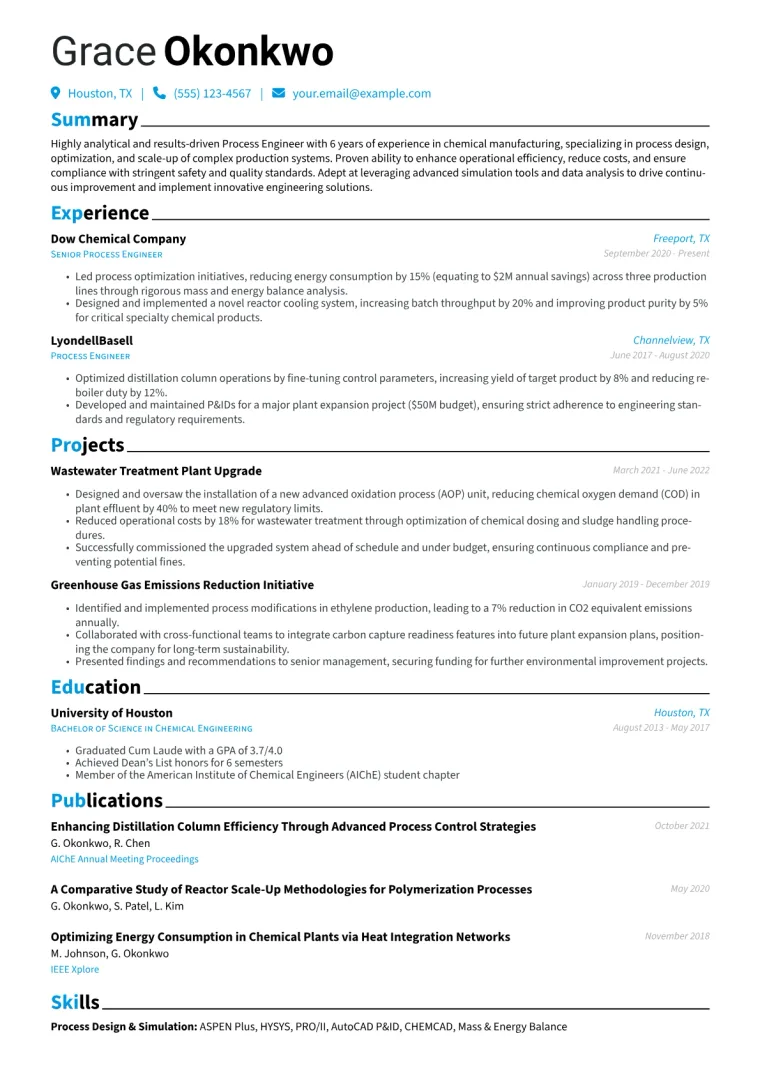
Process Engineer Resume Example
Example by JobSprout
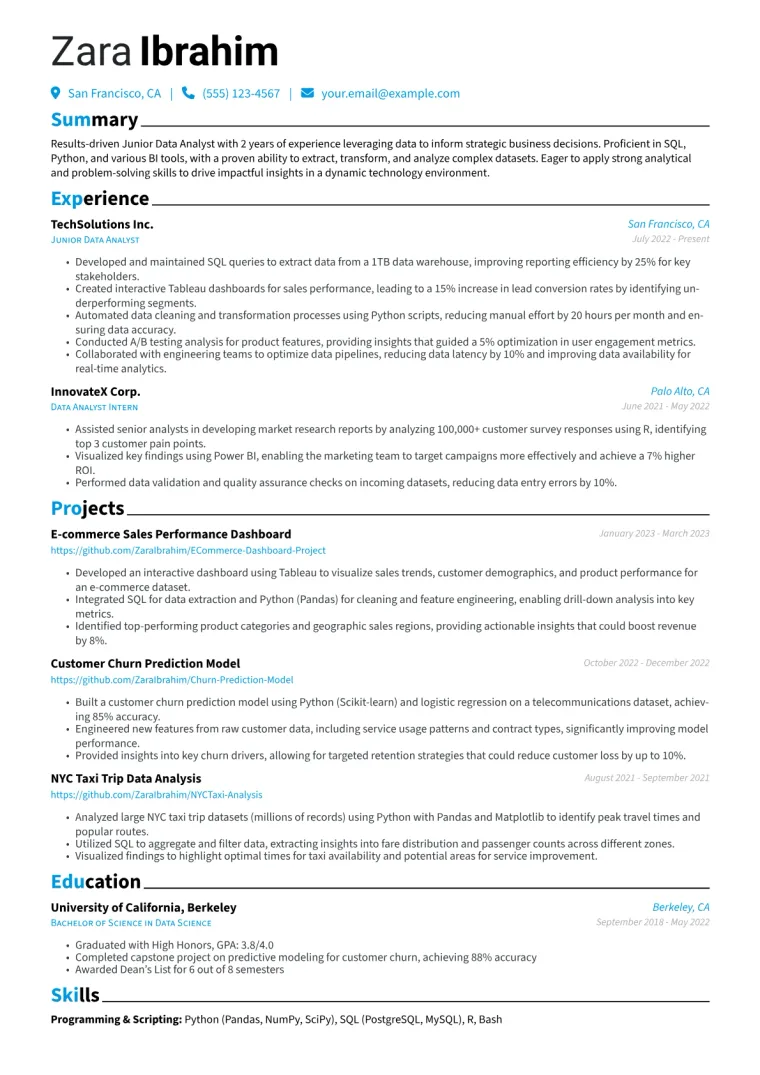
Junior Data Analyst Resume Example
Example by JobSprout
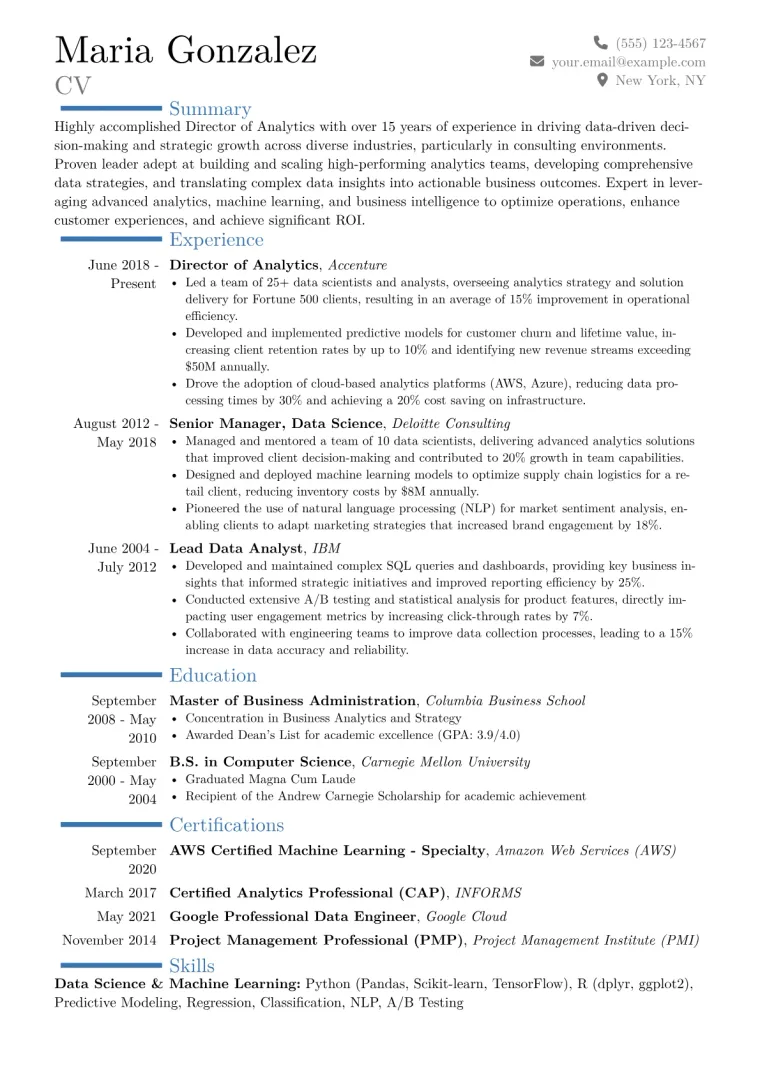
Director of Analytics Resume Example
Example by JobSprout
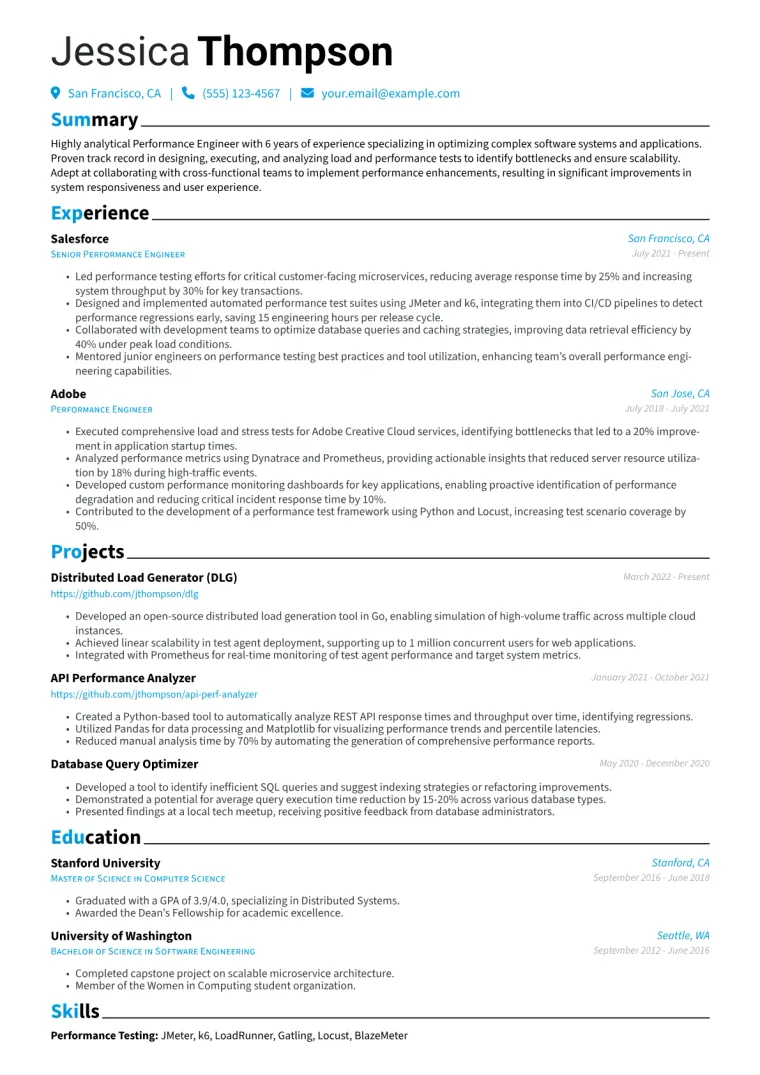
Performance Engineer Resume Example
Example by JobSprout
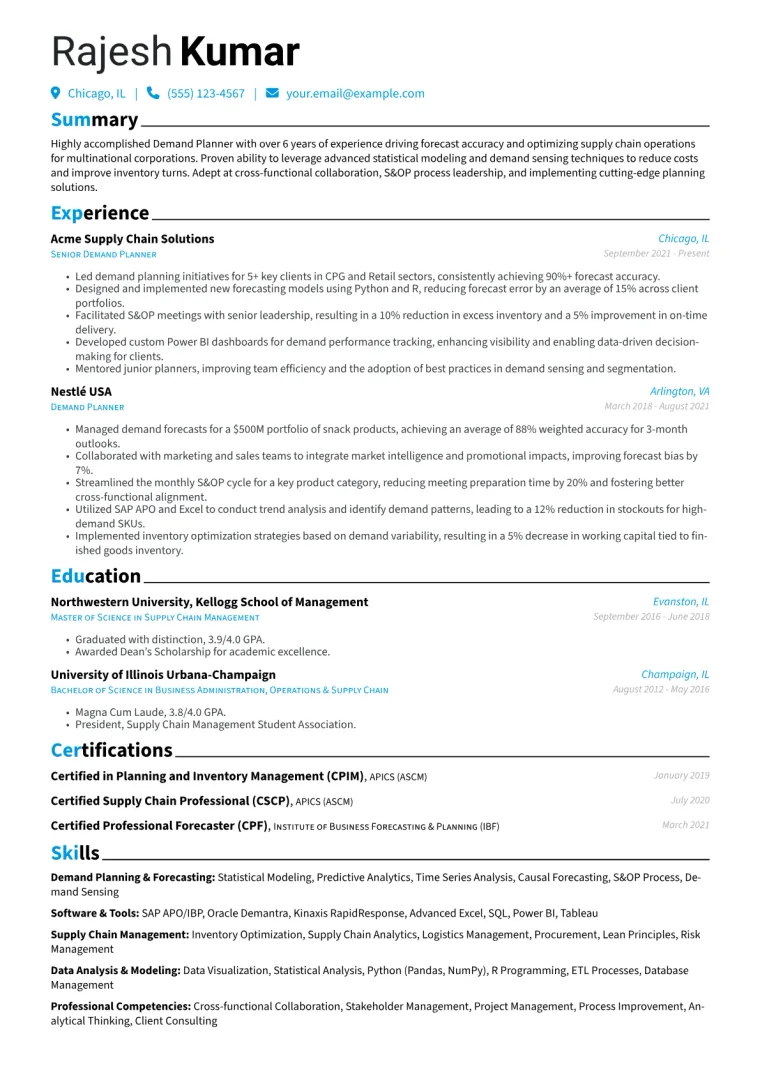
Demand Planner Resume Example
Example by JobSprout
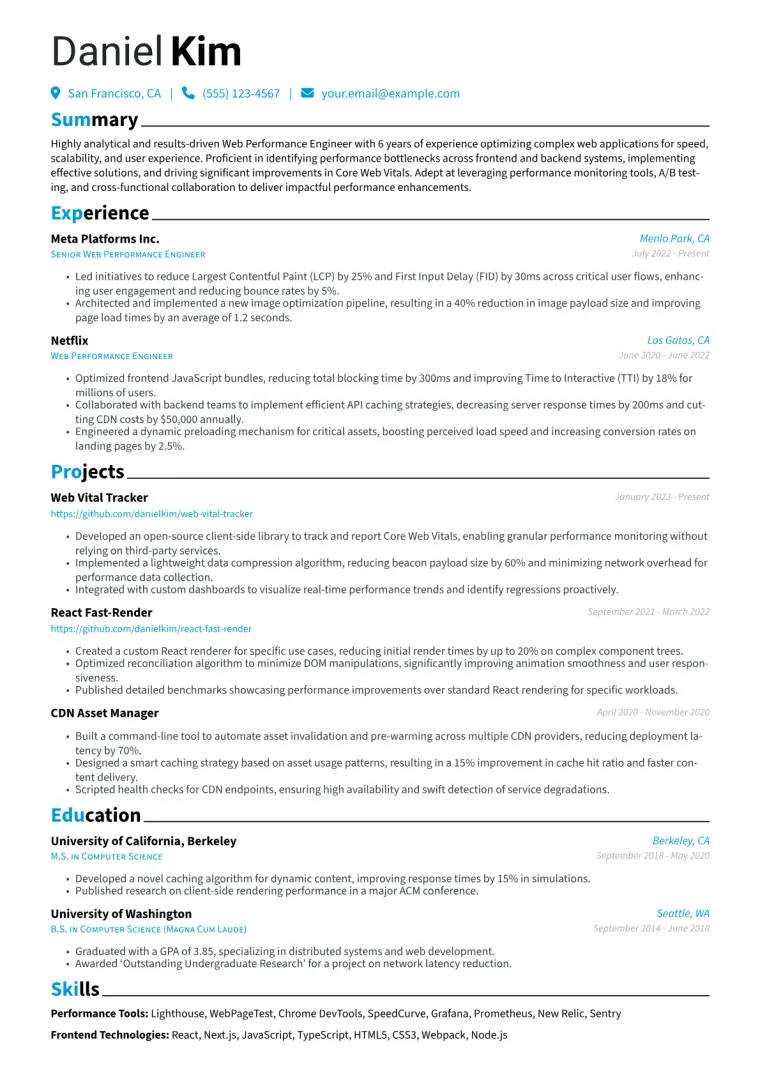
Web Performance Engineer Resume Example
Example by JobSprout