Surveillance Analyst Resume Example
 Example by JobSprout
Score my resume
Market Insights
Surveillance Analyst
Salary Range
US market data · Source: Adzuna · Updated Mar 2026
How useful was this template?
How useful was this template?
Score my resume
Editorial Notes
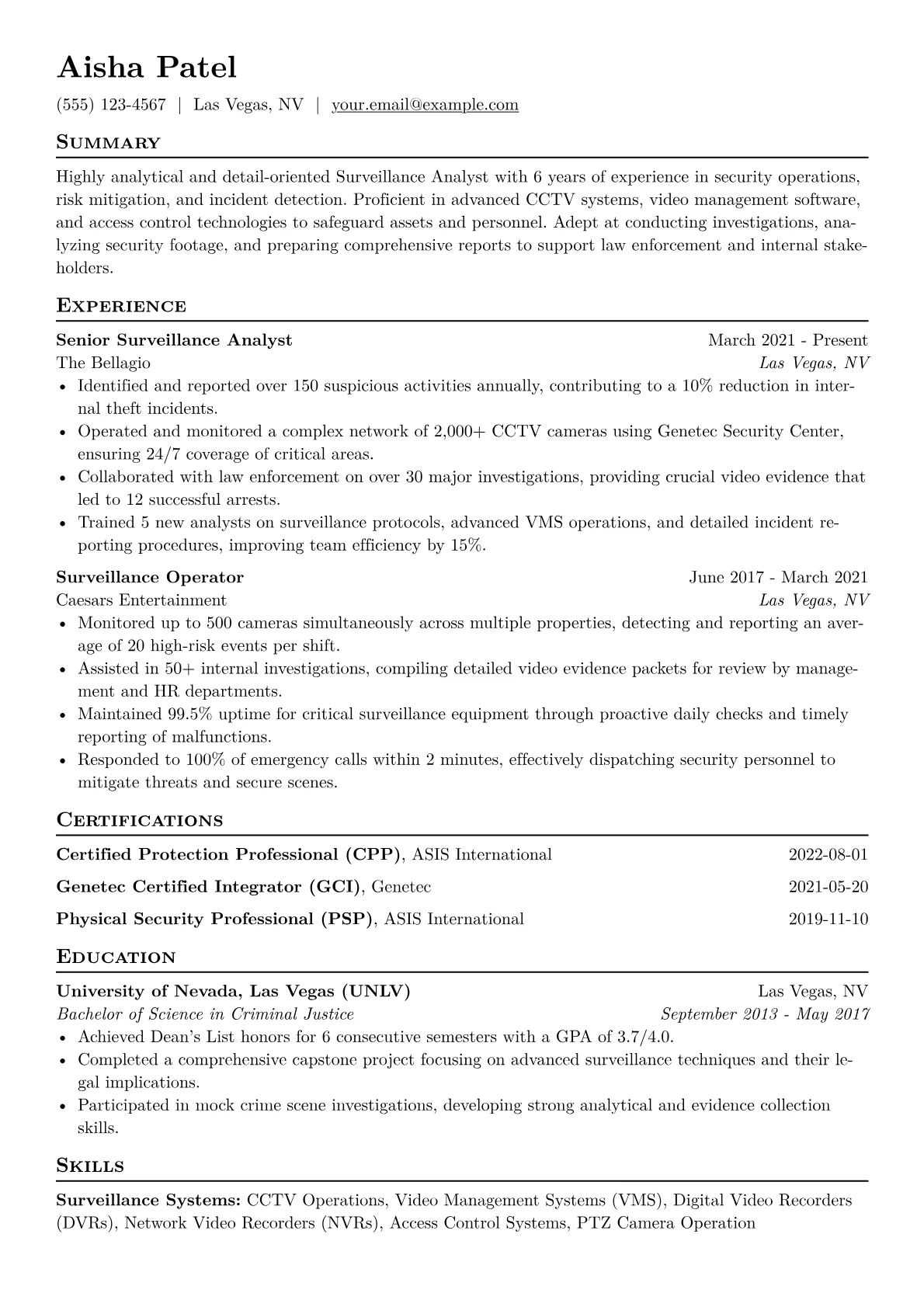
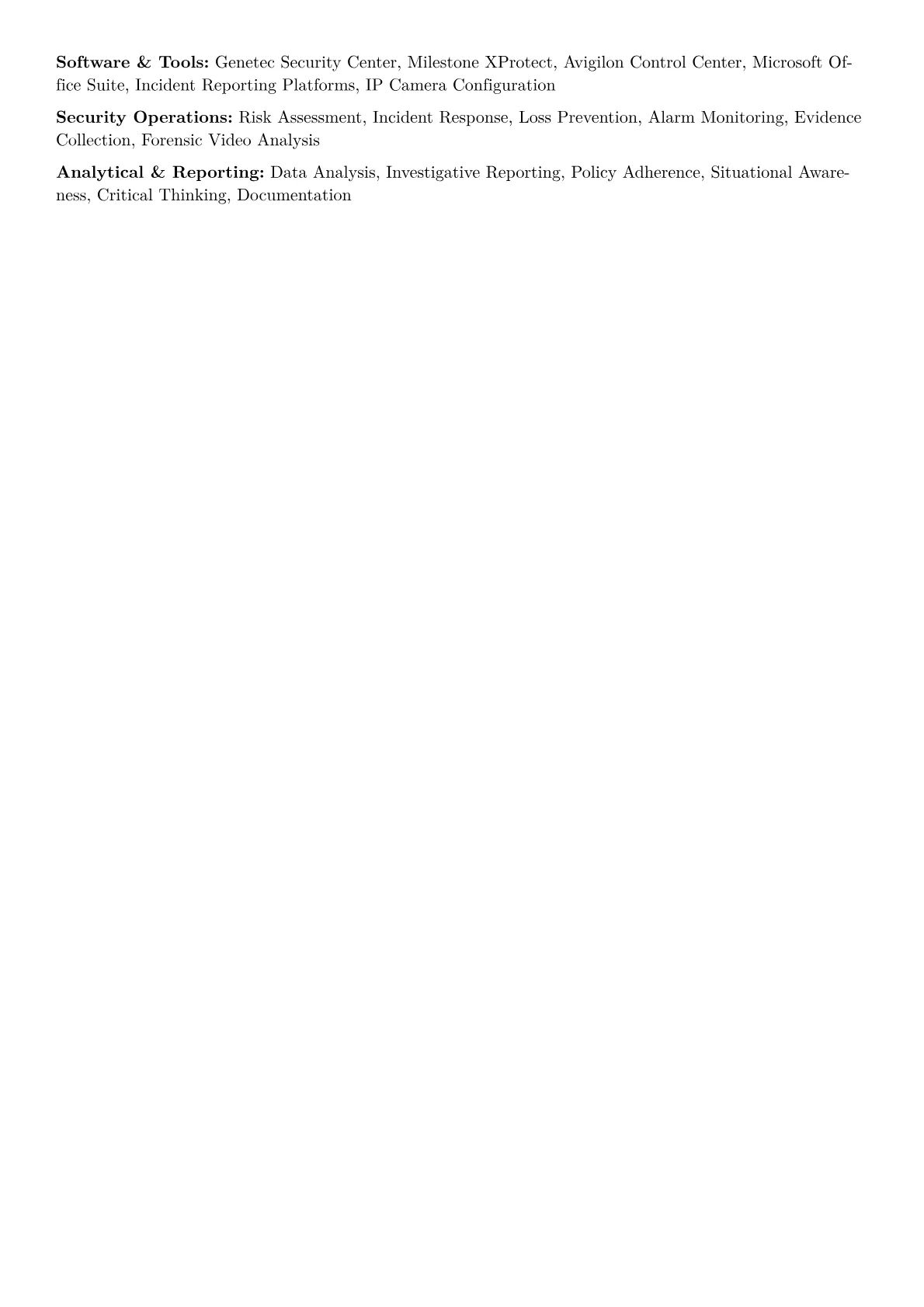
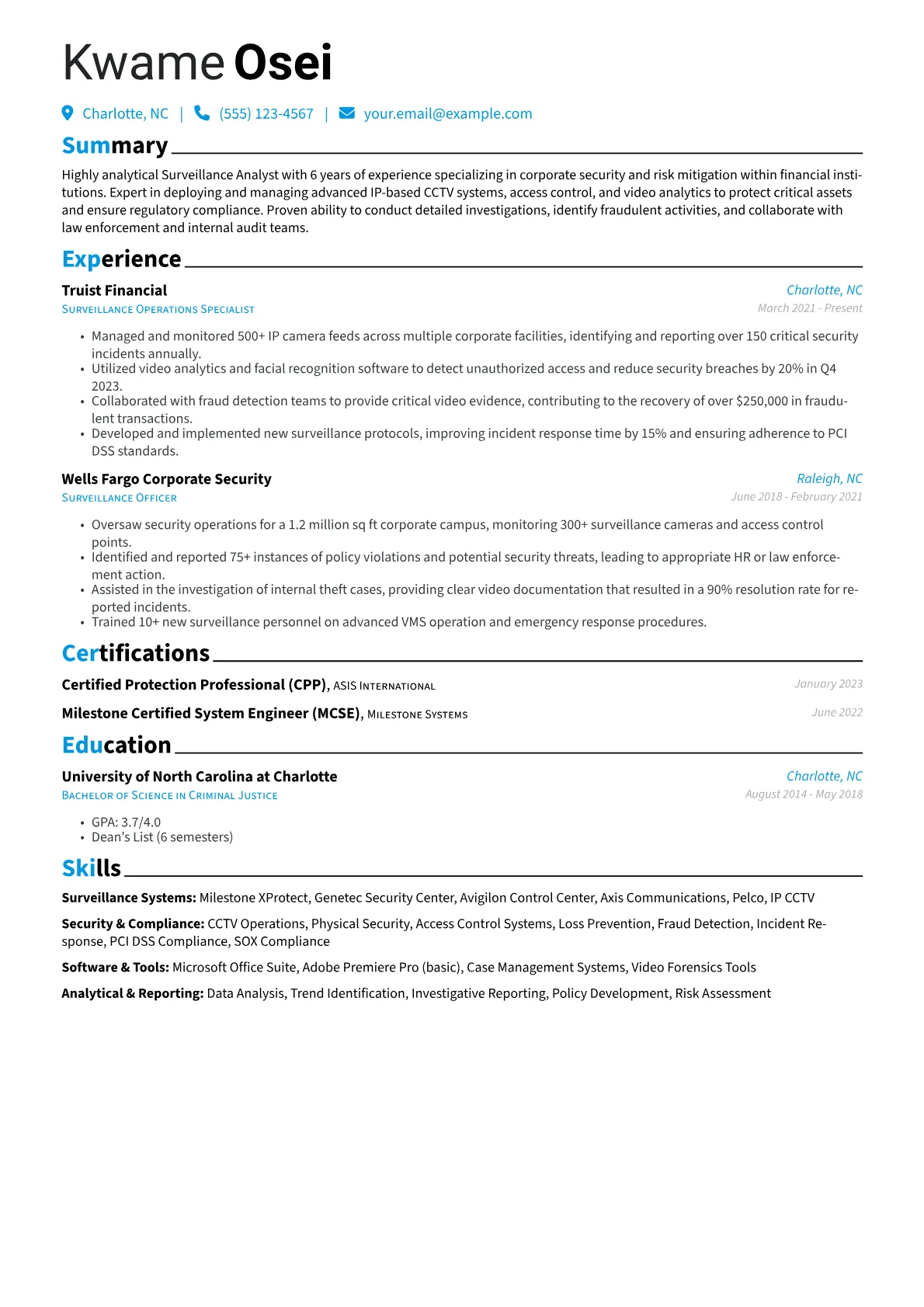
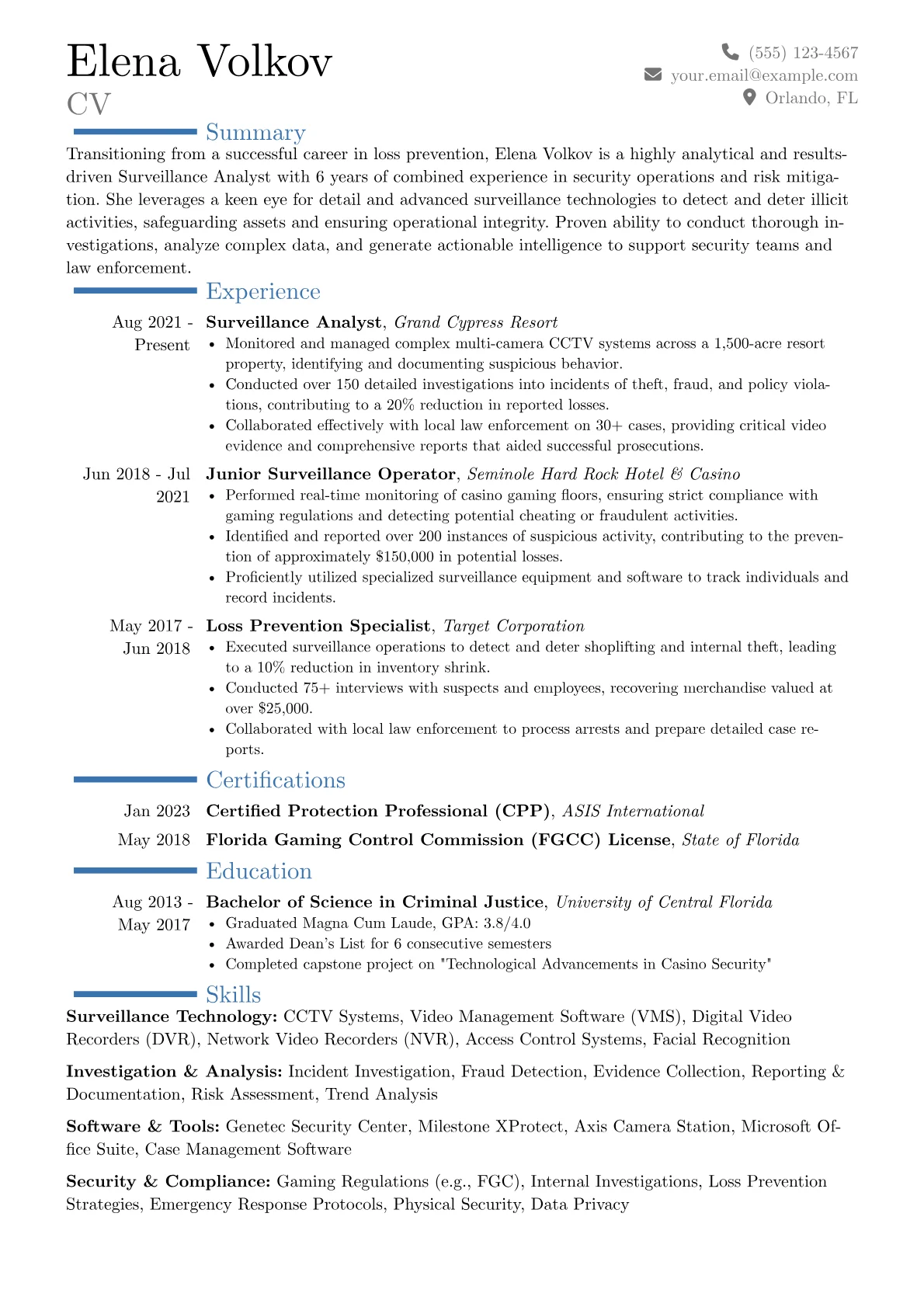
A compelling Surveillance Analyst resume in a general industry context emphasizes meticulous attention to detail and strong analytical capabilities. Hiring managers specifically seek evidence of proactive threat identification, efficient incident reporting, and adherence to security protocols. Key achievements include quantifying success in reducing false positive rates or the average incident detection time. Relevant terminology like anomaly detection, pattern recognition, investigative analysis, and familiarity with various monitoring platforms should be prominent. Certifications in data surveillance fundamentals or specific security operations are also highly valued.
This example CV excels by clearly presenting quantified achievements, such as "reduced incident response time by 12% through streamlined alert protocols." Skills are effectively grouped into distinct categories like "Technical Proficiency" (listing SIEM tools and CCTV systems) and "Analytical Skills" (detailing pattern recognition and risk assessment). Important certifications, like Certified Surveillance Professional, are prominently highlighted in a dedicated section, ensuring a rapid overview of core competencies for busy recruiters.
This template was built with JobSprout and can be remixed to create your own tailored Surveillance Analyst resume.
Surveillance Analyst salary by country
| Country | 25th percentile | Median | 75th percentile |
|---|---|---|---|
| US | $76,250 | $101,667 | $115,833 |
| UK | £30,879 | £37,521 | £49,639 |
| Canada | C$54,015 | C$76,330 | C$106,695 |
| Australia | A$81,573 | A$97,932 | A$124,030 |
| Germany | €41,304 | €59,718 | €72,819 |
| France | €26,998 | €34,650 | €42,911 |
| Netherlands | €40,158 | €49,152 | €62,025 |
| Italy | €17,965 | €23,981 | €29,327 |
| Austria | €34,500 | €56,250 | €71,293 |
| New Zealand | NZ$78,854 | NZ$101,126 | NZ$125,255 |
| India | ₹403,908 | ₹807,816 | ₹1,539,889 |
| Poland | zł159,882 | zł198,275 | zł221,495 |
Annual salaries in local currency, aggregated from live job postings via Adzuna. Figures refresh continuously and reflect advertised pay, not negotiated offers.
Skills and keywords for a Surveillance Analyst resume
Recruiters and applicant tracking systems scan surveillance analyst resumes for these skills and keywords. Include the ones that match your experience and mirror the wording in the job description. Check your resume against them with the free ATS checker.
Hard skills
Tools & software
Certifications
Soft skills
Market Insights
Surveillance Analyst
Salary Range
US market data · Source: Adzuna · Updated Mar 2026
Frequently Asked Questions
What's the optimal resume structure for a mid-level Surveillance Analyst to highlight their analytical skills and investigative experience?
Which specific analytical tools, regulatory knowledge, and investigative techniques should a Surveillance Analyst with 3-7 years of experience emphasize?
How can I craft compelling achievement bullets or a professional summary that quantifies my impact in identifying and mitigating risks as a Surveillance Analyst?
For a Surveillance Analyst, which optional sections, like certifications in financial crime or specific software proficiencies, are most important to include?
How should I effectively tailor my Surveillance Analyst resume for different industries or types of surveillance, and how can JobSprout's 'Remix with AI' feature assist in this process?
Related Templates
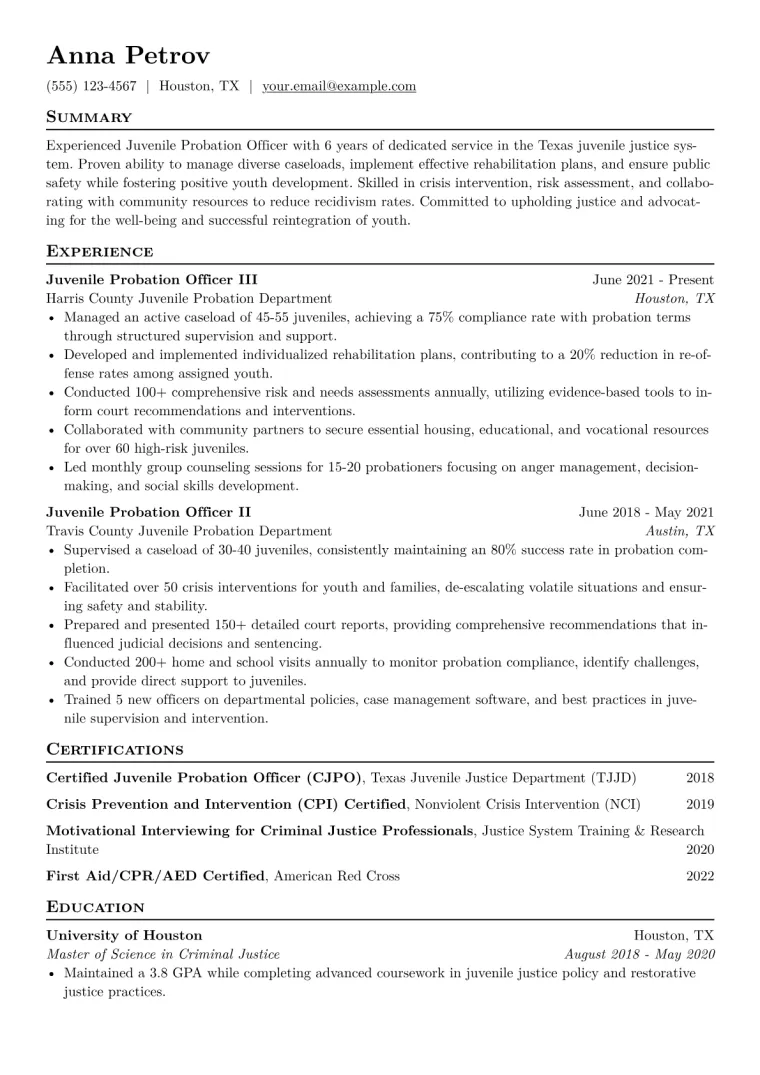
Juvenile Probation Officer Resume Example
Example by JobSprout
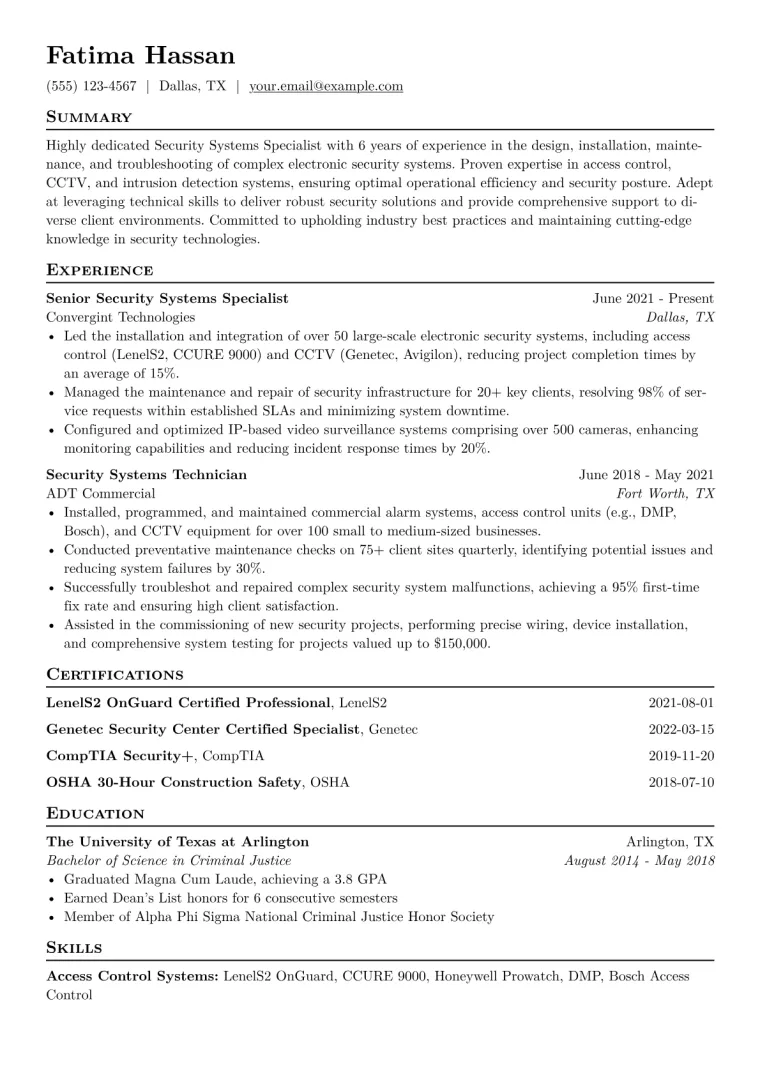
Security Systems Specialist Resume Example
Example by JobSprout
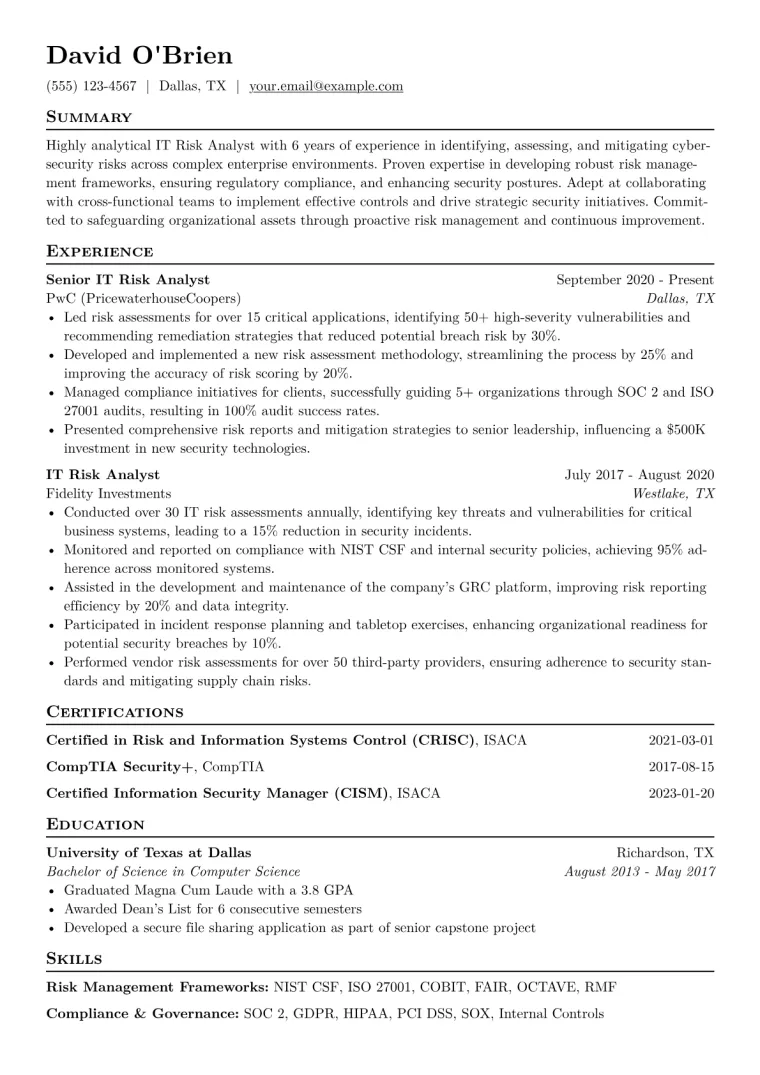
IT Risk Analyst Resume Example
Example by JobSprout
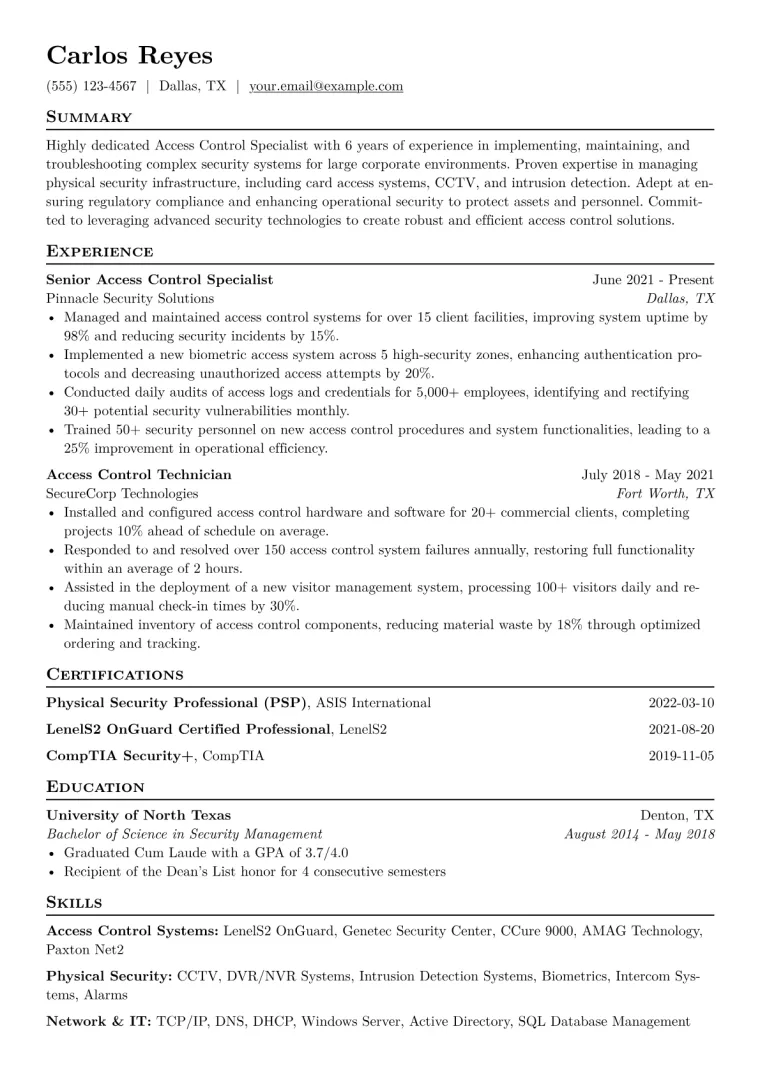
Access Control Specialist Resume Example
Example by JobSprout
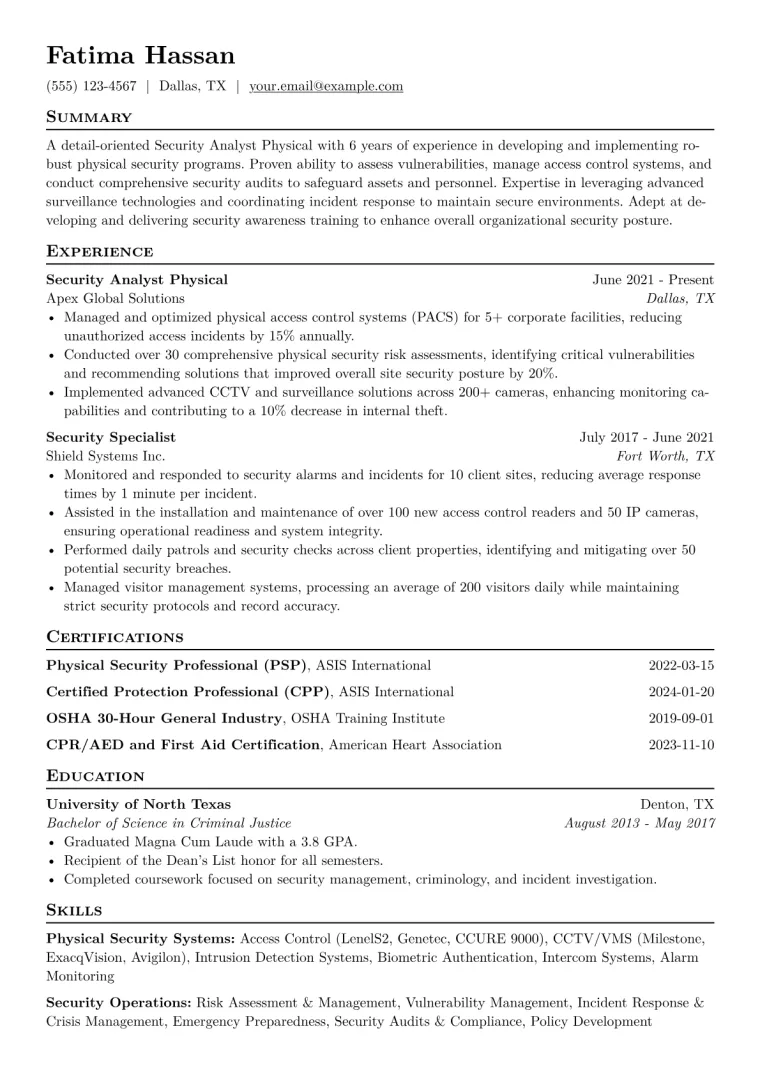
Security Analyst Physical Resume Example
Example by JobSprout
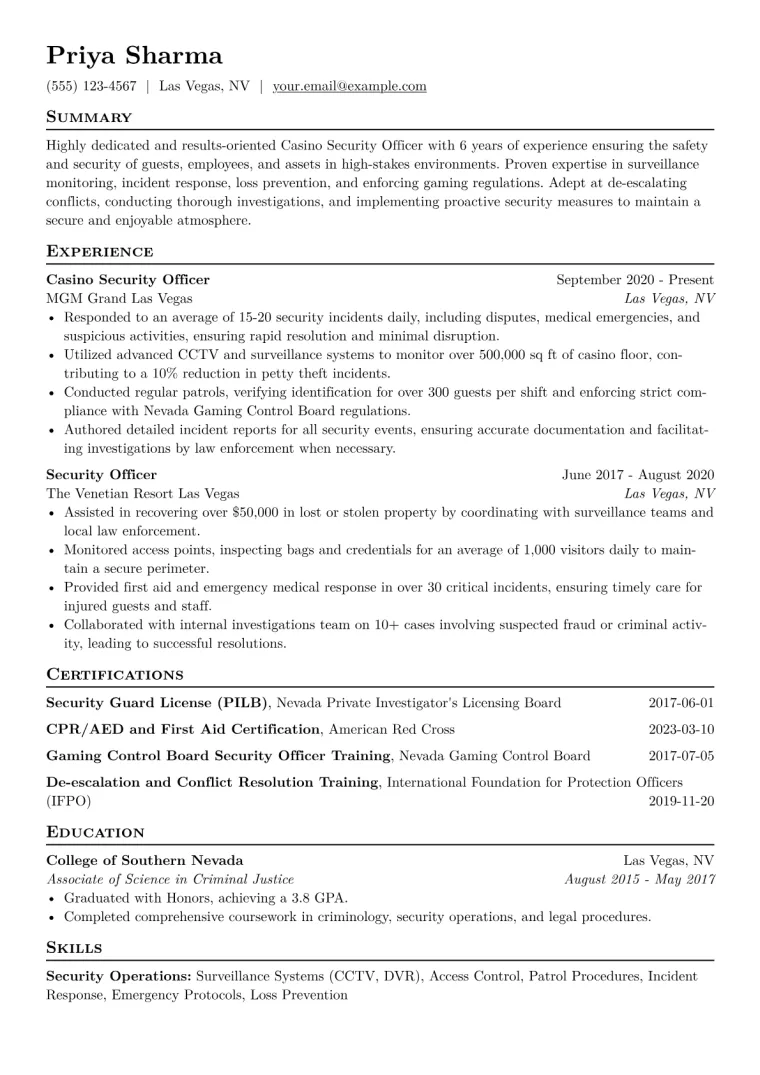
Casino Security Officer Resume Example
Example by JobSprout
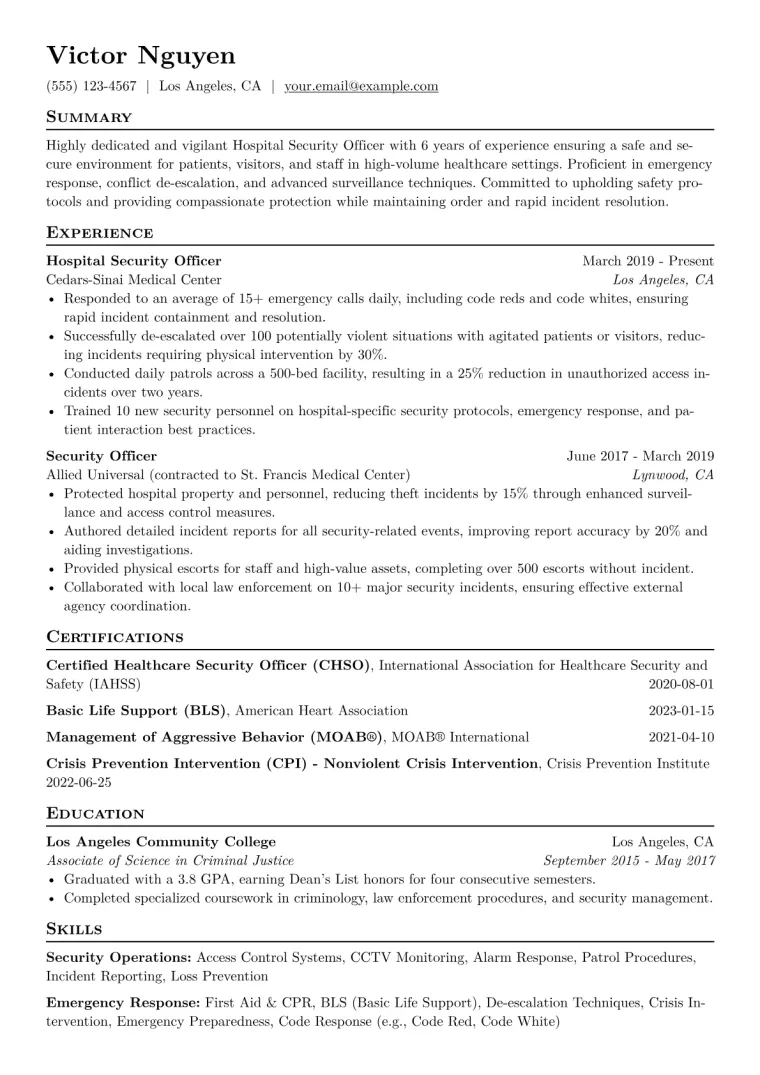
Hospital Security Officer Resume Example
Example by JobSprout
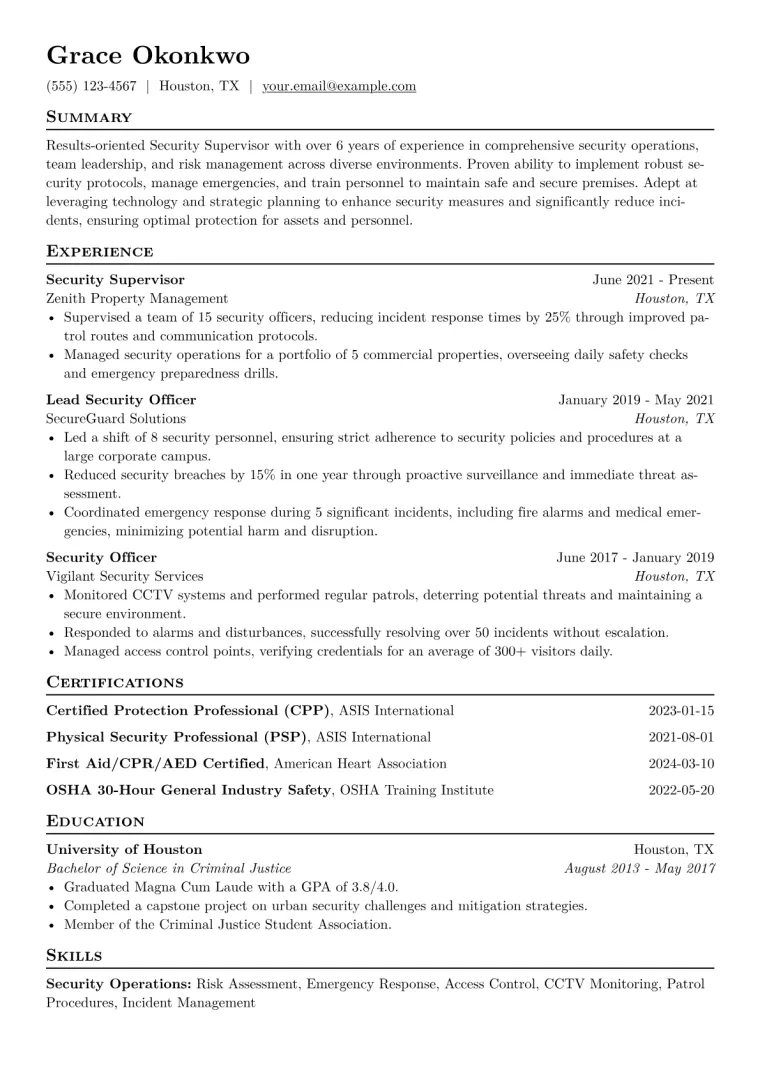
Security Supervisor Resume Example
Example by JobSprout