Write your resume summary
Paste your resume and get three professional summaries in seconds. Free, no sign-up.
Resume headline examples for every industry and experience level. Learn the proven formula, see 50+ examples, and avoid the mistakes that get headlines ignored.
Paste your resume and get three professional summaries in seconds. Free, no sign-up.
Browse 30+ professional bio examples for LinkedIn, company websites, conferences, and social media. Includes templates for every industry, career level, and platform.
Write a prompt engineer resume that gets interviews. Full resume example, summary templates, 10+ experience bullets, technical skills breakdown, and tips for career changers from software engineering, copywriting, data science, and UX research.
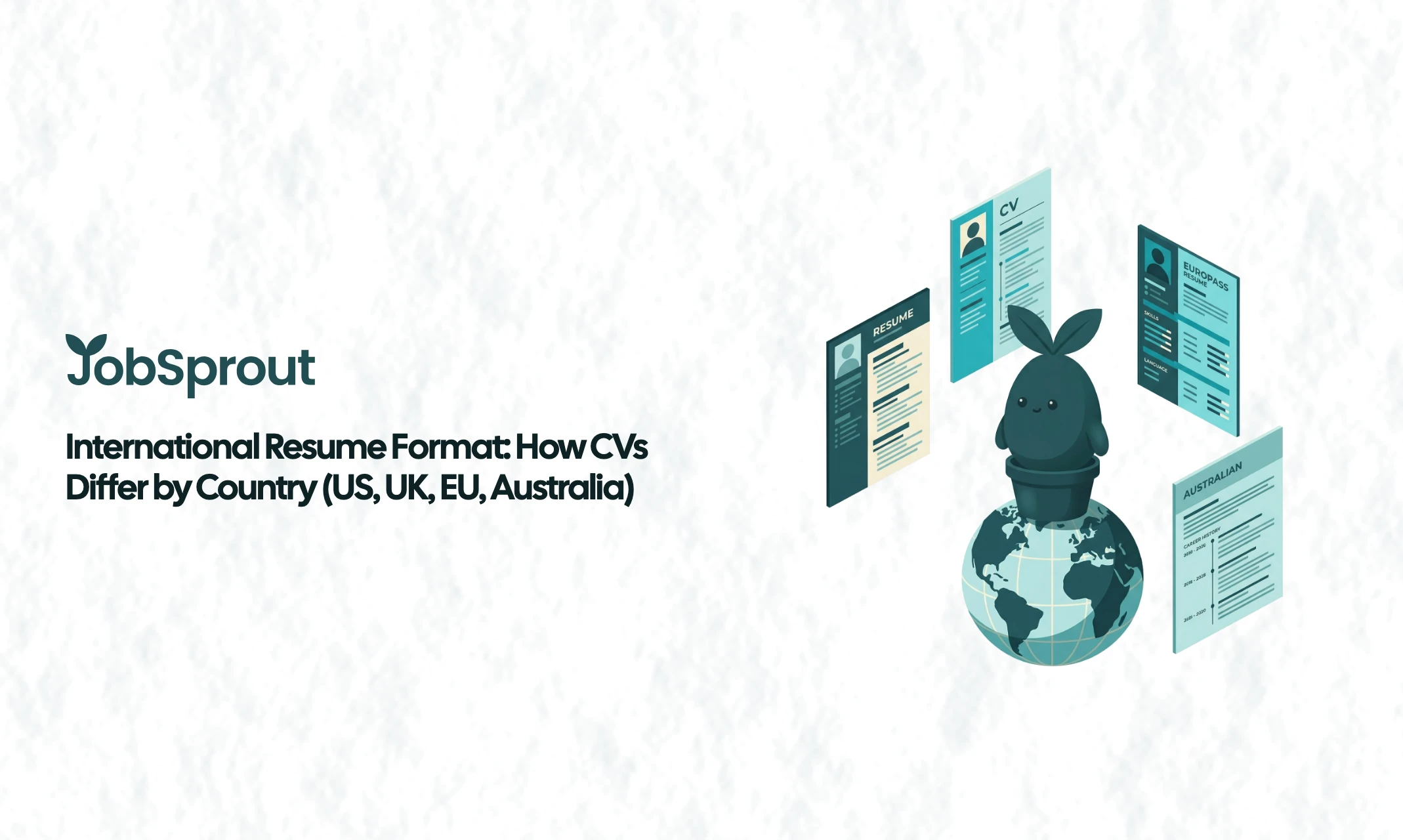
Learn how resume and CV formats differ across countries. Covers the US, UK, Germany, France, Australia, Japan, and the Middle East with comparison tables and practical tips.
Short answer: One line under your name, 10 to 15 words: your job title, your level or key credential, and one specialisation or result. "Certified Medical Assistant, 4 Years in Cardiology, EHR and Phlebotomy" works. "Hard-Working Team Player" does not.
Recruiters spend roughly 6 to 7 seconds on their initial scan of a resume, according to eye-tracking research from Ladders. On job boards like Indeed, they often see nothing but your name and headline before deciding whether to click. That single line of text, usually 10 to 15 words, carries more weight per word than anything else on your application.
A resume headline (sometimes called a resume title or professional title) is a brief phrase that sits directly below your name. It communicates your professional identity, your strongest qualification, and often the reason someone should keep reading. Think of it as the subject line of an email: if it doesn't grab attention immediately, nothing else matters.
Most people either skip the headline entirely or fill it with something generic like "Experienced Professional Seeking Opportunities." Both are missed opportunities. A strong headline does three things at once: it tells recruiters exactly who you are, signals your level, and hints at the value you bring.
This guide gives you everything you need: a proven formula, 50+ examples across industries and experience levels, platform-specific guidance, and the mistakes that get headlines ignored.
Before we get into examples, let's clarify how a headline differs from a resume summary and a resume objective. All three appear near the top of your resume, but they serve different purposes.
| Feature | Resume Headline | Resume Summary | Resume Objective |
|---|---|---|---|
| Length | 1 line (10-15 words) | 2-4 sentences | 1-2 sentences |
| Focus | Professional identity + key differentiator | Achievements, skills, and experience | Career goals and what you want |
| Tone | Punchy, descriptor-like | Narrative paragraph | Forward-looking statement |
| Best for | All experience levels | Experienced professionals (2+ years) | Entry-level and career changers |
| Where it appears | Below your name, above everything | Top of resume, below contact info | Top of resume, below contact info |
| Example | "Full-Stack Developer, 6 Years, React & Node.js Specialist" | "Full-stack developer with 6 years building scalable web applications..." | "Seeking a full-stack developer role where I can apply my React expertise..." |
The key difference: a headline is a label, not a sentence. It identifies you instantly. A summary tells your story. An objective states your goal.
Can you use all three? You can use a headline and a summary together, which is a strong combination. Place the headline directly below your name, then follow it with a 2-3 sentence summary. Using a headline and an objective together is less common but works for entry-level candidates.
Every effective resume headline follows a simple pattern:
[Title/Descriptor] + [Years of Experience OR Key Credential] + [Top Achievement OR Specialisation]Let's break down each part:
Start with your professional title or a descriptor that immediately identifies your role. Be specific rather than broad.
This establishes your level. Use whichever is more impressive for your situation.
End with your strongest differentiator. This is what separates you from every other person with the same title.
Putting it together:
B2B Content Marketing Manager | 8+ Years | Drove 280% Increase in Qualified Leads
AWS-Certified Cloud Architect | 12 Years Building Enterprise Infrastructure
Award-Winning UX Designer Specialising in Accessible Healthcare Applications
Separators that work well: Use pipes ( | ), hyphens ( - ), or commas to separate the parts. Pipes tend to scan best on screens, while commas work better in print.
The tech industry values specificity. Hiring managers and ATS systems look for exact technologies, methodologies, and measurable outcomes. Avoid broad titles like "IT Professional" and instead lead with your specialisation and tech stack.
| # | Headline Example |
|---|---|
| 1 | Senior Full-Stack Developer, 7 Years, React and Node.js, Built Products Serving 2M+ Users |
| 2 | AWS-Certified Solutions Architect with 10+ Years Designing Cloud Infrastructure at Scale |
| 3 | Machine Learning Engineer Specialising in NLP, Published 4 Papers, Python and PyTorch |
| 4 | DevOps Engineer, 6 Years, Reduced Deployment Time by 85% Through CI/CD Automation |
| 5 | iOS and Android Developer with 8 Years Building Consumer Apps, 15M+ Combined Downloads |
| 6 | Cybersecurity Analyst, CISSP-Certified, 5 Years Protecting Enterprise Financial Systems |
| 7 | Data Engineer with 9 Years Building ETL Pipelines, Spark and Airflow, Petabyte Scale |
| 8 | Frontend Developer Specialising in Accessible Design, WCAG 2.2 Compliant, React and TypeScript |
| 9 | Technical Lead, 12 Years, Managed Teams of 15+, Delivered 30+ Enterprise Projects on Time |
| 10 | QA Automation Engineer, 6 Years, Built Test Frameworks That Cut Release Cycles by 60% |
What works here: Specific technologies, certifications (AWS, CISSP), measurable outcomes (2M+ users, 85% reduction), and clear seniority levels.
Healthcare headlines should emphasise clinical credentials, patient outcomes, and regulatory knowledge. Hiring managers need to verify qualifications quickly, so leading with your licence or certification is often the strongest move.
| # | Headline Example |
|---|---|
| 1 | Registered Nurse (BSN), 10 Years in Critical Care, Reduced Patient Readmissions by 22% |
| 2 | Board-Certified Family Physician with 15 Years in Primary Care, 4,000+ Patient Panel |
| 3 | Clinical Pharmacist, PharmD, Specialising in Oncology Medication Management |
| 4 | Healthcare Administrator, MBA, 8 Years Managing Multi-Site Operations, £12M Budget |
| 5 | Physiotherapist (HCPC Registered), 6 Years in Sports Rehabilitation, Treated 200+ Athletes |
| 6 | Medical Laboratory Scientist, ASCP-Certified, 7 Years in Haematology and Molecular Diagnostics |
| 7 | Mental Health Counsellor, LMHC, 9 Years Specialising in Trauma-Informed CBT |
| 8 | Dental Hygienist with 5 Years Experience, Consistently Achieved 98% Patient Satisfaction |
What works here: Professional registrations and board certifications first, followed by specialisation areas and patient-facing metrics. In healthcare, credentials are non-negotiable, so always lead with them.
Finance professionals should highlight certifications (CPA, CFA, ACA), regulatory expertise, and quantified financial impact. Precision matters in this field, and your headline should reflect that.
| # | Headline Example |
|---|---|
| 1 | CPA-Certified Financial Controller, 12 Years, Managed £50M+ Annual Budgets Across 3 Regions |
| 2 | CFA Charterholder and Portfolio Manager, 8 Years, Delivered 14% Average Annual Returns |
| 3 | Senior Auditor (ACA), Big Four Experience, Specialising in Technology Sector Compliance |
| 4 | Financial Analyst with 6 Years in FP&A, Built Forecasting Models That Improved Accuracy by 35% |
| 5 | Tax Manager, CPA, 10 Years Advising High-Net-Worth Individuals and Family Offices |
| 6 | Risk Management Professional, FRM-Certified, 7 Years in Banking Regulatory Compliance |
| 7 | Management Accountant (CIMA), 5 Years, Identified £2.4M in Annual Cost Savings |
| 8 | Investment Banking Analyst, 4 Years, Executed 12 M&A Transactions Totalling £800M+ |
What works here: Professional designations carry enormous weight in finance. Lead with your certification, follow with specialisation, and close with a quantified outcome. Numbers in finance headlines are expected and trusted.
Marketing and sales professionals live and die by metrics. Your headline should prove you can generate revenue, grow audiences, or reduce costs. Avoid vague descriptors like "results-driven" and replace them with actual results.
| # | Headline Example |
|---|---|
| 1 | Senior Digital Marketing Manager, 8 Years, Grew Organic Traffic from 50K to 1.2M Monthly |
| 2 | B2B Sales Director with 15 Years Closing Enterprise Deals, £25M+ Lifetime Revenue |
| 3 | Content Strategist Specialising in SaaS, Built Content Programme That Generated 3,000 MQLs Monthly |
| 4 | Performance Marketing Lead, 6 Years, Managed £5M+ Annual Ad Spend Across Paid Channels |
| 5 | Brand Manager, 7 Years in FMCG, Launched 4 Products That Reached £10M+ Revenue in Year One |
| 6 | SEO Specialist with 5 Years Experience, Ranked 200+ Keywords on Page One Across 8 Clients |
| 7 | Account Executive, SaaS Sales, 4 Years, 145% Average Quota Attainment |
| 8 | Email Marketing Manager, 6 Years, Built Automated Flows Generating £3.2M Annual Revenue |
What works here: Revenue figures, growth percentages, and specific channel expertise. Marketing headlines should read like a mini case study. If you can include a "from X to Y" progression, even better.
Education headlines should balance qualifications with measurable student outcomes. Administrators should emphasise operational achievements, while teachers should focus on subject expertise, student results, and any specialisations.
| # | Headline Example |
|---|---|
| 1 | Secondary Maths Teacher (QTS), 8 Years, Consistently Achieved 90%+ A*-C GCSE Pass Rates |
| 2 | Head of Department, English Literature, 12 Years, Led Curriculum Redesign Across 3 Schools |
| 3 | Special Educational Needs Coordinator (SENCO), 6 Years Supporting Students with Autism and ADHD |
| 4 | University Lecturer in Computer Science, PhD, Published 15 Peer-Reviewed Papers |
| 5 | Primary School Teacher (PGCE), 5 Years, Ofsted-Recognised for Outstanding Literacy Instruction |
| 6 | School Administrator, 10 Years, Managed £4M Budget and Coordinated Staff of 80+ |
What works here: Teaching qualifications (QTS, PGCE), subject specialisation, student outcome metrics, and institutional recognition. In education, the combination of credentials and impact on learners is what stands out.
Engineering headlines should specify your discipline, your experience with relevant tools or standards, and the scale of projects you have delivered. Broad terms like "engineer" are too vague on their own.
| # | Headline Example |
|---|---|
| 1 | Chartered Mechanical Engineer (CEng), 10 Years in Automotive Design, Led 3 Production Launches |
| 2 | Senior Civil Engineer, PE-Licensed, 8 Years Managing Infrastructure Projects Worth £30M+ |
| 3 | Electrical Engineer Specialising in Renewable Energy Systems, 6 Years, 15MW+ Installed Capacity |
| 4 | Chemical Engineer (MIChemE), 7 Years in Pharmaceutical Manufacturing, GMP-Compliant Processes |
| 5 | Structural Engineer, 9 Years, Designed Load-Bearing Systems for 20+ Commercial Buildings |
| 6 | Environmental Engineer, LEED AP Certified, 5 Years in Sustainable Building Design |
What works here: Professional registrations (CEng, PE, LEED AP), project scale, and technical specialisation. Engineering is credential-heavy, so leading with your chartered or licensed status is almost always the right call.
Customer service and retail headlines should demonstrate team leadership, customer satisfaction metrics, and revenue impact. Even in entry-level roles, quantifiable outcomes make a difference.
| # | Headline Example |
|---|---|
| 1 | Retail Store Manager, 8 Years, Grew Annual Revenue by 34% While Reducing Staff Turnover by 20% |
| 2 | Customer Service Team Lead, 5 Years, Managed Team of 12, Achieved 97% Satisfaction Rating |
| 3 | Call Centre Supervisor, 6 Years, Improved First-Call Resolution Rate from 68% to 91% |
| 4 | Visual Merchandiser with 4 Years in Luxury Retail, Increased Average Transaction Value by 25% |
| 5 | Customer Success Manager, SaaS, 3 Years, Maintained 96% Net Retention Rate Across 120 Accounts |
What works here: Customer satisfaction scores, revenue growth, retention rates, and team size. These roles are often undervalued on paper, so strong metrics help you stand out from candidates who only list responsibilities.
Without years of experience to lean on, entry-level headlines should emphasise education, relevant projects, internships, and transferable skills. The key is being specific about what you studied and what you can do, not just what degree you hold.
| # | Headline Example |
|---|---|
| 1 | Computer Science Graduate (First Class), Python and Java, Built 3 Full-Stack Applications |
| 2 | Marketing Graduate with Social Media Internship, Grew Client Instagram Following by 180% |
| 3 | Accounting Graduate (AAT Level 4), Completed Placement at Regional Audit Firm |
| 4 | Recent Psychology BSc Graduate, Research Experience in Behavioural Analysis, SPSS Proficient |
| 5 | Mechanical Engineering Student (Final Year), Formula Student Team Lead, SolidWorks Certified |
| 6 | Business Administration Graduate, 6-Month Internship in Operations, Lean Six Sigma Yellow Belt |
| 7 | Law Graduate (LLB, 2:1), Commercial Law Focus, Vacation Scheme at Top 50 Firm |
| 8 | Aspiring Data Analyst, BSc Mathematics, Completed Google Data Analytics Certificate |
What works here: Degree classification, relevant coursework or projects, internship experience, and industry certifications. The mistake most graduates make is writing something generic like "Recent Graduate Seeking Entry-Level Position." That tells the recruiter nothing. Be specific about your skills and what you have actually done.
Career changers face a unique challenge: your most recent title might have nothing to do with the role you want. Your headline needs to bridge the gap by highlighting transferable skills, relevant training, and what you are moving towards, not what you are leaving behind.
| # | Headline Example |
|---|---|
| 1 | Former Teacher Transitioning to UX Design, Google UX Certificate, 3 Portfolio Projects Completed |
| 2 | Sales Professional Moving into Product Management, 8 Years of Customer-Facing Experience |
| 3 | Military Veteran Transitioning to Cybersecurity, CompTIA Security+ Certified, Active Clearance |
| 4 | Journalist Pivoting to Content Marketing, 10 Years of Storytelling and SEO Writing Experience |
| 5 | Hospitality Manager Transitioning to HR, CIPD Level 5, 6 Years Managing Teams of 30+ |
| 6 | Accountant Moving into Data Analytics, Completed IBM Data Science Professional Certificate |
What works here: Name the transition explicitly. Recruiters need to understand your trajectory in a single line. Include the new credential or training that qualifies you for the target role, and highlight the transferable skills that carry over. If you are making a significant career change, the resume objective format might also serve you well alongside a headline.
The same headline does not work everywhere. Each platform has different character limits, display contexts, and audience expectations.
LinkedIn gives you 220 characters for your headline, and it appears everywhere: search results, connection requests, comments, and messages. It is arguably the most visible piece of text in your professional life.
LinkedIn-specific tips:
| Platform | Example |
|---|---|
| Senior Product Manager, B2B SaaS, 8 Years Building Products Used by 500K+ Users, Open to Opportunities | |
| Full-Stack Developer, React and Python, Passionate About Developer Tooling, Currently at [Company] | |
| Marketing Director, 10 Years in FinTech, Scaling Brands from Series A to IPO |
Indeed uses your headline as the primary text in search results. Recruiters often browse dozens of profiles, so clarity beats creativity. Your headline needs to work as a standalone identifier.
Indeed-specific tips:
| Platform | Example |
|---|---|
| Indeed | Registered Nurse, BSN, 8 Years in Emergency Medicine |
| Indeed | Senior Software Engineer, Java and AWS, 10 Years |
| Indeed | CPA, Financial Controller, 12 Years, Manufacturing |
On a traditional resume or CV, your headline sits directly below your name and contact details. It serves as a label that instantly categorises you for the reader.
Traditional resume tips:
| Platform | Example |
|---|---|
| Resume/CV | Senior Data Scientist, 7 Years, NLP and Computer Vision Specialist |
| Resume/CV | Chartered Accountant (ACA) with 10 Years in Financial Services |
| Resume/CV | Award-Winning Graphic Designer Specialising in Brand Identity |
Tools like JobSprout can help you generate a tailored headline that matches the specific role you are applying for, pulling from your experience and the job description to find the strongest combination of keywords and achievements.
Read your headline back and check three things.
To see one in position, an executive personal assistant CV and a medical receptionist CV both open with a headline built on this formula.
Even a well-qualified candidate can undermine their application with a weak headline. Here are the most common mistakes, with before-and-after comparisons.
Weak: "Experienced Professional Seeking New Opportunities"
Strong: "Senior Project Manager, PMP-Certified, 10 Years Delivering Enterprise Software Projects"
The weak version could apply to literally anyone. The strong version tells the recruiter exactly who you are and what you bring.
Weak: "Results-Driven, Detail-Oriented Team Player with a Proven Track Record"
Strong: "Operations Manager, 8 Years, Reduced Costs by £1.2M While Growing Team from 15 to 45"
Every single word in the weak version is a cliche. Recruiters have read "results-driven" thousands of times. Replace adjectives with numbers.
Weak: "Highly Experienced Senior Software Development Engineer with Extensive Background in Full-Stack Web Application Development Using Modern JavaScript Frameworks"
Strong: "Senior Software Engineer, 9 Years, Full-Stack JavaScript and React Specialist"
Your headline is not a summary. Keep it to one line. If you need more space, that is what your resume summary is for.
Weak: "Looking for a Challenging Position in a Dynamic Organisation"
Strong: "Digital Marketing Manager, 6 Years, Specialising in Paid Social and Performance Marketing"
Recruiters care about what you can do for them, not what you hope to get from the role. Save your goals for the resume objective or cover letter.
Weak: "Hard-Working Father of Three Who Loves Solving Problems"
Strong: "Mechanical Engineer, 7 Years, Specialising in Automotive Safety Systems"
Your headline is professional real estate. Personal details do not help recruiters assess your fit for the role.
Weak: "I Am a Passionate Data Analyst Who Loves Finding Insights"
Strong: "Data Analyst, 4 Years, SQL and Tableau, Specialising in E-Commerce Analytics"
Headlines are written in third-person label format, not as personal statements. Drop the "I am" and lead with the title.
Weak: "Python, Java, JavaScript, SQL, AWS, Docker, Kubernetes, React, Node.js, TypeScript Developer"
Strong: "Backend Developer, 6 Years, Python and AWS, Built Systems Handling 50K Requests per Second"
A headline is not a skills section. Pick your two or three strongest and most relevant skills. You can list the full set in your skills section.
Now that you have seen dozens of examples, here is how to write your own.
Read the target job posting carefully. Identify the job title they use, the key requirements, and any specific tools or certifications they mention. Your headline should mirror their language. If they say "Software Engineer" and you write "Code Artisan," you have already created friction.
Use the structure we outlined earlier:
[Title/Descriptor] + [Years of Experience OR Key Credential] + [Top Achievement OR Specialisation]Write out three or four variations and pick the one that sounds most natural and specific.
Numbers catch the eye and add credibility. Whether it is years of experience, revenue generated, team size managed, or percentage improvements, a number makes your headline concrete.
"Marketing Manager, 7 Years, Grew Revenue by 180%"
is significantly more compelling than
"Experienced Marketing Manager with Strong Growth Track Record"
A generic headline that works for every job works well for none of them. If you are applying for a data engineering role, lead with data engineering. If the same person applies for a backend developer role, the headline should shift accordingly.
This is where most candidates fall short. They write one headline and use it everywhere. Taking two minutes to adjust your headline for each application can meaningfully improve your callback rate. Using an action verb as part of your achievement can add extra impact.
If your headline sounds like something a real person would say when introducing themselves at a networking event, it is probably good. If it sounds like corporate jargon, rewrite it.
Good test: "Hi, I'm Sarah. I'm a senior product designer with 6 years specialising in mobile fintech apps."
That is a headline in conversational form. If the sentence works, the headline will too.
The best headlines are between 8 and 15 words. Anything shorter might lack enough detail. Anything longer is trying to be a summary. If you find yourself going over 15 words, you are probably including information that belongs elsewhere on your resume.
Your most impressive achievement might not be your most relevant one. If you are applying for a project management role, leading with your PMP certification and project delivery record is more effective than mentioning the programming skills you picked up as a hobby.
Here is a summary of the headline formula adapted for different experience levels:
| Experience Level | Formula | Example |
|---|---|---|
| Entry-level | [Degree] + [Relevant Skill or Project] + [Certification if applicable] | Computer Science BSc Graduate, Python Developer, 3 Portfolio Projects |
| Mid-level (3-7 years) | [Title] + [Years] + [Specialisation] + [Key Achievement] | Product Designer, 5 Years, Mobile-First SaaS, Redesigned Onboarding Flow That Doubled Conversions |
| Senior (8+ years) | [Senior Title] + [Years or Credential] + [Scale of Impact] | Senior Engineering Manager, 12 Years, Led Teams of 40+ Across 3 Product Lines |
| Career changer | [Target Title] + [Relevant Training] + [Transferable Skill] | Aspiring Data Analyst, IBM Certificate, 8 Years of Business Intelligence in Finance |
| Executive | [C-Level Title] + [Industry] + [Signature Achievement] | Chief Marketing Officer, FinTech, Scaled Revenue from £5M to £80M in 4 Years |
Your resume headline is a single line, but it is the line that determines whether everything below it gets read. Recruiters scanning through hundreds of applications are making split-second decisions, and a specific, evidence-based headline is what earns you those extra seconds of attention.
The formula is straightforward: lead with your title, establish your level, and close with your strongest differentiator. Tailor it for every application, include at least one number, and avoid the vague buzzwords that every other candidate is using.
If you want to take it a step further, pair your headline with a strong resume summary to create a one-two punch at the top of your CV. Together, they give recruiters everything they need to decide you are worth interviewing, all within that initial 7-second scan.
For more guidance on building a complete resume, check out our full how to write a resume guide, or explore our posts on quantifying your achievements and choosing the best resume format for your situation.