Color Grading Artist Resume Example
 Example by JobSprout
Free to use. No download fee.
Market Insights
Color Grading Artist
Salary Range
Salary Trend
Mar 2025 – Feb 2026
12-Month Trend
Based on advertised Design (UX/UI) roles.
US market data · Source: Adzuna · Updated Mar 2026
How useful was this template?
Color Grading Artist resume samples
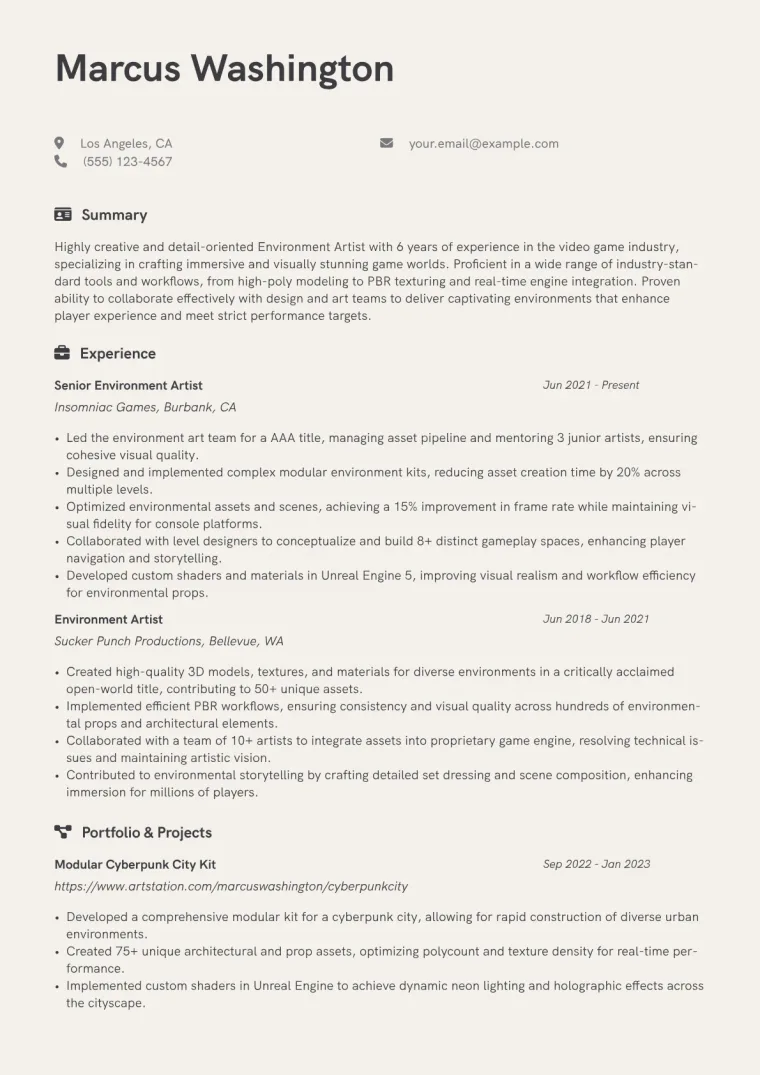
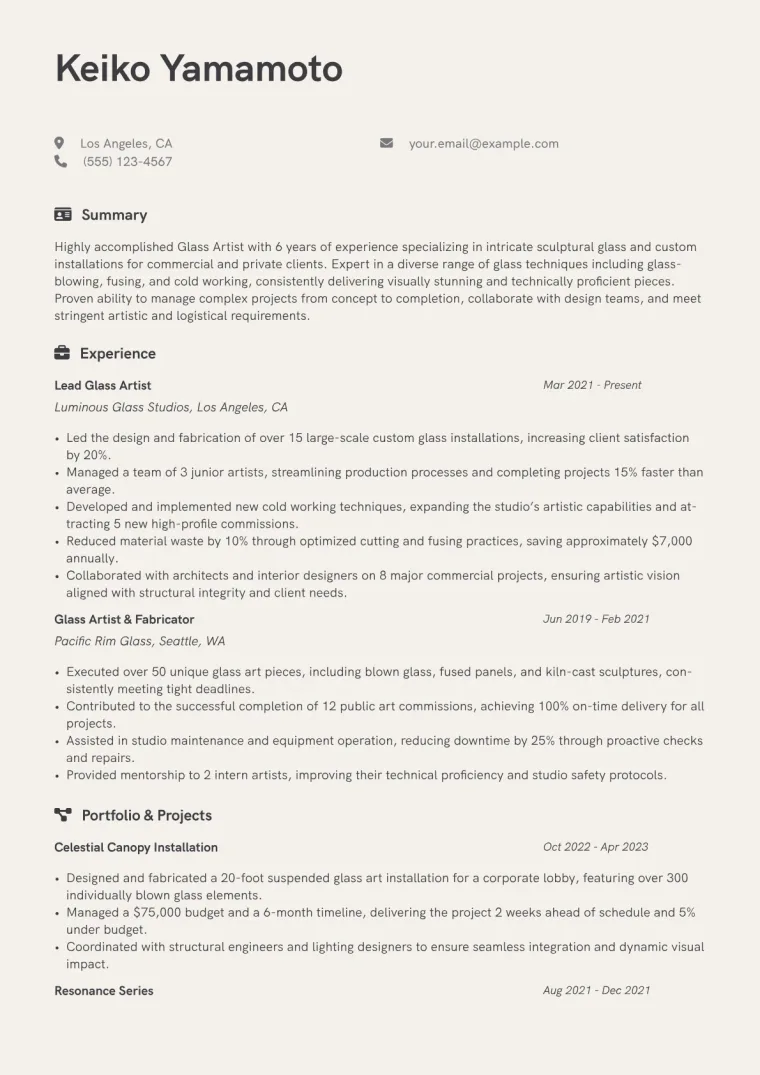
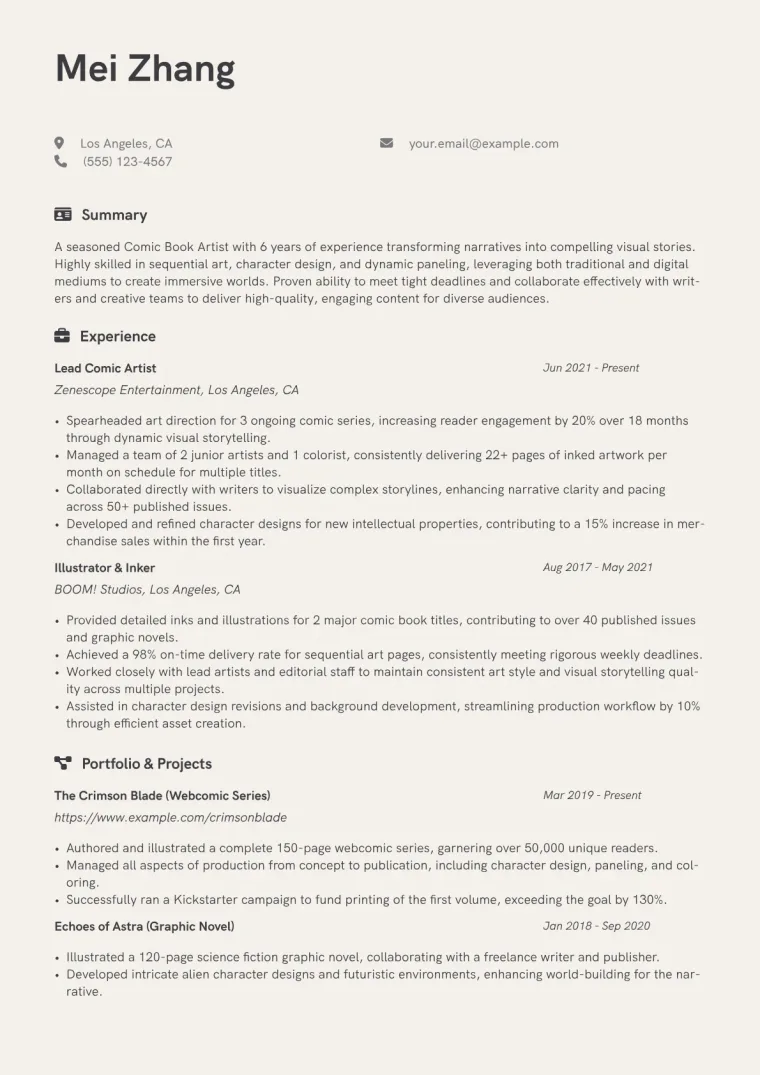
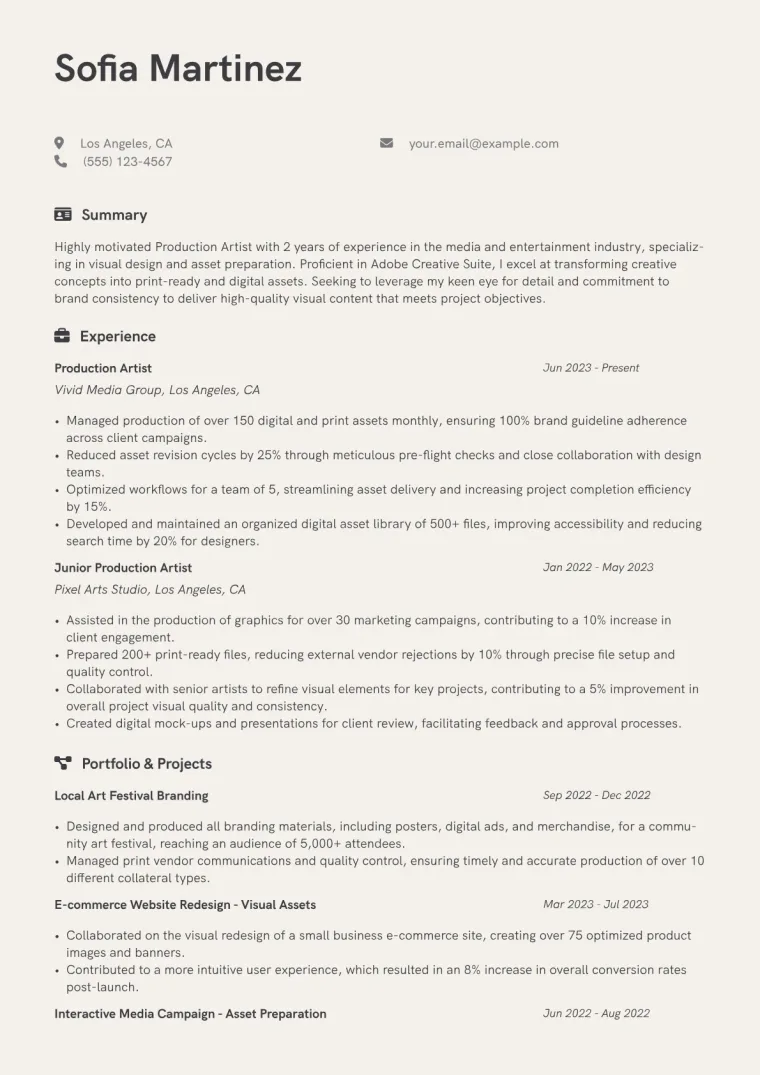
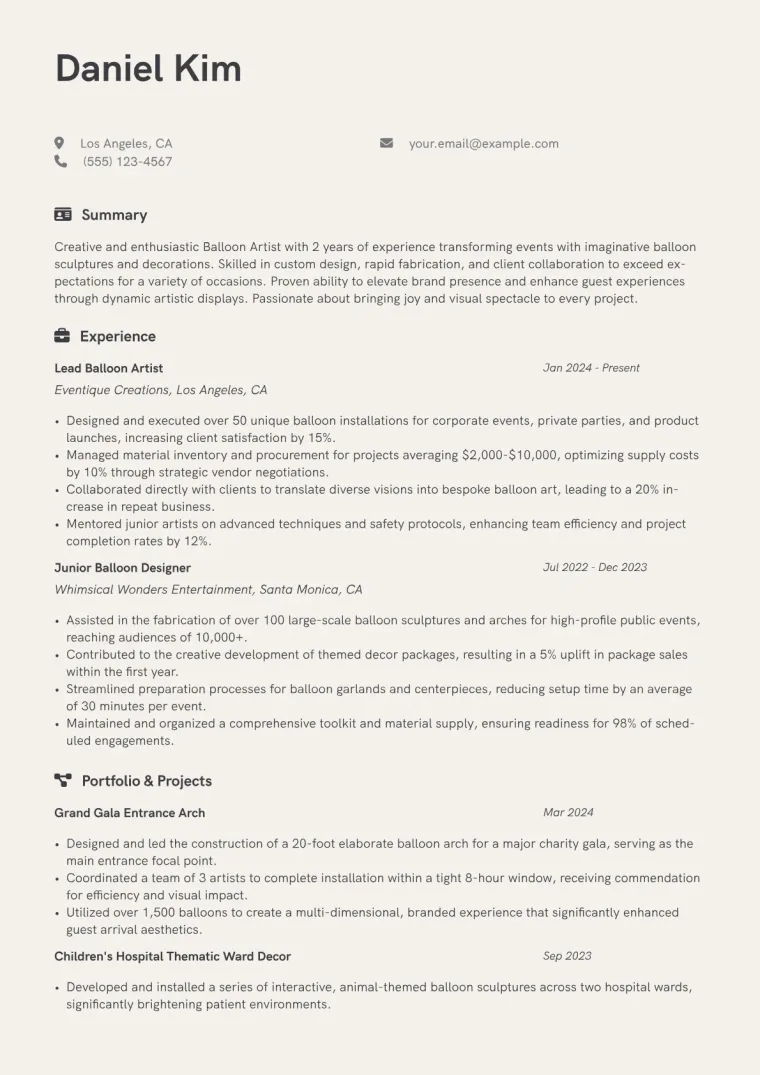
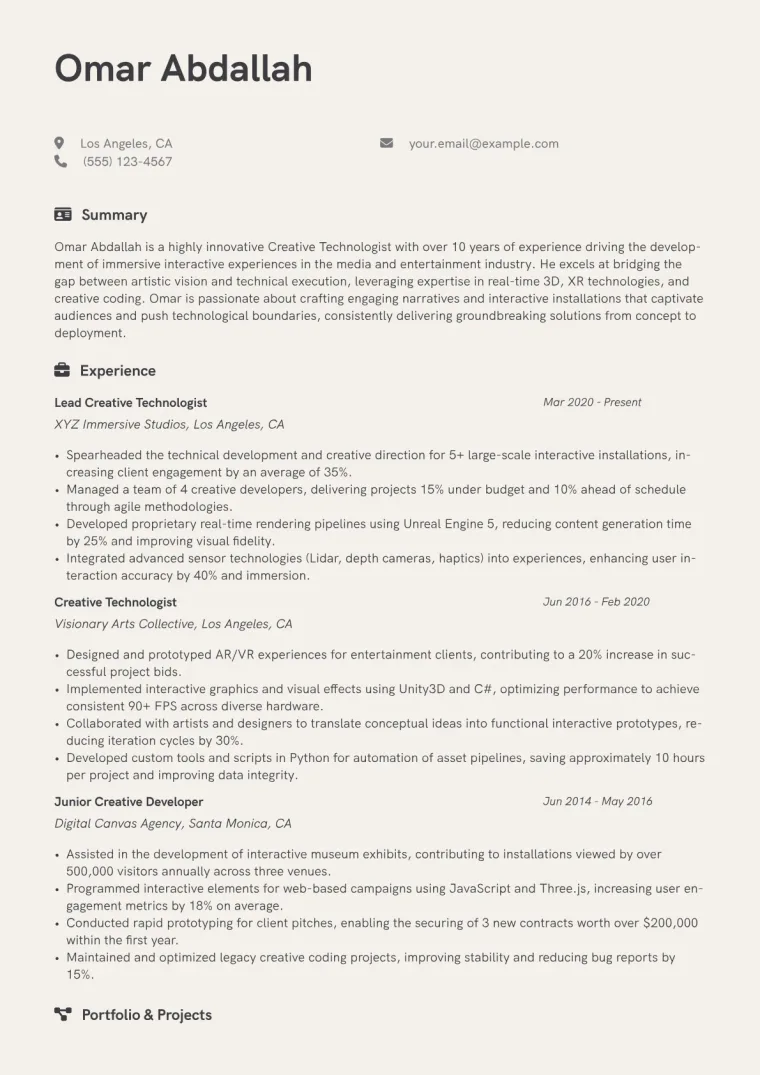
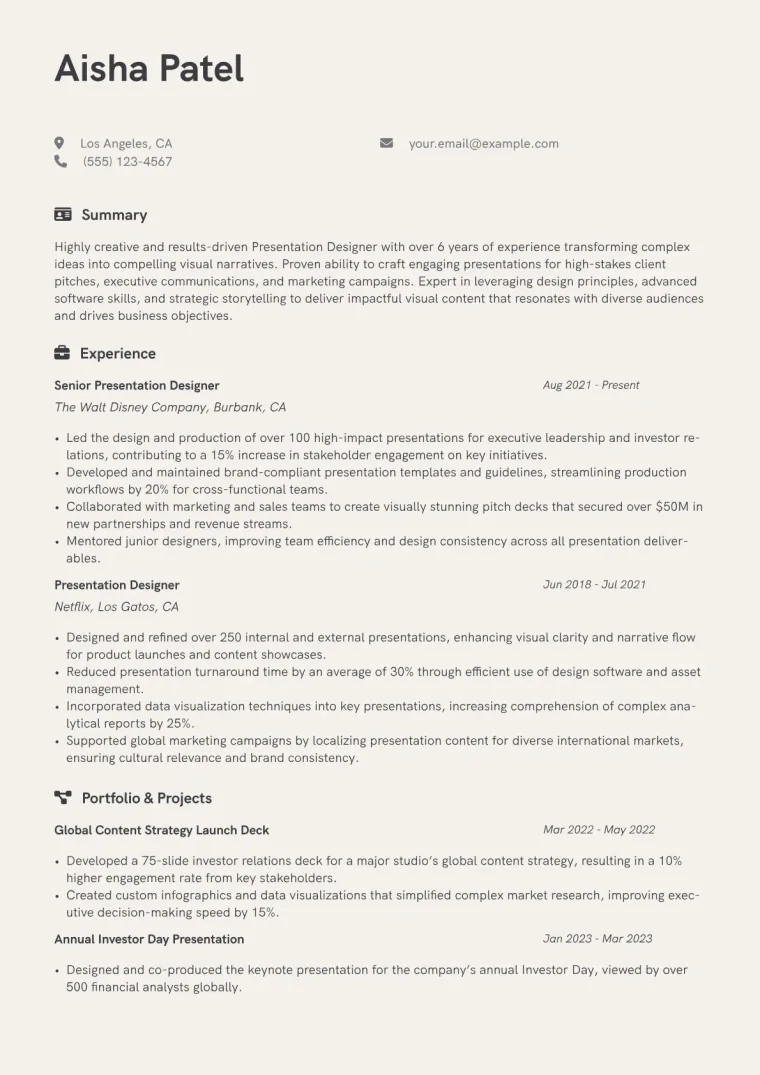
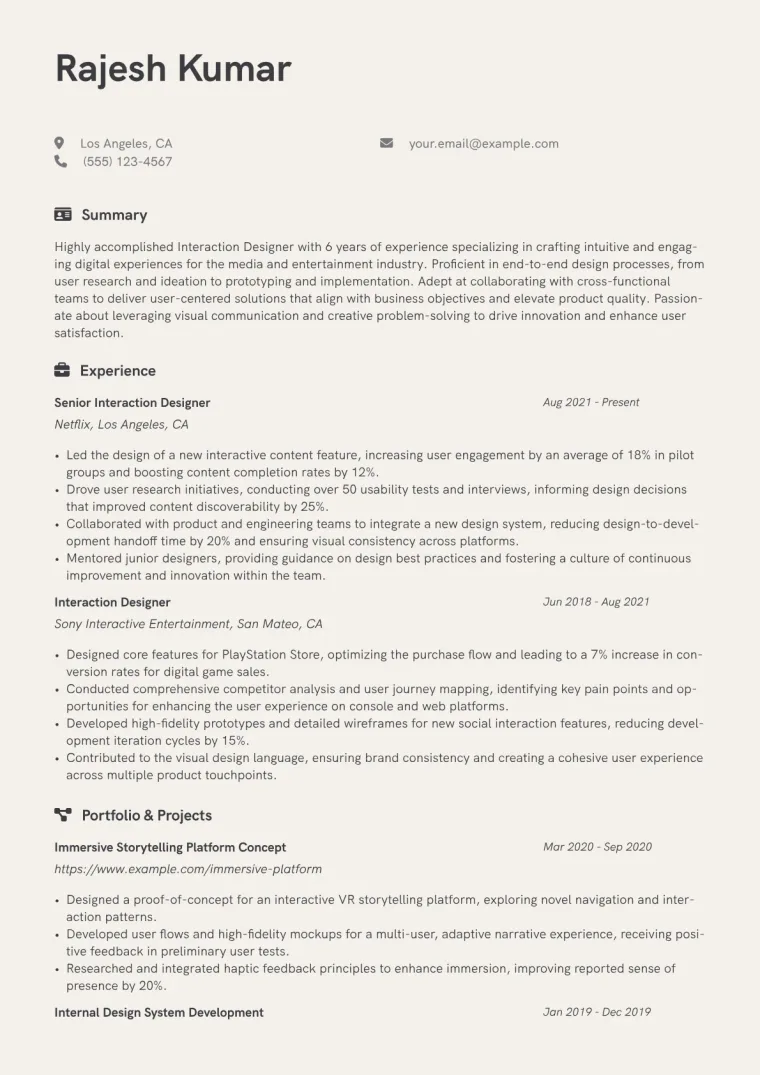
Three complete resumes, each in a different design.
Free to use. No download fee.
Editorial Notes
A compelling Color Grading Artist resume for the Media & Entertainment industry highlights a deep understanding of visual storytelling and technical execution. Hiring managers seek evidence of expertise in color science, advanced grading systems like DaVinci Resolve Studio or Baselight, and experience with ACES or HDR workflows. Concrete achievements should detail contributions to feature films, episodic series, or high-profile commercials, often quantified by project scope or visual impact. Certifications in specific grading software or color management principles, alongside familiarity with post-production pipelines and client collaboration, are crucial. Demonstrating the ability to translate creative vision into tangible on-screen aesthetics is paramount.
This JobSprout example thoughtfully showcases these critical elements. The resume effectively quantifies project achievements, such as "optimized color palettes for a 6-episode streaming series, enhancing visual consistency across all episodes." Skills are clearly grouped into "Grading Software Proficiency" (e.g., DaVinci Resolve Studio, Baselight, Nucoda) and "Technical Workflows" (e.g., ACES, HDR10+, DCI-P3). The prominent inclusion of a portfolio link and specific project details, including the client or production company, provides immediate context. It also highlights certifications in advanced color theory and specific hardware operation, emphasizing specialized knowledge essential for mid-level roles.
This template was built with JobSprout and can be remixed to create your own tailored Color Grading Artist resume. It provides an excellent framework for presenting your specialized expertise effectively.
How useful was this template?
Example by JobSproutColor Grading Artist resume summary example
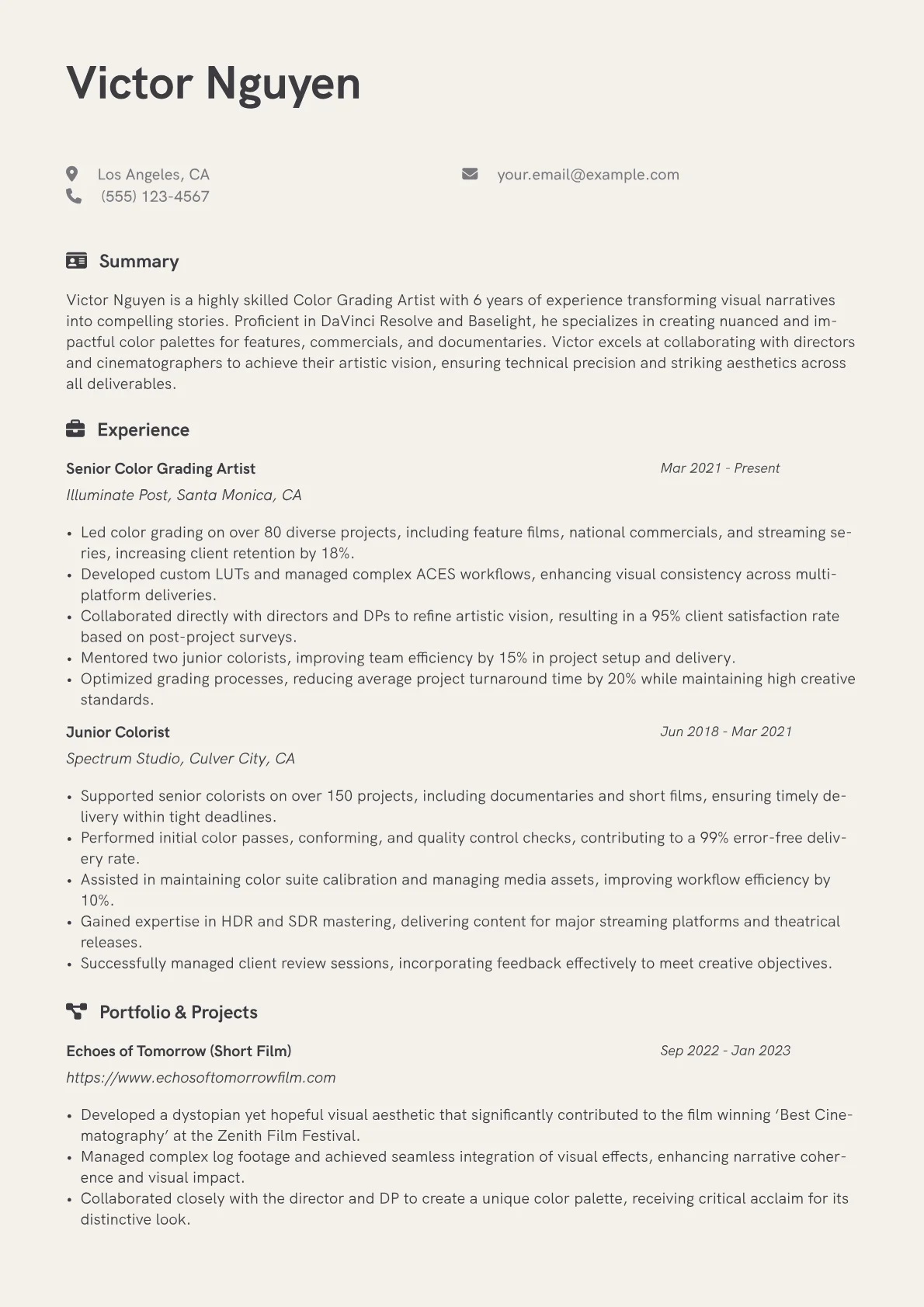
Victor Nguyen is a highly skilled Color Grading Artist with 6 years of experience transforming visual narratives into compelling stories. Proficient in DaVinci Resolve and Baselight, he specializes in creating nuanced and impactful color palettes for features, commercials, and documentaries. Victor excels at collaborating with directors and cinematographers to achieve their artistic vision, ensuring technical precision and striking aesthetics across all deliverables.
Color Grading Artist salary by country
| Country | 25th percentile | Median | 75th percentile |
|---|---|---|---|
| US | $58,183 | $93,455 | $137,645 |
| UK | £34,723 | £48,065 | £67,036 |
| Canada | C$64,372 | C$93,339 | C$124,519 |
| Australia | A$84,021 | A$107,318 | A$140,621 |
| Germany | €54,719 | €68,515 | €71,612 |
| France | €38,546 | €45,891 | €56,325 |
| Netherlands | €42,652 | €52,645 | €62,474 |
| Italy | €25,000 | €34,615 | €49,000 |
| Austria | €36,452 | €54,286 | €72,063 |
| New Zealand | NZ$89,631 | NZ$116,435 | NZ$156,250 |
| India | ₹497,125 | ₹994,250 | ₹1,767,053 |
| Poland | zł149,286 | zł191,135 | zł206,147 |
Annual salaries in local currency, aggregated from live job postings via Adzuna. Figures refresh continuously and reflect advertised pay, not negotiated offers.
Color Grading Artist resume skills and keywords
Recruiters and applicant tracking systems scan Color Grading Artist resumes for these skills and keywords. Include the ones that match your experience and mirror the wording in the job description. Check your resume against them with the free ATS checker.
Hard skills
Tools & software
Certifications
Soft skills
Market Insights
Color Grading Artist
Salary Range
Salary Trend
Mar 2025 – Feb 2026
12-Month Trend
Based on advertised Design (UX/UI) roles.
US market data · Source: Adzuna · Updated Mar 2026
Frequently Asked Questions
What's the best resume format and length for a Color Grading Artist with 3-7 years of experience?
Which specific software skills and artistic qualifications should I highlight as a Color Grading Artist?
How can I write an impactful professional summary and strong achievement bullets for my Color Grading Artist resume?
What optional sections, like a portfolio or awards, are crucial for a Color Grading Artist's resume?
How do I tailor my Color Grading Artist resume for different production houses or project genres, and can JobSprout's AI help?
The blank page is the hard part. Skip it.
Free to use. No download fee.
Related Articles
![How to Write a CV for UX Design Applications [2026 Guide]](/thumbnails/cv-for-design-applications.webp)
How to Write a CV for UX Design Applications [2026 Guide]
Learn how to write a UX or product design CV that gets interviews. Real template analysis, what hiring managers look for, and common mistakes to avoid.
![How to Write a CV for Creative and Media Applications [2026 Guide]](/thumbnails/cv-for-creative-applications.webp)
How to Write a CV for Creative and Media Applications [2026 Guide]
Learn how to write a video production or media CV that gets interviews. Real template analysis, what hiring managers look for, and common mistakes to avoid.