Entry-Level Electronics Engineer Resume Example
 Example by JobSprout
Free to use. No download fee.
Market Insights
Entry-Level Electronics Engineer
Salary Range
Salary Trend
12-Month Trend
Based on advertised Engineering roles.
US market data · Source: Adzuna · Updated Sep 2026
How useful was this template?
Entry-Level Electronics Engineer resume samples
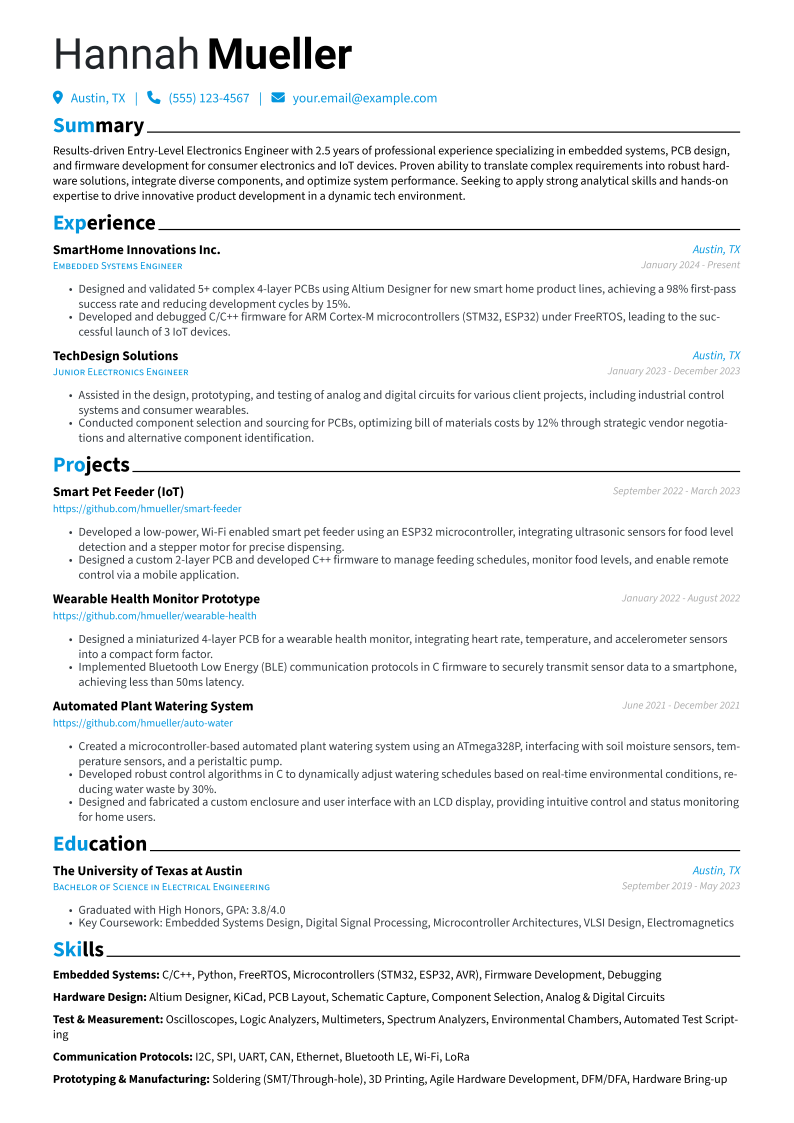
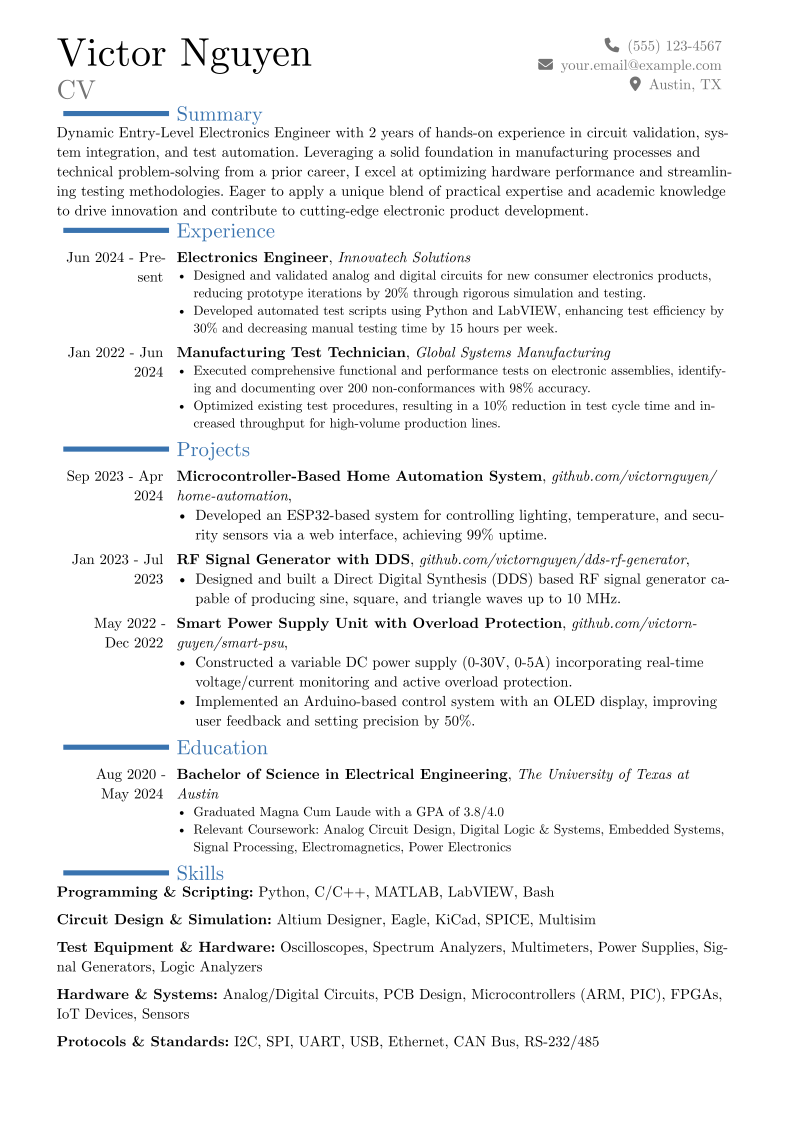
Three complete resumes, each in a different design.
Free to use. No download fee.
What makes a strong Entry-Level Electronics Engineer resume?
US median salary $115,741 ·
For an entry-level Electronics Engineer in the manufacturing sector, hiring managers prioritize candidates who demonstrate practical, hands-on experience and a strong understanding of product development lifecycles. They seek individuals capable of contributing to efficiency, reliability, and cost reduction, often through quantifiable achievements. Key expectations include proficiency in circuit design, testing, and debugging, alongside an awareness of industry standards like EMI/EMC. Emphasizing concrete actions such as “reducing board size,” “optimizing power consumption,” or “identifying and resolving hardware defects” directly addresses manufacturing's focus on tangible improvements and problem-solving, showcasing immediate value.
Why this example works
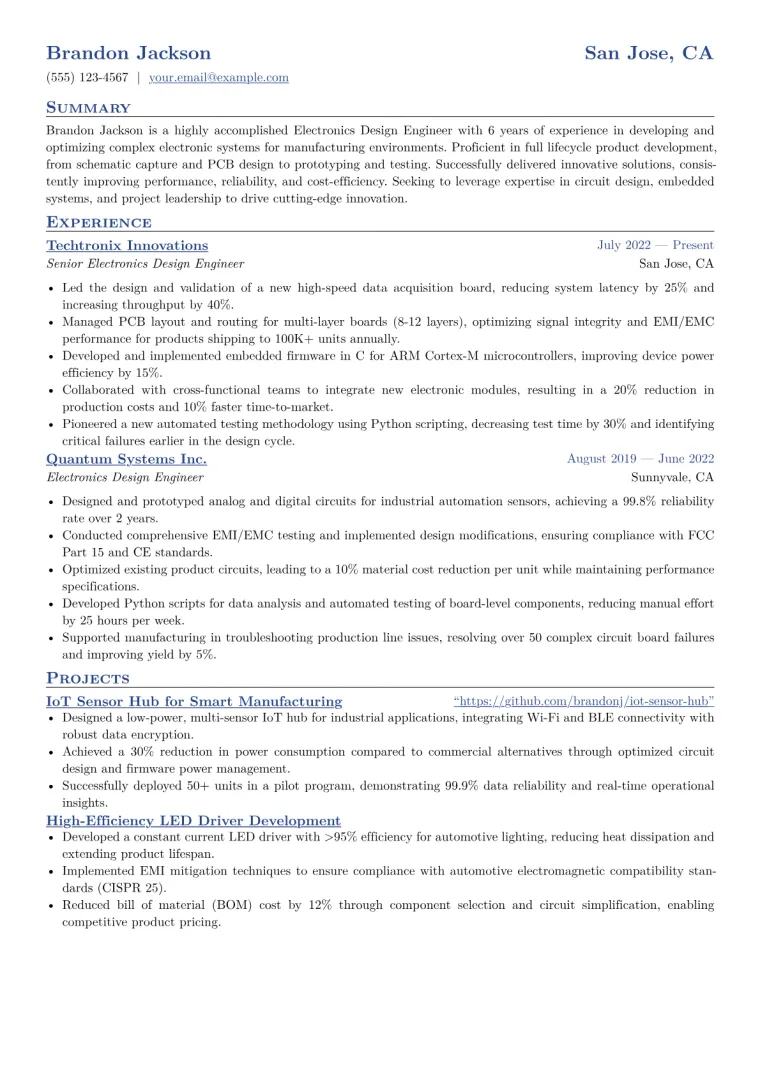
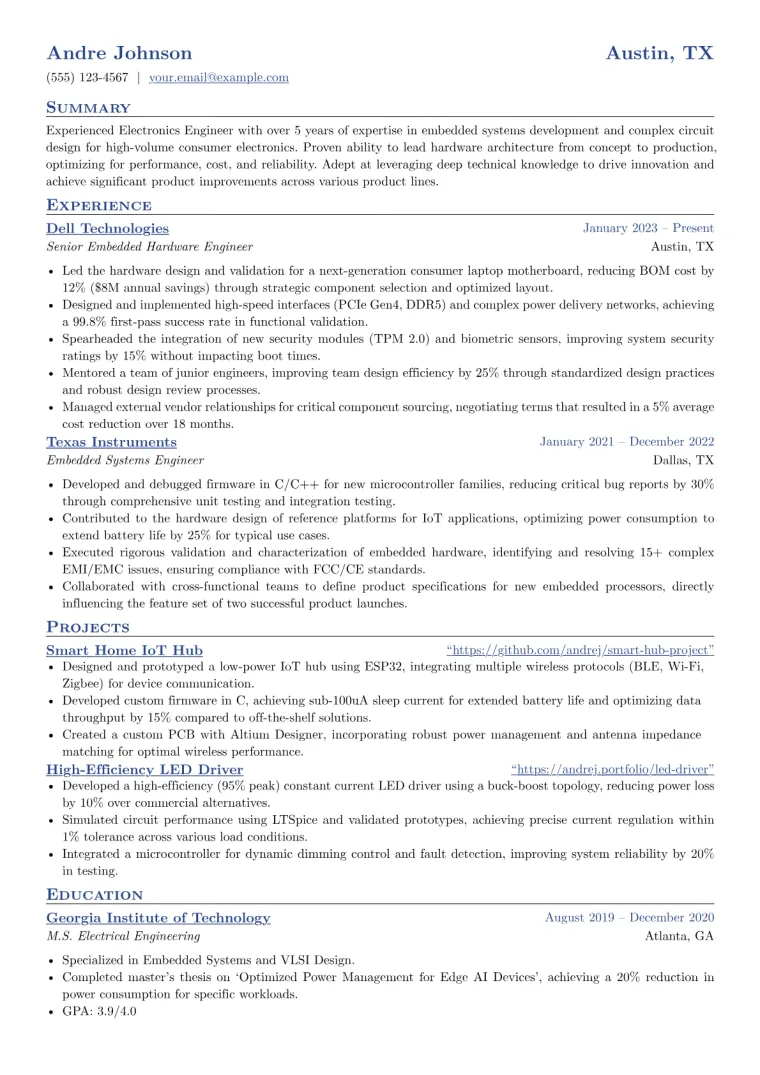
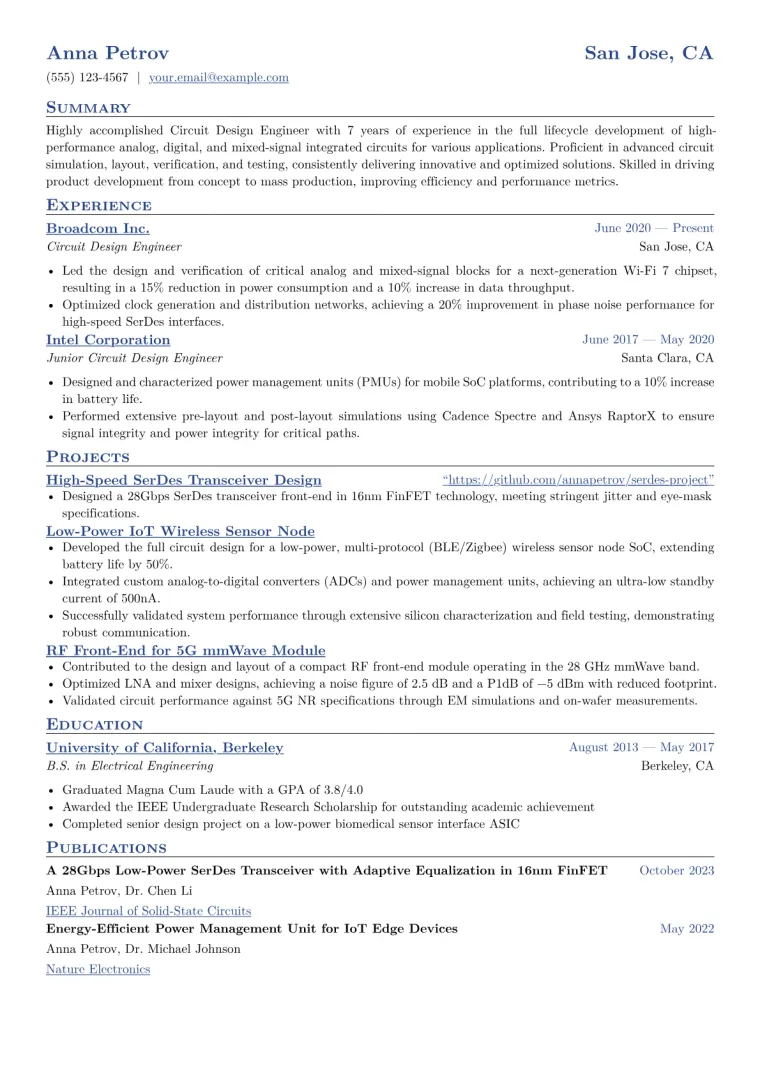
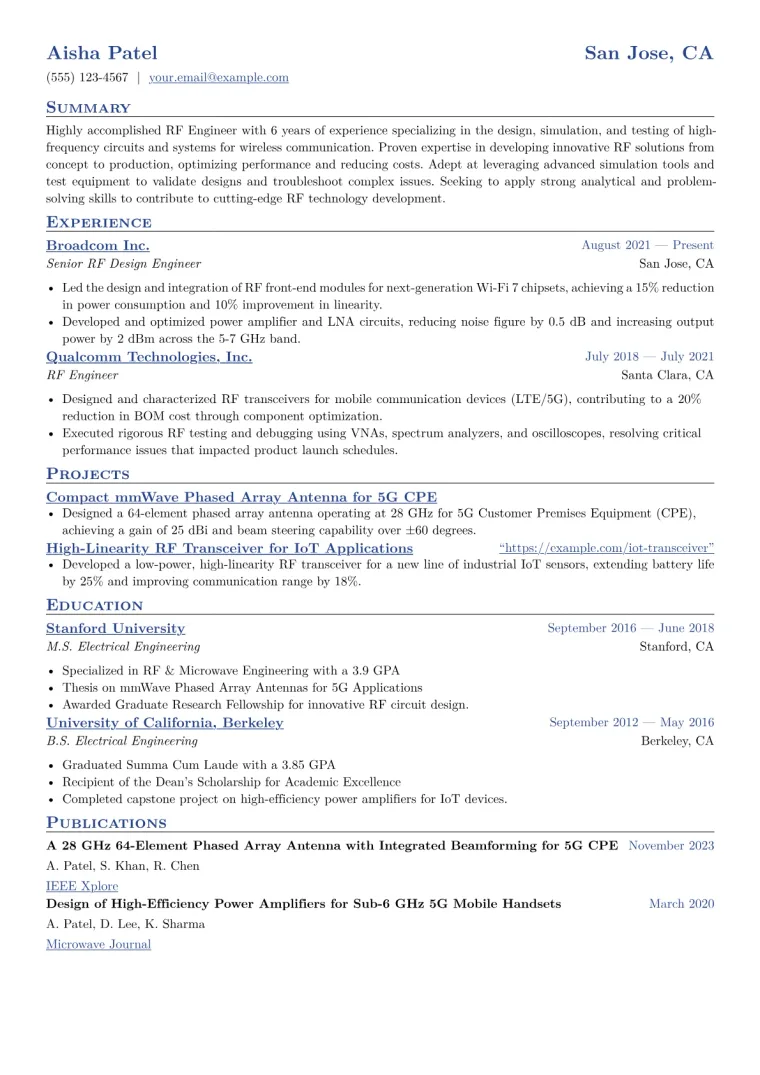
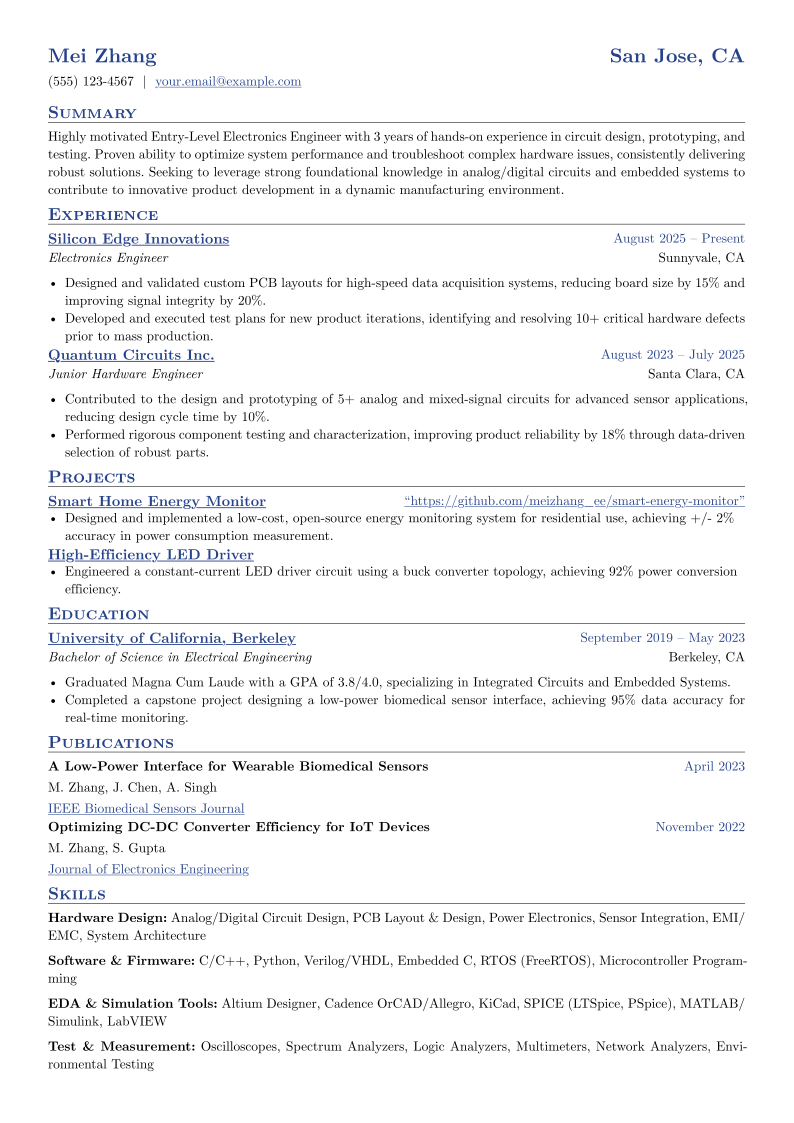
This example CV for Mei Zhang effectively showcases relevant capabilities. The “Experience” section highlights significant achievements, such as “reducing board size by 15% and improving signal integrity by 20%” and “optimizing power consumption in embedded control units by 25%.” The bullet points clearly outline responsibilities like designing custom PCB layouts, developing test plans, and performing component testing. The inclusion of “Projects” like “Smart Home Energy Monitor” and “High-Efficiency LED Driver” alongside “Publications” further demonstrates initiative. The comprehensive “Skills” section, grouped into Hardware Design, Software & Firmware, EDA & Simulation Tools, and Test & Measurement, lists essential tools like Altium Designer, SPICE, Oscilloscopes, and C/C++, directly matching industry requirements.
How useful was this template?
Example by JobSproutEntry-Level Electronics Engineer resume summary example
Highly motivated Entry-Level Electronics Engineer with 3 years of hands-on experience in circuit design, prototyping, and testing. Proven ability to optimize system performance and troubleshoot complex hardware issues, consistently delivering robust solutions. Seeking to leverage strong foundational knowledge in analog/digital circuits and embedded systems to contribute to innovative product development in a dynamic manufacturing environment.
Entry-Level Electronics Engineer salary by country
| Country | 25th percentile | Median | 75th percentile |
|---|---|---|---|
| US | $83,789 | $115,741 | $145,784 |
| UK | £42,383 | £53,967 | £67,273 |
| Canada | C$73,000 | C$96,957 | C$123,056 |
| Australia | A$95,625 | A$116,250 | A$143,500 |
| Germany | €65,833 | €71,637 | €77,367 |
| France | €37,500 | €45,000 | €52,500 |
| Netherlands | €40,625 | €48,750 | €56,875 |
| Italy | €25,000 | €30,000 | €35,000 |
| New Zealand | NZ$112,500 | NZ$150,000 | NZ$200,000 |
| India | ₹414,474 | ₹828,947 | ₹1,544,118 |
Annual salaries in local currency, aggregated from live job postings via Adzuna. Figures refresh continuously and reflect advertised pay, not negotiated offers.
Entry-Level Electronics Engineer resume skills and keywords
Recruiters and applicant tracking systems scan Entry-Level Electronics Engineer resumes for these skills and keywords. Include the ones that match your experience and mirror the wording in the job description. Check your resume against them with the free ATS checker.
Hard skills
Tools & software
Certifications
Soft skills
Market Insights
Entry-Level Electronics Engineer
Salary Range
Salary Trend
12-Month Trend
Based on advertised Engineering roles.
US market data · Source: Adzuna · Updated Sep 2026
Frequently Asked Questions
What's the best resume format for an entry-level Electronics Engineer with academic project experience?
Which technical skills should I emphasize on my resume as an entry-level Electronics Engineer?
How do I write a strong resume summary and achievement bullets for an entry-level Electronics Engineer?
What optional sections like projects or certifications are important for an entry-level Electronics Engineer?
How can JobSprout help me tailor my entry-level Electronics Engineer resume to specific job postings?
The blank page is the hard part. Skip it.
Free to use. No download fee.
Related Articles

Mechanical Engineer Resume Examples and Template (2026)
Write a mechanical engineer resume that lands interviews. Resume examples, technical skills formatting, bullet point formulas with engineering metrics, and ATS tips for every experience level and specialisation.

How to Write a CV for Manufacturing Applications [2026 Guide]
Learn how to write a manufacturing or plant manager CV that gets interviews. Real template analysis, what hiring managers look for, and common mistakes to avoid.