Failure Analysis Engineer Resume Example
 Example by JobSprout
Free to use. No download fee.
Market Insights
Failure Analysis Engineer
Salary Range
US market data · Source: Adzuna · Updated Mar 2026
How useful was this template?
Failure Analysis Engineer resume samples
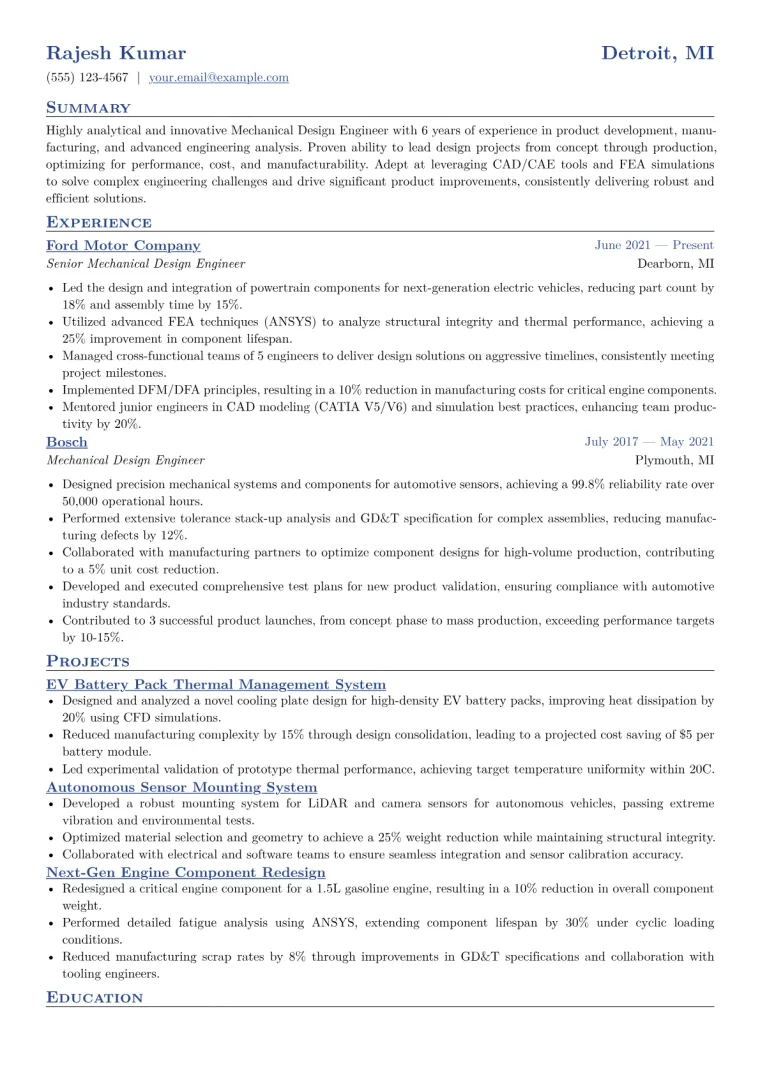
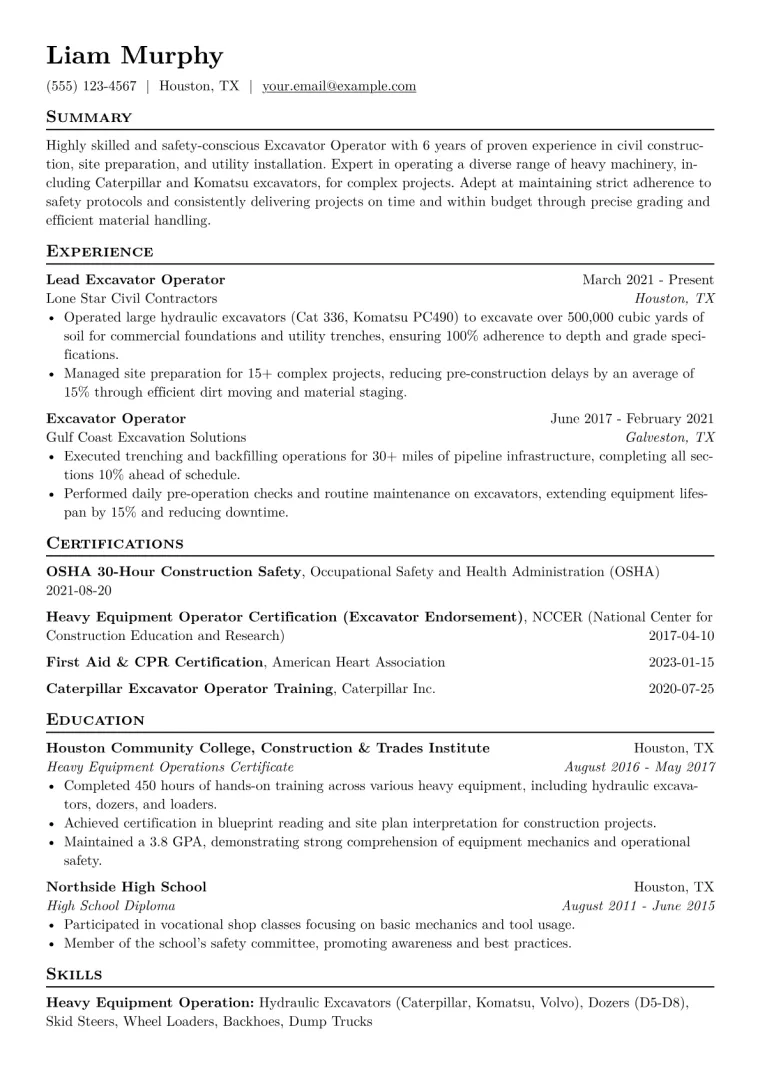
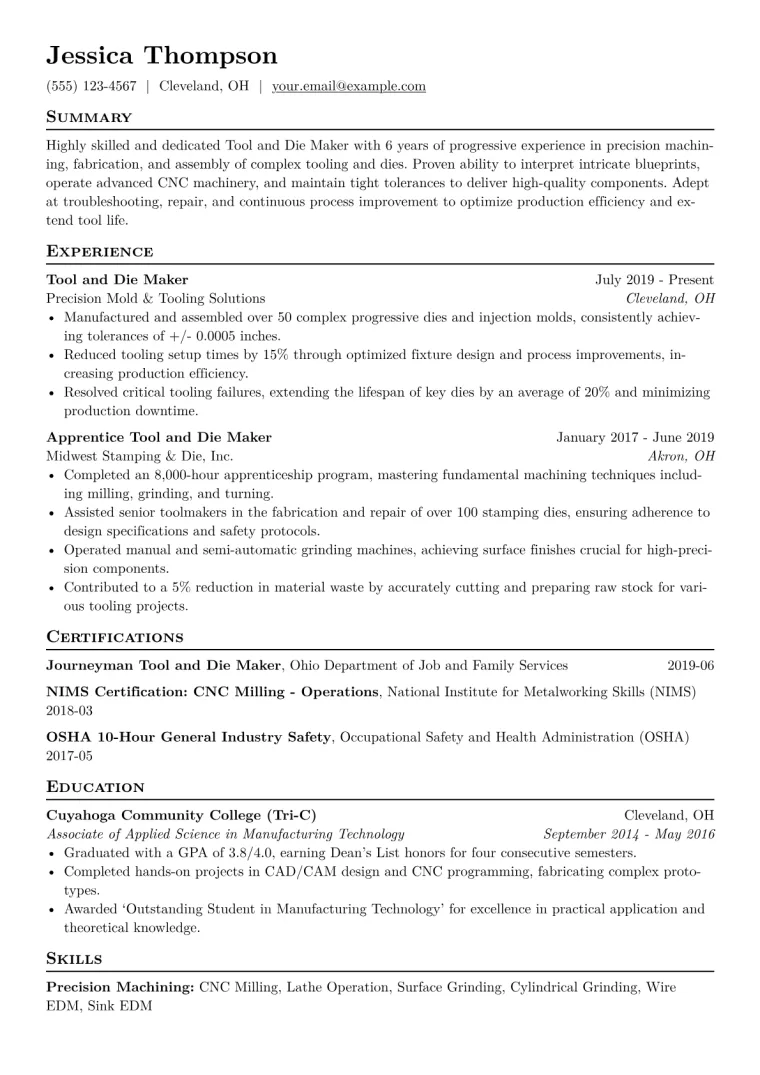
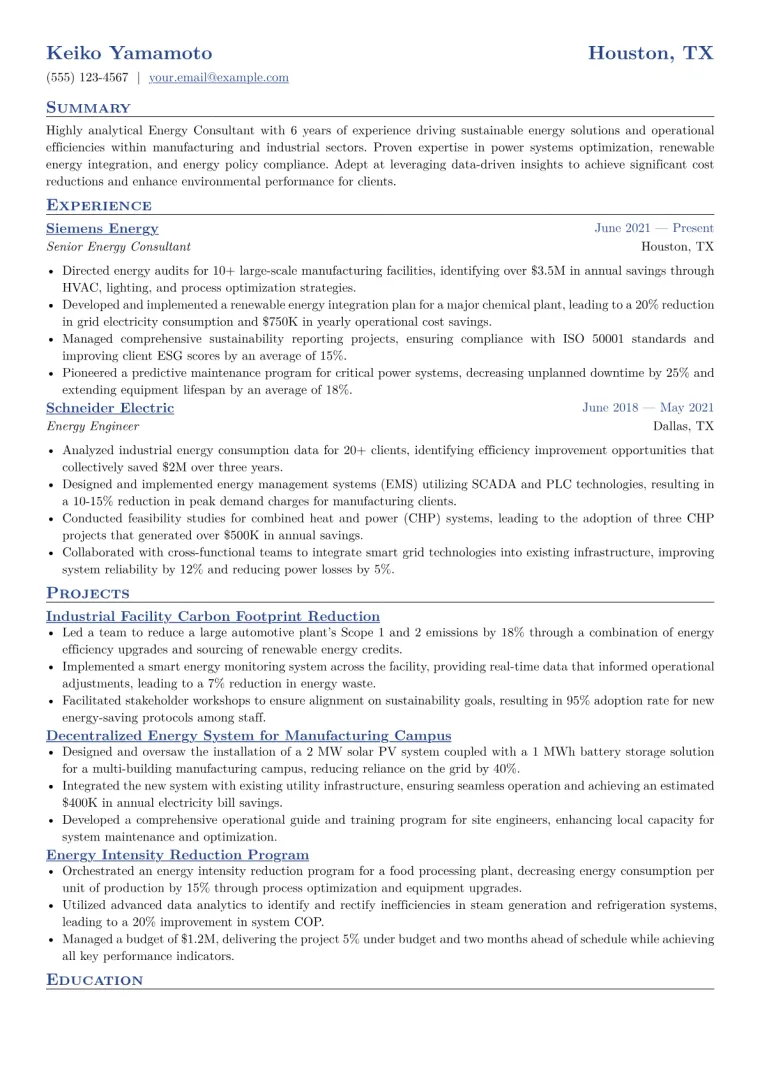
Three complete resumes, each in a different design.
Free to use. No download fee.
Editorial Notes
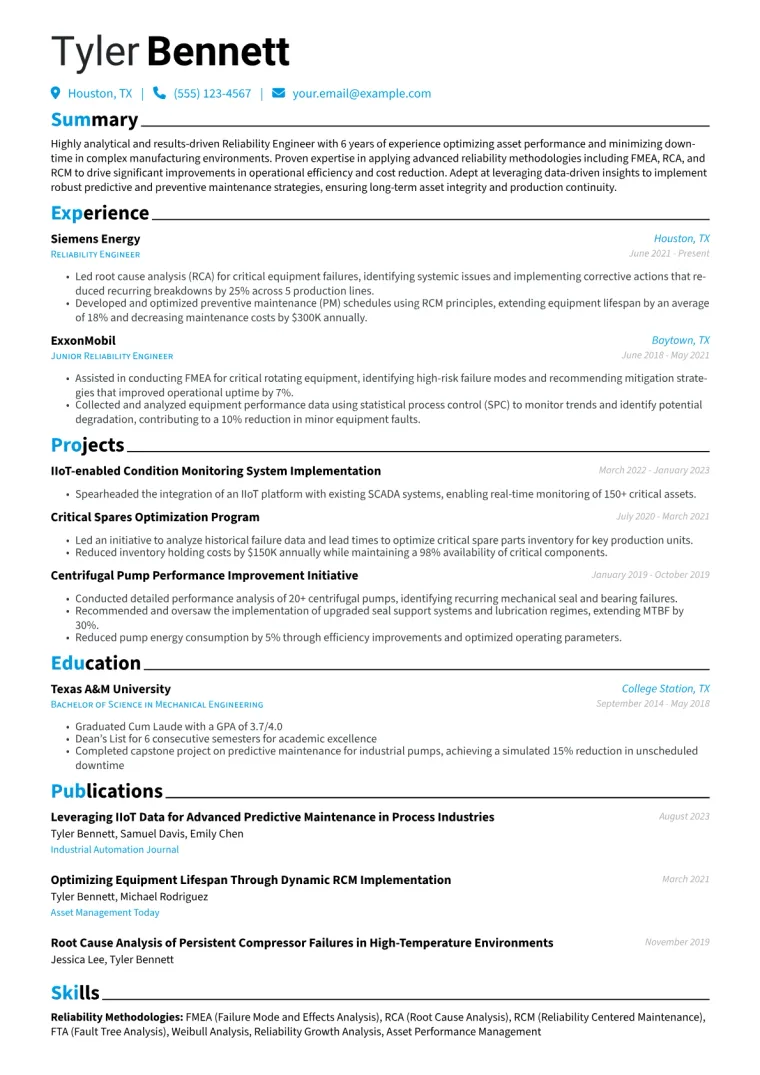
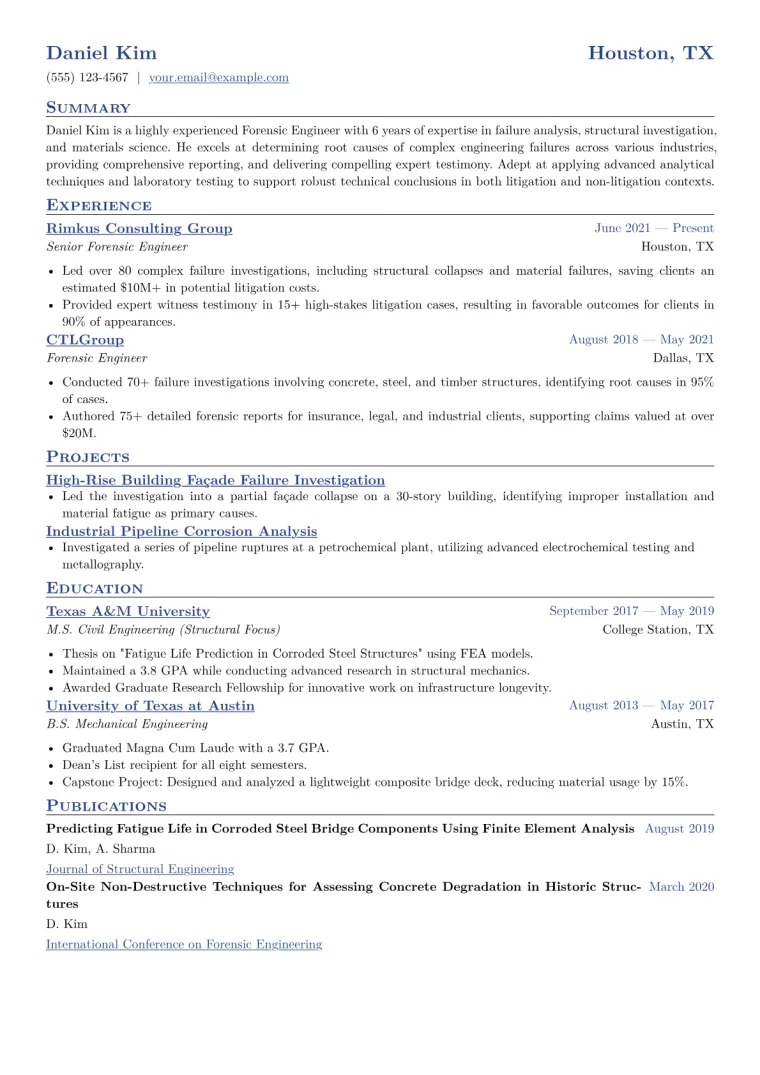
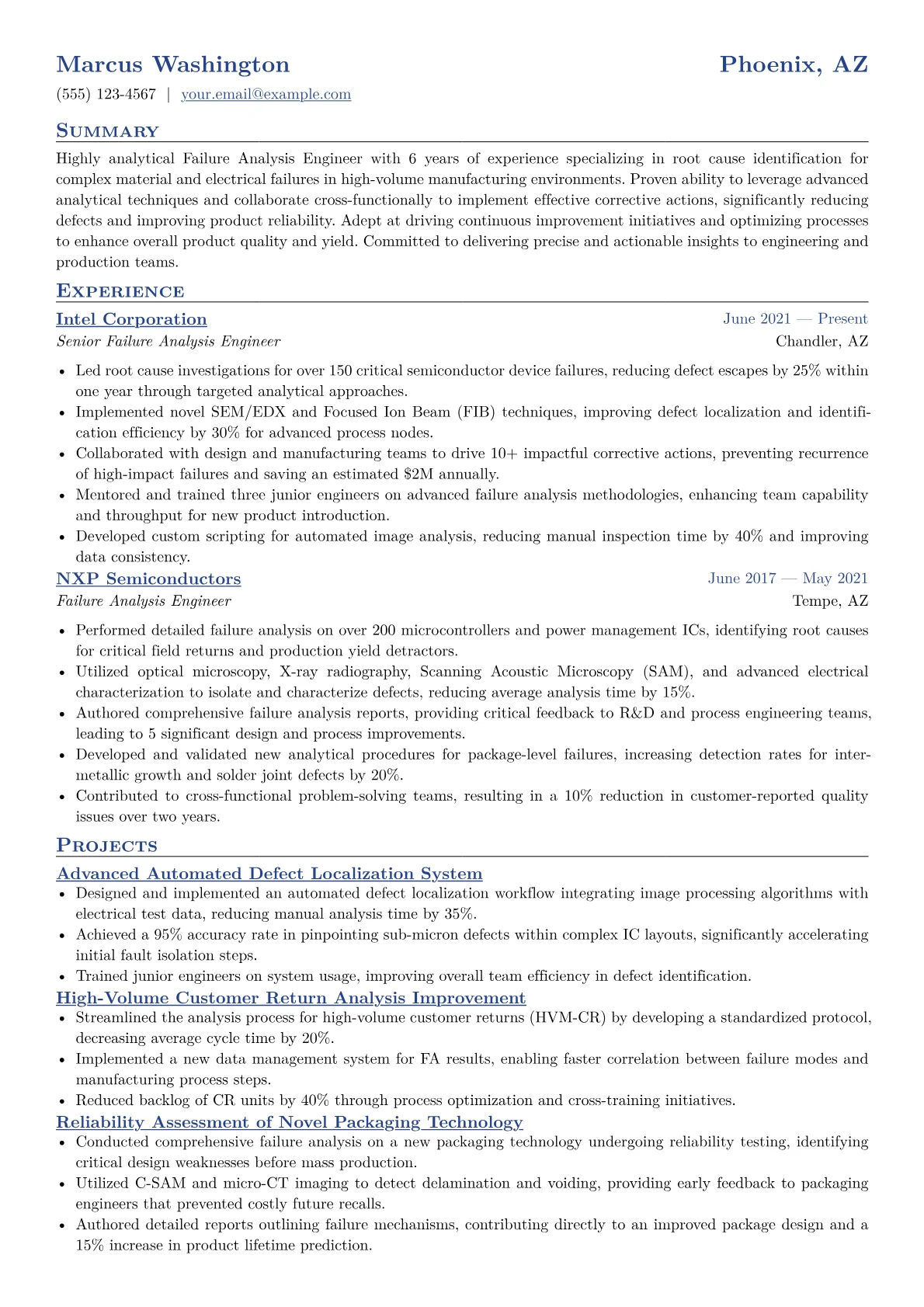
Hiring managers seeking a mid-level Failure Analysis Engineer in Manufacturing prioritize demonstrable expertise in root cause identification and defect prevention. They look for practical experience with methodologies like 8D or FMEA, coupled with proficiency in analytical techniques such as SEM, EDX, or X-ray diffraction. Key achievements should quantify improvements in production yield, material waste reduction, or line downtime. Explicitly mentioning experience with specific materials, like polymers or metals, and familiarity with industry quality standards are crucial indicators of a candidate's readiness for the role's demanding technical challenges.
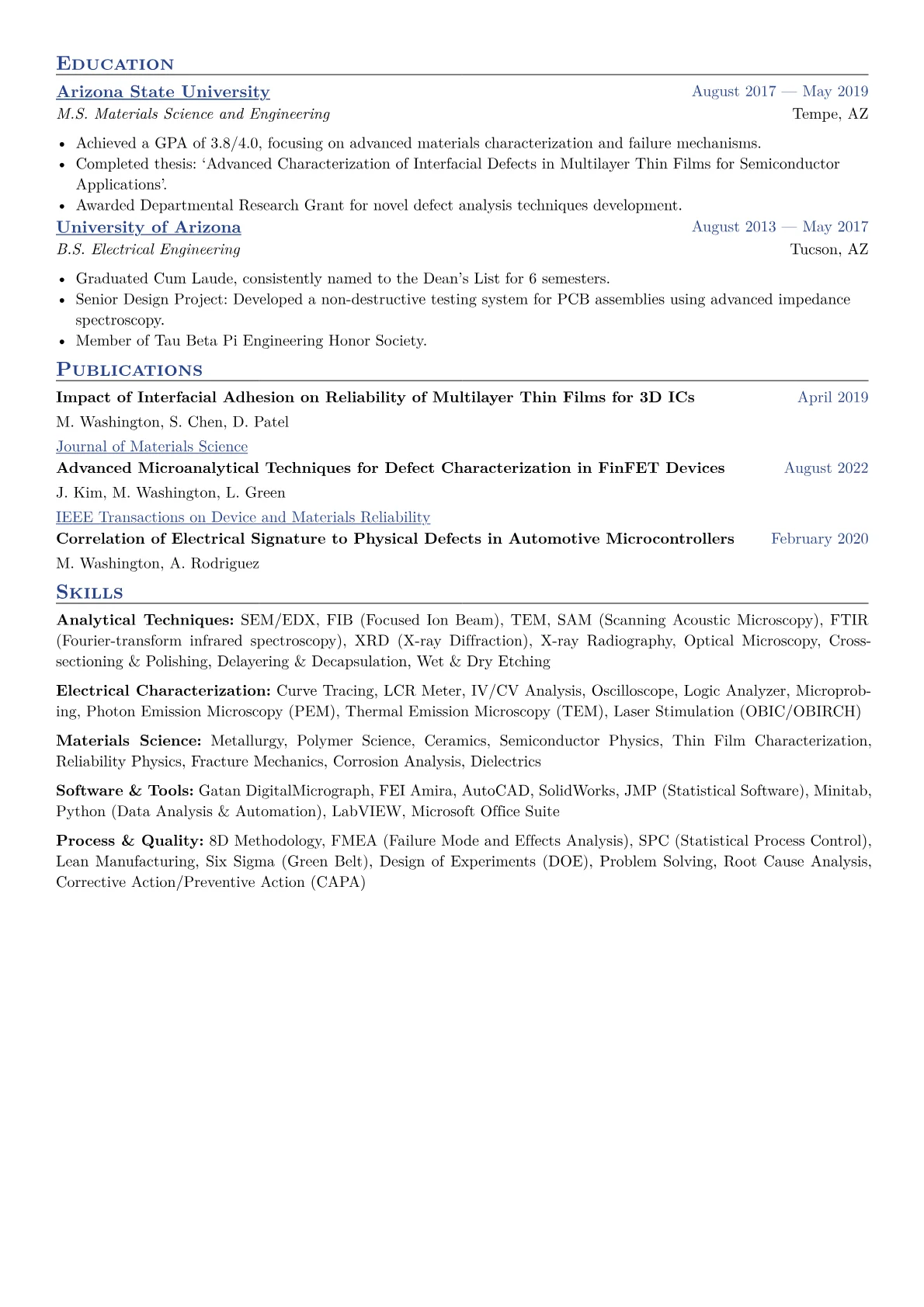
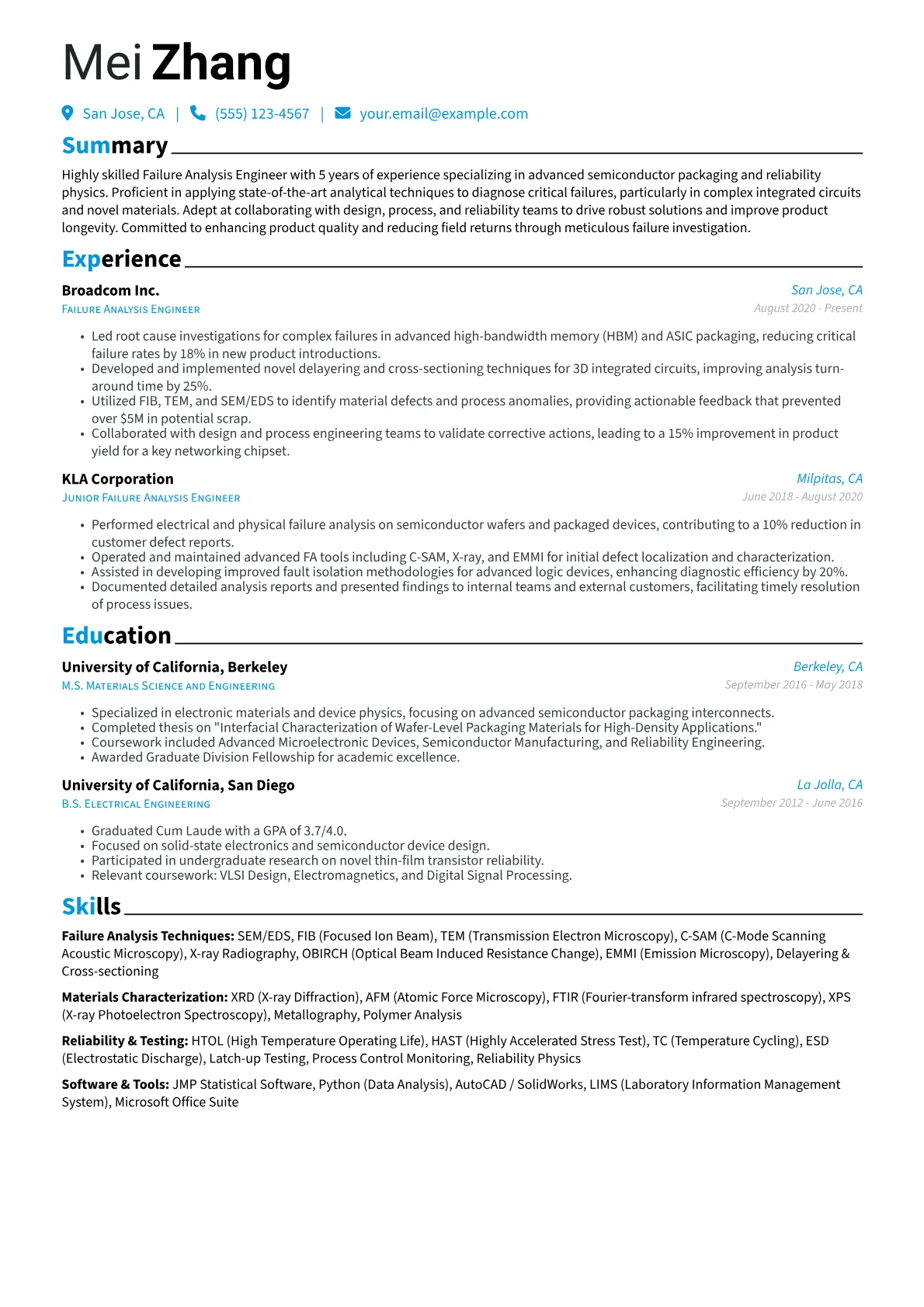
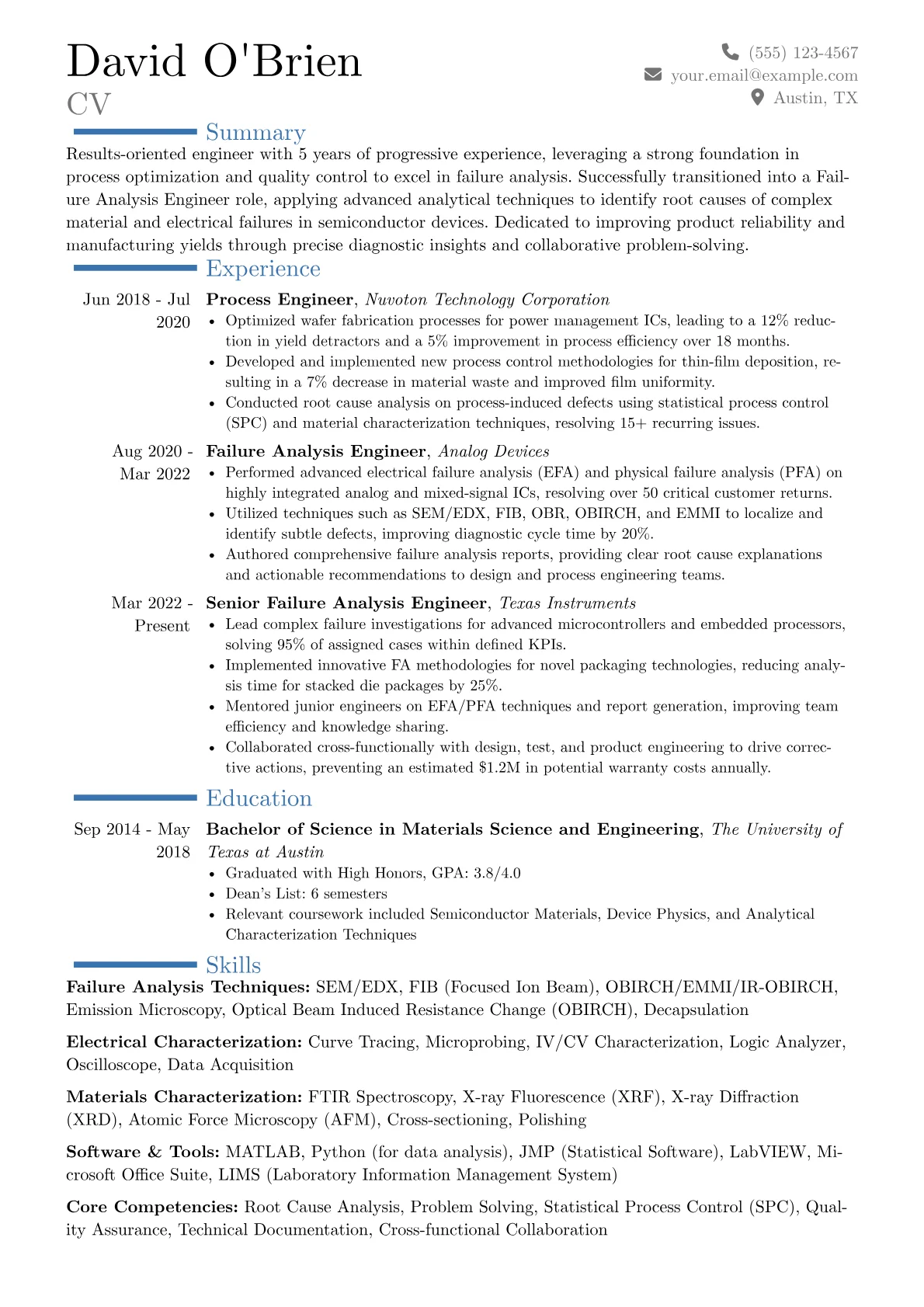
This example CV effectively highlights these critical aspects. Its structure groups technical skills logically, separating diagnostic tools from problem solving frameworks, which allows hiring managers to quickly assess technical breadth. Achievements are consistently quantified, illustrating the direct impact of analyses on process improvement or cost savings, for example, "reduced defect rates by 15%." Crucially, specific analytical software and lab equipment are listed, demonstrating hands-on tool proficiency, while any relevant quality certifications are clearly presented.
This template was built with JobSprout and can be remixed to create your own tailored Failure Analysis Engineer resume.
How useful was this template?
Example by JobSproutFailure Analysis Engineer resume summary example
Highly analytical Failure Analysis Engineer with 6 years of experience specializing in root cause identification for complex material and electrical failures in high-volume manufacturing environments. Proven ability to leverage advanced analytical techniques and collaborate cross-functionally to implement effective corrective actions, significantly reducing defects and improving product reliability. Adept at driving continuous improvement initiatives and optimizing processes to enhance overall product quality and yield. Committed to delivering precise and actionable insights to engineering and production teams.
Failure Analysis Engineer salary by country
| Country | 25th percentile | Median | 75th percentile |
|---|---|---|---|
| US | $88,409 | $118,000 | $145,612 |
| UK | £25,875 | £32,570 | £41,951 |
| Canada | C$88,205 | C$96,410 | C$104,615 |
| Australia | A$70,857 | A$86,364 | A$120,000 |
| Germany | €77,147 | €84,293 | €91,440 |
| France | €76,250 | €82,500 | €88,750 |
| Netherlands | €33,897 | €38,088 | €44,079 |
| New Zealand | NZ$75,000 | NZ$100,000 | NZ$125,000 |
| India | ₹488,806 | ₹977,612 | ₹1,892,857 |
Annual salaries in local currency, aggregated from live job postings via Adzuna. Figures refresh continuously and reflect advertised pay, not negotiated offers.
Failure Analysis Engineer resume skills and keywords
Recruiters and applicant tracking systems scan Failure Analysis Engineer resumes for these skills and keywords. Include the ones that match your experience and mirror the wording in the job description. Check your resume against them with the free ATS checker.
Hard skills
Tools & software
Certifications
Soft skills
Market Insights
Failure Analysis Engineer
Salary Range
US market data · Source: Adzuna · Updated Mar 2026
![How to Write a CV for Manufacturing Applications [2026 Guide]](/thumbnails/cv-for-manufacturing-applications.webp)