Food Technologist Resume Example
 Example by JobSprout
Market Insights
Food Technologist
Salary Range
Salary Trend
Mar 2025 – Feb 2026
12-Month Trend
Based on advertised Research roles.
US market data · Source: Adzuna · Updated Mar 2026
How useful was this template?
Food Technologist resume samples


What makes a strong Food Technologist resume?
US median salary $73,750 ·
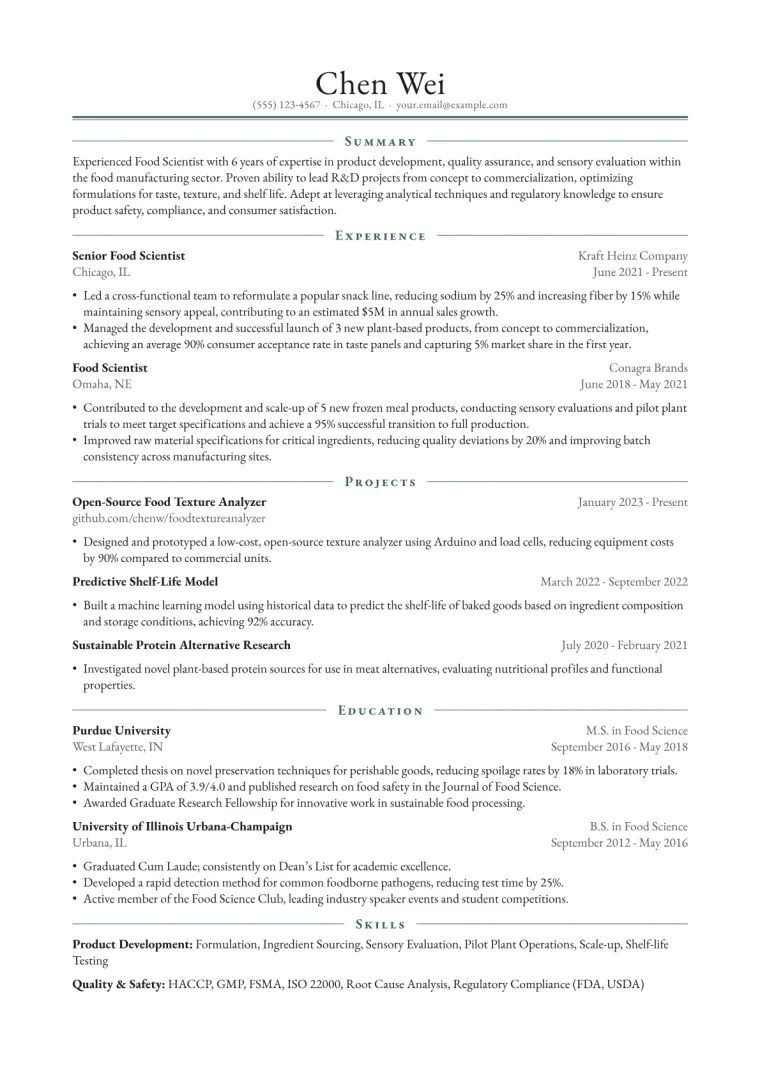
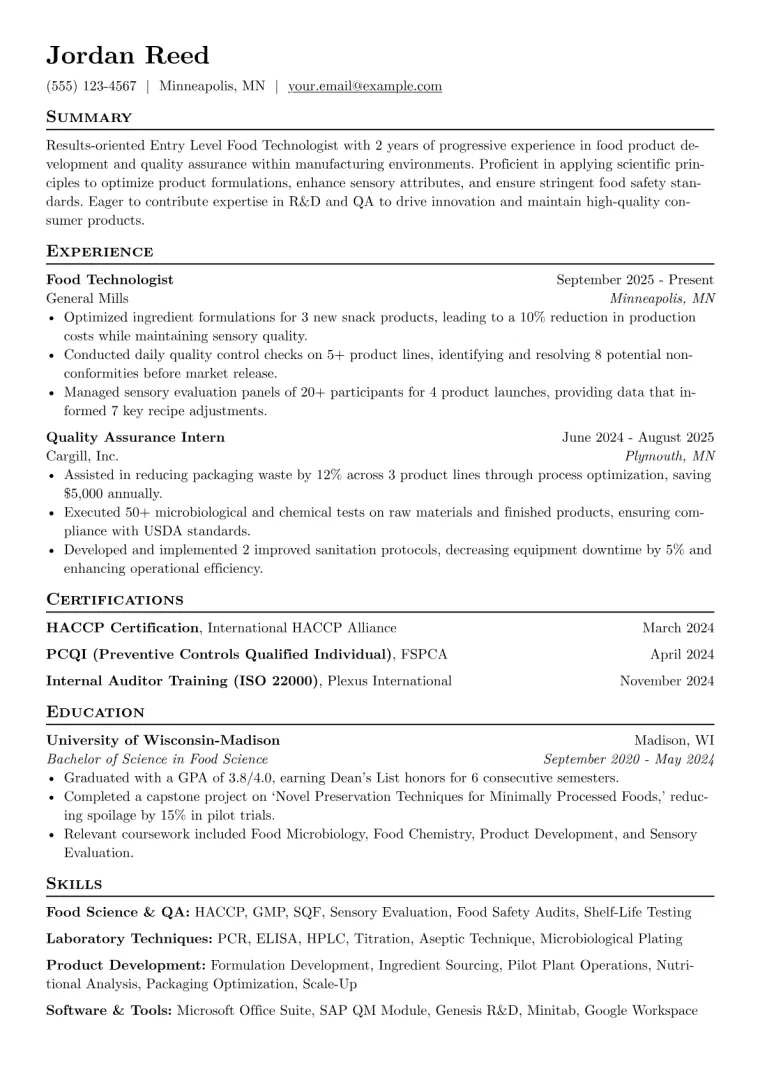
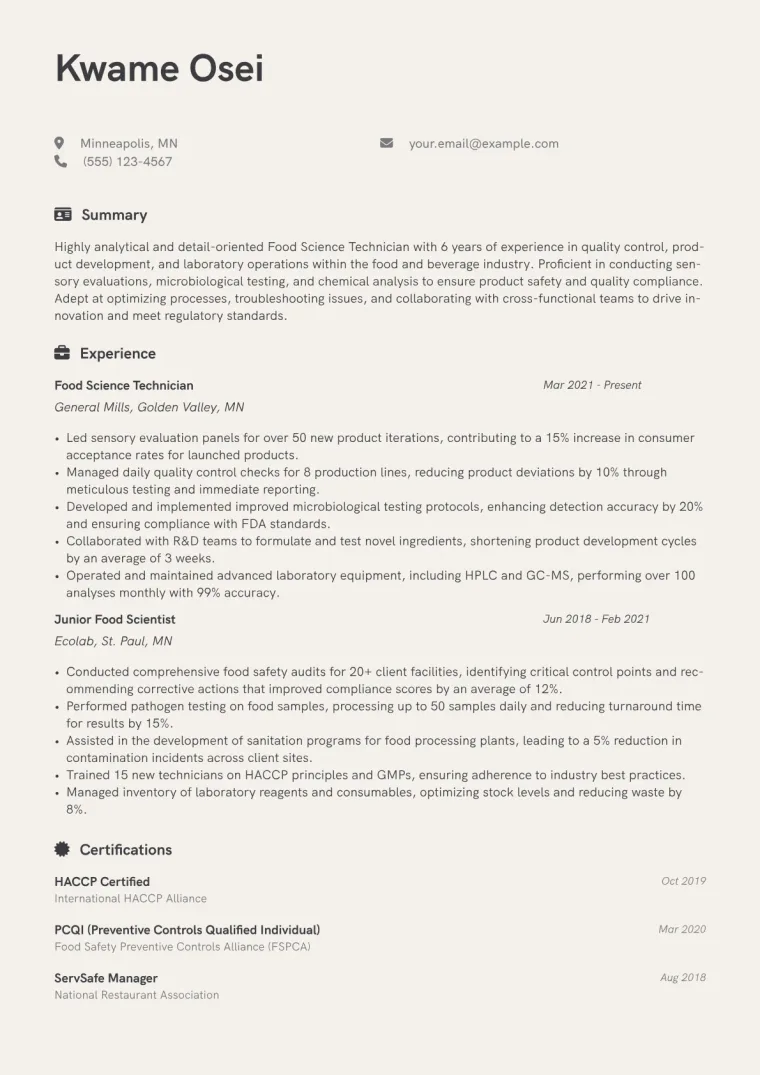
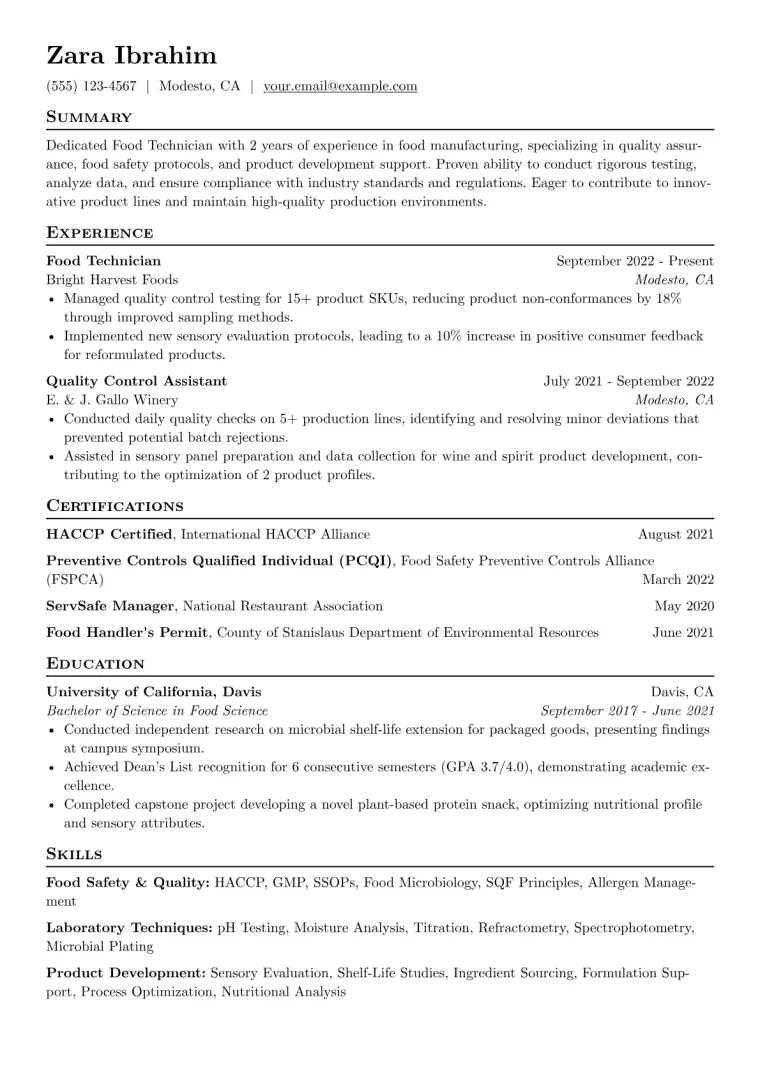
A standout Food Technologist resume in the manufacturing sector, particularly for research and development roles, must clearly articulate impact. Hiring managers prioritize candidates who demonstrate a concrete history of innovation, problem-solving, and efficient project execution. This means showcasing achievements like successful new product launches, optimizing existing formulas for cost savings or improved sensory attributes, and ensuring robust regulatory compliance for products. Crucial terminology and certifications such as HACCP, PCQI, GMPs, experience with pilot plant operations, and proficiency in analytical instrumentation like HPLC or GC-MS, are essential for demonstrating readiness for the complexities of food production and safety.
Why this example works
The JobSprout example resume effectively addresses these expectations. It strategically quantifies achievements, illustrating how a Food Technologist directly contributes to a company's bottom line or product quality. For instance, rather than simply stating “developed new products,” it specifies “launched 3 new snack lines, increasing market share by 5%.” Skills are thoughtfully grouped into relevant categories such as “Product Development and Scale-Up,” “Quality Assurance and Regulatory Compliance,” and “Analytical and Sensory Evaluation,” making key proficiencies immediately apparent. Furthermore, relevant certifications and specialized software or laboratory tools are prominently highlighted, assuring employers of the candidate's technical capabilities.
How useful was this template?
Example by JobSprout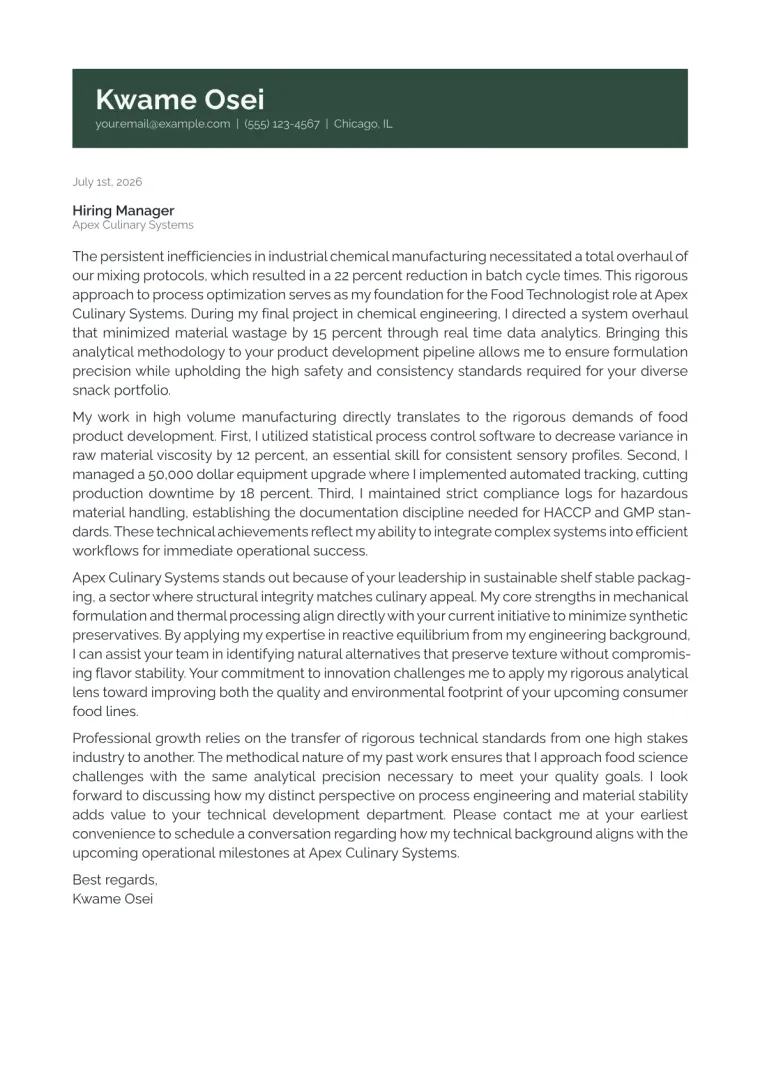
Food Technologist cover letter for a career changer
Written for the same situation as this resume.
Food Technologist resume summary example
Highly analytical and results-driven Food Technologist with 6 years of progressive experience in product development, quality assurance, and food safety within the manufacturing sector. Proven ability to lead projects from concept to commercialization, optimize processes, and ensure regulatory compliance. Adept at leveraging scientific principles to innovate and improve food products while maintaining rigorous quality standards and driving efficiency.
Food Technologist salary by country
| Country | 25th percentile | Median | 75th percentile |
|---|---|---|---|
| US | $65,625 | $73,750 | $95,000 |
| UK | £31,136 | £34,545 | £37,955 |
| Canada | C$51,250 | C$65,455 | C$80,909 |
| Australia | A$68,214 | A$76,429 | A$96,250 |
| Germany | €33,750 | €37,500 | €41,250 |
| India | ₹333,333 | ₹666,667 | ₹1,000,000 |
Annual salaries in local currency, aggregated from live job postings via Adzuna. Figures refresh continuously and reflect advertised pay, not negotiated offers.
Food Technologist resume skills and keywords
Recruiters and applicant tracking systems scan Food Technologist resumes for these skills and keywords. Include the ones that match your experience and mirror the wording in the job description. Check your resume against them with the free ATS checker.
Hard skills
Tools & software
Certifications
Soft skills
Market Insights
Food Technologist
Salary Range
Salary Trend
Mar 2025 – Feb 2026
12-Month Trend
Based on advertised Research roles.
US market data · Source: Adzuna · Updated Mar 2026
The blank page is the hard part. Skip it.
Free to use. No download fee.
Related Articles

Research CV: UK Format, Structure and Examples [2026]
How to write a research CV for UK universities and institutes. The section order panels expect, how to list publications and funding, and how long it should actually be.

Postdoc CV: Structure, Template and Example [2026]
What a postdoctoral CV needs that a doctoral one does not: independence, funding, and a publication list a panel can audit. With a full worked example.
Academic CV for PhD Applications: How to Write One [2026]
Learn how to write an academic CV for PhD applications. Real template analysis, what research committees look for, and common mistakes to avoid.
Career moves from Food Technologist
Usually need more experience or training
Usually need less experience or training
Includes information from the O*NET 30.3 Database by the U.S. Department of Labor, Employment and Training Administration (USDOL/ETA), used under the CC BY 4.0 license. We have modified it; USDOL/ETA has not approved, endorsed or tested these modifications. O*NET is a trademark of USDOL/ETA.