Summary
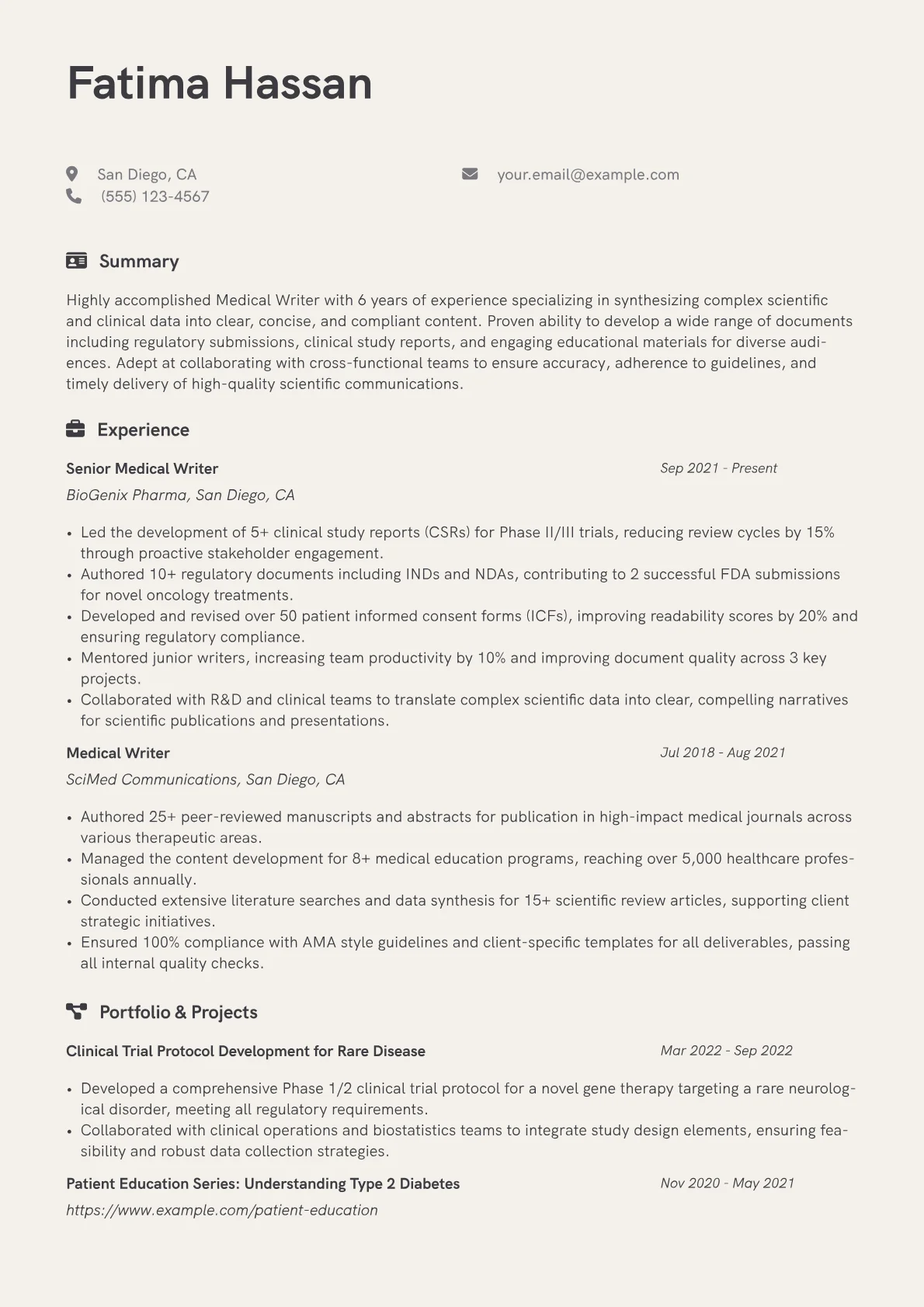
Highly accomplished Medical Writer with 6 years of experience specializing in synthesizing complex scientific and clinical data into clear, concise, and compliant content. Proven ability to develop a wide range of documents including regulatory submissions, clinical study reports, and engaging educational materials for diverse audiences. Adept at collaborating with cross-functional teams to ensure accuracy, adherence to guidelines, and timely delivery of high-quality scientific communications.
Experience
Sep 2021Present
Senior Medical WriterBioGenix Pharma
San Diego, CAJul 2018Aug 2021
Medical WriterSciMed Communications
San Diego, CAPortfolio & Projects
Mar 2022Sep 2022
Clinical Trial Protocol Development for Rare Disease
Nov 2020May 2021
Patient Education Series: Understanding Type 2 Diabetes
Education
Sep 2016May 2018
University of California, San DiegoMaster of Science in Biomedical Writing
La Jolla, CASkills
Clinical Study Reports (CSRs)Regulatory Submissions (IND, NDA)Manuscript DevelopmentAbstracts & PostersMedical EducationSOPs & GuidelinesData Interpretation & SynthesisLiterature ReviewAMA Style GuideICH GCP GuidelinesTarget Audience AdaptationPeer Review Process
![How to Write a CV for UX Design Applications [2026 Guide]](/thumbnails/cv-for-design-applications.webp)
![How to Write a CV for Creative and Media Applications [2026 Guide]](/thumbnails/cv-for-creative-applications.webp)