Simulation Engineer Resume Example
 Example by JobSprout
Free to use. No download fee.
Market Insights
Simulation Engineer
Salary Range
US market data · Source: Adzuna · Updated Mar 2026
How useful was this template?
Simulation Engineer resume samples
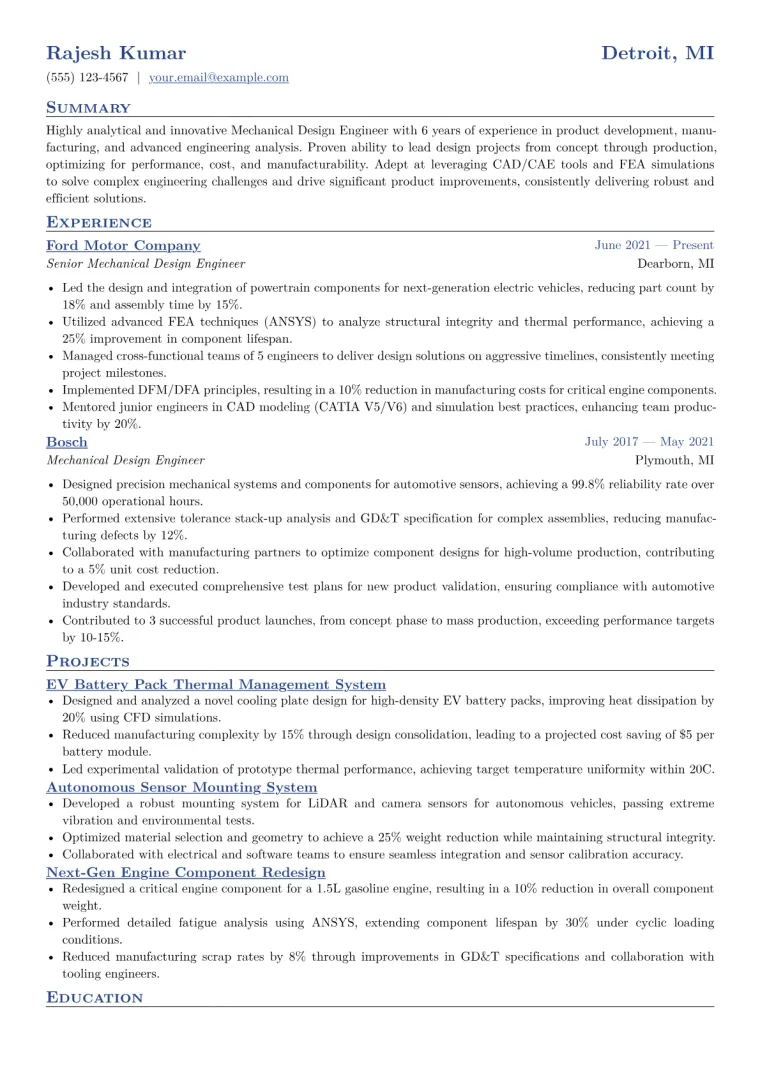
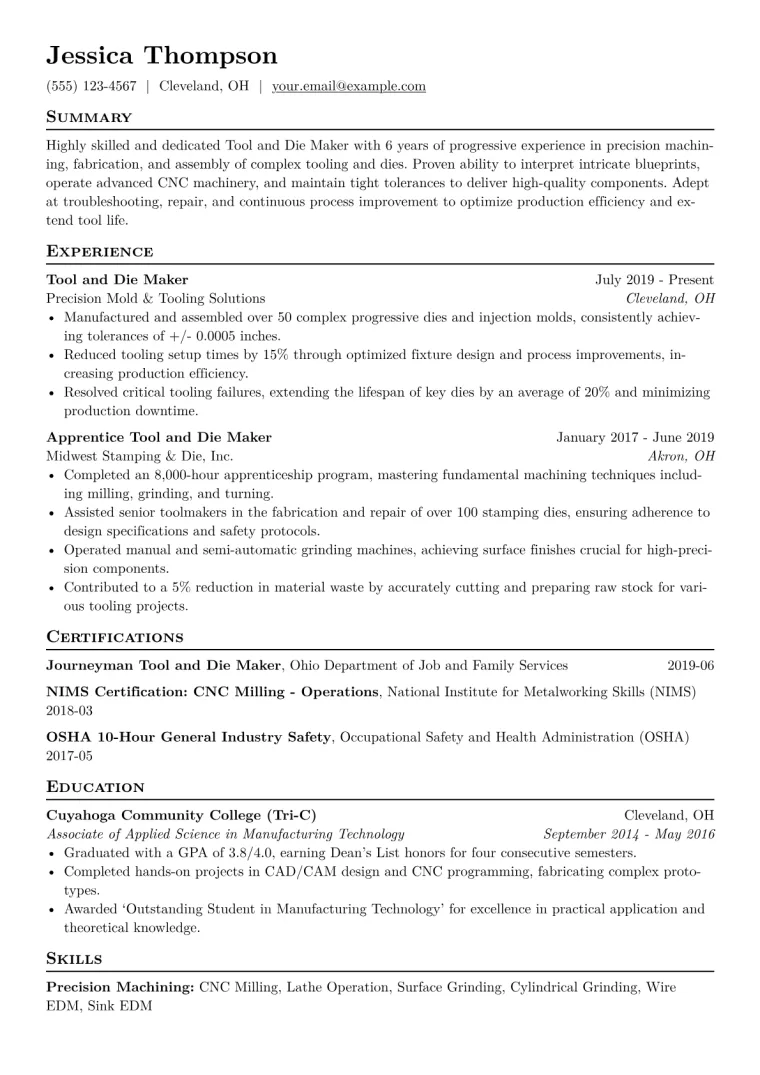
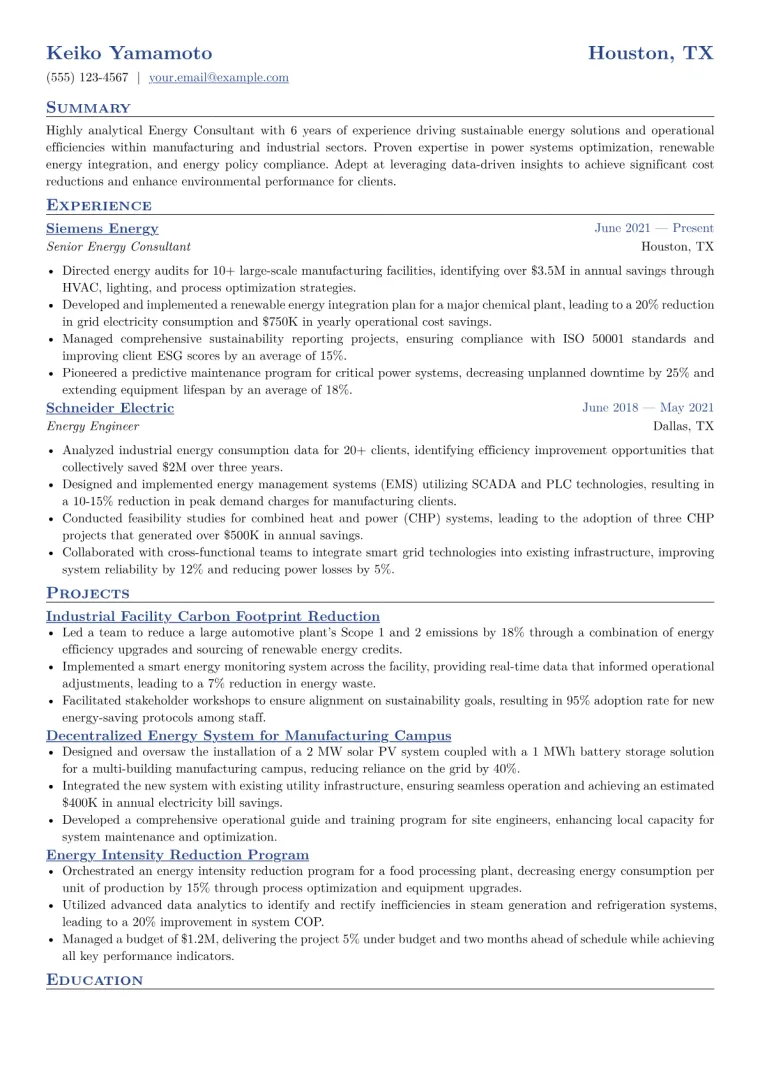
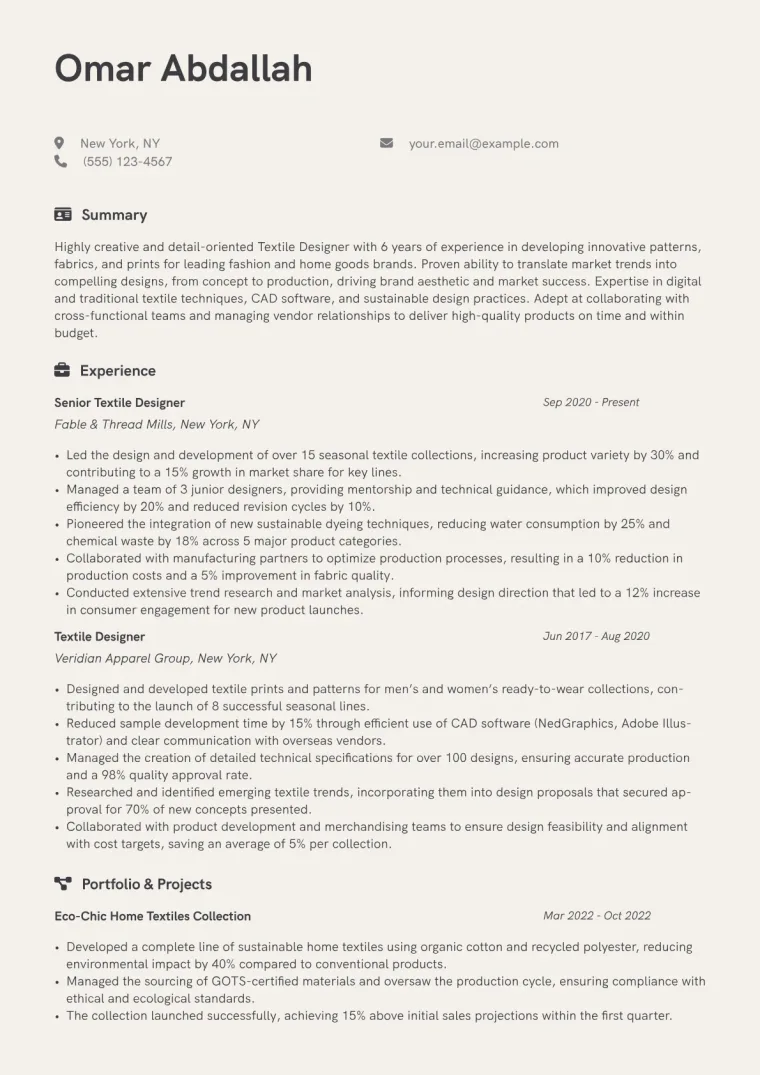
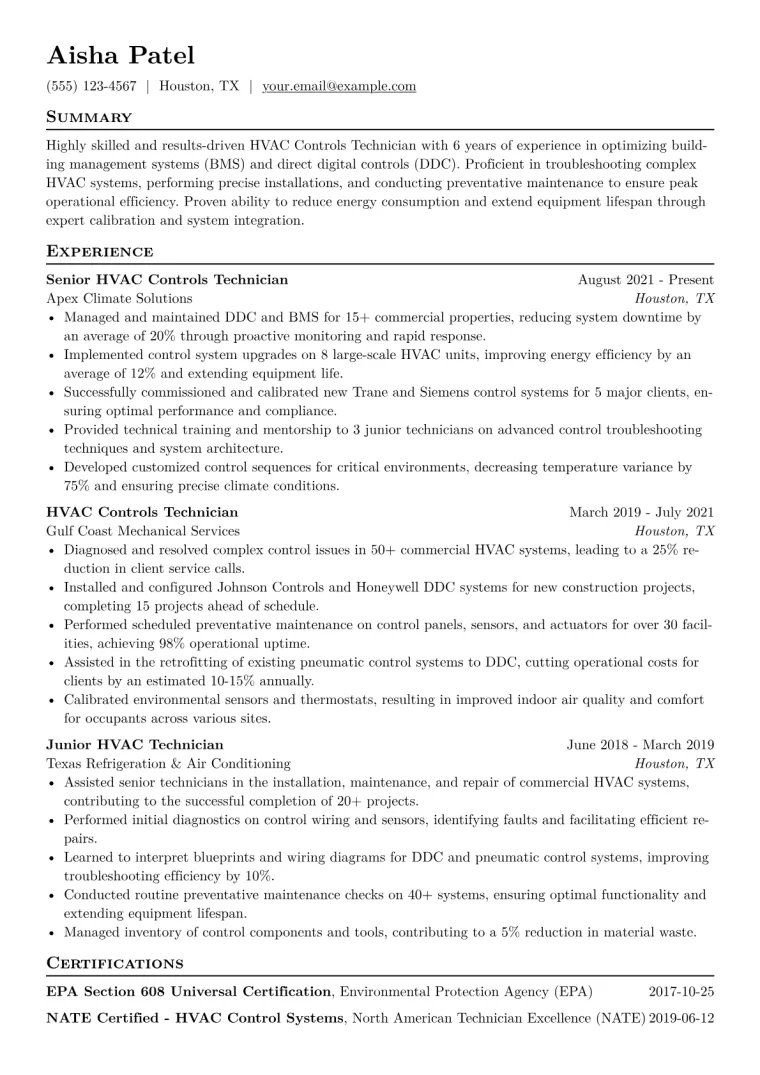
Three complete resumes, each in a different design.
Free to use. No download fee.
Editorial Notes
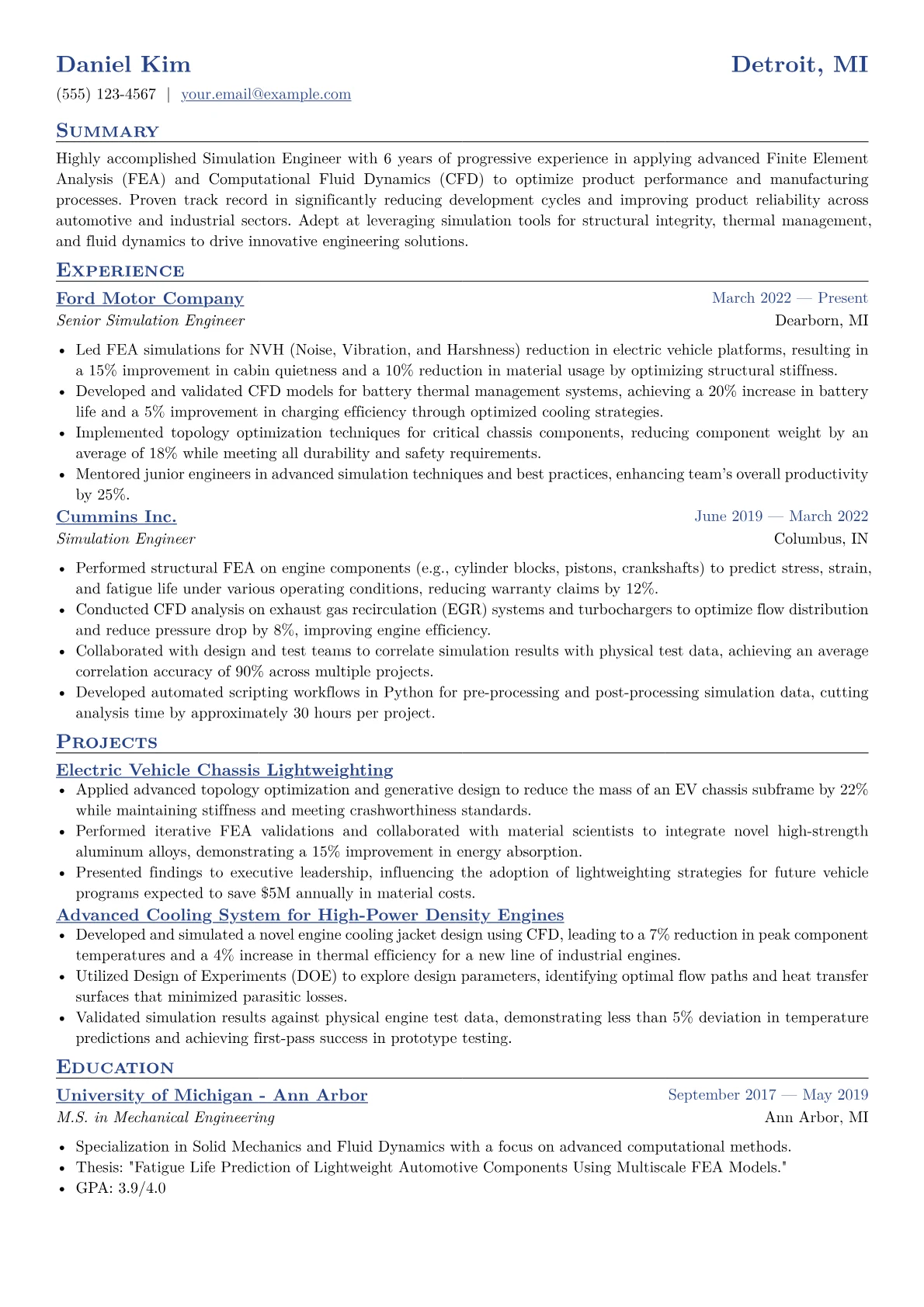
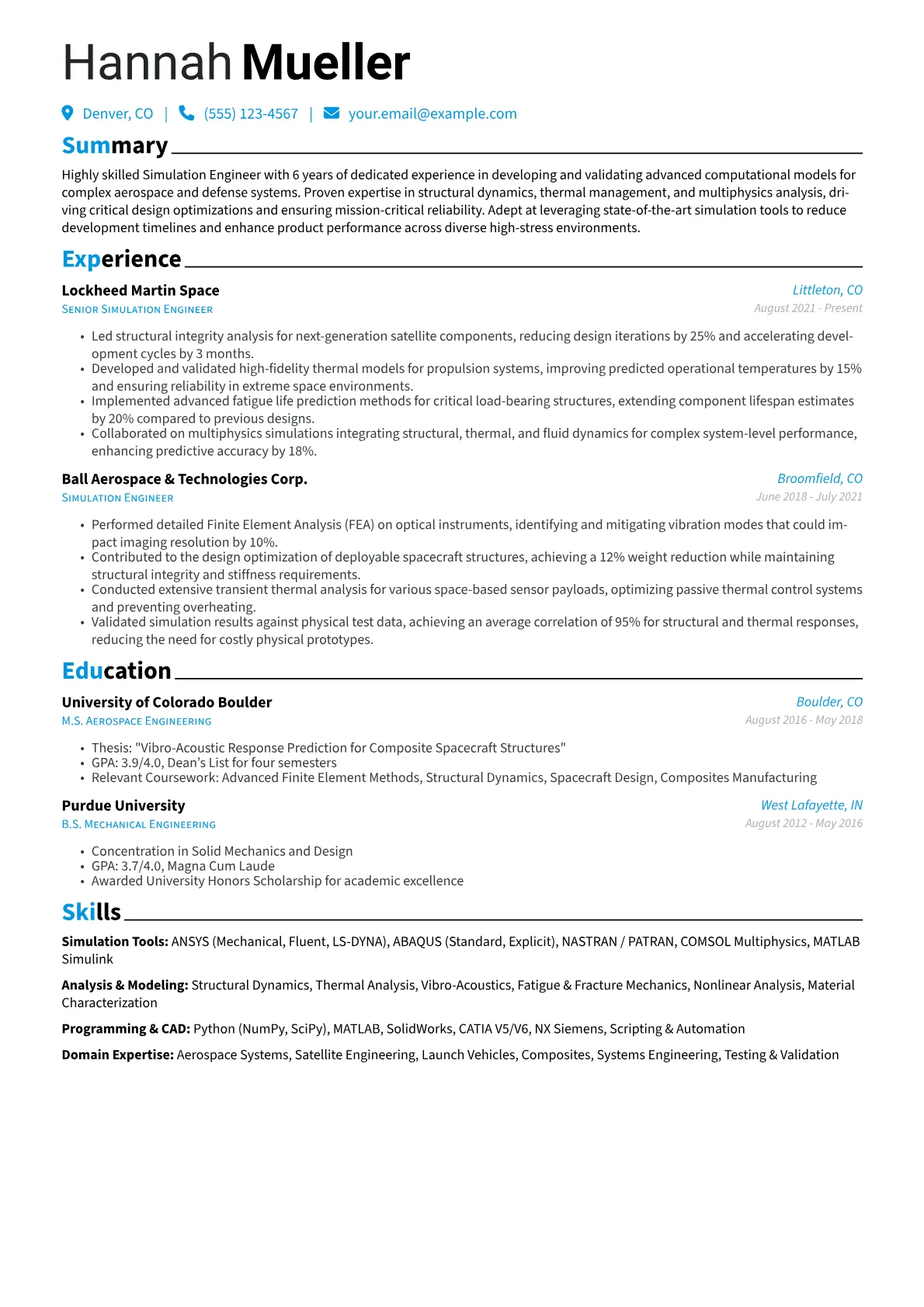
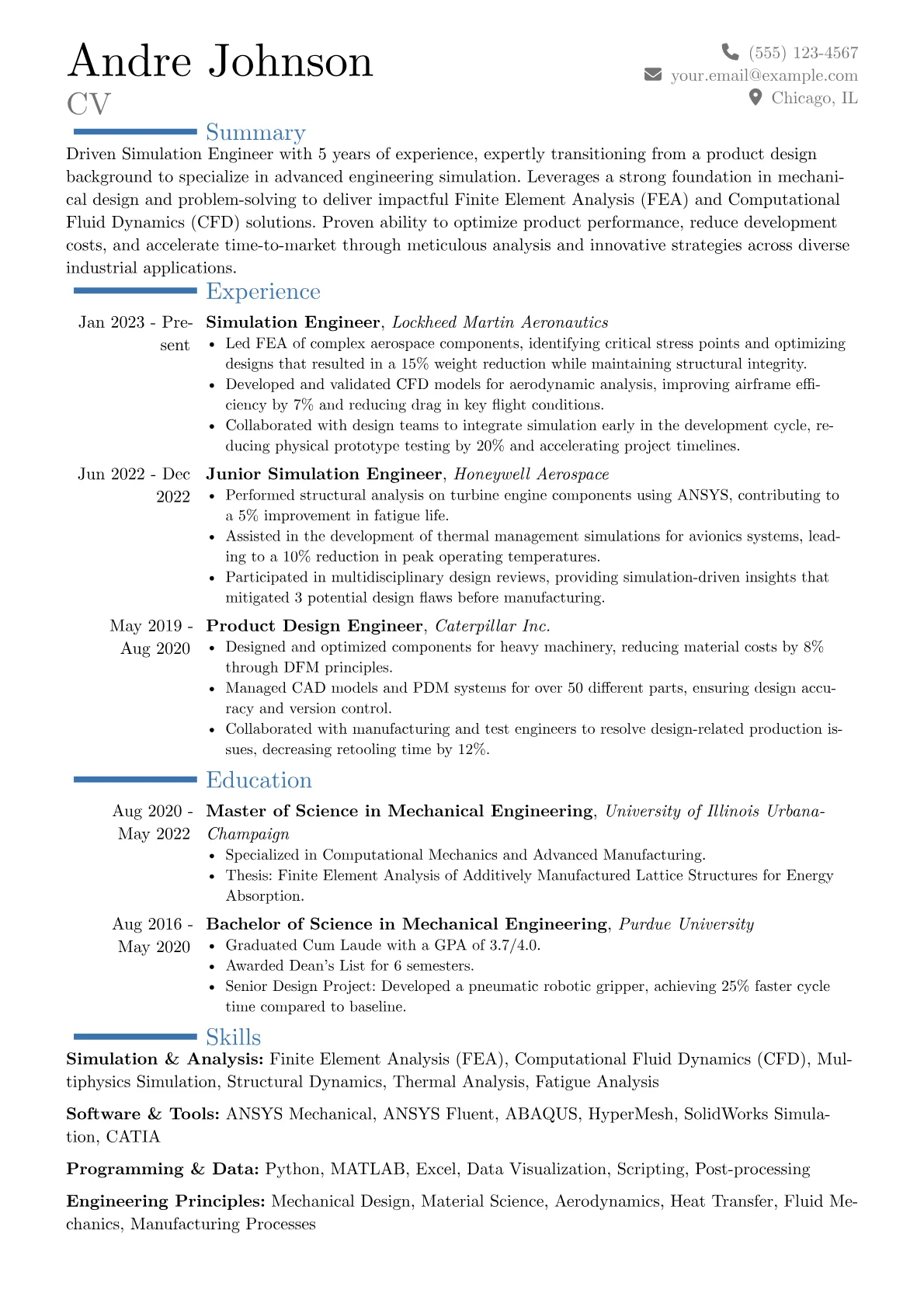
Crafting an effective resume for a mid-level Simulation Engineer in manufacturing demands a focus on quantifiable impact. Hiring managers specifically seek evidence of how simulations have optimized processes, reduced costs, or improved product quality. Resumes should highlight expertise in tools like Ansys, Arena, SolidWorks Simulation, or MATLAB/Simulink, demonstrating application in areas such as Finite Element Analysis (FEA) for structural integrity, Computational Fluid Dynamics (CFD) for process flow, or Discrete Event Simulation for throughput analysis. Mentioning contributions to bottleneck identification, resource allocation, or digital twin initiatives, often supported by industry-specific software certifications, showcases crucial practical experience for this demanding role.
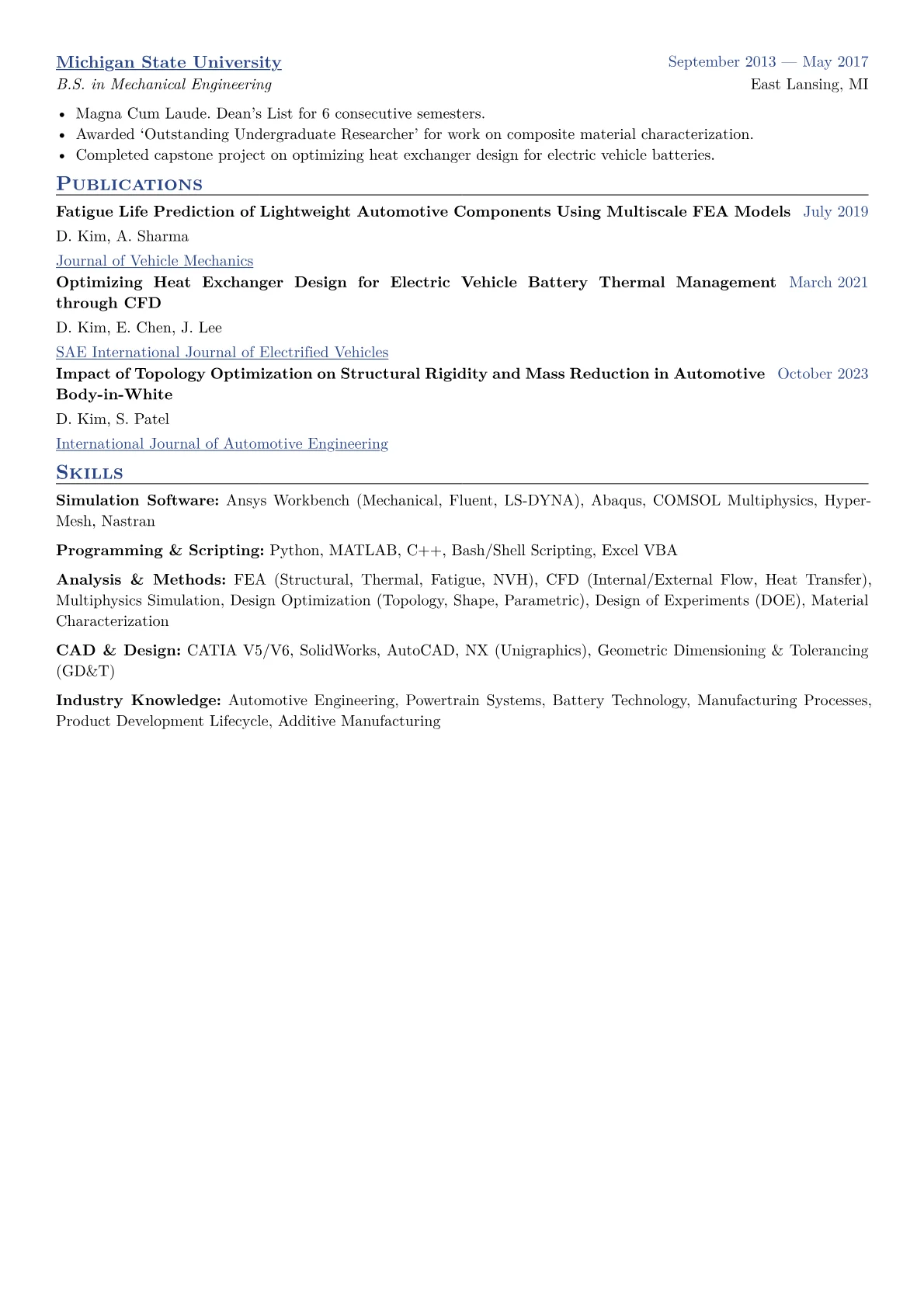
The JobSprout example CV successfully showcases these critical elements. Achievements are precisely quantified, such as "reduced machine downtime by 12% through predictive modeling" or "optimized material flow, decreasing lead time by 15%." Skills are clearly grouped, separating core simulation tools from programming languages like Python or C++, and analytical methods. Key certifications in specific simulation platforms or methodologies are prominently highlighted, reassuring recruiters of specialized expertise. This structured approach effectively communicates the depth of technical skill and real-world problem-solving capability essential for a Simulation Engineer in manufacturing.
This template was built with JobSprout and can be remixed to create your own tailored Simulation Engineer resume.
How useful was this template?
Example by JobSproutSimulation Engineer resume summary example
Highly accomplished Simulation Engineer with 6 years of progressive experience in applying advanced Finite Element Analysis (FEA) and Computational Fluid Dynamics (CFD) to optimize product performance and manufacturing processes. Proven track record in significantly reducing development cycles and improving product reliability across automotive and industrial sectors. Adept at leveraging simulation tools for structural integrity, thermal management, and fluid dynamics to drive innovative engineering solutions.
Simulation Engineer salary by country
| Country | 25th percentile | Median | 75th percentile |
|---|---|---|---|
| US | $123,191 | $147,645 | $162,231 |
| UK | £50,357 | £69,167 | £75,939 |
| Canada | C$97,500 | C$125,000 | C$152,500 |
| Australia | A$140,063 | A$140,125 | A$140,188 |
| Germany | €61,250 | €67,500 | €73,750 |
| France | €50,625 | €56,250 | €63,750 |
| Netherlands | €55,000 | €66,667 | €74,250 |
| Italy | €25,000 | €31,250 | €38,750 |
| Austria | €46,250 | €58,750 | €67,500 |
| New Zealand | NZ$102,500 | NZ$120,000 | NZ$162,500 |
| India | ₹500,000 | ₹1,000,000 | ₹1,750,000 |
| Poland | zł186,440 | zł209,338 | zł232,236 |
Annual salaries in local currency, aggregated from live job postings via Adzuna. Figures refresh continuously and reflect advertised pay, not negotiated offers.
Simulation Engineer resume skills and keywords
Recruiters and applicant tracking systems scan Simulation Engineer resumes for these skills and keywords. Include the ones that match your experience and mirror the wording in the job description. Check your resume against them with the free ATS checker.
Hard skills
Tools & software
Certifications
Soft skills
Market Insights
Simulation Engineer
Salary Range
US market data · Source: Adzuna · Updated Mar 2026
Frequently Asked Questions
What's the best resume structure for a mid-level Simulation Engineer?
What key skills and qualifications should I highlight as a Simulation Engineer?
How can I write strong achievement bullets or a professional summary for this role?
Which optional sections, like certifications or a portfolio, are important for a Simulation Engineer?
How can JobSprout's 'Remix with AI' feature help me tailor my Simulation Engineer resume for a specific job?
The blank page is the hard part. Skip it.
Free to use. No download fee.
![How to Write a CV for Manufacturing Applications [2026 Guide]](/thumbnails/cv-for-manufacturing-applications.webp)