Stress Engineer Resume Example
 Example by JobSprout
Free to use. No download fee.
Market Insights
Stress Engineer
Salary Range
US market data · Source: Adzuna · Updated Mar 2026
How useful was this template?
Stress Engineer resume samples
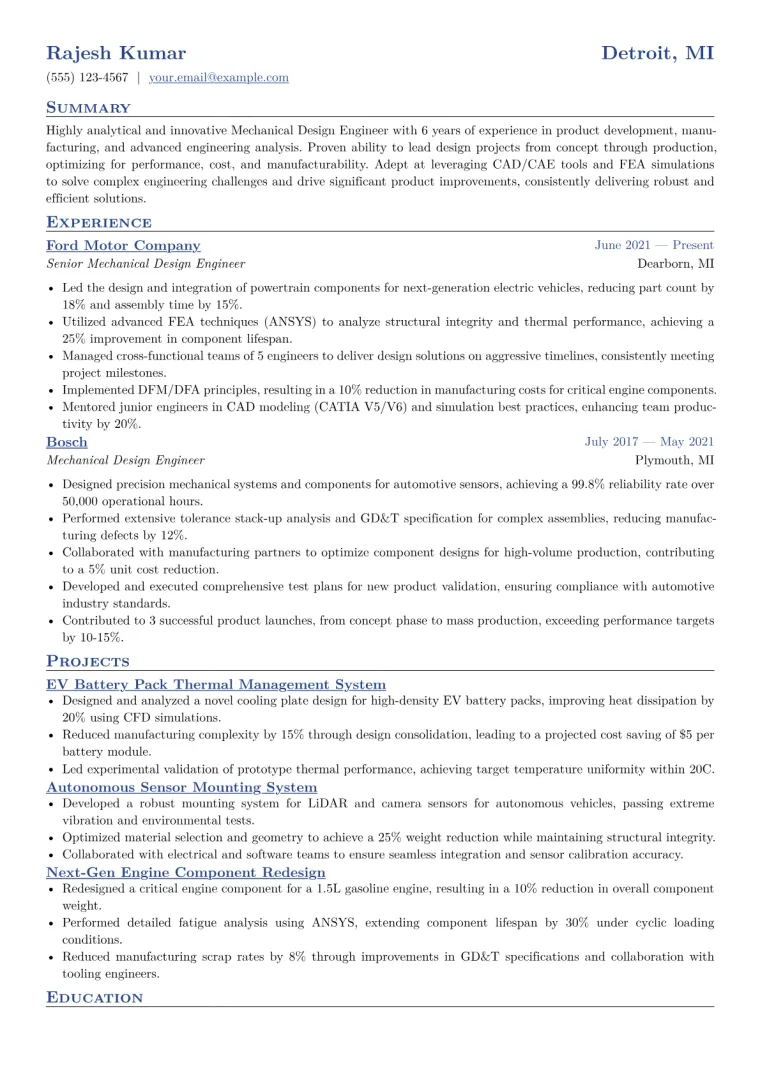
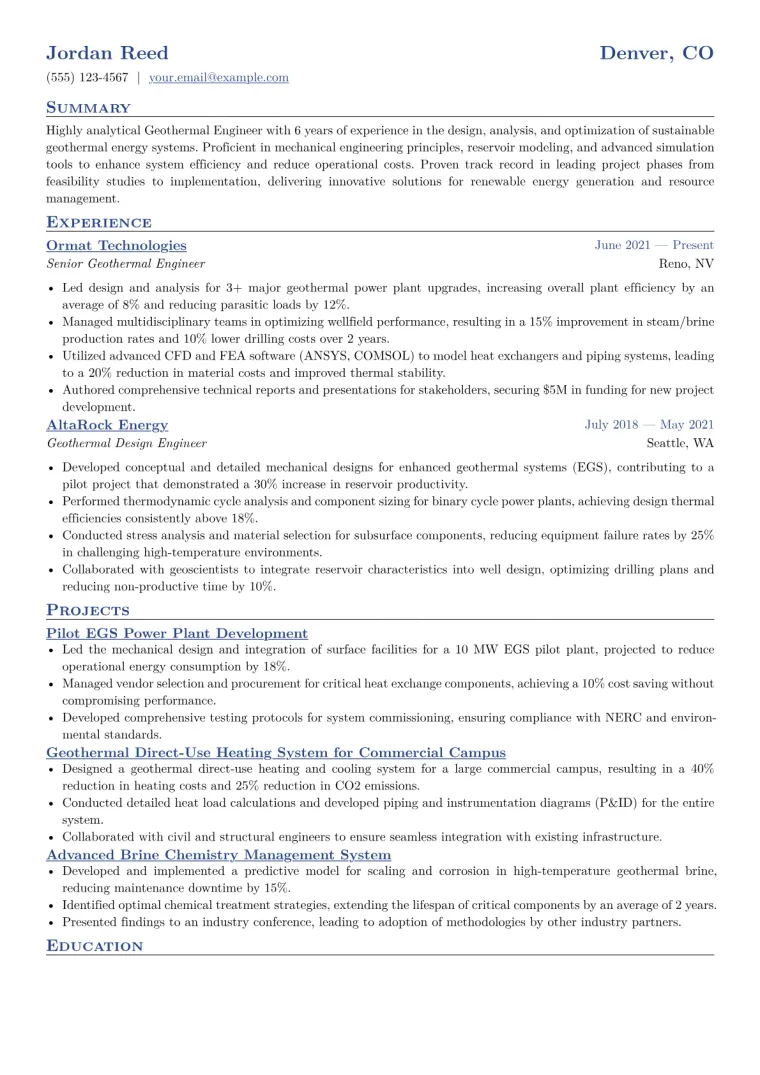
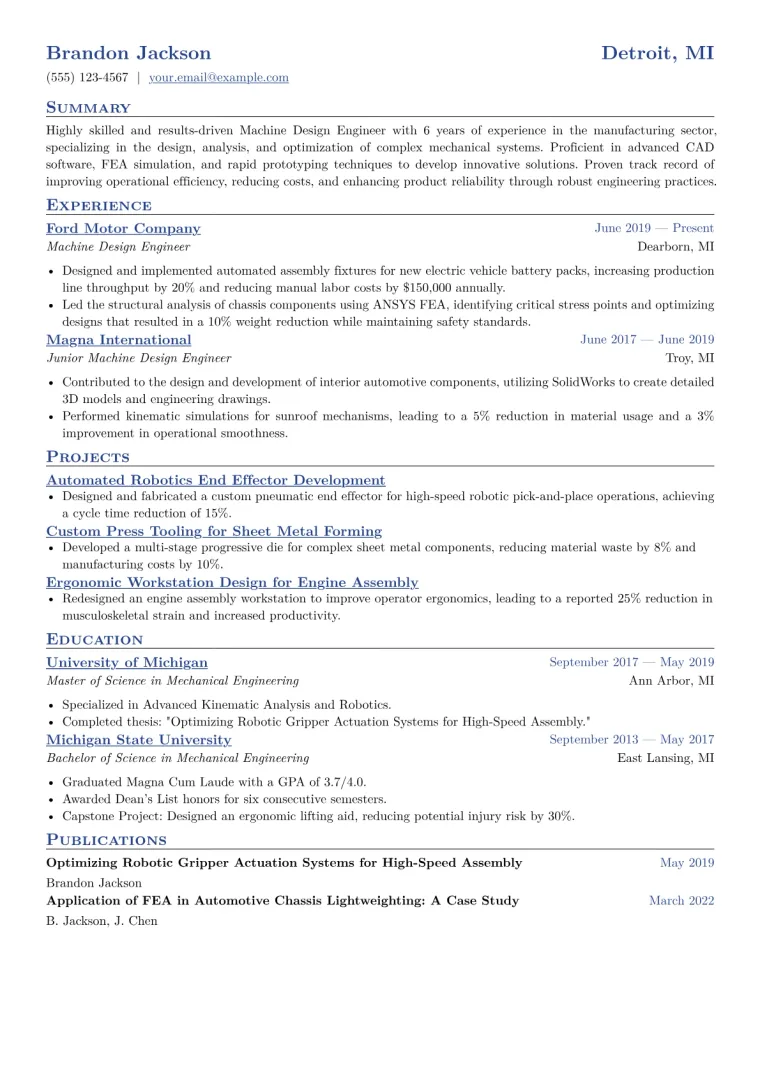
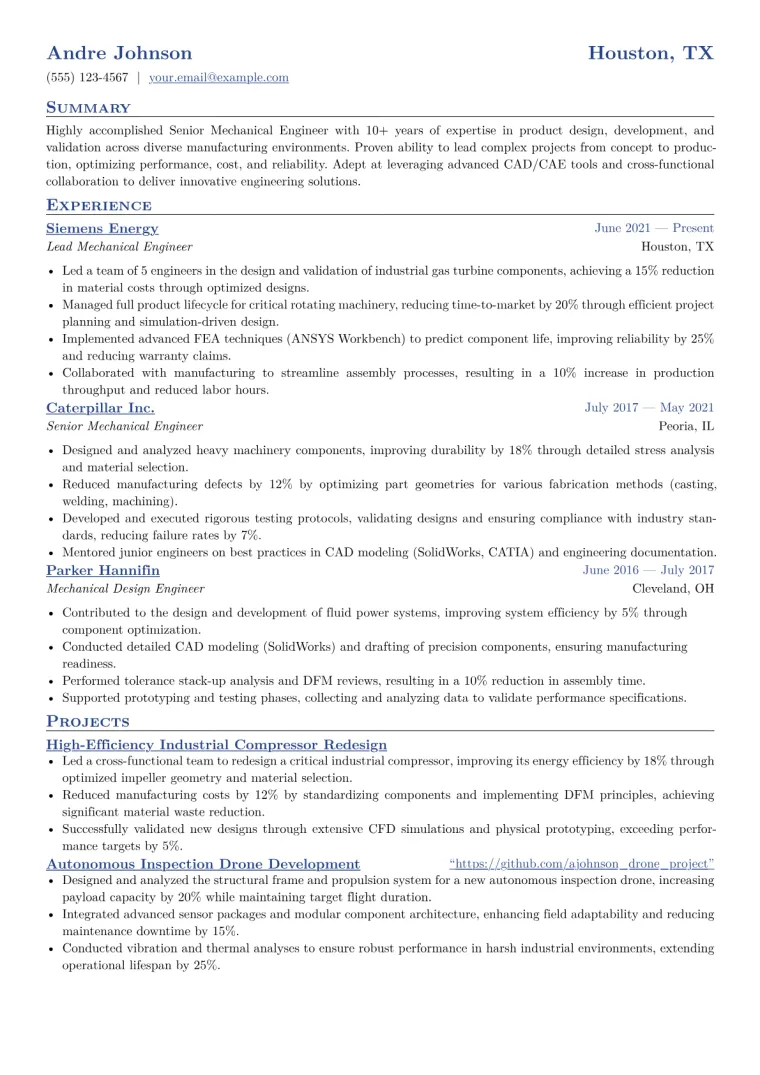
Three complete resumes, each in a different design.
Free to use. No download fee.
Editorial Notes
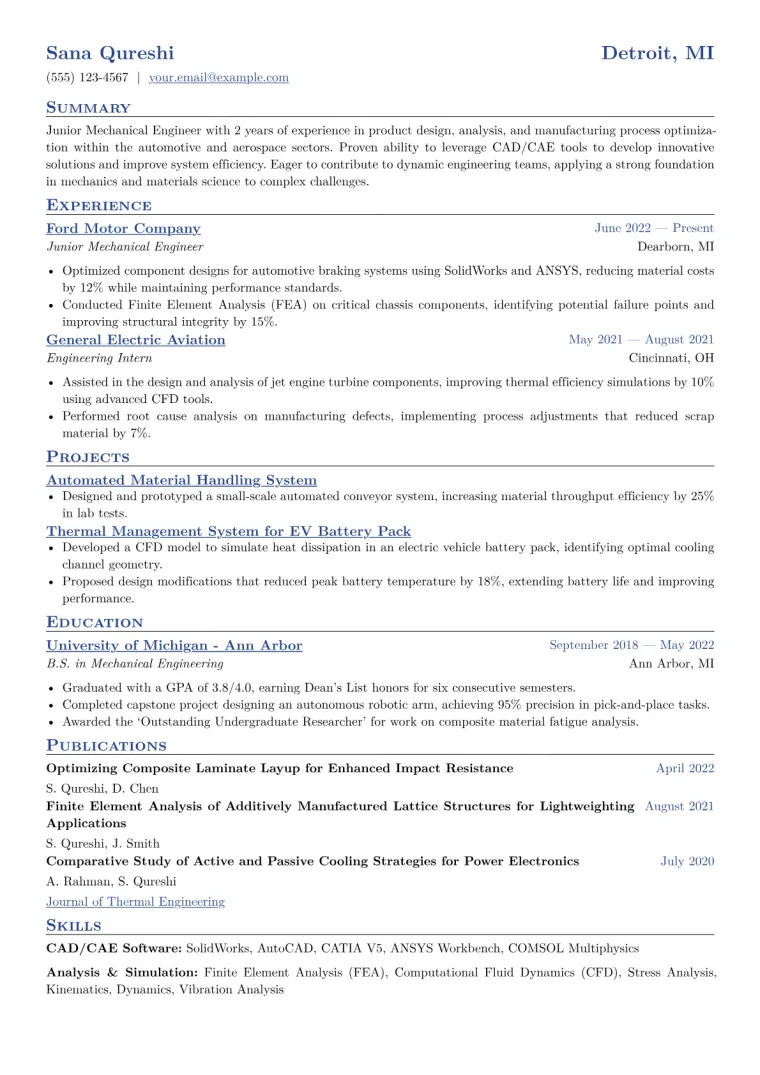
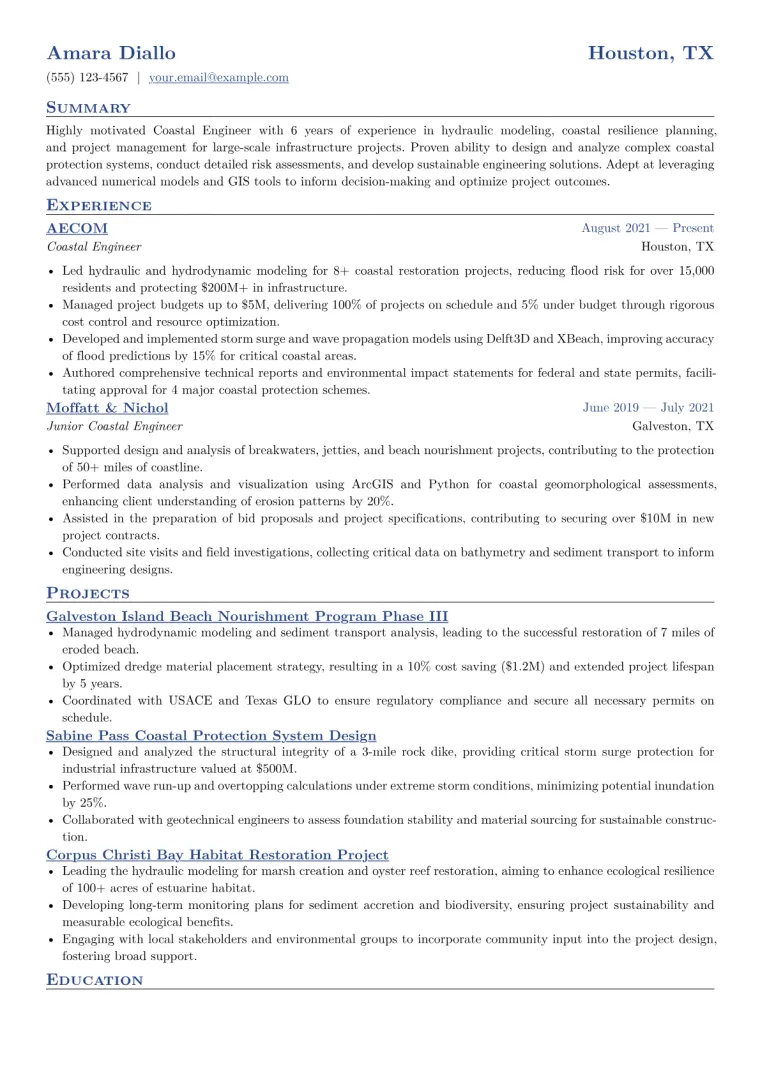
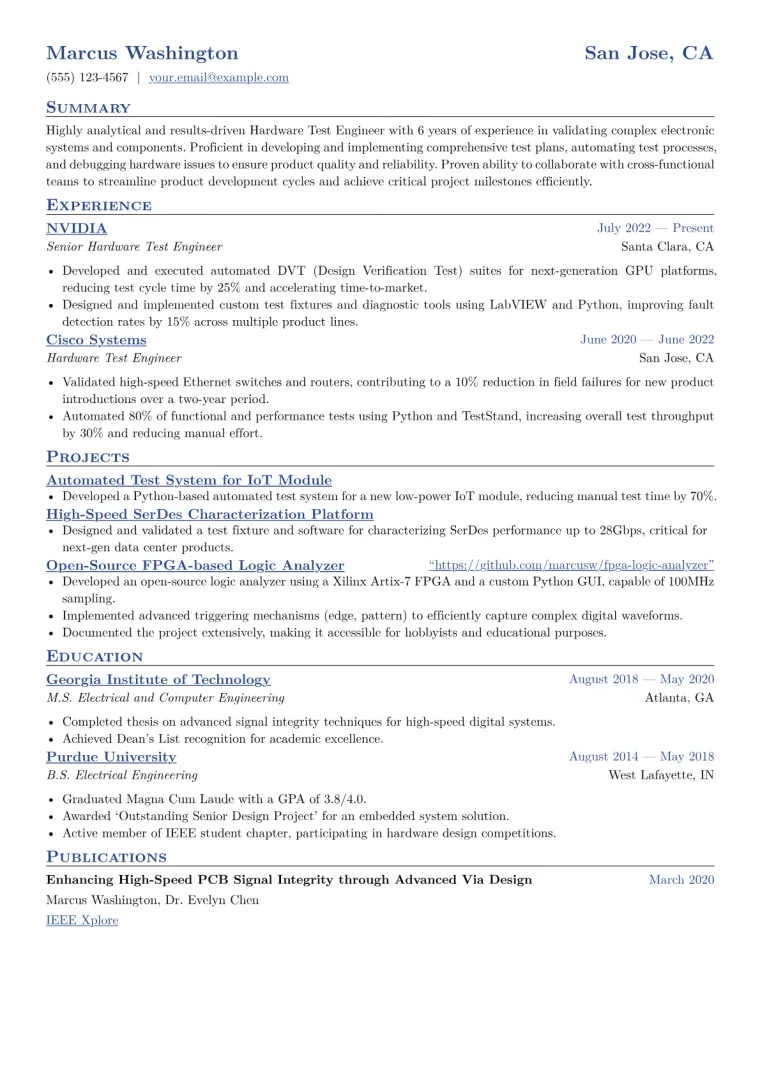
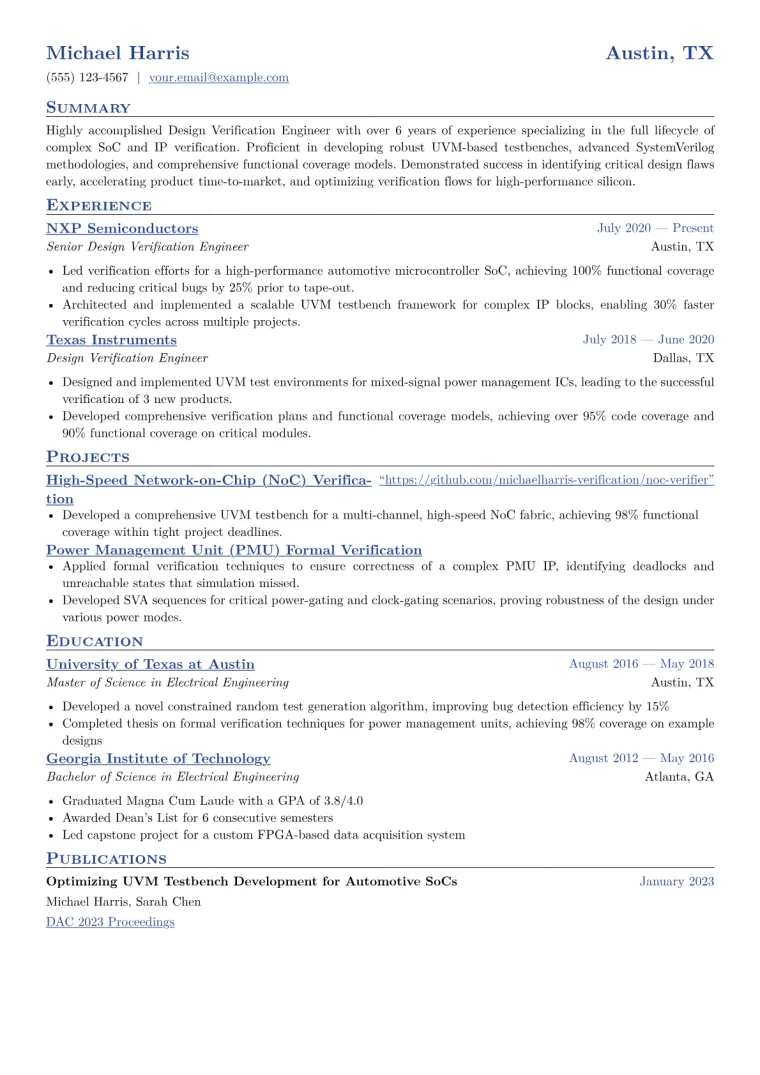
A strong Stress Engineer resume in Manufacturing effectively highlights the critical intersection of technical expertise and practical application. Hiring managers seek candidates who can demonstrate tangible impacts on product reliability, safety, and cost efficiency. Specifics matter: quantifying achievements like "reduced material usage by 15% on X component while maintaining load requirements" or "ensured regulatory compliance for Y product line via rigorous FEA analysis." Key terminology such as finite element analysis (FEA), fatigue life prediction, structural integrity, material characterization, and knowledge of industry standards like ASME or ASTM are expected. Proficiency with specific software like ANSYS, ABAQUS, or Nastran, alongside CAD tools, is also paramount.
This example CV excels by clearly segmenting technical proficiencies, making it easy for recruiters to identify relevant software and analysis methods. Achievements are consistently quantified, illustrating a direct link between the candidate's work and business outcomes, such as project cost reductions or improved product lifespans. The strategic highlighting of certifications and specialized tools, often in a dedicated technical skills section, immediately conveys specific competencies crucial for a mid-level Stress Engineer. This structure ensures that critical contributions to design validation and risk mitigation are prominently featured.
This template was built with JobSprout and can be remixed to create your own tailored Stress Engineer resume.
How useful was this template?
Example by JobSproutStress Engineer resume summary example
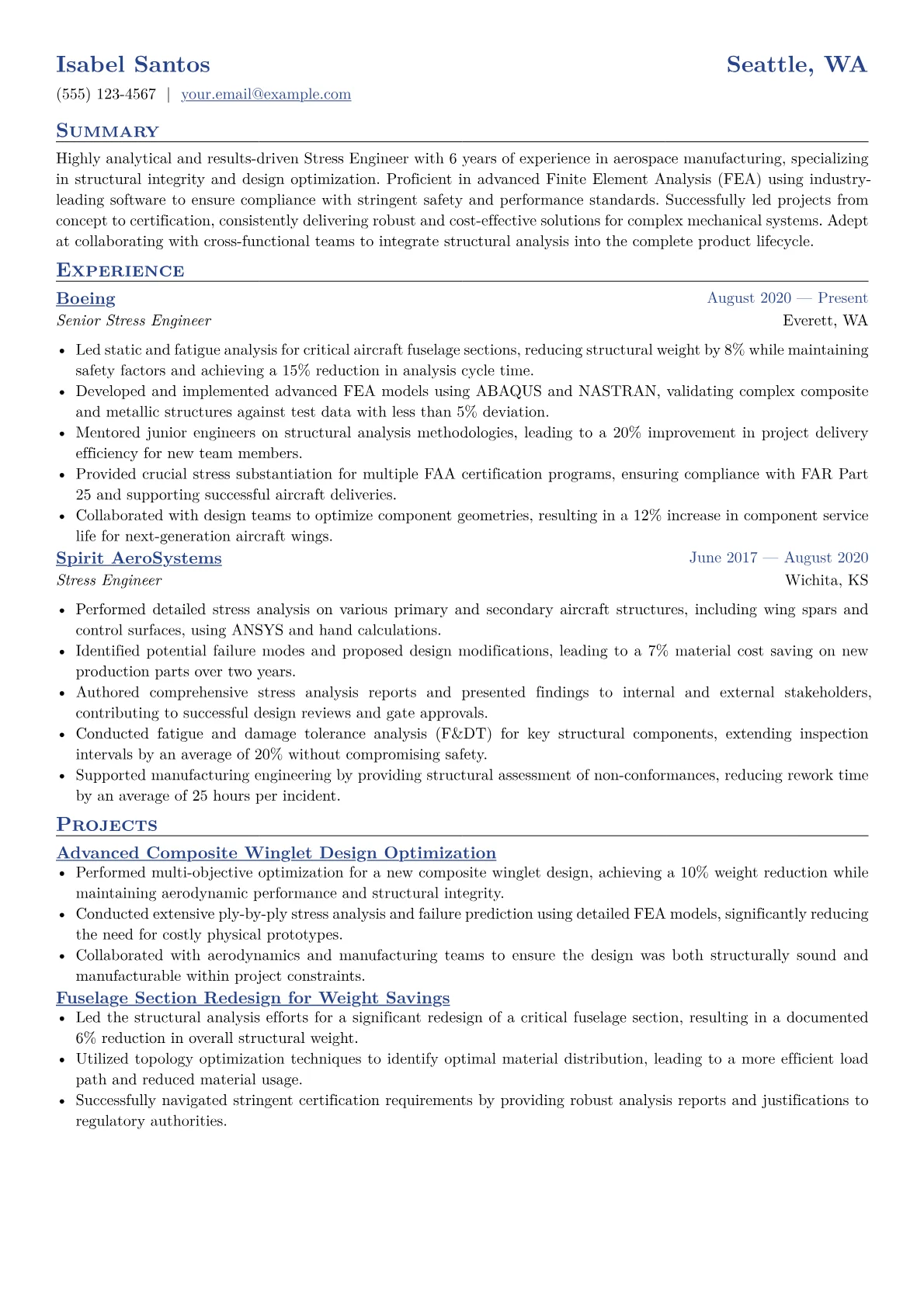
Highly analytical and results-driven Stress Engineer with 6 years of experience in aerospace manufacturing, specializing in structural integrity and design optimization. Proficient in advanced Finite Element Analysis (FEA) using industry-leading software to ensure compliance with stringent safety and performance standards. Successfully led projects from concept to certification, consistently delivering robust and cost-effective solutions for complex mechanical systems. Adept at collaborating with cross-functional teams to integrate structural analysis into the complete product lifecycle.
Stress Engineer salary by country
| Country | 25th percentile | Median | 75th percentile |
|---|---|---|---|
| US | $109,412 | $137,143 | $140,630 |
| UK | £55,625 | £71,585 | £78,320 |
| Canada | C$123,770 | C$147,540 | C$171,310 |
| Australia | A$70,857 | A$86,364 | A$120,000 |
| Germany | €77,147 | €84,293 | €91,440 |
| France | €76,250 | €82,500 | €88,750 |
| Netherlands | €33,897 | €38,088 | €44,079 |
| New Zealand | NZ$75,000 | NZ$100,000 | NZ$125,000 |
| India | ₹250,000 | ₹500,000 | ₹750,000 |
Annual salaries in local currency, aggregated from live job postings via Adzuna. Figures refresh continuously and reflect advertised pay, not negotiated offers.
Stress Engineer resume skills and keywords
Recruiters and applicant tracking systems scan Stress Engineer resumes for these skills and keywords. Include the ones that match your experience and mirror the wording in the job description. Check your resume against them with the free ATS checker.
Hard skills
Tools & software
Certifications
Soft skills
Market Insights
Stress Engineer
Salary Range
US market data · Source: Adzuna · Updated Mar 2026
Frequently Asked Questions
What's the ideal resume structure for a mid-level Stress Engineer?
What key skills and qualifications should a mid-level Stress Engineer emphasize?
How can I write a strong professional summary and achievement bullets for this role?
Which optional sections are most important for a Stress Engineer's resume?
How do I tailor this template for a specific Stress Engineer job posting?
The blank page is the hard part. Skip it.
Free to use. No download fee.
![How to Write a CV for Manufacturing Applications [2026 Guide]](/thumbnails/cv-for-manufacturing-applications.webp)