Vibration Engineer Resume Example
 Example by JobSprout
Free to use. No download fee.
Market Insights
Vibration Engineer
Salary Range
US market data · Source: Adzuna · Updated Mar 2026
How useful was this template?
Vibration Engineer resume samples
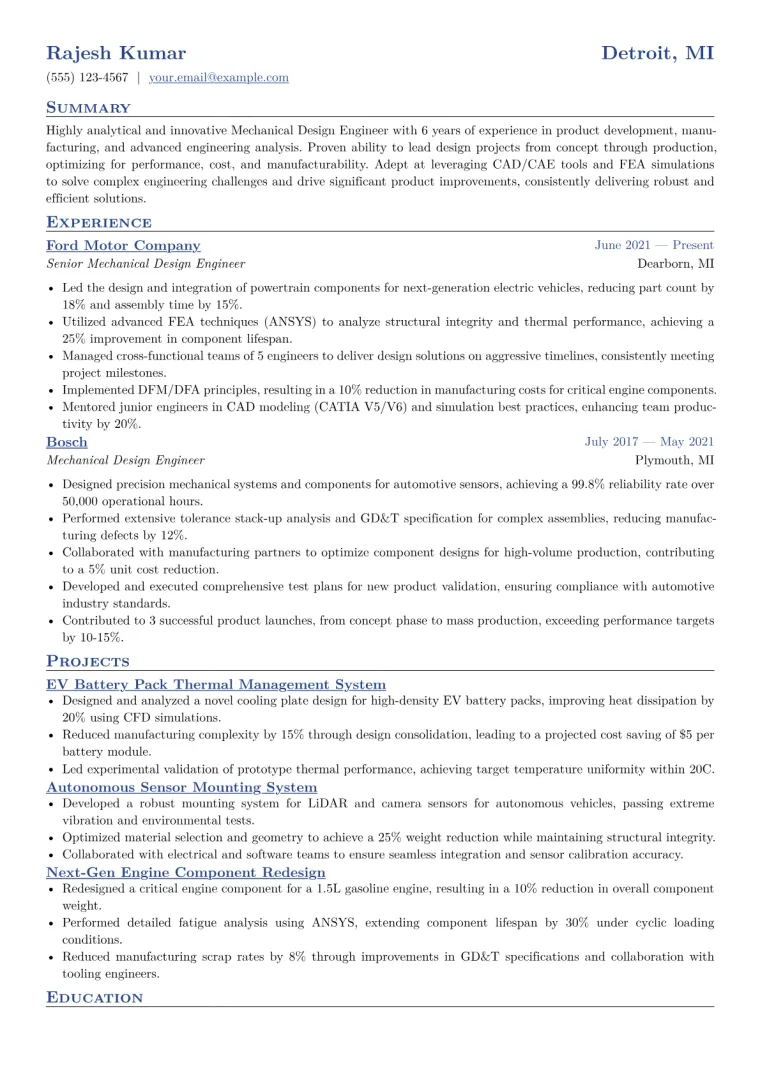
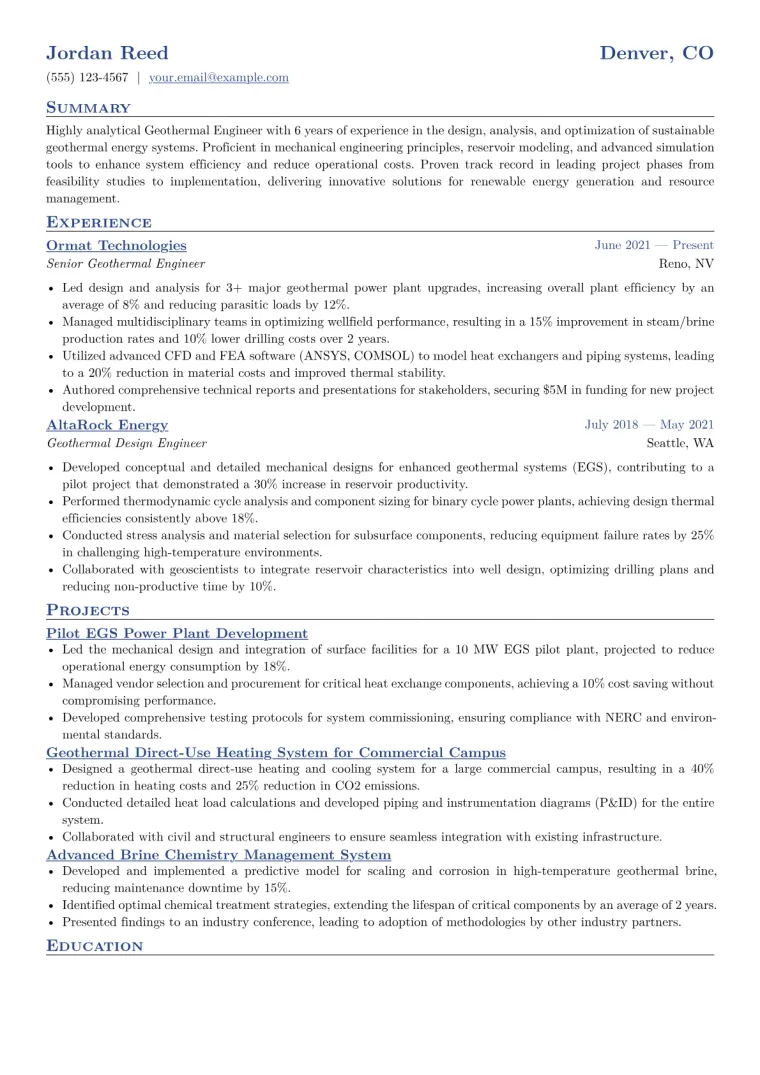
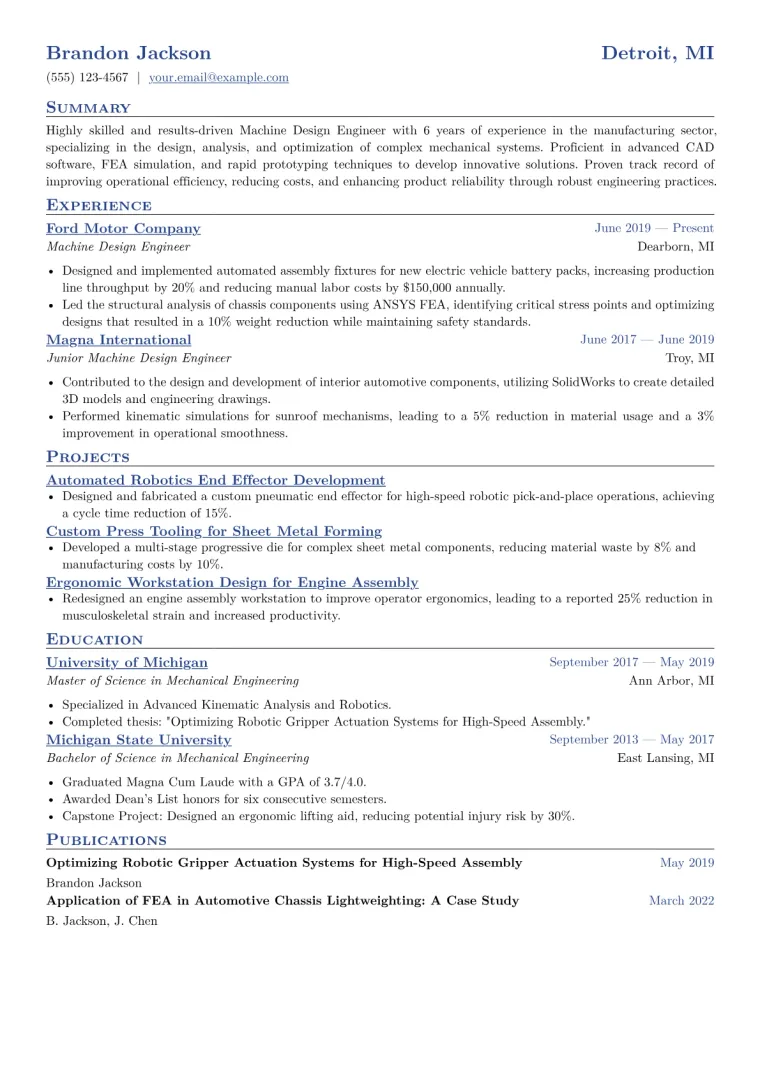
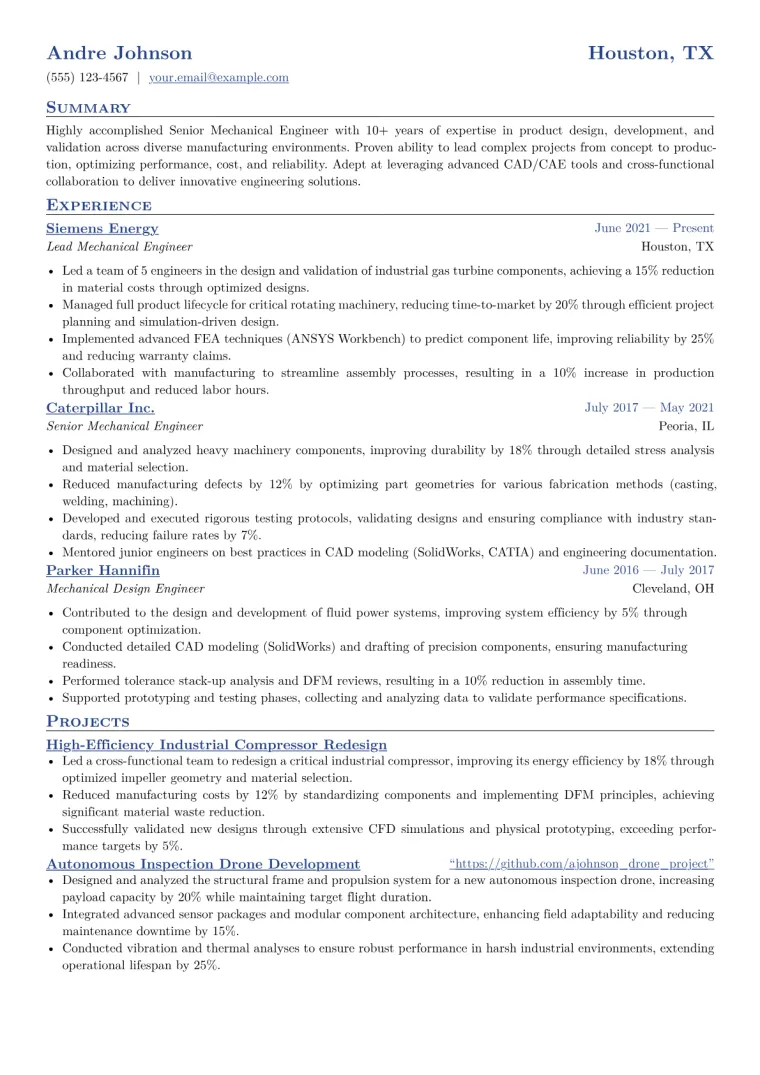
Three complete resumes, each in a different design.
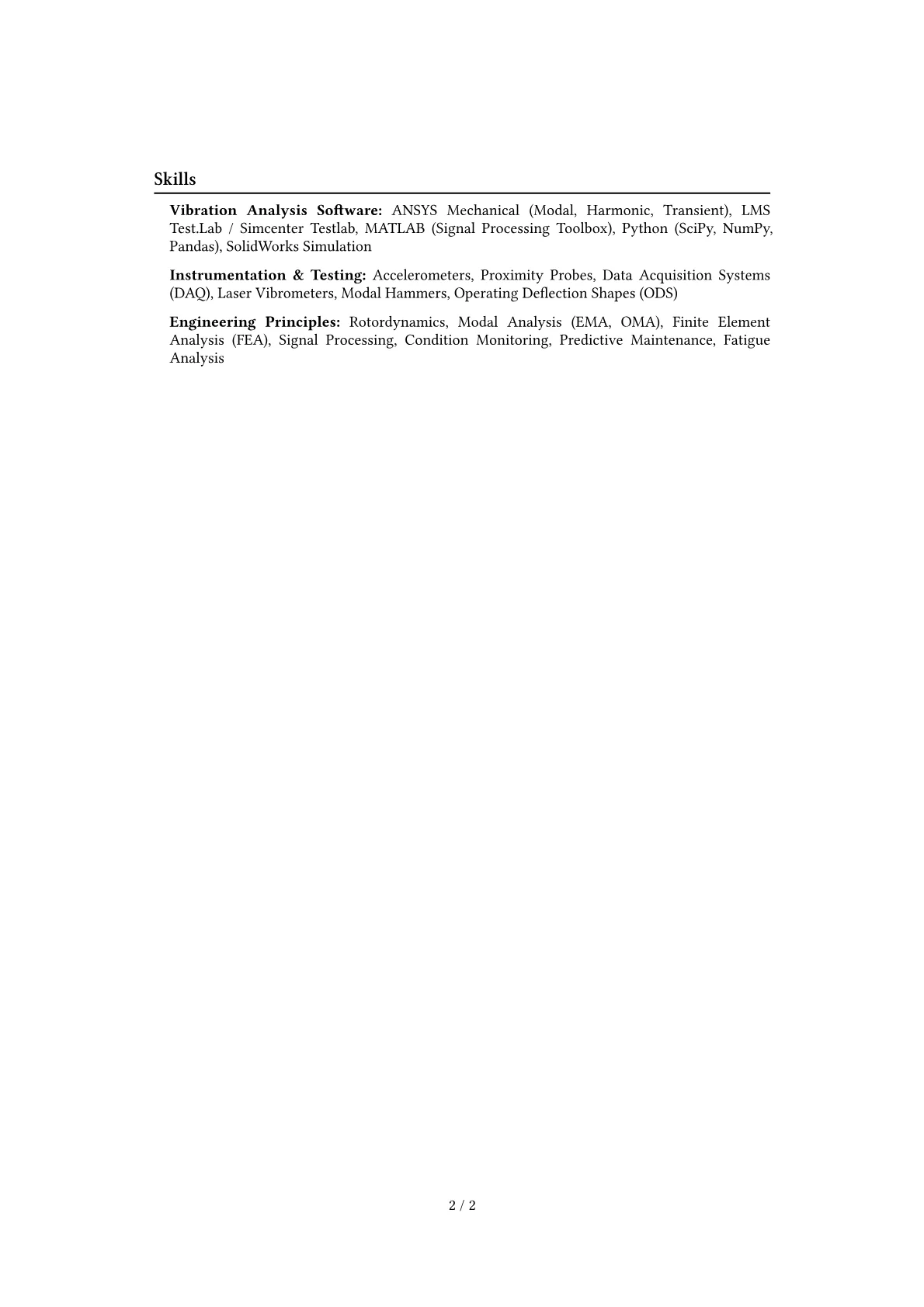
Free to use. No download fee.
Editorial Notes
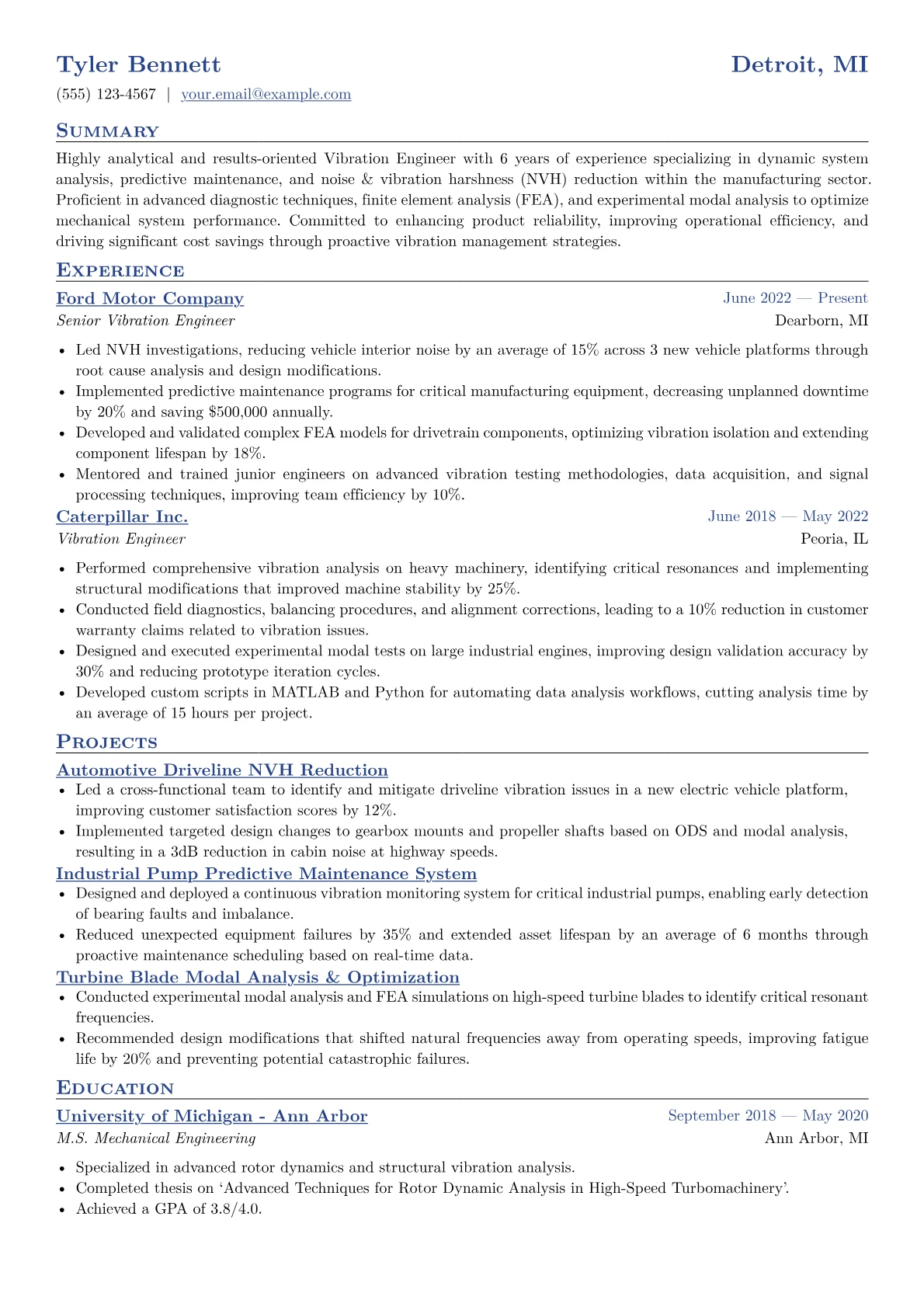
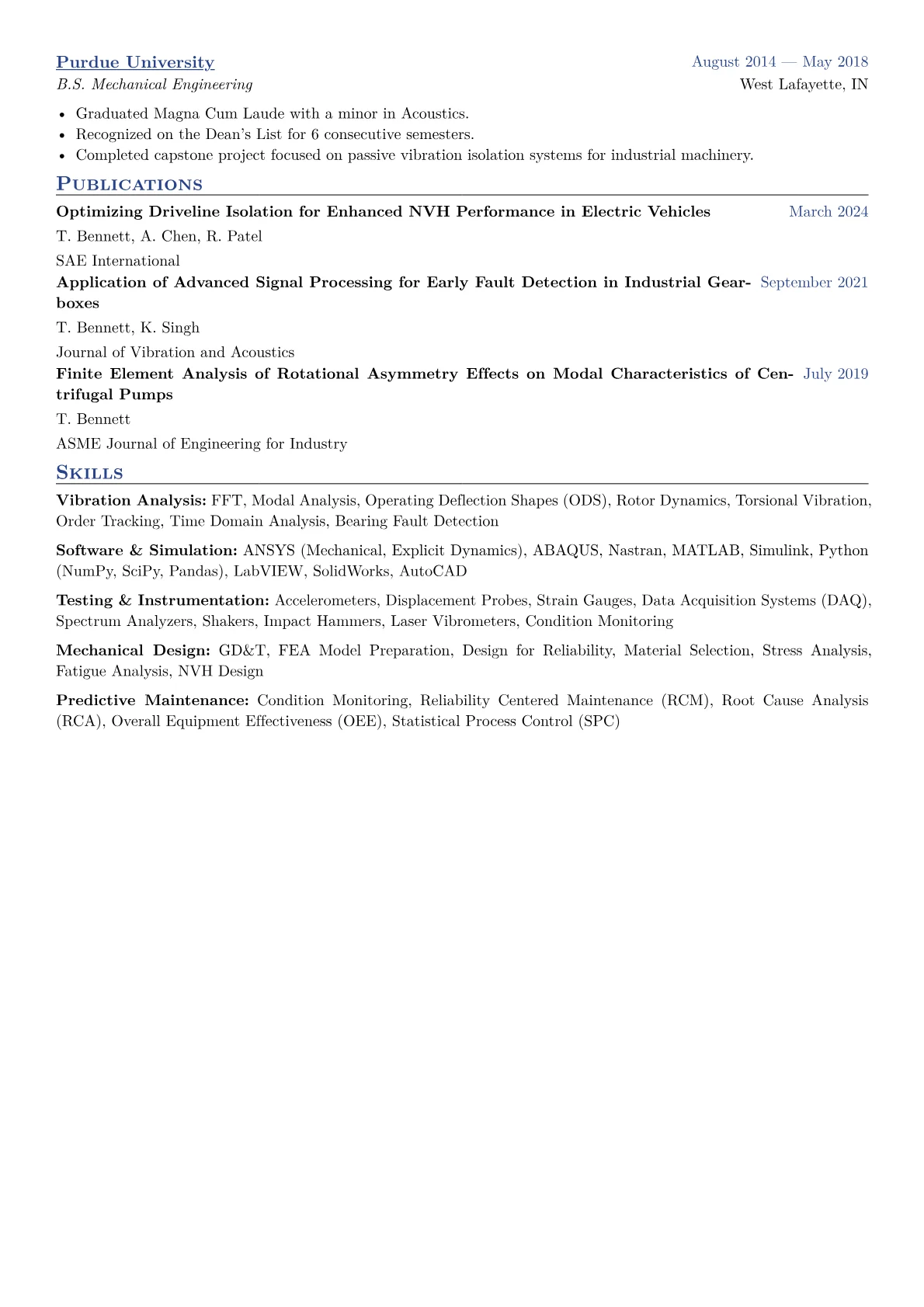
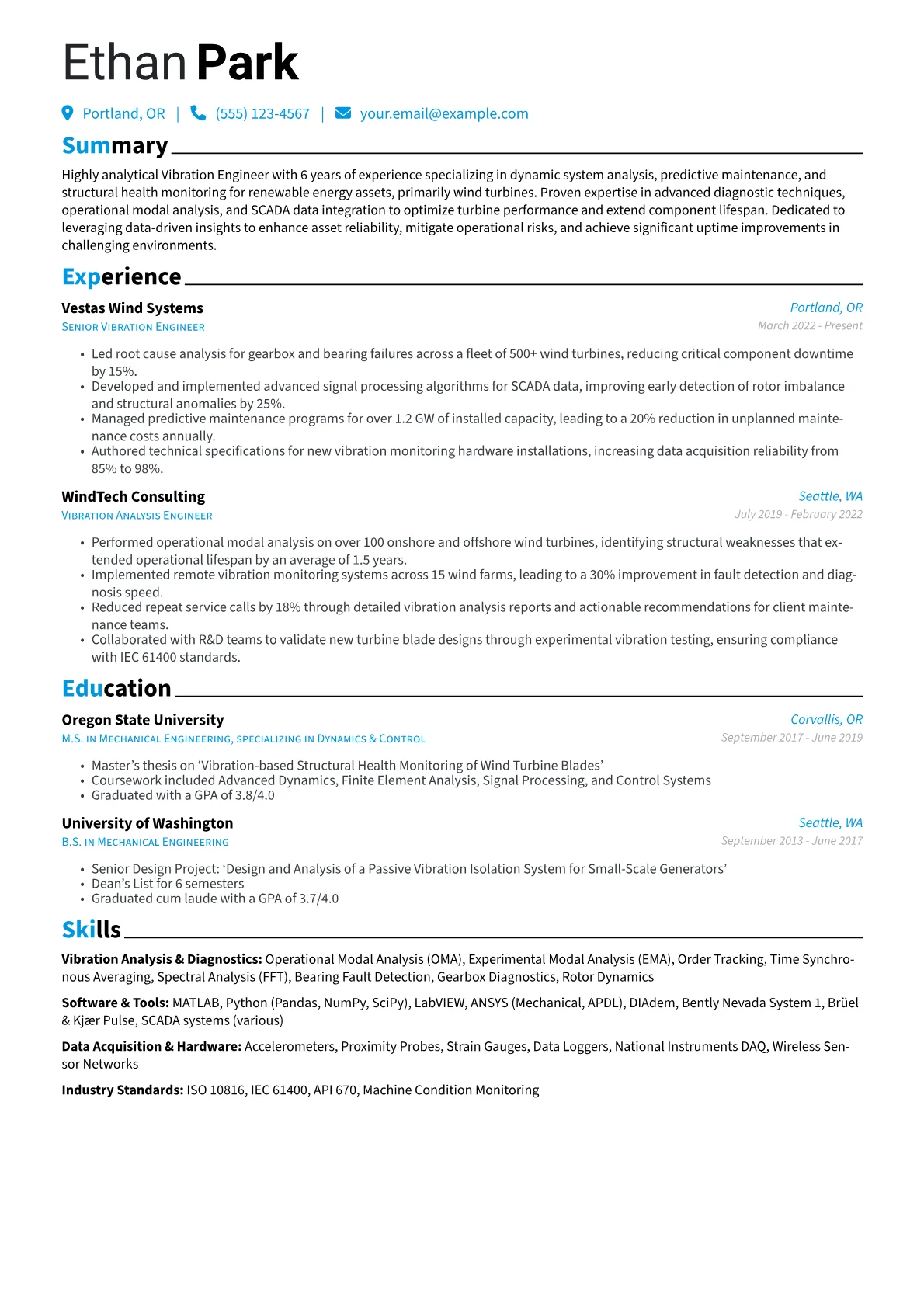
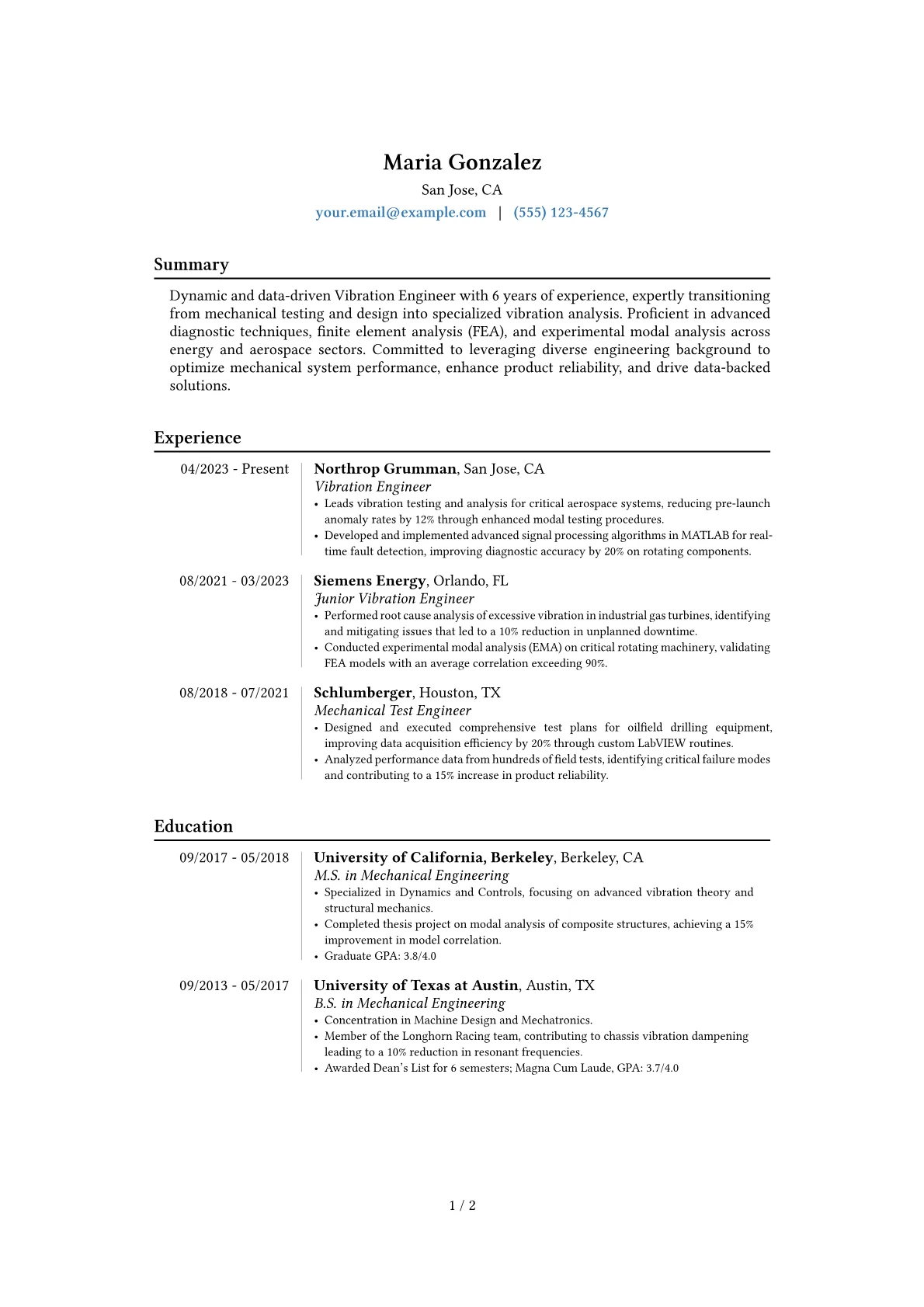
For a mid-level Vibration Engineer in Manufacturing, a compelling resume articulates impact on operational efficiency and asset longevity. Hiring managers specifically seek quantifiable achievements in predictive maintenance, root cause analysis, and reducing unplanned downtime. Essential terminology like FFT analysis, time waveform interpretation, modal analysis, and ODS are crucial, alongside practical experience with balancing and alignment. Certifications such as ISO 18436-2 Category II or III are highly valued, demonstrating expertise in condition monitoring techniques. The resume must showcase problem-solving skills, illustrating how vibration data translates into actionable insights that prevent costly machinery failures and extend equipment lifespans within a production environment.
The JobSprout example resume effectively highlights these critical areas. It excels by presenting achievements with clear metrics, for instance, "Reduced equipment breakdowns by 15% through proactive vibration analysis." Technical skills are thoughtfully grouped, separating specific software proficiencies like SKF @ptitude or AMS Suite from fundamental analytical methods and sensor technologies. Furthermore, industry-specific certifications and advanced tools, such as laser alignment systems and dynamic balancing equipment, are prominently featured, immediately signaling a strong technical foundation and practical application experience vital for a Vibration Engineer role in manufacturing settings.
This template was built with JobSprout and can be remixed to create your own tailored Vibration Engineer resume, ensuring your qualifications stand out.
How useful was this template?
Example by JobSproutVibration Engineer resume summary example
Highly analytical and results-oriented Vibration Engineer with 6 years of experience specializing in dynamic system analysis, predictive maintenance, and noise & vibration harshness (NVH) reduction within the manufacturing sector. Proficient in advanced diagnostic techniques, finite element analysis (FEA), and experimental modal analysis to optimize mechanical system performance. Committed to enhancing product reliability, improving operational efficiency, and driving significant cost savings through proactive vibration management strategies.
Vibration Engineer salary by country
| Country | 25th percentile | Median | 75th percentile |
|---|---|---|---|
| US | $86,667 | $120,000 | $147,500 |
| UK | £46,059 | £60,012 | £72,658 |
| Canada | C$86,152 | C$113,871 | C$140,800 |
| Australia | A$101,935 | A$126,667 | A$147,857 |
| Germany | €59,500 | €70,570 | €77,887 |
| France | €37,875 | €44,167 | €49,750 |
| Netherlands | €55,000 | €66,667 | €74,250 |
| Italy | €25,000 | €31,250 | €38,750 |
| Austria | €46,250 | €58,750 | €67,500 |
| New Zealand | NZ$102,500 | NZ$120,000 | NZ$162,500 |
| India | ₹570,786 | ₹1,167,051 | ₹1,840,563 |
| Poland | zł186,440 | zł209,338 | zł232,236 |
Annual salaries in local currency, aggregated from live job postings via Adzuna. Figures refresh continuously and reflect advertised pay, not negotiated offers.
Vibration Engineer resume skills and keywords
Recruiters and applicant tracking systems scan Vibration Engineer resumes for these skills and keywords. Include the ones that match your experience and mirror the wording in the job description. Check your resume against them with the free ATS checker.
Hard skills
Tools & software
Certifications
Soft skills
Market Insights
Vibration Engineer
Salary Range
US market data · Source: Adzuna · Updated Mar 2026
Frequently Asked Questions
What's the ideal resume format for a mid-level Vibration Engineer?
What key skills should a Vibration Engineer with 3-7 years of experience highlight?
How do I write impactful achievement bullets and a professional summary?
Which optional sections are valuable for a Vibration Engineer's resume?
How can JobSprout's 'Remix with AI' help tailor my Vibration Engineer resume?
The blank page is the hard part. Skip it.
Free to use. No download fee.
![How to Write a CV for Manufacturing Applications [2026 Guide]](/thumbnails/cv-for-manufacturing-applications.webp)