Wildlife Biology Student Resume Example
 Example by JobSprout
Free to use. No download fee.
How useful was this template?
Wildlife Biology Student resume samples
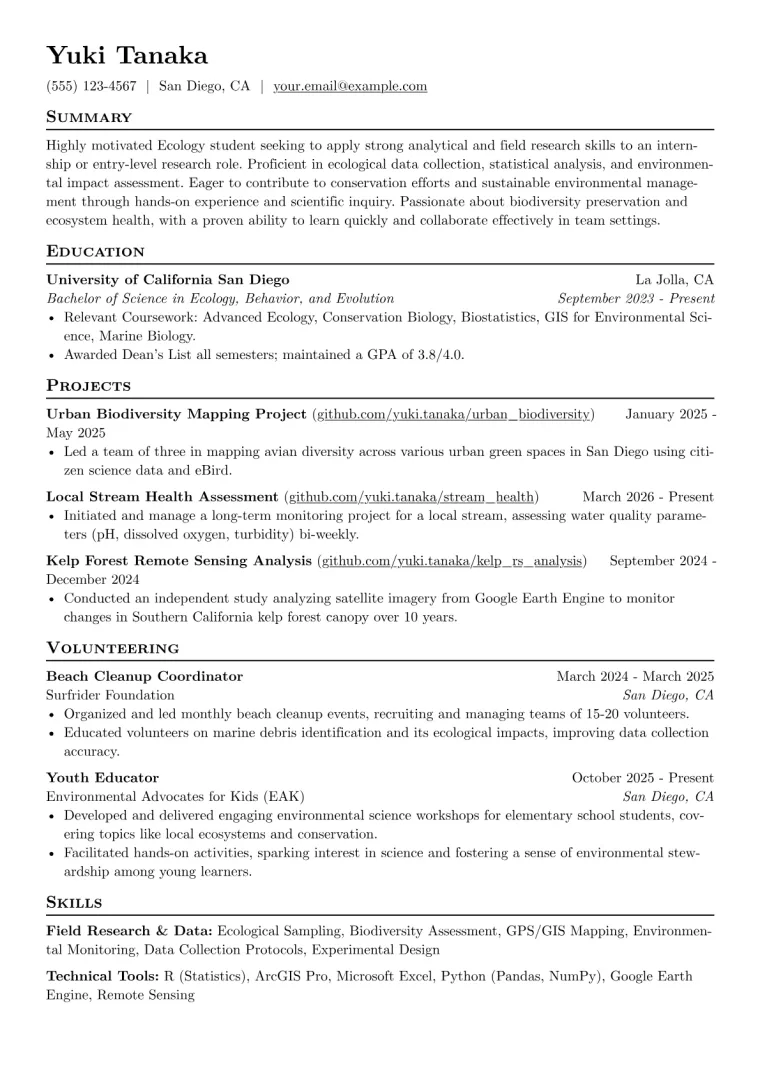
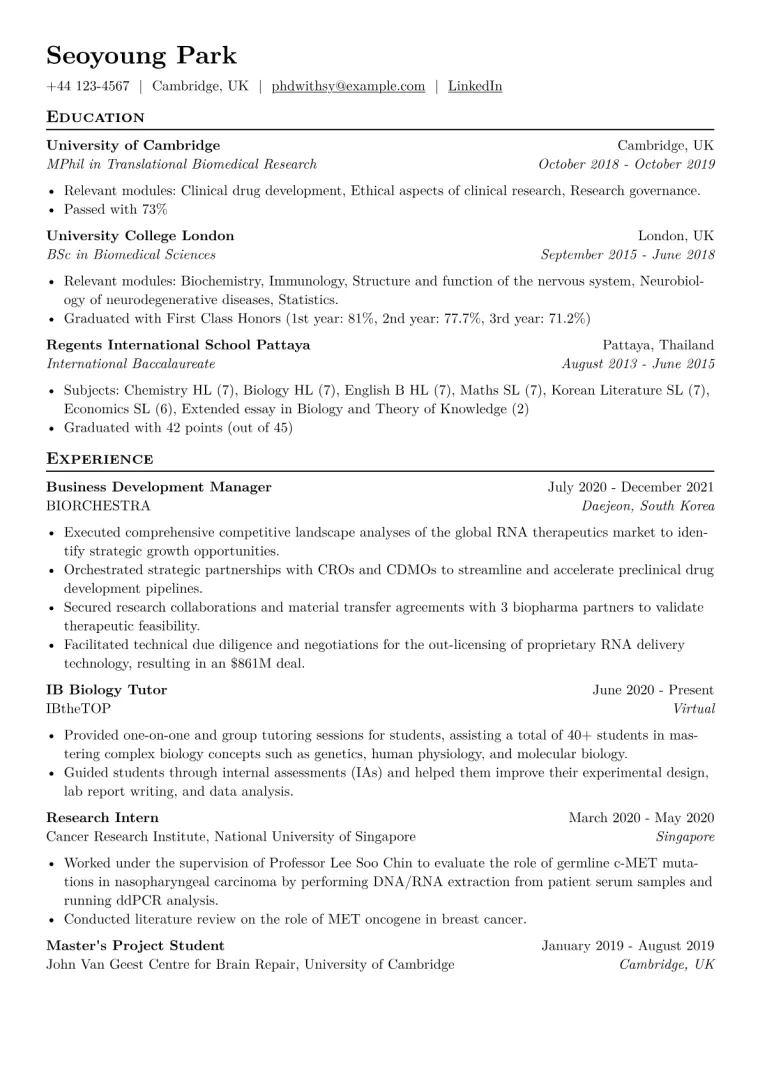
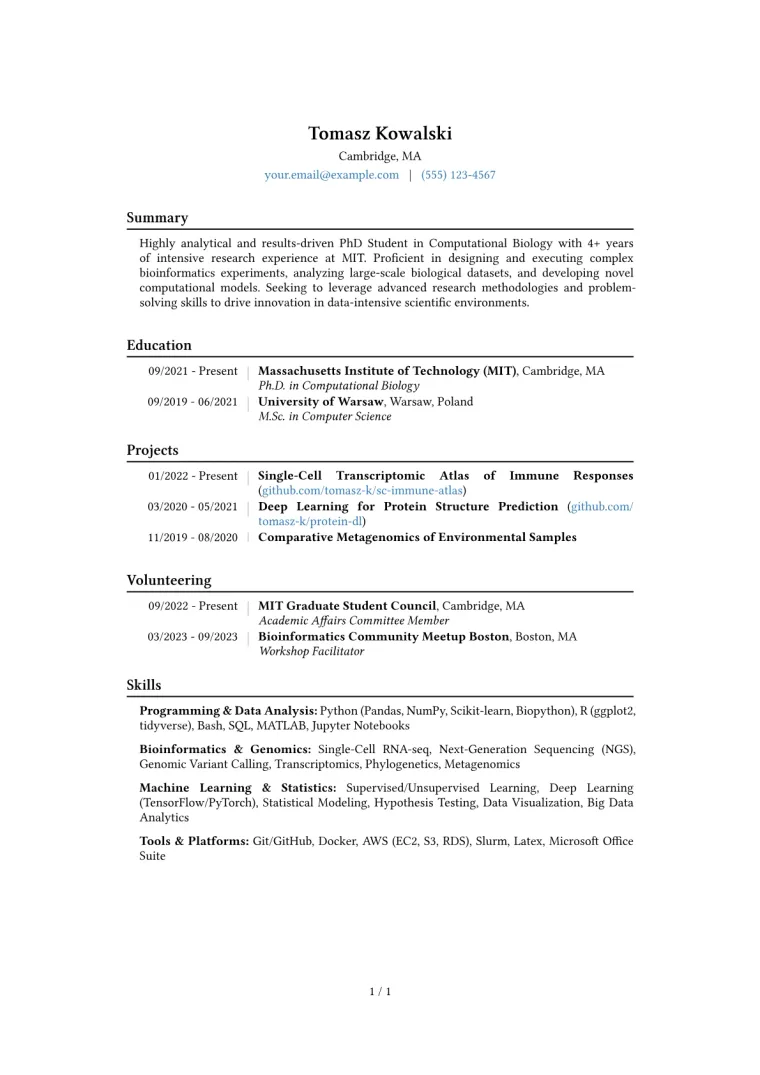
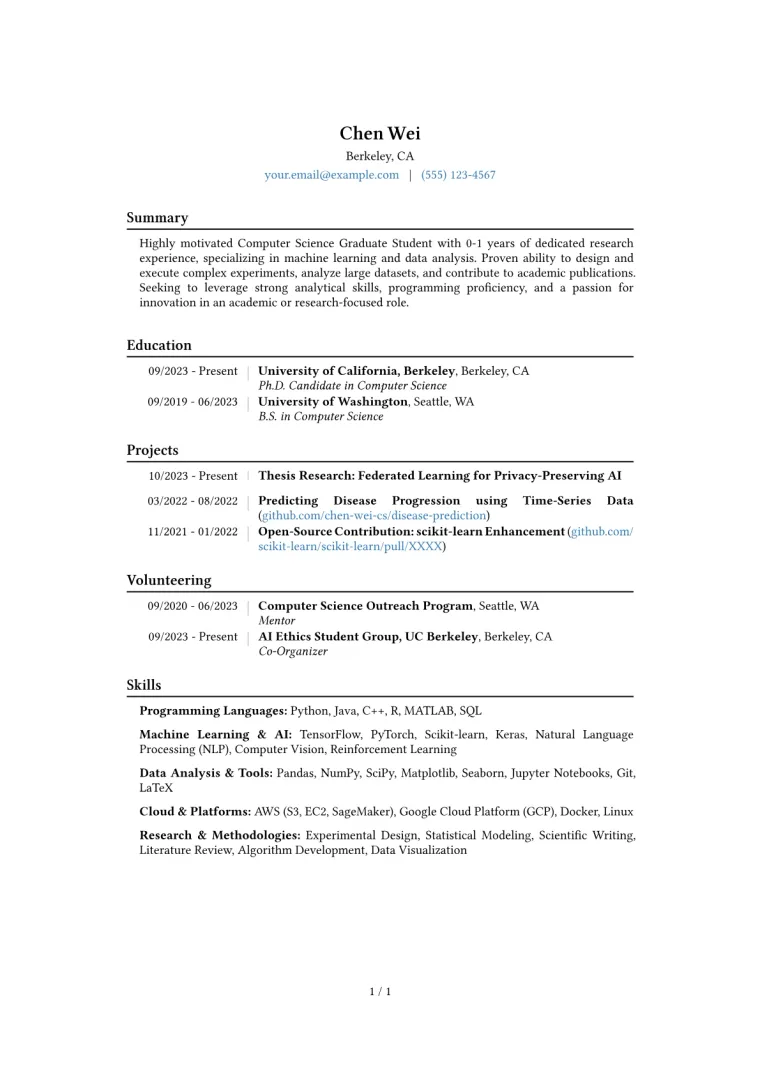
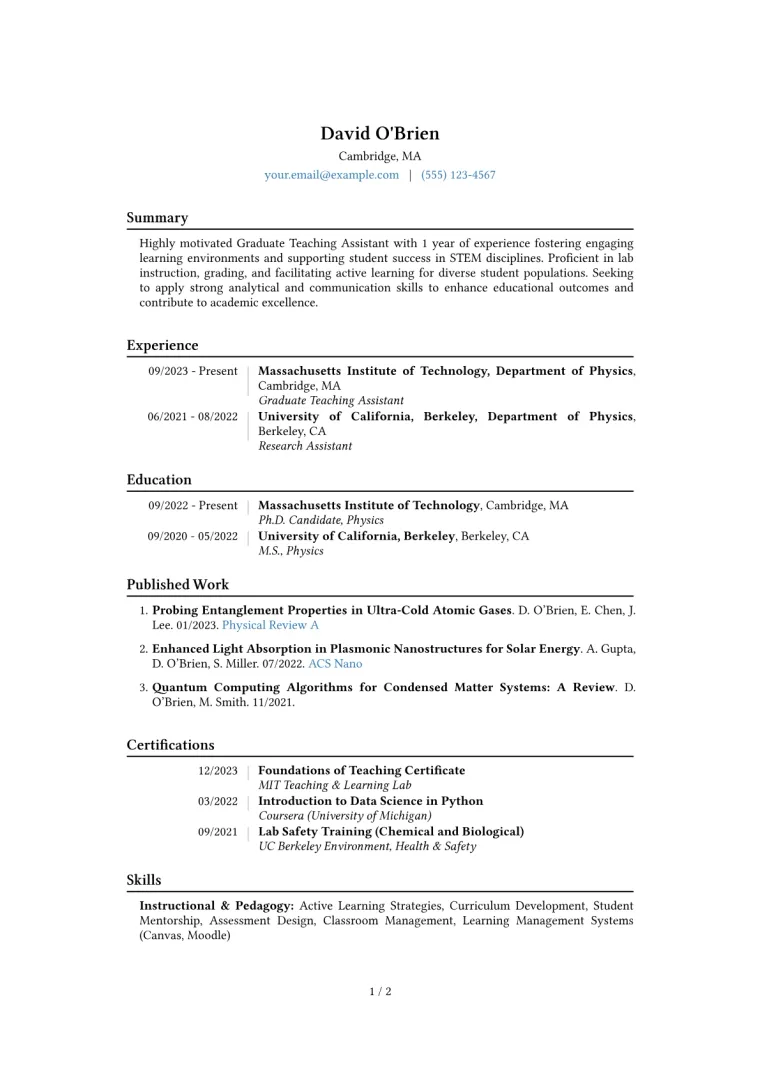
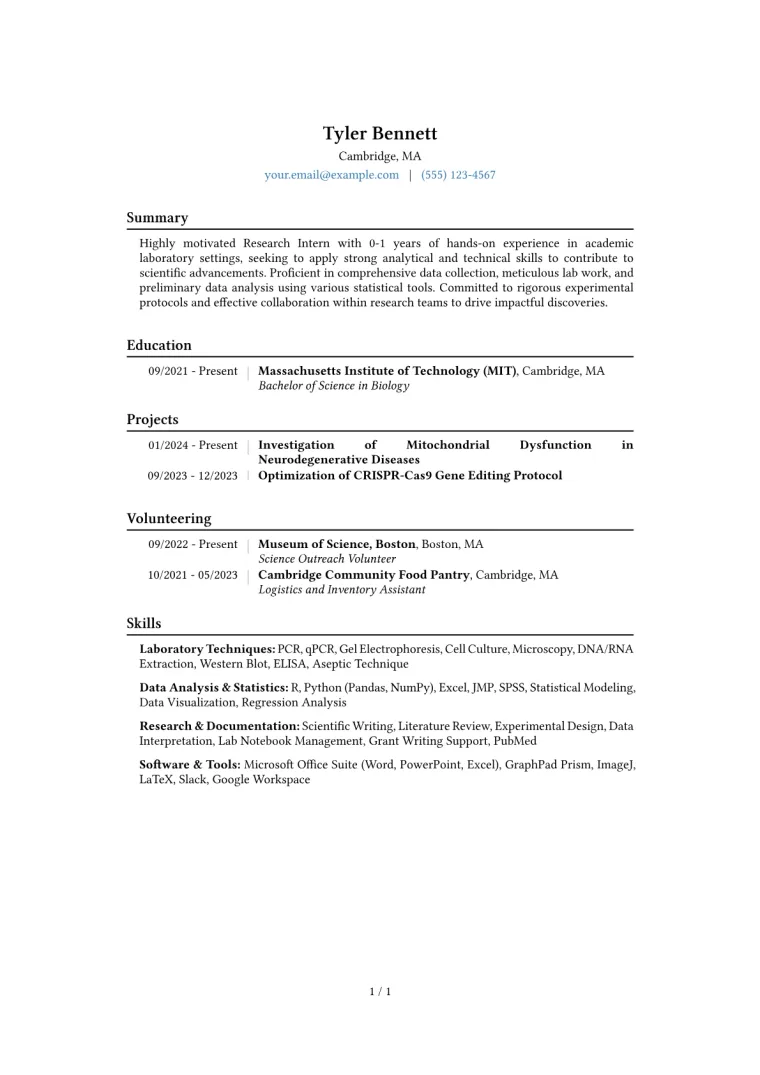
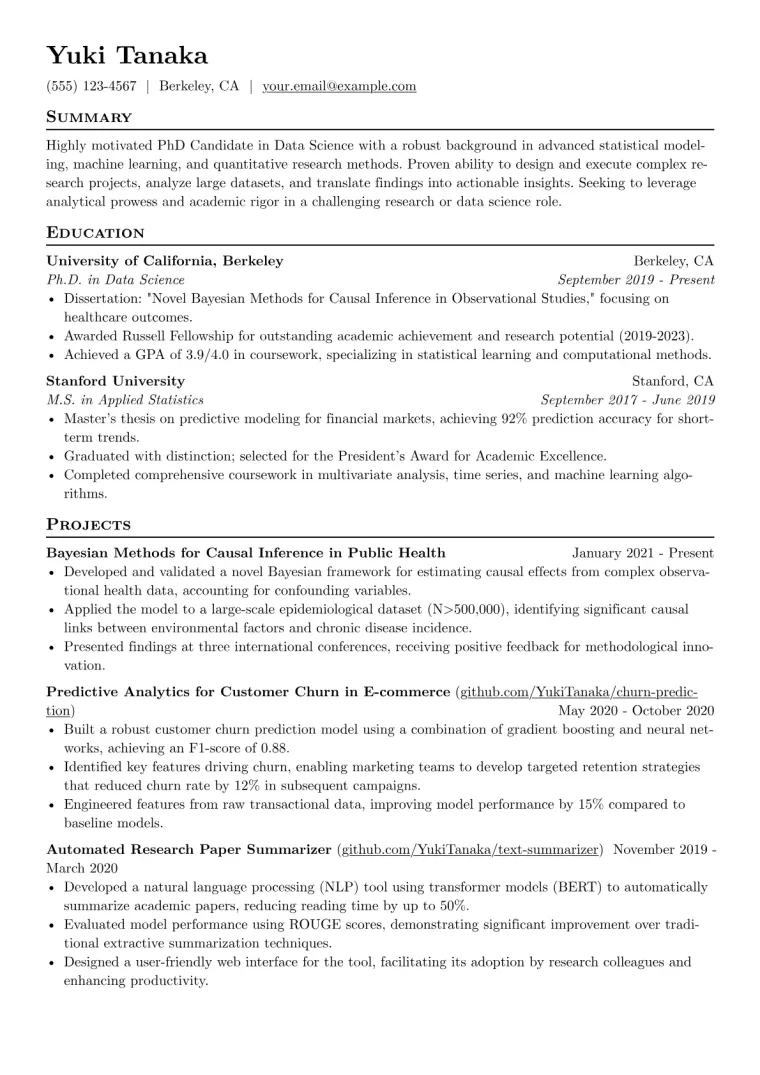
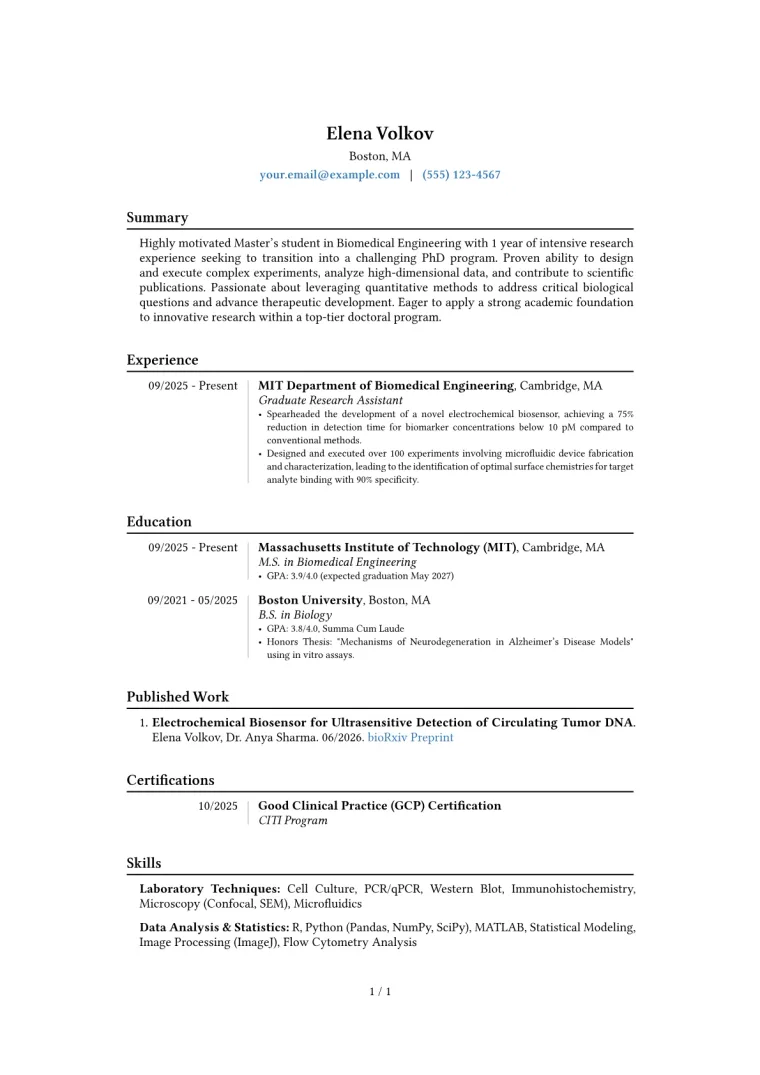
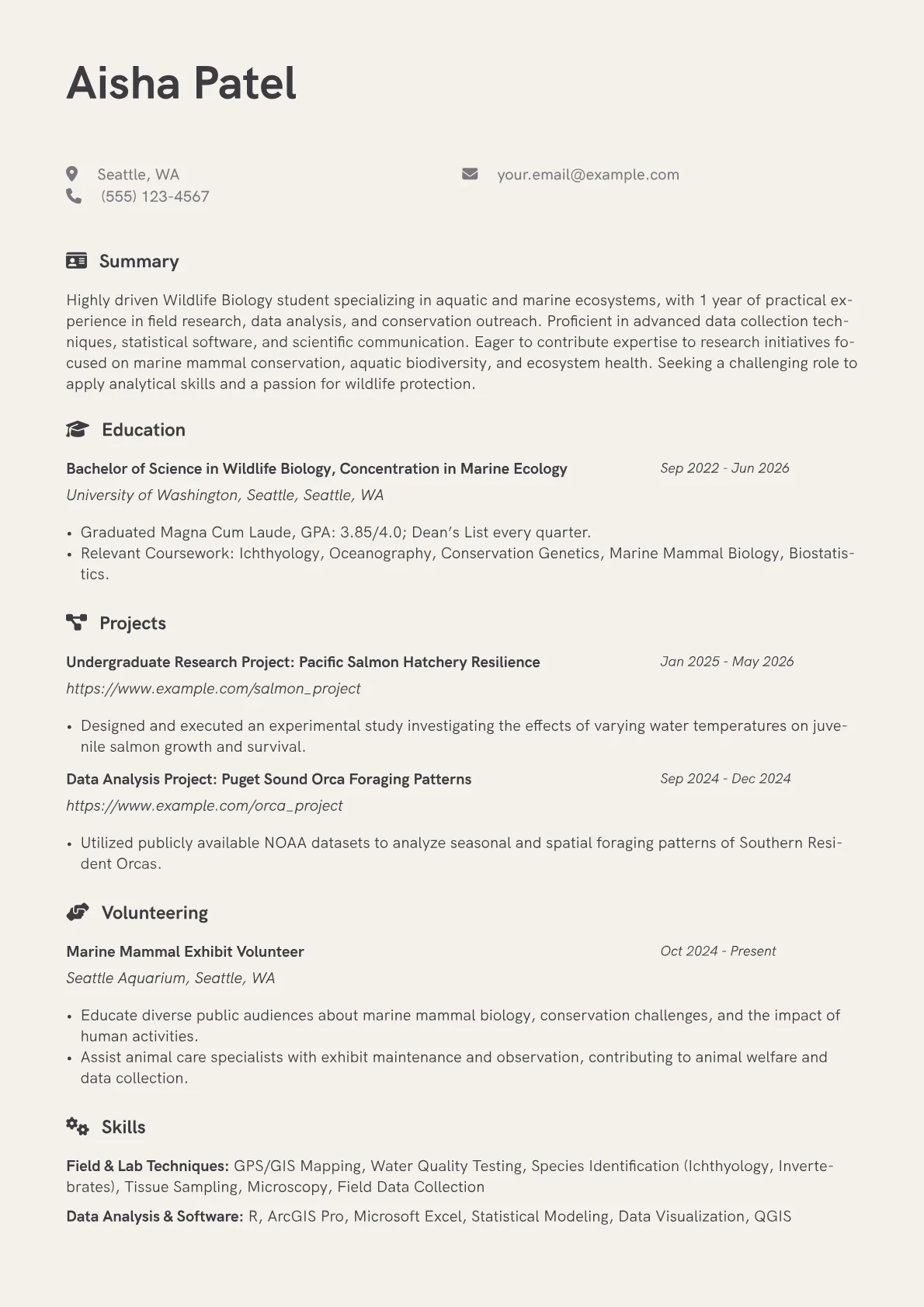
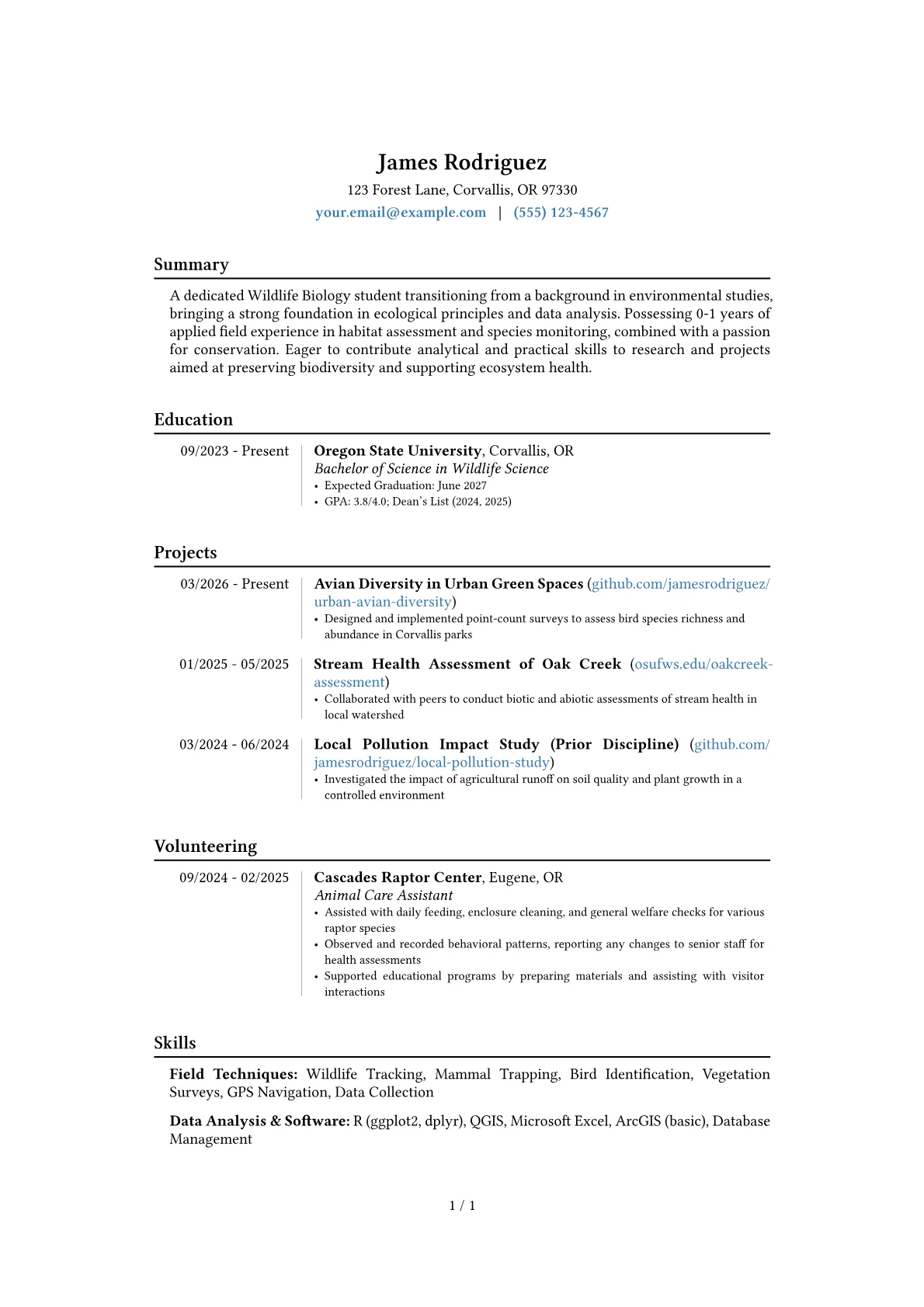
Three complete resumes, each in a different design.
Free to use. No download fee.
Editorial Notes
For wildlife biology students or recent graduates aiming for entry-level research and conservation roles in Academia, a compelling resume showcases direct, hands-on experience. Hiring managers prioritize practical field techniques, data management proficiency, and research involvement. Demonstrating familiarity with tools like GPS, camera traps, and software such as R or ArcGIS Pro is crucial. Recruiters seek candidates who can contribute to data collection, analysis, and conservation efforts, often involving specific skills like species identification, habitat restoration, and meticulous data organization. Undergraduate research projects or assistantships, even short-term ones, are particularly valued for illustrating scientific aptitude and commitment.
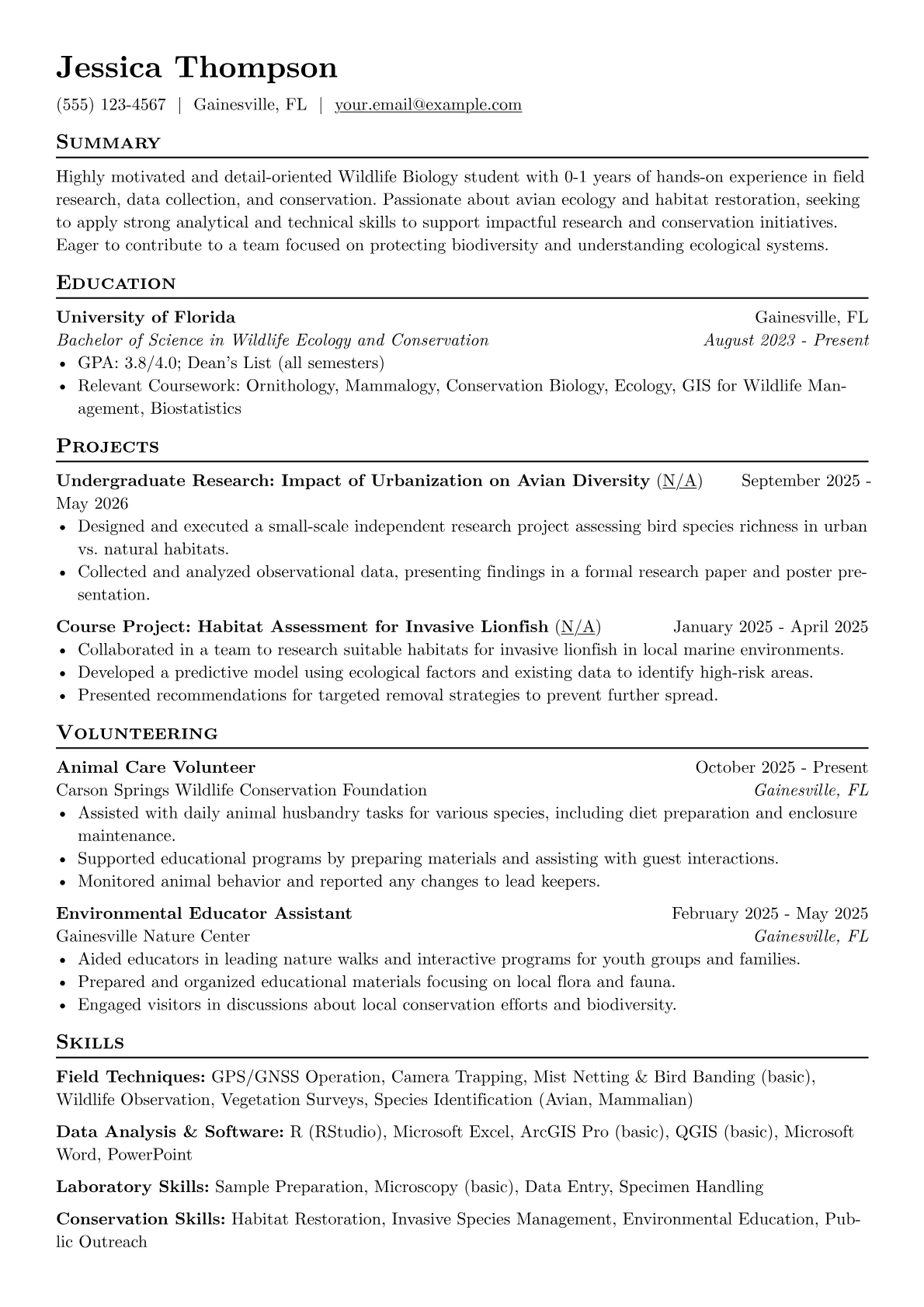
This example resume effectively highlights key competencies essential for its target roles. Jessica Thompson’s "Research Assistant at UF Avian Ecology Lab" experience directly details involvement in data collection, including "mist-netting, banding, and vocalization surveys," alongside data organization using "Microsoft Excel." Her "Field Intern at Alachua Conservation Trust" role further demonstrates practical skills such as "vegetation surveys," "camera traps," and "habitat restoration efforts." The comprehensive "Skills" section categorizes relevant expertise in "Field Techniques," "Data Analysis & Software," "Laboratory Skills," and "Conservation Skills," featuring specific tools like "R (RStudio)" and "ArcGIS Pro (basic)," which are highly desirable in academic research environments.
This template was built with JobSprout and can be remixed to create your own tailored Wildlife Biology Student resume.
How useful was this template?
Example by JobSproutWildlife Biology Student resume summary example
Highly motivated and detail-oriented Wildlife Biology student with 0-1 years of hands-on experience in field research, data collection, and conservation. Passionate about avian ecology and habitat restoration, seeking to apply strong analytical and technical skills to support impactful research and conservation initiatives. Eager to contribute to a team focused on protecting biodiversity and understanding ecological systems.
Wildlife Biology Student resume skills and keywords
Recruiters and applicant tracking systems scan Wildlife Biology Student resumes for these skills and keywords. Include the ones that match your experience and mirror the wording in the job description. Check your resume against them with the free ATS checker.
Hard skills
Tools & software
Certifications
Soft skills
Frequently Asked Questions
What's the best resume structure for a Wildlife Biology student or recent graduate?
Which skills are most important to showcase on a Wildlife Biology student's resume?
How should I write a strong resume summary and achievement bullets as a Wildlife Biology student with academic experience?
What optional sections should a Wildlife Biology student consider adding to their resume?
How can JobSprout's 'Remix with AI' help tailor my Wildlife Biology resume for research or internships?
Related Articles
![Academic CV for PhD Applications: How to Write One [2026]](/thumbnails/cv-for-academic-applications.webp)
Academic CV for PhD Applications: How to Write One [2026]
Learn how to write an academic CV for PhD applications. Real template analysis, what research committees look for, and common mistakes to avoid.
How to Apply for a PhD in the UK: 2027 Entry Guide
Rejected by Cambridge, Oxford, UCL and Imperial, then three funded offers and a Gates Cambridge Scholarship. The UK PhD application process, step by step.