Zoology Resume Example
 Example by JobSprout
Free to use. No download fee.
How useful was this template?
Zoology resume samples
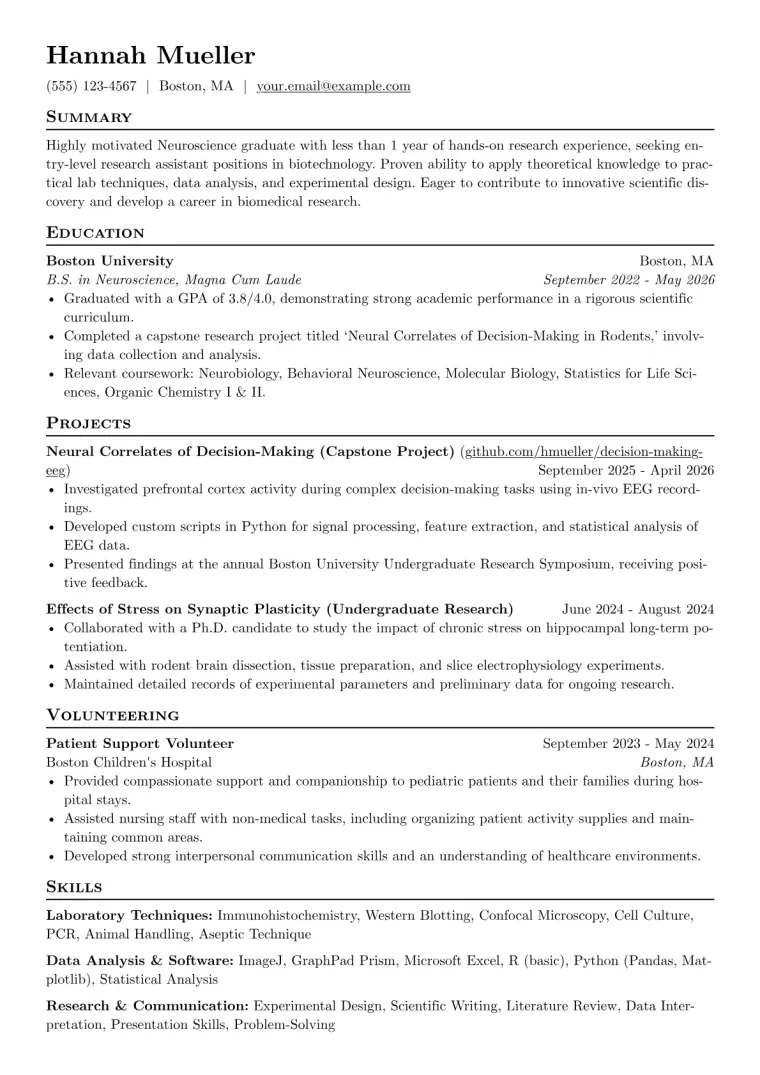
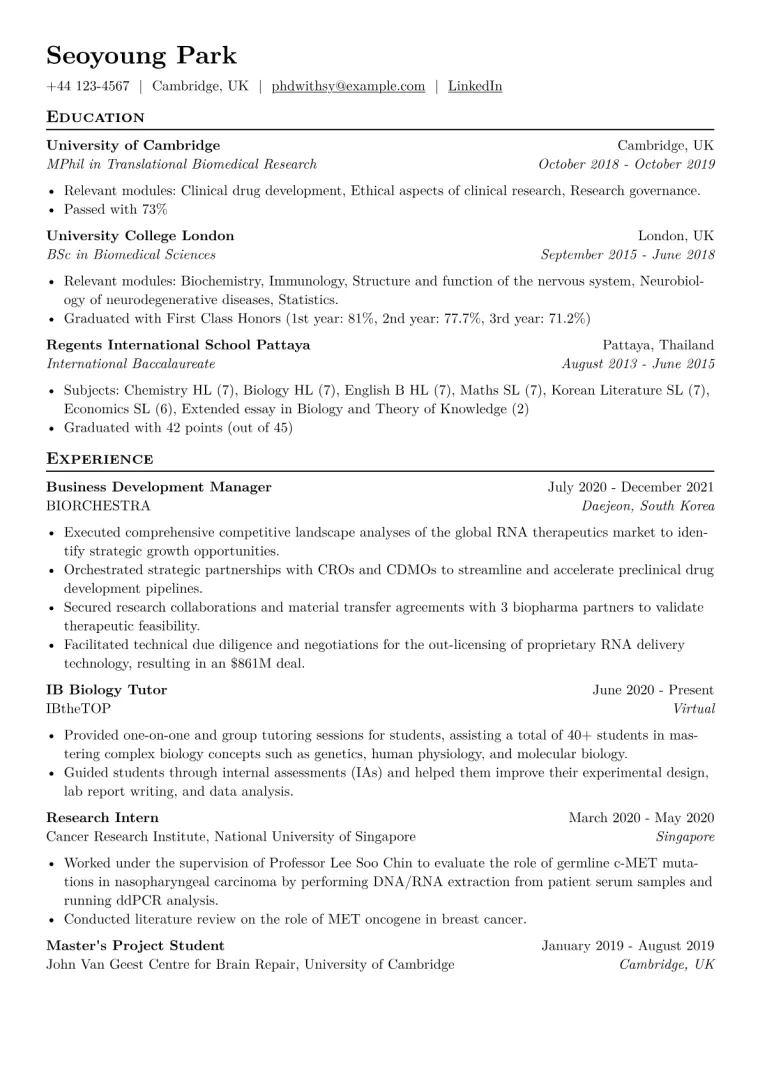
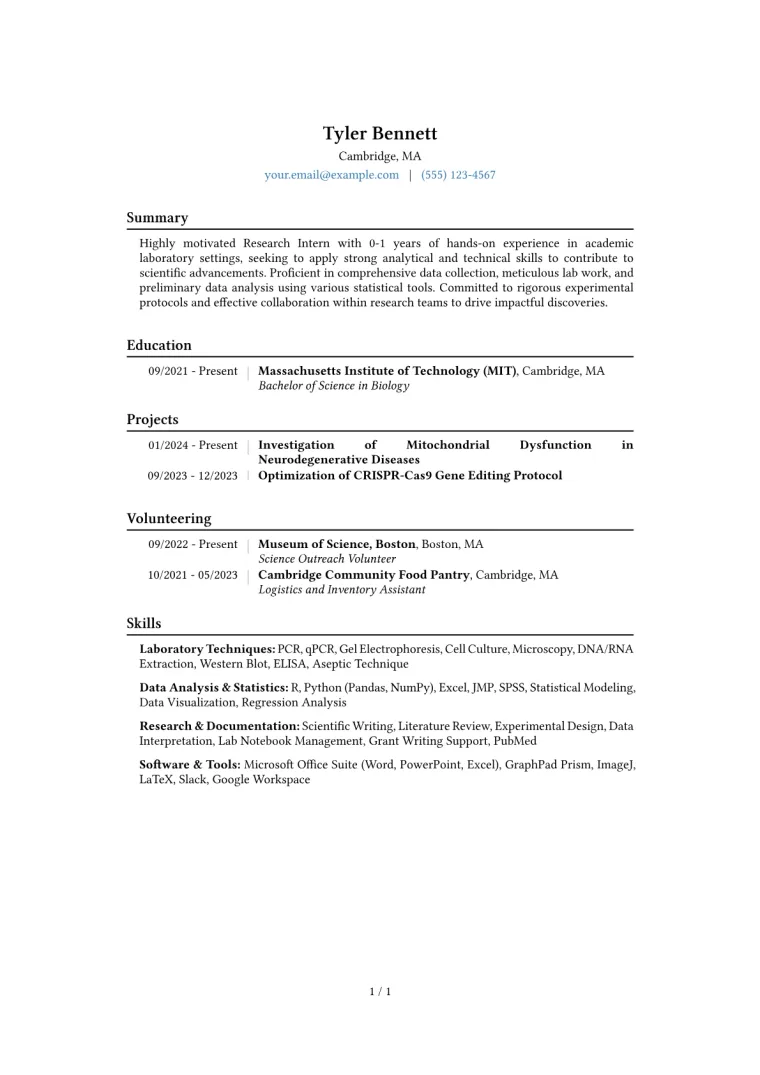
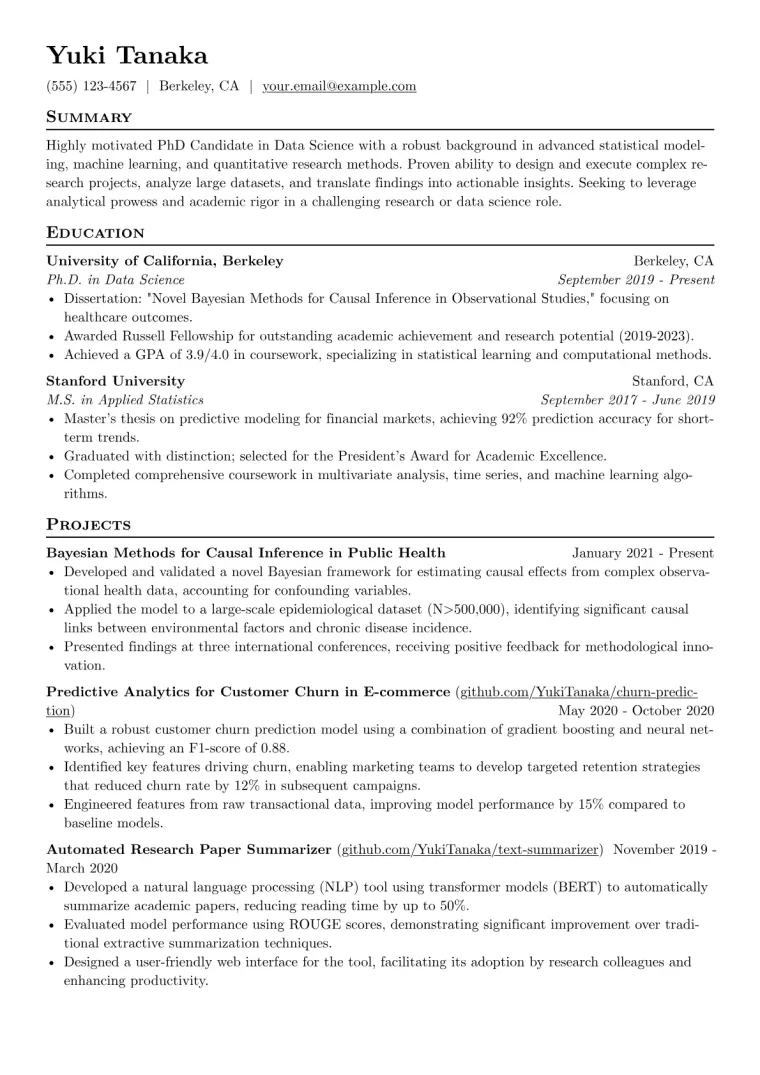
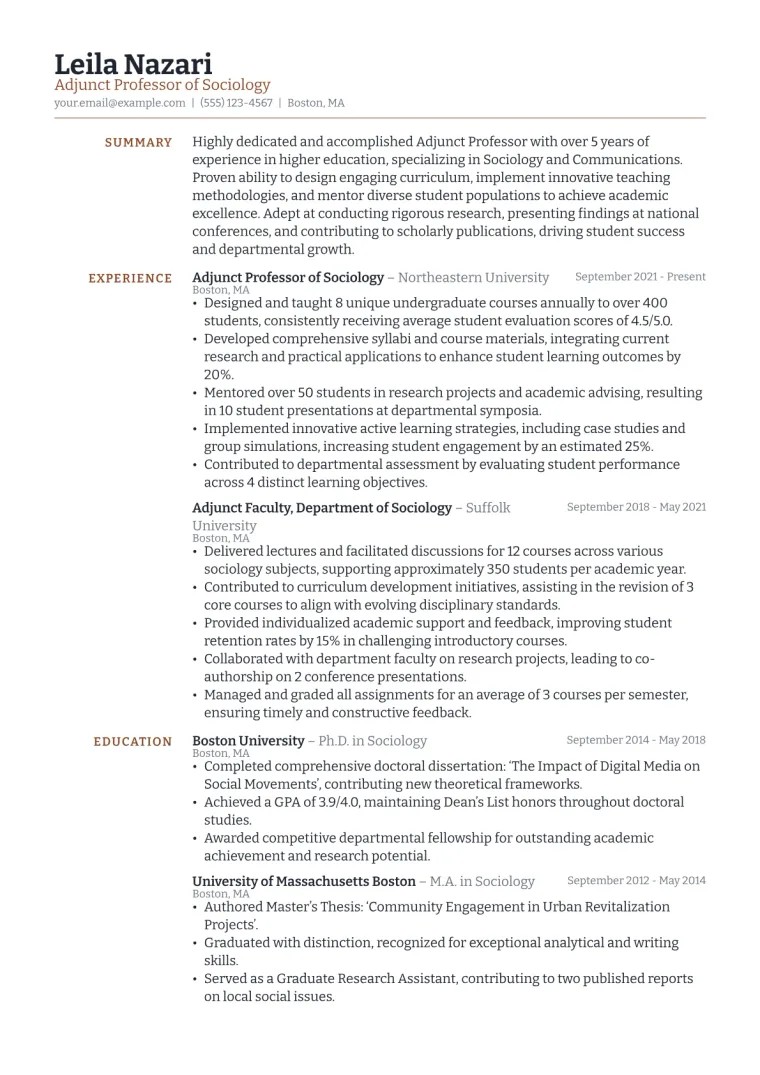
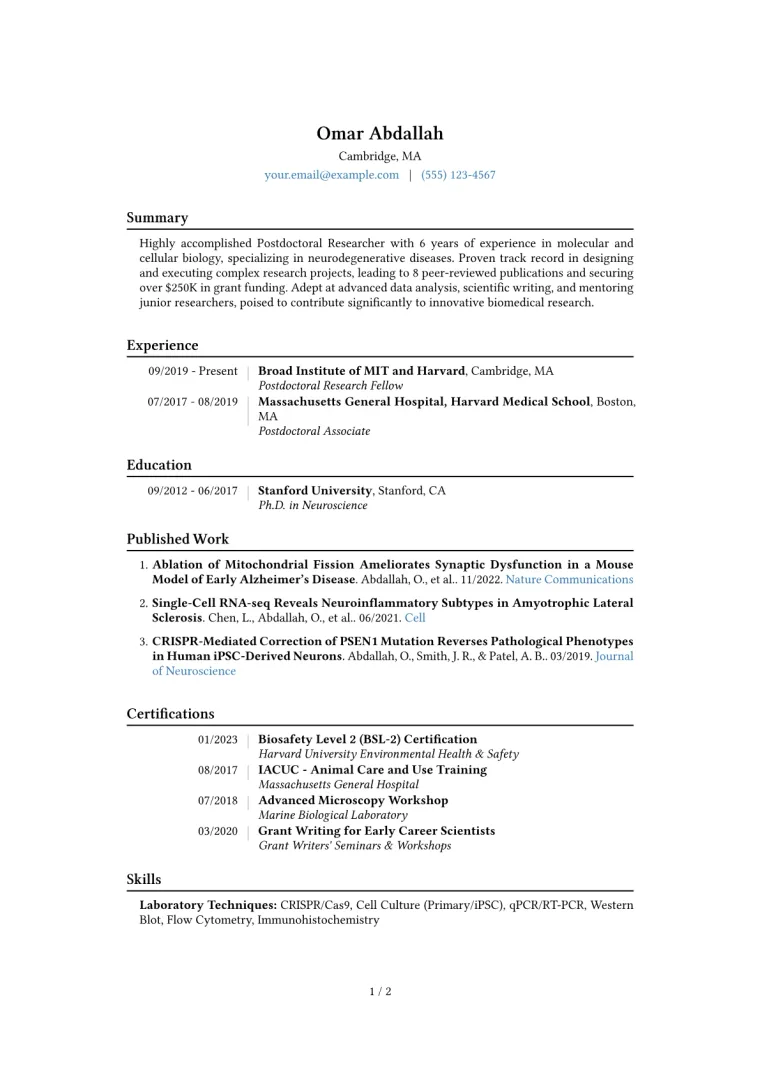
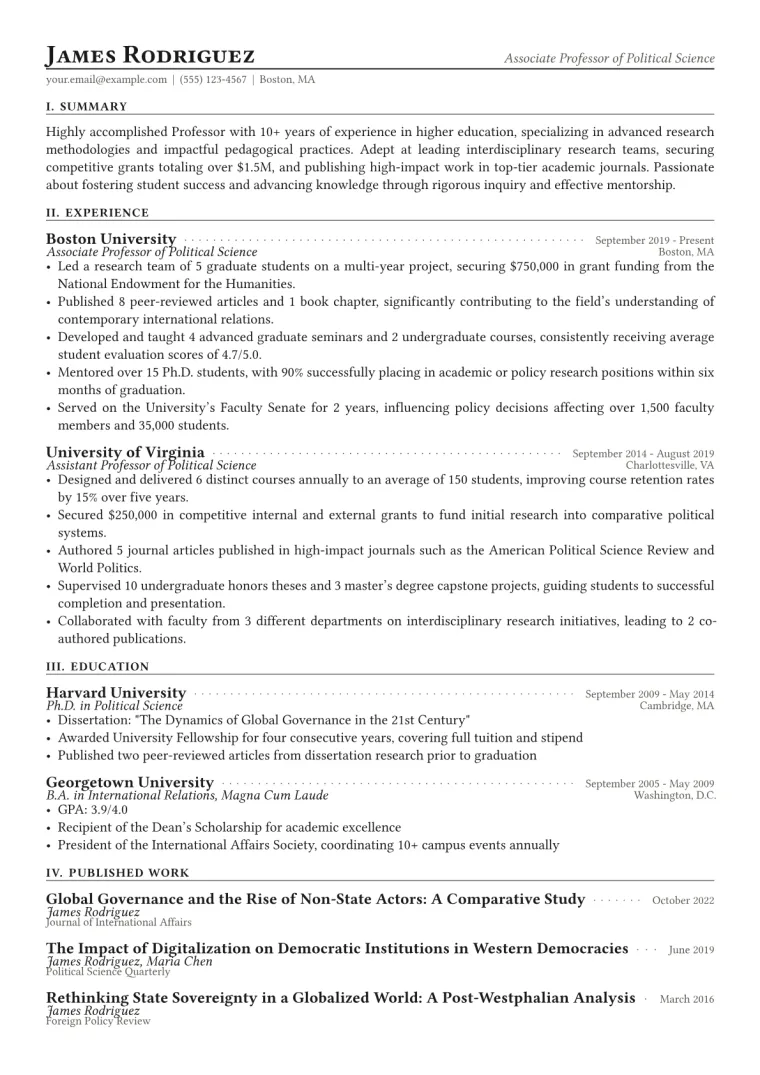
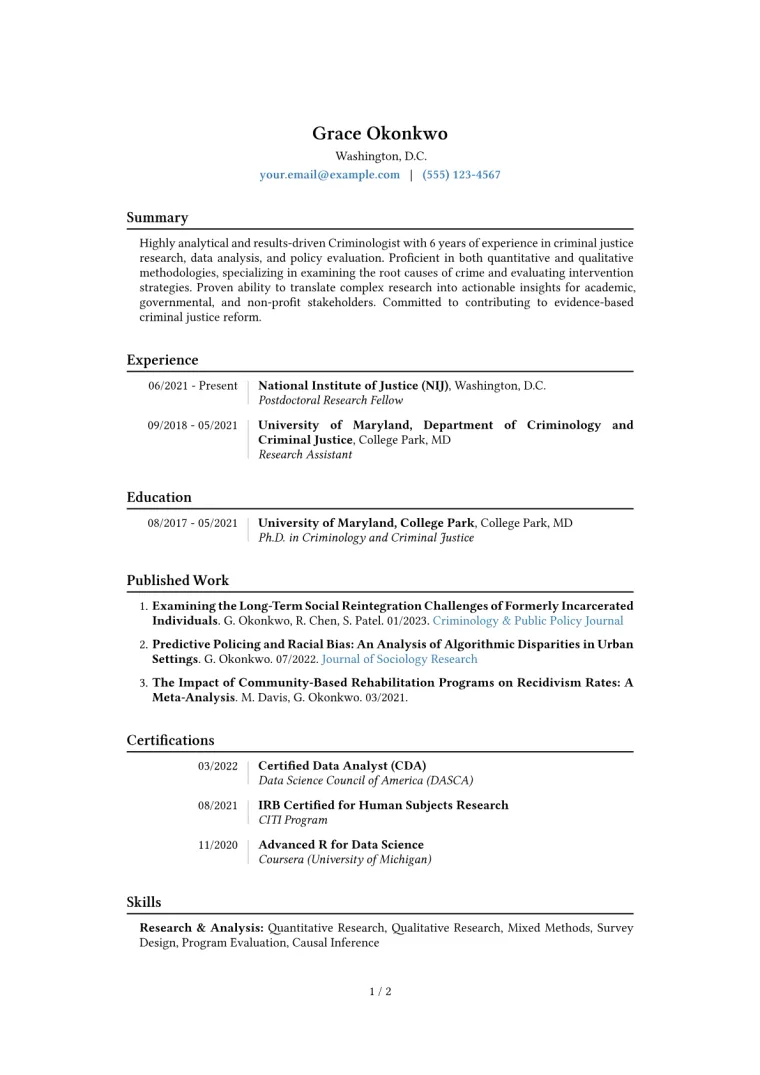
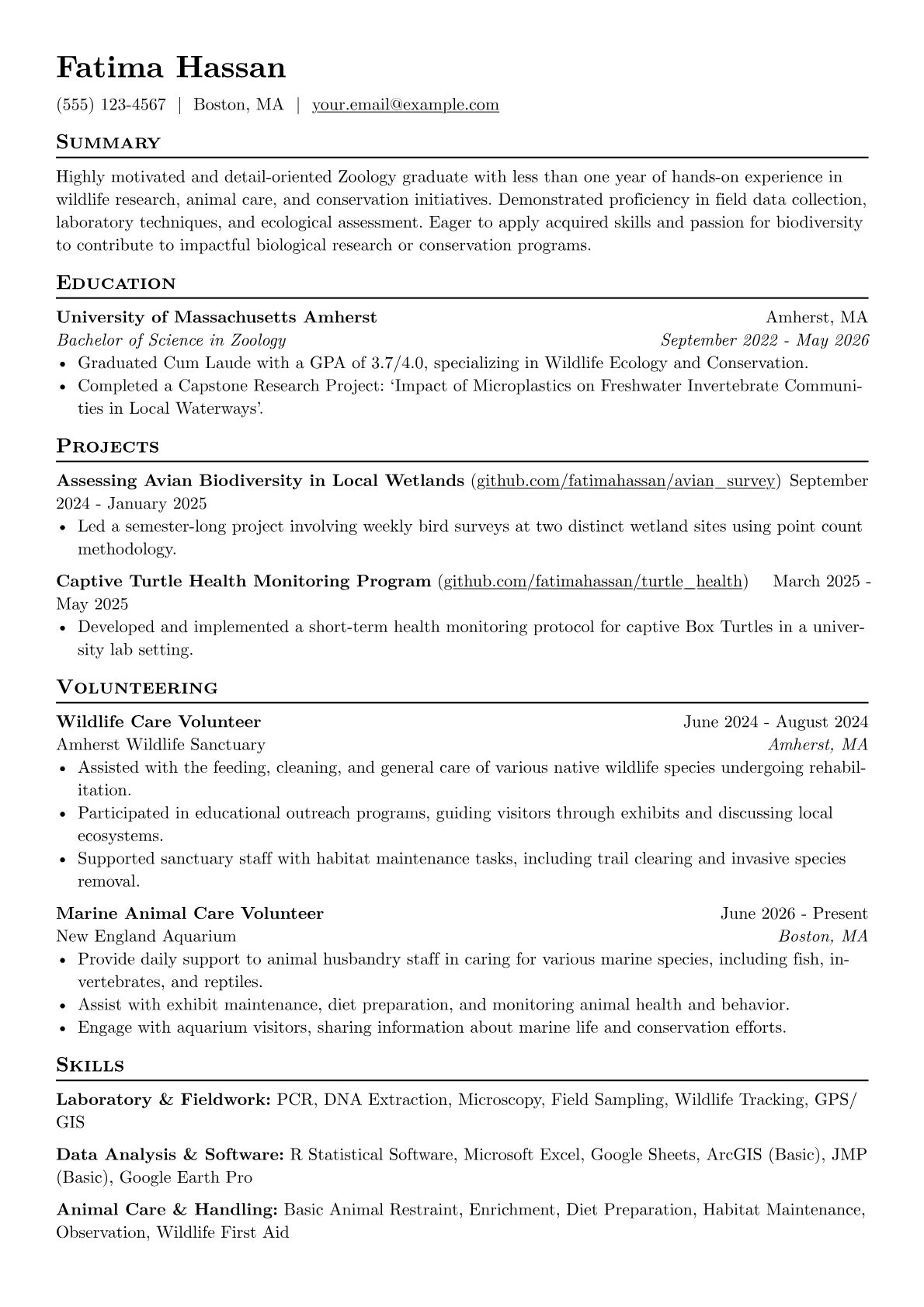
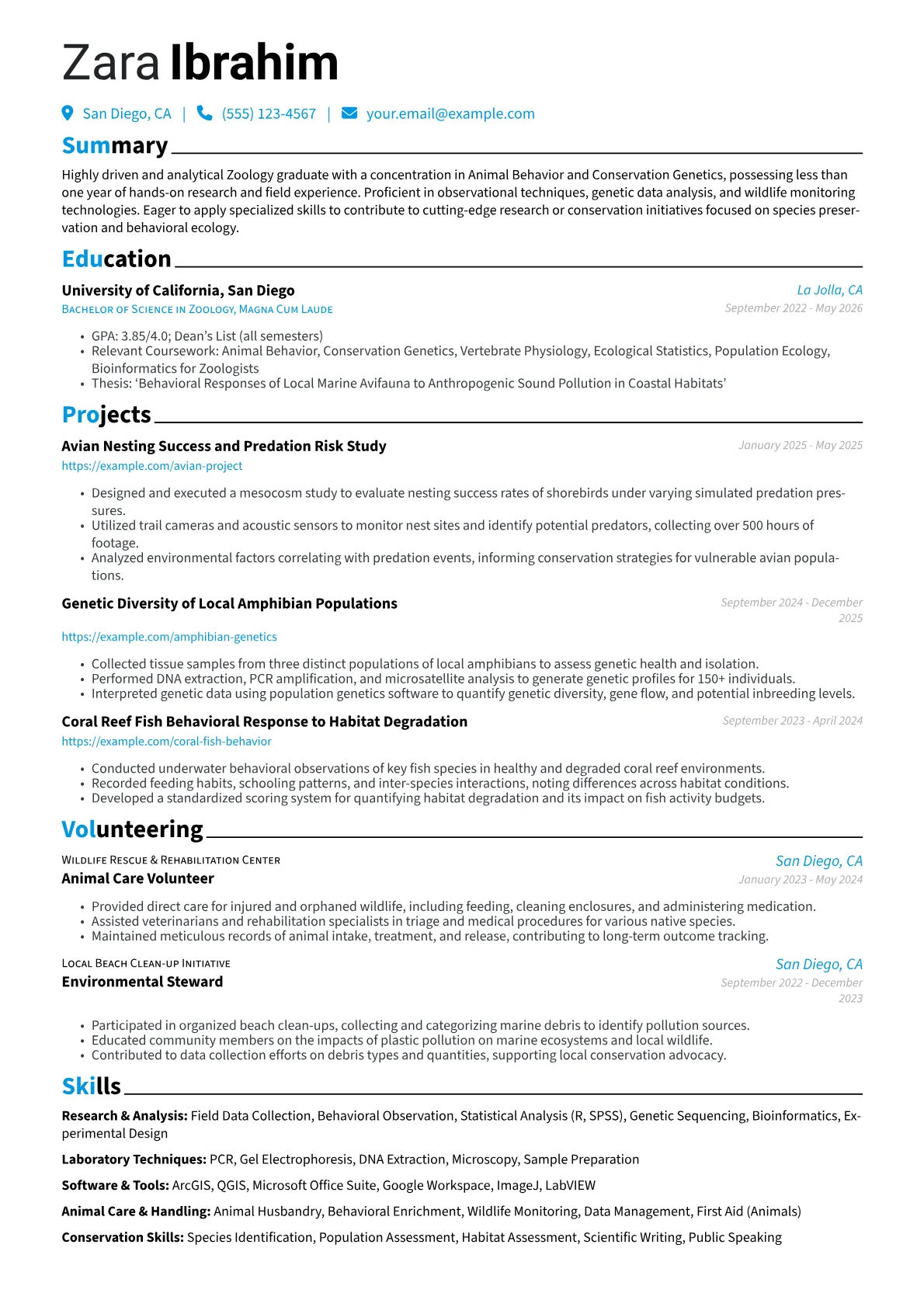
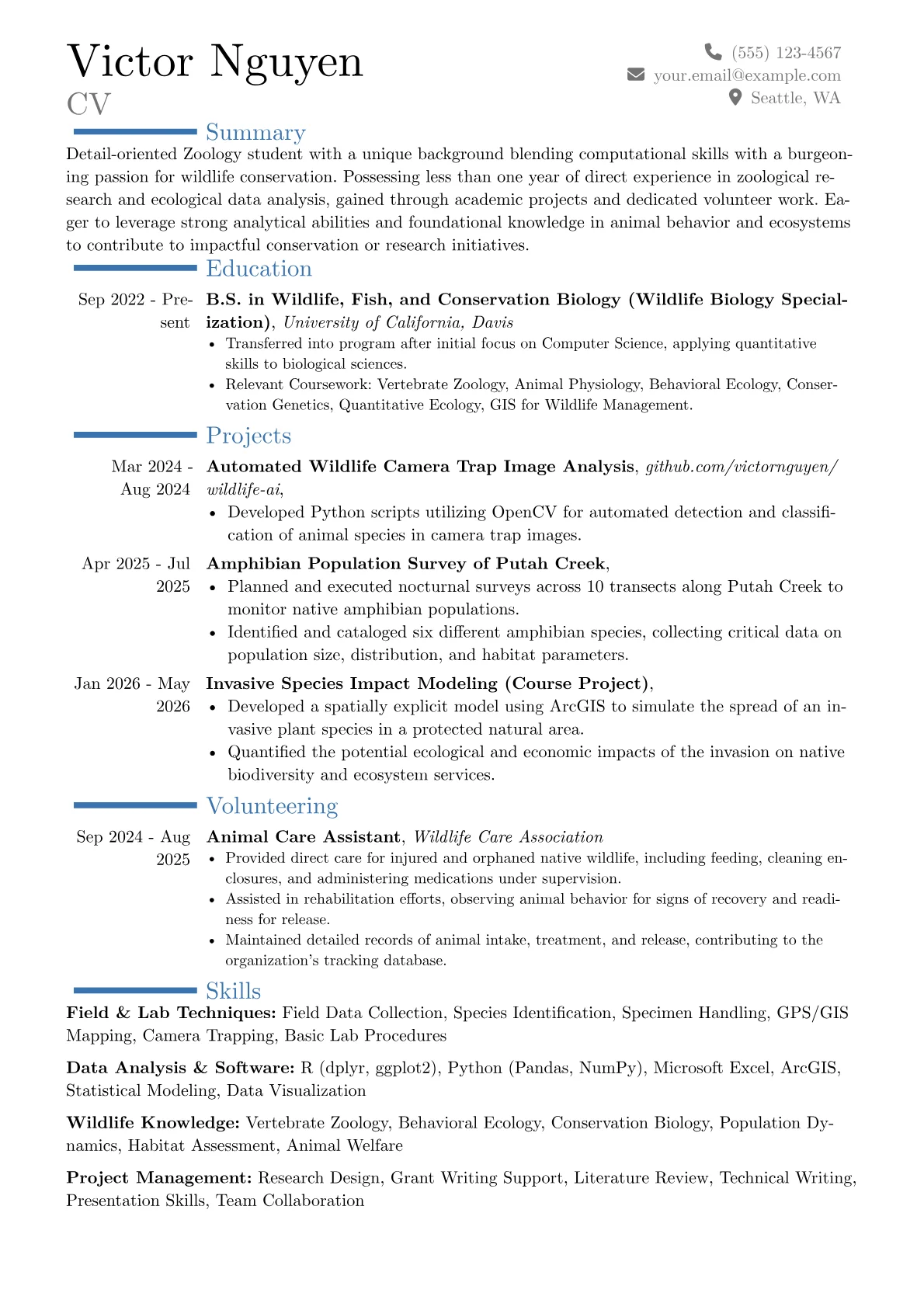
Three complete resumes, each in a different design.
Free to use. No download fee.
Editorial Notes
For zoology students and recent graduates pursuing roles in academia, research, or conservation, a resume must effectively highlight hands-on experience and specialized scientific competencies. Hiring managers seek evidence of practical involvement in research methodologies, such as experimental design, data collection, and analysis. Key terminology and skills like PCR, DNA Extraction, Field Sampling, Wildlife Tracking, and proficiency in R Statistical Software or ArcGIS are crucial. Achievements that demonstrate direct contributions to studies, such as assisting with data visualization or monitoring ecological sites, are highly valued, indicating a readiness for real-world biological research challenges.
This example resume for Fatima Hassan, from Boston, MA, effectively addresses these expectations. The "Education" section clearly states a Bachelor of Science in Zoology from the University of Massachusetts Amherst. The "Undergraduate Research Assistant" experience at UMass Amherst Biology Department demonstrates direct involvement, noting "Assisted Ph.D. candidate with experimental setup, data collection, and analysis" and "Contributed to preliminary data visualization using R statistical software." The "Skills" section is particularly strong, organized into relevant groups such as "Laboratory & Fieldwork" (listing PCR, DNA Extraction, Microscopy), "Data Analysis & Software" (including R Statistical Software, ArcGIS, JMP), "Animal Care & Handling," and "Conservation & Ecology." "Projects" like "Assessing Avian Biodiversity in Local Wetlands" further illustrate practical engagement.
This template was built with JobSprout and can be remixed to create your own tailored Zoology resume.
How useful was this template?
Example by JobSproutZoology resume summary example
Highly motivated and detail-oriented Zoology graduate with less than one year of hands-on experience in wildlife research, animal care, and conservation initiatives. Demonstrated proficiency in field data collection, laboratory techniques, and ecological assessment. Eager to apply acquired skills and passion for biodiversity to contribute to impactful biological research or conservation programs.
Zoology resume skills and keywords
Recruiters and applicant tracking systems scan Zoology resumes for these skills and keywords. Include the ones that match your experience and mirror the wording in the job description. Check your resume against them with the free ATS checker.
Hard skills
Tools & software
Certifications
Soft skills
Frequently Asked Questions
What is the best resume structure for a student or recent graduate in Zoology?
Which skills should I emphasize on my Zoology resume as a student or new graduate?
How do I write a strong summary or impactful bullet points for a Zoology student resume?
What optional resume sections are most valuable for a Zoology student or new graduate?
How can JobSprout's 'Remix with AI' help tailor my Zoology resume to a job description?
Related Articles
![Academic CV for PhD Applications: How to Write One [2026]](/thumbnails/cv-for-academic-applications.webp)
Academic CV for PhD Applications: How to Write One [2026]
Learn how to write an academic CV for PhD applications. Real template analysis, what research committees look for, and common mistakes to avoid.
How to Apply for a PhD in the UK: 2027 Entry Guide
Rejected by Cambridge, Oxford, UCL and Imperial, then three funded offers and a Gates Cambridge Scholarship. The UK PhD application process, step by step.