PDF or DOCX · up to 2MB
Rejected by Cambridge, Oxford, UCL and Imperial, then three funded offers and a Gates Cambridge Scholarship. The UK PhD application process, step by step.
![PhD CV vs Resume: Which One to Send [2026]](/thumbnails/phd-cv-vs-resume.webp)
When a PhD needs an academic CV and when a one-page resume wins, what changes between them, and how to convert one into the other without starting again.
![Postdoc CV: Structure, Template and Example [2026]](/thumbnails/postdoc-cv.webp)
What a postdoctoral CV needs that a doctoral one does not: independence, funding, and a publication list a panel can audit. With a full worked example.
![Research CV: UK Format, Structure and Examples [2026]](/thumbnails/research-cv-uk.webp)
How to write a research CV for UK universities and institutes. The section order panels expect, how to list publications and funding, and how long it should actually be.
Applying for a PhD in the UK is not one process. It is six or seven separate pieces of work on different timelines, assessed by different people, and most of it happens before you open an application form.
Seoyoung Park learned that the hard way. Her first round produced eight rejections, from Cambridge, Oxford, UCL and Imperial. She rebuilt her approach, came away with three offers and a Gates Cambridge Scholarship, and wrote up what changed in Your Complete UK PhD Application Guide. This article follows that process. Where her guide hands you the actual document rather than describing it, we say so instead of reproducing it.
Upfront: Seoyoung and I are partners, and she recommends JobSprout in her guide. Factor that in as you read.
The cycle for an October 2027 start runs roughly like this. Deadlines vary a lot by department and funder, so treat it as the skeleton.
| When | What happens |
|---|---|
| Aug to Sept 2026 | Identify PhD opportunities and funding schemes. Prepare your academic CV. Start contacting supervisors. |
| Oct to Nov 2026 | Initial meetings with supervisors. |
| Nov to Dec 2026 | Prepare and submit application documents. Start interview prep. |
| Dec 2026 to Jan 2027 | Peak funding deadlines. Earliest interviews. |
| Jan to Feb 2027 | Interviews, then offers. |
Two things surprise people.
The first is how early it starts. If you plan to email supervisors in December for an October start, you are behind the people who emailed in September.
The second is that the offer and the funding are often two separate decisions with two separate deadlines, and the funding one usually binds. At Cambridge, for instance, the course and funding applications are submitted together, so if you want to be considered for university funding you have to apply by the funding deadline even when the course deadline falls later.
On dates, the guide's own database carries a warning worth repeating: very few funders have published their 2027 dates yet, so confirm every one on the funder's own website rather than trusting any list, including that one.
Almost every piece of confusing advice about UK PhD applications comes from mixing up two different routes.
Route 1: the advertised, funded studentship. A supervisor has a defined project with funding already attached. You apply to that project the way you would apply to a job, and you do not need to find funding or a supervisor separately. In the UK most of these are funded through UK Research and Innovation, the government umbrella body for the research councils.
Route 2: the independent, self-proposed PhD. You identify a supervisor, co-develop a project with them, and apply for funding separately. These positions are usually not advertised anywhere, so nothing happens unless you make contact.
Here is where most people go wrong, and it is not the mistake you would expect. The instinct is to work out which route you are on and commit to it. Seoyoung's guide argues the opposite:
"Most applicants treat these two routes separately. In practice, the real advantage comes from running them in parallel and actively linking them: searching funded opportunities while simultaneously mapping departments and reaching out to supervisors. Neither route should wait for the other."
That linking is the part that pays. A supervisor you approached speculatively may turn out to have an advertised studentship opening in three months. A funded project you found on a listings site tells you which departments are active in your area, which is exactly the list you want for speculative outreach. Run both, and each one feeds the other.
The most common early mistake is picking institutions first. Prestige is not a research area, and a supervisor at a mid-table department who works on exactly your problem is worth more than a famous name who does not.
Work in this order:
That last point is where proposals come from. You are not looking for a topic you find interesting. You are looking for a question a specific person is well placed to supervise.
Most people leave this until after they have picked programmes, which is why it comes early here. Funding decides whether an offer is usable at all, and its deadlines are usually the ones that bind.
Route 1 funding comes through the UKRI research councils, and which council you fall under is set by your subject, not your preference. That single fact determines the size of your pool:
Funded studentship schemes by research council
Schemes catalogued in the guide's database for October 2027 entry, not a count of all UK funding. Councils are the UKRI bodies mapped above; charities include Wellcome, Leverhulme and the British Academy.
The mapping is fixed: BBSRC and MRC cover the biological and medical sciences, EPSRC engineering and the physical sciences, ESRC the social sciences, NERC environmental science, AHRC arts and humanities, and STFC maths and physics. Find yours before you search, because it decides which doctoral training partnerships you are even eligible for.
Beyond the councils there are university-specific scholarships, which you usually apply for alongside the programme itself, and government or national scholarships tied to your nationality rather than to any university.
That split matters because it changes how you search. The guide's advice on filtering its own database is the most useful rule I have seen on this:
"Almost everything here is open to both UK and international applicants, so nationality is a poor filter and will not narrow the list much. What actually decides whether you can apply is your subject area."
For university and government schemes it inverts. Those are mostly hard-gated by where you are from, so nationality is the first filter and it shrinks the list fast.
Two more things to sort early. First, work out whether you have home or overseas fee status, because the gap is enormous and it decides which schemes are realistic. At York for 2026/27, full-time research fees are £5,238 at the home rate and £25,350 to £30,950 at the overseas rate depending on whether the subject is lab-based. Most UK universities sit near the same home benchmark, because it tracks the UKRI minimum fee. A funded studentship normally covers fees at the home rate only, which is why overseas applicants have to look harder at awards that cover the difference. And ask your prospective supervisor which schemes they expect to put you forward for, since some funding exists only inside a specific grant and is never advertised anywhere.
A UKRI-funded studentship covers fees at the home rate plus a stipend. From 1 October 2026 the UKRI minimum stipend is £21,805 a year, rising to £23,805 with London weighting, and the minimum fee level for 2026/27 is £5,238. Individual funders can pay above the minimum.
Three things change. Your fee status is almost certainly overseas, which raises the bar on what a funded offer has to cover. A large share of the funding open to you is gated by nationality rather than subject, so national and government schemes are worth checking early through your own country's education ministry and the British Council's scholarship search. And most programmes will want an English language test result unless your degree was taught in English, which takes time to book and sit, so treat it as a deadline of its own rather than an afterthought.
The guide ships with a database of 296 funding schemes built for October 2027 entry, spanning the research councils, 22 Russell Group universities and government schemes, with the value, eligibility and deadline for each. It comes with a caveat its author states plainly: "This database is a starting point, not a complete list, because funding changes constantly and without notice." That is the right way to use it. It is available with the guide.
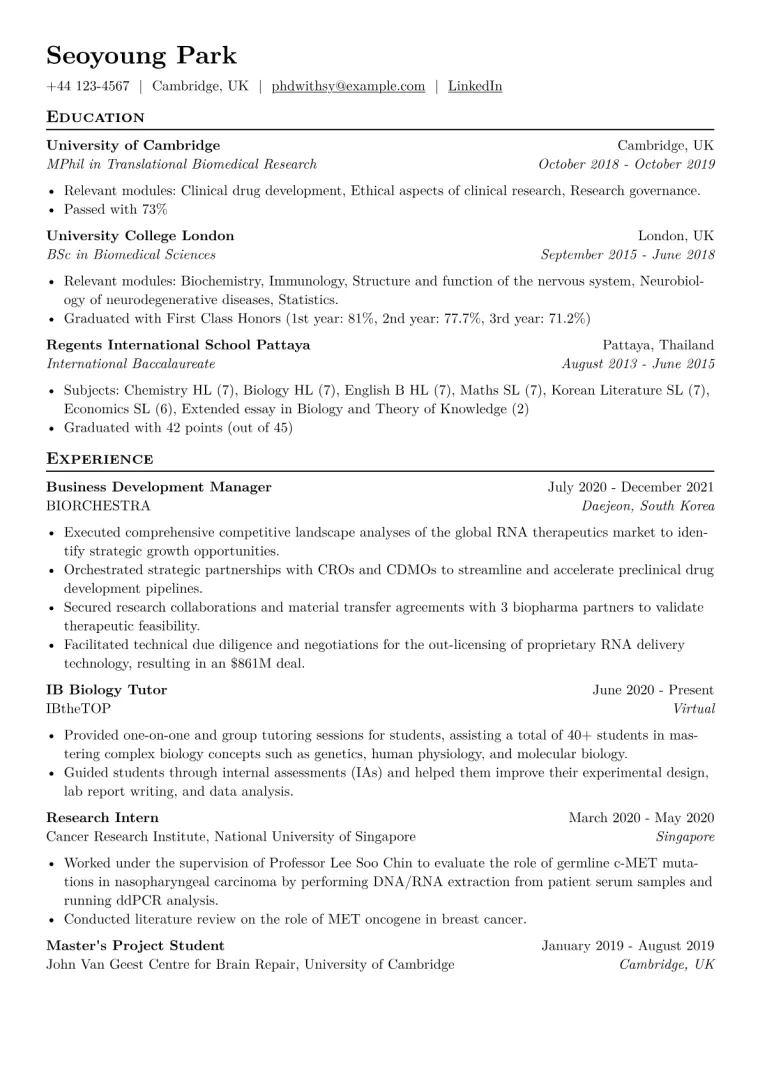
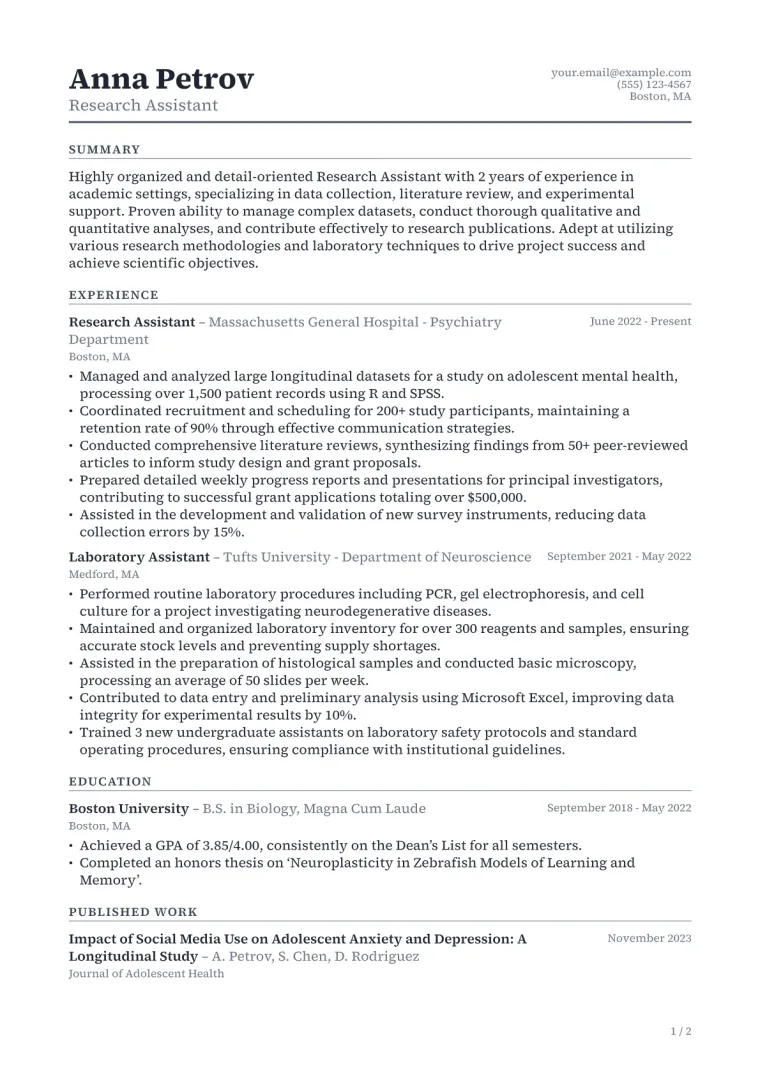
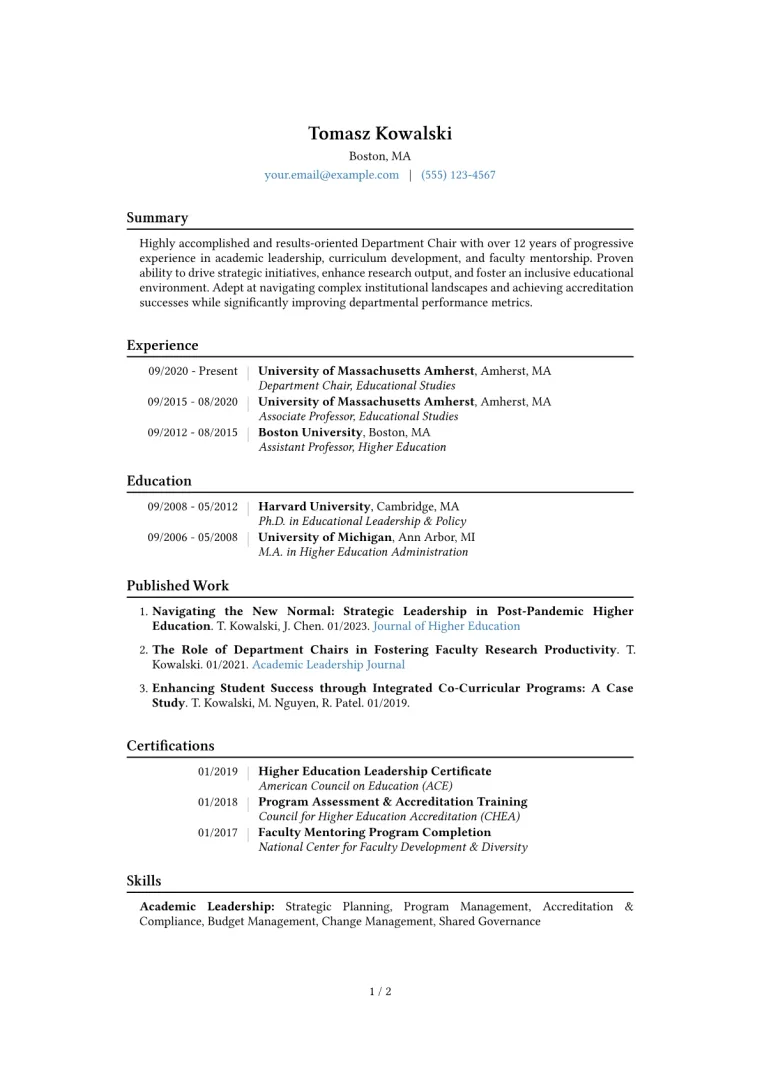
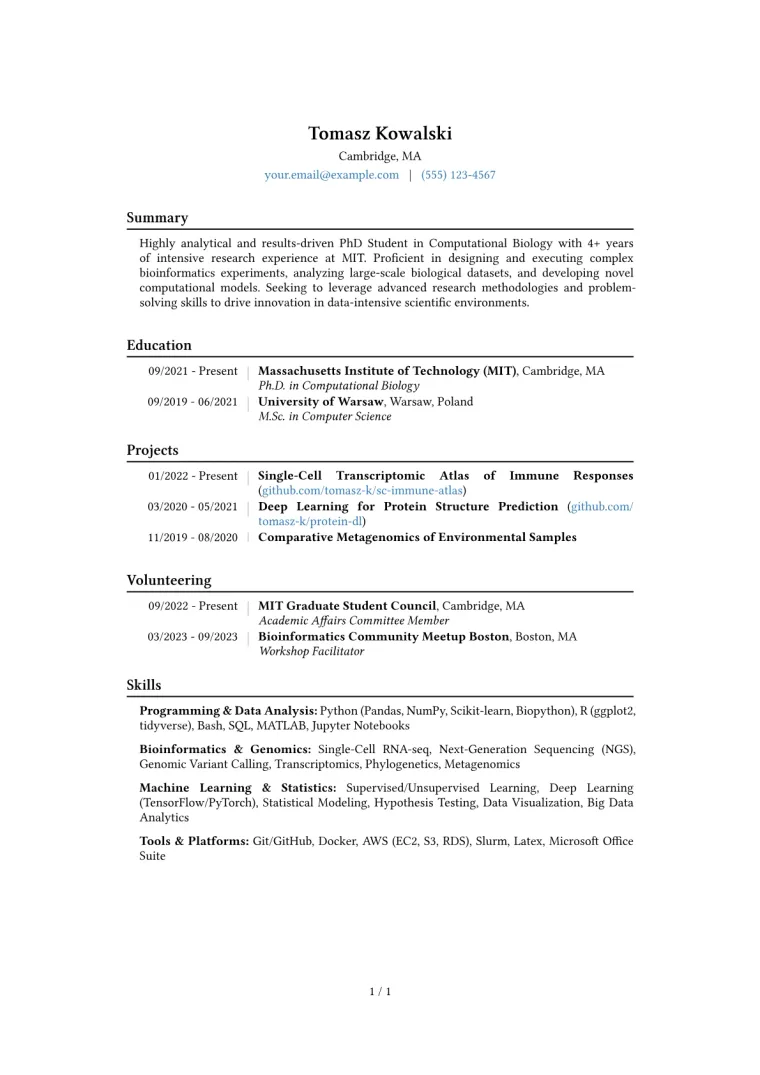
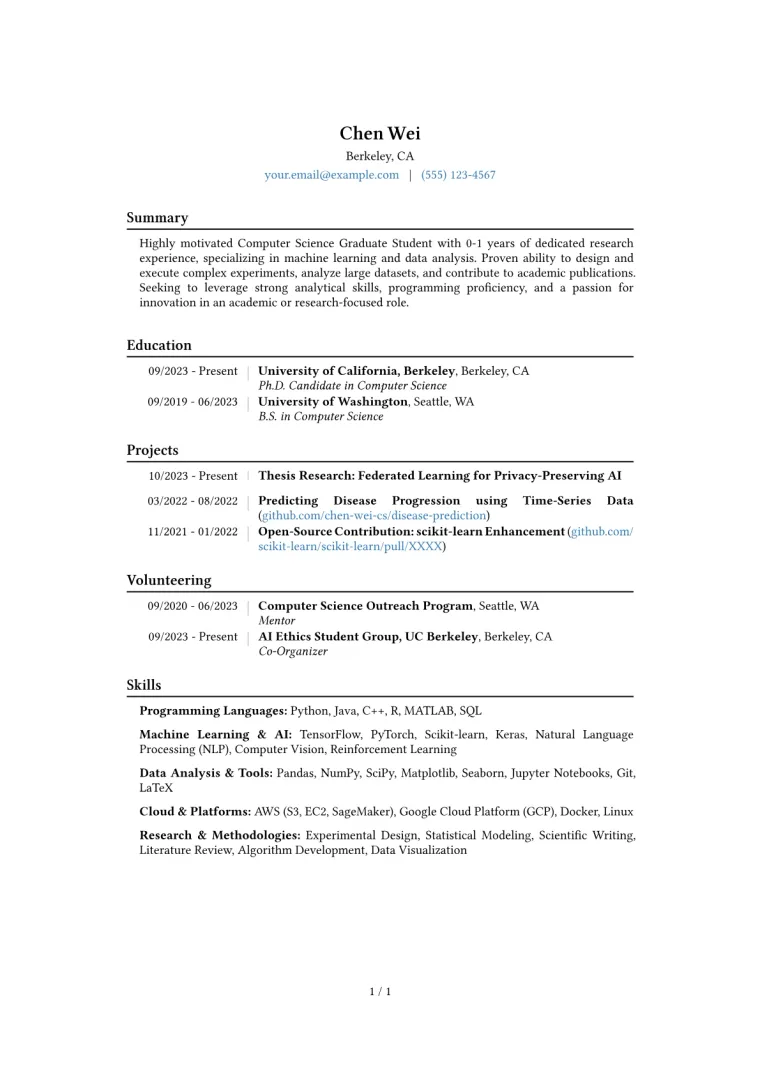
An academic CV is not a shortened work history. Education leads, then research, professional and teaching experience, then awards, publications, volunteering, and technical skills. Two pages, no photo, no graphics, reverse chronological order.
The part people get wrong is the experience section. Listing project titles is not describing research. For each one, answer three questions: what techniques or approach did you use, what problem were you addressing, and what were the outcomes.
This is Seoyoung's real CV, the one that went out with her applications:
For the full section-by-section breakdown, including publications in preparation and what to do when you have none, see our guide to writing an academic CV for PhD applications.
First, check whether you are even supposed to. Contact requirements fall into roughly three tiers: some programmes will reject an application outright if you made no prior contact, some treat it as a plus, and some four-year programmes with a rotation year just want a supervisor named on the form. The guide sets out which is which. The practical point is that the course page states it, and getting it wrong in the first direction is fatal, so read it before you write anything.
Where contact is wanted, academics get a lot of these emails and most are obviously mass-sent. What separates a real enquiry:
A subject line that says what it is. Name the thing: an enquiry about PhD vacancies, and your year of entry.
Evidence you have read their work. Not "I am interested in your research on X". Name a specific paper and say what it made you want to ask next. This is the paragraph that cannot be faked at scale.
Your relevant background in three or four lines. Degree, classification, research experience, methods you already have. Attach the CV from the previous step, which gives them the detail without lengthening the email.
A specific, answerable ask. Whether they are considering PhD applicants for your year of entry, and whether there might be room for you.
Two practical details from the guide that most people miss. Schedule the email to land during the supervisor's working hours rather than whenever you happened to write it. And if you hear nothing, follow up politely after five working days, not after five weeks of agonising.
The guide includes the full email template she used, annotated line by line, along with what to do when nobody replies. If you would rather start from something that worked, that is in the guide.
This is the stage almost nobody prepares for, largely because almost nobody writes about it. A supervisor replies, suggests a call, and applicants turn up treating it as a friendly chat.
It is not. It is a two-way assessment, and the conversation reliably covers four things: who you are and whether you would fit the group, what projects are actually available, what funding you could go after, and whatever either side wants to ask.
The third one is where the meeting earns its place in the process. Go in knowing which schemes you are eligible for, name them, and ask directly whether the supervisor would support your application to them. A supervisor who says yes has just moved you from speculative to backed, and that is worth more than anything else half an hour could produce.
Come with a 60 to 90 second summary of your background and research interests, having read their recent papers properly. And treat it as your assessment too: how often they meet students, what they expect in year one, what happened to their recent students. You are choosing a four-year working relationship.
Afterwards, send a short thank you note summarising anything you agreed, and pin down the deadlines and the next milestone.
Most UK programmes want 500 to 1,000 words. Check the specific requirement, because some cap it hard and some, like Cambridge, replace it with separate short sections for research experience and career goals.
If you take one thing from this article, take this. UK personal statements are not the US genre of the same name:
"Unlike US statements of purpose, UK personal statements are not overly personal or story-driven; instead, they function as a focused academic and research pitch."
The guide lists "writing a personal story instead of a research-focused statement" as the single most common mistake. So the advice you have probably absorbed from American admissions blogs, about opening with the childhood moment that sparked your curiosity, is actively wrong here. You can anchor your interest in an experience, briefly, then move on.
What a UK statement has to establish is narrow: that you understand the research area, that you have the skills for a PhD, and that you fit this project and department. Research experience does most of the work, and for each project the panel wants your actual contribution, the methods, and what you learned, including from the things that did not work.
Seoyoung's own statement, the one that produced the Cambridge and UCL offers, opens by naming the problem rather than herself: "Neurodegenerative disease remains one of the greatest challenges in modern medicine." She then reaches for the field's own grim nickname, "the graveyard for promising drug candidates", and only after that arrives at her own interest in it. Three sentences in, it is a research pitch.
The full statement is reproduced in the guide with paragraph-by-paragraph annotations explaining what each one is doing. Reading one that worked, end to end, answers questions a list of tips cannot.
Typically one to two pages, though the format varies sharply. Cambridge, for example, asks for a 250 word research proposal inside the application portal rather than a standalone document, so check what your programme actually wants before you write two pages of anything.
The guide frames the purpose well:
"The aim is to demonstrate that you can think like a researcher by clearly defining a problem, identifying a gap in knowledge, and proposing a feasible approach to address it."
That is the test. Not whether the project is exciting, but whether you can identify a real gap and propose something doable. A proposal that reads like an essay about a subject fails it. One that names the gap, poses a single clear question, and sketches a method that could answer it passes, even if the science is modest.
The other thing worth doing, which costs nothing and gets skipped constantly: discuss the proposal with your prospective supervisor before you submit it. They know what the panel funds.
A research proposal template is included with the guide, so you are filling in a structure rather than inventing one.
You will usually need two academic referees, and they are the part of your application you control least.
Priority order matters more than seniority. Your BSc or MSc thesis supervisor comes first, because they can speak to your actual research ability. Then an academic who knows your work well from advanced modules. An industry supervisor is useful if you have research experience there, but should not replace an academic referee unless you have no alternative.
Ask one to two months before the deadline. Give each referee a package: your CV, the deadline, the specific programmes, and a reminder of what you did together. A referee working from memory writes a vaguer letter than one working from notes. Send a polite nudge one to two weeks before the deadline if you need to, and tell them how it went afterwards.
Formats vary, but the most common is a panel of three to five academics from the department. Most begin with a short presentation on your most recent project, usually somewhere between five and twenty minutes, followed by questions on both the research and you.
The questions cluster into a handful of types. A sample of what to expect:
Note what those are testing. Not recall. The guide's advice on the presentation applies to the whole interview: the panel "often cares more about your reasoning ... rather than the result itself." Why that method, why that hypothesis. A candidate who can explain why they chose a flawed approach and what they would change beats one who reports a clean result they cannot defend.
Which makes the "what if it does not work" question the opposite of a trap. It is checking whether you understand research as something with real risk.
And you will be asked something you cannot answer. On that the guide is sensible: "Rather than freezing or saying you don't know, it is better to acknowledge the gap honestly and reason through it out loud." Relate it to something you do know, then say how you would go about finding out.
One more thing, because panels ask if you do not volunteer it: if the project was a group effort, state your own contribution explicitly.
The guide includes a full interview question bank grouped by category, a presentation template, and a prompt for running realistic mock interviews with an AI panel that probes follow-ups and then critiques your answers afterwards. That last one is the part I would not want to build myself the week before a panel.
The detail worth sitting with is that Seoyoung's outcome flipped without her becoming a different candidate. Same degrees, same research experience, same publications. What changed was the strategy. In her words, she "didn't just resubmit the same applications and hope for the better."
That is the uncomfortable and useful thing about UK PhD applications. A large share of the outcome is decided by things that have nothing to do with how good you are: whether you contacted the right person, whether you contacted them early enough, whether your proposal was aimed at a question that supervisor could actually supervise, whether you wrote a British personal statement or an American one, and whether you applied to the funding scheme you were eligible for before it closed.
Those are all fixable. That is the whole argument for treating the application as a process rather than a form.

If this article is the map, Your Complete UK PhD Application Guide is the toolkit. It is 43 pages and £40, and alongside the guide you get the documents themselves:
The reason it is worth the money is the same reason this article recommends it. Advice about what a good personal statement contains is everywhere. A successful one you can read end to end, with the author explaining what each paragraph is doing, is not.
Seoyoung shared the strategy, timeline and application documents behind this article, drawn from her own UK PhD applications. Everything here about supervisor outreach, proposals, funding and interviews follows the approach she used to turn eight rejections into three funded offers and a Gates Cambridge Scholarship.
It varies enormously by field and by funding. Unfunded places at less competitive departments are achievable for most well-qualified applicants. Funded places at competitive institutions can attract dozens of strong applications each. The binding constraint is almost always funding rather than academic places.
Sometimes. Many science departments accept applicants directly from a strong undergraduate degree, and integrated four-year programmes are built around exactly that. Humanities and social science departments more often expect a relevant Masters. Check the entry requirements for each programme, because this is one of the areas where practice varies most.
It depends on the programme, and the range is wider than most people realise. Some will reject an application that arrives with no prior contact. Some treat contact as a useful signal but do not require it. Some four-year programmes with a rotation year only need you to name a supervisor on the form. The course page states which, so check before you write.
For an October start, aim for August to September of the previous year, roughly twelve months out. Emailing after Christmas for the following autumn means the competitive funding deadlines are already closing.
Most UK programmes ask for 500 to 1,000 words, though some set a hard limit either side of that and some replace the statement with shorter targeted sections. Follow the stated requirement for the specific programme.
No, and treating them as interchangeable is a common and costly mistake. A UK personal statement is a research pitch: what you want to study, what prepares you for it, and why this department. US statements of purpose allow far more personal narrative. Writing the American version for a British panel reads as unfocused.
At the home rate, very little in fee terms: York charges £5,238 a year for full-time research degrees in 2026/27, and most UK universities sit near that benchmark because it tracks the UKRI minimum fee. At the overseas rate the same degree costs £25,350 to £30,950 a year depending on whether the subject is lab-based. A funded studentship normally covers fees at the home rate plus a stipend, so the practical question is not the sticker price but whether your funding covers it.
There is no reliable national figure. UK universities do not systematically publish application-to-offer ratios for research degrees, and the number would not mean much if they did, because competition varies enormously by department, subject and funding route. The more useful framing is that academic places are rarely the constraint. Funding is.
Most portals open in September or October for the following October's entry. Some departments accept applications year round, but the competitive funding deadlines cluster between December and January, so applying after that usually means applying for an unfunded place.
From 1 October 2026, the UKRI minimum is £21,805 a year, or £23,805 with London weighting. Stipends are tax free. Individual funders may pay above the minimum, and non-UKRI funders set their own rates.
There is no correct number, and a handful of genuinely tailored applications outperforms a large batch of generic ones. Applications to supervisors whose work you have not read are close to wasted effort. Seoyoung's eight rejections came before the strategy change, not because the number was too low.
Use it to pressure-test your thinking, not to produce your prose. Panels read for a specific mind engaging with a specific question, and generic writing is the main thing that gets applications discarded. Using an AI panel to rehearse interview answers is a different matter and genuinely useful, because there the output is your practice rather than your submission.
Applying for a PhD in the UK rewards early, organised, specific work more than almost any other application process. Start with the question, then the people, then the funding, then the forms. And run the two routes together.
Next steps:
You can build and export your academic CV on JobSprout for free, with no watermarks.