RegTech Developer Resume Example
 Example by JobSprout
Free to use. No download fee.
Market Insights
RegTech Developer
Salary Range
Salary Trend
Mar 2025 – Feb 2026
12-Month Trend
Based on advertised Software Engineering roles.
US market data · Source: Adzuna · Updated Mar 2026
How useful was this template?
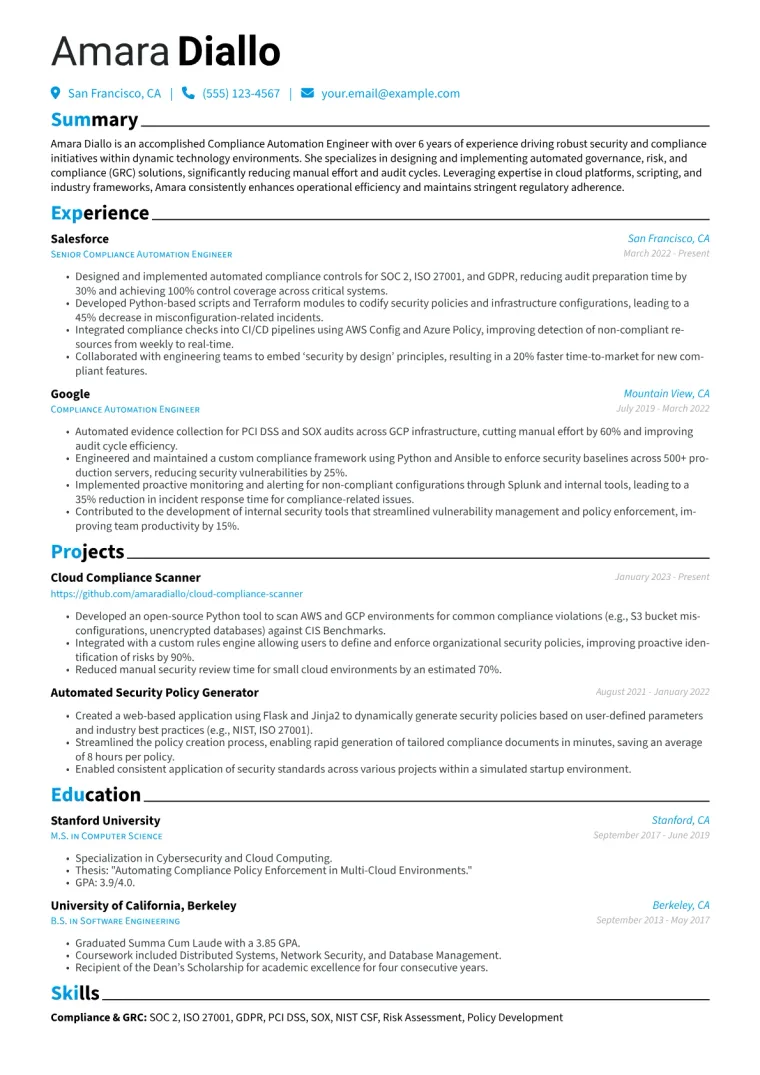
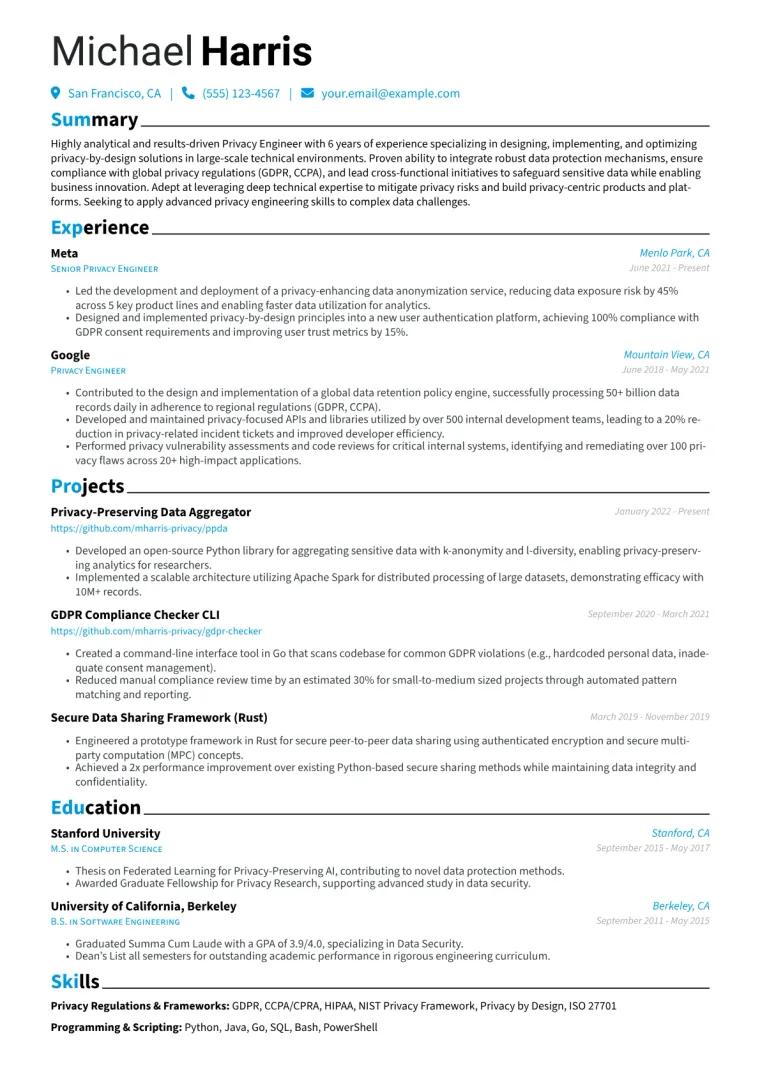
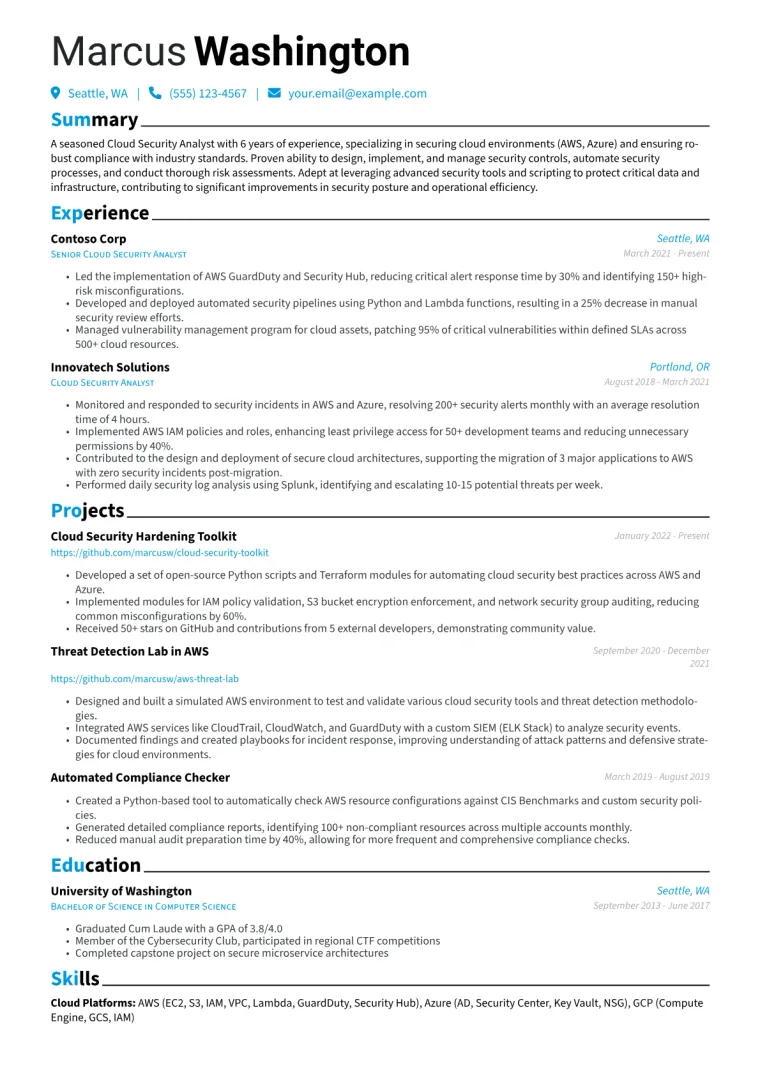
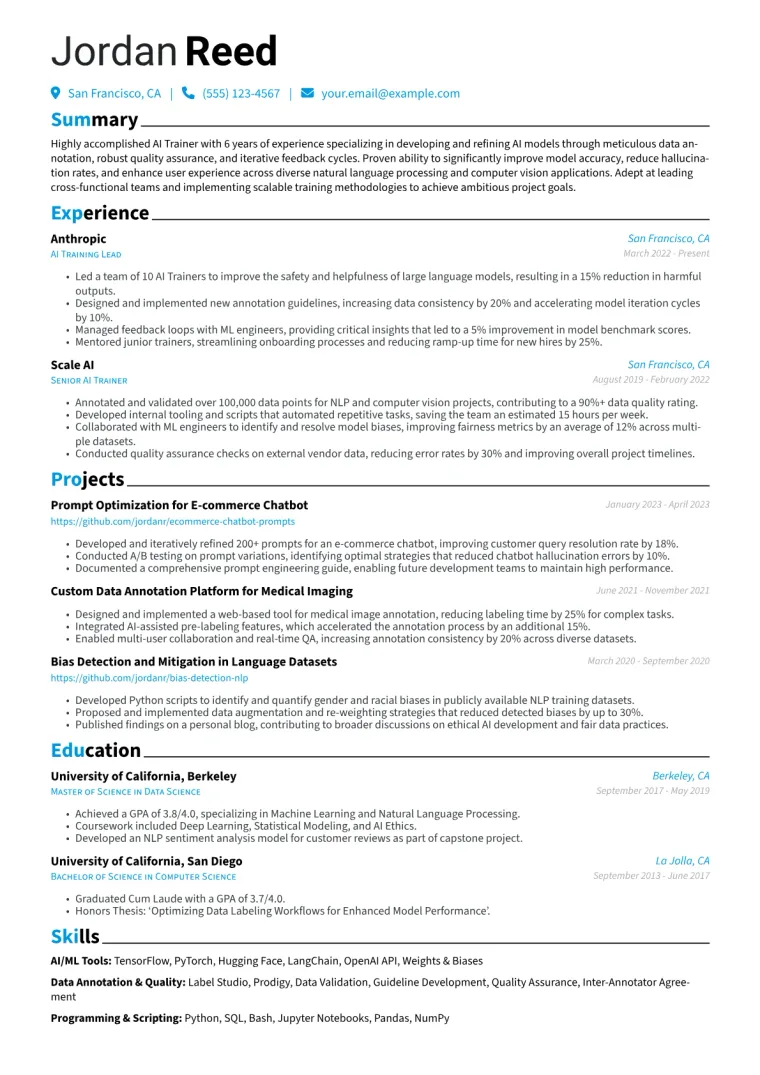
RegTech Developer resume samples
Three complete resumes, each in a different design.
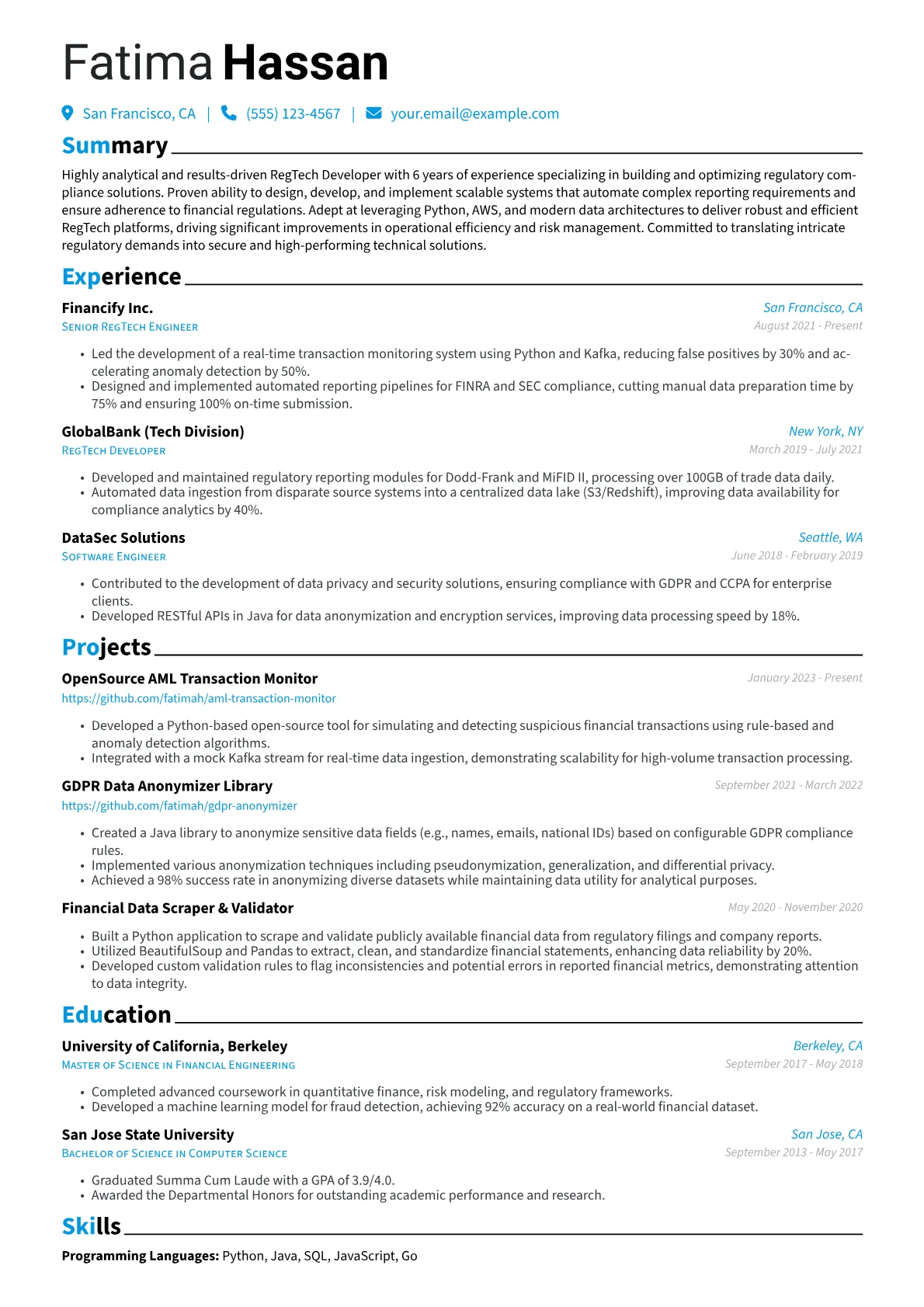

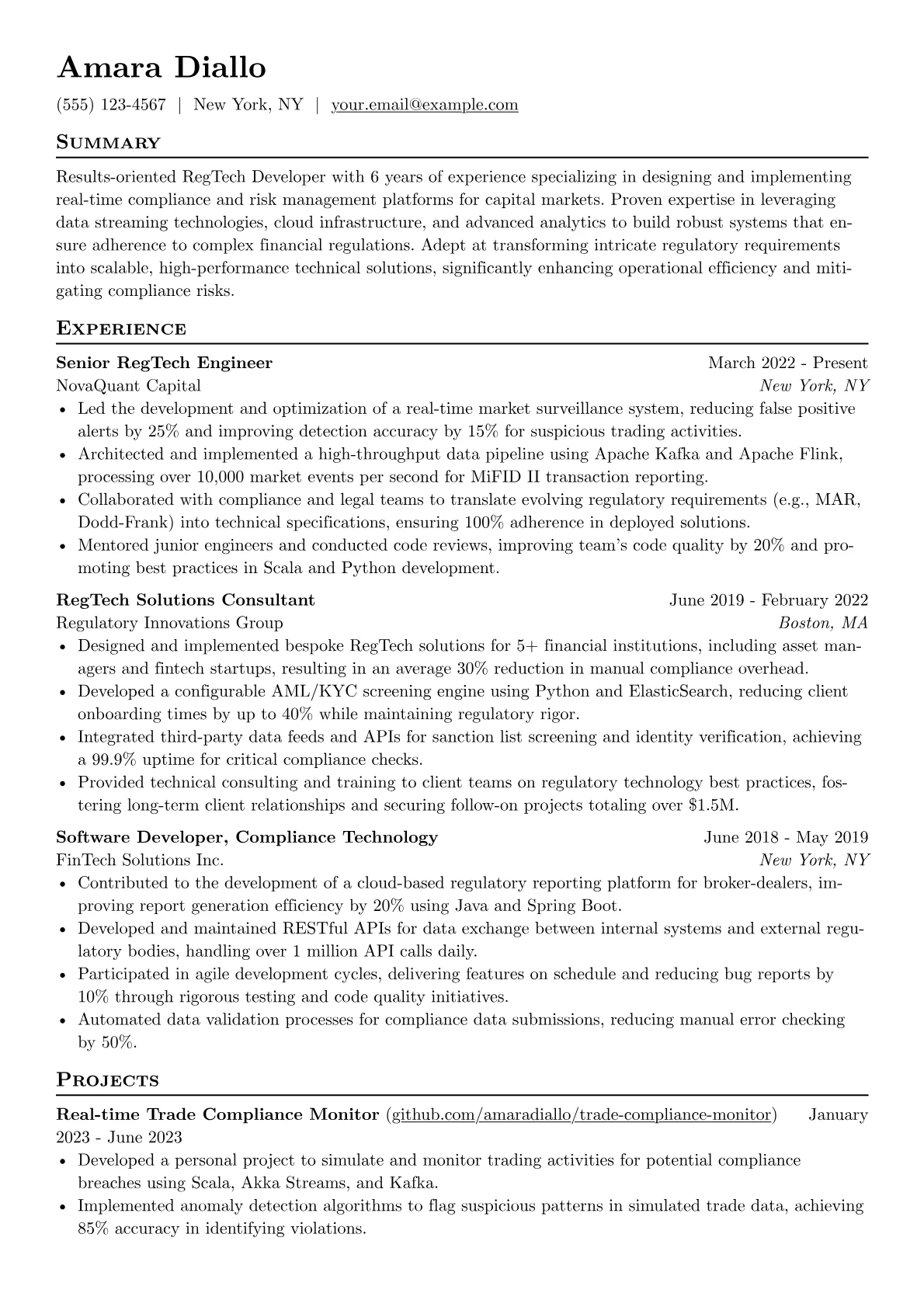
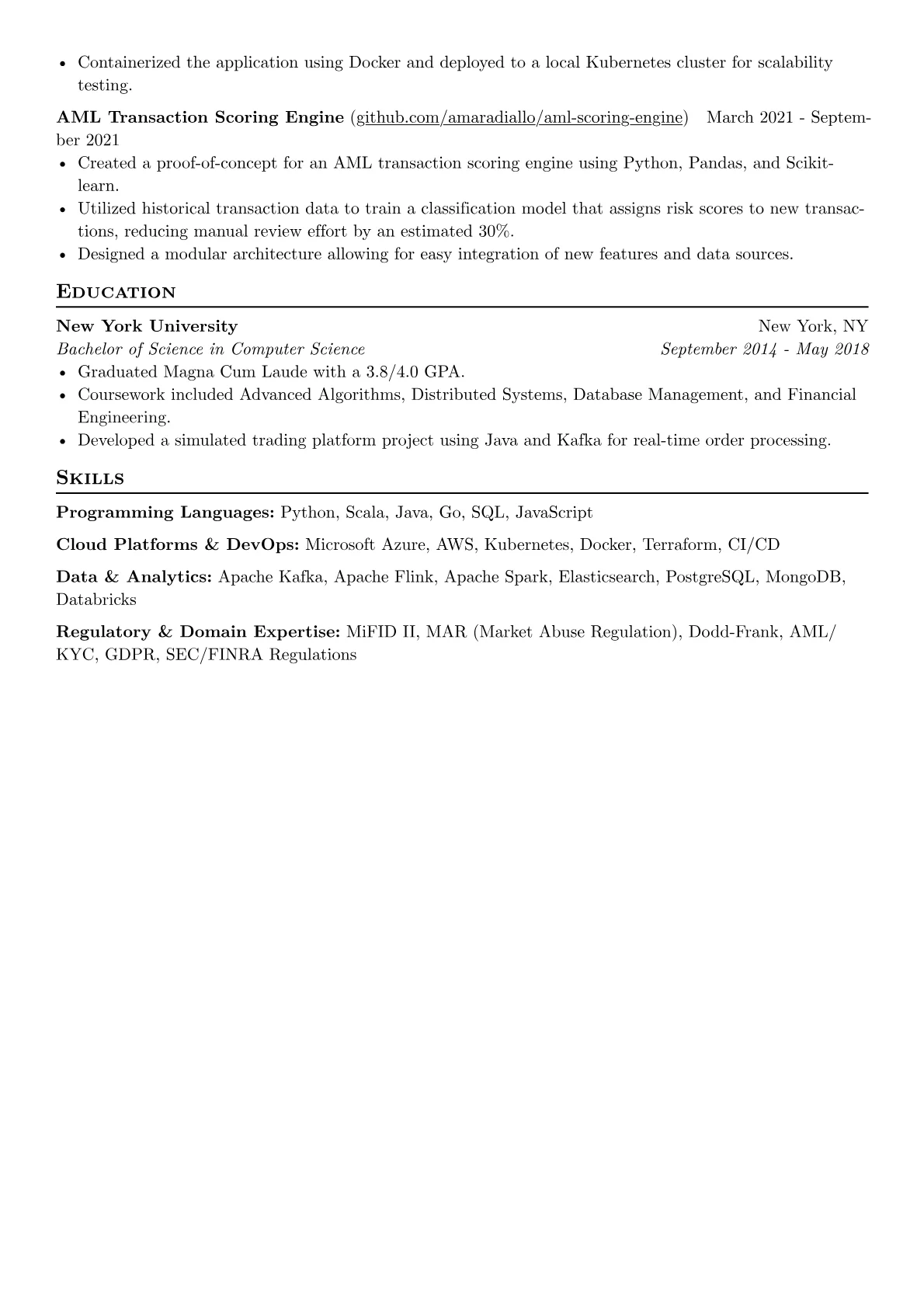
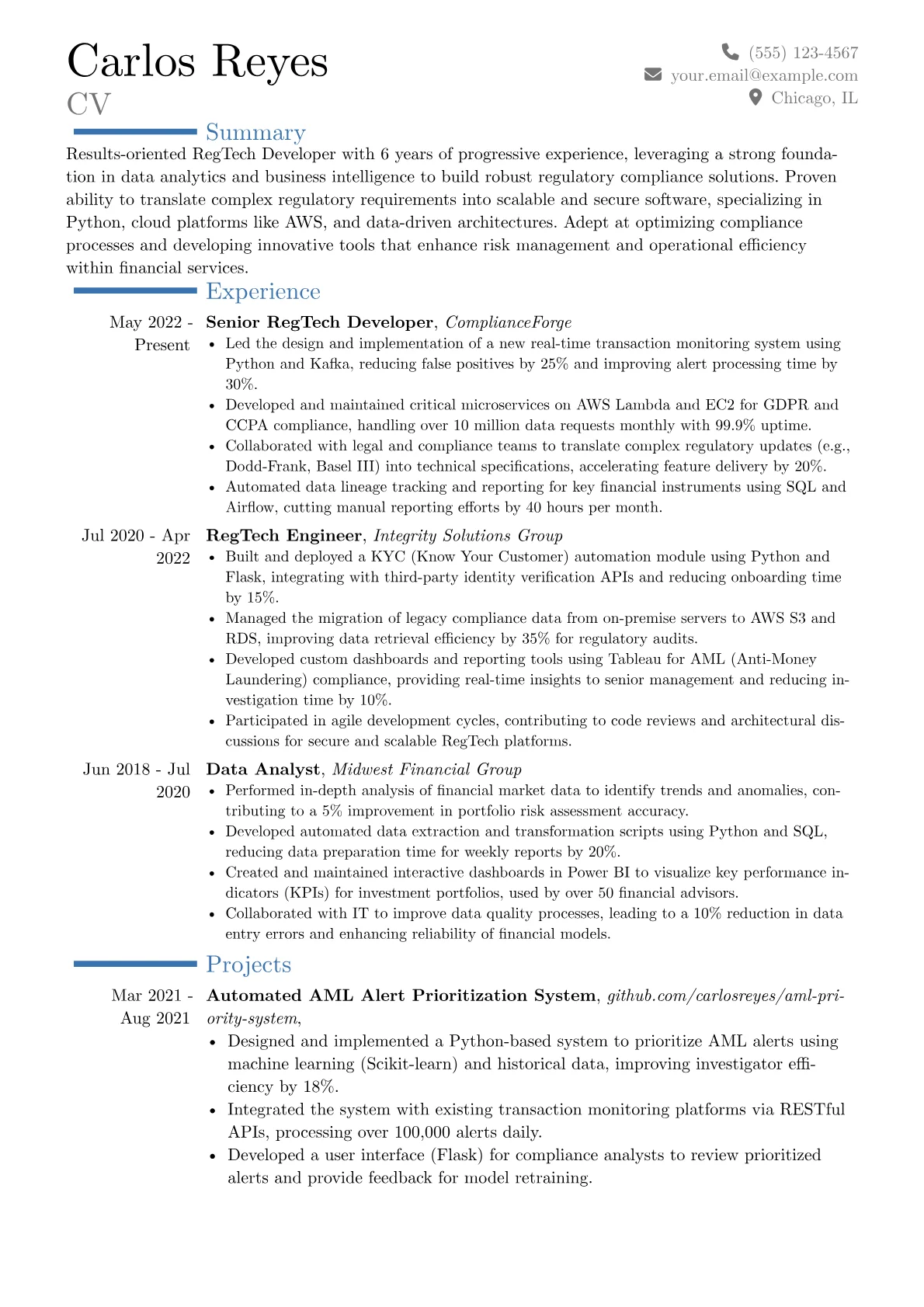
Free to use. No download fee.
What makes a strong RegTech Developer resume?
US median salary $140,620 ·
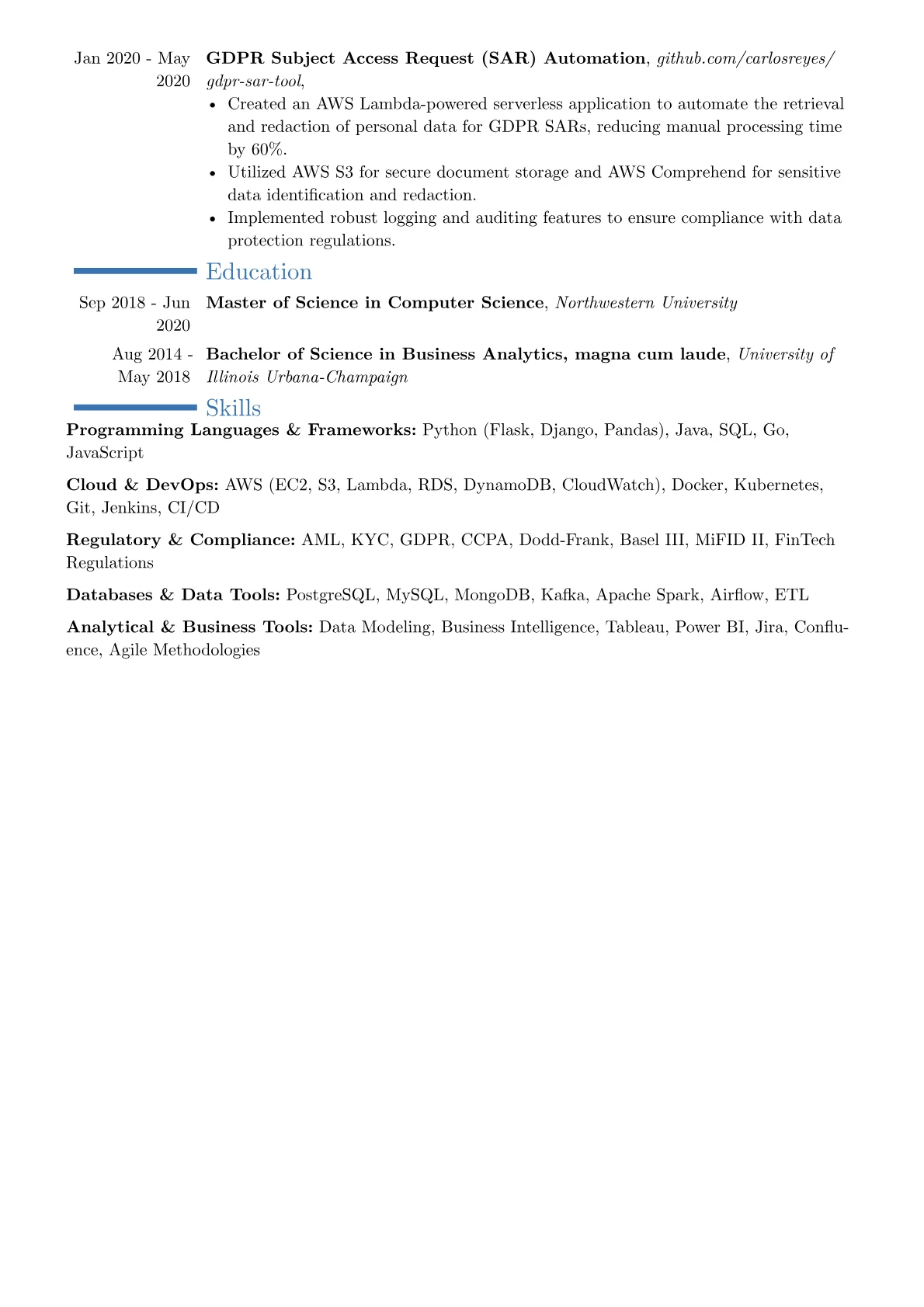
Hiring managers for RegTech Developer roles seek candidates who blend robust software engineering skills with a keen understanding of regulatory compliance frameworks. A strong resume highlights experience with financial regulations like GDPR or MiFID II, demonstrating how technical solutions addressed specific compliance challenges. Key achievements should show impact, such as automating regulatory reporting, building secure data pipelines for financial data, or developing risk management systems. Proficiency in technologies like immutable ledgers, secure APIs, and data privacy frameworks is crucial, alongside any relevant financial or cloud security certifications.
Why this example works
This example CV effectively structures a mid-level RegTech Developer's profile. It quantifies achievements by detailing specific project outcomes, for instance, reducing manual compliance checks by a percentage or processing millions of transactions daily through custom compliance engines. Skills are logically grouped, separating core programming languages like Java or Python from cloud platforms (AWS, Azure) and critical regulatory knowledge areas such as AML or KYC. The template prominently features relevant certifications like CAMS or specific tools used for data governance and security within financial contexts.
How useful was this template?
Example by JobSproutRegTech Developer resume summary example
Highly analytical and results-driven RegTech Developer with 6 years of experience specializing in building and optimizing regulatory compliance solutions. Proven ability to design, develop, and implement scalable systems that automate complex reporting requirements and ensure adherence to financial regulations. Adept at leveraging Python, AWS, and modern data architectures to deliver robust and efficient RegTech platforms, driving significant improvements in operational efficiency and risk management. Committed to translating intricate regulatory demands into secure and high-performing technical solutions.
RegTech Developer salary by country
| Country | 25th percentile | Median | 75th percentile |
|---|---|---|---|
| US | $109,772 | $140,620 | $144,861 |
| UK | £46,059 | £60,012 | £72,658 |
| Canada | C$86,152 | C$113,871 | C$140,800 |
| Australia | A$101,935 | A$126,667 | A$147,857 |
| Germany | €59,500 | €70,570 | €77,887 |
| France | €37,875 | €44,167 | €49,750 |
| Netherlands | €55,000 | €66,667 | €74,250 |
| Italy | €25,000 | €31,250 | €38,750 |
| Austria | €46,250 | €58,750 | €67,500 |
| New Zealand | NZ$102,500 | NZ$120,000 | NZ$162,500 |
| India | ₹570,786 | ₹1,167,051 | ₹1,840,563 |
| Poland | zł186,440 | zł209,338 | zł232,236 |
Annual salaries in local currency, aggregated from live job postings via Adzuna. Figures refresh continuously and reflect advertised pay, not negotiated offers.
RegTech Developer resume skills and keywords
Recruiters and applicant tracking systems scan RegTech Developer resumes for these skills and keywords. Include the ones that match your experience and mirror the wording in the job description. Check your resume against them with the free ATS checker.
Hard skills
Tools & software
Certifications
Soft skills
Market Insights
RegTech Developer
Salary Range
Salary Trend
Mar 2025 – Feb 2026
12-Month Trend
Based on advertised Software Engineering roles.
US market data · Source: Adzuna · Updated Mar 2026
Frequently Asked Questions
What's the best resume structure for a mid-level RegTech Developer?
Which key skills and qualifications should I highlight as a mid-level RegTech Developer?
How should I write strong achievement bullets and a professional summary for a RegTech Developer?
What optional sections matter for a mid-level RegTech Developer's resume?
How can I tailor my RegTech Developer resume for a specific job posting, and can JobSprout help?
The blank page is the hard part. Skip it.
Free to use. No download fee.
Related Articles
![How to Write a CV for Tech Applications [2026 Guide]](/thumbnails/cv-for-tech-applications.webp)
How to Write a CV for Tech Applications [2026 Guide]
Learn how to write a software engineering CV that gets interviews. Real template analysis, what hiring managers look for, and common mistakes to avoid.
![How to Write a CV That Shows Startup Experience [2026 Guide]](/thumbnails/cv-for-startup-engineers.webp)
How to Write a CV That Shows Startup Experience [2026 Guide]
Learn how to write a CV that showcases founding engineer and startup experience. Real example from JobSprout's creator, what hiring managers look for, and how to position breadth as a strength.