PDF or DOCX · up to 2MB
Declining a job offer is awkward, but doing it well is a career skill. Use these 7 email templates to say no gracefully, preserve the relationship, and keep the door open for future opportunities.
Write a prompt engineer resume that gets interviews. Full resume example, summary templates, 10+ experience bullets, technical skills breakdown, and tips for career changers from software engineering, copywriting, data science, and UX research.
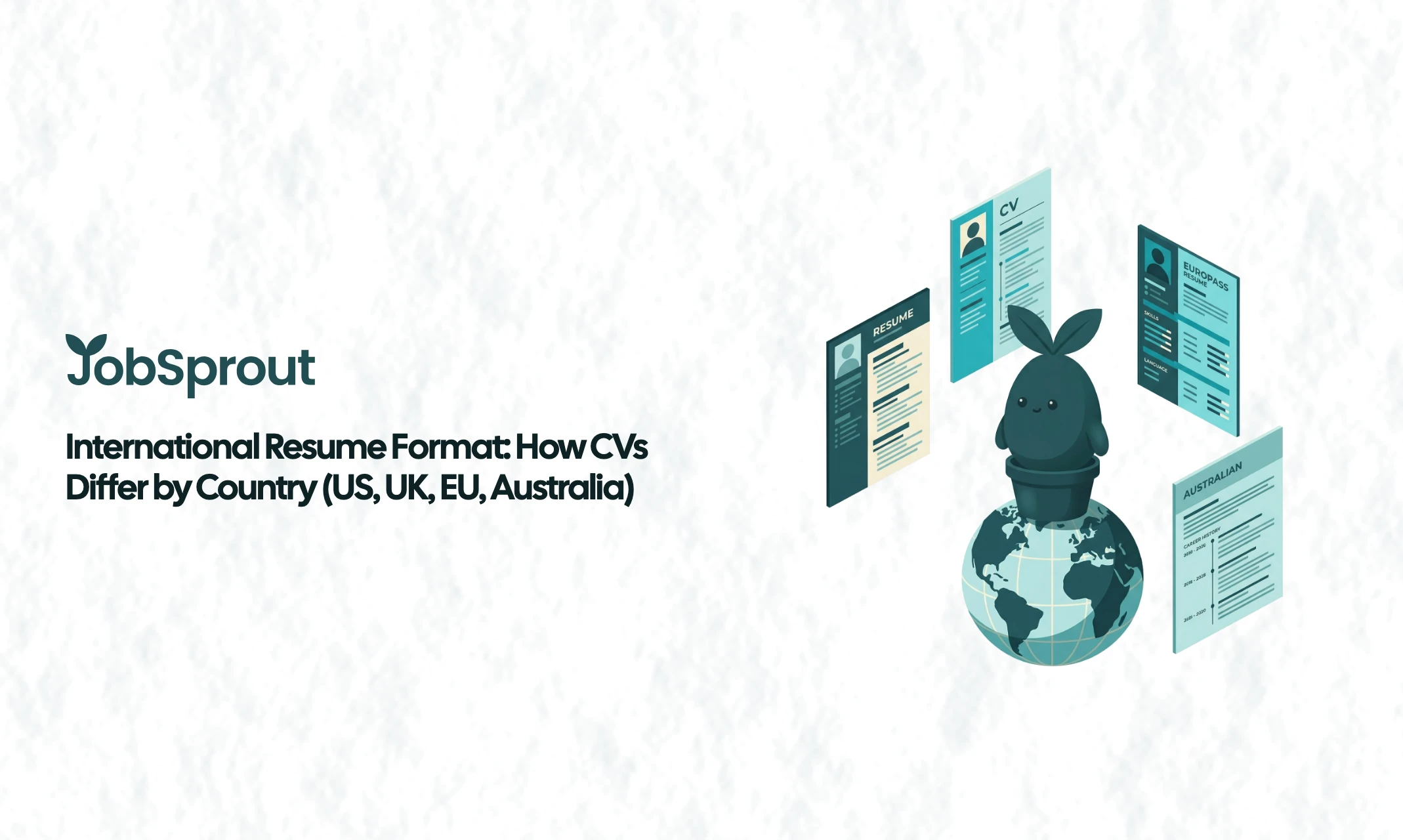
Learn how resume and CV formats differ across countries. Covers the US, UK, Germany, France, Australia, Japan, and the Middle East with comparison tables and practical tips.
Learn how to write a resume for an internal transfer. Includes a full example, summary templates for lateral moves, promotions and department changes, weak vs strong comparisons, and advice on navigating the politics.
Turning down a job offer is one of those career moments that nobody prepares you for. You spent weeks applying, interviewing, and waiting for the decision. The company invested time evaluating you. And now you need to say no.
It feels uncomfortable. That is completely normal. But here is the thing most people get wrong: they treat declining as an ending. In reality, how you decline a job offer is the beginning of a long-term professional relationship. The hiring manager you politely turn down today might be the person who refers you to your dream role in three years. The recruiter you ghost this week might be the one sourcing for a position you desperately want next year.
Research consistently shows that a significant majority of professionals are hired at companies where they have an existing connection. Every interaction in your career, including the ones where you say no, is a node in that network.
This guide gives you the exact formula for declining any offer gracefully, seven email templates you can adapt to your situation, and the principles that separate a bridge-burning rejection from a door-opening one.
Before we get into how to decline, let's clarify when declining is the right call. If any of these situations apply, you are making the correct decision by saying no.
| Situation | Why Declining Is Right |
|---|---|
| You accepted another offer | You have already committed elsewhere. Stringing the other company along wastes everyone's time. |
| The salary is too low | If you have negotiated and the company cannot meet your minimum, the gap is unlikely to close after you start. |
| The culture feels wrong | Red flags during the interview process rarely improve after you join. Trust your instincts. |
| Personal or family reasons | Relocation timing, caregiving responsibilities, or health considerations are all valid. You do not owe anyone a detailed explanation. |
| Something feels off about the role | The job description changed between interviews, the team dynamic seemed tense, or the role is not what you expected. These are legitimate reasons. |
| You realised you do not want to leave your current job | Sometimes the interview process clarifies that your current position is actually the better fit. |
| The commute, hours, or flexibility do not work | Practical logistics matter. A role that sounds perfect on paper but requires three hours of daily commuting is not perfect in practice. |
The key principle: if you know the answer is no, say it quickly. Every day you delay is a day the company cannot extend the offer to their second-choice candidate, who might be someone who genuinely wants the role.
Every effective job offer decline follows the same structure. You do not need to overthink this. The formula is:
Gratitude + Decision + Brief Reason + Door Open
Here is what each part does:
The entire email should be 100 to 150 words. Anything longer and you risk over-explaining, which often comes across as defensive or insincere.
Each template below follows the four-part formula. Adapt the details to your situation, but keep the structure intact.
Subject: Re: Offer for [Role Title] at [Company Name]
Dear [Hiring Manager's Name],
Thank you so much for offering me the [Role Title] position at [Company Name]. I genuinely enjoyed learning about the team and the work you are doing in [specific area discussed during interviews].
After careful consideration, I have decided to accept another opportunity that more closely aligns with my current career goals. This was not an easy decision, and I want you to know how much I appreciated the time and thought your team put into the interview process.
I have a great deal of respect for [Company Name] and would welcome the chance to stay in touch. I hope our paths cross again in the future.
Warm regards, [Your Name]
When to use: You received multiple offers and chose a different one. This is the most common decline scenario.
Why it works: It acknowledges the effort the company invested, gives a clear reason without oversharing which company you chose, and leaves the relationship on a positive note. Saying "more closely aligns with my current career goals" is honest without being comparative or insulting.
Subject: Re: Offer for [Role Title] at [Company Name]
Dear [Hiring Manager's Name],
Thank you for the offer to join [Company Name] as [Role Title]. I was impressed by [specific positive aspect of the company or team], and the conversations I had with your team reinforced my respect for the work you are doing.
After reviewing the full compensation package, I have concluded that we are not quite aligned on this front. I explored whether there was flexibility, and I understand the constraints on your end. Given where I am in my career, I have decided to pursue a different direction.
I genuinely hope we can stay connected. I think highly of [Company Name] and would be interested in exploring opportunities together in the future if the timing and fit are right.
Best regards, [Your Name]
When to use: You negotiated the salary and the company could not meet your requirements. Only use this after you have actually attempted negotiation. Declining without negotiating first leaves money on the table.
Why it works: It references that you tried to find middle ground, which shows good faith. It avoids stating a specific number or comparing their offer unfavourably to another. The phrase "not quite aligned" is diplomatic without being vague.
Subject: Re: Offer for [Role Title] at [Company Name]
Dear [Hiring Manager's Name],
Thank you for offering me the [Role Title] position. I am grateful for the time you and the team spent walking me through the role, the projects, and the company's direction.
After reflecting on our conversations, I have decided that this particular role is not the right fit for the direction I want to take my career. This is entirely about alignment with my own goals, and it does not diminish my respect for what [Company Name] is building.
I would love to stay connected, and if a different type of role opens up in the future, I would be very interested in hearing about it.
With appreciation, [Your Name]
When to use: The role itself was not what you expected, the responsibilities shifted during the interview process, or you realised the day-to-day work would not suit your strengths or interests.
Why it works: It makes clear the issue is fit, not quality. The line "this is entirely about alignment with my own goals" prevents the hiring manager from feeling their role was being judged as inadequate. Mentioning future roles signals that you are open to the company, just not this specific position.
Subject: Re: Offer for [Role Title] at [Company Name]
Dear [Hiring Manager's Name],
Thank you sincerely for offering me the [Role Title] role at [Company Name]. The interview process was excellent, and I came away with a strong impression of both the team and the company culture.
Unfortunately, due to personal circumstances that have recently developed, I am not in a position to take on a new role at this time. This was a difficult decision, as I was genuinely excited about the opportunity.
I hope this does not close the door on working together in the future. I would welcome the chance to reconnect when my circumstances allow.
Kind regards, [Your Name]
When to use: A family situation, health issue, relocation complication, or other personal matter means the timing is wrong. You do not need to specify what the circumstances are.
Why it works: It is honest without oversharing. The phrase "personal circumstances that have recently developed" explains the timing without inviting follow-up questions. Expressing that you were "genuinely excited" reinforces that the decline is not a reflection of the company.
Subject: Re: Offer for [Role Title] at [Company Name]
Dear [Hiring Manager's Name],
I want to start by thanking you for your patience. I know I have taken some time with this decision, and I appreciate you giving me the space to think it through carefully.
After considerable thought, I have decided to decline the offer for the [Role Title] position. This was genuinely one of the hardest career decisions I have faced recently. [Company Name] and the team left a strong impression on me, and the role has a great deal to offer.
Ultimately, I concluded that [brief reason, e.g., "my current trajectory better serves my long-term goals" or "the timing is not right for this transition"]. I did not want to accept and then not give you and the team the full commitment you deserve.
I hope we can stay in touch. I have enormous respect for what you are building.
Sincerely, [Your Name]
When to use: You asked for extra time to decide and are now declining. The company extended you a courtesy, and your response needs to acknowledge that.
Why it works: It leads with gratitude for their patience, which addresses the elephant in the room. Saying the decision was hard is appropriate here because you genuinely deliberated. The line about not wanting to accept without full commitment reframes the decline as a sign of integrity, not indecision.
Subject: [Role Title] Position - An Important Update
Dear [Hiring Manager's Name],
I am writing to share something I do not take lightly. After accepting the offer for the [Role Title] position at [Company Name], I have come to the difficult conclusion that I need to reverse my decision.
I understand this is not what you expected to hear, and I sincerely apologise for the disruption this causes to your plans and timeline. [Brief reason, e.g., "A personal situation has changed significantly since I accepted" or "I received an opportunity that I was not expecting, and after serious reflection, I believe it is the right path for me."]
I take full responsibility for the inconvenience this creates, and I wanted to tell you as soon as possible so your team can move forward without further delay.
I understand if this changes how you view working together in the future, but I want you to know that my respect for you and the team at [Company Name] is genuine. I wish you every success in finding the right person for this role.
With sincere apologies, [Your Name]
When to use: You already said yes, and now you need to say no. This is the most uncomfortable scenario on this list, and it requires the most care.
Why it works: It does not minimise the impact. Acknowledging that this causes disruption and taking responsibility shows maturity. The tone is apologetic without being grovelling. It prioritises informing them quickly, which is the single most important thing you can do in this situation. Note that this template does not try to "keep the door open" aggressively, because the relationship is more strained and a lighter touch is appropriate.
Important note: If you have signed a formal employment contract, check the terms before withdrawing. In most cases during the notice period or before a start date, you can still withdraw. But some contracts include restrictive clauses. When in doubt, consult an employment adviser.
Subject: [Role Title] - My Decision
Dear [Manager's Name],
Thank you for putting me forward for the [Role Title] position and for your support throughout this process. It means a great deal to know that you and the leadership team see that potential in me.
After thinking carefully about the move, I have decided to stay in my current role for now. [Brief reason, e.g., "I feel there is still meaningful work for me to complete in my current position" or "The timing does not feel right for this transition given my current project commitments."]
I want to be clear that I am committed to the team and to continuing to grow here. I hope this does not affect your willingness to consider me for future opportunities as they arise.
I am happy to discuss this in person if you would like.
Best, [Your Name]
When to use: Your current employer offers you a promotion, a lateral move, or a new role internally, and you want to say no without damaging the relationship with your manager.
Why it works: Internal declines are politically sensitive. This template reaffirms commitment to the company and the team, which addresses the unspoken fear that declining means you are disengaged or planning to leave. Offering to discuss in person shows respect for the relationship and avoids the impression that you are hiding behind email.
Not every decline belongs in an email. Here is a quick guide for choosing the right medium.
| Scenario | Best Medium | Why |
|---|---|---|
| Standard decline after receiving a written offer | Matches the communication channel. Creates a record. | |
| You have built a personal rapport with the hiring manager | Phone first, then email confirmation | The personal touch matters when you have a genuine connection. Follow up in writing. |
| Declining after accepting | Phone first, then email | The gravity of the situation warrants a real conversation. Do not hide behind text. |
| Declining an internal offer | In person, then email | Your manager deserves a face-to-face conversation. Follow up in writing for clarity. |
| Recruiter you have only exchanged emails with | Calling someone you have only emailed can feel jarring. Match the existing dynamic. | |
| You were referred by someone in the company | Phone the referrer, email the hiring manager | Your referrer put their credibility on the line. Give them a personal heads-up first. |
If you do choose to decline by phone, keep the call brief (five to ten minutes), follow the same four-part formula, and always send a written follow-up the same day. The email creates the record and ensures nothing is misunderstood.
The short answer: yes, but keep it brief.
Giving no reason at all feels evasive and can leave the hiring manager filling in the blanks with assumptions that may be worse than the truth. Giving too much detail, on the other hand, invites debate, makes you sound defensive, or risks insulting the company.
Here is a practical framework:
Safe reasons to share:
Reasons to keep to yourself:
The rule of thumb: share the reason if it is about your situation. Keep it private if it is a criticism of their situation. Even if your feedback is valid, a decline email is not the right venue. If they ask for interview feedback separately, that is a different conversation.
Saying "I would love to stay in touch" is easy. Actually staying in touch is the part most people skip. Here are concrete actions that turn a polite decline into a lasting professional connection.
Connect on LinkedIn within 24 hours of declining. Send a personalised connection request that references your conversation. Something like: "It was great learning about the team at [Company]. I would love to stay connected." This is low-effort and high-value.
Engage with their content. If the hiring manager or company posts on LinkedIn, comment thoughtfully once every few months. This keeps you visible without being intrusive.
Send a note when something relevant happens. If you see the company launch a product, win an award, or get featured in the press, send a quick message. "Saw the news about [X]. Congratulations to the team." This takes 30 seconds and demonstrates genuine interest.
Refer other candidates. If you know someone who would be a great fit for the role you declined, make the introduction. This is one of the most powerful relationship-building moves you can make. It turns your decline into a net positive for the hiring manager.
Check in annually. Set a reminder to reach out once a year. A simple "How are things going at [Company]?" keeps the connection alive. You never know when the timing will be right on both sides.
For more strategies on maintaining professional connections, see our guide to networking email templates.
These are the errors that damage relationships and close doors. Avoid all of them.
This is the single worst thing you can do. The company invested hours in your candidacy. Disappearing without a word is disrespectful, unprofessional, and surprisingly common. According to Indeed research, a notable percentage of job seekers have ghosted an employer after receiving an offer. Every one of those people burned a bridge they might need later.
If you are avoiding the conversation because it feels awkward, use one of the templates above. It takes two minutes. The discomfort of sending the email is nothing compared to the long-term cost of being known as someone who disappears.
"Your interview process was chaotic, the salary was insulting, and I got a bad vibe from the team lead." Even if all of this is true, a decline email is not the place for it. Constructive feedback can be delivered if they ask for it in a separate conversation. Unsolicited criticism in a decline email just feels like a parting shot.
"I am so, so sorry. I feel terrible about this. I know this is awful timing. I really hope you are not too disappointed." Excessive apology undermines your professionalism. You are allowed to say no. Apologise once, briefly, and move on.
If you have no interest in ever working with this company, do not say "I would love to explore opportunities in the future." That creates false expectations. A simple "I wish you and the team all the best" is a gracious close that does not promise anything.
Every day you sit on a decline is a day the company cannot move forward. If you know the answer is no, say so within 24 to 48 hours. The company's second-choice candidate may accept another offer in the meantime, and your delay directly harms someone else's career opportunity.
Unless a recruitment agency is formally managing the process, do not ask someone else to deliver the news for you. The hiring manager extended the offer to you personally. Your response should come directly from you.
If you have already decided to decline, do not try to negotiate "just to see" if they will match a competing offer. This wastes everyone's time and can come across as manipulative. If there is a number that would genuinely change your mind, negotiate in good faith. If no number would change your mind, decline cleanly.
How you handle declines is a reflection of how you manage your entire job search. If you are juggling multiple applications, interviews, and offers simultaneously, having a system matters.
Tools like JobSprout can help you keep your application materials organised so that when you do need to decline, you have all the context at your fingertips: the role details, the people you spoke with, and the timeline of your interactions. When you are managing several opportunities at once, this kind of organisation prevents the most common decline mistake of all, which is simply forgetting to respond.
Similarly, knowing how to email a resume professionally and how to negotiate salary effectively means that by the time you reach the decline stage, you have already established yourself as a thoughtful, professional candidate. Declining well is the final chapter of that impression.
Before you send your decline email, run through this list:
| Check | Why It Matters |
|---|---|
| Did you thank them for something specific? | Generic gratitude feels hollow. Specific gratitude feels genuine. |
| Is your decision stated clearly? | Ambiguity leads to follow-up calls trying to change your mind. |
| Is your reason brief (1-2 sentences)? | Longer explanations invite debate or sound defensive. |
| Did you avoid criticising the company? | Even valid criticism in a decline email burns bridges. |
| Did you proofread for tone? | Read it aloud. Does it sound respectful and confident, not apologetic or cold? |
| Are you sending it within 48 hours? | Promptness is a form of respect. |
| Did you connect on LinkedIn? | The follow-up action that most people skip. |
Declining a job offer is not the end of a relationship. It is the beginning of a different kind of one. The hiring managers, recruiters, and team members you interact with during your job search are all part of your professional network. How you say no determines whether they remember you as someone they would hire in a heartbeat or someone they would never consider again.
The formula is simple. Be grateful, be clear, be brief, and be kind. Two minutes of thoughtful writing can protect a professional relationship for years.
Use the templates above, adapt them to your voice, and send the email today. The longer you wait, the harder it gets, and the worse the impression you leave.