PDF or DOCX · up to 2MB
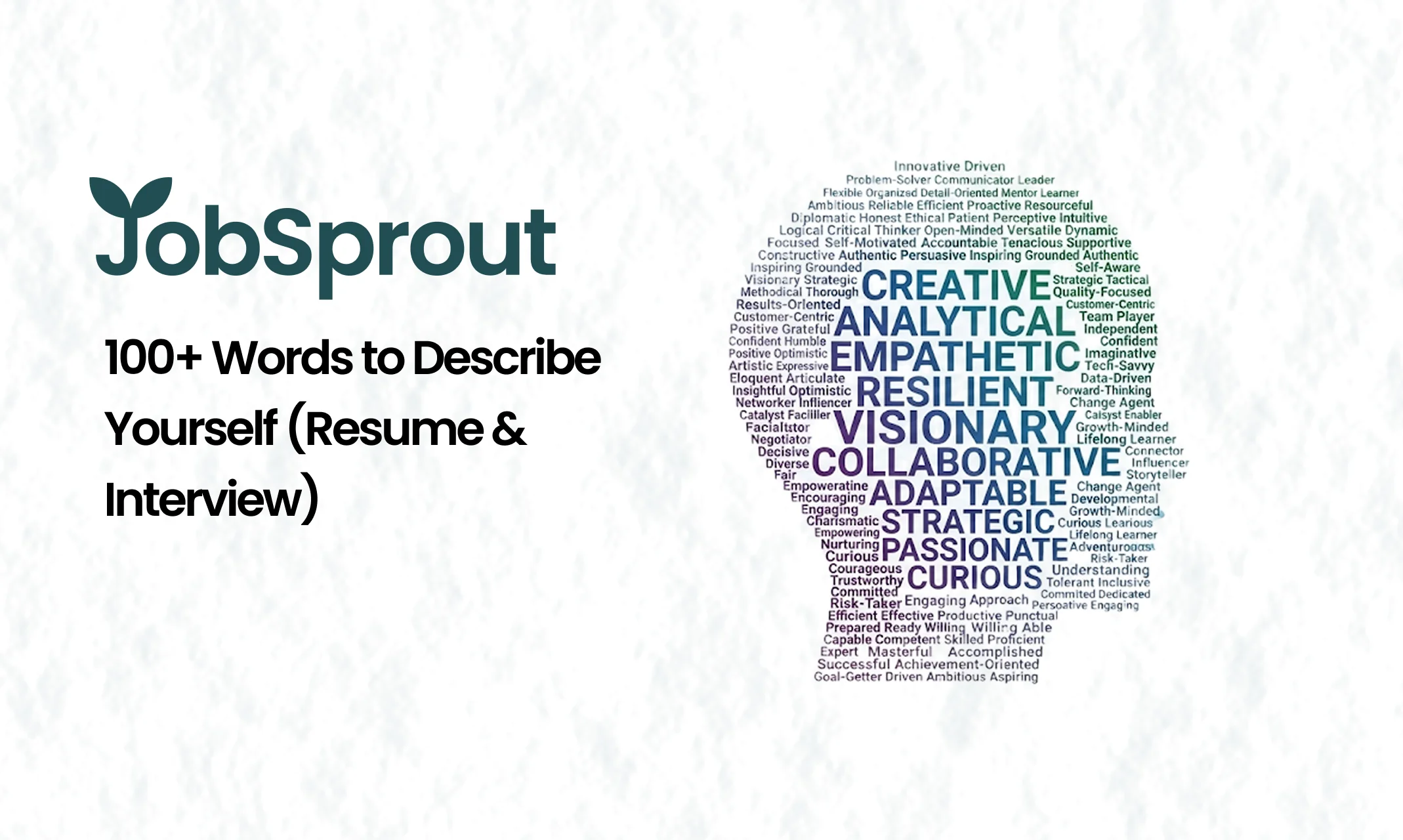
Find the perfect words to describe yourself in interviews and on your resume. 100+ adjectives organised by skill type with usage examples.
Browse 30+ professional bio examples for LinkedIn, company websites, conferences, and social media. Includes templates for every industry, career level, and platform.
Write a prompt engineer resume that gets interviews. Full resume example, summary templates, 10+ experience bullets, technical skills breakdown, and tips for career changers from software engineering, copywriting, data science, and UX research.
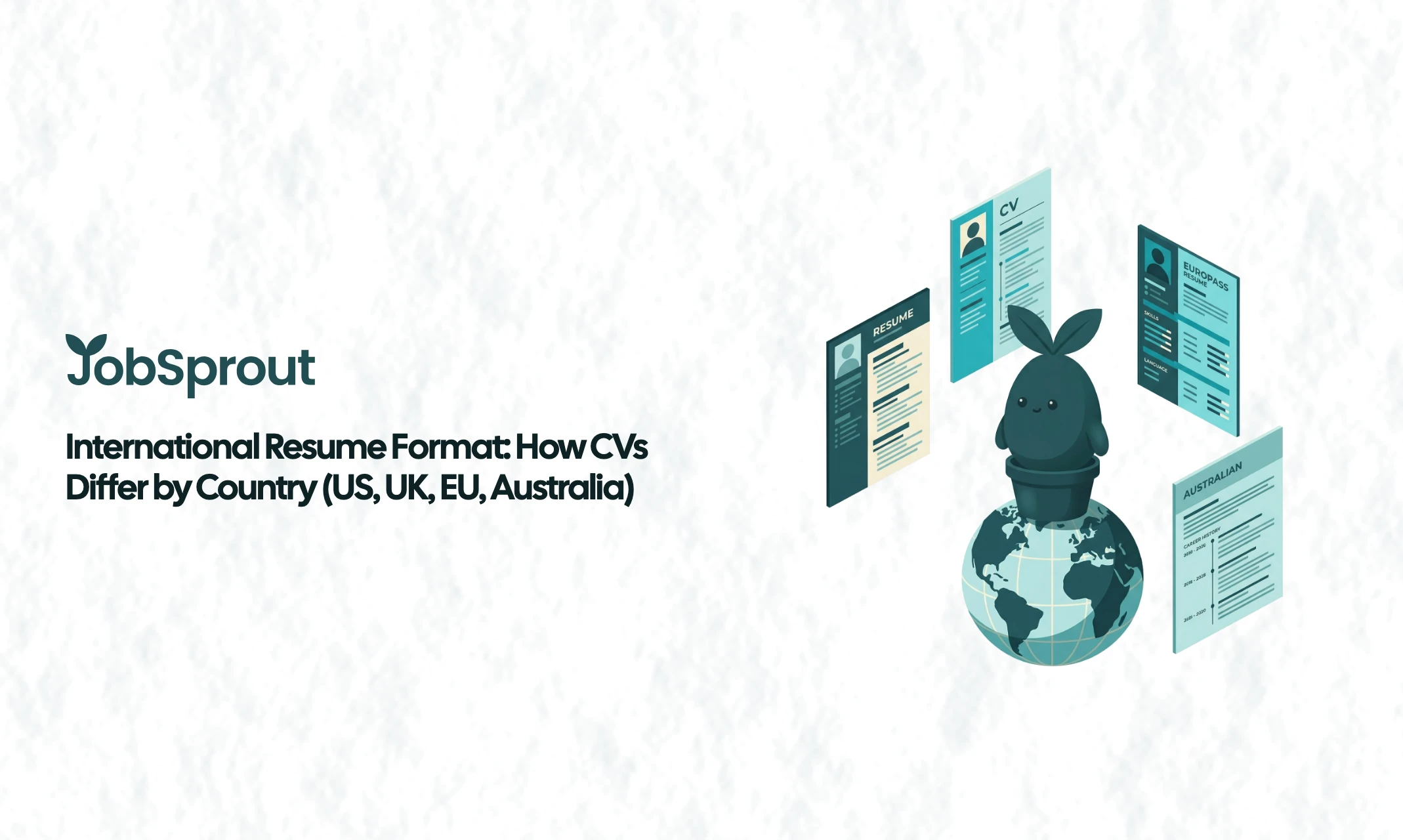
Learn how resume and CV formats differ across countries. Covers the US, UK, Germany, France, Australia, Japan, and the Middle East with comparison tables and practical tips.
"How would you describe yourself?"
It's one of the most common interview questions, and one of the hardest to answer well. Say something generic like "hardworking" and you sound like everyone else. Say something too bold and you seem arrogant.
The same challenge applies to your resume. In the 6-7 seconds recruiters spend scanning, the words you choose shape how they perceive you before you've even spoken.
This guide gives you 100+ words to describe yourself, organised by category, with examples of how to use them effectively in both interviews and on your CV.
Prefer to browse and copy? Try our interactive words-to-describe-yourself explorer, filterable by category and by where you're using them.
According to analysis by Rezi.ai of over 100,000 resumes, overused buzzwords like "hardworking" and "team player" appear so frequently that they've lost all impact. Recruiters see them dozens of times per day.
Meanwhile, research from Career Builder found that 68% of hiring managers spend less than two minutes on a resume. Your word choices determine whether you stand out or blend in.
The right words:
Here's what it looks like when JobSprout's AI assistant reviews a CV and suggests stronger word choices in real time:
Before we get to the word lists, remember this: any word you use to describe yourself needs evidence.
Weak: "I'm a creative person."
Strong: "I'd describe myself as creative. In my last role, I developed a new client onboarding process that reduced setup time by 40% and was adopted company-wide."
The word opens the door. The example walks through it.
These words demonstrate dedication, reliability, and commitment.
| Word | Definition |
|---|---|
| Diligent | Showing careful and persistent effort |
| Dedicated | Devoted to a task or purpose |
| Reliable | Consistently good in quality; dependable |
| Conscientious | Thorough and attentive to detail |
| Persistent | Continuing firmly despite difficulty |
| Disciplined | Self-controlled and focused |
| Tenacious | Holding firmly to a purpose |
| Industrious | Hard-working and productive |
| Committed | Dedicated to a cause or activity |
| Driven | Motivated to achieve goals |
| Proactive | Acting in anticipation rather than reacting |
| Self-motivated | Able to work without external pressure |
| Thorough | Complete with attention to detail |
| Punctual | Consistently on time |
| Accountable | Taking responsibility for actions |
Interview:
"I'd describe myself as diligent. When I took over the quarterly reporting process, I noticed several inconsistencies that had been overlooked for years. I created a verification checklist that caught errors before they reached stakeholders and became the standard process for our department."
Resume:
"Diligent financial analyst who identified £160K in reporting discrepancies and implemented verification processes that eliminated future errors."
Tip: Choosing the right words is step one. JobSprout's AI writer helps you weave them into polished resume bullet points tailored to your target role.
These words demonstrate your ability to guide, inspire, and manage others.
| Word | Definition |
|---|---|
| Strategic | Relating to long-term planning and goals |
| Visionary | Thinking about the future with imagination |
| Decisive | Able to make decisions quickly and confidently |
| Influential | Having impact on others' decisions |
| Empowering | Giving others confidence and authority |
| Mentoring | Advising and training less experienced people |
| Collaborative | Working jointly with others |
| Diplomatic | Skilled at handling sensitive situations |
| Inspiring | Motivating others through example or words |
| Authoritative | Commanding respect through expertise |
| Supportive | Providing encouragement and assistance |
| Delegating | Assigning responsibility effectively |
| Inclusive | Ensuring everyone feels valued |
| Motivating | Providing reasons for others to act |
| Assertive | Confidently self-assured |
Interview:
"I'd say I'm collaborative. I believe the best solutions come from diverse perspectives. When leading the product redesign, I created cross-functional working groups that brought together engineering, design, and customer success. The result was a product that addressed user needs we wouldn't have identified working in silos."
Resume:
"Collaborative leader who built cross-functional teams that delivered product redesign increasing user satisfaction by 35%."
These words demonstrate analytical thinking and the ability to overcome challenges.
| Word | Definition |
|---|---|
| Analytical | Skilled at examining details systematically |
| Resourceful | Finding quick and clever ways to overcome difficulties |
| Innovative | Introducing new ideas or methods |
| Methodical | Orderly and systematic in approach |
| Logical | Reasoning clearly and consistently |
| Pragmatic | Dealing with problems sensibly and practically |
| Inventive | Creating original solutions |
| Insightful | Having deep understanding |
| Perceptive | Quick to notice and understand things |
| Strategic | Planning with long-term goals in mind |
| Inquisitive | Eager to learn and understand |
| Solution-oriented | Focused on solving rather than dwelling on problems |
| Critical | Carefully analysing before judging |
| Systematic | Following a fixed plan or system |
| Investigative | Thoroughly examining facts |
Interview:
"I'm resourceful. When our main supplier suddenly went bankrupt, I had 48 hours to find alternatives before production stopped. I reached out to my network, negotiated emergency terms with two backup suppliers, and we didn't miss a single delivery. That experience taught me the value of maintaining relationships even with vendors we don't actively use."
Resume:
"Resourceful operations manager who secured emergency supplier arrangements within 48 hours, preventing £400K in potential production delays."
These words demonstrate your ability to convey information and connect with others.
| Word | Definition |
|---|---|
| Articulate | Expressing ideas clearly and effectively |
| Persuasive | Good at convincing others |
| Diplomatic | Handling sensitive matters tactfully |
| Engaging | Charming and holding attention |
| Eloquent | Fluent and expressive in speech or writing |
| Empathetic | Understanding others' feelings |
| Personable | Pleasant and easy to talk to |
| Approachable | Friendly and easy to talk to |
| Responsive | Reacting quickly and positively |
| Attentive | Paying close attention |
| Concise | Giving information clearly and briefly |
| Transparent | Open and honest in communication |
| Patient | Able to accept delays without frustration |
| Tactful | Showing sensitivity in dealing with others |
| Confident | Feeling certain about abilities |
Interview:
"I'm empathetic. I believe understanding someone's perspective is the first step to solving any problem. When customers called frustrated about billing issues, I'd first acknowledge their frustration before jumping to solutions. My customer satisfaction scores were consistently 20% above team average, and I was asked to train new hires on de-escalation techniques."
Resume:
"Empathetic customer service representative who achieved 98% satisfaction rating and trained 15+ team members on de-escalation techniques."
These words demonstrate original thinking and the ability to generate new ideas.
| Word | Definition |
|---|---|
| Creative | Using imagination to produce original ideas |
| Imaginative | Having a good imagination |
| Original | Not dependent on others' ideas |
| Visionary | Thinking about the future with imagination |
| Inventive | Good at creating new things |
| Unconventional | Not based on typical methods |
| Experimental | Willing to try new approaches |
| Artistic | Having skill in creative arts |
| Conceptual | Relating to mental concepts or ideas |
| Pioneering | Developing new methods or ideas |
| Forward-thinking | Planning for the future |
| Intuitive | Using instinct rather than conscious reasoning |
| Versatile | Able to adapt to many functions |
| Open-minded | Receptive to new ideas |
| Curious | Eager to know or learn something |
Interview:
"I'd describe myself as inventive. I enjoy finding solutions where others see dead ends. Our team was struggling with low email open rates, and conventional A/B testing wasn't working. I proposed using AI to personalise send times based on individual user behaviour. Open rates increased by 45%, and the approach was rolled out across all marketing campaigns."
Resume:
"Inventive marketer who developed AI-powered email timing system, increasing open rates by 45% across 2M+ subscriber base."
These words demonstrate your ability to work effectively with others.
| Word | Definition |
|---|---|
| Cooperative | Working jointly with others |
| Team-oriented | Prioritising group success |
| Collaborative | Working jointly on activities |
| Supportive | Providing encouragement |
| Adaptable | Able to adjust to new conditions |
| Flexible | Willing to change or compromise |
| Respectful | Showing regard for others |
| Considerate | Careful not to inconvenience others |
| Constructive | Serving to improve or advance |
| Reliable | Consistently performing well |
| Helpful | Giving assistance |
| Communicative | Willing to share information |
| Trustworthy | Deserving of trust |
| Loyal | Giving firm and constant support |
| Harmonious | Forming a pleasing whole |
Interview:
"I'm team-oriented. I genuinely believe we achieve more together than alone. In my previous role, I noticed our design and engineering teams rarely communicated directly, which caused delays. I proposed weekly sync meetings and created a shared Slack channel. Handoff issues dropped by 60%, and the practice spread to other teams."
Resume:
"Team-oriented product manager who improved cross-functional collaboration, reducing handoff delays by 60% through structured communication channels."
These words demonstrate your ability to handle change and grow.
| Word | Definition |
|---|---|
| Adaptable | Able to adjust to new conditions |
| Flexible | Willing to change |
| Versatile | Able to adapt to many functions |
| Resilient | Able to recover quickly from difficulties |
| Agile | Able to move quickly and easily |
| Receptive | Willing to consider new suggestions |
| Quick-learning | Able to acquire new skills rapidly |
| Open-minded | Receptive to new ideas |
| Growth-oriented | Focused on continuous improvement |
| Curious | Eager to learn |
| Coachable | Receptive to feedback and instruction |
| Dynamic | Characterised by constant change |
| Progressive | Favouring innovation |
| Evolving | Developing gradually |
| Enterprising | Resourceful and willing to try new things |
Interview:
"I'm adaptable. When COVID hit, I had to pivot our entire event marketing strategy to virtual within two weeks. Instead of seeing it as a setback, I researched best practices, tested different platforms, and created a virtual event format that actually increased attendance by 30% compared to our in-person events. We've kept the hybrid model ever since."
Resume:
"Adaptable event manager who pivoted to virtual formats during COVID, increasing attendance by 30% and establishing sustainable hybrid event model."
These words demonstrate expertise and proficiency in specialised areas.
| Word | Definition |
|---|---|
| Proficient | Competent or skilled |
| Expert | Having comprehensive knowledge |
| Skilled | Having ability through training |
| Technical | Relating to specialised knowledge |
| Knowledgeable | Intelligent and well-informed |
| Specialised | Designed for a particular purpose |
| Competent | Having the necessary ability |
| Certified | Officially recognised |
| Qualified | Meeting the requirements |
| Experienced | Having gained knowledge through practice |
| Advanced | Far on in progress |
| Accomplished | Highly skilled |
| Trained | Taught a particular skill |
| Capable | Able to achieve efficiently |
| Literate | Competent in a specified area |
Interview:
"I'm proficient in data analysis tools. I'm certified in both Tableau and Power BI, and I've used them to build dashboards that are now used daily by our executive team. I also taught myself Python specifically to automate our monthly reporting, which saves about 15 hours per month."
Resume:
"Proficient data analyst certified in Tableau and Power BI. Automated monthly reporting using Python, saving 15 hours monthly."
Starting your career or switching fields? Employers hiring for entry-level roles care more about potential than past achievements. The key is choosing words that signal you'll ramp up quickly and contribute from day one.
| Word | Definition |
|---|---|
| Quick-learning | Able to acquire new skills rapidly |
| Coachable | Receptive to feedback and instruction |
| Enthusiastic | Showing intense enjoyment or interest |
| Eager | Keen and willing to do something |
| Motivated | Having a strong reason to act |
| Dependable | Trustworthy and reliable |
| Initiative-driven | Taking action without being told |
| Organised | Able to plan and manage effectively |
| Resourceful | Finding ways around limited resources |
| Positive | Constructive, optimistic, and confident |
Interview (career changer):
"I'd describe myself as quick-learning. When I decided to move from hospitality into marketing, I completed three Google certifications in six weeks while still working full-time. Within my first month at my new role, I was managing our social media calendar independently."
Resume (entry-level):
"Enthusiastic marketing graduate who completed Google Analytics, Ads, and Digital Marketing certifications. Managed university society's social media, growing followers by 200% in one academic year."
For more strategies on building a strong resume without years of experience, see our guide on writing a resume with no experience.
According to research by Rezi.ai analysing over 100,000 resumes, some words are so overused they've become meaningless. Teal's analysis confirms that recruiters often roll their eyes at these clichés:
| Avoid | Why | Say Instead |
|---|---|---|
| Hardworking | Everyone claims this | Diligent, dedicated, committed |
| Team player | Too generic | Collaborative, cooperative, supportive |
| Detail-oriented | Overused | Meticulous, thorough, precise |
| Self-starter | Clichéd | Self-motivated, proactive, independent |
| Results-driven | Meaningless without context | Achievement-focused, goal-oriented |
| Passionate | Sounds insincere when overused | Dedicated, enthusiastic, committed |
| Think outside the box | Ironically unoriginal | Innovative, creative, unconventional |
| Go-getter | Informal, vague | Ambitious, driven, determined |
| People person | Vague | Personable, engaging, relationship-focused |
| Perfectionist | Can seem negative | Meticulous, quality-focused, thorough |
| Synergy | Corporate jargon | Collaboration, partnership |
| Best-in-class | Unsubstantiated boast | [Specific achievement with metrics] |
| Seasoned professional | Can have age implications | Experienced, accomplished |
For a deeper look at which buzzwords to cut from your CV, see our full guide on resume buzzwords to avoid.
Not sure which words on your resume are helping and which are hurting? JobSprout's AI assistant reviews your CV and suggests stronger alternatives, tailored to your target role.
Look at the language used in the job posting. If they emphasise "collaboration," use collaborative, cooperative, or team-oriented. If they want "innovation," use creative, inventive, or pioneering.
According to the NACE Job Outlook 2025 survey, 70% of employers are seeking strong communication skills, work ethic, and initiative. Choose words that demonstrate these qualities with evidence.
Only use words you can back up with specific examples. "Analytical" means nothing without evidence of analysis.
Don't repeat the same word multiple times. Use synonyms to demonstrate range and avoid monotony.
Different industries value different qualities. Here are the words that resonate most in each field:
Tech and Engineering: Innovative, agile, analytical, scalable, iterative, data-driven, autonomous, systematic → See our guide to tech CVs
Finance and Accounting: Meticulous, analytical, compliant, precise, risk-aware, methodical, trustworthy, detail-focused → See our guide to finance CVs
Healthcare and Medical: Compassionate, thorough, patient-focused, attentive, composed, empathetic, dependable, clinical → See our guide to healthcare CVs
Marketing and Communications: Creative, data-driven, strategic, persuasive, brand-conscious, audience-focused, versatile, collaborative → See our guide to marketing CVs
Creative and Design: Original, visionary, conceptual, experimental, aesthetic, collaborative, iterative, expressive → See our guides for creative CVs and design CVs
Sales and Business Development: Persuasive, driven, relationship-focused, consultative, tenacious, goal-oriented, resilient, client-facing
Consulting and Advisory: Strategic, methodical, client-focused, pragmatic, analytical, articulate, structured, results-oriented → See our guide to consulting CVs
Education and Teaching: Patient, engaging, adaptive, encouraging, knowledgeable, organised, inclusive, supportive → See our guide to teaching CVs
Government and Public Sector: Compliant, thorough, transparent, accountable, process-oriented, diplomatic, impartial, dedicated → See our guide to government CVs
Legal: Analytical, meticulous, persuasive, ethical, rigorous, articulate, principled, researched → See our guide to legal CVs
Nonprofit and Social Impact: Mission-driven, resourceful, empathetic, collaborative, community-focused, adaptable, resilient, committed → See our guide to nonprofit CVs
Operations and Manufacturing: Efficient, systematic, process-oriented, safety-conscious, detail-focused, reliable, scalable, lean → See our guides for operations CVs and manufacturing CVs
Choose words that genuinely describe you. If you're not naturally outgoing, don't claim to be "gregarious." Authenticity comes through in interviews, and inconsistencies raise red flags.
"Describe yourself in three words" is one of the most common variations of this interview question. The trick is choosing three words that cover different strengths rather than three synonyms.
Entry-level:
Mid-career:
Senior/Leadership:
Career changers:
Pick your three words, then briefly connect them: "I'd say resourceful, collaborative, and analytical. I'm the person my team comes to when we hit a wall, because I'll dig into the data, pull in the right people, and find a path forward."
Keep it under 30 seconds. The interviewer wants a snapshot, not a biography.
When asked "How would you describe yourself?" use this structure:
Word + Context + Example + Result
Aim to deliver your answer in approximately one minute, according to Indeed's guidance. This forces you to be clear and concise.
Example:
"I'd describe myself as resourceful. [Word]
I thrive when I need to find solutions with limited resources. [Context]
In my last role, we lost access to our main design tool mid-project. Instead of waiting for IT, I found a free alternative that could handle our needs and trained the team to use it within a day. [Example]
We delivered the project on time and actually saved £4,000 in licensing costs by switching tools permanently." [Result]
On your resume, weave descriptive words into your achievements rather than responsibilities. Listing them in isolation wastes space.
Weak: "Detail-oriented professional with strong communication skills."
Strong: "Meticulous financial analyst who identified £160K in reporting discrepancies through systematic review of quarterly data."
The difference? The strong version uses the word to frame a quantified achievement. That's what makes it memorable.
"Resourceful operations manager with 8 years optimising supply chain processes..."
Achievement Bullets:
"Developed innovative customer retention programme that reduced churn by 25%..."
Use strong action verbs alongside your descriptive words for maximum impact.
Use sparingly; focus on hard skills here rather than soft skill adjectives.
Diligent, Dedicated, Reliable, Conscientious, Persistent, Disciplined, Tenacious, Industrious, Committed, Driven, Proactive, Self-motivated, Thorough, Punctual, Accountable
Strategic, Visionary, Decisive, Influential, Empowering, Mentoring, Collaborative, Diplomatic, Inspiring, Authoritative, Supportive, Delegating, Inclusive, Motivating, Assertive
Analytical, Resourceful, Innovative, Methodical, Logical, Pragmatic, Inventive, Insightful, Perceptive, Strategic, Inquisitive, Solution-oriented, Critical, Systematic, Investigative
Articulate, Persuasive, Diplomatic, Engaging, Eloquent, Empathetic, Personable, Approachable, Responsive, Attentive, Concise, Transparent, Patient, Tactful, Confident
Creative, Imaginative, Original, Visionary, Inventive, Unconventional, Experimental, Artistic, Conceptual, Pioneering, Forward-thinking, Intuitive, Versatile, Open-minded, Curious
Cooperative, Team-oriented, Collaborative, Supportive, Adaptable, Flexible, Respectful, Considerate, Constructive, Reliable, Helpful, Communicative, Trustworthy, Loyal, Harmonious
Adaptable, Flexible, Versatile, Resilient, Agile, Receptive, Quick-learning, Open-minded, Growth-oriented, Curious, Coachable, Dynamic, Progressive, Evolving, Enterprising
Proficient, Expert, Skilled, Technical, Knowledgeable, Specialised, Competent, Certified, Qualified, Experienced, Advanced, Accomplished, Trained, Capable, Literate
Quick-learning, Coachable, Enthusiastic, Eager, Motivated, Dependable, Initiative-driven, Organised, Resourceful, Positive
Your LinkedIn profile is different from a resume or interview. It's a persistent, public-facing professional identity where you can be slightly more conversational.
Your headline is the most visible text after your name. Use descriptive words that match what recruiters search for:
Weak: "Experienced professional seeking opportunities"
Strong: "Analytical Data Scientist | Python, SQL, Tableau | Turning messy data into clear business decisions"
This is where you can tell your professional story. Use 2-3 descriptive words early, then back them up:
"I'm a resourceful and collaborative product manager who believes the best products come from deeply understanding users. Over the past 6 years, I've led cross-functional teams to ship features that increased retention by 35%..."
| Resume | |
|---|---|
| Third person ("Analytical data scientist who...") | First person ("I'm an analytical data scientist...") |
| Formal, concise | Slightly conversational |
| Past tense achievements | Mix of past and present |
| No personality | Some personality welcome |
For a complete guide on optimising your LinkedIn presence, see our LinkedIn profile guide.
Focus on 2-3 words maximum. It's better to thoroughly explain and evidence a few traits than to list many without depth. When asked for "one word," choose the most relevant to the role.
Use consistent language, but adapt your delivery. Written communication should be more concise; verbal communication can include more context and storytelling.
Choose the word most relevant to the role and be ready with a strong example. "If I had to choose one word, I'd say 'resourceful,' because..." then give your evidence.
Avoid negative words, even when framed positively. "Perfectionist" can suggest you're difficult to work with. "Workaholic" suggests poor work-life balance. Keep it positive and professional.
If you've heard it in every interview you've ever done, it's probably overused. "Hardworking," "team player," and "detail-oriented" need stronger, more specific alternatives.
Yes. Review the job description and company values before each interview. Choose words that align with what they're looking for, but only if you can authentically back them up. For more on this, see our guide on how to tailor your resume to a job description.
The right words are just the start. You need them presented professionally, optimised for ATS, and tailored to each application.
JobSprout helps you build a CV that uses the right language for your industry. The AI assistant reviews your existing content and suggests stronger word choices, while professional templates handle the formatting. Free to create and download.