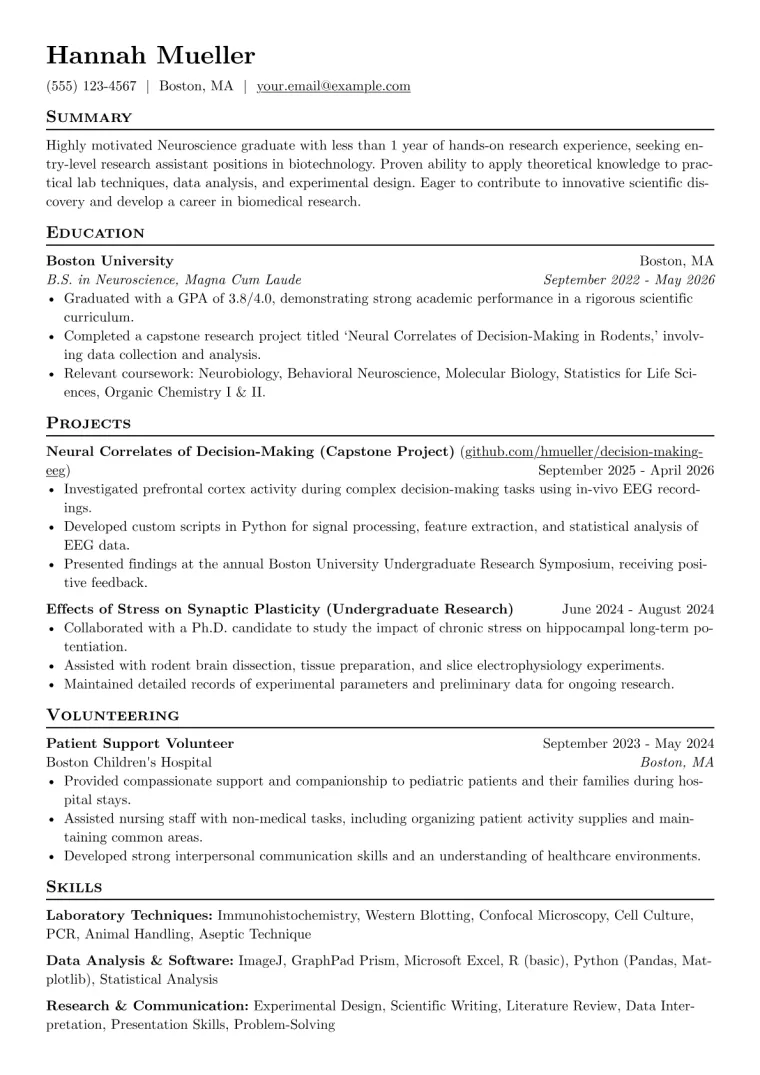
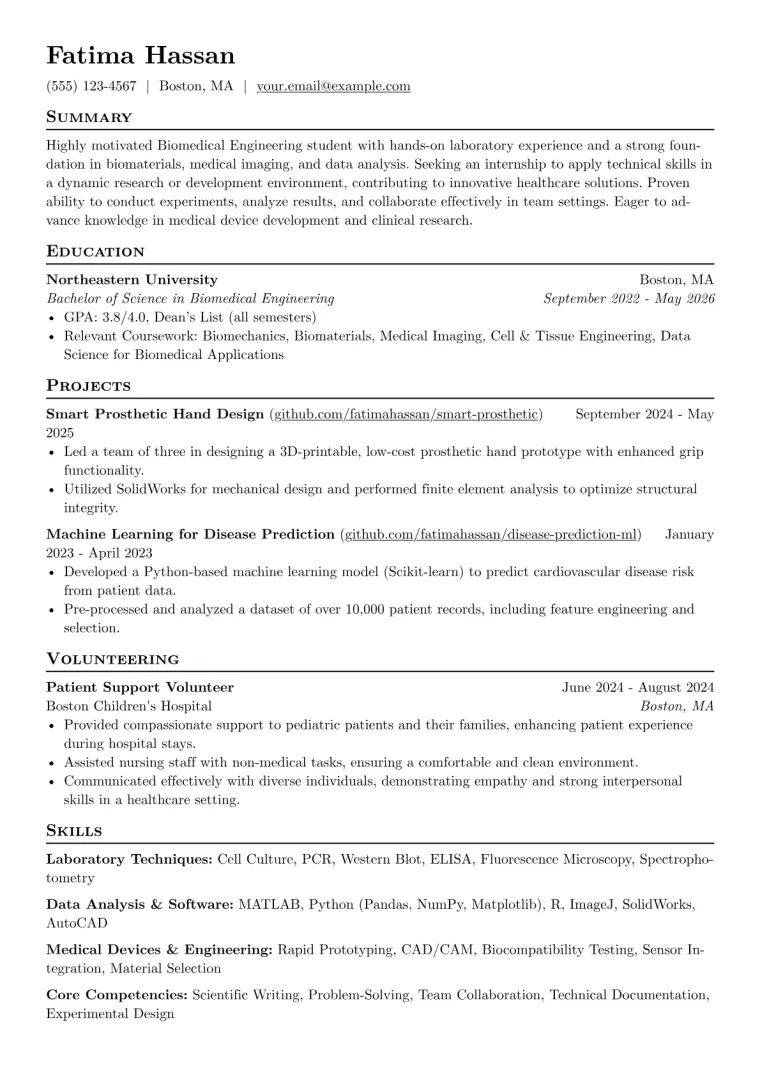
Biochemist Resume Example
 Example by JobSprout
Market Insights
Biochemist
Salary Range
Salary Trend
Mar 2025 – Feb 2026
12-Month Trend
Based on advertised Research roles.
US market data · Source: Adzuna · Updated Mar 2026
How useful was this template?
Biochemist resume samples



What makes a strong Biochemist resume?
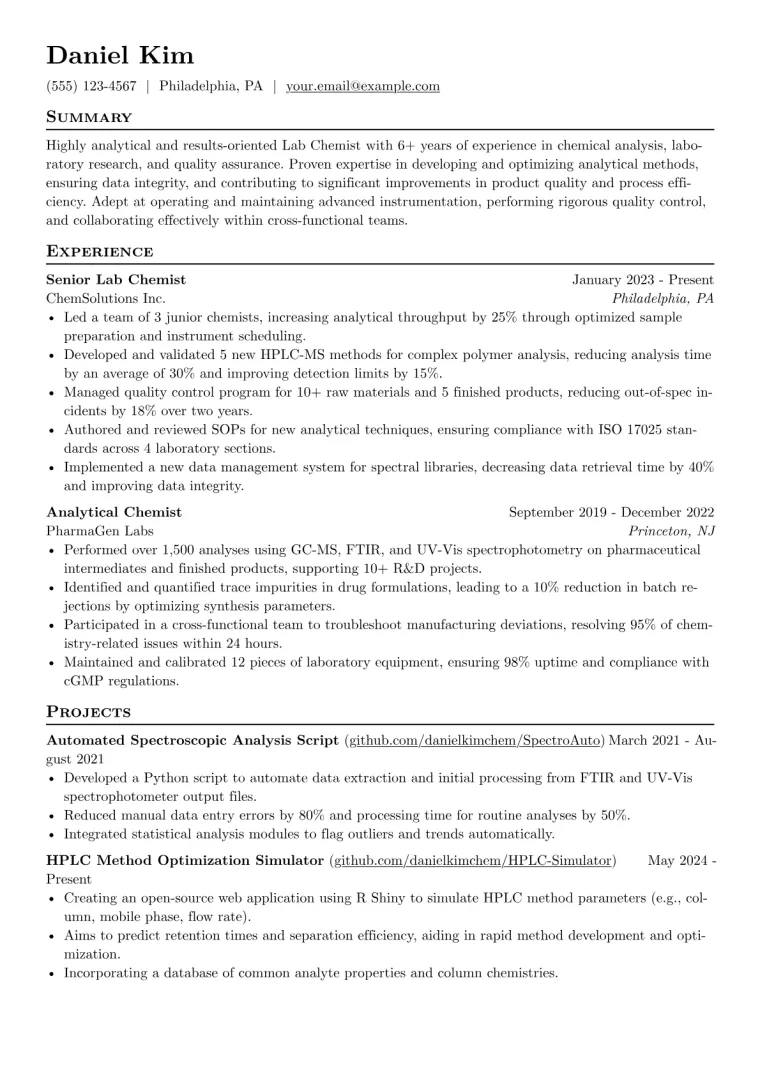
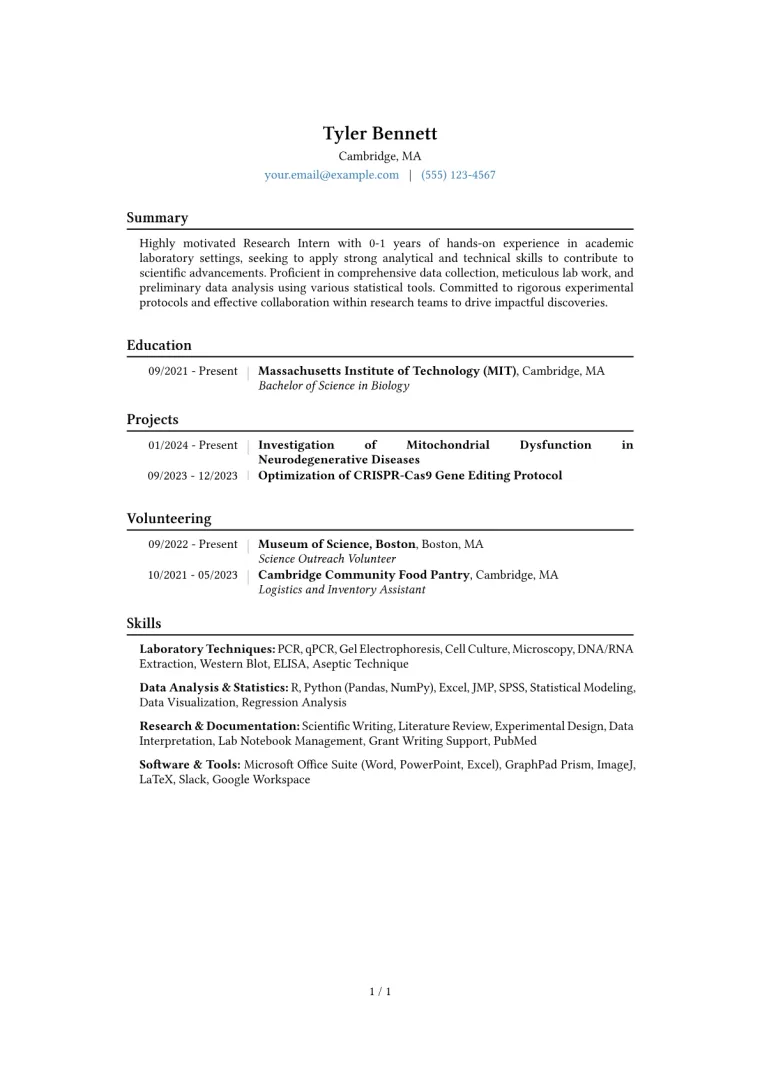
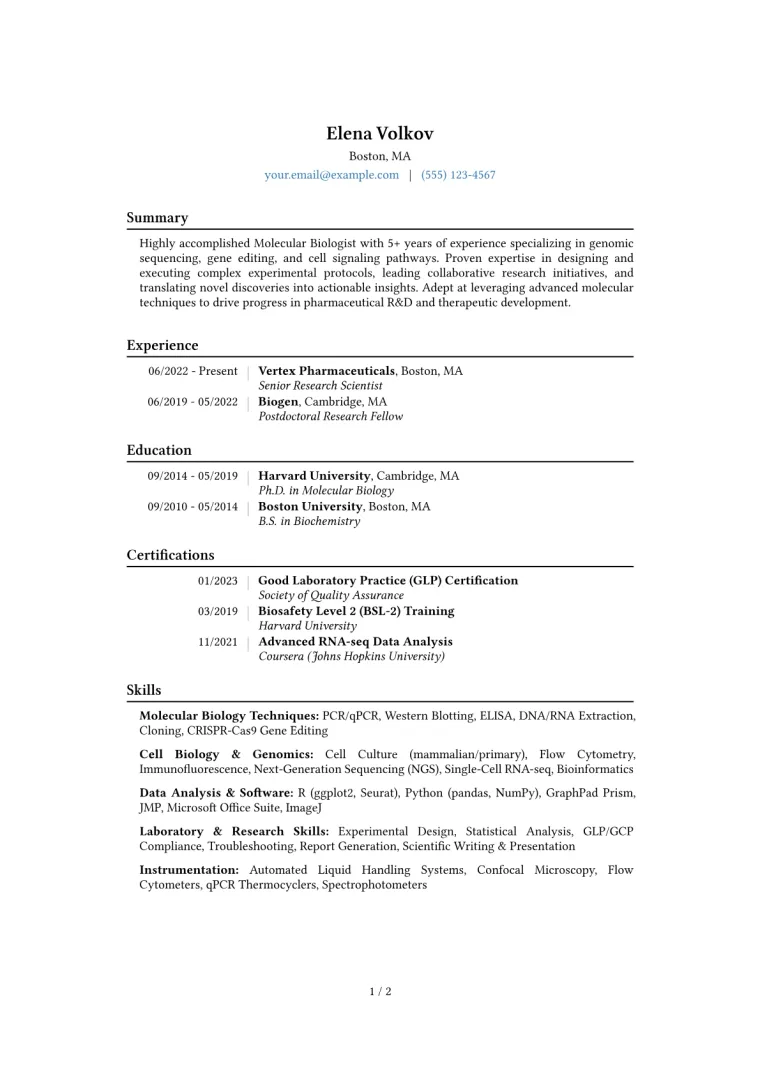
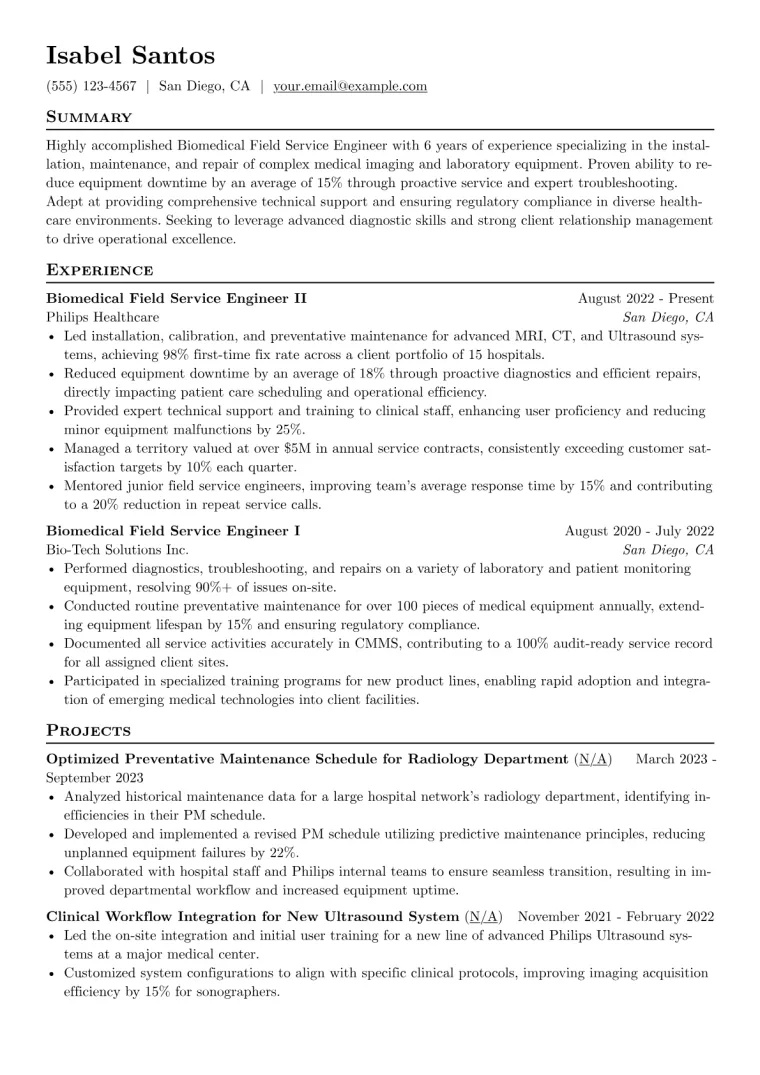
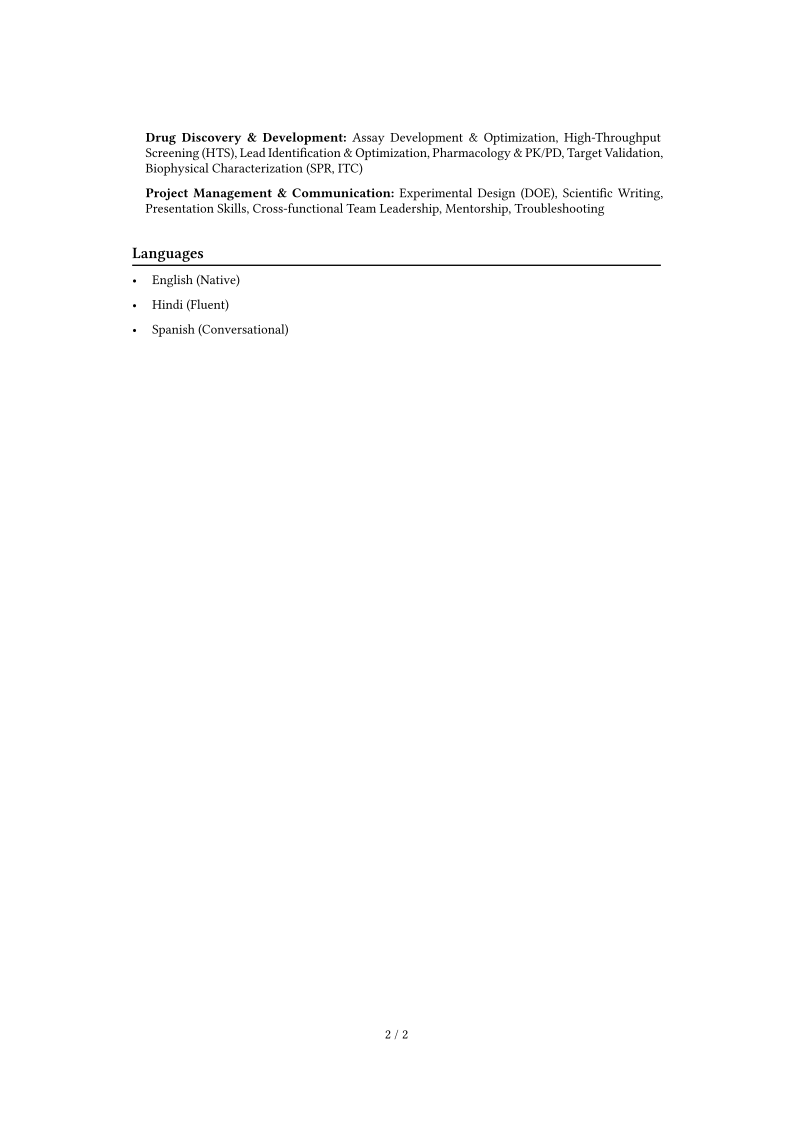
For a mid-level Biochemist in Healthcare Research, hiring managers seek more than just technical skills; they demand concrete evidence of contributions to discovery or development. A strong resume highlights successful assay development, protocol optimization, or impact on experimental throughput, often directly referencing techniques like qPCR, flow cytometry, or advanced chromatography. Demonstrating an understanding of GLP/GCP regulations, contributing to peer-reviewed publications, or managing specific research projects are crucial, showcasing both scientific rigor and practical application in a clinical or pharmaceutical context.
Why this example works
The JobSprout example effectively showcases these demands. Achievements are quantified precisely, detailing contributions such as “optimized protein purification yield by 25%” or “developed and validated three novel diagnostic assays.” Key laboratory techniques like mass spectrometry and cell culture, alongside bioinformatics tools such as R or Python for data analysis, are distinctly grouped. Furthermore, specific instrumentation proficiencies and relevant certifications are clearly highlighted, reflecting the practical, hands-on expertise expected in this specialized field.
How useful was this template?
Example by JobSprout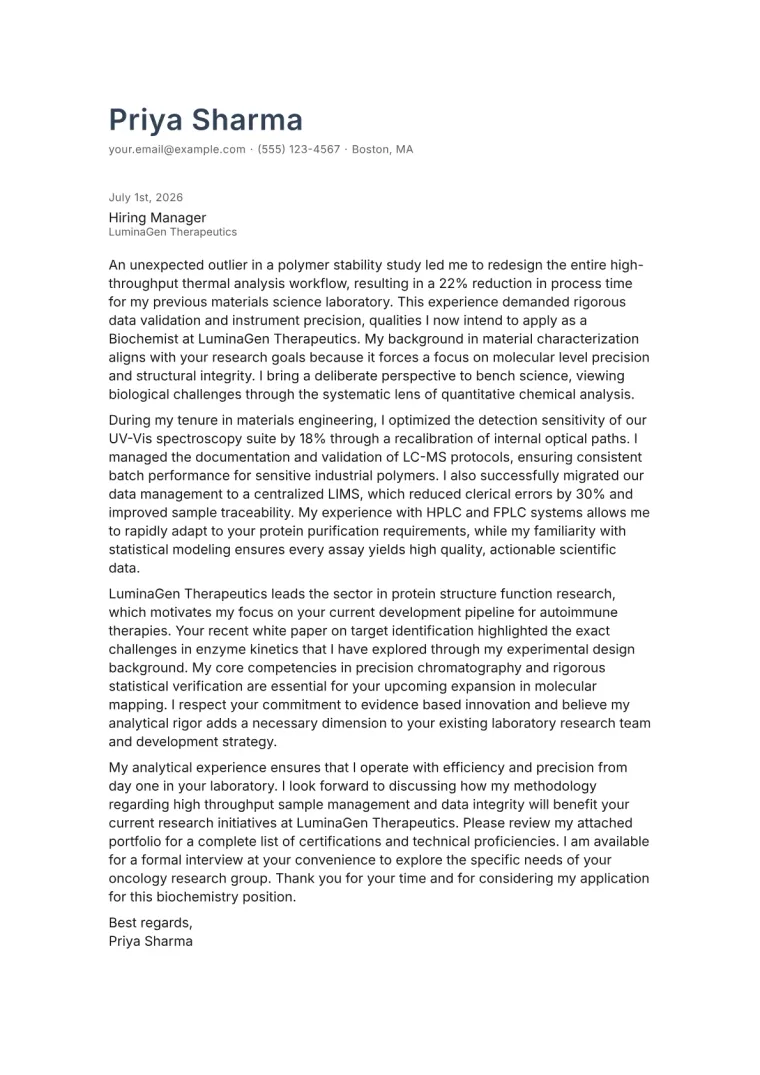
Biochemist cover letter for a career changer
Written for the same situation as this resume.
Biochemist resume summary example
Highly accomplished Biochemist with 7 years of progressive experience in drug discovery, assay development, and molecular biology within pharmaceutical and academic settings. Proven ability to design and execute complex experiments, analyze high-throughput data, and lead research initiatives. Adept at leveraging advanced analytical techniques to accelerate project timelines and deliver critical insights for therapeutic target validation.
Biochemist resume skills and keywords
Recruiters and applicant tracking systems scan Biochemist resumes for these skills and keywords. Include the ones that match your experience and mirror the wording in the job description. Check your resume against them with the free ATS checker.
Hard skills
Tools & software
Certifications
Soft skills
Market Insights
Biochemist
Salary Range
Salary Trend
Mar 2025 – Feb 2026
12-Month Trend
Based on advertised Research roles.
US market data · Source: Adzuna · Updated Mar 2026
The blank page is the hard part. Skip it.
Free to use. No download fee.
Related Articles

Research CV: UK Format, Structure and Examples [2026]
How to write a research CV for UK universities and institutes. The section order panels expect, how to list publications and funding, and how long it should actually be.

Postdoc CV: Structure, Template and Example [2026]
What a postdoctoral CV needs that a doctoral one does not: independence, funding, and a publication list a panel can audit. With a full worked example.

Academic CV for PhD Applications: How to Write One [2026]
Learn how to write an academic CV for PhD applications. Real template analysis, what research committees look for, and common mistakes to avoid.
Career moves from Biochemist
Usually need less experience or training
Includes information from the O*NET 30.3 Database by the U.S. Department of Labor, Employment and Training Administration (USDOL/ETA), used under the CC BY 4.0 license. We have modified it; USDOL/ETA has not approved, endorsed or tested these modifications. O*NET is a trademark of USDOL/ETA.